


 Claim Ownership
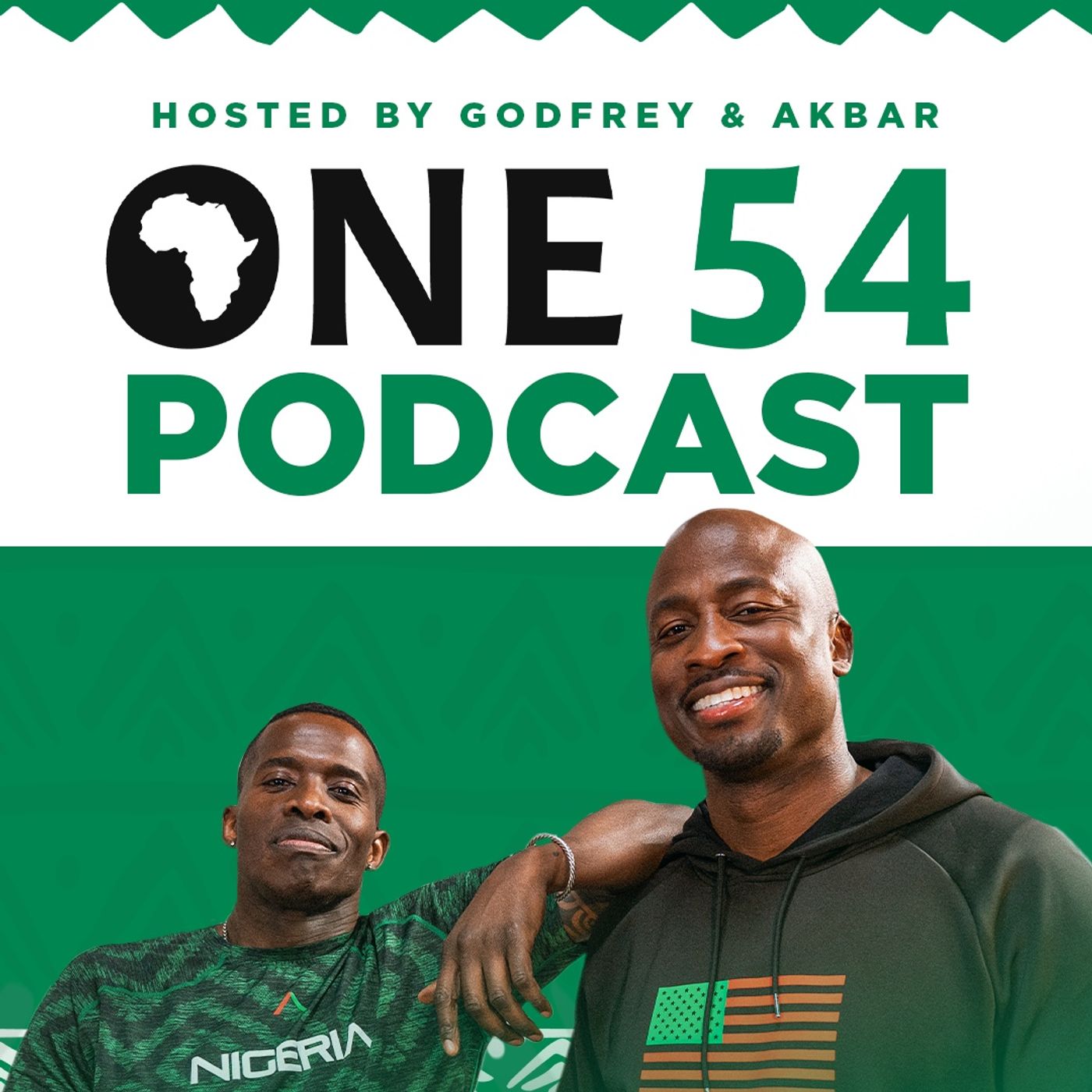
One 54 Podcast
Subscribed: 56Played: 304
Subscribe

© Copyright One54 Podcast
Description
One54, hosted by Akbar and Godfrey, is a first of its kind podcast spotlighting the untold stories of African entertainers, athletes and business leaders. Through unfiltered conversations, this podcast reveals the challenges and culture clashes of growing up African in America.
Akbar Gbajabiamila is a former NFL player, sports analyst, and television host best known for co-hosting American Ninja Warrior and CBS' The Talk. Proud of his Nigerian heritage, he brings a dynamic presence to media, blending his athletic background with insightful commentary and a deep connection to his roots.
Godfrey Daneschmah is a comedian and actor who's resume spans over 30 years and known for his sharp wit, spot-on impressions, and energetic stand-up performances. Drawing from his Nigerian heritage, he infuses cultural insight into his comedy, making him a standout voice in the entertainment industry.
One54 - Celebrating Africa’s 54 Countries, One Story At A Time
Akbar Gbajabiamila is a former NFL player, sports analyst, and television host best known for co-hosting American Ninja Warrior and CBS' The Talk. Proud of his Nigerian heritage, he brings a dynamic presence to media, blending his athletic background with insightful commentary and a deep connection to his roots.
Godfrey Daneschmah is a comedian and actor who's resume spans over 30 years and known for his sharp wit, spot-on impressions, and energetic stand-up performances. Drawing from his Nigerian heritage, he infuses cultural insight into his comedy, making him a standout voice in the entertainment industry.
One54 - Celebrating Africa’s 54 Countries, One Story At A Time
5 Episodes
Reverse
 1
1Darryl Vega, Nigerian-born storyteller, creator, and rising comedic voice, joins Akbar and Godfrey for an honest, funny, and deeply personal episode of One54. From losing his mother at a young age to navigating the turbulence of immigration, identity, culture shock, and rediscovering his voice, Darryl’s journey reflects the resilience, humor, and heart found across the African diaspora.Born in Lagos and raised between Nigeria and the United States, Darryl opens up about the pain and confusion of childhood loss, the difficulty of adjusting to a new country, and the ways culture, grief, and survival shaped him. He recounts the sharp discipline of Nigerian upbringing, the expectations placed on first-generation kids, and the emotional toll of navigating two worlds while trying to figure out who he truly was.The hosts and Darryl dive into the duality of being African in America — the code-switching, the misunderstandings, the stereotypes, and how comedy became a way to process trauma, honor his roots, and express truth. They explore how his storytelling style was influenced by Nollywood, Eddie Murphy, Dave Chappelle, Kevin Hart, and the Nigerian uncles who can turn anything into a lecture.Darryl also opens up about the hustle behind creating content in today’s digital world — from writing sketches to understanding the TikTok and Instagram algorithms to going viral unexpectedly. He talks about carving a space for African humor online, building a loyal audience, and wanting to represent Nigerians in a way that is authentic, layered, and human.The conversation explores family, friendships, manhood, and how the absence of his mother shaped his emotional world. Darryl reflects on healing, therapy, faith, and the moments where he felt closest to quitting — and the surprising breakthroughs that kept him going. From the immigrant survival mindset to the pressure of being “the one who made it,” he shares raw insights about loneliness, identity, and starting over.Filled with laughter, vulnerability, and cultural pride, this episode tackles grief, creativity, reinvention, purpose, and the complex beauty of growing up Nigerian in America. Darryl Vega’s story is a testament to the strength found in struggle and the power of holding onto your true self, no matter how many times life breaks you down.
Ling & Lamb—viral creators with 8.5M+ followers and 3B+ views—join Akbar and Godfrey for a laugh-out-loud, culture-rich episode of One54.From palm wine and “chin-chin” debates to Lagos traffic and pronunciation games (“burger,” “squirrel,” Yoruba tones), the couple unpacks life as an intercultural family—blending Nigerian pride, American slang, and the everyday comedy that made them internet favorites.Lamb shares his journey from music to mission: staging full-scale concerts inside Nigerian prisons (a Johnny Cash–style twist) and helping free 135 non-violent inmates—then bringing that advocacy stateside. Ling opens up about learning Nigerian cuisine (egusi, okra, pounded yam), the infamous “cheesy chin-chin,” and how mac & cheese finally won Lamb over.Together they keep it real about communication, tone, and volume in marriage—and how humor, patience, and faith turn culture clashes into connection. They also reveal the heart behind their new book, Beautiful Foolishness—a playful, practical look at love with space to journal after each chapter—and the gritty first years: moving into Ling’s childhood bedroom, Lamb volunteering at the YMCA, landing the Lowe’s job, and building a salon and a brand from scratch.From Yoruba vs. Igbo identity to “green card” stereotypes, OnlyFans/police pranks, pet-peeves, credit cards (“cash and carry” vs. U.S. credit), and why timing kids is up to God—this one has humor, heart, and real talk.
Emmanuel Acho, Emmy Award–winning host, New York Times bestselling author, and creator of Uncomfortable Conversations with a Black Man, joins Akbar and Godfrey for a raw and inspiring episode of One54. From NFL locker rooms to national television, Emmanuel shares how his Nigerian roots, faith, and family shaped his journey toward purpose and success.Born to Nigerian parents who immigrated to America with nothing, Emmanuel opens up about his father’s path from janitor to Ph.D. in psychology and his mother’s pursuit of a doctorate in nursing—all while raising four kids in Dallas, Texas. He recalls growing up between worlds: attending private school, going to church, learning discipline from strict African parents, and navigating the pressure to live up to the “doctor, lawyer, or engineer” standard.The hosts and Emmanuel discuss identity, colorism, and pride—comparing how Coming to America first gave Africans a sense of cinematic royalty and how Black Panther made it cool to embrace African roots in Hollywood. They reflect on cultural duality, from being called “too African” to “not Black enough,” and how that tension evolved into a superpower for first-generation kids. Emmanuel also opens up about the American Dream—what it truly means for immigrants, why his father’s mantra of “no excuses” drives him, and how faith kept him grounded through NFL setbacks and media fame. He discusses how Uncomfortable Conversations started and how Matthew McConaughey and Oprah helped him along the way. He shares powerful insights on representation and seeing African names proudly displayed on NFL jerseys.Filled with humor, honesty, and cultural pride, this episode dives deep into the power of heritage, family, and perseverance.
Uzo Aduba, the three-time Emmy Award–winning actor, joins Akbar Gbajabiamila and Godfrey Danchimah on this episode of One54. Born to Nigerian parents who lived through the Biafran War, Uzo reflects on how her mother’s courage and work ethic shaped her worldview. She opens up about growing up in Massachusetts, being one of the few Black students in her school, and the painful moment she first heard a racial slur—and how her mother’s fiery response taught her dignity, strength, and pride.The hosts and Uzo dive into the duality of being Nigerian and African American, embracing both Malcolm X and Martin Luther King Jr., while also honoring African icons like Nnamdi Azikiwe and Nelson Mandela. They explore how code-switching begins as survival but evolves into a superpower—a skill that bridges cultures, as Trevor Noah once described in Born a Crime.From beauty standards to self-acceptance, Uzo shares how she once wanted braces to close her gap—until her mother reminded her it was a family mark of beauty. She reflects on the pressures of being a Nigerian kid expected to become a “doctor, lawyer, or engineer,” and how she defied expectations by pursuing her passion for the arts.Uzo recounts the emotional moment she almost quit acting after endless rejections—crying on the New York City subway—only to receive a life-changing call offering her the role that would define her career. She reveals how she built Orange Is the New Black’s beloved “Crazy Eyes” not from madness, but from love and innocence, channeling what she calls “childlike chaos.”She also opens up about losing The Color Purple role to Fantasia Barrino, being compared to Beyoncé after starring as Glinda in The Wiz Live!, and what it takes to stay grounded when the spotlight gets intense. Uzo discusses her acting process, journaling habits, and the influence of performers like Daniel Day-Lewis, Jim Carrey, and Viola Davis, who once inspired her in their New York theater days.Akbar and Godfrey reflect on money, success, and gratitude, sharing how Nigerian parents often express love through sacrifice—and how true success isn’t about fame, but about honoring the investment your family made in you. Uzo explains how she now uses her platform to pay it forward, mentoring others just as her community once supported her.The episode ends on a note of love and faith. Uzo describes meeting her husband at a rooftop mixer at the Empire Hotel, right after praying for clarity and giving up on dating. For the first time, she was fully herself—and it led to a love story worthy of a movie. She even shares details of her two weddings: a classic white American ceremony and a traditional Nigerian celebration complete with the money dance, kola nut, and joyful family traditions.
In this episode of One 54, hosts Akbar Gbajabiamila and Godfrey Danchimah unpack what it means to grow up African in America, mixing raw honesty with comedy and cultural pride. Godfrey recalls how his Nigerian father made him take out the trash after his first one-hour comedy special and how his dad didn’t truly believe in his career until he saw him on Comedy Central with Tommy Davidson. Godfrey also shares his journey with Oprah Winfrey, from dancing with her to attending the Dr. Martin Luther King Celebration, going with her to watch Spike Lee’s Malcolm X before release, receiving an Oprah sweatshirt after his appearances, and bringing the comedian Deon Cole to tapings of the show.Akbar reflects on life as a Nigerian kid growing up in Los Angeles, sharing stories about wanting used jeans his father couldn’t understand, wearing traditional African clothes in his school photos, and learning the importance of conserving water after visiting Nigeria. He remembers his father’s James Earl Jones-like voice, his work as a plumber, and his refusal to accept welfare despite hardships. Akbar also opens up about his NFL years with the San Diego Chargers, playing alongside stars like LaDainian Tomlinson, Antonio Gates, and Philip Rivers, but never making the playoffs.The conversation stretches across culture and history. Godfrey and Akbar compare growing up in Chicago versus Los Angeles and explain how Eddie Murphy’s "Coming to America" made it easier to embrace being African in the U.S. They discuss the differences between light-skin and dark-skin experiences, from Michael Jordan and Wesley Snipes redefining attractiveness for dark-skinned men, to the lack of recognition given to dark-skinned women. They talk about Sammy Sosa bleaching his skin and the fear that Michael Jackson may only be remembered for being light-skinned.Godfrey dives deep into African history, breaking down how pyramids in Egypt were constructed, comparing the “aliens built the pyramids” myth to Irish building Stonehenge, and arguing that Africans, not outsiders, were the real innovators. He explains how humanity traces its genetic roots back to Africa, jokes that Nelson Mandela looked like a “Chinese Black man,” and connects the origins of instruments like the banjo to Africa. He critiques how white people stole resources from Nigeria and the rest of Africa, connects Elon Musk’s wealth to stolen African resources, and breaks down how propaganda depicts Black people through harmful stereotypes in everything from HIV ads to images of poverty. He also shares how Africans influenced Japanese culture and history, connects surfing back to its African roots before white people rebranded it, and even explains why the oldest living person and the most diverse area in the world — Queens, home of Donald Trump — both trace back to Africa.The episode is packed with comedy too: Godfrey imitates his Nigerian dad as a teacher in Chicago, recalls his father catching him after he pierced his ears, and does impressions of Donald Trump that leave Akbar laughing. They talk about Nigerians pointing with their lips and eyes instead of hands, Nigerian parents refusing to say “I love you,” and the bizarre rules about bath time and wash cloths. Godfrey remembers being roommates with Viola Davis in New York before she was dubbed the “Black Meryl Streep,” and explains how actors don’t talk about money the way NFL players do.From cultural clashes to personal triumphs, from Oprah to Michael Jordan, from African pyramids to Shannon Sharpe’s Club Shay Shay, this episode captures the full spectrum of what it means to be African in America today.
Comments

Download from Google Play

Download from App Store
 United States