


Outcomes Rocket
Subscribed: 93Played: 12,851
Subscribe

© Saul Marquez
Description
At Outcomes Rocket, we are the shared knowledge hub for healthcare's toughest problems. Our goal is twofold and clear. To help inspire and guide our listeners to 1. Improve patient outcomes and 2. Experience business success in healthcare. Tune in to learn more!
2190 Episodes
Reverse
What if the biggest problem in healthcare tech isn’t the tech at all, but the data behind it?
In this episode, Megan Schmidt, President and CEO of Madaket Health, and Nicole Berryman, SVP of Growth and Partnerships at Verisys, expose how healthcare’s provider data problem stems from poor data quality, not a lack of technology. The industry’s pursuit of a single “golden record” is misguided, as provider data is constantly changing and must be continuously monitored and refreshed. A data-first approach, focused on clean, validated, and actively managed data, is essential before applying technology. By partnering across credentialing, monitoring, and enrollment, organizations can create a more accurate, efficient, and proactive data ecosystem.
Tune in to hear why chasing the “golden record” may be holding healthcare back, and what a true data-first strategy looks like in practice!
Resources:
Connect with and follow Megan Schmidt on LinkedIn.
Follow Madaket Health on LinkedIn and explore their website!
Connect with and follow Nicole Berryman on LinkedIn.
Follow Verisys on LinkedIn and explore their website!
Mental health care works better when access is timely, care is coordinated, and patients receive the right support before their needs escalate.
In this episode, Lindsay Arnold Sugden, CEO of SOL Mental Health, joins Saul Marquez to discuss what it takes to build a mental health organization centered on access, collaboration, and clinical excellence. Lindsay shares how SOL Mental Health serves as a front door to care through a broad outpatient model that supports adults, children, adolescents, and couples, both in person and virtually. She explains why untreated behavioral health conditions drive major downstream medical costs, why primary care clinicians need stronger behavioral health partners, and why patient education is essential when people do not know what kind of help they need. Lindsay also highlights SOL’s W-2 employment model, weekly supervision structure, and commitment to building a more connected, less fragmented care experience for patients and providers alike.
Tune in to learn how thoughtful mental health care delivery can improve patient outcomes, strengthen provider partnerships, and reduce avoidable costs across the healthcare system.
Resources:
Connect with and follow Lindsay Arnold Sugden on LinkedIn.
Follow SOL Mental Health on LinkedIn and discover their website.
Connect with SOL Mental Health on Facebook.
Behavioral addictions like gambling are real behavioral health conditions, not character flaws, and they can hide in plain sight.
In this episode, Davina Mena, Tribal Liaison for the Arizona Division of Problem Gambling, explains how behavioral addictions work and why gambling is often misunderstood, including how it can rewire the brain’s reward system much like substance use disorders. She describes how gambling addiction can surface at work through distraction, missed time, stress, and financial pressure, even when individuals appear high-functioning. Davina offers practical guidance for families and individuals, emphasizing empathy, healthy boundaries, honest self-checks, and awareness of local resources. She also urges providers to integrate brief screening questions into routine care and discusses the unique realities for tribal communities, where casinos support economic sovereignty while still posing risks that deserve proactive attention.
Tune in to better understand behavioral addictions, reduce stigma, and learn concrete ways families, providers, and communities can respond.
Resources:
Connect with and follow Davina Mena on LinkedIn.
Follow the Arizona Department of Gaming on LinkedIn.
Learn more about the Arizona Department of Gaming’s Problem Gambling Division on their website.
Take the Problem Gambling Self-screening Quiz here.
If someone you know is struggling with a gambling addiction, call 1-800-NEXT-STEP or the national helpline at 1-800-GAMBLER for confidential support.
AI in healthcare only works when it is built for real workflows, real systems, and real change management.
In this episode, Ganesh Padmanabhan, Founder and CEO of Autonomize AI, joins Saul Marquez to unpack what it really takes to deploy AI in healthcare operations at scale. Ganesh shares why many point solutions create islands of efficiency instead of fixing end-to-end processes, and why prompting an LLM is the easy part compared to building production-ready AI that integrates into enterprise systems, meets compliance requirements, and earns clinical trust. He also offers a practical playbook for implementation: anticipate the trust gap, design for behavior change, and treat deployment as a true team sport across tech, clinical, ops, and compliance.
Tune in to learn how to move beyond AI hype and build operational AI that delivers measurable value in healthcare!
Resources:
Connect with and follow Ganesh Padmanabhan on LinkedIn.
Follow Autonomize AI on LinkedIn and discover their website.
Check out Ganesh’s podcast, Stories in AI.
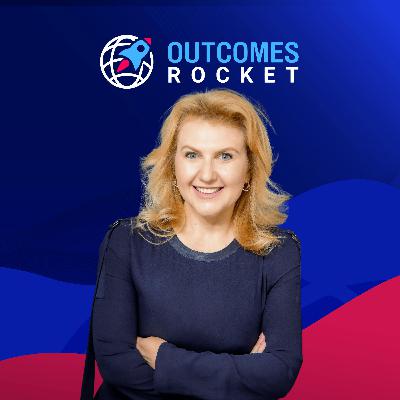
In this episode, Saul is joined by Mariya Filipova, CEO at Proclaim, a renowned healthcare executive, investor, and now Course Director at Harvard School of Dental Medicine. The conversation centers on the concept of Care Convergence, a vital shift in healthcare delivery that moves away from traditional, siloed treatment toward a "whole-person" approach.
Mariya explains that the current healthcare system is often hampered by quarterly financial cycles and fragmented clinician training, which fail to account for the interconnected nature of the human body. She emphasizes that true systemic change begins with education, leading her to co-design a first-of-its-kind program at Harvard. This curriculum is specifically built to connect clinicians and innovators with the business, technology, and cross-disciplinary skills necessary to lead the next generation of integrated care delivery.
Tune in to discover how bridging the gap between clinical practice and business strategy can dismantle healthcare silos and finally put the whole patient at the center of the system.
Resources:
Register for the webinar here: https://bit.ly/4uj014j
Apply now to the Convergent Leadership: Bridging Clinical Care, Business, and Technology: https://web.cvent.com/event/746b6bcb-1d12-4082-9c8c-c68c8b9e85fb/register
Connect with and follow Mariya Filipova on LinkedIn.
Follow Harvard School of Dental Medicine on LinkedIn.
Explore the Harvard School of Dental Medicine Website.
Follow Proclaim on LinkedIn.
Explore the Proclaim Website.
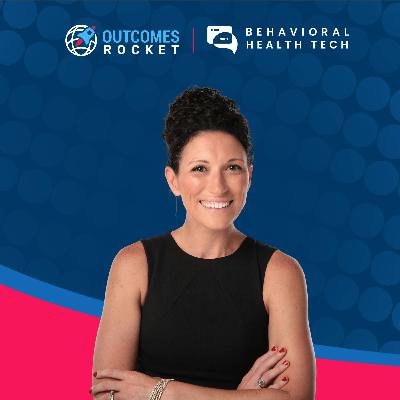
Stability and early mental health care are the biggest levers for improving outcomes for kids impacted by foster care.
In this episode, Michelle Turner, founder and CEO of Here Now Health, shares how her experience as a foster parent revealed critical gaps in mental healthcare access for children and young adults in the child welfare system. She explains how placement instability, case manager turnover, and reliance on crisis care undermine long-term stability and permanency. Michelle explores why foster youth drive significantly higher Medicaid spending due to emergency interventions rather than preventive care, and how virtual, trauma-informed therapy that follows the child can improve outcomes. She closes with insights on caregiver support and how Medicaid and policy can be better leveraged as preventive tools designed specifically for foster youth.
Tune in and learn how targeted, trauma-informed virtual care can prevent crisis, stabilize families, and transform outcomes for foster youth!
Resources:
Connect with and follow Michelle Turner on LinkedIn.
Learn more about Here Now Health on their LinkedIn and explore their website.
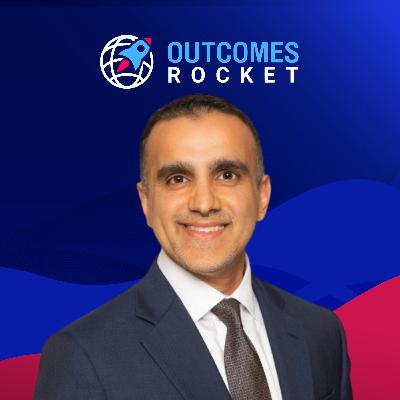
In this episode, Amir Syed, President of BRSi, shares insights on revenue cycle management, the impact of AI in healthcare, and strategies for healthcare leaders to stay ahead in the evolving landscape. Discover practical tips on process improvement, predictive analytics, and how to leverage technology effectively.AI is accelerating claim denials and revenue cycle challenges. Healthcare providers must focus on process optimization before investing in AI. Predictive analytics can prevent denials by identifying problem areas early.Resources:
- BRSi Website - Aamir Syed LinkedIn

Healthcare innovation doesn’t fail for lack of ideas; it fails when execution, people, and focus aren’t aligned.
In this episode, Sabrina Runbeck, fractional COO and CSO, and co-founder of PulsePoint Path, discusses building a collaborative execution model that connects early-stage health tech startups, clinicians, and investors. She explains why moving beyond passive referral-based growth is essential for scaling companies with clarity and real ROI. Sabrina breaks down how startups often miss critical go-to-market fundamentals, including a true client-acquisition strategy and accountable leadership. Drawing from her background in cardiothoracic surgery, she shares how clinicians can transition into scalable advisory, executive, and investor roles to create one-to-many impact.
Tune in to learn how disciplined focus, the right people, and intentional collaboration can turn promising healthcare innovation into sustainable growth!
Resources:
Connect with and follow Sabrina Runbeck on LinkedIn.
Follow PulsePoint Path on LinkedIn and explore their website!
Submit your Health Tech Impact Awards nomination here!
This podcast is brought to you by Outcomes Rocket, your exclusive healthcare marketing agency. Learn how to accelerate your growth by going to outcomesrocket.com
Effective value-based care depends on tight care coordination, clinician trust, and financial alignment that prevents avoidable hospitalizations.
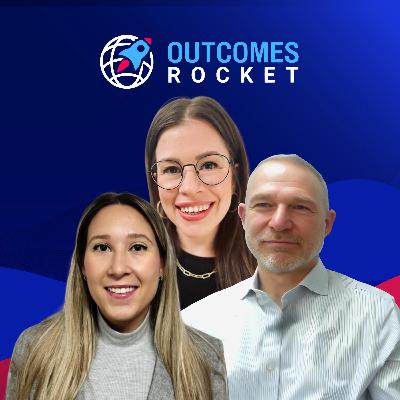
In this episode, three healthcare leaders discuss why proactive kidney care depends on early identification and ongoing patient education, long before dialysis decisions become urgent. Colette Boroch, Director of Clinical Services at PRINE Health, explains how early screening, repeated education, and removing barriers like transportation help prevent patients from “crashing” into the hospital. Kathryn Anderton, Vice President of Clinical Operations at ThoroughCare, shares how care management platforms reduce documentation burden, standardize workflows, and free clinicians to focus on patients, while Jonathan Goldstein, Chief Financial Officer at PRINE Health, outlines how care coordination lowers avoidable utilization, improves quality metrics, and supports shared savings. Together, they explore provider buy-in, fragmented data, AI-enabled scalability, and why value-based care must be treated as a strategic asset.
Tune in and learn how clinical care, technology, and finance must work together to successfully scale value-based care.
Resources
Connect with and follow Colette Boroch on LinkedIn.
Follow PRINE Health on LinkedIn and discover their website!
Follow and connect with Kathryn Anderton on LinkedIn.
Learn more about ThoroughCare on LinkedIn and explore their website.
Listen to Kathryn’s previous interview on the podcast here.
Email Kathryn directly here.
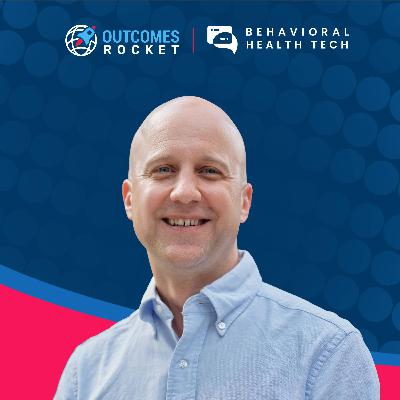
Patient-centered design is not a nice-to-have in healthcare. It is the key to access, trust, and better outcomes.
In this episode, Dr. Justin Coffey, Chief Medical Officer at WorkIt Health, discusses how designing treatment around lived experience can transform substance use care. He explains the philosophy of patients as designers, why immediate access matters in moments of readiness, and how whole-person care better reflects the realities of recovery. The conversation highlights how digital care can reduce stigma, improve engagement, and reach underserved populations, including rural patients and pregnant individuals. Dr. Coffey shares practical examples of how technology, team-based care, and thoughtful design remove barriers while maintaining human connection and explores the future role of AI in supporting care delivery and patient empowerment.
Tune in and learn how patient-designed digital care can create more accessible, humane, and effective treatment.
Resources:
Connect with and follow Dr. Justin Coffey on LinkedIn.
Follow Workit Health on LinkedIn and explore their website.
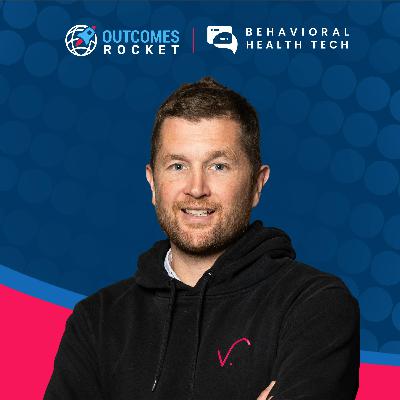
Virtual reality can remove the biggest barriers to evidence-based mental health treatment by making exposure therapy affordable, scalable, and accessible anywhere.
In this episode, Adam Hutchinson, founder of oVRcome, discusses how lived experience with social anxiety and a background in technology led him to build a VR platform that expands access to exposure therapy worldwide. He explains why traditional exposure therapy is difficult, costly, and impractical for many conditions, and how VR “tricks the brain” to safely replicate real-world triggers without physical constraints. Adam explores the clinical value of immersive, filmed VR environments, the emerging role of generative AI in personalizing treatment, and the importance of maintaining realism for effective outcomes. He also shares insights from scaling a global startup from New Zealand, highlights use cases across self-help, clinicians, schools, payers, and health systems, and emphasizes the role of caregivers in successful treatment journeys.
Tune in and discover how immersive technology is revolutionizing anxiety care, lowering costs, and increasing access to proven mental health treatments worldwide!
Resources:
Connect with and follow Adam Hutchinson on LinkedIn.
Follow oVRcome on LinkedIn and explore their website.

The most effective way to drive change in healthcare is to focus on what remains constant: serving patients.
In this episode, sponsored by Amgen. Leandro Boer, Vice President of US Medical and General Medicines at Amgen, discusses how the company is reimagining care delivery to enhance access and outcomes, particularly for underserved populations. He explains how precision medicine, multi-omics, and advanced data use are driving innovation and preventing “data waste,” while Amgen invests heavily in R&D, including a $600 million Innovation and Discovery Science Center. Leandro highlights the role of technology in accelerating clinical trials through machine learning and anticipates three major shifts within the next five years: faster drug development, reduced administrative burden through the use of AI, and improved patient identification via care pathway automation. He also highlights Amgen’s goal to reduce cardiovascular events by 50% by 2030, the importance of diverse clinical representation through the RISE initiative, and the company’s commitment to employee well-being as the foundation for improved patient care.
Tune in and learn how innovation, equity, and purpose-driven leadership are transforming the future of healthcare!
Resources:
Connect with and follow Leandro Boer on LinkedIn.
Follow Amgen on LinkedIn and explore their website.
This podcast is brought to you by Outcomes Rocket, your exclusive healthcare marketing agency. Learn how to accelerate your growth by going to outcomesrocket.com
Aligned incentives change behavior faster than technology alone ever could.
In this episode, Dr. Farzad Mostashari, co-founder and CEO of Aledade, discusses how value-based care finally makes prevention profitable by rewarding primary care for keeping patients healthy rather than treating avoidable disease. He reflects on his path from public health and federal EHR leadership to building a nationwide platform that partners with independent practices to take total-cost-of-care contracts. Dr. Mostashari covers why fee-for-service warped EHRs into billing tools, how accountable care models reversed that logic, and why culture, long-term thinking, and technology at scale matter. He shares results from thousands of practices achieving higher blood-pressure control by focusing on stroke prevention, explains the economics of Medicare Shared Savings and expanding private contracts, and explores how AI can deliver just-in-time insights across hundreds of EHRs without forcing workflow change.
Tune in and learn how aligning incentives, primary care, and AI can deliver better outcomes at lower cost!
Resources:
Connect with and follow Dr. Farzad Mostashari on LinkedIn.
Follow Aledade on LinkedIn and discover their website.
Follow Aledade on LinkedIn and visit their website.
Check out Aledade's Public Benefit Report and Medicare Shared Savings Program announcement.
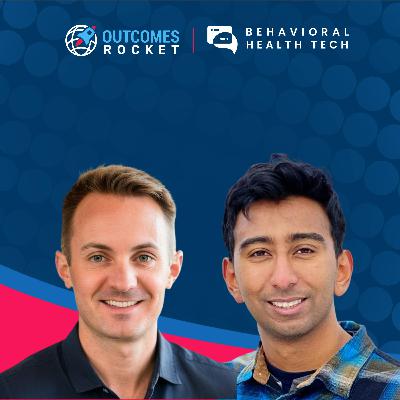
Peer support is becoming a core part of behavioral health, not just an add-on.
In this episode, Shrenik Jain, founder and CEO of Marigold Health, and Robert McAlonan, Director of Behavioral Health at VNS Health, discuss how expanding the role of peer support can bridge the engagement gap in behavioral health. They share how their partnership is transforming access to care through a blend of technology and human connection, making services more accessible, private, and personalized. The conversation highlights how digital peer support offers a low-friction approach for individuals to seek help, thereby reducing hospitalizations and improving long-term recovery outcomes. Shrenik and Rob also explore the operational and systemic challenges of scaling peer support, from credentialing and integration to building value-based partnerships that reward outcomes.
Tune in and learn how technology-driven peer support can reshape behavioral health access, engagement, and recovery outcomes!
Resources:
Connect with and follow Robert McAlonan on LinkedIn.
Follow VNS Health on LinkedIn and visit their website.
Connect with and follow Shrenik Jain on LinkedIn.
Follow Marigold Health on LinkedIn and visit their website.
This podcast is brought to you by Outcomes Rocket, your exclusive healthcare marketing agency. Learn how to accelerate your growth by going to outcomesrocket.com
Real AI in healthcare matters only if it delivers measurable value, not hype.
In this episode, Justin Liu, CEO of Charta Health, discusses how AI is transforming medical record review by making it faster, cheaper, and scalable across all patient charts. He explains why chart review is central to nearly every healthcare workflow and how AI uncovers insights that manual sampling cannot. Justin shares how Charta helps high-volume outpatient providers increase revenue, improve clinical oversight, and consolidate fragmented processes into a single, customized platform. He also emphasizes the importance of provider-specific workflows and warns that AI is only as effective as the humans who train it.
Tune in and learn how value-driven AI is reshaping healthcare operations at scale!
Resources:
Connect with and follow Justin Liu on LinkedIn.
Follow Charta Health on LinkedIn and discover their website.
Email Justin directly here.
High-quality behavioral healthcare scales only when outcomes, engagement, and coordination are designed into the system from day one.
In this episode, Colleen Marshall, Chief Clinical Officer at Two Chairs, discusses how integrating therapy and psychiatry under one roof improves outcomes, reduces drop-off, and removes friction for patients. She explains measurement-based care (MBC), why real-time feedback in sessions drives better results, and how clinician training unlocks adoption. Colleen explores patient engagement, including why rapid access and strong matching matter and how coordinated care prevents conflicting treatment plans. She also breaks down value-based care in behavioral health, sharing how outcomes and retention can anchor shared-risk partnerships with payers. Finally, Colleen looks ahead to the future of behavioral health, including the responsible use of AI to support clinicians while maintaining ethical and effective care.
Tune in and learn how outcomes, engagement, and coordination can redefine success in behavioral healthcare!
Resources:
Connect with and follow Colleen Marshall on LinkedIn.
Follow Two Chairs on LinkedIn and visit their website.
This podcast is brought to you by Outcomes Rocket, your exclusive healthcare marketing agency. Learn how to accelerate your growth by going to outcomesrocket.com
Point-of-care engagement only works when technology serves real clinical workflows instead of forcing new ones.
In this episode, Angelo Campano, CEO of Flora Health, discusses how his company bridges pharmaceutical manufacturers, health systems, and digital platforms to deliver relevant content to physicians at the exact moment of care. He explains how Flora helps brands show up inside EHR workflows without disrupting clinicians, why partnerships with health systems and technology vendors matter more than reinventing distribution, and how education closes the language gap between pharma and health IT. Angelo also shares the origin story behind Flora, his contrarian bet on market access over AI hype, and how automating prior authorization and patient assistance can dramatically improve access to therapy, especially for underserved populations. Drawing from his experience as an ultramarathon runner, he explains how “thinking in chapters” applies to building companies, measuring impact, and sustaining long-term innovation in healthcare.
Tune in and learn how point-of-care strategy, market access, and disciplined execution can reshape patient access and outcomes!
Resources
Connect with and follow Angelo Campano on LinkedIn.
Follow Flora Health on LinkedIn and visit their website!

This podcast is brought to you by Outcomes Rocket, your exclusive healthcare marketing agency. Learn how to accelerate your growth by going to outcomesrocket.com
At-home blood testing is moving diagnostics out of clinics and into people’s lives, removing friction while expanding access to critical health insights.
In this episode, Michael Dubrovsky, co-founder and CEO of SiPhox Health, discusses how his team is reimagining blood testing through painless at-home collection and advanced diagnostics focused on longevity and overlooked biomarkers. He explains why traditional blood testing in the U.S. is burdened by complexity, how SiPhox fills gaps left by primary care, and the growing consumer demand for deeper health data. Michael shares the origins of the company’s silicon photonics technology, the challenges of clinician trust and FDA clearance, and how home testing is already saving lives by identifying conditions like heart disease and hemochromatosis earlier. He also explores B2B use cases, funnel optimization, health equity, and why betting on fully home-based testing is a bold but necessary move for the future of healthcare.
Tune in and learn how at-home diagnostics could fundamentally change how care is delivered and experienced!
Resources:
Connect with and follow Michael Dubrovsky on LinkedIn.
Follow SiPhox Health on LinkedIn and visit their website!
Listen to Michael’s podcast on Apple Podcasts or Spotify.
Email Michael directly here.

This podcast is brought to you by Outcomes Rocket, your exclusive healthcare marketing agency. Learn how to accelerate your growth by going to outcomesrocket.com
Embedding trusted clinical evidence directly into everyday workflows is becoming critical to reducing burnout and improving clinical decision-making.
In this episode, Christopher Sullivan, Vice President and General Manager of Pharmacy and Health Technology Solutions for Wolters Kluwer, discusses how the company is transforming from a traditional publishing company into a software-driven healthcare intelligence partner. He explains how products like UpToDate, Medi-Span, and Sentri7 function as an insight layer across retail pharmacies, hospitals, and the broader digital health ecosystem. A significant focus is UpToDate Connect, an API-based solution that embeds trusted clinical evidence directly into third-party platforms, keeping clinicians in workflow while reducing context switching. Christopher also shares early market feedback, highlighting efficiency gains, clinician confidence, and the importance of trusted content in an AI-driven world. Finally, he examines the future of agentic AI, non-clinical workflows, and the expanding role of partnerships in driving innovation.
Tune in and discover how evidence-based insights are shaping faster, more innovative, and more sustainable healthcare!
Resources
Connect with and follow Christopher Sullivan on LinkedIn.Follow Wolters Kluwer Health on LinkedIn and visit their website!

This podcast is brought to you by Outcomes Rocket, your exclusive healthcare marketing agency. Learn how to accelerate your growth by going to outcomesrocket.com
Accelerating drug development from ten years to one is possible when data, technology, and clinical trial design finally work together.
In this episode, Bari Kowal, Senior Vice President of Development Operations & Portfolio Management for Regeneron, discusses how modernizing clinical trials, strengthening data infrastructure, and using AI responsibly can expand patient access and accelerate development. She emphasizes that education is a significant missing link in clinical research and that true progress depends on interoperability rather than flashy standalone tools. Bari highlights the need for clean, structured data and strong partnerships with health systems to integrate genetics, EMRs, and real-world information for more personalized and preventive medicine. She also explores the future of drug development, emphasising the importance of reducing cycle time, fostering regulatory collaboration, streamlining protocols, ensuring site readiness, and simplifying trial complexity while leveraging digital biomarkers effectively.
Tune in and learn how thoughtful trial design, better data, and smarter collaboration can reinvent the path from discovery to patient impact!
Resources
Connect with and follow Bari Kowal on LinkedIn.
Follow Regeneron on LinkedIn and visit their website!

Comments

Download from Google Play

Download from App Store
 United States