


 Claim Ownership
PBE Podcast
Subscribed: 15Played: 214
Subscribe

Description
Energy innovation is born in the Permian Basin, we’re on the front lines of it! Let’s build a community for the next generation of energy needs.
260 Episodes
Reverse

The SPWLA Houston Chapter’s annual Technology Day, held on December 4th, 2026, is a focused technical event for professionals in petrophysics, reservoir engineering, log analysis, and geosciences. Unlike larger, impersonal trade shows, this event fosters peer-level engagement in a collaborative environment at the University of Houston Technology Bridge.
The 2026 event emphasizes cutting-edge themes ranging from digital rock analysis and autonomous labs to geothermal technology, reservoir rock physics, and the economics of uncertainty. The Houston chapter, the largest in the world, representing a broad geographic area, is led by a new volunteer board dedicated to advancing the subsurface technical community through technology showcases and networking. The event’s well-structured agenda presents a cohesive storyline moving from microscopic pore-scale physics in the morning to field-scale applications and economic considerations in the afternoon.
Key innovations include advances in digital workflows, automation, and machine learning applied to core analysis, with emerging concepts such as digital twins and AI-enabled reservoir modeling. Geothermal energy garners significant attention as a growing sector within subsurface characterization, with industry leaders addressing challenges such as high temperatures and well integrity. The event also highlights integrating rock physics and economic models to quantify uncertainty and improve decision-making, particularly in compressible reservoirs that experience subsidence and swelling due to fluid withdrawal and injection. In addition to traditional technical talks, the event introduces a rapid-fire technology showcase, giving sponsors and vendors a platform to highlight their innovations in brief, impactful presentations.
This structure fosters direct dialogue between technology providers and users, encouraging the sharing of scientific data and practical insights. Overall, Technology Day reflects a commitment to evolving the subsurface industry through interdisciplinary collaboration, advanced technology adoption, and active knowledge sharing, ensuring its relevance as the industry transitions to a diversified energy future.
Highlights:
The SPWLA Houston chapter is the largest professional petrophysics group globally, uniting multiple Houston regions.
🖥️ Cutting-edge digital rock and autonomous lab technologies are transforming subsurface data quality and analysis workflows.
🌡️ Geothermal energy is the “hottest” emerging field, with new tech addressing high-temperature and well-integrity challenges.
🧬 Integration across disciplines (petrophysics, drilling, reservoir engineering) is critical for solving complex subsurface problems.
🚀 A rapid-fire sponsor showcase promotes innovative tools and breakthrough industry solutions in a dynamic networking format.
🌐 Economic uncertainty in reservoir models, including compressible reservoir behavior, is a major focus in improving field-scale decision-making.
🎯 The event promotes inclusion and accessibility with affordable admission, encouraging broad participation from Houston and beyond.
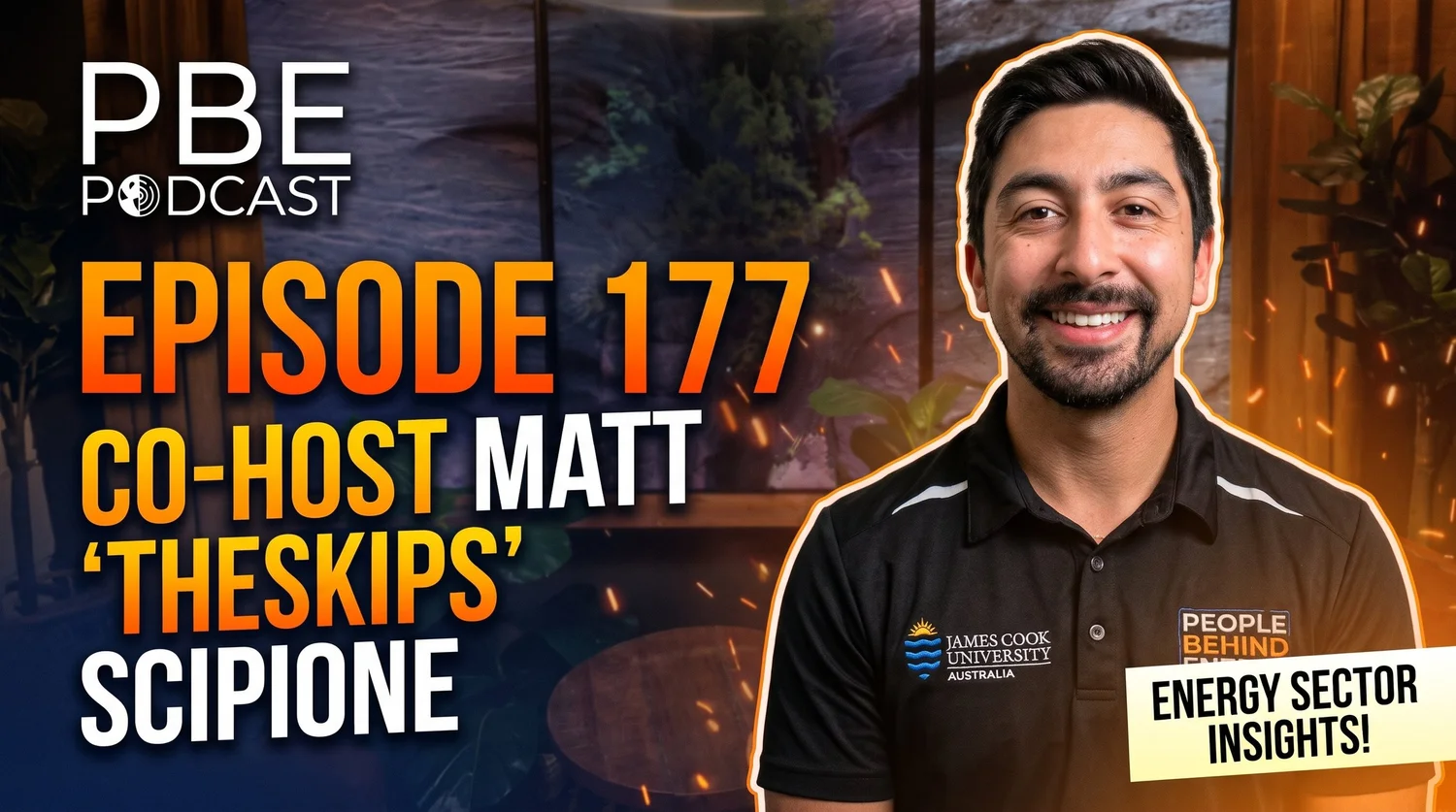
This episode of the PBE Podcast features an in-depth conversation between hosts Troy Tittlemier and Matt "Skip" Scipione, exploring Matt’s academic journey, recent research, and reflections on industry trends. They start with light banter and quickly transition into a detailed discussion of how the Society of Professional Well Log Analysts (SPWLA) is revitalizing engagement through a new Global Media Hub, aiming to bring together technical resources, foster community interaction, and support students.
Matt then shares his academic pathway, from earning a master’s degree during the oil price crash and navigating industry uncertainty (including the historic negative pricing of oil) to pursuing a fully funded PhD in geochronology at James Cook University, Australia. His doctoral research, focused on the Bowen Basin, integrates age-dating techniques, tectonics, sedimentology, and novel hyperspectral core logging to better understand the Permian-Triassic basin evolution. The discussion progresses into technical insights on uranium-lead zircon dating, clay mineralogy characterized by hyperspectral analysis, and the importance of linking petrophysical data with geological realities to improve subsurface models. The discussion underscores the challenge of training AI tools in petrophysics to avoid 'black box' pitfalls and the need for expert geological input. Finally, the hosts debate the role of emerging energy technologies amid the energy transition, emphasizing the synergy between improvements in oil and gas efficiency and renewable storage solutions such as vanadium redox flow batteries.
The episode closes on excitement about the upcoming SPWLA centennial celebration and the opportunities the new media hub affords for enhanced collaboration and knowledge sharing within the petrophysics community.
Highlights:
🌐 SPWLA launches a Global Media Hub to modernize technical knowledge sharing and support student membership.
🎓 Matt Scipione reflects on pivoting from a challenging job market to a geochronology PhD, leveraging fully funded international opportunities.
⛏️ Bowen Basin research reveals complex tectonics, fossil-rich Permo-Triassic successions, and varying sedimentology through geochronology and hyperspectral core logging.
🔬 Uranium-lead zircon dating offers robust age constraints critical for tectonic and sedimentary basin studies.
🤖 Effective AI use in petrophysics requires expert geological oversight to avoid misleading interpretations.
⚡ Energy-transition technologies like vanadium flow batteries complement ongoing advances in efficient oil and gas extraction.
🎉 SPWLA’s 100-year celebration highlights a century of logging innovation, symbolizing the evolution of subsurface understanding.

This video features an in-depth conversation with the University of Louisiana at Lafayette (UL) 2026 Imperial Barrel Award (IBA) team members, who placed second in the prestigious international geology competition. The IBA is a long-standing contest organized by the American Association of Petroleum Geologists (AAPG) and the Society of Exploration Geophysicists (SEG), where university teams analyze a real-world oil and gas dataset and present their exploration and development strategy.
The UL team tackled a challenging oil and gas project based on an onshore dataset from the North Holland platform in the Netherlands. The project required mastering complex, decades-old seismic and well-log data, often in multiple languages and formats, including scanned raster logs. Under the mentorship of both academic and industry advisors, they conducted integrated analyses involving tectonics, petrophysics, dry hole assessment, reservoir characterization, and risk evaluation. They crafted a coherent, compelling story about the petroleum system’s maturity, migration, reservoirs, and prospects, presenting it clearly and professionally to international judges.
Beyond the technical aspects, the discussion highlighted the vital role of teamwork, advisor support, and effective communication skills in the IBA process. The team also reflected on how their experience prepared them for diverse geoscience careers, underscoring the importance of applying geological expertise not only to traditional oil and gas but also to emerging sustainability-related challenges like carbon capture and storage. The video captures the excitement, challenges, and camaraderie that define the IBA competition and offers perspectives on the future directions of energy geology.
Highlights
🛢️ UL’s IBA team won second place in the 2026 Imperial Barrel Award competition analyzing an oil and gas project on the North Holland platform, Netherlands.
🗂️ The dataset was complex, comprising old seismic data and scanned well logs in Dutch and French, requiring substantial data processing and interpretation effort.
👩🏫 The team received mentorship from both university faculty and industry professionals, enhancing their technical confidence and presentation skills.
📊 Integrated analyses covered key aspects: tectonic history, source rock maturity, petrophysical evaluation, dry hole analysis, reservoir characterization, and prospect risk assessment.
🏴☠️ The presentation was creatively themed as “pirates” late in the preparation, showing flexibility and team spirit to engage judges memorably.
🔋 Members expressed strong career ambitions in exploration geology, mineral exploration, and interdisciplinary roles bridging drilling, production, and environmental sustainability.
🌍 The discussion framed oil and gas geology as foundational for advancing energy transition technologies such as CCS and geothermal, linking traditional expertise with future demands.

This episode of the People Behind Energy podcast features John Fofi, co-founder of Mandrill Energy Solutions, a company specializing in backyard services for drilling rigs, notably solids control and staffing of mud technicians critical in oil and gas drilling operations. John shares his career journey, from his Pennsylvania upbringing to joining the Air Force, managing a bar, and eventually entering the oilfield industry, where he built 20 years of expertise in rig operations and mud engineering support. Mandrill began as a backyard service provider but quickly became a staffing powerhouse because of demand and operational challenges. John’s insights highlight the vital yet often overlooked part of drilling rigs—the backyard—where fluids are managed, centrifuges run, and drilling mud chemistry is constantly adjusted to keep the drill bit efficient and the wellbore stable.
The discussion covers both tactical and strategic challenges: from equipment maintenance and quick field fixes to broader market dynamics that affect pay rates and company scaling in an industry marked by boom-bust cycles. The podcast also highlights a recent partnership between the Society of Professional Well Log Analysts (SPWLA) and People Behind Energy to modernize knowledge sharing through a global media hub aimed at enhancing networking, student involvement, and sponsorship opportunities.
John emphasizes the importance of reputation, reliability, and scaling wisely amid rapid growth, while expressing optimism about the future of the oil and gas sector despite uncertainties around oil prices and market resets. The conversation closes with reflections on leadership, teamwork culture, and the need to value the people working in demanding field roles that truly power the industry.
Highlights
🚀 Mandril Energy Solutions started with backyard services but rapidly scaled into a key staffing provider for solids control in drilling.
🛠️ The “backyard” on drilling rigs is critical for mud cleaning, centrifuge operation, and managing drilling fluid chemistry in real-time.
🤝 John’s career path—from Air Force aerospace technician to bar owner to oilfield expert—showcases diverse skills contributing to success in energy services.
🎯 Strategic company growth requires proper vetting of skilled field personnel, especially after rapid scaling led to onboarding challenges.
⚙️ Improvisation on rigs is indispensable, illustrated by the “Home Depot Fix” where tools and materials are adapted for urgent field solutions.
💸 Industry bidding wars for staffing services are driving down pay rates for crucial rig technicians, threatening service quality and long-term viability.
🌐 SPWLA’s new Global Media Hub partnership with People Behind Energy aims to modernize knowledge exchange and increase student scholarships.
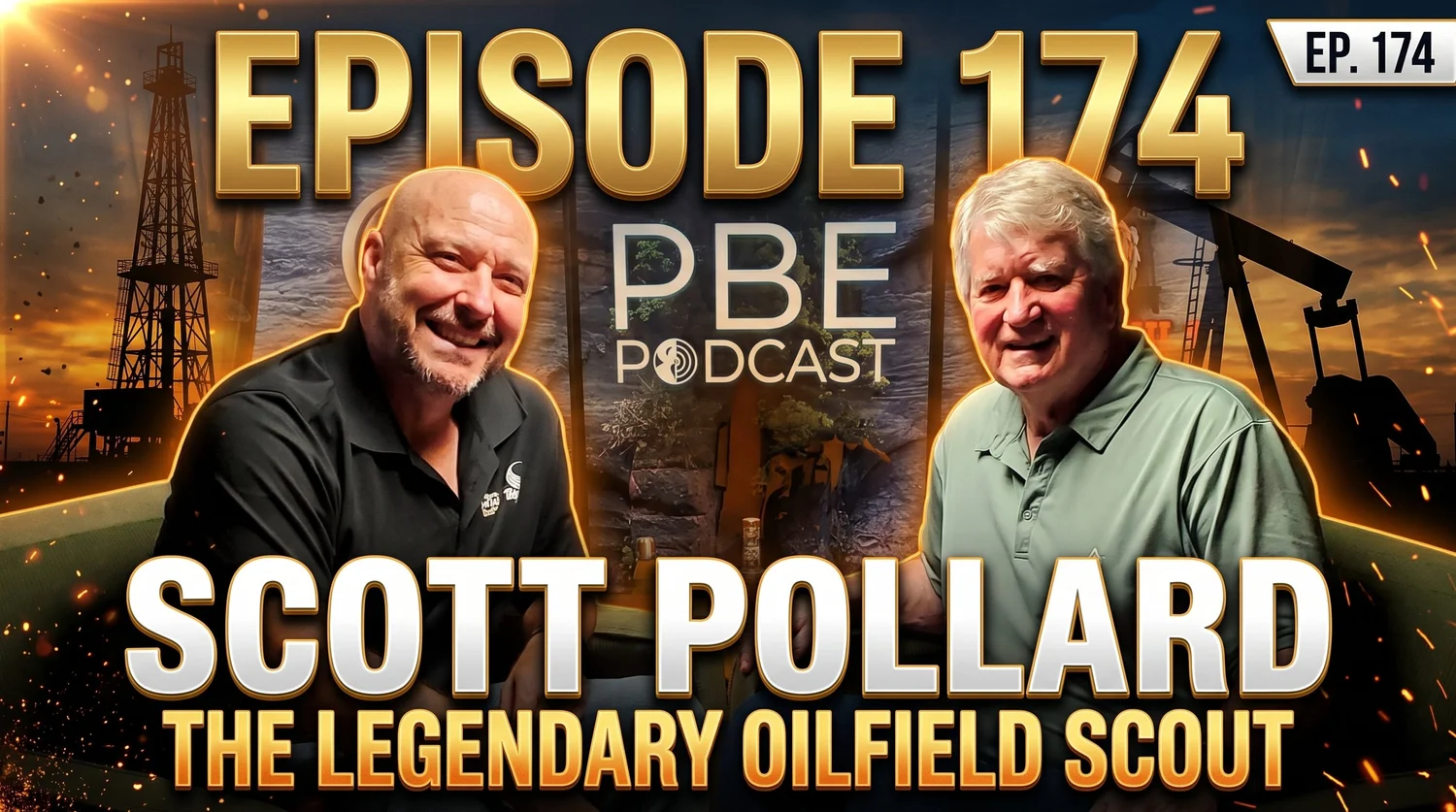
This extensive conversation with Scott Pollard, a seasoned petroleum scout based in San Antonio, offers a rare window into the evolving landscape of oil and gas exploration across Texas and the broader US over the past four decades. Scott’s unique vantage point merges deep family heritage—with ties to legendary Texas oilmen like Clayton Williams Jr.—and extensive personal experience in geology and scouting. Through candid reflections, historical anecdotes, and technical insights, Scott lays bare the shifts in technology, market dynamics, industry structure, and exploration challenges. Starting as a geologist during the early '80s oil boom and subsequent collapse, Scott transitioned into scouting almost by accident.
Over time, he cultivated a reputation for combining geology with a holistic understanding of drilling operations, economics, and interpersonal networks that underpin successful scouting. The discussion covers landmark plays such as the Arkoma Basin, the Austin Chalk, Pearsall, the Haynesville shale, and the Permian Basin, detailing how technological advances like hydraulic fracturing and proppant size revolutionized production and reshaped regional potential. Scott also calls the industry “broken,” citing reduced new exploration, tighter lease acquisition, and the marginal economics of shale oil plays—contrasted with the strong potential still seen in natural gas regions, especially Southeast Texas.
He underscores the vital role of trust, communication, and collaborative intelligence gathering within the scout community, where information is tightly held yet essential for guiding major investment decisions. The conversation extends beyond technicalities into broader energy economics, noting how refinery configurations and international gas markets affect oil pricing and US energy infrastructure sustainability. Scott shares motivational insights on positivity, perseverance, and continuous learning, underlining the complex interplay between market forces, human capital, and innovation driving modern energy production.
Highlights
🛢️ Scott Pollard’s deep family roots in Texas energy history, connecting generations of pioneering oilmen.
🔍 Transition from geology to petroleum scouting, described as an “accidental” but strategic career move.
🚀 The transformative impact of hydraulic fracturing with smaller proppants (100 mesh) on shale gas production, especially in Haynesville and Eagle Ford.
🏞️ Field anecdotes from Arkoma Basin, Austin Chalk, Pearsall, and massive wells producing 100 million cubic feet per day.
📉 Industry challenges include limited new lease acquisitions, decreasing exploration, marginal shale economics, and market-driven price volatility.
🔄 Emphasis on collaboration and information networks among scouts to uncover real drilling activity amidst confidentiality pressures.
🌍 Insights on refinery limitations related to crude grade and the implications for US energy exports and infrastructure investment.

Comments

Download from Google Play

Download from App Store
 United States