


 Claim Ownership
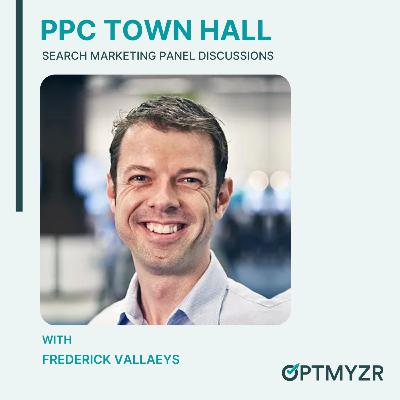
PPC Town Hall
Subscribed: 15Played: 297
Subscribe

© Frederick Vallaeys
Description
Host Fred Vallaeys, Co-founder of Optmyzr, is joined by PPC experts for a panel discussion on the latest hot topics in the search marketing world.
Topics range from updates to Google, Bing, Facebook, and Amazon Ads, to changes in online search behavior, or changes in the business world.
Learn what the experts are seeing in the industry, how they're reacting to make the most of the opportunity, and what they think the future holds.
Topics range from updates to Google, Bing, Facebook, and Amazon Ads, to changes in online search behavior, or changes in the business world.
Learn what the experts are seeing in the industry, how they're reacting to make the most of the opportunity, and what they think the future holds.
144 Episodes
Reverse
Best practices in paid social are useful starting points, but how often do we question whether they're still producing the results we want?As advertising platforms automate more targeting and campaign decisions, some of the approaches we've relied on for years deserve another look. That includes how we structure campaigns, develop creative, and decide when an ad needs to be replaced.In this episode of PPC Town Hall, Aaron Levy and I are joined by paid social expert Akvile DeFazio to discuss which established practices still make sense, where breaking the rules can produce better results, and how advertisers can make more informed decisions.We cover:- Why imperfect ads sometimes outperform polished creative, including Akvile's experience with two videos that became top performers despite having no sound.- When to refresh ad creative, and why one of her Instagram ads continued performing for nearly five years.- How automated targeting is changing paid social strategy, and where advertisers should focus their time as platforms take over more decisions.- Why giving platforms more control still requires human judgment, especially when their optimization decisions don't fully account for business context.- How to work with creators, founders, and executives to produce content that feels natural without losing sight of the advertising objective.- Why platform-reported ROAS isn't the complete picture, and how to evaluate paid social performance against broader business outcomes.- What paid search practitioners should consider when expanding into paid social, including differences in audience behavior, creative, and measurement.One point I found particularly interesting was Akvile's approach to creative fatigue. Rather than replacing ads because they've been running for a certain number of weeks, she looks at what the performance data is telling her. It's a useful example of why established practices should guide our thinking without replacing our judgment.Whether you manage paid social campaigns every day or are expanding beyond search, I hope this conversation gives you a few ideas worth testing in your own accounts.Follow Akvile: https://www.linkedin.com/in/akdefazio/Follow Aaron: https://www.linkedin.com/in/theaaronlevy/Check out Akvertise: https://www.akvertise.com/► Get actionable PPC tips, strategies, and tactics from industry experts every month: https://www.optmyzr.com/ppctownhall/?utm_source=youtube&utm_medium=video&utm_campaign=townhall ► Make your PPC management less complex with Optmyzr's tools. Start a 14-day free trial today: https://tools.optmyzr.com/info/signup?utm_source=youtube&utm_medium=video&utm_campaign=townhallChapters:0:00 Introduction and Guest Background1:29 Managing Reddit and Platform Strategies3:19 Making Ads Human and Ugly6:15 AI Slop vs Authentic Content11:23 Using Influencers and Executives18:18 Outdated Best Practices in Social22:15 AI Agents and Data Privacy32:26 Measurement and Attribution38:28 Social Ad Academy Community
AI can now take on more PPC account work, from analysis and recommendations to parts of campaign management. But if it makes the wrong call, the agency still has to answer for it.In this episode of PPC Town Hall, Kirk Williams joins Fred Vallaeys and Aaron Levy to talk about how PPC agencies should actually use AI without confusing faster work with better work.They discuss:- AI for PPC account management and analysis- Human review and accountability- AI agents making account changes- Client communication and trust- Vibe coding and building internal PPC tools- When to build your own software and when not to- Why practitioner judgment still matters- Measuring AI by business outcomes, not outputIt’s a practical conversation about where AI helps experienced PPC teams, where it creates new risks, and what still needs a human owner.Follow Kirk: https://www.linkedin.com/in/ppckirk/Follow Aaron: https://www.linkedin.com/in/theaaronlevy/Follow Fred: https://www.linkedin.com/in/frederickvallaeys/Check out ZATO Marketing: https://zatomarketing.com/► Get actionable PPC tips, strategies, and tactics from industry experts every month: https://www.optmyzr.com/ppctownhall/?utm_source=youtube&utm_medium=video&utm_campaign=townhall ► Make your PPC management less complex with Optmyzr's tools. Start a 14-day free trial today: https://tools.optmyzr.com/info/signup?utm_source=youtube&utm_medium=video&utm_campaign=townhall
In this episode, Aaron and Fred sit down with Joe Martinez to talk about a question more PPC teams are having to answer: when Google Ads is still working, how do you know when the next dollar should go somewhere else?Joe has spent years working in Google Ads, but today he spends much more of his time testing and managing channels like Microsoft, LinkedIn, Reddit, Meta, OpenAI, TikTok, and others. They talk about how he decides where to move budget, what he’s seeing from newer platforms, and why native platform attribution often doesn’t tell the full story.They also get into OpenAI ads, Reddit’s growing role in B2B, Demand Gen versus standalone video campaigns, and why offline conversion data matters so much for lead generation.The bigger theme is how the PPC job is changing. Platforms can automate more of the execution, but someone still has to decide where the money goes, what signals to feed the system, how to measure success, and how to explain those decisions to clients. Joe has a lot of practical experience doing exactly that, and this conversation is full of useful examples.Follow Joe: https://www.linkedin.com/in/joemartinezppc/Follow Aaron: https://www.linkedin.com/in/theaaronlevy/Check out Paid Media Pros: https://www.youtube.com/c/PaidMediaPros► Get actionable PPC tips, strategies, and tactics from industry experts twice a month: https://www.optmyzr.com/ppctownhall/?utm_source=youtube&utm_medium=video&utm_campaign=townhall ► Make your PPC management less complex with Optmyzr's tools. Start a 14-day free trial today: https://tools.optmyzr.com/info/signup?utm_source=youtube&utm_medium=video&utm_campaign=townhall
AI agents sound exciting in theory. In practice, the useful question is much simpler: can they actually help you manage PPC work better without creating more problems than they solve?That’s what Fred wanted to unpack with Benjamin Wenner in this episode of PPC Town Hall.Benjamin has been working in marketing for about 15 years, and over the past few years he’s spent a lot of time testing agent-based PPC workflows for real accounts. What we appreciated about this conversation is that he doesn’t pretend the work is easy or fully automated.Benjamin and Fred talk about where AI can genuinely help PPC teams today, and where things get messy once you move beyond simple tasks like writing ad copy.A few things they get into:* Why direct access to Google Ads and analytics data matters so much* Why simply giving an AI more data can actually make it less reliable* Why Benjamin recommends starting with read-only access before letting an agent make changes* What data structure and context have to do with whether an agent works well* Why building agentic PPC systems is often more of a data problem than an AI problem* What Benjamin’s own setup looks like today* Why he thinks most marketers only need a small number of core functions, not hundreds of automations* Where human judgment still mattersOne of the things Fred kept coming back to in this conversation is that the goal shouldn’t be to remove the PPC manager from the process.The better goal is to give a good practitioner more reach, more context, and more time to focus on the decisions that still need a human.If you’re already experimenting with AI in PPC and wondering what the next practical step looks like, we think you’ll get a lot from this one.Follow Benjamin: https://www.linkedin.com/in/benjaminnadirwenner/Follow Fred: https://www.linkedin.com/in/frederickvallaeys/► Get actionable PPC tips, strategies, and tactics from industry experts twice a month: https://www.optmyzr.com/ppctownhall/?utm_source=youtube&utm_medium=video&utm_campaign=townhall ► Make your PPC management less complex with Optmyzr's tools. Start a 14-day free trial today: https://tools.optmyzr.com/info/signup?utm_source=youtube&utm_medium=video&utm_campaign=townhall
What do you optimize for when the lead you get today might not become a customer for another two years?That’s the problem David Newson deals with in wealth management, where long sales cycles make many of the usual PPC signals much less useful.In this episode of PPC Town Hall, David and Fred talk about what happens when Google Ads gets plenty of conversions, but they’re not necessarily the right conversions. David shares what happened when his team tried Performance Max and saw lead volume increase while lead quality dropped sharply.From there, they get into a bigger question: how do you give Google useful feedback when the real business outcome happens months or even years later?They talk about:- Why early signals can matter more than waiting for the final sale- How David thinks about PPC for a 24-month sales cycle- The problems that come up when CRM data, compliance, and advertising platforms don’t work neatly together- Why more leads can sometimes make campaign performance worse- How to think about measurement when marketing data will never be perfectly clean- Why David believes there’s a finite set of keywords that really matter in wealth management- Why he encourages firms to give away more of their knowledge- What he’s seeing from AI-driven discovery, including one client getting 65% of its year-to-date leads from LLMsDavid works in an industry where a lot of the easy PPC answers stop working. You can’t simply wait for a closed deal and assume the ad platform will figure everything out from there. Sometimes the better question is: what can we learn much earlier in the customer journey that tells us whether we’re heading toward the right outcome?Hope you enjoy the conversation.Follow David here: https://www.linkedin.com/in/newson/Follow Fred: https://www.linkedin.com/in/frederickvallaeys/► Get actionable PPC tips, strategies, and tactics from industry experts twice a month: https://www.optmyzr.com/ppctownhall/?utm_source=youtube&utm_medium=video&utm_campaign=townhall ► Make your PPC management less complex with Optmyzr's tools. Start a 14-day free trial today: https://tools.optmyzr.com/info/signup?utm_source=youtube&utm_medium=video&utm_campaign=townhall

Comments

Download from Google Play

Download from App Store
 United States