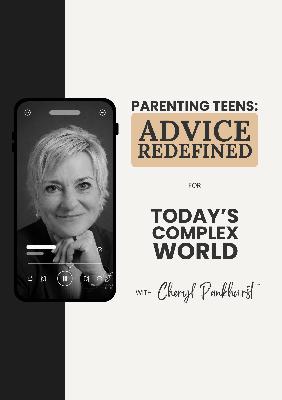
DiscoverParenting Teens: Advice Redefined for Today's Complex World
Parenting Teens: Advice Redefined for Today's Complex World
Claim Ownership

Parenting Teens: Advice Redefined for Today's Complex World

Author: Cheryl Pankhurst

Subscribed: 10Played: 184
Share

Description

"Discover ''Parenting Teens : Advice Redefined for Today's Complex World" with Special Education Specialist / Educator Cheryl, as we dive into real and raw conversations about sex, drugs, screens, social media, LGBTQ+ issues, mental health, and more. This podcast is your guide to reimagining better relationships with teens by doing the essential inner work. Join us for engaging, vibrant, and empathetic discussions that foster trust and understanding in today's complex parenting landscape.  Embrace the change,we just can’t parent the way our parents did”


Questions this podcast will answer;


I am so grateful for you taking your time to listen and I would love your input, feedback , suggestions for topics. We are in this together. 


Connect with me


[email protected]


linkedin.com/in/cheryl-ann-pankhurst-1b611855


https://www.instagram.com/cheryl.a.pankhurst/                       https://www.facebook.com/cheryl.a.pankhurst


https://open.spotify.com/show/4QwFMJMDDSEXJb451pCHO9?si=9c1a298387c84e13


https://youtube.com/playlist?list=PLYv9FQy1X43wwoYg0zF8zAJw6-nCpHMAk&si=7p-e4UlU2rsG3j_t


Optin-podcast subscriber


https://www.cherylpankhurst.com/teen-minds-redefined-podcast


How to work with me!


https://www.cherylpankhurst.com/consulting


Editing credit Gabbi Greco 


154 Episodes
Reverse
#ParentingTeens #TeenParenting #ExecutiveFunctioning #ADHDParenting #NeurodivergentTeens #TeenMentalHealth #TimeBlindness #ParentingADHD #TeenDevelopment #ExecutiveFunctioningSkills #ParentingSupport #NeurodivergentParenting #ParentingPodcast #Teenagers #EducationalAdvocacyHave you ever wondered how your teenager can spend hours gaming, scrolling TikTok, or hanging out with friends—but somehow can't get ready for school, start their homework, remember what they need, or get out the door on time?And then you find yourself thinking:“They can do it when they want to. So why won't they do it?”What if the problem isn't motivation, laziness, defiance, or not caring?In this episode of Parenting Teens: Advice Redefined for Today's World, I sit down with Dr. Anna Levy-Warren, licensed clinical psychologist, speaker, founder of Organizational Tutors, and an expert in executive functioning, to unpack what's really happening underneath these everyday struggles.With more than 20 years of experience working in psychology and education—and as a parent herself—Anna brings both professional expertise and lived experience to this conversation.What you'll learn about executive functioningExecutive functioning isn't one single skill. It's an interconnected set of cognitive processes that help us manage things like:Working memorySelf-regulationMental flexibilityPlanningTask initiationDecision-makingTime managementAttentionOrganizationGoal-settingAnd when these skills are developing differently, the impact can show up everywhere—not just at school.Why can your teen remember every song but forget three instructions?We talk about the difference between long-term memory and working memory, and why a teenager can remember an incredible amount of information but still forget what you just asked them to do.“Go get ready for school” might sound like one simple instruction to a parent.For a teen with working-memory challenges, it can actually contain a whole series of steps that are difficult to hold onto and execute.Is your teen experiencing time blindness?If you're sitting in the car with the engine running while your teenager is still inside getting ready, this part of the conversation is for you.Anna explains time blindness and why some teens don't experience time in the same way their parents do.We talk about:Working backwards from a deadlineBuilding in extra timeUsing alarms and visual remindersCreating routines collaborativelyReducing verbal remindersHelping teens build their own systems rather than constantly managing themStop calling it lazinessOne of the biggest themes in this conversation is the difference between “won't” and “can't yet.”A teen may genuinely want to do something and still struggle to initiate it, organize it, estimate the time required, or shift away from something they are deeply engaged in.And yes, your teen may be able to play video games for three hours.That doesn't necessarily mean they are capable of transferring that same level of attention and executive functioning to a math assignment.Motivation isn't the whole storyWe also challenge the idea that a teenager is simply “motivated” when they want to do something and “unmotivated” when they don't.Adults work this way too.There are things we can do for hours because we enjoy them—and things we procrastinate on despite knowing they need to be done.So what happens when we stop treating our teenagers like they're deliberately making our lives difficult and start looking at what support the task actually requires?Your teen's chronological age isn't necessarily their developmental ageA 16-year-old is chronologically 16.But their executive functioning skills don't necessarily develop in a perfectly linear way.Your teen might be incredibly mature in one area and need significantly more scaffolding in another.We talk about why parents need to look at the developmental skill required by the task, rather than simply assuming that a teenager should be able to do something because of their age.Executive functioning affects more than schoolWe also explore how executive functioning can affect:Friendships and social relationshipsSocial media usePhone regulationImpulsivityPlanning social activitiesExtracurricular activitiesSleepEatingFuture planningCollege preparationEmotional regulationKnowing when to stopWhat should parents do instead?This conversation is packed with practical strategies, including:Collaborate instead of command.Instead of putting the problem between you and your teen, put the problem in front of both of you and work on it together.Use visual cues.Post-it notes, calendars, written instructions, alarms and other visual systems can reduce the endless parent-teen verbal ping-pong.Talk less when everyone is activated.When your teenager's nervous system is overwhelmed, more talking usually isn't the answer.Work backwards.Start with the time your teen needs to be somewhere and work backwards to determine when they need to begin getting ready.Build the system with your teen.The goal isn't for you to become your teenager's external executive functioning system forever. It's to gradually help them develop systems they can eventually use independently.The family calendarAnna has a particular obsession with the family calendar—and after this conversation, I can see why.A shared visual calendar can help teenagers anticipate what's coming, understand competing demands, see how much time they actually have, and participate in planning their own lives.Instead of:“You have a test Monday!”Try:“Let's look at the week together. You have a test, you want to see your friends, and we have Grandma's birthday. How can we make all of this work?”That's the shift.From control → collaboration.From consequences → curiosity.From telling → problem-solving together.About Dr. Anna Levy-WarrenDr. Anna Levy-Warren is a licensed clinical psychologist, speaker, and founder of Organizational Tutors, a company that connects students and families with customized executive functioning support.Her work focuses on helping young people develop the skills they need to navigate academics, relationships, emotional growth, organization, and everyday life.Connect with Dr. AnnaLearn more about Dr. Anna Levy-Warren and Organizational Tutors through the link in the episode resources.Connect with CherylI'm Cheryl Pankhurst, Educational Strategist and Family Advocate, and host of Parenting Teens: Advice Redefined for Today's World.If your teenager is struggling at school, navigating a new diagnosis, transitioning to high school, or you need help understanding assessments, IEPs, accommodations, or how to advocate effectively within the school system, you can work with me directly.Visit CherylPankhurst.com to learn more and book a complimentary consultation.And remember:It's not them. It's you. And that's where the magic happens.If this episode gave you a different way to understand your teenager, share it with another parent. You never know who needs to hear that their teen isn't simply being lazy, defiant, or unmotivated.
Dr. Michelle Machado is an international keynote speaker, author, human performance strategist and creator of the Human Connection Framework™. Recognized for her dynamic presence as a 2x TEDx speaker, Dr. Machado is a trusted voice on connection and self-leadership in an always-on world. Her work has been featured in Forbes, USA Today, MSN, The Economic Times and Business Insider.She has also delivered high-impact keynotes for Fortune 500 companies and nonprofit audiences. With a PhD, MBA, and two decades of leadership in universities spanning Canada, Hong Kong, Australia, and the UK, Dr. Machado uniquely blends neuroscience and lived experience to challenge the epidemic of disconnection. She empowers high-achievers to reclaim attention, presence and fulfilment beginning with reconnection to self. Her practical approach has made her a sought-after advisor to leaders worldwide who are ready to transform how they live, work, and lead in a rapidly changing world.In her upcoming book, Alive Again: 4 Steps to Reclaim Your Life in a Distracted World, Dr. Machado makes the case that high-performance leadership and lasting impact are impossible without first mastering internal alignment, because the way we lead ourselves ultimately defines how we lead others.LinkedIn and IG (drmichellemachado). Website: https://michelledmachado.comWhat if the biggest influence on your teenager isn’t what you’re saying to them—but what they’re watching you do?In this powerful conversation, Dr. Michelle Machado and I get into the messy, complicated reality of parenting teenagers in a world that neither of us grew up in.We talk about social media, screen time, comparison, authenticity, resilience, human connection, nervous-system regulation, and the pressure parents feel to keep their kids constantly busy and entertained.And yes, we talk about phones.Because today’s parents are navigating something completely different from the world we grew up in. Our kids can carry school drama, friendship problems, comparison, cyberbullying and social pressure straight into their bedrooms—and onto the dinner table—24/7.But this conversation isn't about blaming parents.It's about getting curious.Dr. Michelle shares why she believes human connection has three critical layers: connection to self, connection to others, and connection to the world and a greater sense of purpose.We also talk about what authenticity actually looks like for our kids—and how easily we can confuse our idea of who they should be with their emerging identity.In this episode, we talk about:Why teenagers need to develop their own authentic identityThe difference between advocating for your child and allowing them to become themselvesHow parents can model authenticity instead of simply talking about itWhy “pick your battles” matters when parenting teensSocial media, comparison and the impact of constant digital stimulationWhy “everyone else has a phone” is such a difficult parenting conversationHow to talk to a teenager who is already using social mediaWhy education and buy-in may work better than simply taking the phone awayThe importance of teaching kids to compare themselves with their previous selves—not everyone elseWhy boredom is actually an important part of childhoodThe pressure parents feel to keep their kids constantly busyWhat our own hustle, stress and constant stimulation are teaching our childrenWhy parents need white space tooSetting boundaries when you're exhausted and overwhelmedThe idea that “your calm is contagious—and so is your chaos”How children can learn to recognize when they need to “recharge”Why vulnerability can completely change a difficult conversation with your teenagerOne of my favourite moments is Michelle's reminder that we don't have to force our children to change.We can invite them to consider another perspective.That distinction matters.Our teenagers are becoming their own people. Our job isn't to control every choice they make. It's to give them the values, critical thinking, self-awareness and relationship with us that they can carry with them when we're no longer standing beside them.And sometimes, that means knowing which hill is actually worth dying on.A conversation every parent of a teenager needs to hear.If you've ever found yourself wondering:“Did I already screw this up?”“How do I get my kid off their phone?”“Why are they comparing themselves to everyone?”“Am I parenting from my values—or from fear?”“What am I actually modeling for my teenager?”—you are not alone.And you're not failing because you're still trying to figure it out.About Dr. Michelle MachadoDr. Michelle Machado is an international speaker, TEDx presenter, medical educator and founder of the Human Connection Framework. With more than two decades of experience in education and leadership across multiple countries, her work focuses on the connection between mindset, identity, human potential and meaningful human connection.Her book, Alive Again: Four Steps to Reclaim Your Life in a Distracted World, explores what happens when our external lives look successful while internally we feel disconnected—and how we begin to reconnect with ourselves.Find Michelle at michellmachado.com and connect with her on LinkedIn and Instagram at Dr. Michelle Machado.Resources mentionedThe Anxious Generation by Jonathan HaidtMichelle also recommends exploring Jonathan Haidt's work and the research surrounding children, smartphones, social media and mental health.If this episode resonated with you:Subscribe or follow the podcast, leave a review, and share this episode with another parent who is trying to navigate the teenage years without losing themselves—or their relationship with their kid.And if your teenager is struggling at school, navigating a new diagnosis, or you need help understanding assessments, IEPs, school meetings or high-school transitions, you can work with me directly through educational consulting or my 90-day advocacy program.Visit CherylPankhurst.com to learn more and book a complimentary consultation.Because parenting teens is fricking hard.But you do not have to figure it out alone.I got you.#ParentingTeens #TeenParenting #ParentingTeenagers #SocialMediaAndTeens #TeenMentalHealth #ScreenTime #TeenagersAndTechnology #ParentingAdvice #ConnectedParenting #AuthenticParenting #TeenResilience #HumanConnection #DigitalParenting #ParentingPodcast #AnxiousGeneration #ParentingInTodaysWorld #TeenIdentity #ParentingSupport #NeurodivergentTeens #CherylPankhurst
Video is not supported by this plan. Upgrade to add video files. Parents often believe their teenager's emotional struggles began during adolescence.But what if the roots started much earlier?In this fascinating conversation, Cheryl Pankhurst sits down with birth trauma expert Sharon King to explore how our earliest experiences—even before birth—may influence connection, emotional regulation, trust, independence, and relationships throughout life.Together they discuss how sibling birth order, early attachment, separation after birth, and childhood experiences can leave lasting emotional imprints that sometimes reappear during the teenage years.Whether you're parenting a struggling teen or simply want to deepen your understanding of child development, this episode offers a completely different perspective on connection and healing.In this episode you'll learn:✔️ Why the arrival of a new sibling can feel like loss for an older child✔️ How early attachment influences trust later in life✔️ Birth order and how it may shape personality✔️ Why some teens become fiercely independent or emotionally withdrawn✔️ The surprising connection between childhood experiences and teenage behaviour✔️ Practical ways parents can repair connection—even years later✔️ The power of genuine apologies and emotional validation✔️ Why listening with your heart changes everythingAbout Today's GuestSharon King is an international trainer in energy psychology, bestselling author of Heal Your Birth, Heal Your Life, and founder of Magical New Beginnings. Her work focuses on healing birth trauma, attachment wounds, and early childhood experiences for both mothers and children.Could your teenager's emotional struggles actually begin before they could even talk?In this powerful episode, parenting expert Cheryl Pankhurst interviews internationally recognized birth trauma specialist Sharon King about the surprising ways pregnancy, birth experiences, early attachment, and sibling relationships may shape our children's emotional lives decades later.If you've ever wondered why your teen seems distant, struggles with trust, becomes easily triggered, or pushes you away, this conversation may completely change the way you understand their behaviour.Whether you agree with every perspective or simply want to explore another lens on childhood development, this episode will leave you thinking differently about connection, healing, and parenting.If this episode resonates with you, subscribe, leave a review, and share it with another parent who needs to hear this conversation.Sharon King is an international trainer of energy psychology techniques for transforming trauma and living a more joyful, connected, and empowered life. One of her specialties is working with pre and perinatal birth trauma for both mother and baby. As a best-selling author, Sharon shares her extensive knowledge in her books Heal Your Birth, Heal Your Life and co-author of Return to The Mother World: Ancient Feminine Wisdom in Times of Transition. Sharon’s specialty is transforming your experience of giving birth or being born and any trauma associated with conception, pregnancy, and birth. She also works with mothers-to-be to achieve a natural birth, as well as infertility, IVF, adoption issues and healing the wounds of losing a baby. Her training is extensive, with qualifications and experience in holistic healing modalities and creating her own; Heal Your Birth (formally known as Matrix Birth Reimprinting) and The Light Matrix techniques, for transforming ancestral patterns, past lives, discovering your life purpose and manifesting the life of your dreams. Sharon is living on the beautiful island of Koh Phangan in Thailand and is hosting retreats and producing online programs for parents-to-be to achieve a conscious conception, pregnancy and birth, plus hosting new training programs for students.Important Links / How to find you *Websites: www.magicalnewbeginnings.com & www.healyourbirthbook.com Email: [email protected] Facebook: https://www.facebook.com/magicalnewbeginnings YouTube: https://www.youtube.com/@sharonking5861YOUR GIFT- GUIDE FOR GRADE 8 TO GRADE 9 IEP TRANSITIONShttps://www.cherylpankhurst.com/iep-high-school-transition-parent-quick-guideLet’s Chat https://tidycal.com/cherylpankhurst/consultation-chatConnect with Cheryl!Get the book here!Daring to Belong: Autism Stories of Courage and ConnectionDIRECT LINK TO COACHING WITH CHERYL email : [email protected] Website  cherylpankhurst.comSOCIALS:linkedin.com/in/l. R.cheryl-ann-pankhurst-1b611855https://www.instagram.com/cheryl.a.pankhurst/                       https://www.facebook.com/cheryl.a.pankhurstPODCAST- “PARENTING TEENS ADVICE REDEFINED FOR TODAY’S WORLDTHE PODCASThttps://open.spotify.com/show/4QwFMJMDDSEXJb451pCHO9?si=9c1a298387c84e13https://youtube.com/playlist?list=PLYv9FQy1X43wwoYg0zF8zAJw6-nCpHMAk&si=7p-e4UlU2rsG3j_tOptin-podcast subscriberParenting Teens Advice Redefined
#ParentingTeens #TeenFriendship #GirlDrama #ParentingTeenagers #TeenMentalHealthGirl Drama, Mean Girls & Teen Friendship: What Parents Get Wrong (And What Actually Helps)Your daughter comes home crying because she was left out.She wasn't invited.The group chat is exploding.Someone said something hurtful.And every instinct in you wants to fix it.Call the other parent. Contact the school. Tell her those girls are awful. Tell her to find new friends.But what if some of the ways parents try to help are actually making teen friendship problems worse?In this episode of Parenting Teens Advice Redefined for Today's Complex World, Cheryl Pankhurst sits down with internationally recognized friendship expert Sheri Gazitt, founder of Teen Wise and author of Girl Drama Decoded.Together, they unpack the complicated world of teen friendships, social exclusion, group chats, mean girl behaviour, social anxiety, and the emotional impact friendship struggles can have on adolescents.This is not about blaming parents.It's about giving parents better tools.In this episode, we discuss:Why calling girls "mean" may not tell the whole storyThe difference between bullying and typical teen friendship conflictWhy today's friendship drama feels different from previous generationsHow group chats and phones have changed teenage social dynamicsWhat happens when parents become emotionally involved in their teen's dramaWhy confronting another parent can sometimes make things worseWhat to say when your daughter comes home feeling excluded or rejectedHow to listen without immediately jumping into problem-solving modeThe LOVE framework for supporting teens through friendship strugglesWhat to do when your own teen is participating in hurtful behaviourWhy parents need to stay "above the drama"How to help your teen repair friendships instead of immediately ending themWhat to do when your teen is hanging around friends who are making unhealthy choicesWhen parents should intervene with schools, coaches, or other adultsHow to know when your teen needs additional emotional supportOne of the most powerful messages in this conversation?Your teen doesn't need you to jump into the trench with them.They need you to stand above it and help them find their way out.Teen friendships can be messy. They can be painful. And watching your child struggle socially can be heartbreaking.But these moments can also become opportunities to help adolescents build emotional resilience, communication skills, confidence, self-awareness, and healthier relationships.If you're parenting a tween or teenager navigating friendship problems, exclusion, social anxiety, group chats, or girl drama, this episode is for you.About Our GuestSheri Gazitt is an internationally recognized friendship expert, speaker, and founder of Teen Wise. With more than 30 years of experience and a background in counseling psychology, she helps girls navigate friendship struggles, social anxiety, confidence, and the emotional challenges of adolescence.She is the author of Girl Drama Decoded and creator of the MomWise Collective, supporting mothers who want to help their daughters navigate difficult social dynamics without losing themselves in the process.Learn more about Sherry and Teen Wise at Teen-Wise.com.Need Support Navigating the Teen Years?Cheryl Pankhurst is an Educational Strategist, Family Advocate, speaker, published author, and former Special Education Specialist with more than 25 years of experience supporting adolescents and their families.Through Insight to Impact, Cheryl helps parents navigate:Neurodivergence and new diagnosesIEPs and school accommodationsEducational assessmentsHigh school transitionsSchool advocacyComplex challenges facing today's teenagersLearn more or book a complimentary consultation at CherylPankhurst.com.If this episode helped you, please follow the podcast, share it with another parent, and leave a review.Parenting teenagers is hard.But you do not have to figure it out alone.YOUR GIFT- GUIDE FOR GRADE 8 TO GRADE 9 IEP TRANSITIONShttps://www.cherylpankhurst.com/iep-high-school-transition-parent-quick-guideLet’s Chat https://tidycal.com/cherylpankhurst/consultation-chathttp://cherylpankhurst.comConnect with Cheryl!Get the book here!Daring to Belong: Autism Stories of Courage and ConnectionDIRECT LINK TO COACHING WITH CHERYL email : [email protected] Website  cherylpankhurst.comSOCIALS:My Substacklinkedin.com/in/l. R.cheryl-ann-pankhurst-1b611855https://www.instagram.com/cheryl.a.pankhurst/                       https://www.facebook.com/cheryl.a.pankhurstPODCAST- “PARENTING TEENS ADVICE REDEFINED FOR TODAY’S WORLDTHE PODCASThttps://open.spotify.com/show/4QwFMJMDDSEXJb451pCHO9?si=9c1a298387c84e13https://youtube.com/playlist?list=PLYv9FQy1X43wwoYg0zF8zAJw6-nCpHMAk&si=7p-e4UlU2rsG3j_tOptin-podcast subscriberParenting Teens Advice Redefined
Video is not supported by this plan. Upgrade to add video files. #TeenParenting #TeenSafety #ParentingAdvice #ParentingPodcast #ChildSafety #ChildSexualAbusePreventionHow to Protect Your Teen Without Parenting in Fear: A Conversation Every Parent Needs to HearTalking about child sexual abuse and teen safety can feel frightening, uncomfortable, and overwhelming. But avoiding the conversation doesn't protect our kids. Knowledge, connection, boundaries, and open communication can.In this important episode of Parenting Teens: Advice Redefined for Today's Complex World, Cheryl Pankhurst sits down with Jenny Coleman, Director of Stop It Now!, to talk honestly about preventing child sexual abuse without parenting from a place of fear.This conversation goes beyond "stranger danger" and explores what parents, caregivers, educators, and communities can do proactively to create safer environments for children and teenagers.Together, Cheryl and Jenny discuss:What child sexual abuse actually means, including contact and non-contact abuseWhy prevention matters and how we can move from reactive parenting to proactive awarenessWhy "stranger danger" may actually interfere with preventionHow to talk to teens about boundaries, consent, privacy, and personal safetyHow parents can create an environment where teens feel safe coming to them with difficult informationThe importance of checking your tone, body language, and reactions when your teen tells you something difficultWhat it means to be an "upstander" instead of a bystanderWarning signs that parents, educators, and caring adults should pay attention toHow online relationships and digital spaces can create additional vulnerabilitiesWhy speaking up matters, even when you're worried you might be wrongHow adults and young people can seek confidential support before harm occursThe importance of reducing shame and isolation when someone recognizes they may be at risk of crossing a boundaryOne of the most powerful messages in this episode is that prevention is not about frightening our kids or making them afraid of the world.It's about helping them develop language, confidence, boundaries, self-awareness, and trusted relationships.Because the goal isn't to make our teenagers scared to tell us something.The goal is to make sure they know they can.Resources Mentioned in This EpisodeStop It Now!A child sexual abuse prevention organization offering resources, education, consultation, and support for adults, families, and communities.What's OK?A confidential resource designed specifically for young people who have questions or concerns about sexual thoughts, behaviours, boundaries, relationships, or safety.Visit:Stop It Now!What's OK?About Jenny ColemanJenny Coleman is the Director of Stop It Now! and a clinician, educator, and advocate with more than 30 years of experience working with youth and families.Her work focuses on prevention, education, safer communities, and helping adults recognize warning signs and take action before harm occurs.Jenny Colemanwhatsok.org | stopitnow.orgAbout Cheryl PankhurstCheryl Pankhurst is an Educational Strategist, Family Advocate, speaker, published author, and former Special Education Specialist with more than 25 years of experience supporting families and adolescents.Through her work at Insight to Impact and her podcast, Parenting Teens: Advice Redefined for Today's Complex World, Cheryl helps parents navigate adolescence, neurodiversity, school systems, diagnoses, IEPs, transitions, and the complex realities of raising teenagers today.If you're parenting a teen and need support navigating school, a diagnosis, advocacy, or educational challenges, visit CherylPankhurst.com to learn more.If this episode resonated with you, please follow the podcast, leave a review, and share this episode with another parent.You never know who may need this conversation.YOUR GIFT- GUIDE FOR GRADE 8 TO GRADE 9 IEP TRANSITIONShttps://www.cherylpankhurst.com/iep-high-school-transition-parent-quick-guideLet’s Chat https://tidycal.com/cherylpankhurst/consultation-chathttp://cherylpankhurst.comConnect with Cheryl!Get the book here!Daring to Belong: Autism Stories of Courage and ConnectionDIRECT LINK TO COACHING WITH CHERYL email : [email protected] Website  cherylpankhurst.comSOCIALS:My Substacklinkedin.com/in/l. R.cheryl-ann-pankhurst-1b611855https://www.instagram.com/cheryl.a.pankhurst/                       https://www.facebook.com/cheryl.a.pankhurstPODCAST- “PARENTING TEENS ADVICE REDEFINED FOR TODAY’S WORLDTHE PODCASThttps://open.spotify.com/show/4QwFMJMDDSEXJb451pCHO9?si=9c1a298387c84e13https://youtube.com/playlist?list=PLYv9FQy1X43wwoYg0zF8zAJw6-nCpHMAk&si=7p-e4UlU2rsG3j_tOptin-podcast subscriberParenting Teens Advice Redefined
loading
Comments 
loading