


 Claim Ownership
Pearl Dive Podcast
Subscribed: 0Played: 0
Subscribe

© Asian American Christian History Institute (AACHI)
Description
The Pearl Dive pod will feature interviews with people who offer historically-rooted insight, wisdom and inspiration from Asian American, Hawaiian, and Pacific Islander Christian communities.
fulleraachi.substack.com
fulleraachi.substack.com
48 Episodes
Reverse
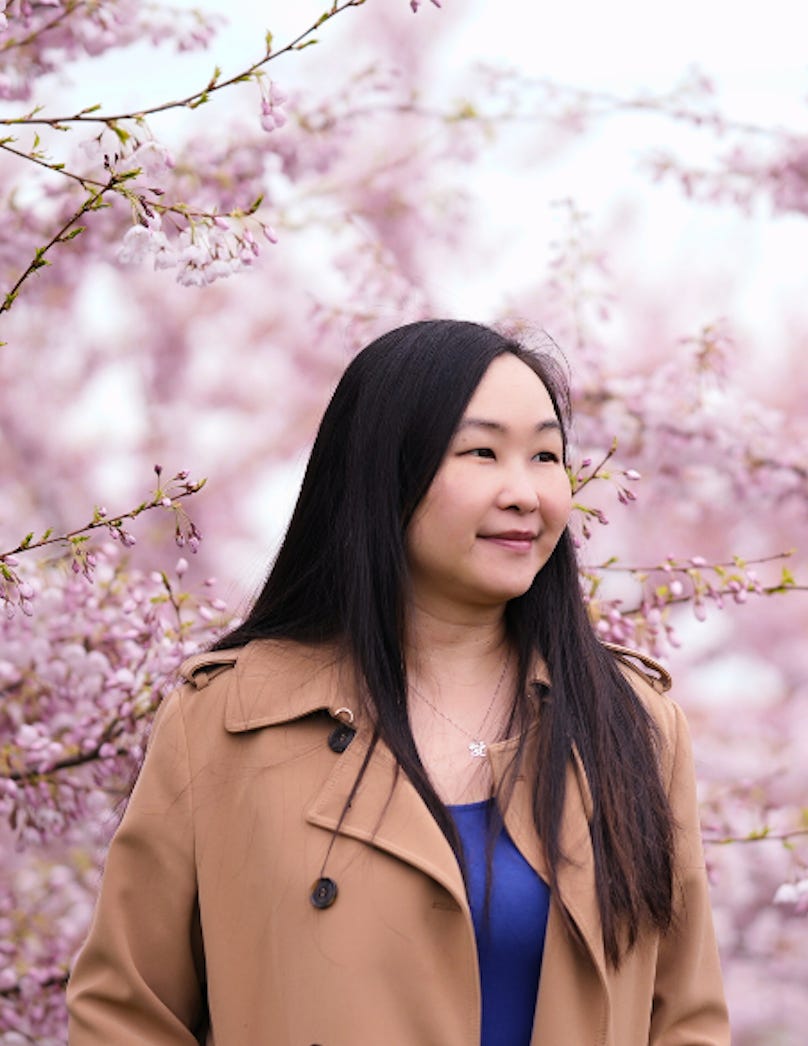
What do you get when you cross Chinese Canadian Christianity with Indigenous history? An unforgettable episode of the Pearl Dive Podcast! Esther Leung-Kong — an author, worship leader, “unconventional social worker,” and seminary graduate based in Vancouver, BC — shares her journey of moving from Hong Kong as a nine-year-old and finding a second home in the tight-knit world of Chinese immigrant churches. But her story doesn’t stop in the pew: from pastoring inner-city youth to leading worship with Indigenous grandmothers playing hand drums, Esther unpacks how her faith led her across cultural boundaries and into deep solidarity with First Nations communities.The conversation takes a powerful turn as Esther addresses the silence surrounding Asian diasporic and Indigenous histories in mainstream theological education. Driven by the lack of diversity in children’s literature, Esther wrote her bilingual book Wonderfully Made, drawing from her own childhood experiences with racism and her transformative interactions with residential school survivors. She breaks down the fascinating, forgotten history of early Chinese-Indigenous relations on Turtle Island—from 18th-century first contacts and 19th-century “heathen” joint burial grounds, to the Musqueam Nation leasing farmland to Chinese immigrants facing employment discrimination. Grab your headphones for an eye-opening dive into identity, advocacy, and the beautiful complexity of the Canadian church matrix!Glossary of Terms* Turtle Island: A name used by many Indigenous peoples for North America, originating from several Indigenous creation stories.* Head Tax: A discriminatory fee levied by the Canadian government against Chinese immigrants between 1885 and 1923 to restrict Chinese immigration after the completion of the Canadian Pacific Railway.* Indian Residential Schools: A system of mandatory boarding schools funded by the Canadian government and run by Christian churches to assimilate Indigenous children, resulting in widespread systemic abuse and cultural destruction.* Musqueam Nation: A Coast Salish First Nation whose traditional, ancestral, and unceded territory encompasses present-day Vancouver and surrounding areas.* Eagles Rising: An educational project created by Esther Leung Kong to raise awareness among Chinese-speaking communities about Indigenous history and reconciliation in Canada.Small Group Discussion Questions* Cultural Representation & Memory: Esther shared that during her seminary education, she rarely encountered stories or professors representing Asian immigrant churches. Where do you see gaps in your own education or spiritual formation regarding diverse cultural histories, and how can your community actively bridge those gaps?* Shared History & Solidarity: The episode highlights the historical crossover between Chinese immigrants and Indigenous peoples—such as shared burial grounds, intermarriage, and land leasing during times of intense systemic discrimination. How does learning about these historical intersections change your understanding of Canadian history and cross-cultural solidarity?* Embracing Identity (”Wonderfully Made”): Esther reflected on how she initially wanted to reject her Chinese culture to fit into mainstream society, but was inspired by Indigenous grandmothers to take pride in how God created her. Have you ever felt pressure to downplay your identity or heritage? How can the church foster an environment where everyone feels “wonderfully made”? This is a public episode. If you would like to discuss this with other subscribers or get access to bonus episodes, visit fulleraachi.substack.com

Welcome back for the second half of our deep dive with Ben Lau! If you thought part one was deep, prepare to get your spiritual socks knocked off. We kick things off with a provocative reading of Ben’s second parable, “Converting the Chinese Heathen.” It’s a story that challenges the “either-or” mentality of early missions, where becoming Christian often meant leaving one’s culture at the door. Ben and Daniel get real about the “white man’s religion” trap and ask the million-dollar question: Can you honour your ancestors and still follow Jesus? (Spoiler alert: it involves less “demonic” labelling and a lot more “conversational wondering.”)The episode takes a fascinating turn as we connect Chinese history with Indigenous ways of knowing. From the “dry bones” of Ezekiel to the inculturation retreat centres of Hong Kong like Tao Fong Shan, we explore how faith can be planted in any soil and grow into something beautiful and unique. We even get into some “hot takes” on why Western theology dominates the pulpit while Chinese culture dominates the potluck. Whether you’re curious about Jesus as a “Hong Kong gangster boss” (yes, you read that right) or wanting to know how to be “prophetic” against modern-day empires, this episode is a playful wrestling in the tension and a deeply necessary conversation for anyone trying to navigate faith from any cultural, racial, or ethnic margin of Christianity.Glossary of Terms* Contextualization: The process of presenting the Gospel in a way that is relevant to a specific culture, without losing its core message.* Heathen: A historical (and often derogatory) term used by missionaries for those who did not follow the Christian faith; Ben uses it here to critique historical attitudes.* Ruach: The Hebrew word for “spirit,” “wind,” or “breath,” often used to describe the moving power of God.* Tao Fong Shan (道風山): A Christian retreat centre in Hong Kong famous for its architecture and mission that blends Chinese cultural aesthetics with Christian theology.* Prophetic: In this context, not predicting the future, but speaking truth to power and identifying “malformations” in society (like economic extraction or the marginalization of people).* Qingming Festival (清明節/清明节): Also known as Tomb-Sweeping Day, a traditional Chinese festival for honouring and visiting the graves of ancestors.Small Group Discussion Questions* Cultural vs. Christian: In the parable, the pastor mistakes Western culture (folding hands, specific hymns) for “pure” Christianity. What are some practices in your own church or faith life that are actually cultural rather than strictly biblical?* The Ancestor Intersection: Ben points out that the Gospels start with genealogies and Jesus met his ancestors at the Transfiguration. How can we better “honour the dead” or our heritage in a way that enriches our faith rather than scares us?* Jesus, the “Hong Kong Gangster” Boss: Daniel shares a hot take about Jesus being like a loyal Hong Kong “gangster boss” who takes a bullet for his people. If you were to explain Jesus’ character using a figure or archetype from your specific culture or community, who would it be and why? This is a public episode. If you would like to discuss this with other subscribers or get access to bonus episodes, visit fulleraachi.substack.com

Welcome to Season 3 of the Pearl Dive! We resume our series on Chinese Canadian Christianity with Daniel Mok.Grab your snorkels, folks, because we’re going deep! In this episode, Daniel sits down with Ben Lau, a student of Thanatology (the study of death and grief) and a former campus minister, to discuss the “pearls” hidden within Chinese Canadian history. Ben shares how his personal journey—from understanding his parents’ migration from Hong Kong to researching the “unknown forces” of nation-building—led him to write a series of evocative parables. Together, they explore why knowing your specific ethnic and cultural history isn’t just a hobby; it’s a vital part of spiritual formation. After all, if you don’t know who you are and where you came from, how can you truly know the God who created you?The heart of the conversation dives into Ben’s creative project: The Parable of the Salmon. Moving away from dry academic papers, Ben uses the rugged, uphill battle of the migrating salmon to mirror the struggles, sacrifices, and “migratory trauma” of the Chinese diaspora. We get real about the “nation-building” myths of Canada, the theological implications of the Canadian Pacific Railway, and why we need to sit with the discomfort of grief and death before we can truly find life. It’s a witty, poignant, and slightly “fishy” exploration of what it means to be Chinese, Canadian, and Christian in a world that wasn’t always built with us in mind.Glossary of Terms* Thanatology: The scientific study of death and the losses brought about as a result of it. (Yes, Ben is literally an expert on the “Thanos snap” of life).* Diaspora: The dispersion or spread of any people from their original homeland (e.g., the Chinese community living in Canada).* Pearl Diver: A metaphor used in the podcast for someone who researches and recovers hidden or “sunken” stories of history and faith.* Interpellate: To give a name or identity to something; in this context, incorporating theological ideas into one’s own sense of self.* Dominion “From Sea to Sea”: A reference to Psalm 72:8, historically used to justify the westward expansion of Canada, often at the expense of Indigenous and immigrant populations.* Spiritual Bypassing: The tendency to use spiritual explanations or “nice neat bows” to avoid facing unresolved emotional issues, grief, or historical trauma.Small Group Discussion Questions* The Mirror of History: Ben suggests that we cannot fully know God without knowing ourselves and the “unknown forces” that shaped our ancestors. How does knowing your family’s specific history (migration, struggles, or triumphs) change the way you view your relationship with God?* The Salmon’s Sacrifice: In the Parable of the Salmon, the salmon dies to provide a future for the next generation. Do you think we often “glorify suffering” in Christian circles, or do we move too quickly to the “hope” without sitting with the grief of what was lost?* Built for Whom?: The episode mentions that Canada was often dreamed of as a “Christian nation” that wasn’t necessarily built for Chinese or Indigenous bodies. How can the church today work to dismantle those old “nation-building” exclusions to create a community where everyone is truly wanted, not just needed for their labor? This is a public episode. If you would like to discuss this with other subscribers or get access to bonus episodes, visit fulleraachi.substack.com

Welcome to this episode of Pearl Dive Live with Tim Tseng, Elise Hatsuko and Fiel Sahir! Today we discuss pilgrimage and how it has impacted our lives with Jesus.Each of the people on this fireside chat have had faith come alive through learning the stories of Japanese Americans incarcerated during World War II or Hawaiians and other communities with their own histories. There are also two exciting conferences that will be spaces for people to become “pilgrims” and learn from those of different backgrounds! First is the Burma Christian Diaspora Conference in Indianapolis from August 7-8th, 2026. It’s hosted by AACHI, Princeton Seminary, Epic, and the American Baptist Home Mission Societies. You can find out more at Our Stories Our Faith. Second is the Japanese American Christian History Project celebrating the 150th anniversary of the Japanese American church in 2027! Keep up to date with Pearldive.net for more information.Thank you for joining us and see you at the next Pearl Dive! This is a public episode. If you would like to discuss this with other subscribers or get access to bonus episodes, visit fulleraachi.substack.com
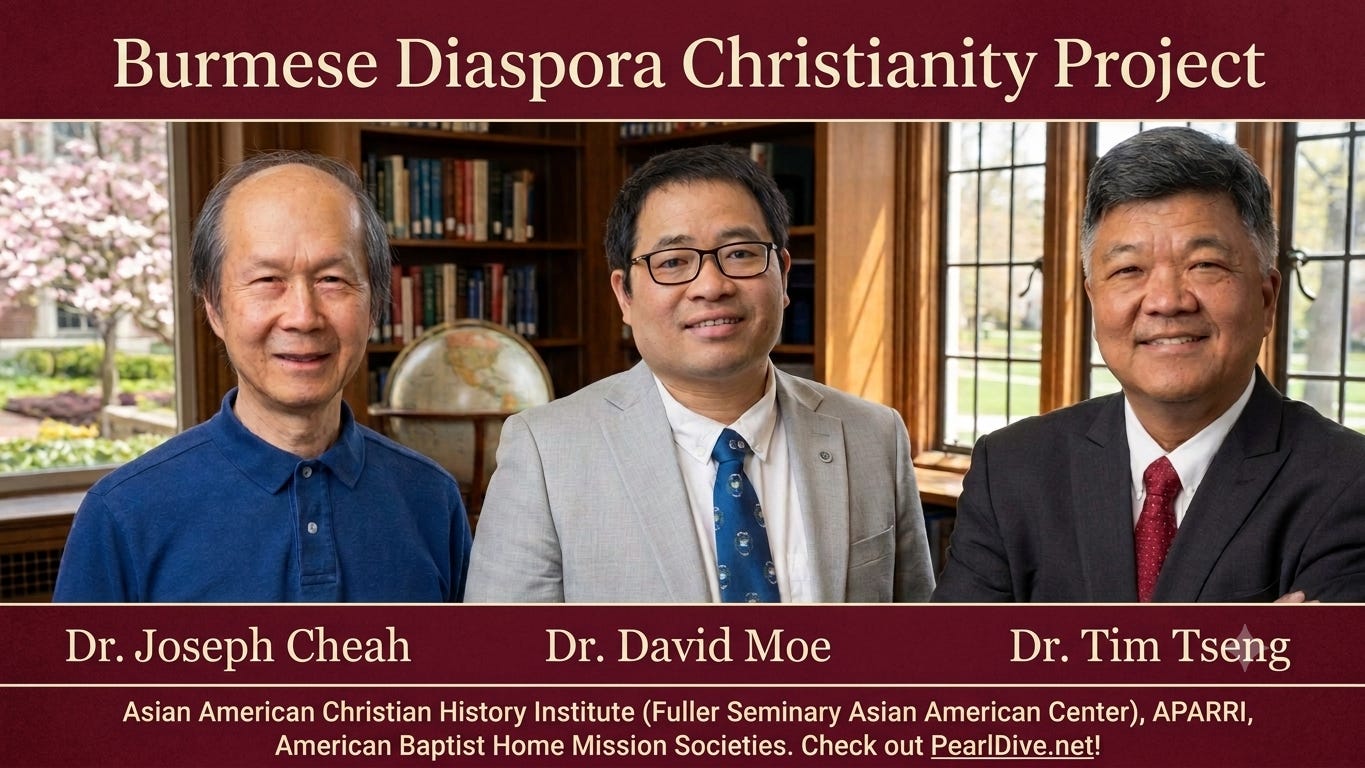
Welcome to episode 11 of our series discussing the history of Burmese American Christianity (Pearl Dive episode 230)! This series is part of Fuller AACHI’s Burma Diaspora Christianity Project led by Dr. Joseph Cheah and Dr. David Moe.In the culminating episode of our Burma Diaspora Christianity project, Dr. Joseph Cheah and Dr. David Moe join host Tim Tseng for a profound exploration of the future of Burmese Christianity in the United States. Together, they unpack the complex dynamics of integration, organizational unity, and the preservation of ethnic identity within both Burmese Catholic and Protestant contexts. From the highly relational, communal traditions enriching the broader U.S. Catholic Church to the inter-tribal cooperation forming within Protestant networks, this conversation sheds light on the resilience and spiritual depth of the Burmese diaspora.The episode also tackles the pressing intergenerational concerns facing these communities today. As the second generation of Burmese Americans navigates a hybrid identity and shifts toward English-speaking congregations, churches are forced to balance their roots in refugee experiences with an increasingly Americanized context. Furthermore, the scholars discuss the unique landscape of Indianapolis—home to the highest concentration of the Chin diaspora—and what this means for local civic engagement. Join us to discover how these vibrant communities are shaping and being shaped by the evolving landscape of American religion.Listen to Podcast: “Leading with Faith and Purpose: An Interview with Dr. Stephen Hre Kio” (with David Moe and David Chao) or view below….Burma Christian Diaspora in Indianapolis: Celebrating Our Stories, Embracing Our ChallengesYou are warmly invited to attend the 2026 Our Story, Our Faith (OSOF) Conference: Burma Christian Diaspora in Indianapolis: Celebrating Our Stories, Embracing Our Challenges, taking place August 7–8, 2026 in Indianapolis, IN, and online.📍Dates: August 7–8, 2026📍In-Person Location: Falam Baptist Church of Indiana in Indianapolis, IN📍Virtual Attendance: AirmeetGlossary* Burma/Myanmar Diaspora: The dispersion of people originating from Myanmar (formerly Burma) who have migrated and settled in other countries, often seeking refuge from political conflict or pursuing better educational and economic opportunities.* Chin, Kachin, and Karen: Distinct ethnic minority groups from Myanmar, each possessing their own rich linguistic, cultural, and historical backgrounds. They constitute a significant portion of the Burmese Christian diaspora in the U.S.* Ecclesiology: The theological study of the Christian Church, including its origins, structural organization, relationship to its members, and role in community building.* Intergenerational Transition: The cultural, linguistic, and leadership shift occurring between the first generation of immigrants (who retain native languages and trauma-shaped memories of their homeland) and the second generation (who tend to be more assimilated and English-dominant).* Evangelicalism (in a Diasporic Context): A movement within Protestant Christianity focusing on personal conversion and biblical authority. In the diaspora, it serves a dual role: fostering strong ethnic and spiritual networks, while sometimes creating generational friction over cultural and social values.Discussion Questions * Dr. Cheah mentions that Burmese Catholic communities model a highly relational form of faith in the U.S. How might broader American church structures learn from and integrate this communal approach to spirituality?* Dr. Moe points out the tension between Jesus’ “last commission” (outreach/evangelism) and his “last prayer” (structural unity) in Protestant communities. How can diaspora churches better balance outward mission with internal ecclesial unity?* The conversation highlights language shifts and memory disconnects between first-generation refugees and second-generation Burmese Americans. What are some practical ways church leaders can bridge this intergenerational gap while preserving their cultural heritage?* Indianapolis features the highest concentration of the Chin diaspora in the U.S. How does geographic concentration impact the political, social, and civic engagement of an immigrant community compared to populations spread out across the country?This podcast series is funded by the APARRI Working Grant and the American Baptist Home Mission Societies.Thanks for reading Pearl Dive, AACHI’s digital platform! This post is public so feel free to share it. This is a public episode. If you would like to discuss this with other subscribers or get access to bonus episodes, visit fulleraachi.substack.com

Comments

Download from Google Play

Download from App Store
 United States