


 Claim Ownership
People Inspired By Purpose - Purposely Podcast
Subscribed: 24Played: 1,234
Subscribe

© Mark Longbottom
Description
Speaking with people of purpose, those making the world a better place
People Inspired By Purpose - Purposely Podcast amplifies the stories of inspirational people from across the Globe, philanthropy leaders, founders and CEO's of nonprofits, charities, for purpose business leaders as well social entrepreneurs. They are often inspired by their own experiences.
Join the Purposely team www.purposelypodcast.com
People Inspired By Purpose - Purposely Podcast amplifies the stories of inspirational people from across the Globe, philanthropy leaders, founders and CEO's of nonprofits, charities, for purpose business leaders as well social entrepreneurs. They are often inspired by their own experiences.
Join the Purposely team www.purposelypodcast.com
407 Episodes
Reverse
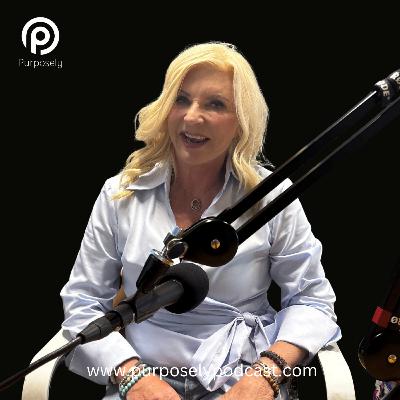
Welcoming Annette Presley to Purposely Podcast, we hear how a career defined by entrepreneurship has evolved into a focus on philanthropy, with a commitment to creating opportunities for young women and communities.In this conversation, Annette shares:Her early experiences in business, when female role models were rare and breaking through as a woman was a significant challenge.The influence of her grandmother, whose belief in her became a driving force, and why support and encouragement are essential for young women to thrive.Her views on education reform, including the need to equip young people with practical skills such as financial literacy, resilience, and public speaking.Why she launched the Dream Foundation and how she applies her entrepreneurial mindset to set measurable goals, build strong partnerships, and ensure accountability.Annette’s story is one of hustle, determination, disruption, and a belief that lasting change requires more than good intentions. Through her foundation, she is working to open doors for others and create practical, measurable impact in communities across New Zealand.
Welcome to Purposely Short, a weekly episode, featuring one of our friends or past guests and their expertise on a certain topic. This weeks episode features Angus Crowther co-founder of Tanck.
Angus shares how they help nonprofits and 'for purpose businesses' to communicate effectively with government officials. How ability to do this can positively effect your ability to make a positive impact and increase their reach.
Episode highlights:
- 'Providing technical details as well as a compelling narrative and a narrative arc is important'
- Data important and can grab the attention of politicians
Quote: 'Remember politicians are competing with the Kardashians for eyeballs on twitter'
Based in Australia... although still relevant in other parts of the world Tanck's mission is to empower purpose-led organisations by providing the know-how and the strategy for impactful government engagement.
Tanck is B Corp certified consultancy firm is on a mission to level the playing field by countering the influence of lobbyists and private interests that often shape policy decisions.
United by their shared dedication to positive change, Angus Crowther and (co founder) Neil Pharaoh are reshaping the dynamics of government engagement for nonprofits.
Welcome to Purposely Short, a weekly episode, featuring one of our friends or past guests and their expertise on a certain topic. This weeks episode features Philippa Charles on what a charity needs to succeed as well the value she puts on fundraisers.
Since its inception in 1958, the Garfield Weston Foundation has donated close to a billion pounds to good causes in the UK, granting between seventy and hundred million pounds annually.
Despite the size and importance of the foundation's financial resources, Philippa Charles, its leader, is known for her accessibility, humility, and empathy. She is renowned for being a straight talker and has a desire to keep things simple.
The foundation was set up by the Weston Family to benefit from the proceeds of their successful businesses, which include well-known brands in the food industry. These brands range from high-end retail, such as Fortnum and Mason, to household staples like Tip Top Ice Cream in New Zealand.

Welcoming Simone Woodland, Co-founder of Circle Living, toPurposely Podcast. Simone is an architect and the co-founder of Circle Living,a people-first property development company building intergenerational, community-led neighbourhoods across New Zealand, with developments underway inWellington, Christchurch and Nelson. The idea is simple but not common in mainstream housing: design homes so people have their own privacy, while making it easy to connect with the people living around them. Originally from Bristol in the UK, Simone traces herinterest in community back to childhood, when her father ran street parties on their cul-de-sac to bring disconnected neighbours together. At 15 she helped build a house in a co-housing development in Bristol's St Werburgh's, an early,hands-on introduction to what community-built housing could look like. She studied architecture in Brighton and completed a mastersin urban design and planning at Bristol University, but found the traditional architecture industry limiting. Her early career as a social entrepreneur started with Paper Arts, a platform she built for students to showcase their work, which grew into a gallery, studios and a printing service, and eventually into a training facility teaching enterprise skills to young people. A trip around New Zealand's South Island in 2013 convincedSimone this was where she wanted to live. She moved through the Edmund Hillary Fellowship, joining its first cohort of global entrepreneurs focused on people and planet. That move led to Elemental Design and Build, a natural buildingcompany in the Tasman region working with materials like hemp, straw and earth, and eventually to the Takaka co-housing neighbourhood in Golden Bay. Simonetalks through how that first development came together: a 14 hectare piece of land secured with a 10 percent deposit, nine months to find the rest of the funding, and a model built on loans from future residents rather than a traditional developer structure. Circle Living builds on that experience with a differentfinancing model, allowing residents to buy off the plans with a deposit rather than putting large sums at risk upfront. The communities run on Sociocracy, a decentralised decision-making approach where smaller groups hold responsibilityfor specific areas rather than requiring full consensus on every decision.Simone talks candidly about what it takes to build trust within a community, why shared resources like community solar and car share schemes help keep ongoing costs down, and her long-term goal of seeing co-housing become a mainstream choice in New Zealand, in the way it already is in Denmark, where five percent of new homes are built as some form of collective housing. The conversation also gets into what community actuallydelivers day to day, including a moment when a neighbour drove ninety minutes each way to collect Simone's children after she was unable to drive, and what that kind of reciprocity means for the people who choose to live this way.

Welcoming Tara Arnold back to Purposely Podcast. Tara is a fundraising consultant, engaged by grant making charities including Unbound Philanthropy and Lloyds Bank Foundation to help small and mid sized nonprofits strengthen their income generation. This is her second appearance this year on the show, following an earlier conversation about her work in grant making at Sharegift, and this time the focus turns to what she sees from inside the charities she supports.Tara works through a funder plus model, where a grant comes bundled with an offer of consultancy support. With Unbound, that support is light touch and opt in, a follow up email after a grant is confirmed. With Lloyds, charities apply directly for up to six days of support across fundraising, finance, volunteering or governance. In both cases Tara is usually introduced at CEO or director level, working on strategy rather than day to day delivery, and she starts every relationship by listening before she advises.Much of the conversation centres on income diversification. Tara describes charities that dip into difficulty because they lean on a single funding stream, often grants, and never build anything alongside it. She talks through practical, lowcost ways to test new approaches, from a five minute ask at the end of an online event to reviewing untapped supporter bases the charity has never directly asked for money. She is blunt about the discomfort many charities feelaround fundraising itself, describing organisations with long term, loyal supporters who have simply never been asked to give.A recurring theme is the mismatch between expectation and resourcing. Tara has seen new fundraisers hired with no budget and an unspoken expectation that they raise their own salary in year one. She calls it insanity, and argues that if acharity cannot answer a straightforward question about budget and culture in an interview, that is a warning sign for any fundraiser considering the role. She also flags basics that get missed constantly, including no reserves policy, nofundraiser on the board, and donors thanked late or not at all.The conversation closes on stewardship, the unglamorous work of keeping donors and funders engaged after the money lands. Tara's examples are small and human, athirty second video from a charity worker, a short case study, a one line thank you email. None of it costs much. All of it, she says, is what actually keeps funding relationships alive.The funder plus model and how consultancy support gets triggered without being forced on charitiesWhy income diversification matters and how to test new fundraising approaches cheaplyThe real cost of underfunding a fundraiser's role, and what questions to ask before taking the jobGetting buy-in and a genuine fundraising culture across an organisation, not just the fundraising teamStewardship as the quiet, unglamorous work that keeps donors and funders engagedBasics that get missed: reserves policies, fundraiser representation on boards, and simply saying thank youThis episode of Purposely isbrought to you by Benevity and Trust Investments.Key Themes

Comments

Download from Google Play

Download from App Store
 United States