


 Claim Ownership
People and Projects Podcast: Project Management Podcast
Subscribed: 3,345Played: 48,654
Subscribe

© (c) 2001-2025 Institute for Leadership Excellence & Development Inc.
Description
Welcome to the People and Projects Podcast, where we provide interviews and insights to help you lead people and deliver projects. Since 2009, this show is brought to you by speaker, author, and executive coach Andy Kaufman. If you're looking for insights on project management, leadership, and how AI influences both of those, you've come to the right place! And if you hold a project management certification, you can even earn free PDUs for listening!
504 Episodes
Reverse
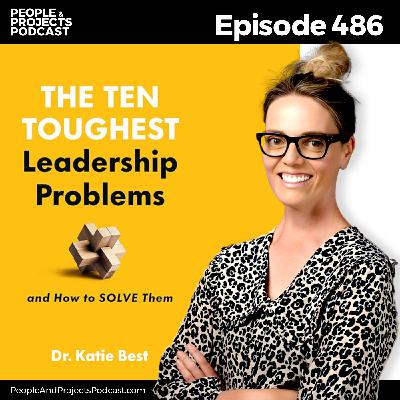
Summary In this episode, Andy talks with Dr. Katie Best, leadership coach and author of The Ten Toughest Leadership Problems and How to Solve Them. Drawing on years of coaching leaders across industries, Katie shares practical insights that help you tackle high-stakes leadership moments—especially when a coach isn't available. They explore Katie's SOLVE framework for problem-solving under pressure, the danger of performative busyness, and how to make better decisions when trade-offs and uncertainty rule the day. You'll also hear how to unlock authentic influence without manipulation, foster healthy debate on overly "nice" teams, and support psychological safety in leadership and parenting. Andy and Katie also dig into how to empower women in leadership and how small actions can create big shifts in workplace culture. If you've ever felt overwhelmed as a leader or wished for a coach in the moment, this conversation offers clarity, encouragement, and real tools you can start using today! Sound Bites "You only have power if someone believes that you do." "All interaction is manipulative, but that doesn't mean it's toxic." "Performative busyness is one of the biggest traps for high performers." "Draw the line, or others will draw it for you." "Influence is about being a decent human, not just using techniques." "If you've done the learning, don't let it go to waste." "The idea that people put on an act at work has always fascinated me." "We owe it to ourselves, and if we're leaders of other human beings, we owe it to them as well, to show that it's okay to switch off." "Performative busyness is that kind of, we're never allowed to stop, and if we continue to perform, we keep that idea going that everyone needs to be busy all the time." "We are so much better at learning from positivity than we are from negativity." "We have to recognize that lots of people don't like speaking up in meetings." "It's much easier to do a positive thing than to not do a negative thing." Chapters 00:00 Introduction 01:33 Start of Interview 01:45 Early Influences on Leadership 04:33 The Coaching Gap and Why She Wrote the Book 05:47 What Is Performative Busyness? 09:32 How Katie Protects Her Own Focus and Energy 12:00 Introducing the SOLVE Framework 18:00 Making Decisions with Uncertainty 20:40 Power and Influence: What's the Difference? 25:42 Why Influence Techniques Sometimes Backfire 26:43 Encouraging Debate in "Too Nice" Cultures 28:40 Building Psychological Safety on Your Team 31:00 Advice for Women Leaders (and the Men Who Support Them) 34:00 Leadership Lessons as a Parent 35:55 End of Interview 36:25 Andy Comments After the Interview 40:19 Outtakes Learn More You can learn more about Katie and her work at KatieBest.com. For more learning on this topic, check out: Episode 442 with Dominic Ashley-Timms. Excellent ideas on how to coach the people around us—and ourselves. Episode 391 with Adam Bryant. Insightful and engaging stories about how people make the leap to being leaders. Episode 385 with Vanessa Patrick. She wrote a great book about How To Say No. Very empowering. Pass the PMP Exam If you or someone you know is thinking about getting PMP certified, we've put together a helpful guide called The 5 Best Resources to Help You Pass the PMP Exam on Your First Try. We've helped thousands of people earn their certification, and we'd love to help you too. It's totally free, and it's a great way to get a head start. Just go to 5BestResources.PeopleAndProjectsPodcast.com to grab your copy. I'd love to help you get your PMP! Level Up Your AI Skills Join other listeners from around the world who are taking our AI Made Simple course to prepare for an AI-infused future. Just go to ai.PeopleAndProjectsPodcast.com. Thanks! Join Us for LEAD52 I know you want to be a more confident leader—that's why you listen to this podcast. LEAD52 is a global community of people like you who are committed to transforming their ability to lead and deliver. It's 52 weeks of leadership learning, delivered right to your inbox, taking less than 5 minutes a week. And it's all for free. Learn more and sign up at GetLEAD52.com. Thanks! Thank you for joining me for this episode of The People and Projects Podcast! Talent Triangle: Power Skills Topics: Leadership, Coaching, Decision Making, Influence, Communication, Psychological Safety, Conflict, Engagement, Organizational Culture, Team Development, Strategic Thinking, Problem Solving The following music was used for this episode: Music: On Point by Steven O'Brien License (CC BY 4.0): https://filmmusic.io/standard-license Music: Tropical Vibe by WinnieTheMoog License (CC BY 4.0): https://filmmusic.io/standard-license
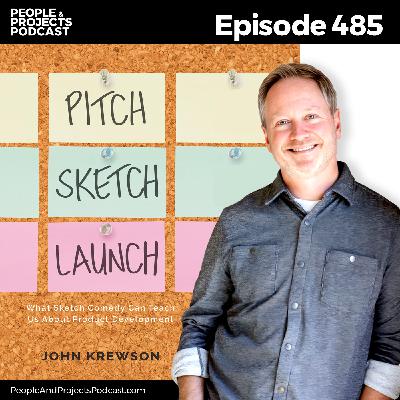
Summary In this episode, Andy talks with John Krewson, co-author of Pitch, Sketch, Launch: A Sketch Comedy Approach to Product Development. John's journey spans software development, acting, and even a stint with Saturday Night Live. He now leads Sketch Development, where he helps teams build products people actually want, faster and with more joy. In this conversation, John explains why project teams should behave more like creative troupes than traditional org charts. You'll hear how laughter can be a feedback loop, why messy first drafts matter, and how simple tools like sticky notes, Elmo cards, and Lean Coffee can radically improve your team's collaboration. We also explore how sketch comedy's "test before polish" approach can transform how we ship ideas, and what that looks like on real-world teams. From unblocking meetings to unleashing creativity, this episode is packed with practical tools and paradigm shifts. If you're looking to bring more energy, experimentation, and feedback into your team's workflow, this episode is for you! Sound Bites "The best ideas often start as bad ones. The magic is in iteration." "You're not building a product. You're testing a hypothesis in the real world." "Sketch comedy taught me this: if the audience isn't laughing, it doesn't work. Product teams need that same feedback mindset." "You can't argue with the emotion of a dead silent audience when you think you've got gold." "We often equate busy with productive. But they're not the same thing." "A meeting isn't productive just because everyone showed up. Did it move ideas forward?" "Troupes thrive on trust and feedback. Traditional teams often operate on fear and approval." "I was a mediocre software developer, which made me well-suited for management." "You are sucking the fun out of this. We are building software here. We get to play on computers. Let's make this fun." "There's this ruthless search for feedback that we learn how not to take things personally." "Nowhere in that iron triangle does anybody talk about whether or not the customer said, 'I needed that thing in the first place.'" "We're not just cross-functional. We're cross-committed. That's what makes a team operate like a troupe." "If you're building something new, you need a mechanism to decide if it's valuable. And if it isn't, you toss it." "The law of averages will tell you: 80% of the ideas need to be tossed." Chapters 00:00 Introduction 01:46 Start of Interview 01:57 Career Backstory 07:30 Acting Skills in Daily Work 12:00 Busy vs Productive 14:07 Project vs Product 17:20 Teams as Troupes 22:13 Meeting Tools and Techniques 27:37 Laugh Testability 33:35 Creative Mindsets at Work 35:21 Co-Authoring and Collaboration 38:00 Applying Ideas at Home 40:33 End of Interview 41:05 Andy Comments After the Interview 44:13 Outtakes Learn More You can learn more about John and the book at SketchDev.io/pitch-sketch-launch. For more learning on this topic, check out: Episode 316 with Jennifer Aaker and Naomi Bagdonas. It's a conversation on humor as a secret weapon in business and life. Episode 109 with Peter McGraw. It's also about humor, a fun follow-up, even though John's book isn't just about comedy. Episode 469 with Phil Wilson. It's packed with great ideas for unleashing your team, which ties in beautifully with John's approach. Pass the PMP Exam This Year If you or someone you know is thinking about getting PMP certified, we've put together a helpful guide called The 5 Best Resources to Help You Pass the PMP Exam on Your First Try. We've helped thousands of people earn their certification, and we'd love to help you, too. It's totally free, and it's a great way to get a head start. Just go to 5BestResources.PeopleAndProjectsPodcast.com to grab your copy. I'd love to help you get your PMP this year! Join Us for LEAD52 I know you want to be a more confident leader. That's why you listen to this podcast. LEAD52 is a global community of people like you who are committed to transforming their ability to lead and deliver. It's 52 weeks of leadership learning, delivered right to your inbox, taking less than 5 minutes a week. And it's all for free. Learn more and sign up at GetLEAD52.com. Thanks! Level Up Your AI Skills Join other listeners from around the world who are taking our AI Made Simple course to prepare for an AI-infused future. Just go to ai.PeopleAndProjectsPodcast.com. Thanks! Thank you for joining me for this episode of The People and Projects Podcast! Talent Triangle: Power Skills Topics: Creativity, Feedback Loops, Team Collaboration, Agile Thinking, Innovation, Leadership, Project Management, Development, Meetings, Humor, Iteration, Trust, Team Culture, Psychological Safety, Growth Mindset The following music was used for this episode: Music: Tuesday by Sascha Ende License (CC BY 4.0): https://filmmusic.io/standard-license Music: Brooklyn Nights by Tim Kulig License (CC BY 4.0): https://filmmusic.io/standard-license
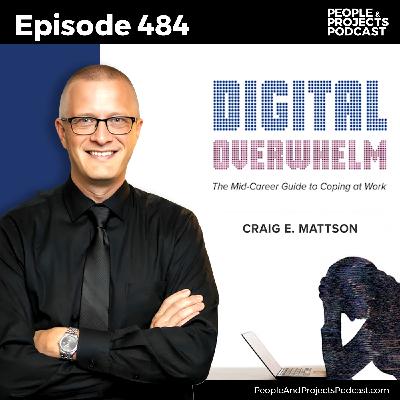
Summary In this episode, Andy talks with Dr. Craig Mattson, professor of communication and author of Digital Overwhelm: A Mid-Career Guide to Coping at Work. Rather than encouraging digital detoxing or escaping technology, Craig offers a refreshing way to understand and navigate the pressures of modern work. He introduces the idea of digiwhelm, explains why so much of our stress comes from the communication modes we inhabit, and shows how leaders can respond with intention rather than overload. You will hear Craig describe why email can be more than information transfer, how mode switching differs from context switching, and why one-way communication sometimes matters more than dialogue. Craig also shares why signals like silence, gestures, and tone often communicate more than words. Before closing, he draws connections to life at home, offering ideas for families that feel overwhelmed by devices and demands. If you are looking for practical insights to reduce digital overwhelm, improve communication, and lead with greater clarity and calm, this episode is for you! Sound Bites "Instead of digital minimalism, I recommend something like digital flexibility." "Humans are essentially users and switchers of modes." "What is going to be the defining overwhelm of my life?" "You are always overwhelmed by something." "Flexibility is the wisdom that my book is urging." "Your words do things." "Think about the voice of the email." "A mode is an approach, it is a posture, it is a way of relating." "Is there a way in which this is actually good for me and actually good for other people?" Chapters 00:00 Introduction 01:33 Start of Interview 01:42 Early Life and Influences 02:57 Growing Up with Technology 04:11 What is Digiwhelm? 06:26 How Does It Compare to Overload? 08:35 The Impact of a David Ford Quote 10:34 Understanding Mode Switching 16:20 A Day in Communication Modes 22:04 Email as Conversation 24:29 Writing Email Like You Talk 27:24 Dissemination in Practice 32:00 Signals Leaders Should Notice 39:00 Coping with Digiwhelm at Home 43:04 End of Interview 43:44 Andy Comments After the Interview 48:14 Outtakes Learn More You can learn more about Craig and his work at DigitalOverwhelm.com. For more learning on this topic, check out: Episode 144 with Cal Newport. Craig references Cal's book Deep Work in Digital Overwhelm, making this a great companion conversation. Episode 269 with Nir Eyal, about his book Indistractable. Nir shares insights about shaping your day to be less distracted. Episode 377 with Cassie Holmes, about her book Happier Hour. It is not only about managing your time but focusing on what really matters. Level Up Your AI Skills Join other listeners from around the world who are taking our AI Made Simple course to prepare for an AI infused future. Just go to ai.PeopleAndProjectsPodcast.com. Thanks! Pass the PMP Exam If you or someone you know is thinking about getting PMP certified, we have a helpful guide called The 5 Best Resources to Help You Pass the PMP Exam on Your First Try. It is free and a great way to get a head start. Just go to 5BestResources.PeopleAndProjectsPodcast.com to grab your copy. I would love to help you get your PMP this year! Join Us for LEAD52 I know you want to be a more confident leader. That is why you listen to this podcast. LEAD52 is a global community of people like you who are committed to transforming their ability to lead and deliver. It is 52 weeks of leadership learning, delivered right to your inbox, taking less than 5 minutes a week. And it is all for free. Learn more and sign up at GetLEAD52.com. Thanks! Thank you for joining me for this episode of The People and Projects Podcast! Talent Triangle: Power Skills Topics: Digital Overwhelm, Leadership, Communication, Project Management, Email Effectiveness, Team Culture, Listening Skills, Collaboration, Productivity, Decision Making, Stakeholder Engagement, Psychological Safety The following music was used for this episode: Music: Echo by Alexander Nakarada License (CC BY 4.0): https://filmmusic.io/standard-license Music: Energetic Drive Indie Rock by WinnieTheMoog License (CC BY 4.0): https://filmmusic.io/standard-license
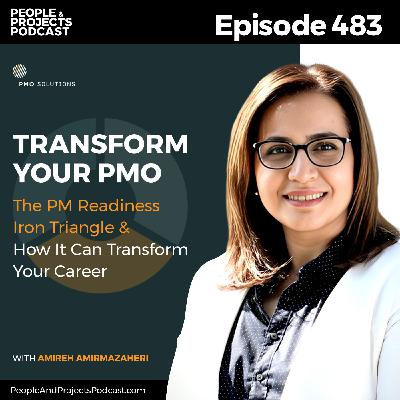
Summary In this episode, Andy talks with Amireh Amirmazaheri, CEO of PMO Solutions and a leading voice in the global PMO community. From growing up in Iran during a time of war to building a respected consultancy in Australia, Amireh shares how resilience and curiosity shaped her approach to leadership and enabling project success. You'll hear how PMOs have evolved from administrative hubs to strategic influencers, what it means to truly "speak the language of executives," and how to recognize when a PMO is at risk of drifting into irrelevance. We also explore how AI is transforming the work of PMOs and what leaders can do to stay ahead of the curve. Plus, Amireh offers practical advice on leading as a woman in project management and applying PMO principles at home as a parent. If you're looking for insights on elevating PMO impact, executive communication, and leading through change, this episode is for you! Sound Bites "Limitations aren't always bad. They push us into the creativity zone." "Executives don't want red or amber. They want to know where the ship is heading." "When PMOs chase BAU firefighting, they lose their strategic brain." "If PMOs stay educated and ahead of the game, they can influence the AI journey." "It's okay to cry. Then think, learn, and lead." "Um, should I tell you that my little one has a kanban board?" Chapters 00:00 Introduction 01:31 Start of Interview 01:42 Early Life in Iran and Resilience 12:56 Lessons About Enablement 15:02 How PMOs Have Changed 18:55 Speaking the Language of Executives 21:22 Failure Clues and PMO Drift 25:11 Sponsorship as a Risk Factor 26:08 Using AI and Its Near-Term Impact on PMOs 32:25 Leading as a Woman 37:44 Applying PM and PMO Ideas at Home 40:22 PMO Global Alliance Overview 42:15 End of Interview 42:50 Andy Comments After the Interview 46:22 Outtakes Learn More You can learn more about Amireh and her work at PMOSol.com, or connect with her on LinkedIn. For more learning on this topic, check out: Episode 436 with Laura Barnard, about the IMPACT Engine Episode 429 with Bill Dow, about PMO insights Episode 187 with Peter Taylor, Bill Dow, and others, about the State of PMOs Level Up Your AI Skills Join other listeners from around the world who are taking our AI Made Simple course to prepare for an AI-infused future. Just go to ai.PeopleAndProjectsPodcast.com. Thanks! Pass the PMP Exam This Year If you or someone you know is thinking about getting PMP certified, we've put together a helpful guide called The 5 Best Resources to Help You Pass the PMP Exam on Your First Try. We've helped thousands of people earn their certification, and we'd love to help you, too. It's totally free, and it's a great way to get a head start. Just go to 5BestResources.PeopleAndProjectsPodcast.com to grab your copy. I'd love to help you get your PMP! Join Us for LEAD52 I know you want to be a more confident leader—that's why you listen to this podcast. LEAD52 is a global community of people like you who are committed to transforming their ability to lead and deliver. It's 52 weeks of leadership learning, delivered right to your inbox, taking less than 5 minutes a week. And it's all for free. Learn more and sign up at GetLEAD52.com. Thanks! Thank you for joining me for this episode of The People and Projects Podcast! Talent Triangle: Ways of Working Topics: PMOs, Executive Communication, Leadership, AI in Projects, Change Management, Strategic Thinking, Women in Leadership, Organizational Influence, Resilience, Stakeholder Engagement, Career Growth, Continuous Improvement The following music was used for this episode: Music: Brooklyn Nights by Tim Kulig License (CC BY 4.0): https://filmmusic.io/standard-license Music: Tuesday by Sascha Ende License (CC BY 4.0): https://filmmusic.io/standard-license
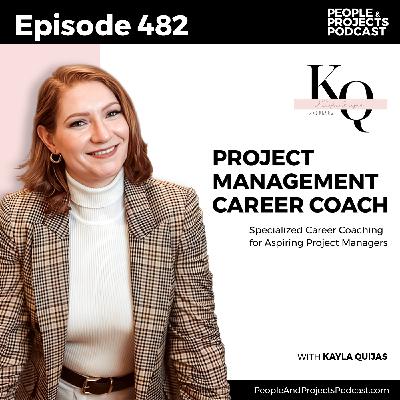
Summary In this episode, Andy talks with Kayla Quijas, founder of Kayla Q Career Coaching. Kayla's journey from cake decorator to Senior Project Manager at a global law firm is anything but conventional, and it's that transformation that fuels her work helping others break into and thrive in project management. At the heart of the discussion is Kayla's signature framework, the PM Readiness Iron Triangle, which focuses on three key pillars: credentials, experience, and network. You'll hear how to assess your readiness for a PM role, even if you don't come from a traditional background, and what to do if one leg of your triangle feels weak. In this conversation, Kayla shares practical ways to reframe your experience into project management language, advice for overcoming fear and imposter syndrome, and how to network without feeling sleazy or self-promotional. If you're looking for insights on how to grow your project management career—even if you're already PMP-certified—this episode is for you! Sound Bites "With this triangle, you need to be strong in at least two and then figure out where you're weak and shore that one up." "Before that, I was not getting any interviews. And then after that, I landed a project management job pretty quickly." "It is selfish not to share your thoughts because you're afraid people will judge you." "Networking doesn't have to be sleazy. Come at it from a give first perspective." "I got put on a PIP once for a project management job. That was one of the most sinking feelings that I had ever had." "Studying for the PMP, even if you don't take the test, can be a game-changer for your confidence and credibility." "Most of what you're doing in your current role is already project management. You just haven't labeled it that way yet." "You don't need a perfect resume to get hired. You need to tell a better story about your experience." Chapters 00:00 Introduction 01:32 Start of Interview 02:00 Kayla's Journey from Cake Decorator to Senior PM 03:20 Pivotal Career Decisions 04:20 What Kayla Did After Quitting Her Job 06:00 Introducing the PM Readiness Iron Triangle 07:40 How Kayla Came Up With the Triangle 09:00 A Real-Life Success Story Using the Triangle 11:00 Is the PMP Worth It? 13:00 Benefits Beyond the Certification 17:00 What If You Don't Have Enough Experience? 18:25 Examples of Overlooked Project Experience 20:00 How to Translate Experience into PM Language 24:10 Turning a Project Into a Resume Story 26:00 Reframing Networking So It Feels Authentic 30:20 Kayla's Mastermind Group Strategy 35:10 Giving Value Without Chasing Metrics 36:24 About the PM Readiness Assessment 37:14 End of Interview 37:50 Andy Comments After the Interview 42:55 Outtakes Learn More You can learn more about Kayla and her work at KaylaQCareerCoaching.com. Take the PM Readiness Assessment here: PM Readiness Assessment Connect with Kayla on LinkedIn: Kayla's LinkedIn Profile For more learning on this topic, check out: Episode 474 with Stuart Taylor. It's a candid discussion about LinkedIn, our careers, and the role of AI. Episode 465 with Kari Mirabal. You'll get practical strategies for building professional relationships. Episode 258, also with Kari Mirabal. She shares even more insights on networking and career growth. Episode 39 with Devora Zack about her book Networking for People Who Hate Networking. Level Up Your AI Skills Join other listeners from around the world who are taking our AI Made Simple course to prepare for an AI-infused future. Just go to ai.PeopleAndProjectsPodcast.com. Thanks! Pass the PMP Exam This Year If you or someone you know is thinking about getting PMP certified, we've put together a helpful guide called The 5 Best Resources to Help You Pass the PMP Exam on Your First Try. We've helped thousands of people earn their certification, and we'd love to help you, too. It's totally free, and it's a great way to get a head start. Just go to 5BestResources.PeopleAndProjectsPodcast.com to grab your copy. I'd love to help you get your PMP this year! Join Us for LEAD52 I know you want to be a more confident leader–that's why you listen to this podcast. LEAD52 is a global community of people like you who are committed to transforming their ability to lead and deliver. It's 52 weeks of leadership learning, delivered right to your inbox, taking less than 5 minutes a week. And it's all for free. Learn more and sign up at GetLEAD52.com. Thanks! Thank you for joining me for this episode of The People and Projects Podcast! Talent Triangle: Business Acumen Topics: Project Management, Career Growth, PMP Certification, Networking, Leadership, Resume Writing, Personal Branding, Professional Development, Coaching, Confidence Building, Interviewing, Career Transitions The following music was used for this episode: Music: Quantum Sparks Full Version by MusicLFiles License (CC BY 4.0): https://filmmusic.io/standard-license Music: Fashion Corporate by Frank Schroeter License (CC BY 4.0): https://filmmusic.io/standard-license
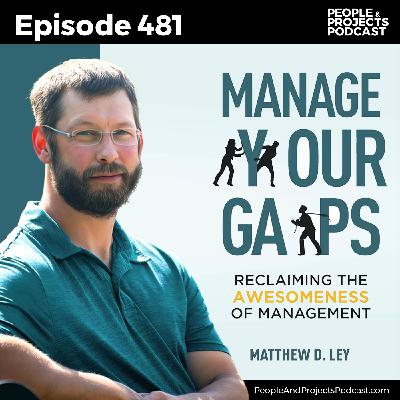
Summary In this episode, Andy talks with Matt Ley about his new book Manage Your Gaps: Reclaiming the Awesomeness of Management. Matt challenges the myths and misunderstandings around management, explaining why clarity between contributors, managers, and leaders is key to organizational performance. You'll hear why he says managers are "multipliers" of value, how to recognize when you're being overled or overmanaged, and why he believes managers are not "junior leaders." Matt introduces his EP!C Management model: Environment, Performance, Identity, and Communication. It's a tactical framework designed to help managers activate and optimize their teams. He also shares practical ideas for improving one-on-ones, measuring success, and even applying these same principles at home through the Four Cs: Care, Clarity, Consistency, and Communication. If you're looking for actionable insights to sharpen your management skills and strengthen your team's performance, this episode is for you! Sound Bites "The thing is, managers are zero value add." "Contribution is all about working in the business. Management's all about working on the business and leadership's all about working on the future." "A manager is someone who's titled with making sure that they're multiplying the value of that organization." "A leader's job is to look up and out. So their job is to define the new, whereas a manager's accountability is to look down and in. So their job is to refine the now." "If you're not doing one-on-ones on a regular, consistent basis? That to me is the beating drum and the heartbeat of management." "It's really hard to feel successful in something if you don't have two things. One, you need a definition of what you're doing. And you need a measurement of how you're doing against it." "We reflect on the different roles that we play, that we call four hats: our professional hat, our personal hat, our partner hat, and our professional parent." Chapters 00:00 Introduction 01:38 Start of Interview 02:00 Family Influence on Leadership 04:00 Career Journey to EP!C Model 07:20 Rethinking Roles as Spokes 09:40 Managers vs. Leaders 12:40 Over-Led or Over-Managed 15:20 Zero Value Add Concept 17:20 Introducing the EP!C Model 20:20 Identity in Management 22:20 One Practical Management Tip 24:00 Applying EP!C at Home 26:14 End of Interview 26:37 Andy Comments After the Interview Learn More You can learn more about Matt and his work at ManageYourGaps.com. For more learning on this topic, check out: Episode 363 with Roger Martin. Roger typically shows up in the Thinkers50 Top 10 and shares key management lessons that complement this discussion. Episode 47 with Henry Mintzberg. It's a candid, entertaining conversation with one of the most influential management thinkers of our time. Episode 11 with Susan Scott. Based on her book Fierce Leadership, this episode explores powerful communication and management lessons that still hold up today. Level Up Your AI Skills Join other listeners from around the world who are taking our AI Made Simple course to prepare for an AI-infused future. Just go to ai.PeopleAndProjectsPodcast.com. Thanks! Pass the PMP Exam This Year If you or someone you know is thinking about getting PMP certified, we've put together a helpful guide called The 5 Best Resources to Help You Pass the PMP Exam on Your First Try. We've helped thousands of people earn their certification, and we'd love to help you, too. It's totally free, and it's a great way to get a head start. Just go to 5BestResources.PeopleAndProjectsPodcast.com to grab your copy. I'd love to help you get your PMP this year! Join Us for LEAD52 I know you want to be a more confident leader–that's why you listen to this podcast. LEAD52 is a global community of people like you who are committed to transforming their ability to lead and deliver. It's 52 weeks of leadership learning, delivered right to your inbox, taking less than 5 minutes a week. And it's all for free. Learn more and sign up at GetLEAD52.com. Thanks! Thank you for joining me for this episode of The People and Projects Podcast! Talent Triangle: Business Acumen Topics: Leadership, Management, Role Clarity, Team Performance, Organizational Design, Communication, One-On-Ones, Change Management, Coaching, Strategic Thinking, Team Culture, Manager Development The following music was used for this episode: Music: The Fantastical Ferrett by Tim Kulig License (CC BY 4.0): https://filmmusic.io/standard-license Music: Tropical Vibe by WinnieTheMoog License (CC BY 4.0): https://filmmusic.io/standard-license
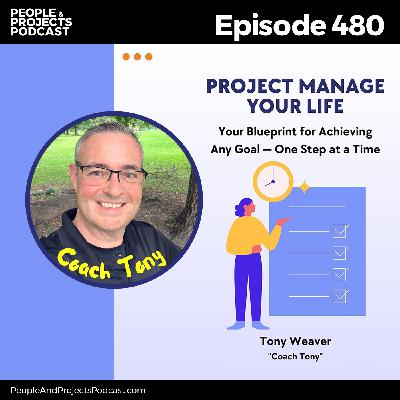
Summary In this episode, Andy welcomes Coach Tony Weaver, author of Project Manage Your Life: Your Blueprint for Achieving Any Goal — One Step at a Time. After decades of leading complex IT, marketing, and transformation projects, Tony turned his project management skills inward and used them to lose over 100 pounds. That journey sparked a new mission: helping others apply the same proven methods to their own goals, whether it's health, finances, career, or just finally following through on something important. In this conversation, you'll hear how to turn vague intentions into measurable, motivating goals. Tony shares how to break down big ambitions into doable milestones, track your progress without becoming a slave to the data, and stay consistent with joy instead of burnout. He unpacks what SMART goals actually look like in the real world and explains why the project mindset can transform not just what you achieve, but how you feel while doing it. If you're looking for practical ideas to move forward on goals that matter to you, at work or at home, this episode is for you! Sound Bites "Project management absolutely changed my life." "Life is agile." "Every goal is a project. Project management is just applying structure to that goal." "Your brain doesn't care about your happiness. It cares about keeping you safe. That's why it resists change." "Once you build confidence in yourself, the goal you set becomes just a jumping-off point." "Setting a goal is an act of hope. It says that tomorrow can be better than today." "Track what you can control. Influence is important, but control drives change." "Focus on the things you control. Keep an eye on the results, but don't obsess about them." "The safest place to be is in your comfort zone, not trying." "Some numbers matter. Some are interesting. Some aren't even interesting." "Letting a goal die of loneliness? That's a recipe for regret." Chapters 00:00 Introduction 01:36 Start of Interview 02:00 How Project Management Led to a New Mission 06:14 Mentorship, Coaching, and Project Management in Life 07:40 What Project Management Looks Like in Everyday Terms 11:20 Why Good Intentions Don't Lead to Change 13:10 Why Most People Don't Set Goals 15:24 Setting a Goal as an Act of Hope 18:00 Common Goal-Setting Mistakes and How to Fix Them 21:30 Building a Plan that Actually Works for You 23:50 Why You Should Plan Celebration, Not Just Completion 24:38 How to Track Progress Without Obsessing Over Data 29:20 The Danger of Focusing Too Much on Lagging Indicators 30:45 Two Client Success Stories 34:34 Where to Learn More About Coach Tony 35:28 End of Interview 36:03 Andy Comments After the Interview 39:05 Outtakes Learn More You can learn more about Tony and his work at OperationMelt.com. For more learning on this topic, check out: Episode 376 with Nick Sonnenberg. It's an episode about how to stop drowning in work, and though the focus is more about life on the job, there are so many ideas from Nick that can help you in your personal life. Episode 81 with Ben Snyder, where we talk about how everything is a project. We're always working on projects, and there are so many ways to apply our project knowledge to other areas of life. Episode 17 with John Wittry. It's perhaps more of a time management episode, but it's about taking back your life, and there's a theme for how project management ideas can apply. Level Up Your AI Skills During these interviews, I often mention our AI Made Simple course. Join other listeners from around the world who are taking this course to prepare for an AI-infused future. Just go to ai.PeopleAndProjectsPodcast.com. Thanks! Pass the PMP Exam This Year If you or someone you know is thinking about getting PMP certified, we've put together a helpful guide called The 5 Best Resources to Help You Pass the PMP Exam on Your First Try. We've helped thousands of people earn their certification, and we'd love to help you too. It's totally free, and it's a great way to get a head start. Just go to 5BestResources.PeopleAndProjectsPodcast.com to grab your copy. I'd love to help you get your PMP this year! Join Us for LEAD52 I know you want to be a more confident leader–that's why you listen to this podcast. LEAD52 is a global community of people like you who are committed to transforming their ability to lead and deliver. It's 52 weeks of leadership learning, delivered right to your inbox, taking less than 5 minutes a week. And it's all for free. Learn more and sign up at GetLEAD52.com. Thanks! Thank you for joining me for this episode of The People and Projects Podcast! Talent Triangle: Ways of Working Topics: Goal Setting, Project Management, Productivity, SMART Goals, Personal Growth, Behavior Change, Tracking Progress, Milestones, Motivation, Self-Leadership, Coaching, Resilience The following music was used for this episode: Music: Brooklyn Nights by Tim Kulig License (CC BY 4.0): https://filmmusic.io/standard-license Music: Energetic Drive Indie Rock by WinnieTheMoog License (CC BY 4.0): https://filmmusic.io/standard-license
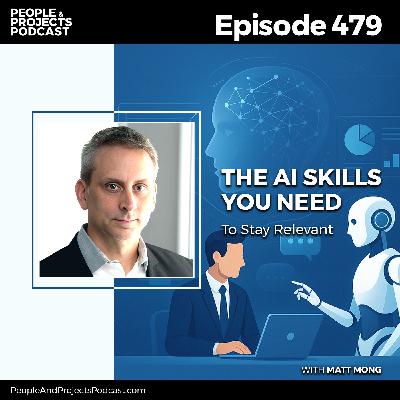
Summary In this episode, Andy interviews Matt Mong, a leader at PlanAutomate, a company focused on bringing intelligent automation to the world of project management. With AI dominating headlines, Matt joins the podcast to explore what's real, what's hype, and what project managers and frontline leaders should actually be doing to stay ahead. They discuss common misconceptions about AI in projects, why structured data is critical, and how AI can evolve from productivity booster to strategic game-changer. Matt shares practical advice on balancing innovation with data privacy, how project roles may shift over time, and what leaders can do today to prepare ourselves (and even our kids) for the future of work. If you're looking for insights on how to stay relevant in an AI-transformed workplace, this episode is for you! Sound Bites "The real question isn't just what AI can do faster. It's what it can do that we couldn't do before." "We tend to overestimate what AI will do in two years and underestimate what it will do in ten." "If you don't get your data in order, AI won't be useful. It's as simple as that." "This isn't about eliminating jobs. It's about empowering people to lead and collaborate better." "Don't future-proof your job. Prepare for the future by experimenting and adapting." "What if your projects could talk to you and give ongoing guidance? That's where we're heading." Chapters 00:00 Introduction 02:00 Start of Interview 02:06 What's Something About AI or Projects That Drives You Crazy? 05:00 How Are You Personally Using AI at Work or Home? 07:00 How Are Customers Using AI Today? And Where Is It Heading? 12:06 What About Concerns With Data Privacy and Security? 15:00 What Other Risks or Opportunities Should Leaders Be Thinking About? 17:22 Do You Agree That 'AI Won't Take Your Job. Someone Using AI Will'? 19:40 What Mindsets or Skills Should People Build Now? 23:52 How Can We Prepare Our Kids for the Future of Work? 27:47 Where Can People Learn More About You and PlanAutomate? 29:00 End of Interview 29:20 Andy Comments After the Interview 33:14 Outtakes Learn More You can learn more about Matt and his work at PlanAutomate.com. You can take the survey that Matt mentions here: https://www.planautomate.com/survey-state-of-ai-in-project-management/ For more learning on this topic, check out: Episode 463 with Faisal Hoque. He has an empowering take on how to transcend the fear and hype around AI. It's a great discussion. Episode 415 with leaders from the software company Keto Software. It's a great follow-up to this discussion, with some guys who have been in this space for many years. Episode 384 with PMeLa, an AI persona that I've been curating for a couple of years. She was the first AI to be interviewed on a leadership or project management podcast ever. In fact, YOU can talk with PMeLa here. Level Up Your AI Skills During the interview, I mentioned our AI Made Simple course. Join other listeners from around the world who are taking this course to prepare for an AI-infused future. Just go to ai.PeopleAndProjectsPodcast.com. Thanks! Pass the PMP Exam This Year If you or someone you know is thinking about getting PMP certified, we've put together a helpful guide called The 5 Best Resources to Help You Pass the PMP Exam on Your First Try. We've helped thousands of people earn their certification, and we'd love to help you too. It's totally free, and it's a great way to get a head start. Just go to 5BestResources.PeopleAndProjectsPodcast.com to grab your copy. I'd love to help you get your PMP this year! Join Us for LEAD52 I know you want to be a more confident leader–that's why you listen to this podcast. LEAD52 is a global community of people like you who are committed to transforming their ability to lead and deliver. It's 52 weeks of leadership learning, delivered right to your inbox, taking less than 5 minutes a week. And it's all for free. Learn more and sign up at GetLEAD52.com. Thanks! Thank you for joining me for this episode of The People and Projects Podcast! Talent Triangle: Business Acumen Topics: AI, Automation, Project Management, Future of Work, Innovation, Data Privacy, Intelligent Systems, Team Leadership, Experimentation, Upskilling, Technology Strategy, Digital Transformation The following music was used for this episode: Music: The Fantastical Ferret by Tim Kulig License (CC BY 4.0): https://filmmusic.io/standard-license Music: Tuesday by Sascha Ende License (CC BY 4.0): https://filmmusic.io/standard-license

Summary In this episode, Andy talks with Bree Groff, transformation consultant, speaker, and author of Today Was Fun: A Book About Work (Seriously). Bree challenges the idea that work must be draining to be valuable, offering a refreshing and practical vision for how leaders can help teams thrive, and even enjoy, their workdays. They explore how her upbringing shaped her perspective on work, why so many teams normalize burnout and busyness, and how leaders can model a healthier, more joyful approach. Bree introduces rituals, such as user manuals and daily check-ins, that foster trust and psychological safety, and she explains what it means to build "cozy teams" that perform through connection. You'll also hear her take on performative professionalism and how to lead without losing your humanity. If you're looking for ways to lead with more energy, authenticity, and yes, fun, this episode is for you! Sound Bites "Most work, most days, should be fun." "Being busy is not the same as being brilliant." "Cozy teams are teams that trust each other enough to tell the truth." "We've confused being professional with looking professional." "You can either be consumed by your calendar or create space to consume ideas." "Even shoveling tough work can be joyful if you like your co-shovelers." Chapters 00:00 Introduction 02:00 Start of Interview 02:03 Bree's Background and Family Influence 05:47 The Normalization of Burnout 10:54 Optimizing for Good Laughs with Good People 17:50 Performative Professionalism vs. Authenticity 26:26 Creating Fun and Cozy Work Environments 33:08 Building a Trusting and High-Performing Team 34:42 Practical Tools for Team Cohesion 35:15 The User Manual: A Quickstart Guide to Teamwork 37:01 Daily Check-ins: Enhancing Team Communication 38:28 The Fast Food Rule: Effective One-on-One Communication 40:38 Prioritizing Personal Well-being for Better Work 46:24 Milton Glaser: Finding Pleasure in Work 49:45 Applying Team Principles in Family Life 51:39 End of Interview 52:12 Andy Comments After the Interview 56:52 Outtakes Learn More You can learn more about Bree and her work at BreeGroff.com. For more learning on this topic, check out: Episode 458 with Elizabeth Lotardo, about finding joy in the job you have Episode 333 with Bob Nelson and Mario Tamayo, on how to make work more fun Episode 82 with Bill Catlette, about how contented teams deliver better results Pass the PMP Exam This Year If you or someone you know is thinking about getting PMP certified, we've put together a helpful guide called The 5 Best Resources to Help You Pass the PMP Exam on Your First Try. We've helped thousands of people earn their certification, and we'd love to help you too. It's totally free, and it's a great way to get a head start. Just go to 5BestResources.PeopleAndProjectsPodcast.com to grab your copy. I'd love to help you get your PMP this year! Join Us for LEAD52 I know you want to be a more confident leader–that's why you listen to this podcast. LEAD52 is a global community of people like you who are committed to transforming their ability to lead and deliver. It's 52 weeks of leadership learning, delivered right to your inbox, taking less than 5 minutes a week. And it's all for free. Learn more and sign up at GetLEAD52.com. Thanks! Thank you for joining me for this episode of The People and Projects Podcast! Talent Triangle: Power Skills Topics: Leadership, Work Culture, Team Rituals, Burnout, Psychological Safety, Joy at Work, Authenticity, People Management, Communication, Employee Engagement, Project Management, Emotional Intelligence The following music was used for this episode: Music: Summer Morning Full Version by MusicLFiles License (CC BY 4.0): https://filmmusic.io/standard-license Music: Fashion Corporate by Frank Schroeter License (CC BY 4.0): https://filmmusic.io/standard-license

Summary In this episode, Andy talks with Jess Baker, business psychologist and author of The Super-Helper Syndrome: A Survival Guide for Compassionate People. Jess helps leaders, project managers, and anyone who tends to take on too much work avoid burnout, preserve self-worth, and build healthier ways of helping. The conversation digs into what "Super-Helper Syndrome" means, how over-helping can lead to exhaustion, resentment, exploitation, or harsh self-criticism, and what beliefs often drive us into that pattern. Jess shares actionable tools for setting boundaries, recognizing irrational helper beliefs, and changing our mindset, including asking "What kind of help is needed here?" to building systems that support sustainable helping. If you're leading projects, teams, or supporting others, these insights will help you avoid overcommitment while still being compassionate. Sound Bites "Helping others to the detriment of your own wellbeing is something many of us do without noticing." "When you struggle to say no to requests for help, your relationships are lopsided. You deny your own needs." "Exhaustion, resentment, exploitation and self-criticism are the four adverse impacts of super-helper syndrome." "Compassion is when you decide you have to do something to alleviate someone's suffering." "'What kind of help is needed here?' rather than just 'How can I help?'" "Your self-worth does not depend upon helping people." "Healthy helping is about recognizing who, how and when you help, and having boundaries that are not porous." Chapters 00:00 Introduction 02:01 Start of Interview 02:23 What Got You Started Exploring Empathy and Compassion? 05:15 Cognitive Empathy vs Emotional Empathy 08:02 How Do You, As a Clinician, Use Empathy Without Being Overwhelmed? 10:07 The Four Forms of Help 18:52 Stakeholder Scenario: Balancing Autonomy and Dependency in Helping 25:01 When Did Jess Help? What Were Her Motivations? 31:56 It Adds Energy to Help 33:28 How Can I Discern If I'm Becoming a Super-Helper? 38:07 A Roadmap for Setting Healthy Boundaries 46:03 Parenting and Helping Habits 51:21 End of Interview 51:58 Andy Comments After the Interview 56:33 Outtakes Learn More You can learn more about Jess, her book, and her work at JessBaker.co.uk. For deeper reading and related conversations, check out: Episode 448 with Marie-Helene Pelletier (on burnout and resilience) Episode 385 with Vanessa Patrick (about her book The Power of Saying No) Episode 26 with Dr. Ed Schein (MIT Fellow, Helping: How to Offer, Give, and Receive Help) Pass the PMP Exam This Year If you or someone you know is thinking about getting PMP certified, we've put together a helpful guide called The 5 Best Resources to Help You Pass the PMP Exam on Your First Try. We've helped thousands of people earn their certification, and we'd love to help you too. It's totally free, and it's a great way to get a head start. Just go to 5BestResources.PeopleAndProjectsPodcast.com to grab your copy. I'd love to help you get your PMP this year! Join Us for LEAD52 I know you want to be a more confident leader–that's why you listen to this podcast. LEAD52 is a global community of people like you who are committed to transforming their ability to lead and deliver. It's 52 weeks of leadership learning, delivered right to your inbox, taking less than 5 minutes a week. And it's all for free. Learn more and sign up at GetLEAD52.com. Thanks! Thank you for joining me for this episode of The People and Projects Podcast! Talent Triangle: Power Skills Topics: Leadership, Project Management, Empathy, Boundaries, Wellbeing, Helping Others, Self-Compassion, Impact of Beliefs, Burnout Prevention, Communication The following music was used for this episode: Music: The Fantastical Ferret by Tim Kulig License (CC BY 4.0): https://filmmusic.io/standard-license Music: Tropical Vibe by WinnieTheMoog License (CC BY 4.0): https://filmmusic.io/standard-license
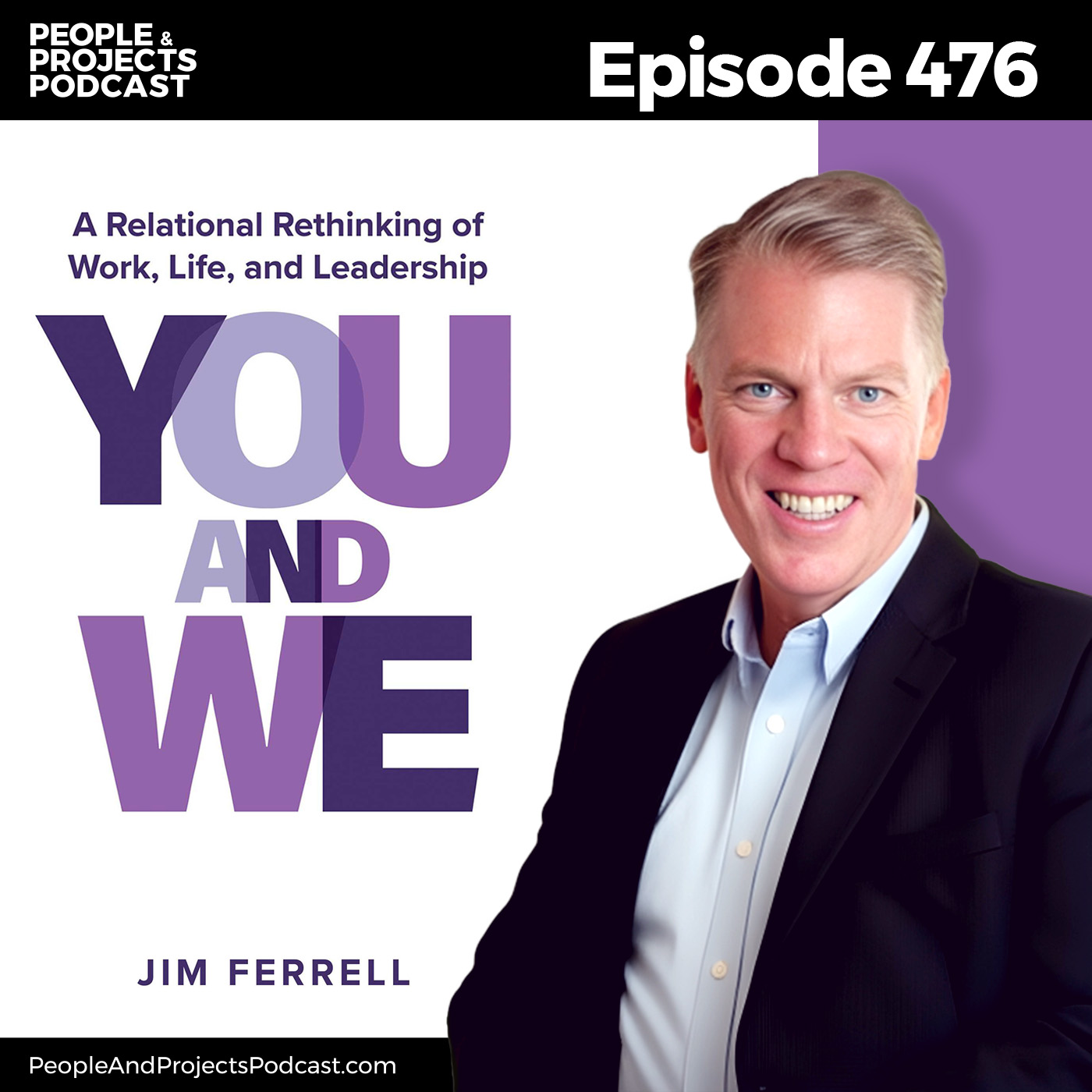
Summary In this episode, Andy interviews Jim Ferrell, author of You and We: A Relational Rethinking of Work, Life and Leadership. Andy has long been a big fan of Jim's work with The Arbinger Institute, authoring Leadership and Self-Deception and The Anatomy of Peace. In this conversation, Jim unpacks his insights on how leaders can move from a self-focused to a relational mindset. Drawing from his new book, Jim explains why our effectiveness as leaders depends not just on what we do, but on how we view and relate to the people around us. The discussion explores what it means to be relational instead of transactional, how leaders can better navigate conflict, and the subtle ways our self-deceptions hinder growth. Jim also shares practical ideas for building trust, leading with humility, and focusing on outcomes that matter most. This episode is packed with thought-provoking insights that will challenge how you think about leadership, culture, and collaboration. If you're looking for insights on how to become a more relational leader and truly impact those you serve, this episode is for you! Sound Bites "Machines don't have to be great at relation, but they'll be great at everything else. And if we're lousy at relation ourselves, we won't have a job." "Those who can relate better, that's the uniquely human competitive advantage we bring to the marketplace." "The top people spend most of their time on the relational work, not on the other stuff. So you see it happening already. That's all going to be accelerating." "The most important part of the chart of any org chart is actually all the space in between the names and boxes, because that's where everything's happening, right?" "We went from the body economy to the mind economy to now the heart economy." "Proximity is not necessarily closeness." Chapters 00:00 Introduction 01:55 Start of Interview 02:07 Jim Ferrell's Backstory and Early Influences 06:17 About Jim Writing Leadership and Self-Deception 08:57 Exploring the Concept of Relation vs. Relationships 10:07 The Five Levels of Relation 13:19 Managing Relation in Organizations 17:29 The Shift to the Heart Economy 20:00 Insights from the Book 'You and We' 27:00 Proximity vs. Closeness in Remote Work 29:08 The Power of Hydrogen and Oxygen 29:46 Remote vs. In-Person Work Dynamics 32:14 The Importance of Connectivity in Teams 33:14 Understanding Relational Space 34:35 Personal Stories of Relation 37:48 How Can We Discern Where We Are in the Levels? And Our Teams? 39:29 The Concept of Compounding in Relations 41:07 The Relational Leap 45:54 End of Interview 46:27 Andy Comments After the Interview 49:23 Outtakes Learn More You can learn more about Jim and his book at Withiii.com/youandwe. For more learning on this topic, check out: Episode 185 with Mitch Warner about the Arbinger book Leadership and Self-Deception. Episode 356 with Eric Barker about why everything you know about relationships is mostly wrong. Episode 459 with Adrian Kelly about identity and rethinking success. Pass the PMP Exam This Year If you or someone you know is thinking about getting PMP certified, we've put together a helpful guide called The 5 Best Resources to Help You Pass the PMP Exam on Your First Try. We've helped thousands of people earn their certification, and we'd love to help you too. It's totally free, and it's a great way to get a head start. Just go to 5BestResources.PeopleAndProjectsPodcast.com to grab your copy. I'd love to help you get your PMP this year! Join Us for LEAD52 I know you want to be a more confident leader–that's why you listen to this podcast. LEAD52 is a global community of people like you who are committed to transforming their ability to lead and deliver. It's 52 weeks of leadership learning, delivered right to your inbox, taking less than 5 minutes a week. And it's all for free. Learn more and sign up at GetLEAD52.com. Thanks! Thank you for joining me for this episode of The People and Projects Podcast! Talent Triangle: Power Skills Topics: Leadership, Project Management, Relationships, Trust, Relational Mindset, Conflict, Self-Deception, Self-Awareness, Influence, Humility, Collaboration, Culture, Authenticity The following music was used for this episode: Music: Echo by Alexander Nakarada License (CC BY 4.0): https://filmmusic.io/standard-license Music: Fashion Corporate by Frank Schroeter License (CC BY 4.0): https://filmmusic.io/standard-license
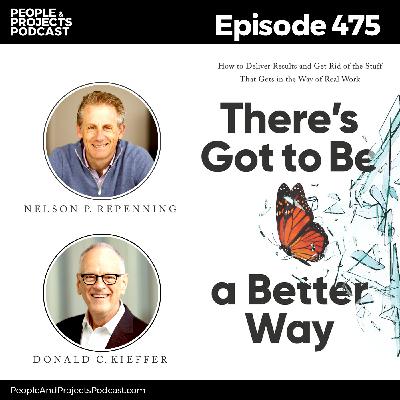
Summary Have you ever wrapped up your workday thinking, "I've been busy all day, but I'm not sure I actually made anything better"? If so, you're not alone, and today's guests are here to help you break that cycle. In this episode, Andy talks with Don Kieffer and Nelson Repenning, co-authors of the new book There's Got to Be a Better Way. Don is a former Harley-Davidson executive who led during some of the company's most challenging years. Nelson is a professor at MIT Sloan who studies why well-intended management tools often fail in practice. Together, they're helping leaders rethink how work actually gets done. In the conversation, you'll learn why so many teams get stuck in firefighting mode, and why that's often not a people issue but a systems issue. You'll hear how to spot the "firefighter-arsonist" pattern, why problem-solving starts with problem-finding, and what it means to "design for discovery." We also talk about Agile, Lean, invisible handoffs, and even how these ideas apply to family life. If you're looking for insights on how to make your team's work more effective, sustainable, and human-centered, this episode is for you! Sound Bites "Most performance problems are not people problems. They're design problems." "You get what you design for. And most work isn't designed at all. It just kind of happens." "Firefighting is not a character flaw. It's a predictable output of a broken system." "If you don't make the work visible, you can't improve it." "When no one owns the handoff, it's not really a handoff. It's a drop." "Success should be easy. That doesn't mean the work isn't hard, but the path to doing it well should be clear." "Discovery isn't luck. It's a design choice." Chapters 00:00 Introduction 01:49 Start of Interview 01:59 The Origin Story: How Don and Nelson Collaborated 07:36 Challenges in Implementing Business Tools 13:19 Dynamic Work Design vs. Traditional Methods 25:16 A Lesson from the Factory Floor 26:53 Identifying and Solving Problems in Teams 31:23 The Importance of Connecting the Human Chain 35:46 Making Work Visible: Strategies and Tools 40:34 Applying Work Strategies at Home 42:46 End of Interview 43:12 Andy Comments After the Interview 47:35 Outtakes Learn More You can learn more about the book and their work at shiftgear.work/theres-got-to-be-a-better-way-book. For more learning on this topic, check out: Episode 249 with Aaron Dignan about Brave New Work Episode 252 with Marcus Buckingham about Nine Lies About Work Episode 162 with Jonathan Raymond on culture and leadership mindset Thank you for joining me for this episode of The People and Projects Podcast! Talent Triangle: Business Acumen Topics: Leadership, Project Management, System Design, Agile, Lean, Problem Solving, Collaboration, Organizational Effectiveness, Continuous Improvement, Work Design, Team Performance The following music was used for this episode: Music: Quantum Sparks Full Version by MusicLFiles License (CC BY 4.0): https://filmmusic.io/standard-license Music: Synthiemania by Frank Schroeter License (CC BY 4.0): https://filmmusic.io/standard-license
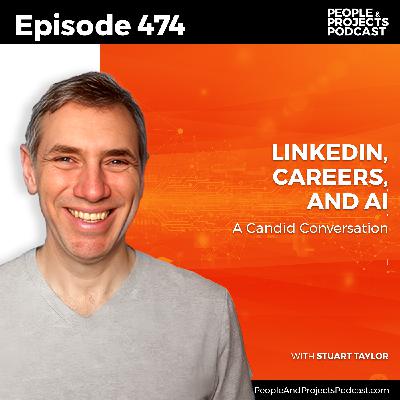
Summary In this candid live-stream conversation, Andy chats with content creator and project leader Stuart Taylor, the mind behind the Influential PMO platform and the Stuart Taylor Project YouTube channel. They dig into the difference between influencers and thought leaders, how to choose topics that genuinely help practitioners, and what to do when metrics don't match the effort. Stuart shares practical strategies for building professional visibility on LinkedIn and YouTube, including how to craft resonant messages, handle trolls, and focus on service over self-promotion. The discussion also explores Stuart's experiment asking whether AI could manage a project. Spoiler: AI is a strong team member for first drafts and research, but a weak project manager. They wrap with career advice for today's shifting job market, including why to think like an internal consultant and how to future-proof your career by learning in public. If you're looking for insights on personal branding, creator tactics, and AI's real role in project work, this episode is for you! Sound Bites Regarding AI: "It cannot be the project manager. It's spineless. It is a weakling leader." "There is no such thing as a permanent job anymore." "Share what you know and people will be drawn to you for what you are sharing." "Learn to make a resonating message. Learn how to share value." "I never did this to become internet famous… What problem do I want to solve? That's it." "Because you don't understand how the algorithm works. You think your whole network's ignoring you, and in fact, all that's happened is maybe less than 10% of your network has seen the message before the algorithm realized that your message wasn't resonating." "It will be the penny pinching execs who want to save a few dollars, who will take your job, and they'll replace it with a machine that can do 50% of your job for a fraction of your price, and they'll live with the 50% they can't do." Chapters 00:00 Start of Live Stream 02:13 Thoughts on Influencers and Thought Leaders 05:28 Deciding on Video Content 07:34 Views and Metrics 14:41 The Creative Process and Challenges 18:28 Sharing Knowledge and Building a Community 18:49 Navigating Social Media: The Good, The Bad, and The Trolls 19:18 Handling Criticism and Building Connections 24:37 The Role of AI in Project Management 29:10 The Future of Work: AI, Automation, and Adaptation 36:24 Staying Curious and Embracing Change Learn More You can learn more about Stuart and his work here: LinkedIn: linkedin.com/in/skt Website: InfluentialPMO.com YouTube: Stuart Taylor Project Thank you for joining me for this episode of The People and Projects Podcast! Talent Triangle: Business Acumen Topics: Leadership, Project Management, Content Strategy, Personal Branding, Career Development, LinkedIn, Artificial Intelligence, Communication, Influence, Stakeholder Engagement, Future Of Work, Creator Economy The following music was used for this episode: Music: Echo by Alexander Nakarada License (CC BY 4.0): https://filmmusic.io/standard-license Music: Chillhouse by Frank Schroeter License (CC BY 4.0): https://filmmusic.io/standard-license
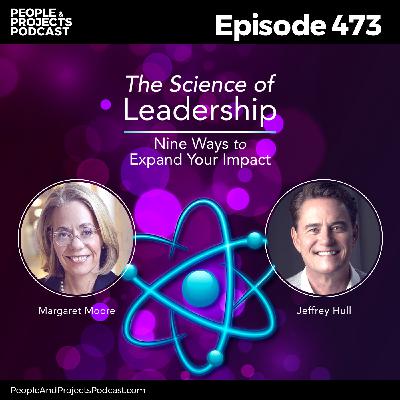
Summary In this episode, Andy welcomes Jeffrey Hull and Margaret Moore, co-authors of The Science of Leadership: Nine Ways to Expand Your Impact. Drawing from over 50 years of leadership research and tens of thousands of studies, Jeff and Meg offer an accessible roadmap for leaders who want to grow in meaningful, evidence-based ways. As coaches and leaders at the Institute of Coaching, they distill complex research into nine practical leadership capacities that help you expand your impact while staying grounded. In this conversation, they unpack what it means to be a conscious leader and why self-awareness is essential. You'll hear how cultural context affects leadership perceptions, what it takes to be ready to grow, and how to quiet the "ego noise" that can derail your effectiveness. Whether you're managing a team across time zones or parenting in today's high-pressure environment, the insights from this episode are deeply practical and immediately usable. If you're looking for insights on how to lead with more clarity, authenticity, and impact, this episode is for you! Sound Bites "Leadership isn't about you as much as it is about your impact on others." "Motivation and confidence are twin engines that power real growth." "Quieting your ego doesn't make you less effective. It gives you clarity." "Cultural norms can shape how leadership is perceived, but respect always translates." "Transformational leadership isn't about having a vision. It's about co-creating one." "Parenting is leadership. And it's one of the best places to practice these capacities." "The book is a self-coaching tool for everyday leaders who want to grow with intention." Chapters 00:00 Introduction 01:49 Start of Interview 02:00 What From Your Early Life Influenced How You Think About Leadership? 08:00 What Types of Leadership Books Make You Shake Your Head? 11:08 What Do You Mean by Leadership? 17:30 How Do We Know If We're Ready to Grow as Leaders? 21:00 How Do Cultural Norms Affect the Practice of These Capacities? 25:45 What Does It Mean to Be a Conscious Leader? 35:00 What Is a Quiet Ego, and How Do You Quiet Ego Noise? 38:30 What Does Transformational Leadership Look Like in Practice? 40:30 A Practical Way to Develop This Capacity 45:28 What Can Parents Learn From This Book to Lead Better at Home? 48:46 End of Interview 49:20 Andy Comments After the Interview 53:00 Outtakes Learn More You can learn more about Jeff, Meg, and their work at ScienceOfLeadership.com. For more learning on this topic, check out: Episode 344 with Peter Bregman about how you can change other people by setting the conditions under which they're willing to change. Episode 416 with Jim Kouzes. He's been with us four times, each episode exploring research-driven insights on leadership. Episode 252 with Marcus Buckingham about the Nine Lies we believe about work and leadership, and what to do about them. Pass the PMP Exam This Year If you or someone you know is thinking about getting PMP certified, we've put together a helpful guide called The 5 Best Resources to Help You Pass the PMP Exam on Your First Try. We've helped thousands of people earn their certification, and we'd love to help you too. It's totally free, and it's a great way to get a head start. Just go to 5BestResources.PeopleAndProjectsPodcast.com to grab your copy. I'd love to help you get your PMP this year! Join Us for LEAD52 I know you want to be a more confident leader–that's why you listen to this podcast. LEAD52 is a global community of people like you who are committed to transforming their ability to lead and deliver. It's 52 weeks of leadership learning, delivered right to your inbox, taking less than 5 minutes a week. And it's all for free. Learn more and sign up at GetLEAD52.com. Thanks! Thank you for joining me for this episode of The People and Projects Podcast! Talent Triangle: Power Skills Topics: Leadership, Self-Awareness, Coaching, Organizational Behavior, Servant Leadership, Team Culture, Feedback, Psychological Safety, Confidence, Change Readiness, Authenticity, Conscious Leadership, Project Management The following music was used for this episode: Music: Echo by Alexander Nakarada License (CC BY 4.0): https://filmmusic.io/standard-license Music: Fashion Corporate by Frank Schroeter License (CC BY 4.0): https://filmmusic.io/standard-license
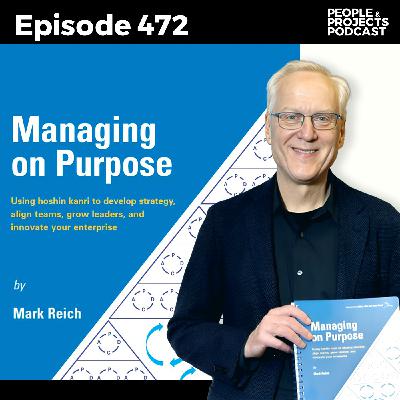
Summary In this episode, Andy welcomes Mark Reich, a former Toyota leader and current Chief Engineer for Strategy at the Lean Enterprise Institute. Mark is the author of Managing on Purpose. If you've ever tried to improve your team but felt like your strategy was stuck in a slide deck, this conversation is for you. Mark introduces the idea of hoshin kanri, a lesser-known but critical pillar of Toyota's management system, and explains how lean thinking is more than just tools--it's a way of developing people and aligning purpose across an organization. You'll hear why metrics alone won't get you to strategic clarity, how to escape the trap of firefighting, and why engagement, not just direction, is the key to long-term improvement. He also shares how lean thinking can be applied at home, even with your kids! If you're looking for insights on how to align teams, build capability, and lead with greater purpose, this episode is for you! Sound Bites "Don't focus on the tool. The tools have to serve a purpose." "Catchball is not just a handoff of plans. It's a conversation about what matters and how we'll learn together." "Direction without development is just pressure." They're not called punishment calls. They're called co-learning calls. "If strategy feels like something being done to people, you've already lost." "You don't learn PDCA by attending a training. You learn it by doing it, with guidance, reflection, and coaching." "It's not just about solving the problem. It's about who solves it and how they do it." "We had to change how we talked about strategy before we could change how we worked on strategy." Chapters 00:00 Introduction 01:49 Start of Interview 02:01 What early experiences shaped your views on leadership, strategy, or lean? 05:28 How do you explain TPS and hoshin kanri as two pillars of Toyota's system? 10:36 What are common mistakes leaders make when trying to improve the business? 15:23 Where do you coach people to start when they want better alignment? 17:40 What myths or misunderstandings do people have about lean? 18:12 Case study example: Turner Construction 25:45 What lean tools or concepts should project managers explore more deeply? 29:24 Where do you recommend someone begin learning about lean? 34:47 How has lean thinking helped at home—and with raising kids? 36:09 End of Interview 36:36 Andy Comments After the Interview 40:53 Outtakes Learn More You can learn more about Mark Reich and his work at the Lean Enterprise Institute at Lean.org. For more learning on this topic, check out: Episode 438 with Jeff Gothelf. It's a book about OKRs, which is different from hoshin kanri, but the overall discussion is worth checking out. Episode 387 with Atif Rafiq. It's a book that has a strategic approach to dealing with uncertainty. Episode 320 with Greg Githins. It's more about how to think strategically. Pass the PMP Exam This Year If you or someone you know is thinking about getting PMP certified, we've put together a helpful guide called The 5 Best Resources to Help You Pass the PMP Exam on Your First Try. We've helped thousands of people earn their certification, and we'd love to help you too. It's totally free, and it's a great way to get a head start. Just go to 5BestResources.PeopleAndProjectsPodcast.com to grab your copy. I'd love to help you get your PMP this year! Join Us for LEAD52 I know you want to be a more confident leader–that's why you listen to this podcast. LEAD52 is a global community of people like you who are committed to transforming their ability to lead and deliver. It's 52 weeks of leadership learning, delivered right to your inbox, taking less than 5 minutes a week. And it's all for free. Learn more and sign up at GetLEAD52.com. Thanks! Thank you for joining me for this episode of The People and Projects Podcast! Talent Triangle: Business Acumen Topics: Lean, Toyota Production System, Hoshin Kanri, Strategy, Organizational Alignment, Leadership Development, Continuous Improvement, Team Engagement, Project Management, PDCA, Capability Building, Coaching The following music was used for this episode: Music: Underground Shadows by MusicLFiles License (CC BY 4.0): https://filmmusic.io/standard-license Music: Synthiemania by Frank Schroeter License (CC BY 4.0): https://filmmusic.io/standard-license

Summary When you hear the word negotiation, what comes to mind? A boardroom showdown? A salary discussion? In this episode, Andy welcomes back Dr. Mike Clayton, author of How to Negotiate: Practical and Proven Skills to Help You Strike Better Deals to unpack the truth about negotiating. Mike brings clarity, wisdom, and practicality to a skill that project managers and frontline leaders use more often than they might realize. In this conversation, you'll learn why negotiation is not a talent you're born with. Rather, it's a skill you can build. Mike explains how to prepare effectively, how to open conversations the right way, and how to bargain in ways that foster agreement, not conflict. You'll discover surprising examples of everyday negotiations, phrases that help (and hurt) rapport, and even ideas to help your kids become more confident negotiators. If you're looking for insights on how to lead through conversations that matter, this episode is for you! Sound Bites "Negotiation is a process of searching for an agreement that satisfies both parties." "You can become a good negotiator the same way you become a good leader: by learning and practicing." "Building agreement on agreement is easier than building agreement on disagreement." "What will you get when you've got it? Because that's the motivator." "If we respect each other and follow a process, we can negotiate even in tough situations." "The phrases that are best for building rapport are questions." "Signposting the junction means alerting our counterparty that we think we're coming to the point where we need to stop." "Your credibility is currency. Character and trust are foundational in negotiation." "Almost every conversation where two people want different things is a negotiation." "It's okay to negotiate. It's okay to walk away. And it's okay to not always win." Chapters 00:00 Introduction 01:50 Start of Interview 01:04 Understanding Negotiation as a Skill 02:01 Common Myths About Negotiation 05:39 The Process of Negotiation 12:31 Preparing for a Negotiation 16:12 Opening a Negotiation 23:05 Introduction to Feedback and Negotiation 23:43 Breaking Down Feedback 24:42 The Yes Mindset in Negotiation 25:56 Building Rapport in Negotiation 27:40 The Light and Dark Sides of Language 29:08 Signposting the Junction in Negotiation 31:47 Establishing Character in Negotiation 34:21 Teaching Kids to Negotiate 38:34 End of Interview 39:01 Andy Comments After the Interview 42:09 Outtakes Learn More You can find Mike's content and negotiation advice at his YouTube channel: OnlinePMCourses. For more learning on negotiation, check out these episodes: Episode 444 with Rick Czaplewski, who provides negotiating secrets for project managers Episode 412 with Scott Walker, who provides insights from a former hostage negotiator Episode 148 with Dan Shapiro: High-stakes negotiation from a Harvard expert Thank you for joining me for this episode of The People and Projects Podcast! Talent Triangle: Power Skills Topics: Leadership, Negotiation, Communication, Emotional Intelligence, Project Management, Influence, Rapport Building, Conflict Resolution, Trust, Team Collaboration, Process Thinking, Parenting The following music was used for this episode: Music: Summer Awakening by Frank Schroeter License (CC BY 4.0): https://filmmusic.io/standard-license Music: Chillhouse by Frank Schroeter License (CC BY 4.0): https://filmmusic.io/standard-license
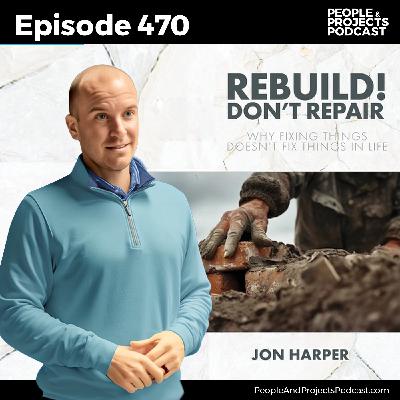
Summary In this episode, Andy welcomes Jon Harper, author of Rebuild! Don't Repair: Why Fixing Things Doesn't Fix Things in Life. Jon shares from his personal and professional journey about the courage it takes to stop settling for temporary fixes and instead do the deeper, more intentional work of rebuilding. Drawing on lessons from his leadership experience and faith-based insights, Jon invites listeners to consider how our beliefs, habits, and leadership defaults often stem from foundations we didn't consciously choose. The conversation covers when to rebuild rather than repair, how to evaluate the people around us during transformation, and why awkwardness is often a sign of real change. Jon shares stories about quitting alcohol as a coping mechanism and the daily habits that keep him focused and grounded. He also offers a practical approach to helping children process their day—something leaders can adapt for teams, too. If you're leading a team, a project, or a personal transition and want to build something stronger and more lasting, this episode is for you! Sound Bites "We had duct tape where we should lay new concrete." "People who are part of the solution are those willing to say, 'I am the problem and I can be the solution.'" "None of us really experiences life. We experience the life we focus on." "Actions tell them who we are. Words tell them who we want to be." "If you are asking for big things in your life, a lot of success is being able to deal with bigger amounts of stress in a better way." "Our parents weren't making conscious, informed, well-rounded, intentional decisions to shape us the way we are. They just did the best with what they had." "My main goal in life is to be respected the most by those who know me the most." Chapters 00:00 Introduction 02:03 Start of Interview 02:12 Why Duct Tape Solutions are so Tempting 04:23 Rebuilding Is Messy 06:17 Are People the Problem or the Solution? 09:18 You Have to Own It 10:26 Foundations and Their Impact on Leadership 15:10 Personal Stories of Rebuilding 18:07 Daily Habits and Their Long-term Impact 20:35 The Importance of the Journey Over the Destination 22:44 The Illusion of the Finish Line 24:29 The Importance of Associations 27:54 Actions Speak Louder Than Words 31:30 Parenting Insights from the Book 36:54 End of Interview 37:28 Andy Comments After the Interview 40:08 Outtakes Learn More You can learn more about Jon and his work at JonHarper.co. Pass the PMP Exam This Year If you or someone you know is thinking about getting PMP certified, we've put together a helpful guide called The 5 Best Resources to Help You Pass the PMP Exam on Your First Try. We've helped thousands of people earn their certification, and we'd love to help you too. It's totally free, and it's a great way to get a head start. Just go to 5BestResources.PeopleAndProjectsPodcast.com to grab your copy. I'd love to help you get your PMP this year! Thank you for joining me for this episode of The People and Projects Podcast! Talent Triangle: Power Skills Topics: Leadership, Self-Development, Change Management, Team Dynamics, Habits, Identity, Ownership, Resilience, Personal Growth, Emotional Intelligence, Parenting, Workplace Culture The following music was used for this episode: Music: Imagefilm 034 by Sascha Ende License (CC BY 4.0): https://filmmusic.io/standard-license Music: Energetic Drive Indie Rock by WinnieTheMoog License (CC BY 4.0): https://filmmusic.io/standard-license
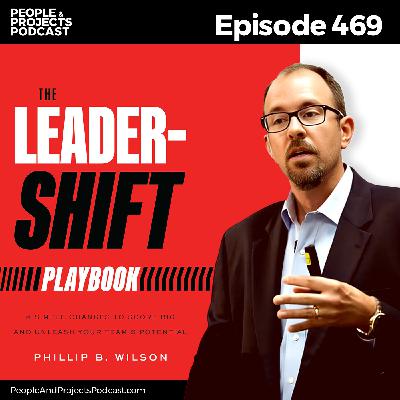
Summary In this episode, Andy talks with leadership coach Phil Wilson, author of The Leader-Shift Playbook: 4 Simple Changes to Score Big and Unleash Your Team's Potential. Phil shares his own "Mount Stupid" moment, when he realized the biggest obstacle to his team's success was actually himself, and how that wake-up call led to powerful changes in his leadership approach. The conversation dives into the four core shifts from his book, covering topics like the power of belief (in yourself and others), and how seemingly small habits shape team culture. Phil and Andy explore how frontline leaders can create real momentum by changing how they show up, how they relate to their team, and how they view their role as a leader. You'll also hear practical ways to build trust on remote teams and foster relationships that drive performance. If you're looking for insights on culture, trust, feedback, and practical leadership growth, this episode is for you! Sound Bites "There are no neutral interactions. You're either growing the culture or you're hurting the culture." "The solution wasn't a Chief of Staff. What I needed was to be a better leader." "Self-doubt isn't humility. It's fear dressed up as honesty." "Beliefs drive behavior." "The belief you have about your team—whether they're heroes or villains—changes everything." "You don't have the luxury of assuming anything other than the best about your people." "Leadership actually happens in the conversations you're willing to have." "Best and Best: Each person shares the best thing going on in their personal life, and the best thing going on in their work life." "The Three Happys: Three things from the day before that made you happy." "If you had a product you were selling, you'd ask your customers for feedback. As a leader, your team is your customer." Chapters 00:00 Introduction 02:06 Start of Interview 02:16 Phil's Family Influence on Leadership 05:15 Mount Stupid Moment: A Leadership Realization 09:11 Implementing EOS for Better Leadership 11:12 We're Always Making Culture 13:47 We Shape a Tone Just By Walking Into a Room: How Does that Work With Virtual Work? 16:04 Self-Doubt vs. Humility in Leadership 20:30 The Hero Assumption in Leadership 24:23 How to Show You Believe In Someone 26:54 The Importance of Relationships in Teams 29:09 Creating a Positive Team Culture 32:07 Applying Leadership Principles at Home 35:31 End of Interview 36:06 Andy Comments After the Interview 40:14 Outtakes Learn More You can learn more about Phil and his work at YourLeaderShift.com. For more learning on this topic, check out: Episode 342 with Krister Ungerbock about his book 22 Talk Shifts, exploring how small changes in our words can change our teams. Episode 440 with Kelli Thompson about overcoming self-doubt and leading with confidence. Episode 468 with James Turk on giving, motivation, and long-term team engagement. Pass the PMP Exam This Year If you or someone you know is thinking about getting PMP certified, we've put together a helpful guide called The 5 Best Resources to Help You Pass the PMP Exam on Your First Try. We've helped thousands of people earn their certification, and we'd love to help you too. It's totally free, and it's a great way to get a head start. Just go to 5BestResources.PeopleAndProjectsPodcast.com to grab your copy. I'd love to help you get your PMP this year! Thank you for joining me for this episode of The People and Projects Podcast! Talent Triangle: Power Skills Topics: Leadership, Feedback, Self-Doubt, Culture, Remote Teams, Trust, Communication, Organizational Behavior, Performance, Project Management, Relationship Building, Personal Growth The following music was used for this episode: Music: Summer Awakening by Frank Schroeter License (CC BY 4.0): https://filmmusic.io/standard-license Music: Energetic Drive Indie Rock by WinnieTheMoog License (CC BY 4.0): https://filmmusic.io/standard-license
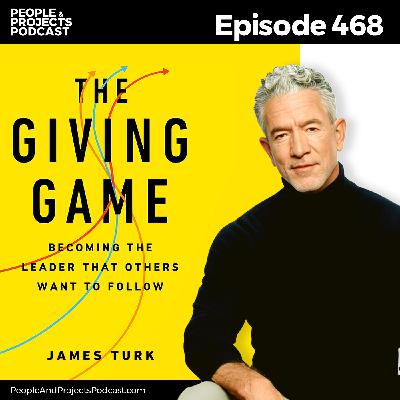
Summary When you're promoted into management, the shift can feel like you're suddenly in charge, but with very little guidance. In this episode, Andy chats with executive coach and author James Turk about his insightful book The Giving Game: A Manager's Playbook for the First Year of Leadership. James brings decades of experience helping leaders navigate that tricky transition from individual contributor to team leader. They explore why being a subject-matter expert doesn't automatically make you an effective leader, and why the first 45 days in a new role are so critical. James shares practical advice for building a strong team climate, coaching instead of controlling, and why clarity is one of the greatest gifts you can offer as a manager. Plus, they discuss what new managers often miss about feedback and delegation (and how to avoid those traps). Whether you're newly promoted or preparing to step into a leadership role, this conversation is filled with actionable insights. If you're looking for real-world advice on how to lead when you're suddenly in charge, this episode is for you! Sound Bites "The number one reason employees don't do what they're supposed to do is that they don't know what it is." "Leadership isn't about being the smartest person in the room. It's about creating the conditions for others to succeed." "Climate is how it feels to work for you, and as a leader, that's something you have the power to shape every day." "Coaching isn't fixing the past. It's investing in someone's future performance." "Most people, when they're promoted, don't have the skills, and they're afraid to admit it." "If I want people to do the work, they need to know what's expected of them." Chapters 00:00 Introduction 01:57 Start of Interview 02:06 What early experiences shaped how you think about leadership? 05:30 Why call it 'The Giving Game'? 08:39 What would you coach me to do differently in my first 45 days as a new manager? 11:01 Why focus on climate instead of culture? 15:57 How do we shift teams from renter mode to ownership? 20:18 Why do so many managers think we're being clear? 21:42 How can leaders delegate in a way that builds ownership? 22:47 When did you make a delegation mistake because of lack of clarity? 25:25 What's an example of feedback that changed your career? 27:59 What do you think about the 'feedback sandwich' technique? 29:44 How can these ideas help parents at home? 32:10 End of Interview 32:31 Andy Comments After the Interview 36:15 Outtakes Learn More You can learn more about James Turk and his work at TheTurkGroup.com/TheGivingGameBook. For more learning on this topic, check out: Episode 466 with Sabina Nawaz. Sabina was the executive coach for Bill Gates and other Microsoft leaders and wrote a book that would be an excellent follow-up to this one. Episode 455 with Janet Polach. It's a great follow-on to what we talked with James here today. Episode 391 with Adam Bryant about his book The Leap to Leader. Pass the PMP Exam This Year If you or someone you know is thinking about getting PMP certified, we've put together a helpful guide called The 5 Best Resources to Help You Pass the PMP Exam on Your First Try. We've helped thousands of people earn their certification, and we'd love to help you too. It's totally free, and it's a great way to get a head start. Just go to 5BestResources.PeopleAndProjectsPodcast.com to grab your copy. I'd love to help you get your PMP this year! Thank you for joining me for this episode of The People and Projects Podcast! Talent Triangle: Power Skills Topics: Leadership, First-Time Managers, Team Climate, Feedback, Coaching, Clarity, Delegation, Emotional Intelligence, Ownership, Communication, People Management, Personal Development, Project Management, Career Development The following music was used for this episode: Music: Imagefilm 034 by Sascha Ende License (CC BY 4.0): https://filmmusic.io/standard-license Music: Fashion Corporate by Frank Schroeter License (CC BY 4.0): https://filmmusic.io/standard-license
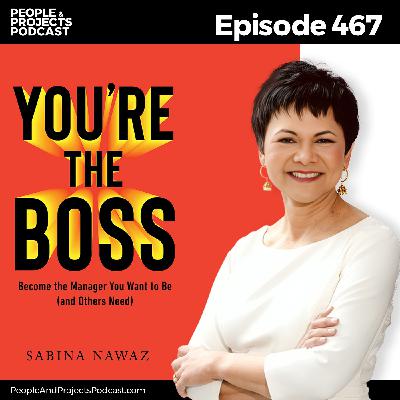
Summary In this episode, Andy talks with Sabina Nawaz, global CEO coach and former Microsoft executive, about her new book You're the Boss: Become the Manager You Want to Be and Others Need. With authenticity and insight, Sabina shares what no one tells you about stepping into management, from the strange emptiness that can follow a promotion to how pressure can quietly bring out the worst in us. They discuss why even successful leaders can feel like imposters, how power and pressure distort our perceptions, and what it means to be an "innocent saboteur." Sabina also offers practical advice, such as developing your "shut up muscle," asking better questions, and making small habit changes that stick. The conversation covers everything from leadership in the workplace to parenting, making this one of those rare episodes with takeaways for every area of life. If you're looking for insights on how to grow as a leader without losing yourself in the process, this episode is for you! Sound Bites "It's not power that corrupts. It's pressure that corrupts." "If nobody's giving you the full truth, what are the ways you might be going off track?" "When you're under pressure, do nothing. That's counterintuitive but that's where insight lives." "The more righteous you feel, the more you need to consider alternative stories." "Use 'Say more' when you're curious—and especially when you're judgmental." "The only way to overachieve is to underachieve—start with micro habits." "You're not the only one with imposter syndrome—CEOs have it too." Chapters 00:00 Introduction 02:15 Start of Interview 02:24 "Can you think of anything from your family culture or experiences growing up that may have influenced how you think about leadership?" 05:08 "You describe getting promoted as a strange emptiness—what were the signs it came with unexpected costs?" 07:17 "Do you see imposter syndrome even in top-level leaders you coach?" 08:21 "How does embracing the complexity of leadership change how we view our own leaders?" 10:04 "How do we unknowingly sabotage ourselves as leaders?" 12:09 "What are some of the signs that you're veering off track as a boss?" 13:10 "What specific things do you personally do to manage pressure situations so you don't become a monster?" 17:13 "You say, 'stay small longer than you think you need to.' What does that mean and how do you apply it?" 21:07 "What is a singular story and how do we rescue ourselves from believing them?" 26:20 "What's the 'shut up muscle' and how do you develop it?" 29:02 "Can you think of ideas from the book that apply to parenting as well?" 31:44 End of Interview 32:09 Andy Comments After the Interview 37:40 Outtakes Learn More You can learn more about Sabina and her work at SabinaNawaz.com/book. For more learning on this topic, check out: Episode 455 with Janet Polach. It's a great follow-on to what we talked with Sabina here today. Episode 456 with Kevin Eikenberry. Leading at the next level up comes with a lot of ambiguity that can shake our confidence. Kevin hits that topic head on—I think you'll get value out of it. Episode 391 with Adam Bryant about his book The Leap to Leader. Pass the PMP Exam This Year If you or someone you know is thinking about getting PMP certified, we've put together a helpful guide called The 5 Best Resources to Help You Pass the PMP Exam on Your First Try. We've helped thousands of people earn their certification, and we'd love to help you too. It's totally free, and it's a great way to get a head start. Just go to 5BestResources.PeopleAndProjectsPodcast.com to grab your copy. I'd love to help you get your PMP this year! Thank you for joining me for this episode of The People and Projects Podcast! Talent Triangle: Power Skills Topics: Leadership, Management, Power Dynamics, Self-Awareness, Feedback, Emotional Intelligence, Coaching, Communication, Organizational Culture, Habits, Imposter Syndrome, Pressure, Stress The following music was used for this episode: Music: Brooklyn Nights by Tim Kulig License (CC BY 4.0): https://filmmusic.io/standard-license Music: Chillhouse by Frank Schroeter License (CC BY 4.0): https://filmmusic.io/standard-license


Download from Google Play

Download from App Store
 United States
15 Best Project Management Software 2024 Shortlist · 1. Celoxis – Best for Comprehensive PMO Software · 2. Planview – Portfolio and Resource Management. More check at: https://www.celoxis.com/article/best-project-management-software
love this. I am looking to pursue a career in PM and this has given some great insights!
great thanks for this episode, appreciate variation on subjects you are dealing with each time.
Andy is conducting a great podcast. great reference for additional learning and insight.
When there is even an inkling that I made a mistake, the first thing I tried to do is take the emotions and defensivness out of it. When that works, I am the better for it. Conversely, when someone makes a mistake, again I try to take the emotions out of it and give them an opportunity to own the mistake. We then move on with a better appreciation for it and respect for one another. That said, if someone does not own up to a mistake, I start taking notes and writing letters. You be amazed of the response at that time. Bottom line, we are all one moment away from making a mistake. Don't let your reaction to your mistake be your mistake.
Like it very much. I once told my supervisor "don't be easily disappointed".