


 Claim Ownership
PhotoPhone
Subscribed: 0Played: 0
Subscribe

© Jesse Alexander and Clare Bottomley
Description
Jesse Alexander and Clare Bottomley explore photography within higher education. In conversation with colleagues, recent graduates and other professionals, they seek to address the pertinent issues that concern those involved in learning, teaching, or just curious about photography education.
https://www.jessealexander.co.uk
https://clarebottomley.co.uk
https://www.jessealexander.co.uk
https://clarebottomley.co.uk
15 Episodes
Reverse

Clare and Jesse continue their mini series – The Hustle – with Serena Brown, talking to photographers about how they have gone about finding commissions and generally navigating the murky waters of professional photography.Serena is a photographer based in London. She studied on the BA Photography programme at Falmouth and graduated in 2018. Within 6 months of getting her degree, Serena had managed to secure a photoshoot with Nike, and since then has worked on commercial and editorial assignments for similarly well-known brands, and magazines like Rolling Stone, the Face and the Wall Street Journal. In 2023 a photograph of her sister taken at her grandmother’s house in Ghana was in the last 5 finalists of the Taylor Wessing portrait prize. This resulted in receiving the inaugural commission from the National Portrait Gallery that required her to photograph someone of historical significance to be accessioned to the gallery’s permanent collection.Serena chose to photograph fellow Londoner Dr. Rosamund Adoo-Kissi-Debrah CBE, who began campaigning against air pollution following the tragic death of her daughter, Ella in 2013. As a result of Rosamund’s work, in 2020 the coroner amended Ella’s death certificate to include air pollution as a cause of death, making Ella’s the first recorded death – worldwide –inked to air pollution. You can read about the commission on the NPG’s website, and watch a short film of the shoot on Serena’s website. You can also read more about Ella and her legacy here.https://www.serenabrown.co/@_serenabrownPLEASE BE ADVISED:Unfortunately we experienced some technical issues that we weren’t aware of at the time of the interview, so the recording is a bit glitchy in places – mostly at the beginning. We are disappointed about this but ask listeners to bear with us and we promise to do better next time.

Jesse and Clare welcome Robert Darch for the first of a micro-series they are loosely calling ‘The Hustle’ where they talk to photographers about how they’ve navigated the often opaque territory of professional photography: how they’ve gone about making contacts, getting assignments, and ultimately finding ways of supporting the pursuit of the work that they really want to make.Robert Darch is a graduate of the University of Wales, Newport and Plymouth University, where he completed his postgraduate studies in Photography. His work explores themes such as rural identity, memory, imagined futures, and psychological states, drawing from his own experience to create narratives that help contextualise a personal response to place. Robert is the author of three very successful photobooks; The Moor, Vale, and The Island, and has featured in Facing Britain, a touring retrospective of the last sixty years of British Documentary Photography and included in Another Country: British Documentary Photography since 1945, by Gerry Badger. Robert also works on editorial assignments for the Guardian, Sunday Times and the Financial Times, and on long-term commissions for Beaford and the Devon Wildlife Trust. Robert also works on the BA(Hons) Photography (online) programme at Falmouth University.See Robert’s work, or connect at:https://www.robertdarch.com/@RobertDarchPhoto: Tavis Amosford

Jesse and Clare talk to Linda Jarrett and Justin Quinnell about their creative practices, both of which involve alternative processes and working with communities. Justin Quinnell is an artist and educator based in Bristol and Linda Jarrett is an artist based in New Zealand.They talk about the value of analogue and alternative photographic processes and the greater sense of community that these can come with. They discuss how alternative processes can communicate ideas to new audiences and are remarkable tools for learning.See their work, or connect via:@justin_quinnellhttps://www.pinholephotography.org/@lindajarrettphotographyhttps://lindajarrett.comIf you have and questions, or themes, that you’d like Jesse and Clare to discuss in an episode, please get in touch or leave a comment. Thank you for listening!
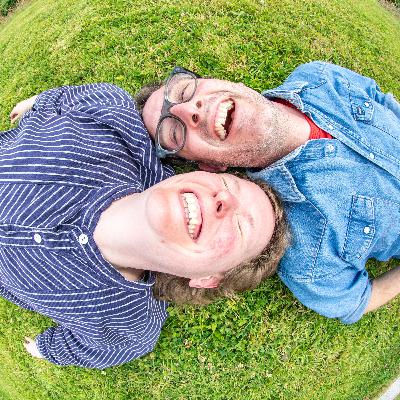
"Play is the highest form of research."-Albert Einstein.Clare and Jesse talk to George Bull and Michal Iwanowski about photography and 'play'. They ask how play has featured in their education and creative practices, and discuss their experiences of students' willingness (or not as the case may be) to play, experiment, take creative risks and get things 'wrong'. George Bull is a photographer and lecturer in photography at Henley College in Berkshire and completed the MA Photography (online) programme at Falmouth University in 2025.https://www.georgecbull.com@George_C_BullMichal Iwanowski is an artist and lecturer in photography at Cardiff Metropolitan University. He has exhibited widely and his work is in numerous collections. His project 'Go Home Polish' which explores his identity in a post-Brexit climate was first published as a photobook and will be exhibited at Y Storiel in Bangor on March 20th, to mark the 10th anniversary of Brexit referendum.https://www.michaliwanowski.com@MichalIwanowskiThank you also to Joe Costigan @CostiganJoe for the playful artwork! (Sorry we ever doubted the wisdom of using a fisheye lens for a portrait!)
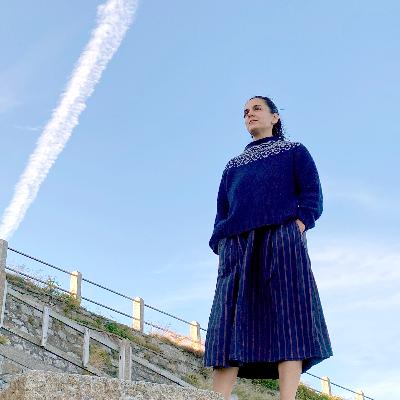
Join by Dr. Catarina Fontoura, Course Leader for BA(Hons) Photography (online) at Falmouth University, Jesse and Clare discuss the challenges of teaching a subject that is steeped in politics, in an unprecedented time of polarised viewpoints.

Comments

Download from Google Play

Download from App Store
 United States