


 Claim Ownership
Podcards
Subscribed: 0Played: 1
Subscribe

© Maitrī Publications
Description
Podcards are brief, beautiful, and pocketable sound bites of timeless wisdom to bring back more love and kindness into your life.
49 Episodes
Reverse

Being able to reflect on ageing, sickness, and death (दोषानुदर्शनम्) is a central tenet of the Vedic tradition. Freud says that you cannot imagine your own death because when you imagine it, you merely observe (in a superficial way) what it might be like from the outside, disassociated from the visceral reality. Death is the end of experience as we know it, so the only recourse we have is to deny its fearful existence. Others may die around us, but we can never really comprehend what that means for us, and the ego assures us that we cannot die. But no matter how much society tries to brush aside the facts of ageing, illness, and death, the reality is that they are the only certainties in life; ageing brings with it pain, suffering, separation, and loss; death is most assured. Life is a gift, all will say, but the spectre of death is always present, no matter how rich and powerful you are. ‘“So careful of the type?” but no’ says Tennyson, ‘[she] cries, "A thousand types are gone: I care for nothing, all shall go."‘ And though we are apt to dismiss the notion, the human spirit knows that all lives are interconnected and even though death takes many, others are spared.If you keep running away from the facts of ageing and death, you will end up suffering more from the pain of encountering them and the bewilderment that arises out of sudden knowledge of their implications. The ordinary vicissitudes of life—a life-changing ailment or the sudden loss of a loved one—have devastating effects, even though you know, deep down, that such things are a part of life. To face these existential fears is to examine how you unconsciously act or react to their presence. Do you allow yourself to grieve in sympathy with others at their loss or do you let it foster your own fears? Do you despair at the thought of never indulging in physical pleasures? To accept life and death, pain and pleasure, is to accept that they are not opposite forces but the two phases of the same continuum. To deny one in favour of the other is to gradually offset the delicate balance that sustains all life everywhere. On the other hand, to accept your own vulnerability is to accept how naked and utterly exposed you are to the ravages of time and tide. Instead of an egocentric preoccupation with overcoming this vulnerability or a morbid fixation with mortality, you embrace this vulnerability, this tenderness in an open way. You can accept your own insignificance and perhaps even extend your compassion to those outside your group who are different from you. You can begin to live and cherish each day as a chance to give and give back, with no guarantee of a tomorrow. And in the process you’ll discover what is really meaningful to you.Get this podcard This is a public episode. If you would like to discuss this with other subscribers or get access to bonus episodes, visit podcard.substack.com
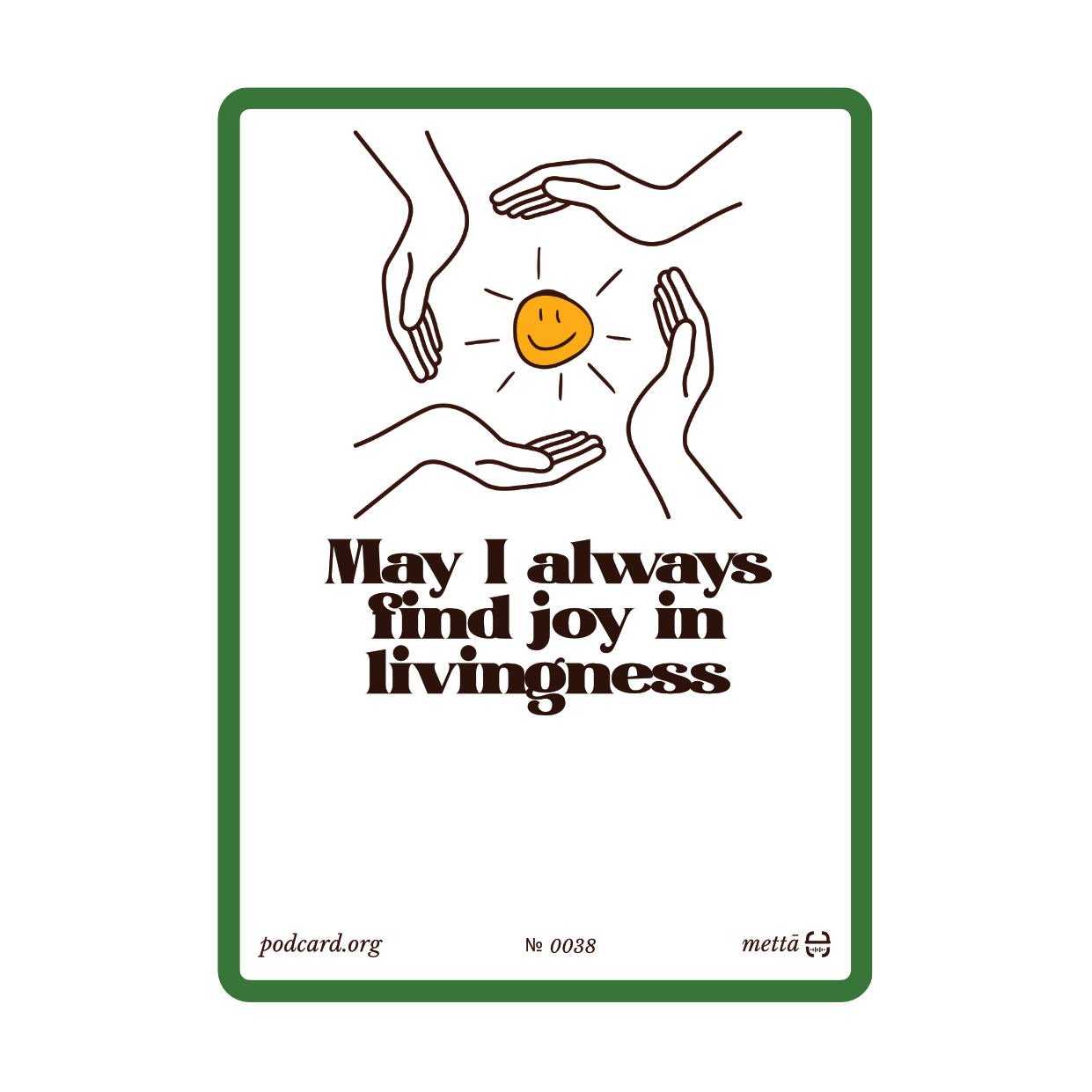
Muditā (मुदिता) means sympathetic or vicarious joy. It is one of the four brahmavihārās (ब्रह्मविहारा), the sublime attitudes, and also the hardest to cultivate, perhaps harder in our day and age as we see abject inequality around us. Your happiness is tainted by the suffering of others to the point where you unconsciously resent the simple moments of joy in your life and in the lives of those around you. Indeed, when someone has fortune and felicity undeservedly heaped upon him, it doesn’t seem fair to all those who suffer. Apart from resentment being no damn good to anyone, such feelings more likely arise out of the ordinary human appetite for competitiveness which in turn is driven by fear blended with the volatile energies of sex. Remind yourself that those successful people often got there by throwing themselves into the turbulent gulf stream of life for the sheer pleasure of experiencing it in its fullness. You can allow yourself to revel in the joy of others: in the ebullience of happy children; in the intrepid passion of the adventurer, entrepreneur, or artist; in the triumph of the sportsman.There is happiness in doing and it is most natural to derive pleasure from your actions. We, like all animals, get our stability and form by the perpetual motion of our various disparate parts. In fact, our actuating faculties carry in themselves the impulse to their own exercise, and in that exercise there is pleasure—the delight of sheer aliveness. “Wherever a process of life communicates an eagerness to him who lives it,” says William James, “there the life becomes genuinely significant.” That fleeting feeling of aliveness is often serendipitous and the moments of unbridled delight it evokes seem incommunicable, perhaps that is why our language has no fixed term or turn of phrase for such experiences. The French expression joie de vivre comes closest to describing the sheer ebullience of experiencing life; that simply being alive is an extraordinary experience. And even though you may be suffering all sorts of hardship or illness, in this moment you allow the ecstatic rapture of life to envelope you and spirit you away to a place devoid of time and space—for to miss the joy is to miss all.Get this podcard This is a public episode. If you would like to discuss this with other subscribers or get access to bonus episodes, visit podcard.substack.com
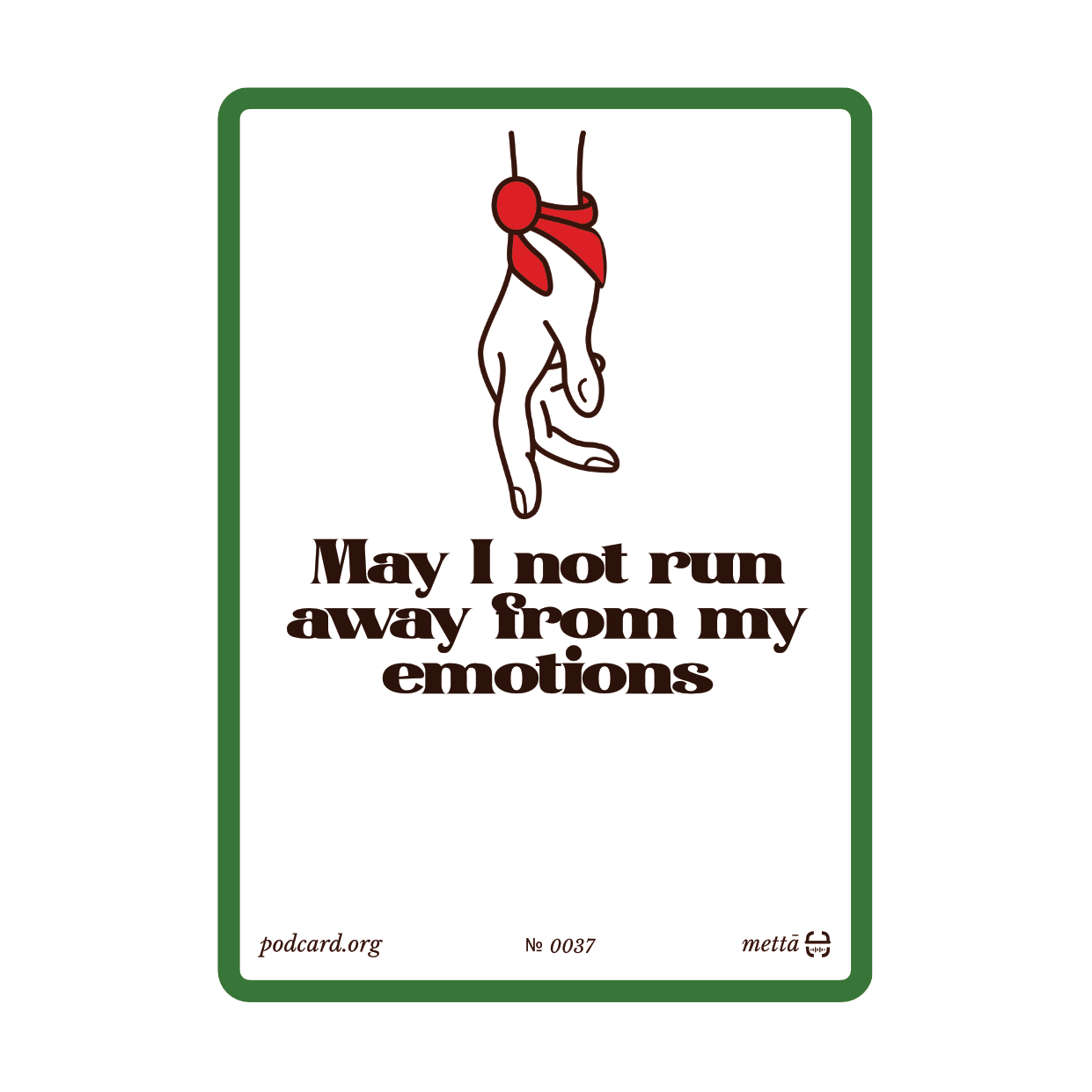
The fourth and fifth skandhas (स्कन्ध) of egotism—intellectualism and consciousness—give rise to discursive thought and the freewheeling swells of strong emotion that it brings in its wake. But even discursive thought serves a purpose: it simulates the various outcomes of past and future actions as the mind attempts to consolidate experiences into well known concepts; which it then uses to anticipate every snippet of sight, sound, smell, taste, and touch that you will experience, and every action that you will take in response. This is the natural modus of the survival mechanism. For to be simply reactive would place our relatively vulnerable bodies at a fatal disadvantage in a hostile world. Forbidden emotions like fear and anger dominate discursive thought because they must invariably lie at the bottom of your disconcertment. Their instances, past and future, have a high impact on your body budget. A flash of fear floods your mind and then recedes, but it leaves in its wake a slew of agitated neurons and chemical effluents from the priming of your defence system. These effects linger around long after the feeling has passed and give the illusion of prolonged malaise. So it is prudent for the self system to inhibit or subdue such feelings of irrational anger, guilt, fear, and loneliness by literally blocking thoughts and associations that have even a whiff of the forbidden. Fearing your fear, being angry about your anger, agonizing over your loneliness only makes things worse. And when you have contracted so many ways of “losing face”, the need to inhibit and censor thoughts quickly becomes untenable.A more viable alternative is to embrace unwanted and unbidden emotions fully; to sit them out and understand where they’re coming from. Feelings of anger towards someone are really part of a wider and deeper anger towards similar people and situations from your past. Fear, anger, self-satisfaction, and self-pity share a common provenance—they are all emotions of the ego. They arise in reaction to how people and situations affect your personal identity and how you relate to them. By letting yourself feel your fear without trying to justify it or otherwise explain it away, or worse yet, condemn or suppress it, you gain a better understanding of what makes you tick. By facing your emotions without reacting to them, you develop greater confidence in your own ability to cope with whatever life throws at you. In the Eastern tradition you are encouraged to sit with your anger, to let it well up and fully occupy the space it requires. Allowing the raw energy of your emotions to expand and grow this way lets you focus on the feeling instead of the objects that produced it. That is, you don’t focus on the thoughts and perceptions that produced the anger, but the feeling with its complexities and interwovenness as it sits heavily inside you. Anger is transformed from a destructive force into a catalyst for empathy and compassion. Fear no longer triggers the instinct to run away and hide but to pay closer attention to what is going on outside and inside. Loneliness reveals itself as the basic human need for connection and vulnerability. In this way, your emotions are transmuted from mere objects to react against into instruments of self-discovery and self-realisation.Get this podcard This is a public episode. If you would like to discuss this with other subscribers or get access to bonus episodes, visit podcard.substack.com
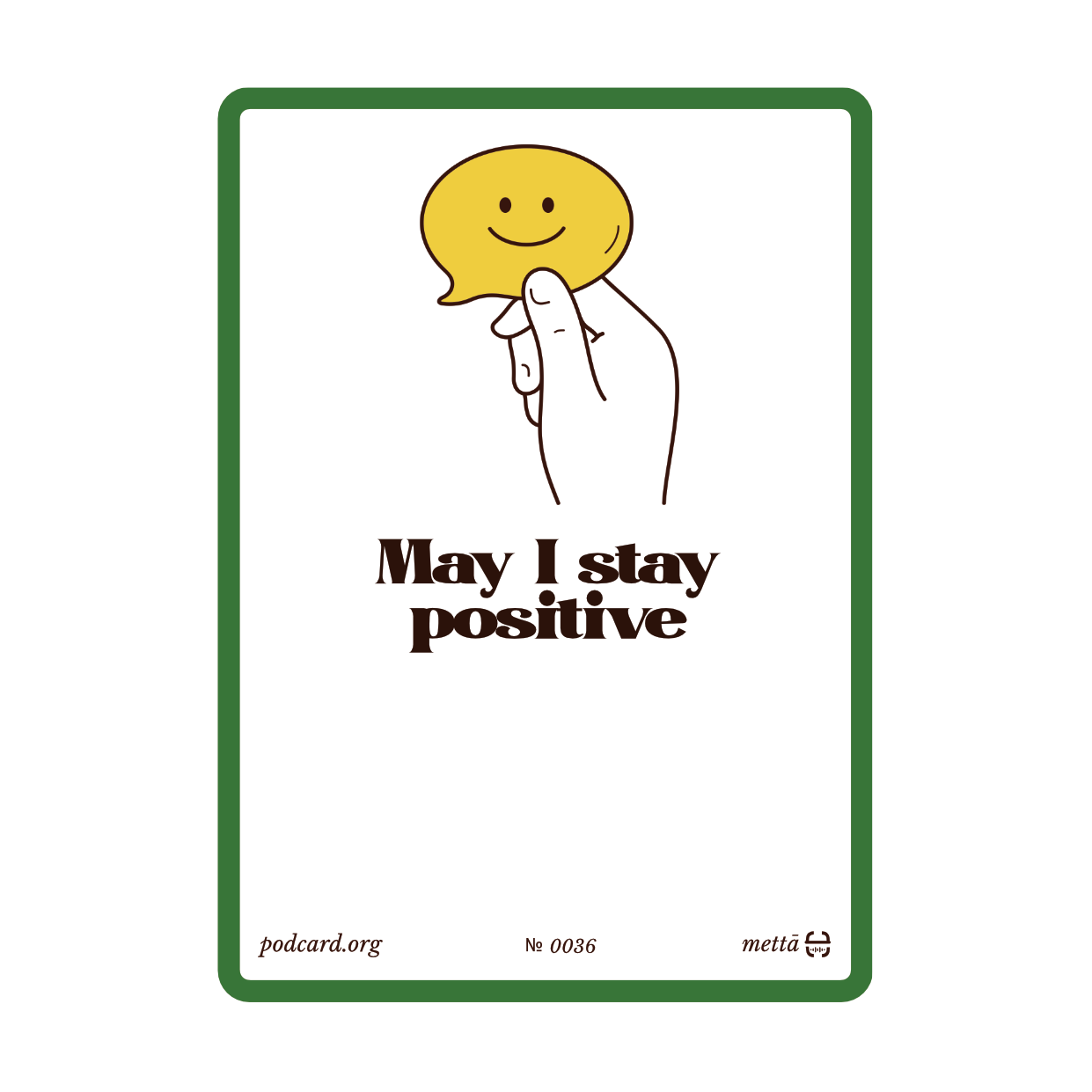
Your brain does not care if your internal representations bear no more than a fleeting resemblance to reality. It distorts, omits, and even deletes parts of your perceptual experience, depending on your tendencies and your temperament. It is this neurological ambiguity that transforms mere spectres of the imagination into all manner of tangible things, ranging from utilitarian to useless. Thoughts themselves are the cornerstones of this imaginative capacity. Merely recalling a memory rearranges its previous associations by changing its connection to other neuronal circuits. Your thoughts actually affect the neurological functioning of your body, from the actions you take thenceforth, to the subtle physiological functioning of the body that constitutes its general health and wellbeing. So, optimism is essential for maintaining a healthy brain and body while also propelling you forwards with eagerness and alacrity. While positive thoughts neurologically suppress negative thoughts, a fearful and pessimistic attitude to life can quickly spiral into the void of depression. Focussing on things that make you frightened and angry trigger the same priming of the bodily system as biological imperatives and genuine threats do. If you are someone who focuses excessively on the negative aspects of yourself or your life, your brain’s limited pool of energy is rapidly depleted by the hollow pinging back and forth of areas of your system in response to imagined threats. Simply focussing on an image of benevolence or compassion, or one that give you hope for at least twelve minutes a day in a quiet space, will build and strengthen new positive neural circuits which will, in turn, interrupt and suppress the negative neurological tendencies that only find outlet in anger and fear. When you change how you focus your attention, you change the way you think and as you begin to think more positively, you begin to change your outward circumstances for the better.Get this podcard This is a public episode. If you would like to discuss this with other subscribers or get access to bonus episodes, visit podcard.substack.com
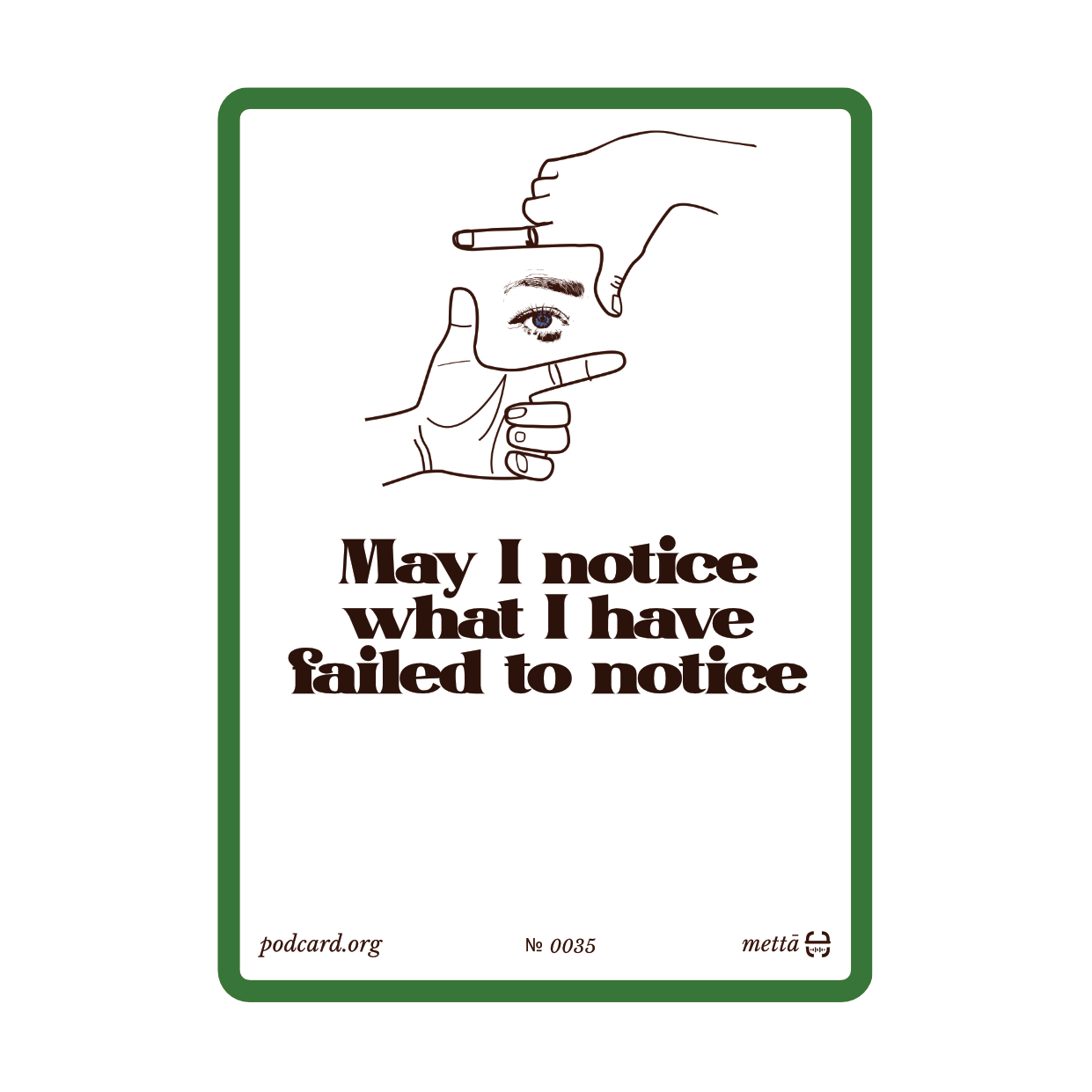
Because the mind is a tangle of sensations, vivid recollections of sensations, images of events as well as images of states of mind, new experiences are not entirely detached from those images and recollections. In fact, we are constantly reliving our past experiences at a certain rate in time or perceiving meaning in a flash of insight that is only experienced as an inner duration. Through all of this, our innumerable subtle faiths, fears, anticipations, instincts, superstitions, and blind tendencies forever tinge the fabric of our reality. The universal tendencies that lead to suffering are the five kleśas (क्लेश): hatred, greed, envy, pride, and ignorance. When you are so self-involved, you tend to only notice things when your tendencies are crossed or satisfied. And because you fail to notice what you have failed to notice, there is little you can do to change—until you notice how failing to notice shapes your thoughts and deeds.We have a need to go beyond ourselves, to step outside our familiar, safe boundaries and taste life on a larger scale. So the natural tendency is to always explain or explain away experience so that you can maintain some measure of control of your world and the persona you have cultivated for yourself. At the heart of this egotism is really the noble tendency to realise yourself as an individual and live a full and rich personal life. The very word tendency (from Latin tendens) means a “stretching to”, to aim at something. You can only begin to understand what makes you tick by observing how you act and react in different situations. What satisfies or antagonises your tendencies is usually felt instinctively as pleasure or pain. But tendencies like intuitions are more limiting beliefs than any prescient indicators of unfavourable things. So pay attention to the things that you like to do that give you bad results and the things you don’t like to do that give you good results whenever you encounter such thoughts and feelings. In time you’ll learn to be more skillfully discerning in how you shape your awareness.Get this podcard This is a public episode. If you would like to discuss this with other subscribers or get access to bonus episodes, visit podcard.substack.com

Comments

Download from Google Play

Download from App Store
 United States