Discover
Pondering AI
Pondering AI
Author: Kimberly Nevala, Strategic Advisor - SAS
Subscribed: 44Played: 460Subscribe
Share
© 2024 SAS Institute Inc. All Rights Reserved.
Description
How is the use of artificial intelligence (AI) shaping our human experience?
Kimberly Nevala ponders the reality of AI with a diverse group of innovators, advocates and data scientists. Ethics and uncertainty. Automation and art. Work, politics and culture. In real life and online. Contemplate AI’s impact, for better and worse.
All presentations represent the opinions of the presenter and do not represent the position or the opinion of SAS.
Kimberly Nevala ponders the reality of AI with a diverse group of innovators, advocates and data scientists. Ethics and uncertainty. Automation and art. Work, politics and culture. In real life and online. Contemplate AI’s impact, for better and worse.
All presentations represent the opinions of the presenter and do not represent the position or the opinion of SAS.
85 Episodes
Reverse
Masheika Allgood delineates good AI from GenAI, outlines the environmental imprint of hyperscale data centers, and emphasizes AI success depends on the why and data. Masheika and Kimberly discuss her path from law to AI; AI as an embodied infrastructure; forms of beneficial AI; if the GenAI math maths; narratives underpinning AI; the physical imprint of hyperscale data centers; the fallacy of closed loop cooling; who pays for electrical capacity; enabling community dialogue; starting with why in AI product design; AI as a data infrastructure play; staying positive and finding the thing you can do. Masheika Allgood is an AI Ethicist and Founder of AllAI Consulting. She is a well-known advocate for sustainable AI development and contributor to the IEEE P7100 Standard for Measurement of Environmental Impacts of Artificial Intelligence Systems. Related Resources Taps Run Dry Initiative (Website) Data Center Advocacy Toolkit (Website) Eat Your Frog (Substack) AI Data Governance, Compliance, and Auditing for Developers (LinkedIn Learning) A Mind at Play: How Claude Shannon Invented the Information Age (Referenced Book) A transcript of this episode is here.
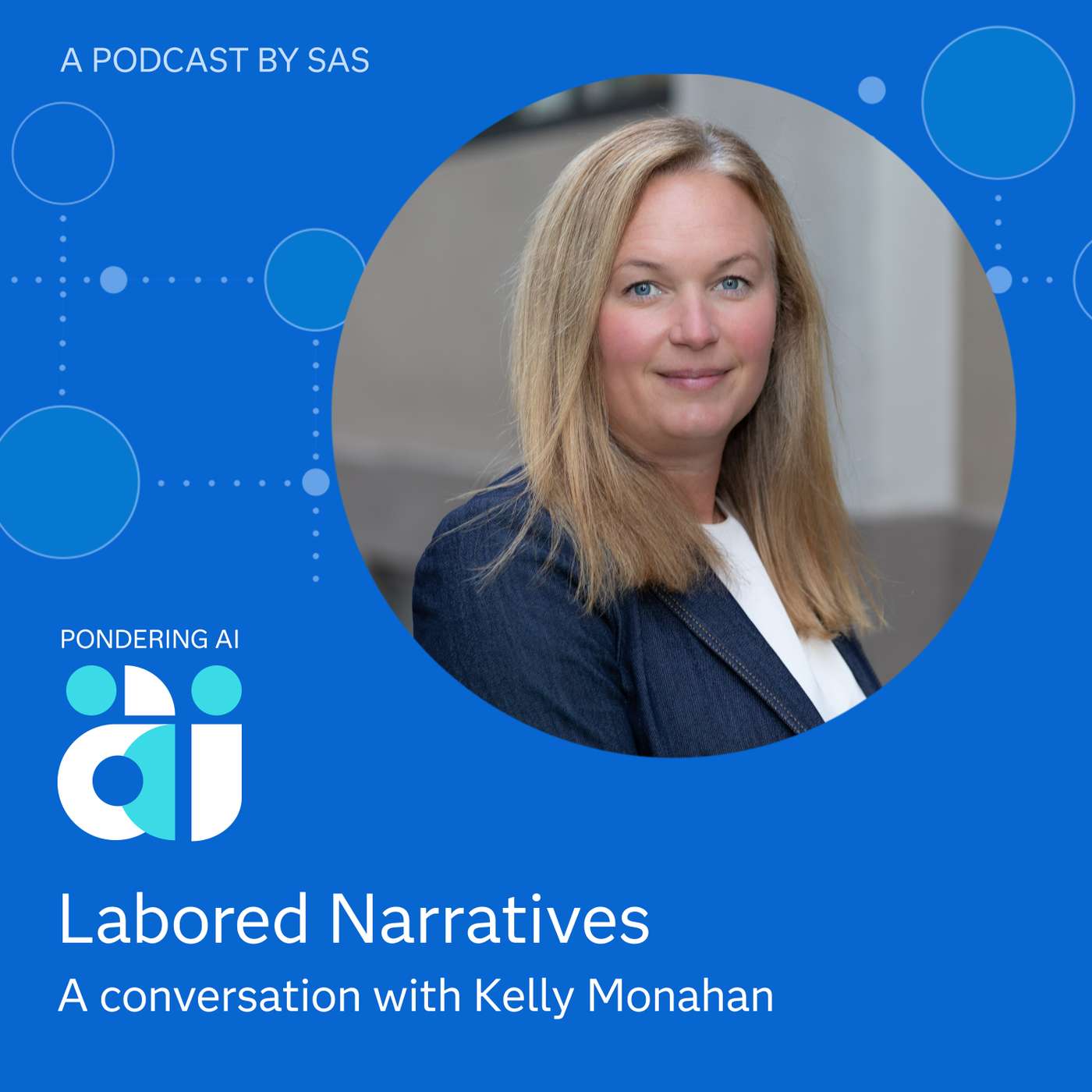
Kati Walcott differentiates simulated will from genuine intent, data sharing from data surrender, and agents from agency in a quest to ensure digital sovereignty for all.Kati and Kimberly discuss her journey from molecular genetics to AI engineering; the evolution of an intention economy built on simulated will; the provider ecosystem and monetization as a motive; capturing genuine intent; non-benign aspects of personalization; how a single bad data point can be a health hazard; the 3 styles of digital data; data sharing vs. data surrender; whether digital society represents reality; restoring authorship over our digital selves; pivoting from convenience to governance; why AI is only accountable when your will is enforced; and the urgent need to disrupt feudal economics in AI. Kati Walcott is the Founder and Chief Technology Officer at Synovient. With over 120 international patents, Kati is a visionary tech inventor, author and leader focused on digital representation, rights and citizenship in the Digital Data Economy.Related ResourcesThe False Intention Economy: How AI Systems are Replacing Human Will with Modeled Behavior (LinkedIn Article)A transcript of this episode is here.
Paula Helm articulates an AI vision that goes beyond base performance to include epistemic justice and cultural diversity by focusing on speakers and not language alone. Paula and Kimberly discuss ethics as a science; language as a core element of culture; going beyond superficial diversity; epistemic justice and valuing other’s knowledge; the translation fallacy; indigenous languages as oral goods; centering speakers and communities; linguistic autonomy and economic participation; the Māori view on data ownership; the role of data subjects; enabling cultural understanding, self-determination and expression; the limits of synthetic data; ethical issues as power asymmetries; and reflecting on what AI mirrors back to us. Paula Helm is an Assistant Professor of Empirical Ethics and Data Science at the University of Amsterdam. Her work sits at the intersection of STS, Media Studies and Ethics. In 2022 Paula was recognized as one of the 100 Most Brilliant Women in AI-Ethics.Related ResourcesGenerating Reality and Silencing Debate: Synthetic Data as Discursive Device (paper) https://journals.sagepub.com/doi/full/10.1177/20539517241249447Diversity and Language Technology (paper): https://link.springer.com/article/10.1007/s10676-023-09742-6A transcript of this episode is here.
Jordan Loewen-Colón values clarity regarding the practical impacts, philosophical implications and work required for AI to serve the public good, not just private gain.Jordan and Kimberly discuss value alignment as an engineering or social problem; understanding ourselves as data personas; the limits of personalization; the perception of agency; how AI shapes our language and desires; flattening of culture and personality; localized models and vernacularization; what LLMs value (so to speak); how tools from calculators to LLMs embody values; whether AI accountability is on anyone’s radar; failures of policy and regulation; positive signals; getting educated and fostering the best AI has to offer.Jordan Loewen-Colón is an Adjunct Associate Professor of AI Ethics and Policy at Smith School of Business | Queen's University. He is also the Co-Founder of the AI Alt Lab which is dedicated to ensuring AI serves the public good and not just private gain.Related ResourcesHBR Research: Do LLMs Have Values? (paper): https://hbr.org/2025/05/research-do-llms-have-values AI4HF Beyond Surface Collaboration: How AI Enables High-Performing Teams (paper): https://www.aiforhumanflourishing.com/the-framework-papers/relationshipsandcommunication A transcript of this episode is here.
Keren Katz exposes novel risks posed by GenAI and agentic AI while reflecting on unintended malfeasance, surprisingly common insider threats and weak security postures. Keren and Kimberly discuss threats amplified by agentic AI; self-inflicted exposures observed in Fortune 500 companies; normalizing risky behavior; unintentional threats; non-determinism as a risk; users as an attack vector; the OWASP State of Agentic AI and Governance report; ransomware 2025; mapping use cases and user intent; preemptive security postures; agentic behavior analysis; proactive AI/agentic security policies and incident response plans. Keren Katz is Senior Group Manager of Threat Research, Product Management and AI at Tenable, a contributor at both the Open Worldwide Application Security Project (OWASP) and Forbes. Keren is a global leader in AI and cybersecurity, specializing in Generative AI threat detection. Related ResourcesArticle: The Silent Breach: Why Agentic AI Demands New OversightState of Agentic AI Security and Governance (whitepaper): https://genai.owasp.org/resource/state-of-agentic-ai-security-and-governance-1-0/ The LLM Top 10: https://genai.owasp.org/llm-top-10/A transcript of this episode is here.
Maximilian Vogel dismisses tales of agentic unicorns, relying instead on human expertise, rational objectives, and rigorous design to deploy enterprise agentic systems. Maximilian and Kimberly discuss what an agentic system is (emphasis on system); why agency in agentic AI resides with humans; engineering agentic workflows; agentic AI as a mule not a unicorn; establishing confidence and accuracy; codesigning with business/domain experts; why 100% of anything is not the goal; focusing on KPIs not features; tricks to keep models from getting tricked; modeling agentic workflows on human work; live data and human-in-the-loop validation; AI agents as a support team and implications for human work. Maximilian Vogel is the Co-Founder of BIG PICTURE, a digital transformation boutique specializing in the use of AI for business innovation. Maximilian enables the strategic deployment of safe, secure, and reliable agentic AI systems.Related ResourcesMedium: https://medium.com/@maximilian.vogelA transcript of this episode is here.
Henrik Skaug Sætra considers the basis of democracy, the nature of politics, the tilt toward digital sovereignty and what role AI plays in our collective human society. Henrik and Kimberly discuss AI’s impact on human comprehension and communication; core democratic competencies at risk; politics as a joint human endeavor; conflating citizens with customers; productively messy processes; the problem of democracy; how AI could change what democracy means; whether democracy is computable; Google’s experiments in democratic AI; AI and digital sovereignty; and a multidisciplinary path forward. Henrik Skaug Sætra is an Associate Professor of Sustainable Digitalisation and Head of the Technology and Sustainable Futures research group at Oslo University. He is also the CEO of Pathwais.eu connecting strategy, uncertainty, and action through scenario-based risk management.Related ResourcesGoogle Scholar Profile: https://scholar.google.com/citations?user=pvgdIpUAAAAJ&hl=enHow to Save Democracy from AI (Book – Norwegian): https://www.norli.no/9788202853686AI for the Sustainable Development Goals (Book): https://www.amazon.com/AI-Sustainable-Development-Goals-Everything/dp/1032044063Technology and Sustainable Development: The Promise and Pitfalls of Techno-Solutionism (Book): https://www.amazon.com/Technology-Sustainable-Development-Pitfalls-Techno-Solutionism-ebook/dp/B0C17RBTVLA transcript of this episode is here.
Dr. Rebecca Portnoff generates awareness of the threat landscape, enablers, challenges and solutions to the complex but addressable issue of online child sexual abuse. Rebecca and Kimberly discuss trends in online child sexual abuse; pillars of impact and harm; how GenAI expands the threat landscape; personalized targeting and bespoke abuse; Thorn’s Safety by Design Initiative; scalable prevention strategies; technical and legal barriers; standards, consensus and commitment; building better from the beginning; accountability as an innovative goal; and not confusing complex with unsolvable. Dr. Rebecca Portnoff is the Vice President of Data Science at Thorn, a non-profit dedicated to protecting children from sexual abuse. Read Thorn’s seminal Safety by Design paper, bookmark the Research Center to stay updated and support Thorn’s critical work by donating here. Related Resources Thorn’s Safety by Design Initiative (News): https://www.thorn.org/blog/generative-ai-principles/ Safety by Design Progress Reports: https://www.thorn.org/blog/thorns-safety-by-design-for-generative-ai-progress-reports/ Thorn + SIO AIG-CSAM Research (Report): https://cyber.fsi.stanford.edu/io/news/ml-csam-report A transcript of this episode is here.
Hiwot Tesfaye disputes the notion of AI givers and takers, challenges innovation as an import, highlights untapped global potential, and charts a more inclusive course. Hiwot and Kimberly discuss the two camps myth of inclusivity; finding innovation everywhere; meaningful AI adoption and diffusion; limitations of imported AI; digital colonialism; low-resource languages and illiterate LLMs; an Icelandic success story; situating AI in time and place; employment over automation; capacity and skill building; skeptical delight and making the case for multi-lingual, multi-cultural AI. Hiwot Tesfaye is a Technical Advisor in Microsoft’s Office of Responsible AI and a Loomis Council Member at the Stimson Center where she helped launch the Global Perspectives: Responsible AI Fellowship. Related Resources#35 Navigating AI: Ethical Challenges and Opportunities a conversation with Hiwot TesfayeA transcript of this episode is here.
Dietmar Offenhuber reflects on synthetic data’s break from reality, relates meaning to material use, and embraces data as a speculative and often non-digital artifact. Dietmar and Kimberly discuss data as a representation of reality; divorcing content from meaning; data settings vs. data sets; synthetic data quality and ground truth; data as a speculative artifact; the value in noise; data materiality and accountability; rethinking data literacy; Instagram data realities; non-digital computing and going beyond statistical analysis. Dietmar Offenhuber is a Professor and Department Chair of Art+Design at Northeastern University. Dietmar researches the material, sensory and social implications of environmental information and evidence construction. Related Resources Shapes and Frictions of Synthetic Data (paper): https://journals.sagepub.com/doi/10.1177/20539517241249390 Autographic Design: The Matter of Data in a Self-Inscribing World (book): https://autographic.design/ Reservoirs of Venice (project): https://res-venice.github.io/ Website: https://offenhuber.net/ A transcript of this episode is here.
Pia Lauritzen questions our use of questions, the nature of humanity, the premise of AGI, the essence of tech, if humans can be optimized and why thinking is required. Pia and Kimberly discuss the function of questions, curiosity as a basic human feature, AI as an answer machine, why humans think, the contradiction at the heart of AGI, grappling with the three big Es, the fallacy of human optimization, respecting humanity, Heidegger’s eerily precise predictions, the skill of critical thinking, and why it’s not really about the questions at all. Pia Lauritzen, PhD is a philosopher, author and tech inventor asking big questions about tech and transformation. As the CEO and Founder of Qvest and a Thinkers50 Radar Member Pia is on a mission to democratize the power of questions. Related ResourcesQuestions (Book): https://www.press.jhu.edu/books/title/23069/questions TEDx Talk: https://www.ted.com/talks/pia_lauritzen_what_you_don_t_know_about_questions Question Jam: www.questionjam.comForbes Column: forbes.com/sites/pialauritzen LinkedIn Learning: www.Linkedin.com/learning/pialauritzen Personal Website: pialauritzen.dk A transcript of this episode is here.
Michael Strange has a healthy appreciation for complexity, diagnoses hype as antithetical to innovation and prescribes an interdisciplinary approach to making AI well. Michael and Kimberly discuss whether AI is good for healthcare; healthcare as a global system; radical shifts precipitated by the pandemic; why hype stifles nuance and innovation; how science works; the complexity of the human condition; human well-being vs. health; the limits of quantification; who is missing in healthcare and health data; the political-economy and material impacts of AI as infrastructure; the doctor in the loophole; the humility required to design healthy AI tools and create a resilient, holistic healthcare system. Michael Strange is an Associate Professor in the Dept of Global Political Affairs at Malmö University focusing on core questions of political agency and democratic engagement. In this context he works on Artificial Intelligence, health, trade, and migration. Michael directed the Precision Health & Everyday Democracy (PHED) Commission and serves on the board of two research centres: Citizen Health and the ICF (Imagining and Co-creating Futures). Related Resources If AI is to Heal Our Healthcare Systems, We Need to Redesign How AI Is Developed (article): https://www.techpolicy.press/if-ai-is-to-heal-our-healthcare-systems-we-need-to-redesign-how-ai-itself-is-developed/ Beyond ‘Our product is trusted!’ – A processual approach to trust in AI healthcare (paper) https://mau.diva-portal.org/smash/record.jsf?pid=diva2%3A1914539 Michael Strange (website): https://mau.se/en/persons/michael.strange/ A transcript of this episode is here.
Andriy Burkov talks down dishonest hype and sets realistic expectations for when LLMs, if properly and critically applied, are useful. Although maybe not as AI agents. Andriy and Kimberly discuss how he uses LLMs as an author; LLMs as unapologetic liars; how opaque training data impacts usability; not knowing if LLMs will save time or waste it; error-prone domains; when language fluency is useless; how expertise maximizes benefit; when some idea is better than no idea; limits of RAG; how LLMs go off the rails; why prompt engineering is not enough; using LLMs for rapid prototyping; and whether language models make good AI agents (in the strictest sense of the word). Andriy Burkov holds a PhD in Artificial Intelligence and is the author of The Hundred Page Machine Learning and Language Models books. His Artificial Intelligence Newsletter reaches 870,000+ subscribers. Andriy was previously the Machine Learning Lead at Talent Neuron and the Director of Data Science (ML) at Gartner. He has never been a Ukrainian footballer. Related Resources The Hundred Page Language Models Book: https://thelmbook.com/ The Hundred Page Machine Learning Book: https://themlbook.com/ True Positive Weekly (newsletter): https://aiweekly.substack.com/ A transcript of this episode is here.
Ravit Dotan, PhD asserts that beneficial AI adoption requires clarity of purpose, good judgment, ethical leadership, and making responsibility integral to innovation. Ravit and Kimberly discuss the philosophy of science; why all algorithms incorporate values; how technical judgements centralize power; not exempting AI from established norms; when lists of risks lead us astray; wasting water, eating meat, and using AI responsibly; corporate ethics washing; patterns of ethical decoupling; reframing the relationship between responsibility and innovation; measuring what matters; and the next phase of ethical innovation in practice. Ravit Dotan, PhD is an AI ethics researcher and governance advisor on a mission to enable everyone to adopt AI the right way. The Founder and CEO of TechBetter, Ravit holds a PhD in Philosophy from UC Berkeley and is a sought-after advisor on the topic of responsible innovation.Related ResourcesThe AI Treasure Chest (Substack): https://techbetter.substack.com/The Values Embedded in Machine Learning Research (Paper): https://dl.acm.org/doi/fullHtml/10.1145/3531146.3533083A transcript of this episode is here.
Dr. Ash Watson studies how stories ranging from classic Sci-Fi to modern tales invoking moral imperatives, dystopian futures and economic logic shape our views of AI. Ash and Kimberly discuss the influence of old Sci-Fi on modern tech; why we can’t escape the stories we’re told; how technology shapes society; acting in ways a machine will understand; why the language we use matters; value transference from humans to AI systems; the promise of AI’s promise; grounding AI discourse in material realities; moral imperatives and capitalizing on crises; economic investment as social logic; AI’s claims to innovation; who innovation is really for; and positive developments in co-design and participatory research. Dr. Ash Watson is a Scientia Fellow and Senior Lecturer at the Centre for Social Research in Health at UNSW Sydney. She is also an Affiliate of the Australian Research Council (ARC) Centre of Excellence for Automated Decision-Making and Society (CADMS). Related Resources:Ash Watson (Website): https://awtsn.com/The promise of artificial intelligence in health: Portrayals of emerging healthcare technologies (Article): https://doi.org/10.1111/1467-9566.13840An imperative to innovate? Crisis in the sociotechnical imaginary (Article): https://doi.org/10.1016/j.tele.2024.102229A transcript of this episode is here.
Robert Mahari examines the consequences of addictive intelligence, adaptive responses to regulating AI companions, and the benefits of interdisciplinary collaboration. Robert and Kimberly discuss the attributes of addictive products; the allure of AI companions; AI as a prescription for loneliness; not assuming only the lonely are susceptible; regulatory constraints and gaps; individual rights and societal harms; adaptive guardrails and regulation by design; agentic self-awareness; why uncertainty doesn’t negate accountability; AI’s negative impact on the data commons; economic disincentives; interdisciplinary collaboration and future research. Robert Mahari is a JD-PhD researcher at MIT Media Lab and the Harvard Law School where he studies the intersection of technology, law and business. In addition to computational law, Robert has a keen interest in AI regulation and embedding regulatory objectives and guardrails into AI designs. A transcript of this episode is here. Additional Resources:The Allure of Addictive Intelligence (article): https://www.technologyreview.com/2024/08/05/1095600/we-need-to-prepare-for-addictive-intelligence/Robert Mahari (website): https://robertmahari.com/
Phaedra Boinodiris minds the gap between AI access and literacy by integrating educational siloes, practicing human-centric design, and cultivating critical consumers. Phaedra and Kimberly discuss the dangerous confluence of broad AI accessibility with lagging AI literacy and accountability; coding as a bit player in AI design; data as an artifact of human experience; the need for holistic literacy; creating critical consumers; bringing everyone to the AI table; unlearning our siloed approach to education; multidisciplinary training; human-centricity in practice; why good intent isn’t enough; and the hard work required to develop good AI. Phaedra Boinodiris is IBM’s Global Consulting Leader for Trustworthy AI and co-author of the book AI for the Rest of Us. As an RSA Fellow, co-founder of the Future World Alliance, and academic advisor, Phaedra is shaping a future in which AI is accessible and good for all. A transcript of this episode is here. Additional Resources: Phaedra’s Website - https://phaedra.ai/ The Future World Alliance - https://futureworldalliance.org/
Ryan Carrier trues up the benefits and costs of responsible AI while debunking misleading narratives and underscoring the positive power of the consumer collective. Ryan and Kimberly discuss the growth of AI governance; predictable resistance; the (mis)belief that safety impedes innovation; the “cost of doing business”; downside and residual risk; unacceptable business practices; regulatory trends and the law; effective disclosures and deceptive design; the value of independence; auditing as a business asset; the AI lifecycle; ethical expertise and choice; ethics boards as advisors not activists; and voting for beneficial AI with our wallets. A transcript of this episode is here. Ryan Carrier is the Executive Director of ForHumanity, a non-profit organization improving AI outcomes through increased accountability and oversight.
Olivia Gambelin values ethical innovation, revels in human creativity and curiosity, and advocates for AI systems that reflect and enable human values and objectives. Olivia and Kimberly discuss philogagging; us vs. “them” (i.e. AI systems) comparisons; enabling curiosity and human values; being accountable for the bombs we build - figuratively speaking; AI models as the tip of the iceberg; literacy, values-based judgement and trust; replacing proclamations with strong living values; The Values Canvas; inspired innovations; falling back in love with technology; foundational risk practices; optimism and valuing what matters. A transcript of this episode is here. Olivia Gambelin is a renowned AI Ethicist and the Founder of Ethical Intelligence, the world’s largest network of Responsible AI practitioners. An active researcher, policy advisor and entrepreneur, Olivia helps executives and product teams innovate confidently with AI. Additional Resources: Responsible AI: Implement an Ethical Approach in Your Organization – BookPlato & a Platypus Walk Into a Bar: Understanding Philosophy Through Jokes - Book The Values Canvas – RAI Design Tool Women Shaping the Future of Responsible AI – Organization In Pursuit of Good Tech | Subscribe - Newsletter
Helen Beetham isn’t waiting for an AI upgrade as she considers what higher education is for, why learning is ostensibly ripe for AI, and how to diversify our course. Helen and Kimberly discuss the purpose of higher education; the current two tribe moment; systemic effects of AI; rethinking learning; GenAI affordances; the expertise paradox; productive developmental challenges; converging on an educational norm; teachers as data laborers; the data-driven personalization myth; US edtech and instrumental pedagogy; the fantasy of AI’s teacherly behavior; students as actors in their learning; critical digital literacy; a story of future education; AI ready graduates; pre-automation and AI adoption; diversity of expression and knowledge; two-tiered educational systems; and the rich heritage of universities.Helen Beetham is an educator, researcher and consultant who advises universities and international bodies worldwide on their digital education strategies. Helen is also a prolific author whose publications include “Rethinking Pedagogy for a Digital Age”. Her Substack, Imperfect Offerings, is recommended by the Guardian/Observer for its wise and thoughtful critique of generative AI. Additional Resources:Imperfect Offerings - https://helenbeetham.substack.com/Audrey Watters - https://audreywatters.com/ Kathryn (Katie) Conrad - https://www.linkedin.com/in/kathryn-katie-conrad-1b0749b/ Anna Mills - https://www.linkedin.com/in/anna-mills-oer/ Dr. Maya Indira Ganesh - https://www.linkedin.com/in/dr-des-maya-indira-ganesh/ Tech(nically) Politics - https://www.technicallypolitics.org/ LOG OFF - logoffmovement.org/ Rest of World - www.restofworld.org/Derechos Digitales – www.derechosdigitales.org A transcript of this episode is here.