


 Claim Ownership
Privacy Podcast
Subscribed: 0Played: 0
Subscribe

© 2026 Musso Media
Description
The Privacy Podcast by Miden explores the future of privacy, identity, and trust in a digital world being reshaped by blockchain and AI.
Hosted by Ben Schiller, The Privacy Podcast dives into one of the most critical questions facing technology today: How do we build a more private, secure, and trustworthy internet?
A former journalist with over a decade of experience covering crypto and emerging technologies, including six years at CoinDesk, Schiller brings a sharp editorial lens to conversations at the intersection of privacy, blockchain, and digital rights.
At its core, this podcast is driven by a simple idea: privacy is not optional. It is foundational to the next phase of the internet.
As blockchain technology moves from experimentation to real-world adoption, privacy becomes essential for onboarding institutions, enabling enterprise use cases, and unlocking the full potential of decentralized systems. At the same time, it addresses a deeper, long-standing issue. The modern internet was built without effective privacy infrastructure, giving rise to what is often described as a surveillance-based economy, where personal data is exchanged for access to services.
This show explores how that model is changing.
Produced by Musso Media, The Privacy Podcast features conversations with leading builders, researchers, policymakers, and thinkers shaping what comes next.
Hosted by Ben Schiller, The Privacy Podcast dives into one of the most critical questions facing technology today: How do we build a more private, secure, and trustworthy internet?
A former journalist with over a decade of experience covering crypto and emerging technologies, including six years at CoinDesk, Schiller brings a sharp editorial lens to conversations at the intersection of privacy, blockchain, and digital rights.
At its core, this podcast is driven by a simple idea: privacy is not optional. It is foundational to the next phase of the internet.
As blockchain technology moves from experimentation to real-world adoption, privacy becomes essential for onboarding institutions, enabling enterprise use cases, and unlocking the full potential of decentralized systems. At the same time, it addresses a deeper, long-standing issue. The modern internet was built without effective privacy infrastructure, giving rise to what is often described as a surveillance-based economy, where personal data is exchanged for access to services.
This show explores how that model is changing.
Produced by Musso Media, The Privacy Podcast features conversations with leading builders, researchers, policymakers, and thinkers shaping what comes next.
16 Episodes
Reverse

Privacy on the blockchain is one thing. But what about everything that happens before and after a transaction?On this episode of The Privacy Podcast, host Ben Schiller sits down with Dr.Corey Petty, Chief Evangelist at Logos, to explore why true digital privacy may require protecting far more than the contents of an individual transaction.Logos grew out of the Ethereum ecosystem with an ambitious goal: build a decentralized, privacy-focused technology stack that addresses the entire transaction lifecycle, from communication and coordination to settlement and beyond.Corey explains why he believes privacy cannot simply be added to existing systems after the fact, and why metadata such as IP addresses, network activity, timing and communications can potentially reveal just as much as the transaction itself.Ben and Corey also dig into the growing institutional demand for blockchain privacy, the difference between transaction-level privacy and deeper infrastructure-level privacy, and how increasingly sophisticated AI tools could make seemingly disconnected pieces of metadata even more revealing over time.They also discuss the economic case for privacy. Could better privacy infrastructure do more than protect users? Could it actually make transactions and coordination more efficient, opening the door to business activity that companies may be reluctant to conduct on fully transparent networks today?The conversation then turns to the idea of the network state, where communities organize around shared rules, technologies and economies, with the ability to opt in...and importantly, the ability to exit.Finally, Corey shares what’s ahead for Logos as its teams work toward mainnet, expand the ecosystem around the network and develop a token designed to help secure its decentralized infrastructure.In this episode:• Why Logos is building privacy across the entire transaction lifecycle• The privacy risks hidden in metadata• Institutional blockchain privacy and its limitations• How AI could make leaked metadata even more revealing• The economic argument for privacy infrastructure• What “network states” could look like in practice• Why the ability to exit matters in decentralized systems• Logos’ roadmap toward mainnet• Why the network is expected to have its own tokenCan blockchain infrastructure ever be truly private if the transaction is protected but everything surrounding it is still visible?🔗 About the 👤 Guest Dr. Corey Petty is a longtime blockchain researcher, technologist and evangelist for Logos, a privacy-focused technology stack being developed to support digital sovereignty, decentralized infrastructure and resilient digital communities.Corey has been involved in the Ethereum and decentralized technology ecosystem for years, with work spanning blockchain, messaging, privacy, security and decentralized infrastructure. Today, his work focuses on explaining the vision behind Logos and why privacy needs to be built into technology from the ground up rather than added as an afterthought.Through his writing, public talks and podcast appearances, Corey explores topics including full-stack privacy, blockchain infrastructure, digital sovereignty, network states and the development of alternative digital institutions.Corey Petty on LinkedIn:https://www.linkedin.com/in/corey-pettyCorey Petty’s Website / Writing:https://bayesianpersuasion.comLogos:https://logos.coIf you enjoyed this conversation, be sure to Like, Subscribe, and turn on notifications so you never miss future episodes of The Privacy Podcast.About the ShowThe Privacy Podcast by Miden explores the intersection of privacy, identity, and emerging technologies. Hosted by Ben Schiller, the show brings together builders, regulators, and thinkers shaping what comes next in a world where data is power.Executive Producer Michele MussoEdited by the Musso Media Team Music: licensed.All rights reserved. ©2026 Musso Media

Hummingbird: The Bitcoin Jungle Story shows a community coming together around new monetary ideas.It began as a five-minute film about bitcoin in Costa Rica. It became a full-length documentary called Hummingbird: The Bitcoin Jungle Story. In this week’s episode of of Privacy Podcast, host Ben Schiller speaks with Paul Keating, one of the creators of the documentary about the people and ideas behind a growing Bitcoin community in Costa Rica and what happens when the principles of Bitcoin move from the internet into the real world.Keating’s own story is part of that experiment. After leaving California for Costa Rica near the end of the COVID era, he found a community of Bitcoiners and eventually began living almost entirely on Bitcoin, converting his paychecks and later being paid directly in Bitcoin.Hummingbird draws its title from the prophecy of the eagle and the condor, representing different cultures and ways of understanding the world coming together. The film asks whether Bitcoin can provide common ground between communities that might otherwise appear very different.Merchants in Costa Rica can accept Bitcoin, how users can move between Bitcoin and local currency when necessary, and why adoption doesn’t require people to first understand every aspect of monetary theory.The conversation then expands beyond money into another form of sovereignty: social media.Paul discusses his work with Primal and his belief in Nostr, an open social protocol designed to give users greater control over their identity, content and connections.Instead of rebuilding a social network every time someone joins a new platform, Nostr makes that identity and social graph portable across compatible applications. For Paul, the philosophy behind it closely parallels Bitcoin: users own their data and maintain sovereignty over their stack.In This EpisodeBen and Paul discuss:Paul’s decision to leave California and build a life in Costa RicaWhat it’s actually like to live primarily on BitcoinHow Bitcoin Jungle developed in Costa RicaHow a five-minute video became Hummingbird: The Bitcoin Jungle StoryThe meaning behind the film’s hummingbird metaphorWhy Bitcoin adoption can look different outside the United StatesUsing Bitcoin for everyday purchasesStreaming Bitcoin payments directly to filmmakersWhy Paul believes Nostr could provide a better foundation for social mediaTaking ownership of your identity, followers and content onlinePrimal and the emerging Nostr ecosystemWhy decentralization still faces a major mainstream adoption challengeWhat living in Costa Rica taught Paul that “Bitcoin Twitter” couldn’tWatch HummingbirdSearch for Hummingbird: The Bitcoin Jungle Story on YouTube or visit hummingbirdfilm.com.🔗 About the 👤 Guest Paul Keating | https://www.hiimpaulk.com/ Paul Keating can also be found on Nostr/Primal as Paul in the Jungle. | https://primal.net/paul X: @thepaulosophyInstagram: @paulinthejungleNOSTR| Join Nostr / beginner siteNostr protocol overviewOfficial Nostr protocol GitHubPrimal — a social media app built on the decentralized Nostr protocol.https://apps.apple.com/us/app/primal/id1673134518If you enjoyed this conversation, be sure to Like, Subscribe, and turn on notifications so you never miss future episodes of The Privacy Podcast.About the ShowThe Privacy Podcast by Miden explores the intersection of privacy, identity, and emerging technologies. Hosted by Ben Schiller, the show brings together builders, regulators, and thinkers shaping what comes next in a world where data is power.Executive Producer Michele MussoEdited by the Musso Media Team Music: licensed.All rights reserved. ©2026 Musso Media

As financial institutions move more activity on-chain, privacy and interoperability are becoming critical to the future of blockchain adoption.In this episode of The Privacy Podcast, host Ben Schiller sits down with Igor Mandrigin, co-founder and Chief Technology Officer of Gateway, to discuss the evolution of Ethereum infrastructure, institutional adoption, and why modern privacy technology could play a major role in bringing finance on-chain.Igor explains why enterprises are moving beyond traditional permissioned blockchains toward newer privacy architectures and how zero-knowledge technology is making it possible to protect sensitive information while still proving that transactions follow network rules.The conversation also explores interoperability and the risk of recreating traditional financial silos across disconnected blockchain networks. Ben and Igor discuss the AggLayer, changes within the Ethereum Foundation, and where institutions are showing the most interest today, including stablecoins, payments, real-world assets, and fintech platforms built on-chain from the start.They also examine why privacy becomes even more important as blockchain moves into everyday financial products, where transparent transaction histories can expose information consumers and institutions expect to remain private.In this episode, you'll learn:• Why institutions are reconsidering permissioned blockchains• How modern privacy technology can support enterprise adoption• Why interoperability matters for the future of on-chain finance• Where stablecoins and real-world assets fit into institutional adoption• How Ethereum’s ecosystem is evolving• Why privacy matters as blockchain enters everyday financial servicesWhy This MattersAs stablecoins, tokenized assets, and other financial services move on-chain, institutions need more than faster infrastructure. They need privacy, interoperability, and security that can work at scale.Without those capabilities, blockchain risks recreating the same fragmented financial systems it was designed to improve. The next phase of adoption will depend on whether the industry can connect networks while protecting sensitive financial information and maintaining the benefits of open, verifiable infrastructure.🔗 About the 👤 GuestIgor Mandrigin is Co-Founder and Chief Technology and Product Officer (CTPO) at Gateway.fm, where he focuses on blockchain infrastructure, privacy, and technology for institutional on-chain adoption.Igor Mandrigin on LinkedIn: https://www.linkedin.com/in/mandrigin/ Website: Gateway.fm https://gateway.fm/ If you enjoyed this conversation, be sure to Like, Subscribe, and turn on notifications so you never miss future episodes of The Privacy Podcast.About the ShowThe Privacy Podcast by Miden explores the intersection of privacy, identity, and emerging technologies. Hosted by Ben Schiller, the show brings together builders, regulators, and thinkers shaping what comes next in a world where data is power.Executive Producer Michele MussoEdited by the Musso Media Team Music: licensed.All rights reserved. ©2026 Musso Media
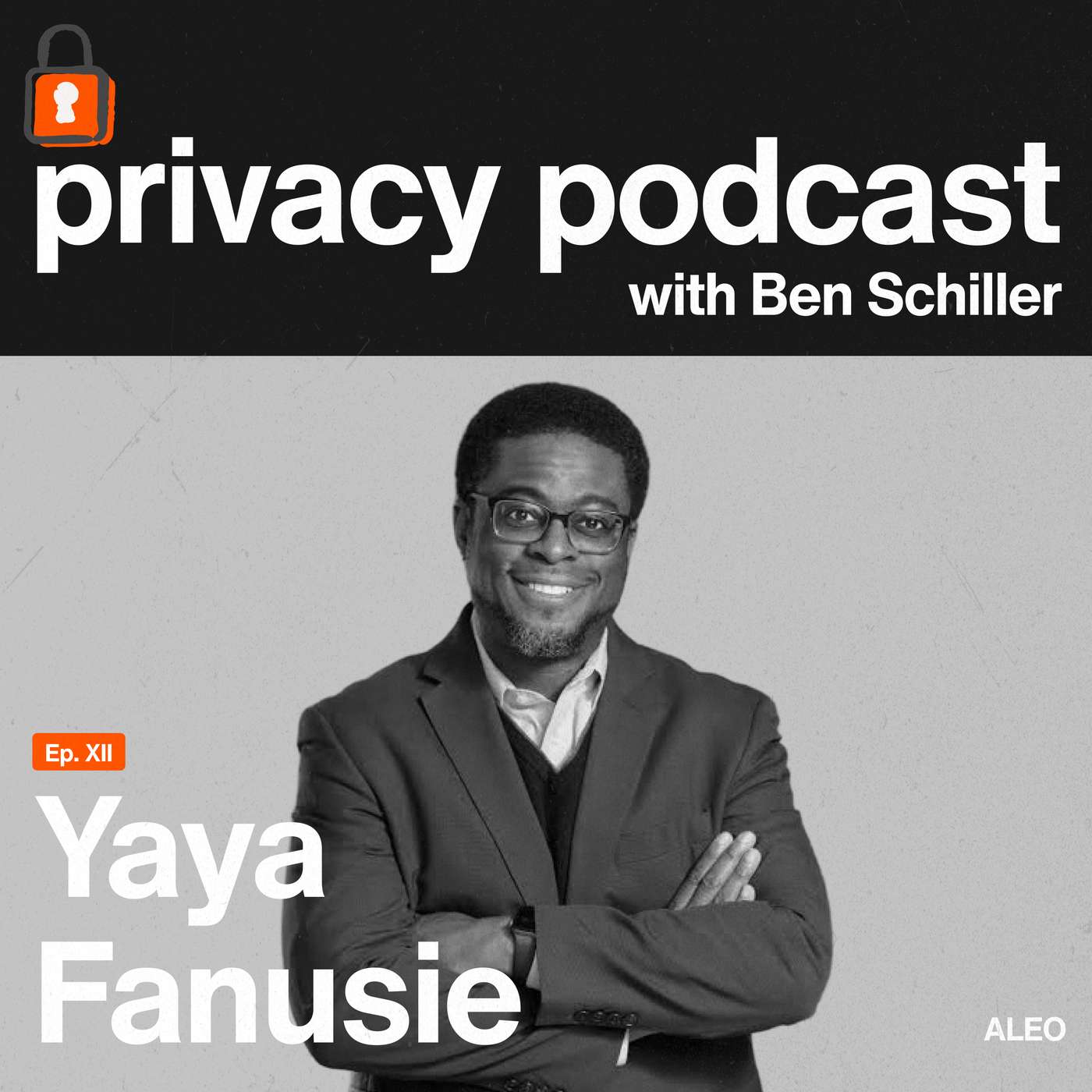
As stablecoins become a core part of the global financial system, one critical question remains: How do we protect privacy without sacrificing security or compliance?In this episode of The Privacy Podcast, host Ben Schiller welcomes Yaya Fanusie, Chief Policy Officer at Aleo and former CIA counterterrorism analyst, for a timely discussion on the future of blockchain privacy.Yaya shares how his career investigating terrorist financing led him into cryptocurrency policy and why he now believes privacy-preserving technology is essential for both individual freedom and national security. The conversation explores the GENIUS Act, stablecoin adoption, zero-knowledge proofs, regulatory challenges, illicit finance, and why the next major policy debate will focus on protecting consumer privacy in an increasingly digital financial system.In this episode, you'll learn:• Why blockchain transparency creates new privacy challenges• How zero-knowledge technology can balance privacy with regulatory compliance• What the GENIUS Act means for stablecoins and financial innovation• Why privacy is becoming a national security issue• How regulators are beginning to rethink digital identity and financial privacy• What comes next for blockchain policy and consumer protectionWhy This MattersAs stablecoins transition from crypto-native assets into mainstream financial infrastructure, the conversation around blockchain is shifting. The challenge is no longer simply achieving adoption. It's ensuring that privacy, security, and compliance can coexist. This episode explores why privacy may become one of the most important policy issues facing digital finance over the coming decade and what builders, regulators, and institutions need to consider next.🔗 About the 👤 Guesthttps://www.linkedin.com/in/yaya-jata-fanusie-87901738/ https://aleo.org/ If you enjoyed this conversation, be sure to Like, Subscribe, and turn on notifications so you never miss future episodes of The Privacy Podcast.About the ShowThe Privacy Podcast by Miden explores the intersection of privacy, identity, and emerging technologies. Hosted by Ben Schiller, the show brings together builders, regulators, and thinkers shaping what comes next in a world where data is power.Executive Producer Michele MussoEdited by the Musso Media Team Music: licensed.All rights reserved. ©2026 Musso Media
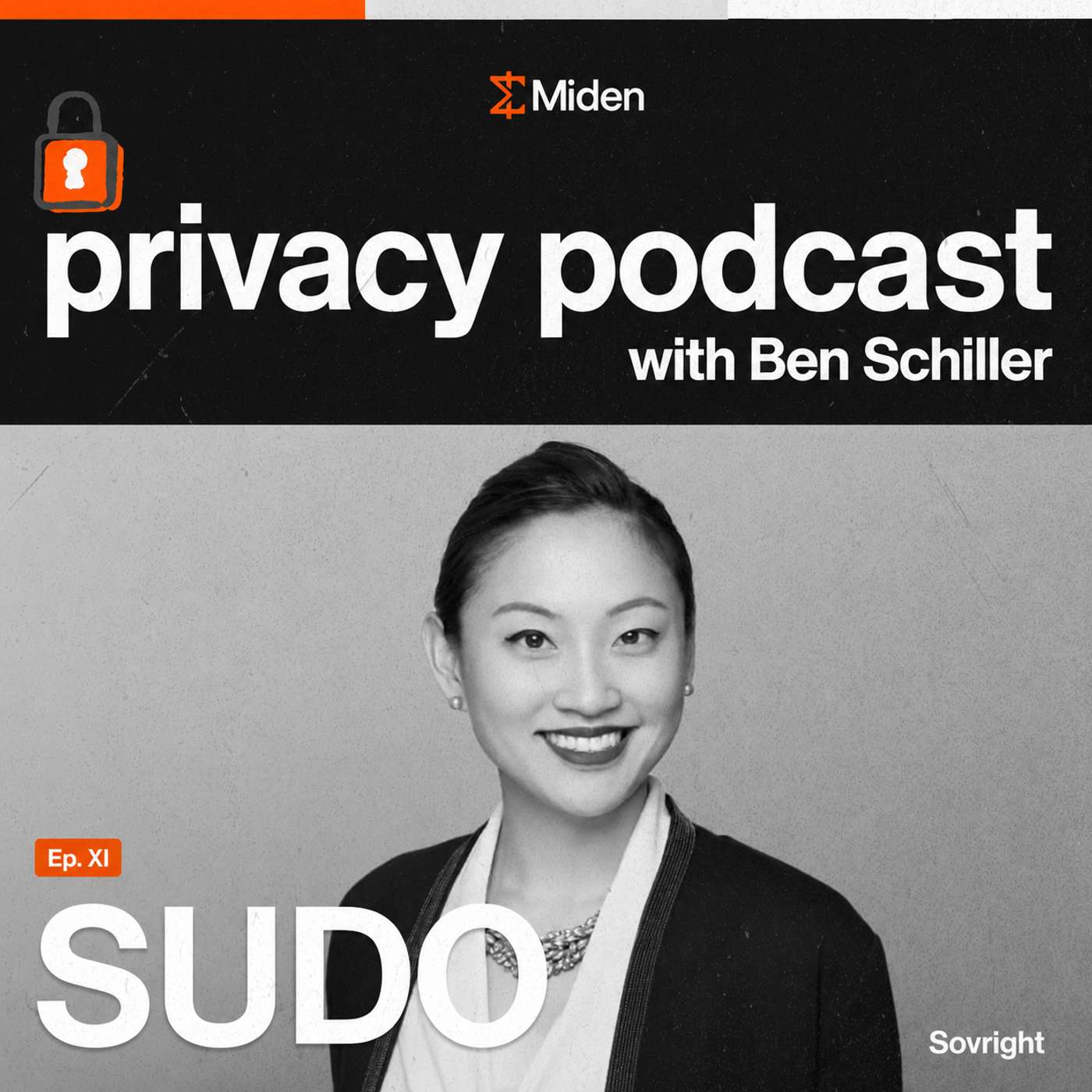
"In the age of AI, privacy is the foundation of human autonomy," says Sudo.On this episode of The Privacy Podcast, host Ben Schiller sits down with Sudo, Executive Director of SovRight (the nonprofit successor to the Electric Coin Company), to discuss privacy in the age of AI. Sudo, part of the flourishing Zcash community, argues the battle isn’t just about protecting people’s data from surveillance. It’s about preserving our “right to choose” on the internet.The conversation traces Sudo's journey from traditional finance to blockchain after witnessing the inefficiencies of a $100 million escrow transaction, an experience that revealed the transformative potential of smart contracts. From there, the discussion expands into the growing risks posed by AI, centralized data collection, digital identity, and the invisible systems that increasingly influence our everyday decisions.Rather than viewing privacy as a simple checkbox or regulatory requirement, Sudo argues privacy should empower individuals to decide who can access their information, when, and for what purpose. As AI agents automate more of our daily lives, maintaining meaningful control over personal data may become one of the defining challenges of the decade.The episode also explores:Why AI may quietly erode personal choice through manipulation and default automationHow privacy tools can become more intuitive instead of more complicatedSovRight's mission following its transition from the Electric Coin CompanyZcash's efforts to improve decentralization, wallet recovery, and network resilienceThe future of private AI inference and quantum-resistant privacy technologiesWhy mission-driven communities may become increasingly important as AI reshapes the internetIf AI is changing the internet, what safeguards will ensure people remain in control of their own lives? This conversation explores why the future of privacy may ultimately determine the future of human freedom.Why It MattersAs AI systems become embedded in everything from payments to healthcare to everyday online interactions, the ability to control personal information is becoming increasingly complex. This episode examines how privacy technologies must evolve beyond encryption to protect individual choice, autonomy, and digital sovereignty in an AI-driven world.🔗 About the 👤 GuestMichelle Lai (sudo) is Executive Chair of SovRight, the nonprofit organization advancing privacy technologies and supporting the Zcash ecosystem. A longtime privacy advocate and blockchain leader, she focuses on protecting individual choice in an AI driven world while helping build secure, decentralized infrastructure for the futureSovRight:sovright.com Zcash: https://z.cashX (Michelle Lai / sudo_ml): https://x.com/sudo_mlX (SovRight): x.com/sovright_ GitHub: https://github.com/sovright About the ShowThe Privacy Podcast by Miden explores the intersection of privacy, identity, and emerging technologies. Hosted by Ben Schiller, the show brings together builders, regulators, and thinkers shaping what comes next in a world where data is power.Executive Producer Michele MussoEdited by the Musso Media Team Music: licensed.All rights reserved. ©2026 Musso Media

Comments

Download from Google Play

Download from App Store
 United States