


 Claim Ownership
PsychEd: Educational Psychiatry Podcast
Subscribed: 1,353Played: 19,780
Subscribe

© PsychEd
Description
This podcast is written and produced by psychiatry residents at the University of Toronto and is aimed at medical students and residents. Listeners will learn about fundamental and more advanced topics in psychiatry as our resident team explore these topics with world-class psychiatrists at U of T and abroad.
84 Episodes
Reverse
Welcome to PsychEd, the psychiatry podcast for medical learners, by medical learners.This episode covers the psychiatric case presentation with Dr. Justin Delwo, a staff psychiatrist at Toronto Western Hospital where he works in the emergency department and urgent care settings.The learning objectives for this episode are as follows:What is the goal of a psychiatric case presentation?What are some ground rules for a case presentation?What are the key sections of a case presentation and what should you include under each? How can you tailor your case presentation to the settingGuest: Dr. Justin DelwoHosts: Dr. Matt Cho (PGY1), Dr. Daamoon Ghahari (PGY2), and Dr. Angad Singh (PGY2)Audio editing: Dr. Angad Singh (PGY2)Episode evaluation: Shelly Palchik (MS4)Time Stamps:(1:50) - Goals of a case presentation(4:49) - Ground rules for presenting(7:56) - General overview(19:44) - Identifying Data(23:16) - Chief complaint and reason for referral(25:42) - History of presenting illness(38:38) - Review of systems(42:16) - Safety(49:42) - Past psychiatric history(53:54) - Medications(55:55) - Past medical history(59:14) - Allergies(1:00:13) - Family psychiatric history(1:02:07) - Personal history(1:06:23) - Mental status exam(1:09:45) - Impression(1:14:20) - Plan(1:18:43) - Tailoring to different settingsFor more PsychEd, follow us on Instagram (@psyched.podcast), Facebook (PsychEd Podcast), X (@psychedpodcast), and Bluesky (@psychedpodcast.bsky.social). You can email us at psychedpodcast@gmail.com and visit our website atpsychedpodcast.org.

Welcome to PsychEd, the psychiatry podcast for medical learners, by medical learners. This short episode covers how to take a substance use historyHosts: Dr. Andrew Nguyen, Dr. Zakia Hussain, Jo Kikukawa, and Dr. Kate Braithwaite.Audio editing: Dr. Kate BraithwaiteResources:Chapter 4: Substance Use and Addictive Disorders. In Kaplan & Sadock’s Synopsis of Psychiatry: Behavioral SciencesMeta:Phi Resource LibraryTen Domains of De-escalation to Prevent Behavioural Emergencies (from Alberta Health Services)References:American Psychiatric Association Publishing. (2022). Substance-Related and Addictive Disorders. In Diagnostic and Statistical Manual of Mental Disorders: Fifth Edition, Text Revision: DSM-5-TR (5th ed., pp. 481-590). American Psychiatric Association Publishing. Boland, R.J., Verduin, M.L., & Ruiz, P. (2022). Chapter 4: Substance Use and Addictive Disorders. In Kaplan & Sadock’s Synopsis of Psychiatry: Behavioral Sciences, Clinical Psychiatry (12th ed., pp. 269 - 336). Wolters Kluwer. Porter, L.D. Getting to the Good Part: How to Take an Engaging SUD History. [Presentation Transcript]. University of California, Los Angeles Integrated Substance Use and Addictions Programs. https://www.uclaisap.org/clinicalproviderquicktips/docs/La-Donna-Porter/Porter_LD_Transcript_Clean.pdf Welsh, C.J. “Trapped”: A Mnemonic for Taking a Substance Use History. Acad Psychiatry 27, 289 (2003). https://doi.org/10.1176/appi.ap.27.4.289For more PsychEd, follow us on Instagram (@psyched.podcast), Facebook (PsychEd Podcast), X (@psychedpodcast), and Bluesky (@psychedpodcast.bsky.social). You can email us at psychedpodcast@gmail.com and visit our website at psychedpodcast.org.
Welcome to PsychEd, the psychiatry podcast for medical learners, by medical learners.This episode covers Functional Neurological Disorder with Dr. Patricia Rosebush. Dr. Rosebush is a Professor in the Department of Psychiatry & Behavioural Neurosciences at McMaster University. She is the distinguished author of numerous articles on clinical neuroscience, including considerable work on mitochondrial disorders in mental illness and over 30 papers on catatonia, and practices consultation-liaison psychiatry at St. Joseph’s Healthcare Hamilton.The learning objectives for this episode are as follows:Provide a definition and conceptual approach to FNDIdentify clinical signs and patient histories relevant to a diagnosis of FNDDescribe an approach to the treatment of FNDUnderstand the special challenges of communication and collaboration in this illnessGuest: Dr. Patricia RosebushHosts: Dr. Alastair Morrison, Dr. Kate BraithwaiteAudio editing: Dr. Alastair MorrisonShow notes: Dr. Kate BraithwaiteInterview content:(02:39) Learning objectives(03:09) Conceptualization of FND(08:30) Underlying psychological processes(09:35) Difference between FND and factitious disorder/malingering(14:54) Alexithymia(16:51) Common symptomatic presentations(18:00) Types of underlying stressors(19:17) Other risk factors for FND(22:12) Communicating with patients to address stigma(24:32) Psychotherapy in FND(29:36) Referral pathways for patients with FND(31:15) Prognosis of FND(33:09) Social media and FNDResources:Functional Neurological Disorder Society. Functional Neurological Disorder Society (FNDS). Includes a podcast and courses for physiciansFunctional Neurological Disorder (FND) – A Patient's Guide to FNDReferences:Hull, M., & Parnes, M. (2021). Tics and TikTok: Functional Tics Spread Through Social Media. Movement disorders clinical practice, 8(8), 1248–1252. https://doi.org/10.1002/mdc3.13267National Institute for Neurological Disorders and Stroke. (2024, July.) Functional Neurological Disorder. U.S. Department of Health and Human Services, National Institutes of Health. Functional Neurologic Disorder | National Institute of Neurological Disorders and StrokePsychDB. (2024, April). Conversion Disorder (Functional Neurological Disorder. Conversion Disorder (Functional Neurological Disorder) - PsychDBRosebush, P. I., & Mazurek, M. F. (2011). Treatment of conversion disorder in the 21st century: have we moved beyond the couch?. Current treatment options in neurology, 13(3), 255–266. https://doi.org/10.1007/s11940-011-0124-yScamvougeras, A., & Castle, D. (2024). Functional Neurological Disorders: Challenging the Mainstream Agnostic Causative Position. Canadian journal of psychiatry. Revue canadienne de psychiatrie, 69(7), 487–492. https://doi.org/10.1177/07067437241245957For more PsychEd, follow us on Instagram (@psyched.podcast), Facebook (PsychEd Podcast), X (@psychedpodcast), and Bluesky (@psychedpodcast.bsky.social). You can email us at psychedpodcast@gmail.com and visit our website at psychedpodcast.org.
Welcome to PsychEd, the psychiatry podcast for medical learners, by medical learners. This episode covers metabolic monitoring for patients on antipsychotic medications.Hosts: Grant Yao (MS4) and Dr. Angad Singh (PGY2)Audio editing: Dr. Angad Singh (PGY2)Timestamps:(0:21) - Background(2:22) - Monitoring for metabolic side effects(6:16) - Managing metabolic side effects(9:50) - SummaryReferences:Agarwal, S. M., Stogios, N., Faulkner, G. E., & Hahn, M. (2023). Pharmacological interventions for the prevention of antipsychotic-induced weight gain in people with schizophrenia: A Cochrane systematic review and meta-analysis. Schizophrenia Bulletin, 49(4), 833-835.Carolan, A., Hynes-Ryan, C., Agarwal, S. M., Bourke, R., Cullen, W., Gaughran, F., ... & O’Donoghue, B. (2024). Metformin for the prevention of antipsychotic-induced weight gain: guideline development and consensus validation. Schizophrenia bulletin, sbae205.Cooper, S. J., Reynolds, G. P., With expert co-authors (in alphabetical order):, Barnes, T. R. E., England, E., Haddad, P. M., ... & Smith, J. (2016). BAP guidelines on the management of weight gain, metabolic disturbances and cardiovascular risk associated with psychosis and antipsychotic drug treatment. Journal of Psychopharmacology, 30(8), 717-748.DeJongh, B. M. (2021). Clinical pearls for the monitoring and treatment of antipsychotic induced metabolic syndrome. Mental Health Clinician, 11(6), 311-319.Stogios, N., Humber, B., Agarwal, S. M., & Hahn, M. (2023). Antipsychotic-induced weight gain in severe mental illness: risk factors and special considerations. Current Psychiatry Reports, 25(11), 707-721.For more PsychEd, follow us on Instagram (@psyched.podcast), Facebook (PsychEd Podcast), X (@psychedpodcast), and Bluesky (@psychedpodcast.bsky.social). You can email us at psychedpodcast@gmail.com and visit our website at psychedpodcast.org.

Welcome to PsychEd, the psychiatry podcast for medical learners, by medical learners.This episode is part of the PsychEd Book Club, a forum where we discuss books of interest to psychiatry learners from a variety of disciplines. We invite you to read along with us and contribute to our discussion.This short introductory episode gives you a heads-up about our upcoming book club on Healing: Our Path from Mental Illness to Mental Health by Thomas Insel. Stay tuned for a longer episode in a few months where we’ll share our thoughts on the book.If you’d like to share your thoughts or questions about the book, email us at psychedpodcast@gmail.com or reach out on social media.Hosts: Dr. Kate Braithwaite, Dr. Sophie Gregoire-Mitha, Dr. Gaurav SharmaAudio editing by: Dr. Gaurav SharmaFor more PsychEd, follow us on Instagram (@psyched.podcast), Facebook (PsychEd Podcast), X (@psychedpodcast), and Bluesky (@psychedpodcast.bsky.social). You can email us at psychedpodcast@gmail.com and visit our website at psychedpodcast.org.
Welcome to PsychEd, the psychiatry podcast for medical learners, by medical learners. This episode covers goals of care conversations.Our guest for this episode is Dr. Tavis Apramian, a clinician-investigator in the Department of Family & Community Medicine (DFCM) at the University of Toronto and scientist in the Office of Education Scholarship. He works as a palliative care physician at St. Michael’s Hospital and at Kensington Hospice. His largely qualitative program of research is focused on advance care planning; workplace-based learning and assessment; palliative care in family medicine; medical assistance in dying; and inequity in end-of-life care. His primary focus is on telling rich stories of learner and patient experiences to spark conversation about socioculturally complex educational and clinical problems in serious illness.The learning objectives for this episode are as follows:Describe a palliative approach to care and its relevance across different contextsDemonstrate a structured and compassionate approach to goals of care conversationsApply effective communication strategies to build therapeutic alliance, navigate difficult conversations, and involve multiple actors in the palliative contextRecognize and manage challenges in goals of care conversationsGuest: Dr. Tavis ApramianHosts: Dr. Daamoon Ghahari (PGY2) and Dr. Angad Singh (PGY2)Audio editing: Dr. Angad Singh (PGY2)Timestamps:(1:07) - Journey to palliative care(5:07) - What is palliative care(14:47) - Understanding patient values(33:47) - Structuring goals of care conversations(44:16) - Communication strategies(57:05) - Navigating family meetings(77:25) - Reflections on MAiD for sole mental illnessResources:Roth, H. (2024). Hearing the unspoken. Canadian Family Physician, 70(10), 642-642. https://pmc.ncbi.nlm.nih.gov/articles/PMC11477260/pdf/0700642.pdfReferences:Bernacki, R. E., & Block, S. D. (2014). Communication about serious illness care goals: a review and synthesis of best practices. JAMA internal medicine, 174(12), 1994-2003.Gross, J., & Koffman, J. (2024). Examining how goals of care communication are conducted between doctors and patients with severe acute illness in hospital settings: A realist systematic review. PLoS One, 19(3), e0299933.Scheunemann, L. P., Ernecoff, N. C., Buddadhumaruk, P., Carson, S. S., Hough, C. L., Curtis, J. R., ... & White, D. B. (2019). Clinician-family communication about patients’ values and preferences in intensive care units. JAMA internal medicine, 179(5), 676-684.You, J. J., Downar, J., Fowler, R. A., Lamontagne, F., Ma, I. W., Jayaraman, D., ... & Canadian Researchers at the End of Life Network (CARENET). (2015). Barriers to goals of care discussions with seriously ill hospitalized patients and their families: a multicenter survey of clinicians. JAMA Internal Medicine, 175(4), 549-556.For more PsychEd, follow us on Instagram (@psyched.podcast), Facebook (PsychEd Podcast), X (@psychedpodcast), and Bluesky (@psychedpodcast.bsky.social). You can email us at psychedpodcast@gmail.com and visit our website at psychedpodcast.org.
Welcome to PsychEd, the psychiatry podcast for medical learners, by medical learners. This short episode covers the basics of electroconvulsive therapy.Hosts: Ravi Bhindi (CC3), Dr. Angad Singh (PGY2)Audio Editing: Dr. Angad Singh (PGY2)Show Notes: Dr. Angad Singh (PGY2)Time Stamps:(0:36) - What is ECT?(2:18) - Indications and efficacy(4:35) - Treatment course(4:32) - Combination treatment(6:33) - Medications to discontinue(8:16) - Contraindications(9:40) - Side effects(11:52) - Procedure(16:03) - SummaryResources:https://www.camh.ca/en/health-info/mental-illness-and-addiction-index/electroconvulsive-therapyhttps://sunnybrook.ca/content/?page=psychiatry-electroconvulsive-therapy-ect-faqReferences:Andrade, C., Arumugham, S. S., & Thirthalli, J. (2016). Adverse Effects of Electroconvulsive Therapy. The Psychiatric clinics of North America, 39(3), 513–530.Brakemeier, E. L., Merkl, A., Wilbertz, G., Quante, A., Regen, F., Bührsch, N., van Hall, F., Kischkel, E., Danker-Hopfe, H., Anghelescu, I., Heuser, I., Kathmann, N., & Bajbouj, M. (2014). Cognitive-behavioral therapy as continuation treatment to sustain response after electroconvulsive therapy in depression: a randomized controlled trial. Biological psychiatry, 76(3), 194–202.Espinoza, R. T., & Kellner, C. H. (2022). Electroconvulsive therapy. New England Journal of Medicine, 386(7), 667-672.Gill, S., Hussain, S., Purushothaman, S., Sarma, S., Weiss, A., Chamoli, S., ... & Loo, C. K. (2023). Prescribing electroconvulsive therapy for depression: Not as simple as it used to be. Australian & New Zealand Journal of Psychiatry, 57(9), 1202-1207.Janjua, A. U., Dhingra, A. L., Greenberg, R., & McDonald, W. M. (2020). The efficacy and safety of concomitant psychotropic medication and electroconvulsive therapy (ECT). CNS Drugs, 34(5), 509-520.Jelovac, A., Kolshus, E., & McLoughlin, D. M. (2013). Relapse following successful electroconvulsive therapy for major depression: a meta-analysis. Neuropsychopharmacology : official publication of the American College of Neuropsychopharmacology, 38(12), 2467–2474.Kolshus, E., Jelovac, A., & McLoughlin, D. M. (2017). Bitemporal v. high-dose right unilateral electroconvulsive therapy for depression: a systematic review and meta-analysis of randomized controlled trials. Psychological Medicine, 47(3), 518-530.Lam, R. W., Kennedy, S. H., Adams, C., Bahji, A., Beaulieu, S., Bhat, V., ... & Milev, R. V. (2024). Canadian Network for Mood and Anxiety Treatments (CANMAT) 2023 Update on Clinical Guidelines for Management of Major Depressive Disorder in Adults: Réseau canadien pour les traitements de l'humeur et de l'anxiété (CANMAT) 2023: Mise à jour des lignes directrices cliniques pour la prise en charge du trouble dépressif majeur chez les adultes. The Canadian Journal of Psychiatry, 69(9), 641-687.Luchini, F., Medda, P., Mariani, M. G., Mauri, M., Toni, C., & Perugi, G. (2015). Electroconvulsive therapy in catatonic patients: Efficacy and predictors of response. World journal of psychiatry, 5(2), 182–192.Tess, A. V., & Smetana, G. W. (2009). Medical evaluation of patients undergoing electroconvulsive therapy. New England Journal of Medicine, 360(14), 1437-1444.Zolezzi M. (2016). Medication management during electroconvulsant therapy. Neuropsychiatric disease and treatment, 12, 931–939.For more PsychEd, follow us on Instagram (@psyched.podcast), Facebook (PsychEd Podcast), X (@psychedpodcast), and Bluesky (@psychedpodcast.bsky.social). You can email us at psychedpodcast@gmail.com and visit our website at psychedpodcast.org.
 1
1Welcome to PsychEd, the psychiatry podcast for medical learners, by medical learners. This episode covers exercise as a treatment for depression. Our guest for this episode is Dr. Nicholas Fabiano, a third-year psychiatry resident at the University of Ottawa. His research focuses on the overlap between mental and physical health, particularly lifestyle measures that can be used to improve mental health, including exercise, diet, and sleep.The learning objectives for this episode are as follows:Understand the evidence supporting the antidepressant effects of exercise Explore the mechanisms underlying the benefits of exerciseLearn how to prescribe exercise as a treatment for depressionIdentify the risks and caveats of prescribing exercise for depressionGuest: Dr. Nicholas Fabiano (PGY3)Hosts: Dr. Wendy MacMillan-Wang (PGY4) and Dr. Angad Singh (PGY1)Audio Editing: Dr. Angad Singh (PGY1)Timestamps:(2:55) Origins of the interest in exercise(6:22) Evidence of antidepressant effects(14:05) Considerations in special populations(18:00) Overlap of mental and physical health(20:37) Mechanism of action(26:18) Exercise prescription(33:10) Exercise as addiction and self-harm(36:42) Counselling and mitigating harm(39:30) Combining with other lifestyle interventions(41:41) Evidence for other mental illnessesReferences:Fabiano N, Gupta A, Fiedorowicz JG, Firth J, Stubbs B, Vancampfort D, Schuch FB, Carr LJ, Solmi M. The effect of exercise on suicidal ideation and behaviors: A systematic review and meta-analysis of randomized controlled trials. Journal of affective disorders. 2023 Jun 1;330:355-66.Fabiano, N., Puder, D., & Stubbs, B. (2024). The evidence is clear, exercise is not better than antidepressants or therapy: it is crucial to communicate science honestly. Journal of Physical Activity and Health, 1(aop), 1-2.Heissel, A., Heinen, D., Brokmeier, L. L., Skarabis, N., Kangas, M., Vancampfort, D., ... & Schuch, F. (2023). Exercise as medicine for depressive symptoms? A systematic review and meta-analysis with meta-regression. British journal of sports medicine, 57(16), 1049-1057.Hird, E. J., Slanina-Davies, A., Lewis, G., Hamer, M., & Roiser, J. P. (2024). From movement to motivation: a proposed framework to understand the antidepressant effect of exercise. Translational Psychiatry, 14(1), 273.Verhoeven, J. E., Han, L. K., Lever-van Milligen, B. A., Hu, M. X., Révész, D., Hoogendoorn, A. W., ... & Penninx, B. W. (2023). Antidepressants or running therapy: Comparing effects on mental and physical health in patients with depression and anxiety disorders. Journal of affective disorders, 329, 19-29.For more PsychEd, follow us on Instagram (@psyched.podcast), Facebook (PsychEd Podcast), X (@psychedpodcast), and Bluesky (@psychedpodcast.bsky.social). You can email us at psychedpodcast@gmail.com and visit our website at psychedpodcast.org.
Welcome to PsychEd, the psychiatry podcast for medical learners, by medical learners. This short episode covers the mental status exam.Hosts: Dr. Matthew Cho (PGY1) and Dr. Angad Singh (PGY2)Audio editing: Dr. Angad Singh (PGY2)Episode Evaluation: Shelly Palchik (MS4)Timestamps:(0:20) Basics of the mental status exam(2:05) Appearance(4:00) Behaviour(5:00) Cooperation(6:20) Speech(7:18) Emotions(9:12) Perception(10:15) Thought process(12:35) Thought content(13:28) Insight(14:10) Judgement(14:46) CognitionReference: Donnelly, J., Rosenberg, M., & Fleeson, W. P. (1970). The evolution of the mental status—past and future. American Journal of Psychiatry, 126(7), 997-1002.Folstein, M. F., Folstein, S. E., & McHugh, P. R. (1975). “Mini-mental state”: a practical method for grading the cognitive state of patients for the clinician. Journal of psychiatric research, 12(3), 189-198.Norris, D. R., Clark, M. S., & Shipley, S. (2016). The mental status examination. American family physician, 94(8), 635-641.PsychDB. (2024, Jan 18). Mental Status Exam. https://www.psychdb.com/teaching/mental-status-exam-mseVoss, R., & Das, J. (2024). Mental status examination. StatPearls.If you want to learn more about the mental status exam, check out our longer episode about this topic: https://www.psychedpodcast.org/blog/mseFor more PsychEd, follow us on Instagram (@psyched.podcast), Facebook (PsychEd Podcast), X (@psychedpodcast), and Bluesky (@psychedpodcast.bsky.social). You can email us at psychedpodcast@gmail.com and visit our website at psychedpodcast.org.

Welcome to PsychEd, the psychiatry podcast for medical learners, by medical learners.This episode covers South Asian mental health with Dr. Farooq Naeem, a senior scientist with the Institute for Mental Health Policy Research and a psychiatrist at the Centre for Addiction and Mental Health. He is also a professor of psychiatry at the University of Toronto.Dr. Naeem pioneered techniques for culturally adapting CBT. These techniques have been used to adapt CBT in South Asia, North Africa, Middle East, Kenya and China. His research areas include CBT, psychosis, and culture, with an overall aim to improve access to CBT. He has also published on issues related to health services and quality improvement. He works with a team of IT experts and has developed a CBT-based therapy program — called eGuru — that can be delivered through web and smartphone apps.The learning objectives for this episode are as follows:By the end of this episode, you should be able to…Recognize the unique mental health challenges and barriers faced by South Asian communitiesUnderstand how cultural nuances shape mental health presentations and assessmentsDescribe culturally adapted CBT and its benefits for South Asian patientsIdentify initiatives and future directions in transcultural psychiatry for South AsiansGuest: Dr. Farooq NaeemHosts: Hira Ahmad, Gurvir Rai, Nikhita SinghalAudio editing by: Nikhita SinghalShow notes by: Nikhita SinghalResources:PsychEd Episode 29: Cultural Psychiatry with Dr. Eric JarvisCulturally Adapted Cognitive Behavioural Therapy for Canadians of South Asian OriginSouth Asian Canadian Mental Health FoundationSociety for the Study of Psychiatry and CultureReferences:Gadalla, T.M. (2010). Ethnicity and seeking treatment for depression: a Canadian national study. Canadian Ethnic Studies 41(3), 233-245. https://doi.org/10.1353/ces.2010.0042Karasz, A., Gany, F., Escobar, J., Flores, C., Prasad, L., Inman, A., Kalasapudi, V., Kosi, R., Murthy, M., Leng, J., & Diwan, S. (2019). Mental health and stress among South Asians. Journal of Immigrant and Minority Health, 21(S1), 7–14. https://doi.org/10.1007/s10903-018-0790-4Kumar, A., & Nevid, J. S. (2010). Acculturation, enculturation, and perceptions of mental disorders in Asian Indian immigrants. Cultural Diversity and Ethnic Minority Psychology, 16(2), 274–283. https://doi.org/10.1037/a0018352Lai, D. W. L., & Surood, S. (2008). Socio-cultural variations in depressive symptoms of ageing South Asian Canadians. Asian Journal of Gerontology and Geriatrics, 3(2), 84-91.Leung, P., Cheung, M., & Tsui, V. (2011). Asian Indians and depressive symptoms: Reframing mental health help -seeking behavior. International Social Work, 55(1), 53–70. https://doi.org/10.1177/0020872810372801Masood, N., Okazaki, S., & Takeuchi, D. T. (2009). Gender, family, and community correlates of mental health in South Asian Americans. Cultural Diversity and Ethnic Minority Psychology, 15(3), 265–274. https://doi.org/10.1037/a0014301Vakil, K., Desse, T. A., Manias, E., Alzubaidi, H., Rasmussen, B., Holton, S., & McNamara, K. P. (2023). Patient-centered care experiences of first-generation, South Asian migrants with chronic diseases living in high-income, Western countries: systematic review. Patient Preference and Adherence, 17, 281–298. https://doi.org/10.2147/PPA.S391340For more PsychEd, follow us on Instagram (@psyched.podcast), Facebook (PsychEd Podcast), X (@psychedpodcast), and Bluesky (@psychedpodcast.bsky.social). You can email us at psychedpodcast@gmail.com and visit our website at psychedpodcast.org.
Welcome to PsychEd, the psychiatry podcast for medical learners, by medical learners.This short episode is about an approach to patients with psychotic symptoms.Hosts: Ravi Bhindi (CC3), Dr. Angad Singh (PGY2)Audio editing: Dr. Angad Singh (PGY2)Show notes: Dr. Angad Singh (PGY2)Infographic: Dr. Kate BraithwaiteReferences:Griswold, K. S., Del Regno, P. A., & Berger, R. C. (2015). Recognition and differential diagnosis of psychosis in primary care. American family physician, 91(12), 856-863.Hua, L. L., Alderman, E. M., Chung, R. J., Grubb, L. K., Lee, J., Powers, M. E., ... & Wallace, S. B. (2021). Collaborative care in the identification and management of psychosis in adolescents and young adults. Pediatrics, 147(6), e2021051486.Lieberman, J. A., & First, M. B. (2018). Psychotic disorders. New England Journal of Medicine, 379(3), 270-280.PsychDB. (2021, Jan 15). Psychotic Disorders. Retrieved July 15, 2025, from https://www.psychdb.com/psychosis/homePsychDB. (2022, Jan 26). Psychotic Depression. Retrieved July 15, 2025, from https://www.psychdb.com/mood/1-depression/psychoticPsychDB. (2021, Jan 15). Psychotic Disorders. Retrieved July 15, 2025, from https://www.psychdb.com/psychosis/homeResources:https://www.camh.ca/en/health-info/mental-illness-and-addiction-index/psychosishttps://www.earlypsychosis.ca/symptoms-of-psychosis/For more PsychEd, follow us on Instagram (@psyched.podcast), Facebook (PsychEd Podcast), and X (@psychedpodcast). You can email us at psychedpodcast@gmail.com and visit our website at psychedpodcast.org.
Welcome to PsychEd, the psychiatry podcast for medical learners, by medical learners.This episode covers catatonia with Dr. Patricia Rosebush. Dr. Rosebush is a Professor in the Department of Psychiatry & Behavioural Neurosciences at McMaster University. She is the distinguished author of numerous articles on clinical neuroscience, including considerable work on mitochondrial disorders in mental illness and over 30 papers on catatonia, and practices consultation-liaison psychiatry at St. Joseph’s Healthcare Hamilton.The learning objectives for this episode are as follows:By the end of this episode, the listener will be able to…Develop a conceptual understanding of catatoniaHave an approach for diagnosing catatoniaHave an approach for treating catatoniaGuest: Dr. Patricia RosebushHosts: Dr. Alastair Morrison (PGY1), Dr. Angad Singh (PGY1)Audio editing: Dr. Angad SinghShow notes: Dr. Alastair MorrisonInterview content:(01:20) Clinical features of catatonia (high level overview)(04:15) Clinical anecdote - an index case of catatonia(06:00) History of approaches to catatonia(10:00) Approach to different catatonia phenotypes(15:00) Categorization and ideas of mechanism(18:00) Assessing clinical signs of catatonia (24:00) Preserved awareness in catatonia(27:00) Investigations and differential diagnosis(30:00) First interventions: benzodiazepines and benzodiazepine withdrawal(41:30) Managing medical considerations in catatonia(45:00) Treating other psychiatric illnesses in the catatonic patient(49:00) Acute, chronic, and refractory treatmentsReferences:Barnes MP, Saunders M, Walls TJ, Saunders I, Kirk CA. The syndrome of Karl Ludwig Kahlbaum. J Neurol Neurosurg Psychiatry. 1986 Sep;49(9):991-6. https://doi.org/10.1136/jnnp.49.9.991Bush G, Fink M, Petrides G, Dowling F, Francis A. Catatonia. I. Rating scale and standardized examination. Acta Psychiatr Scand. 1996 Feb;93(2):129-36. https://doi.org/10.1111/j.1600-0447.1996.tb09814.xPsychDB. (2023, November 23). Catatonia. https://www.psychdb.com/cl/0-catatoniaRosebush PI, Mazurek MF. Catatonia and its treatment. Schizophr Bull. 2010 Mar;36(2):239-42. https://doi.org/10.1093/schbul/sbp141For more PsychEd, follow us on Instagram (@psyched.podcast), Facebook (PsychEd Podcast), X (@psychedpodcast), and Bluesky (@psychedpodcast.bsky.social). You can email us at psychedpodcast@gmail.com and visit our website at psychedpodcast.org.
Welcome to PsychEd, the psychiatry podcast for medical learners, by medical learners.This short episode is about counselling patients on antidepressant medications.Hosts: Matthew Cho and Angad SinghAudio editing: Angad SinghTime stamps:(02:03) Steps to antidepressant counselling(07:31) Frequently asked questions about antidepressantsRelated episodes:PsychEd Episode 1: Diagnosis of Depression with Dr. Ilana ShawnPsychEd Episode 2: Treatment of Depression with Dr. Sidney KennedyPsychEd Episode 58: Depression in Children and Adolescents with Dr. Darren CourtneyPatient education:UpToDate resource on ‘Medicines for Depression’: https://www.uptodate.com/contents/medicines-for-depression-the-basicsCAMH resource on ‘Antidepressant Medications’:https://www.camh.ca/en/health-info/mental-illness-and-addiction-index/antidepressant-medicationsKelty Mental Health resource on ‘Selective Serotonin Reuptake Inhibitors’: https://keltymentalhealth.ca/sites/default/files/resources/SSRI_MedicationSheet2022.pdf, References:PsychDB. (2024, January 11). Introduction to Antidepressants. https://www.psychdb.com/meds/antidepressants/homeLam RW, Kennedy SH, Adams C, Bahji A, Beaulieu S, Bhat V, Blier P, Blumberger DM, Brietzke E, Chakrabarty T, Do A. Canadian Network for Mood and Anxiety Treatments (CANMAT) 2023 Update on Clinical Guidelines for Management of Major Depressive Disorder in Adults: Réseau canadien pour les traitements de l'humeur et de l'anxiété (CANMAT) 2023: Mise à jour des lignes directrices cliniques pour la prise en charge du trouble dépressif majeur chez les adultes. The Canadian Journal of Psychiatry. 2024 Sep;69(9):641-87.Contact:For more PsychEd, follow us on Instagram (@psyched.podcast), Facebook (PsychEd Podcast), and X (@psychedpodcast). You can email us at psychedpodcast@gmail.com and visit our website at psychedpodcast.org.
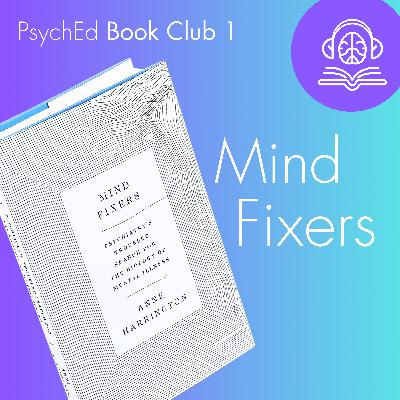
Welcome to PsychEd, the psychiatry podcast for medical learners, by medical learners.This is our inaugural book club episode centred around the book Mind Fixers by Anne Harrington. Mind Fixers is by the Harvard historian Anne Harrington, and came out from Norton in 2022. It reframes the “biological turn” in later twentieth century psychiatry with a history of the discipline from the later nineteenth century forward. Harrington argues that the biological turn had relatively little to do with new scientific advances, and came instead from a need to separate psychiatry from the increasingly unpopular public image of the discipline’s previous, “Freudian” age. To make this argument, she starts with the anatomic research of turn-of-the-century figures like Kraepelin, and how this generally failed to explain important mental illnesses. She traces the emergence of “Freudian” or psychological approaches to mental illness to the high point of their dominance in the mid twentieth century, and then their decline, as their inadequacy with respect to things like bipolar disorder and schizophrenia became increasingly clear, and their emphasis on childhood experience stigmatized families. Biological psychiatry is then a way to restore the fields’s respectability as as branch of medicine, but according to Harrington, there is not much transformative innovation to go along with this rebrand; and she emphasizes that the psychopharmacology revolution which gave us the first antipsychotics, MAOIS, tricyclics, and the receptor model of mental illness, actually happened during the heyday of psychoanalysis.The members of our team involved in this discussion are:Sara Abrahamson - MS2 at the University of TorontoDr. Kate Braithwaite - medical doctor from South AfricaDr. Wendy MacMillan-Wang - PGY4 psychiatry resident at the University of ManitobaDr. Alastair Morrison - PGY1 psychiatry resident at McMaster UniversityDr. Gaurav Sharma - staff psychiatrist working in Nunavut, CanadaAudio editing by:Dr. Angad Singh - PGY1 psychiatry resident at the University of TorontoOur discussion was structured around four themes:(03:15) - Psychiatry and Economic Incentives(19:33) - Psychiatry and Parenting(28:40) - Biological Psychiatry and its Alternatives(52:05) - Psychiatry and Social ControlIf you enjoyed this episode, consider listening to our episodes about:History of Psychiatry with Dr. David CastleCritical Psychiatry with Dr. Elia Abi-Jaoude and Lucy CostaFor more PsychEd, follow us on Instagram (@psyched.podcast), X (@psychedpodcast), and Facebook (PsychEd Podcast). You can provide feedback by email at psychedpodcast@gmail.com. For more information, visit our website at psychedpodcast.org.
Welcome to PsychEd, the psychiatry podcast for medical learners, by medical learners.This primer covers the differential diagnosis of dementia.Hosts: Dr. Alastair Morrison (PGY-1) and Dr. Angad Singh (PGY-1)Audio editing by: Dr. Angad Singh (PGY-1)Resources:MoCA: https://dementia.talkbank.org/protocol/materials/MOCA.pdfMMSE: https://meded.temertymedicine.utoronto.ca/sites/default/files/assets/resource/document/mini-mental-state-examinationmmse.pdfBeers Criteria: American Geriatrics Society 2023 updated AGS Beers Criteria® for potentially inappropriate medication use in older adultsPsychEd Episode 49: Dementia Assessment with Dr. Lesley WiesenfeldReferences:American Psychiatric Association. (2013). Diagnostic and statistical manual of mental disorders (5th ed.). https://doi.org/10.1176/appi.books.9780890425596Francis, J. & Young, B. (2022). Diagnosis of delirium and confusional states. UpToDate. Retrieved January 31, 2025, from https://www.uptodate.com/contents/delirium-and-acute-confusional-states-prevention-treatment-and-prognosisLarson, E. B. (2022). Evaluation of cognitive impairment and dementia. UpToDate. Retrieved January 31, 2025, from https://www.uptodate.com/contents/evaluation-of-cognitive-impairment-and-dementiaPsychDB. (2022, Oct 3). Introduction to Dementia. Retrieved January 31, 2025, from https://www.psychdb.com/geri/dementia/homePsychDB. (2024, Feb 1). Delirium. Retrieved January 31, 2025, from https://www.psychdb.com/cl/1-deliriumPsychDB. (2024, Feb 9). Alzheimer’s Disease. Retrieved January 31, 2025, from https://www.psychdb.com/geri/dementia/alzheimersPsychDB. (2023, Oct 12). Vascular Dementia. Retrieved January 31, 2025, from https://www.psychdb.com/geri/dementia/vascularPsychDB. (2024, Jan 23). Frontotemporal Dementia. Retrieved January 31, 2025, from https://www.psychdb.com/geri/dementia/frontotemporalPsychDB. (2024, Feb 5). Dementia with Lewy Bodies. Retrieved January 31, 2025, from https://www.psychdb.com/geri/dementia/lewy-bodyFor more PsychEd, follow us on Instagram (@psyched.podcast), Facebook (PsychEd Podcast), and X (@psychedpodcast). You can email us at psychedpodcast@gmail.com and visit our website at psychedpodcast.org.

Welcome to PsychEd, the psychiatry podcast for medical learners, by medical learners.This episode covers ADHD in youth with Dr. Daniel Gorman, an Associate Professor in the Department of Psychiatry at the University of Toronto and a Staff Psychiatrist at The Hospital for Sick Children. Dr Gorman’s clinical and academic interests include ADHD, Tourette syndrome, obsessive-compulsive disorder, child psychopharmacology, psychiatric education, and narrative medicine. He is highly involved in resident teaching and clinical supervision, and from 2014 to 2022 he was the Program Director for the Child and Adolescent Psychiatry subspecialty program at the University of Toronto.Dr. Gorman has given over 85 invited presentations and authored or co-authored over 35 peer-reviewed articles and book chapters, mainly related to childhood neuropsychiatric disorders and their pharmacological management. He also contributed to several Canadian guidelines, including guidelines on cardiac risk assessment before the use of stimulants, management of tic disorders, pharmacotherapy for childhood disruptive and aggressive behaviour, and pharmacogenetic testing for children treated with psychiatric medications.The learning objectives for this episode are as follows:By the end of this episode, the listener will be able to…Review diagnostic criteria for ADHDDescribe important considerations in making the diagnosis of ADHDDescribe psychosocial aspects of management of ADHDOutline the pharmacological management of ADHDGuest: Dr. Daniel GormanHosts: Dr. Kate Braithwaite, Dr. Shaoyuan Wang (PGY-4), Matthew Cho (MS-4) Audio editing by: Dr. Angad Singh (PGY-1)Resources:CADDRA - Canadian ADHD Resource Alliance: Canadian ADHD Practice Guidelines, 4.1 Edition, Toronto ON; CADDRA, 2020. References:American Psychiatric Association. (2013). Diagnostic and statistical manual of mental disorders (5th ed.). https://doi.org/10.1176/appi.books.9780890425596Biederman, J., DiSalvo, M., Fried, R., Woodworth, K. Y., Biederman, I., & Faraone, S. V. (2019). Quantifying the protective effects of stimulants on functional outcomes in attention-deficit/hyperactivity disorder: A focus on number needed to treat statistic and sex effects. Journal of Adolescent Health, 65(6), 784–789. https://doi.org/10.1016/j.jadohealth.2019.06.016Peterson, B. S., Trampush, J., Brown, M., Maglione, M., Bolshakova, M., Rozelle, M., Miles, J., Pakdaman, S., Yagyu, S., Motala, A., & Hempel, S. (2024). Tools for the diagnosis of ADHD in children and adolescents: A systematic review. Pediatrics, 153(4), e2024065854. https://doi.org/10.1542/peds.2024-065854Fedder, D., Patel, H., & Saadabadi, A. (2018). Atomoxetine. StatPearls. Retrieved January 31, 2025, from https://www.ncbi.nlm.nih.gov/books/NBK493234/Canadian Pediatric Society. (2022). Mental health: Screening tools and rating scales. Canadian Pediatric Society. Retrieved January 31, 2025, from https://cps.ca/mental-health-screening-toolsFor more PsychEd, follow us on Instagram (@psyched.podcast), X (@psychedpodcast), and Facebook (PsychEd Podcast). You can provide feedback by email at psychedpodcast@gmail.com. For more information, visit our website at psychedpodcast.org.
Welcome to PsychEd, the psychiatry podcast for medical learners, by medical learners.This episode covers psychotherapy in youth with Dr. Laurence Katz, a professor of child and adolescent psychiatry at the University of Manitoba. Dr. Katz received his medical and adult psychiatric training at the University of Manitoba and his child and adolescent psychiatry training at the Albert Einstein College of Medicine, Bronx N.Y. He is an adjunct scientist at the Manitoba Centre for Health Policy and has published numerous papers using the population health administrative database in mental health outcomes. He has held and been part of numerous grants funded by CIHR, PHAC, and other national funding agencies related to work with First Nations communities. Dr. Katz is widely published in particular in the areas of suicide and suicidal behaviour. His other research interests include Dialectical Behaviour Therapy, pharmacoepidemiology, and implementation of complex interventions.The learning objectives for this episode are as follows:By the end of this episode, the listener will be able to…Outline which psychotherapeutic modalities are commonly used in youthIdentify which youth may benefit/should be referred for psychotherapyDiscuss important considerations in delivering psychotherapy to youthGuest: Dr. Laurence KatzHosts: Wendy MacMillan-Wang, Shaoyuan Wang, Kate Braithwaite, and Sara AbrahamsonAudio editing by: Angad SinghShow notes by: Kate BraithwaiteInterview content:(00:04) Introduction(00:44) Guest introduction(05:25) Learning objectives(06:00) Definitions(07:44) Types of psychotherapy in youth(13:10) Evolution of psychotherapy in youth over time(16:24) Psychotherapy in suicide prevention/risk mitigation(18:32) Challenges in research: decrease in effect sizes over time(22:01) Conditions responding best to psychotherapy(26:44) Youth specific modalities(29:49) Summary of learning objective 1(30:23) Indications and contraindications(37:31) Consent(39:31) Group therapy(46:27) Summary of learning objective 2(47:10) Differences in psychotherapy in youth compared to adults in practice(53:32) Techniques for engagement of youth(58:21) Family involvement(01:02:39) Confidentiality(01:07:20) Use of mobile apps/internet-based therapies(01:11:17) Summary of learning objective 3(01:12:35) Other considerations(01:16:52) End creditsReferences:Please visit the episode's page on our website to view the full list of references: https://www.psychedpodcast.org/blog/youth-psychotherapyFor more PsychEd, follow us on Instagram (@psyched.podcast), X (@psychedpodcast), and Facebook (PsychEd Podcast). You can provide feedback by email at psychedpodcast@gmail.com. For more information, visit our website at psychedpodcast.org.

Welcome to PsychEd, the psychiatry podcast for medical learners, by medical learners.This is a special episode in a new series — the PsychEd Book Club, a forum where we'll introduce and discuss books of interest to psychiatry learners from a variety of disciplines, moving beyond epidemiology and clinical practice to look at science, history, culture, and more. We'll also invite you to read along and discuss with us as we read!Our book club episodes will start with a short introductory episode (like this one) sharing the book title and why we picked it. A few months later, we plan to release an episode debriefing our thoughts on the book. If there are specific things you want us to talk about, email us at psychedpodcast@gmail.com or reach out to us on social media and we will try to include them in our debrief!The first book we'll be covering is Anne Harrington's Mind Fixers: Psychiatry's Troubled Search for the Biology of Mental Illness. This is a new history of psychiatry, from the later nineteenth century to the present, with a focus on biological explanations and treatments for mental illness — the way that these approaches have gained and lost ground in the profession over time, clashing and collaborating with other understandings. It offers a wide-ranging overview of many defining figures, discoveries, and shifts within modern mental healthcare, unified by a single narrative which gives the book momentum and makes its portraits memorable, and often stinging. It's a polemical history, which prompts us to reconsider some of the field's most automatic self-conceptions, and to recognize the social, political, and cultural forces that have shaped and reshaped it over time.Hosts: Drs Kate Braithwaite, Wendy MacMillan-Wang, Alastair Morrison, and Gaurav Sharma Audio editing by: Dr Angad SinghFor more PsychEd, follow us on Instagram (@psyched.podcast), X (@psychedpodcast), and Facebook (PsychEd Podcast). You can provide feedback by email at psychedpodcast@gmail.com. For more information, visit our website at psychedpodcast.org.

Welcome to PsychEd, the psychiatry podcast for medical learners, by medical learners.This episode covers Introduction to Consultation Liaison Psychiatry with Dr. Raed Hawa and Dr. Alan Wai, both from the University of Toronto.Dr. Raed Hawa is an esteemed CL psychiatrist and educator with interests in undergraduate, postgraduate, and continuing medical education. He also practices general sleep medicine with particular clinical interest in insomnia, comorbid psychiatric and medical illnesses, and sleep-related movement disorders. He currently serves as the President of the Canadian Academy of Consultation-Liaison Psychiatry and is a Professor in the Faculty of Medicine at the University of Toronto. Dr. Hawa is also Deputy Psychiatrist-in-Chief at University Health Network. Dr. Hawa has earned American Board Certification in Psychiatry with subspecialty certifications in Sleep Medicine and Psychosomatic Medicine (Consultation-Liaison Psychiatry). His expertise and contributions to the field have been recognized through his designation as a Distinguished Fellow of both the American Psychiatric Association and Canadian Psychiatric Association.Dr. Alan Wai is a Psychiatrist at University Health Network in Toronto and an Assistant Professor in the Department of Psychiatry at the University of Toronto. He provides inpatient CL psychiatry care and mental health and psychiatric care embedded in the Immunodeficiency Clinic at Toronto General Hospital, where he sees both persons living with and at risk of HIV. He received his medical degree from the University of British Columbia and completed his psychiatric residency training at the University of Toronto.The learning objectives for this episode are as follows: By the end of this episode, you should be able to…Outline the history and evolution of CL Psychiatry.Define the role and scope of CL Psychiatrists in diverse medical settings.Identify and assess common psychiatric disorders in CL settings.Provide differential diagnoses and a general approach to a CL patient through a sample case.Guest: Dr. Raed Hawa, Dr. Alan WaiHosts: Annie Yu (PGY3), Sena Gok (MD), Matthew Cho (CC3)Audio editing by: Sena GokShow notes by: Sena GokInterview content:(00:13) Introduction(01:09) Learning Objectives(01:36) First Guest Introduction(03:18) History of CL Psychiatry(10:33) Subspecialties within CL Psychiatry(14:00) Collaborative Care of CL Psychiatry(20:03) Preparation for CL Rotation(22:32) Bariatric Clinic and CL Psychiatry(27:45) Future of CL Psychiatry, AFC Certification(33:29) Second Guest Introduction(34:18) Role and Scope of CL Psychiatry(39:32) A Day in CL Psychiatry(44:08) Cultural Competence in CL Psychiatry(47:53) Introduction to Patients in CL Clinics(50:14) Resources for CL Psychiatry Rotation(53:08) Clinical Vignette(01:00:25) CL Psychiatric Assessment Approach(01:09:24) Agitation Management in CL Psychiatry(01:13:51) Closing(01:15:05) End CreditsResources:Massachusetts General Hospital Handbook of General Hospital Psychiatry Academy of CL Psychiatry (ACLP) Educational ResourcesAFC (Area of Focused Competence) in CL PsychiatryCanadian Academy of Consultation-Liaison Psychiatry WebsitePsychEd Episode 22: Psycho-Oncology Assessments with Dr. Elie Isenberg-GrzedaPsychEd Episode 35: Pain Psychiatry with Dr. Leon TourianPsychEd Episode 36: Understanding Eating Disorders with Dr. Randy StaabPsychEd Episode 37: Treating Eating Disorders with Dr. Randy StaabPsychEd Episode 57: HIV Psychiatry with Dr. Adriana Carvalhal and Dr. Leigh van den HeuvelReferences:Please visit the episode's page on our website for the full list of references: https://www.psychedpodcast.org/blog/clpsychFor more PsychEd, follow us on Twitter (@psychedpodcast), Facebook (PsychEd Podcast), and Instagram (@psyched.podcast). You can provide feedback by email at psychedpodcast@gmail.com. For more information, visit our website at psychedpodcast.org.
Welcome to PsychEd, the psychiatry podcast for medical learners, by medical learners.In this episode, we discuss the practice of involuntary hospitalization (also referred to as involuntary commitment or certification) with two special guests and fellow podcast creators — Jesse Mangan and Dr. Jim McQuaid. Their podcast, Committable, focuses on the topic of involuntary commitment and features stories from people with lived experience as a window into complex conversations with attorneys, physicians, psychologists, and more. Jesse Mangan is the producer of Committable and someone who has experienced involuntary hospitalization. Dr. Jim McQuaid is an Associate Professor of Sociology at Framingham University.The learning objectives for this episode are as follows:By the end of this episode, the listener will be able to…Appreciate the individual and societal functions of involuntary hospitalizationUnderstand the potential benefits and risks associated with involuntary hospitalization from the perspective of health care professionals as well as service users and the community at largeDescribe actions you can take as a practitioner (who has the power to certify) that may better serve your community and those you care forIdentify meaningful ways to continue the conversation about these issues in medical education or training and beyond*This episode was recorded in 2021. Through a saga involving lost and recovered audio files, we’re thrilled to finally be able to release it, and believe that the topic is just as timely and relevant as ever!Guests: Jesse Mangan and Dr. Jim McQuaidHosts: Anita Corsini, Nikhita Singhal, Gray Meckling, and Alex RabenAudio editing by: Nikhita SinghalShow notes by: Nikhita SinghalInterview content:(00:34) Introduction(01:52) Committable podcast trailer(04:26) Guest introductions(07:22) Learning objectives(08:11) Defining terms and setting the context(12:03) Jesse’s experience(23:06) Exploring the functions of involuntary hospitalization(41:05) Power differentials and the importance of humility(45:18) Training considerations(51:39) False divide between patients and providers(55:57) Primary prevention and public health(57:57) Professional identity formation(01:05:00) Societal functions and processes(01:11:57) Building trust(01:20:20) Legal safeguards(01:30:11) Alternative approaches/systems(01:37:12) Rosenhan experiment(01:39:21) Final thoughts(01:43:50) End creditsResources:Committable podcast websitePsychEd Episode 18: Assessing Suicide Risk with Dr. Juveria ZaheerOn Being Sane in Insane PlacesReferences:Please visit the episode's page on our website for the full list of references: https://www.psychedpodcast.org/blog/involuntaryFor more PsychEd, follow us on Instagram (@psyched.podcast), X (@psychedpodcast), and Facebook (PsychEd Podcast). You can provide feedback by email at psychedpodcast@gmail.com. For more information, visit our website at psychedpodcast.org.

Comments

Download from Google Play

Download from App Store
 United States