


 Claim Ownership
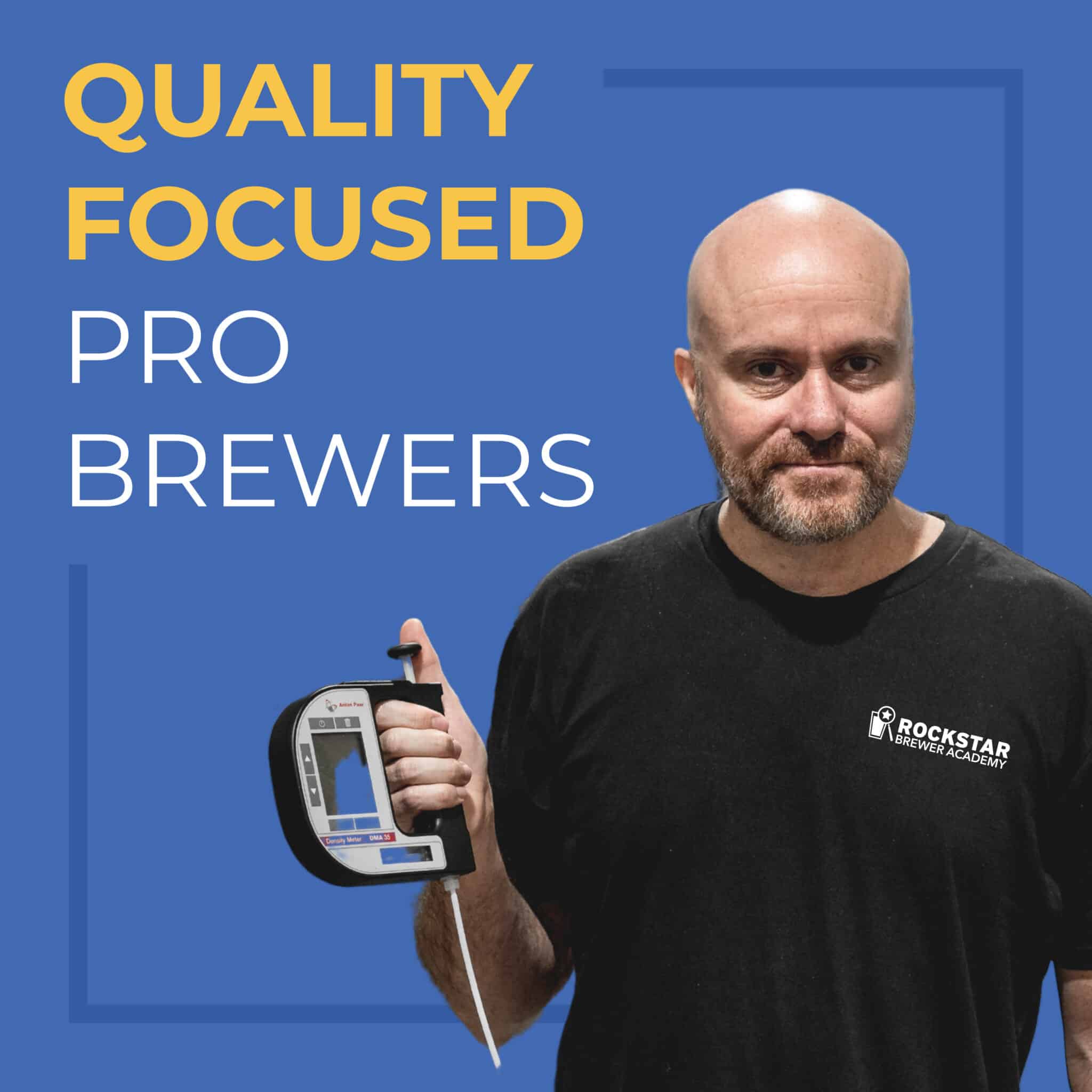
Quality-focused Pro Brewers
Subscribed: 8Played: 109
Subscribe

© Hendo From The Rockstar Brewer Academy
Description
Welcome to Quality-Focused Pro Brewers, the podcast dedicated to helping professional brewers master the art and science of brewing high-quality beer.
Every fortnight, we delve into essential topics like brewery quality systems, maximising beer shelf life, dissolved oxygen, brewing water chemistry, CIP, Yeast Husbandry, lab and more.
Designed for those planning, building, or running a craft brewery, our episodes provide actionable insights to enhance your brewing processes.
Join us as we share expert knowledge and practical tips to ensure your beer is always at its best.
Every fortnight, we delve into essential topics like brewery quality systems, maximising beer shelf life, dissolved oxygen, brewing water chemistry, CIP, Yeast Husbandry, lab and more.
Designed for those planning, building, or running a craft brewery, our episodes provide actionable insights to enhance your brewing processes.
Join us as we share expert knowledge and practical tips to ensure your beer is always at its best.
55 Episodes
Reverse
Comment CLONE RECIPE GUIDE below or scan the QR code to get the guide.Most clone recipes start with an ingredient list: likely malts, likely hops, likely yeast. Then the first batch misses the target, and the brewer changes everything at once.That is not reverse-engineering. It is creating a moving target.In this episode of Quality Focused Pro Brewers, Hendo shows you how to start with the commercial beer in the glass, collect measurable and sensory evidence, then work backwards into a supported first recipe hypothesis.You’ll learn how to: assess the reference beer through Fit For Use and True To Brand; use ABV, final gravity, beer pH, colour, clarity and foam as useful evidence; work through the Reverse-Spec 5: strength/body/finish, malt, hops, water and fermentation; distinguish hop bitterness, flavour and aroma rather than treating “hoppy” as one thing; build water from the beer you are targeting and the source water you actually have; and compare your first attempt fairly, identify the dominant mismatch and make one deliberate next change.The goal is not to claim you have uncovered a brewery’s secret recipe.It is to build a better first version, learn how your own system behaves, and stop chasing someone else’s grain bill.For professional brewers, the same approach also provides a practical competitor-benchmarking and product/QC lens.Chapters00:00 Why online clone recipes miss the mark01:59 Fit For Use vs True To Brand02:52 Get the Clone Recipe Guide03:18 Capture the measurable evidence04:29 Reverse-Spec 5: strength, appearance, body and finish05:20 Build the malt hypothesis07:02 Separate hop bitterness, flavour and aroma09:06 Build the water profile from the target beer11:25 Yeast and fermentation character12:51 Turn the product specification into a first recipe13:25 Compare side by side and change one thing14:03 Home-brewer learning and professional benchmarkingGet My Free Guide - "The Pro-Brewer Quality & Consistency Checklist" - https://bit.ly/3f6ryQBSOCIALSFacebook: https://www.facebook.com/rockstarbrewerInstagram: https://www.instagram.com/rockstarbrewer--------------------DISCLAIMER: This video and description may contain affiliate links or product recommendations, which means that if you click on one of the product links, I’ll receive a small commission. This helps support the channel and allows us to continue to make videos like this. Thank you for the support!
Want a hand identifying the key levers for your next Hefeweizen?Comment HEFEWEIZEN CHEAT SHEET below or scan the QR code to grab the Hefeweizen Flavour Cheat Sheet.You can tick every classic Hefeweizen box—ferulic acid rest, warmer fermentation, yeast stress, copied water profile—and still end up with a beer that is technically fine but just doesn’t belong together.Maybe it is a clove bomb. Maybe the banana has drifted into bubblegum. Maybe it drinks tart and thin when you wanted soft and rounded.In this episode of Quality Focused Pro Brewers, Hendo unpacks the wheat beer myths that lead brewers to chase individual process levers instead of designing one balanced expression in the glass.You’ll learn:Why a ferulic acid rest is a tool for a clove-forward result—not a compulsory wheat beer ritualWhy banana ester is part of a coordinated fermentation system, not a magic dialWhy copied water profiles from all-barley beers can miss the mark in a high-wheat mashWhy the proof is in the finished beer, not just the number you hit on brew dayHow to identify the dominant mismatch between your intended beer and the one in your handHow to make one purposeful process change at a time, rather than changing everything and learning nothingChapters:00:00 Why wheat beer rituals do not guarantee a balanced beer01:22 Set the sensory target before you change the recipe02:30 Ferulic acid rest: do you need it?04:05 Banana ester: stop treating it like a magic dial06:44 Wheat beer water chemistry10:09 Diagnose common Hefeweizen issues11:54 How to tweak your recipe with purpose13:35 Build repeatable understanding with your brewingGet My Free Guide - "The Pro-Brewer Quality & Consistency Checklist" - https://bit.ly/3f6ryQBSOCIALSFacebook: https://www.facebook.com/rockstarbrewerInstagram: https://www.instagram.com/rockstarbrewer--------------------DISCLAIMER: This video and description may contain affiliate links or product recommendations, which means that if you click on one of the product links, I’ll receive a small commission. This helps support the channel and allows us to continue to make videos like this. Thank you for the support!
If you want a copy of the Beer Foam Fault Finder, comment FOAM FAULT FINDER below and I'll send it to you.A hazy IPA can pour with plenty of fizz—and still lose its head fast.In this episode, Hendo unpacks the difference between foam formation and foam stability.Carbonation and serving conditions are worth checking, but they are only the starting point. Durable foam is a systems outcome, shaped by the balance of contributors in the beer and the process history behind it.You’ll learn:Why visible bubbles and lasting foam are not the same thingWhy carbonation and serving conditions should be checked before jumping to a culprit;How malt-derived foam contributors, process history and hop-related variables fit into the bigger picture; andHow to investigate a head-retention problem without changing every lever at once.Dry hopping is not automatically the villain when it comes to head retention, and there is no single magic fix for every hazy IPA. The useful shift is to rethink how you think about foam stability in this beer.This episode is for serious home brewers and professional brewers who want a clearer, more methodical way to think about foam without relying on guesswork.Chapters0:00 Intro: Fizzy but no head?1:47 How carbonation and serving conditions affect beer foam5:04 Foam formation vs foam stability7:13 Foam stability: Positive and negative factors8:18 Mash and boil variables9:28 Dry hopping: A variable, not the villain11:45 A more methodical investigation mindsetGet My Free Guide - "The Pro-Brewer Quality & Consistency Checklist" - https://bit.ly/3f6ryQBSOCIALSFacebook: https://www.facebook.com/rockstarbrewerInstagram: https://www.instagram.com/rockstarbrewer--------------------DISCLAIMER: This video and description may contain affiliate links or product recommendations, which means that if you click on one of the product links, I’ll receive a small commission. This helps support the channel and allows us to continue to make videos like this. Thank you for the support!
If you want the Dry Hopping SOP, comment DRY HOP SOP below and I’ll send it over.Your hazy IPA smells incredible after dry hopping… then just a few days later the aroma is gone.Most brewers assume they need more hops, a different variety, or another dry hop charge. But the real problem usually isn't the amount of hops—it's understanding how hop aroma actually works.In this episode of Quality Focused Pro Brewers, Hendo explains the two completely different families of hop aroma compounds—thiols and terpenes—and why each requires a different brewing strategy.You'll also learn why dissolved oxygen destroys hop aroma faster than most brewers realise, how dry hop timing affects biotransformation, and why one well-managed dry hop often outperforms multiple additions.In this episode you'll learn: Chapters Homebrewer, planning to open a brewery or already running one? In just 60 days, you can build a quality system that brews consistent, world-class beer 👉 https://youtu.be/NZy7pdDhyEI🎯 Want the Free 5-Step Brewery Quality Checklist?Visit 👉 https://rockstarbrewer.com/guideDISCLAIMERThis video and description may contain affiliate links or product recommendations. If you click on one of these links, I may receive a small commission. This helps support the channel and allows us to continue producing content like this. Thank you for the support!
If you want the Dry Hopping SOP, comment DRY HOP SOP below and I’ll send it over.Your hazy IPA smells incredible after dry hopping… then just a few days later the aroma is gone.Most brewers assume they need more hops, a different variety, or another dry hop charge. But the real problem usually isn't the amount of hops—it's understanding how hop aroma actually works.In this episode of Quality Focused Pro Brewers, Hendo explains the two completely different families of hop aroma compounds—thiols and terpenes—and why each requires a different brewing strategy.You'll also learn why dissolved oxygen destroys hop aroma faster than most brewers realise, how dry hop timing affects biotransformation, and why one well-managed dry hop often outperforms multiple additions.In this episode you'll learn:The difference between thiols and terpenesWhy biotransformation depends on active yeastWhy terpenes disappear during dry hoppingWhy I DON’T believe in soft-crashing your beer before dry hoppingThe science behind dry hop creepWhen and at what temperature to dry hop for maximum aromaHow oxygen destroys hop characterWhether double dry hopping is worth the riskHow to build a repeatable dry hopping SOPChapters00:00 Why hop aroma disappears02:00 Thiols vs terpenes explained05:00 Choosing the right hop varieties and combos09:00 Best timing and temperature for dry hopping12:00 Oxygen and dry hopping risks14:00 Is double dry hopping worth it?16:00 Practical dry hopping frameworkHomebrewer, planning to open a brewery or already running one? In just 60 days, you can build a quality system that brews consistent, world-class beer 👉 https://youtu.be/NZy7pdDhyEI🎯 Want the Free 5-Step Brewery Quality Checklist?Visit 👉 https://rockstarbrewer.com/guideSOCIALSYouTube: https://youtube.com/rockstarbrewerFacebook: https://facebook.com/rockstarbrewerInstagram: https://instagram.com/rockstarbrewerTikTok: https://www.tiktok.com/@rockstarbrewerDISCLAIMERThis video and description may contain affiliate links or product recommendations. If you click on one of these links, I may receive a small commission. This helps support the channel and allows us to continue producing content like this. Thank you for the support!

Comments

Download from Google Play

Download from App Store
 United States