


 Claim Ownership
Raising Men
Subscribed: 7Played: 66
Subscribe

© 2026 Shaun Dawson
Description
Raising Men is a podcast about parenting, masculinity, and the lifelong journey of raising sons—and ourselves—to be men of courage, character, and purpose. Hosted by Shaun Dawson, each episode features real conversations with parents, leaders, and thinkers redefining what it means to raising men in today’s world.
93 Episodes
Reverse
In this episode of Raising Men, host Shaun Dawson sits down with Joseph Okoroji, a coach, Muay Thai practitioner and author of A Mark in the Sand. Shaun asks a question many parents are weighing: should I sign my seven-year-old son up for martial arts? Joseph makes the case for martial arts for boys, from discipline and community to the quiet confidence of knowing you can protect yourself. Shaun shares what it was like to be the size of a sixth grader in second grade and get picked on by the older kids. He also tells the story of freezing during advanced spin training in an airplane, and what that taught him about trained confidence. Together they take on the common worry that fighting skills turn boys into bullies. You’ll come away with a clear picture of how training shapes calm, patient young men who don’t need to prove anything.Key TakeawaysGrowth rarely happens in comfort. Martial arts puts a boy somewhere completely new, where he can explore, be boisterous and test himself without real danger.On the mat, mistakes have consequences. That gives boys a kind of discipline some parents find hard to give at home, and it keeps them from turning into spoiled kids.Training turns the unknown into the known. A boy who practices every week doesn’t wonder how he’d handle a confrontation. Joseph compares that silent confidence to a spare tire you hope you never need.Some things can’t be taught, only trained. Shaun calls it the difference between the Sherlock Holmes brain, which understands an idea, and the Conan the Barbarian brain, which has to react under pressure.Trained boys are less likely to bully. After a week of sparring with people who fight back, picking on someone weaker feels like punching down, so they learn to give others an easy way out instead.“They’re more likely to be the pacifist, not from a position where they’re incapable, but because I can is why I don’t get involved.” - Joseph Okoroji“No good ever came or no growth ever came in your comfort.” - Joseph Okoroji“It’s problem solving. It’s chess with real life consequences.” - Joseph OkorojiChapters 00:00:00 Welcome Back Joseph Okoroji Returns 00:00:34 Should My Son Start Training 00:01:11 Growth Never Comes from Comfort 00:01:55 The Need to Protect Yourself 00:02:17 Shaun on Being Picked On 00:04:18 The Silent Confidence of Training 00:05:09 Flat Spins and Aerobatic Training 00:06:36 Sherlock Holmes Versus Barbarian Brain 00:08:23 Early Training Builds Calmer Boys 00:10:03 Does Martial Arts Create Bullies 00:13:44 Training Makes Everyday Stress Smaller 00:17:22 Father and Son Training TogetherBooks, Links and Frameworks MentionedA Mark in the Sand by Joseph OkorojiWhy Boys Need Resistance More Than Reassurance with Joseph Okoroji: https://raising.men/episodes/why-boys-need-resistance-more-than-reassurance-with-joseph-okorojiFrameworks and Concepts Maslow’s hierarchy of needs Sherlock Holmes brain vs. Conan the Barbarian brain (Shaun’s idea that some skills have to be trained, not just understood) The spare tire (Joseph’s picture of confidence you hope never to use) Muay Thai, boxing and jiu-jitsu as starting points #RaisingBoys #MartialArtsForKids #RaisingMen #ParentingBoys #MuayThai #KidsMartialArts #Confidence #Discipline #BullyingPrevention #Jiujitsu #ParentingTips
In this episode of Raising Men, host Shaun Dawson sits down with Joseph Okoroji, a coach, Muay Thai practitioner and the author of A Mark in the Sand. Their subject is why boys need resistance more than reassurance, and Joseph makes the case narrower and more useful than the slogan suggests. Resistance is not hardship you manufacture. It is something a boy needs practice at, because his life will hand it to him whether or not anyone got him ready. Joseph is not a father, and he speaks as the coach and as the boy who was once coached. He gives parents three roles to rotate through: carer, drill sergeant, consigliere. Key Takeaways1. Give your son small, real resistance on purpose, because his job, his coach and his first rejection will not negotiate with him. The point is practice, not suffering.2. When you do help, help the smallest amount that works. Some obstacles genuinely need an adult, but clearing every one teaches a boy that someone will always open the door.3. Rotate through three roles as he grows: carer while he is small, drill sergeant while the habits go in, consigliere once he comes to you for a point of view he does not have.4. Reassurance never stops mattering, it changes shape. Instead of a pat on the back, give an older boy the receipt: here is the hard thing you already came through.5. In sparring Joseph lets students feel the fire without getting burned badly, and that is the parenting standard too. Let him learn the stove is hot without letting it scar him.Quotes"Actual strength is having strength and providing restraint." - Joseph Okoroji"Comfort is almost like a carbon dioxide poisoning. It's not something you see, it's not something noticeable, but it's slowly killing you." - Joseph Okoroji"The dad of two with a gut and a receding hairline is the one that can snap your knee out of place." - Joseph OkorojiChapters00:00:00 Welcome And Meet Joseph Okoroji00:01:49 Why Young Men Need Resistance00:03:13 The Helicopter Parent's Good Intentions00:04:18 Controlled Chaos And Sparring Limits00:07:37 Everything Is Reps For Kids00:09:02 Comfort Is Carbon Dioxide Poisoning00:10:56 Carer Drill Sergeant And Consigliere00:15:54 Performative Strength Versus Actual Strength00:18:54 Dangerous Men Look Completely Ordinary00:23:18 Why Girls Are A Multiplier00:27:55 Coaching Fighters Through Constant Tension00:32:05 Joseph's Principle About Real ConsequenceBooks, Links and Frameworks MentionedBooksA Mark in the Sand, by Joseph A. Okoroji: https://www.amazon.com/Mark-Sand-Joseph-Okoroji/dp/B0HDYV3GZDSocial MediaJoseph Okoroji on Instagram: itrenium_red Links and WebsitesJoseph for speaking and podcast bookings: [email protected] the Masculinity Crisis with Deland McCullough:https://raising.men/episodes/navigating-the-masculinity-crisis-with-deland-mccullough Biologically Aligned Parenting with Geoff Owen: https://raising.men/episodes/biologically-aligned-parenting-with-geoff-owen
In this episode of Raising Men, host Shaun Dawson sits down with Boad Swanson, author of Great-Souled Men, to start working through Aristotle’s virtues one at a time. They begin with courage, and what it takes to raise a boy who is brave without being reckless. Aristotle put courage on a spectrum, and Boad describes both ends. Too much caution collapses into cowardice. Too little becomes recklessness. Courage is the judgment in the middle, and it starts with knowing what is worth the risk.Key TakeawaysCourage sits between two failures, not at one end of a dial. Too much caution slides into cowardice, too little slides into recklessness, and the virtue is the judgment in the middle. Telling a child to “be brave” gives them no way to find that middle.Fear is supposed to be there. Boad’s reading of Aristotle is that feeling fear is appropriate, and courage is proceeding anyway. A boy who believes courage means feeling nothing will read his own fear as proof he is failing.The muscle gets built in small reps, starting young. Kids get micro-opportunities every day to speak up, stand up or let something go. Those small pushes are what produce the instinct for when the stakes are real.Review the swing, not just the shot. Boad’s golf pro told him to hold his finish and watch where the ball went, and he applies the same habit to decisions. After a hard moment, ask your child what their choice actually produced, because that is where experience turns into wisdom.The apps removed a practice ground boys used to have. Asking someone out in person carried real stakes and immediate feedback, which is exactly what builds nerve. Both sides lose something, since the person being asked no longer has to give an honest answer either.“Too much courage becomes recklessness, not enough courage becomes cowardice. So courage is knowing what’s important.” - Boad Swanson“We have to experience it at small levels, push through at small levels, so that when the time comes we know how to push through.” - Boad Swanson“You have to have developed this sixth sense muscle in you to know what’s worthy of your courage and to fight for it.” - Boad Swanson00:00:00 Welcome Back Boad Swanson Again00:01:31 How Aristotle Defined True Courage00:02:13 Between Recklessness And Pure Cowardice00:03:44 Feeling Fear And Going Anyway00:05:11 Three Layers Of Understanding Courage00:06:13 The Golf Swing Wisdom Lesson00:07:19 Fear As Courage’s Raw Material00:07:59 Working Up Courage To Ask00:10:00 Why Dating Apps Lower Stakes00:11:24 Desmond Doss And Moral Courage00:13:30 Dan Lanning’s Fifteen Year Climb00:15:03 Starting Over From Absolute ScratchBooksGreat-Souled Men: Reclaiming Aristotle’s Vision for Building Character and Virtue, by Boad Swanson https://www.amazon.com/dp/B0HFMV8FM6?lvRaising Men: Lessons Navy SEALs Learned from Their Training and Taught to Their Sons, by Eric DavisLinks and WebsitesBoad Swanson’s book: https://greatsouledmen.com/Buy Great-Souled Men: https://greatsouledmen.com/product/great-souled-men/Beyond the Battlefield: A Navy SEAL’s Guide to Raising Good Men with Eric Davis: https://raising.men/episodes/beyond-the-battlefield-a-navy-seal-s-guide-to-raising-good-men-with-eric-davisNavigating the Masculinity Crisis with Deland McCullough: https://raising.men/episodes/navigating-the-masculinity-crisis-with-deland-mcculloughSocial MediaInstagram: https://www.instagram.com/greatsouledmen/Facebook: https://www.facebook.com/GreatsouledmenYouTube: https://www.youtube.com/@boadswanson6740People and References MentionedDesmond Doss, and the film Hacksaw RidgeDan Lanning, head coach, University of Oregon footballRyan Holiday, on Marcus Aurelius, Seneca and EpictetusAristotle, and the StoicsFrameworks and ConceptsThe golden mean: every virtue sits between an excess and a deficiencyCourage as the mean between cowardice (too much caution) and recklessnessMoral courage and physical courageWisdom as the application of knowledge, built out of experienceHold your finish: reviewing a decision after the fact, the way a golfer watches the ballShaun’s three layers of courage: absence of fear, then pushing through fear, then the judgment in the middle
In this episode of Raising Men, host Shaun Dawson returns to his conversation with Boad Swanson, author of Great-Souled Men, to dig into Aristotle’s virtues and what they mean for raising boys. They start with Aristotle’s answer to the purpose of life, a state of flourishing he called eudaimonia. Shaun opens up about seasons when he was crushing it and could not feel content, and how a lack of gratitude led straight to hubris. Boad explains the golden mean, the idea that every virtue has a sweet spot between too much and too little. Key TakeawaysAristotle called the purpose of life eudaimonia, a state of flourishing as a whole person. It covers your relationships, your work and your role as a parent, and money is only one piece of it.Every virtue has a golden mean, a sweet spot between too much and too little. Courage pushed too far turns reckless, and gratitude and ambition need the same balance.Gratitude keeps hubris in check. Shaun says his hardest stretches came after seasons when he was doing well but never stopped to appreciate the luck and help that got him there.Let your kids ask why, but ask them to say yes first. Shaun’s family rule, “Yes, Dad, but why?”, keeps their questions curious and stops them from becoming an argument.Struggle is part of the plan. Boad sees setbacks, like his younger son’s physical challenge, as the opposition that lets a boy earn magnanimity, a great soul, over time.“There’s nothing that I think makes us as men feel more valued than being needed and respected.” - Boad Swanson“Even when they appear like disasters and catastrophes in our life, they’re really blessings, ultimately.” - Boad Swanson“They shouldn’t get leftovers, our kids. They shouldn’t get the sloppy seconds at the end of the day.” - Boad Swanson00:00:00 Welcoming Boad Swanson Back Again00:02:51 Eudaimonia and Flourishing as Humans00:05:32 Hunger That Grows with Eating00:08:50 The Golden Mean of Gratitude00:11:20 Endless Hunger and Proper Ambition00:13:59 Magnanimity Means a Great Soul00:16:04 Saying Yes Before Asking Why00:18:20 Men Want to Be Needed00:20:26 Boys Born with Great Souls00:22:01 Why Kids Need Life’s Opposition00:27:30 When Athletes Lose Their Identity00:30:21 Our Kids Deserve Our BestBooks, Links and Frameworks MentionedGreat-Souled Men by Boad SwansonGreat-Souled Men: https://greatsouledmen.com/Social MediaInstagram: @greatsouledmenFacebook: https://www.facebook.com/GreatsouledmenFrameworks and ConceptsAristotle’s twelve virtuesEudaimonia (flourishing)The golden meanProper ambition
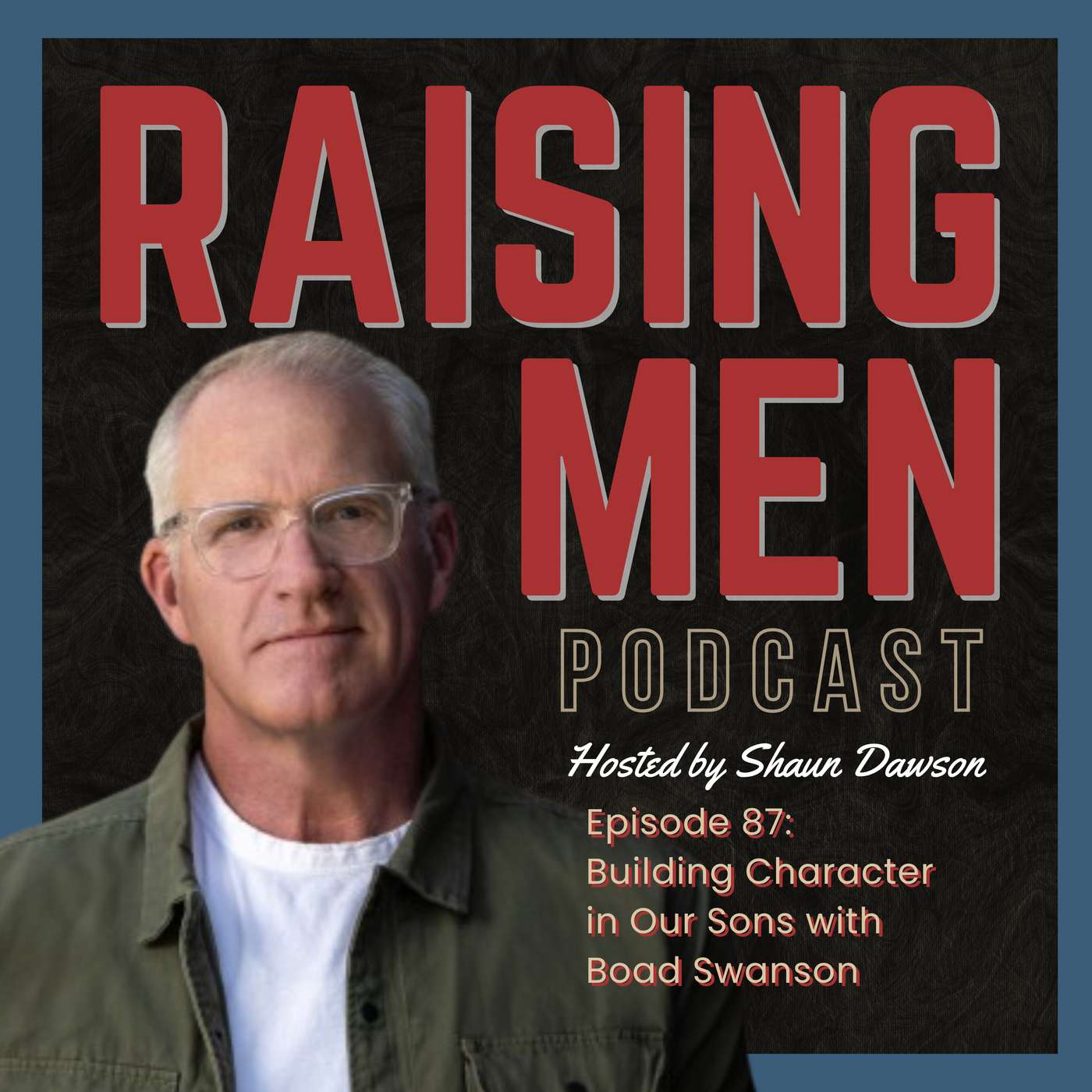
In this episode of Raising Men, host Shaun Dawson sits down with entrepreneur, father, and author Boad Swanson to explore what classical philosophy can teach us about raising resilient, honorable young men in an era of cultural confusion. Drawing from his book, Great Souled Men, Boad unpacks Aristotle’s twelve virtues—anchored by courage, magnanimity, and magnificence—and explains how fathers can apply the "golden mean" to everyday parenting.00:00 - Introduction to the masculinity crisis and the modern opportunity01:40 - Aristotle's twelve virtues and defining the magnanimous ma04:18 - Understanding courage through Aristotle's golden mean05:55 - Moral and physical courage in Desmond Doss and Dan Lanning09:28 - Managing life tensions and parenting with a clear vision15:35 - Fatherhood missteps and the power of delayed apologies 19:35 - What the game of golf reveals about emotional regulation 25:35 - The explosion of the youth travel sports industry 28:08 - Establishing family boundaries and the Sunday sports rule 34:00 - Releasing parental ego and confronting identity after athletics 38:00 - The collapse of male institutions and the value of Scouting 39:50 - Aristotle's magnificence and building a legacy that serves humanityBooksGreat Souled Men by Bode SwansonNicomachean Ethics by AristotleWalden by Henry David Thoreau (quoted on wisdom and avoiding desperate things)Links & Social MediaWebsite: https://greatsouledmen.com/Instagram: https://www.instagram.com/greatsouledmenFacebook: https://www.facebook.com/greatsouledmenFrameworks & ConceptsThe Golden Mean: Aristotle's philosophical model proposing that every virtue sits in the balanced center between two extremes of vice—deficiency and excess.Magnanimity ("The Great-Souled Men"): The crown of virtues characterized by warmth, strength, charisma, intelligence, and high moral character without toxic posturing.Magnificence ("Generosity at Scale"): The practice of directing personal means, skills, or wealth toward building enduring civic, artistic, or social structures that outlive the builder and elevate mankind (illustrated by Antoni Gaudí’s La Sagrada Família).Oblique Parenting: Mentoring sons indirectly by actively embodying virtue and living an inspiring life rather than lecturing them at the dinner table.The Golf Swing Metaphor (Input vs. Outcome): Holding your posture after an errant shot to reflectively analyze what flaw in the swing caused the ball to slice, applied to parenting reactions and personal missteps.

Comments

Download from Google Play

Download from App Store
 United States