


Reason with Science
Subscribed: 13Played: 162
Subscribe

© Jitender Kumar
Description
Welcome to "Reason with Science", the podcast that explores the intersection of reason and science in our everyday lives. Billions of years of evolution led to a species which is asking questions about its own existence. This quest of humans is not possible without science. As we navigate an increasingly complex world, it's more important than ever to approach issues with a clear and evidence-based understanding. In this podcast, we'll dive into the latest research, explore fascinating topics, and interview experts in their respective fields to help us make sense of the world around us.
58 Episodes
Reverse
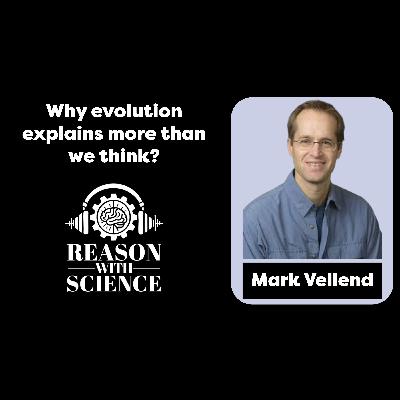
Evolution is often misunderstood as a process limited to biology and genes. In this in-depth conversation, evolutionary ecologist Mark Vellend challenges that narrow view and presents a powerful idea: evolution is a universal principle that governs all complex systems.In this episode of Reason with Science, we explore how evolution applies not only to living organisms, but also to languages, technologies, cultures, institutions, scientific theories, economics, and artificial intelligence. Drawing on his book Everything Evolves: Why Evolution Explains More Than We Think (From Proteins to Politics), Mark Vellend explains why evolutionary theory deserves recognition as a general science of change, alongside physics.We discuss:-•What makes a system evolutionary in the most fundamental sense• Why Darwinism shaped — and narrowed — our understanding of evolution• How languages evolve through everyday use and variation• Why technologies advance through trial, error, and selection• How cultural norms, ideas, and institutions evolve over time• The role of randomness, contingency, and selection beyond biology• Evolutionary thinking in AI, economics, and complex systems• Tipping points, feedback loops, and irreversible change in ecosystems and societiesThis episode is essential viewing for scientists, students, educators, philosophers, and anyone curious about how the world changes — from cells to civilizations.📘 Book discussed: Everything Evolves by Mark Vellend🎙️ Podcast: Reason with ScienceGuests infoWebsite : https://mvellend.weebly.com/Linked in : https://www.linkedin.com/pulse/mark-vellend-everything-evolves-princeton-university-press-is5xcEpisode links: Website: https://reasonwithscience.com/why-evolution-explains-more-than-we-thinkYoutube: https://www.youtube.com/watch?v=yYqQOPph6QoSpotify: https://open.spotify.com/episode/6CQdIDnDABUPMCkgoy4gCL?si=U6zufCa_RMqckOQijL4n1AApple podcast: https://podcasts.apple.com/us/podcast/why-evolution-explains-more-than-we-think/id1641776894?i=1000741038261YouTube music: https://music.youtube.com/watch?v=yYqQOPph6Qo&si=gGOJsq0EzY7rldSHFollow Reason with Science: Website: https://www.reasonwithscience.com/ Youtube: https://www.youtube.com/@ReasonwithScience Spotify: https://open.spotify.com/show/5qFLGsPWjL4GAGidmF2nKh Apple podcast: https://podcasts.apple.com/us/podcast/reason-with-science/id1641776894 YouTube music: https://music.youtube.com/playlist?list=PLila1Jm-QEwKu4xXtNpYFAsSDmPR9mlZB&si=5ehXeZhZ-z181G5bTimestamps:00:00:13 — Opening & episode premise: evolution beyond biology00:01:05 — What makes something an evolving system?00:01:46 — Welcome to Mark Vellend00:02:05 — Mark’s research: ecology, climate change, and evolution00:03:17 — Evolution as a universal process00:05:13 — Why evolution goes beyond DNA and genes00:06:45 — Language as an evolving system00:07:45 — Technology, trial-and-error, and innovation00:09:01 — Darwinism and the Modern Synthesis00:11:01 — How biology narrowed the meaning of evolution00:13:03 — The “Second Science”: generalized evolutionary theory00:14:34 — Why direct gene analogies (memes) fail00:17:49 — Modeling evolution without DNA00:20:49 — Selection beyond biology00:51:39 — Tipping points and irreversible change#evolution #evolutionexplained #trendingvideo #podcast #biology #culturalevolution #languageevolution #sciencepodcasts #reasonwithscience #philosophyofscience #science #evolutiontheory #sciencetalks #youtubevideo #viralvideo
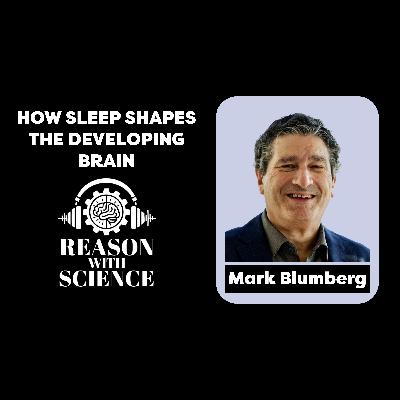
How sleep shapes the developing Brain with Mark Blumberg This conversation is with Mark Blumberg, a neuroscientist at the University of Iowa whose work has fundamentally reshaped how we understand infant sleep, movement, and early brain development. Mark’s research reveals that sleep is not a passive state, but an active, self-organizing process essential for building the brain’s earliest sensory and motor circuits.We begin by asking a basic yet surprisingly difficult question: What is sleep, really? Mark explains why defining sleep across development and across species is far more complex than it seems, and why the brain during sleep—especially during REM sleep—is often more active than during wakefulness.Together, we explore why infants spend so much of their early life in REM sleep, how sleep unfolds in distinct stages, and why the tiny, jerky movements known as sleep twitches are not meaningless byproducts of dreams, but powerful developmental signals that help wire the brain and body. We discuss how these movements contribute to building internal models of the body, how sleep supports plasticity and learning, and what happens when these processes are disrupted early in life.Finally, we turn to broader questions about development, neurodiversity, and the limits of genetic explanations. Mark argues for the importance of studying typical development in order to understand developmental disorders, and reflects on what infant sleep can teach us about plasticity, embodiment, and the foundations of human cognition.Guests infoWebsite: https://blumberg.lab.uiowa.edu/X: https://x.com/canadiancharityEpisode links: Website: https://reasonwithscience.com/how-sleep-shapes-the-developing-brain-with-mark-blumbergYoutube: https://www.youtube.com/watch?v=YNDcpIq2B98Spotify: https://open.spotify.com/episode/4ASTAAKKlokphbOc2TJxCi?si=a44044dd89554571Apple podcast: YouTube music: https://music.youtube.com/watch?v=YNDcpIq2B98&si=Alxad9KU-RtJn78SFollow Reason with Science: Website: https://www.reasonwithscience.com/ Youtube: https://www.youtube.com/@ReasonwithScience Spotify: https://open.spotify.com/show/5qFLGsPWjL4GAGidmF2nKh Apple podcast: https://podcasts.apple.com/us/podcast/reason-with-science/id1641776894 YouTube music: https://music.youtube.com/playlist?list=PLila1Jm-QEwKu4xXtNpYFAsSDmPR9mlZB&si=5ehXeZhZ-z181G5bTimestamps:00:00:00 – Why sleep is one of the greatest unsolved problems in neuroscience 00:01:22 – What is sleep? Scientific challenges in defining sleep 00:04:05 – Is sleep a single state or a collection of components? 00:06:40 – Why sleep is not a passive state: brain activity during REM 00:08:37 – The major stages of sleep: REM vs non-REM 00:11:10 – Why dreaming is not the core function of REM sleep 00:12:22 – How scientists study sleep in humans and animals 00:15:10 – Sleep deprivation, stress, and experimental limits 00:19:48 – Why babies sleep so much more than adults 00:24:10 – The science of twitching during infant sleep 00:30:05 – How twitches help build the brain’s internal body maps 00:36:01 – Does twitching continue into adulthood? 00:43:28 – Learning during sleep vs learning during wake 00:50:04 – Sleep, memory, and real-world policy implications 01:21:47 – What infant sleep reveals about development and the future of research #reasonwithscience #science #health #lifescience #podcast #sciencepodcasts #trending #trendingvideo #viralvideo
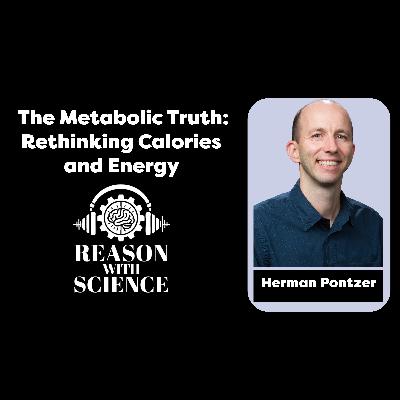
This conversation is with Herman Pontzer, an evolutionary anthropologist and professor at Duke University. Herman is best known for his groundbreaking work on human metabolism and energetics, which challenges long-held assumptions about how our bodies burn and manage energy. His field research with hunter-gatherer and subsistence-farming populations—including the Hadza of Tanzania, the Daasanach of Kenya, and the Tsimane’ of Bolivia—has redefined what we know about the relationship between activity, diet, and health.We begin by exploring the deceptively simple question: Why do some people burn more calories than others? Herman explains how the body’s total energy expenditure is remarkably constrained, meaning that even when we exercise more, our bodies often compensate by reducing energy spent elsewhere. This insight challenges the familiar “calories in, calories out” model and reframes how we understand diet, obesity, and modern sedentary lifestyles.Together, we discuss how evolution has shaped the human metabolic system—from the daily life of foragers walking 19,000 steps a day to the physiology of those in industrialized societies. We examine how metabolism interacts with the immune system, reproduction, and brain function, and why understanding these trade-offs is key to improving public health.Herman also shares insights from his books Burn and Adaptable, connecting metabolic research to broader questions about longevity, diet quality, and the future of medicine. Finally, we consider how modern tools—from doubly labeled water to GLP-1 drugs—fit into the long story of how humans manage energy in a changing world.Guests info:Website: https://sites.duke.edu/pontzerlab/X: https://x.com/HermanPontzerEpisode links: Website: https://reasonwithscience.com/the-metabolic-truth-rethinking-calories-and-energy-with-herman-pontzerYoutube: https://youtu.be/07qrQN91IowSpotify: https://open.spotify.com/episode/0uN2PJNfEmHckUcdvpg9BJ?si=wZQ4g-ckRnCDNgT71ZwXMgApple podcast: https://podcasts.apple.com/us/podcast/the-metabolic-truth-rethinking-calories-and-energy/id1641776894?i=1000732444106YouTube music: https://music.youtube.com/watch?v=07qrQN91Iow&si=Ho8HOtfA5f-HzzxfFollow Reason with Science: Website: https://www.reasonwithscience.com/ Youtube: https://www.youtube.com/@ReasonwithScience Spotify: https://open.spotify.com/show/5qFLGsPWjL4GAGidmF2nKh Apple podcast: https://podcasts.apple.com/us/podcast/reason-with-science/id1641776894 YouTube music: https://music.youtube.com/playlist?list=PLila1Jm-QEwKu4xXtNpYFAsSDmPR9mlZB&si=5ehXeZhZ-z181G5bTimestamps:00:00:00 — What is metabolism, really?00:01:20 — Who is Herman Pontzer?00:03:10 — Measuring energy in real life00:06:45 — Lessons from the Hadza and Daasanach00:09:30 — The Constrained Energy Expenditure model00:12:15 — Why exercise alone rarely changes body weight00:15:50 — Diet versus activity: the hierarchy of control00:19:10 — Internal trade-offs: the body’s energy budget00:22:35 — Metabolism in global context00:26:20 — Metabolism across the human lifespan00:29:55 — Overtraining, stress, and energy limits00:33:40 — Modern lifestyles and metabolic mismatch00:37:25 — GLP-1 drugs and the new metabolic frontier00:41:10 — Energy, health, and longevity00:45:00 — Evolution’s signature in our metabolism00:48:15 — How culture shapes our energy habits00:52:00 — Metabolism and reproductive health00:56:30 — The science of appetite and satiety01:00:45 — Metabolic research and public health policy01:05:10 — Final reflections on what it means to live energetically#reasonwithscience #science #health
Support ALFA Mars:
https://www.alfamars.org/get-involved/
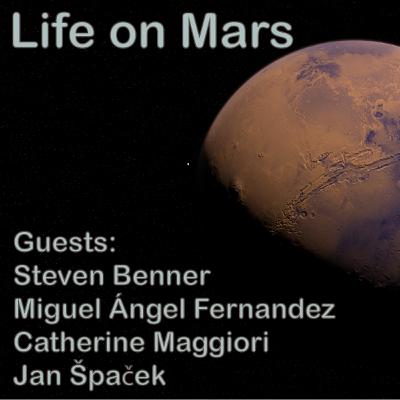
For years, humanity has been captivated by the idea of the red planet
and the possibility of finding extraterrestrial life. With advancements
in technology and space exploration, the search for life on Mars has
become more realistic than ever before. In this stream, we will talk
about latest discoveries and developments in our understanding of the
Martian environment, and explore the potential for life to exist on this
neighboring planet. We will also discuss why NASA or ESA would not be
able to find life on Mars. How a new project 'ALFA Mars' will contribute
in this endeavor.
Guests:
1) Steven Benner
https://www.alfamars.org/about-us/#bio-3
2) Miguel Ángel Fernandez
https://www.alfamars.org/about-us/#bio-32
3) Catherine Maggiori
https://www.alfamars.org/about-us/#bio-29
4) Jan Špaček
https://www.alfamars.org/about-us/#bio-1
Episode links:
Website: https://www.reasonwithscience.com/home/life_on_mars
Youtube: https://www.youtube.com/live/xLi05sr-Ivk?feature=share
Spotify: https://open.spotify.com/episode/6NPFfY0WzT7LabCxORLwYI?si=SXZjmmfBSIScuVPh_WbGvA
Apple podcast:
https://podcastsconnect.apple.com/my-podcasts/show/reason-with-science/407cd478-4271-4319-8318-fc378d4e7ccb/episode/life-on-mars-|-reason-with-science-|-alien-life-|-alfa-mars-project/ba1ff7ee-0885-4d95-a094-683a18a584f0
Google podcast:
https://podcasts.google.com/feed/aHR0cHM6Ly9hbmNob3IuZm0vcy9iMjMyNDZlOC9wb2RjYXN0L3Jzcw/episode/Mjk1NDVjODMtZTRjMS00MTQzLTkyOWMtNzQwYWYxYWVlMzQ2?sa=X&ved=0CAUQkfYCahcKEwjQ3ruopcD-AhUAAAAAHQAAAAAQLA
Follow Reason with Science:
Website: https://www.reasonwithscience.com/
Youtube: https://www.youtube.com/c/reasonwithscience
Spotify: https://open.spotify.com/show/5qFLGsPWjL4GAGidmF2nKh
Apple podcast: https://podcasts.apple.com/us/podcast/reason-with-science/id1641776894
Google podcast: https://podcasts.google.com/feed/aHR0cHM6Ly9hbmNob3IuZm0vcy9iMjMyNDZlOC9wb2RjYXN0L3Jzcw
Timestamps:
00:00:00 Introduction
00:05:54 Why Mars is an important candidate for life?
00:09:00 What kind of life are we looking at Mars?
00:14:00 Is there water on Mars?
00:17:33 Temperature ranges on Mars
00:24:09 What type of microbes are present in Mars like conditions?
00:26:14 Understanding Mars geology from meteorites
00:38:23 How to avoid contaminating Mars?
00:51:50 Assembly theory by Lee Cronin and Sara Walker
00:59:20 Many microbe species live together, so why don't we see any biosignatures yet?
01:04:04 Do we see any biosignatures on Mars?
01:06:13 Panspermia on Mars
01:09:46 Contribution of the Moon for origin of life
01:15:48 ALFA Mars project and how to support it?
01:25:28 Thank you!
Can economics help us create a sustainable future? Our guest is Doyne Farmer, Director of the Complexity Economics Programme at Oxford University. Trained as a physicist, he’s spent his career studying chaos, complex systems, and prediction, and now applies those ideas to economics, sustainability, and climate change. In this episode, we’ll talk about why traditional economic models often fail, how complexity economics gives us new tools to understand markets, and what agent-based models and heterogeneity can teach us about the real economy. We’ll look at chaos, business cycles, and equilibrium, and draw surprising parallels between biology, supply chains, and innovation.Guest info: Website: https://www.doynefarmer.com/Bluesky: https://bsky.app/profile/doynefarmer.bsky.socialEpisode links: Website: https://reasonwithscience.com/predicting-future-of-the-planet-with-j-doyne-farmerYoutube: https://youtu.be/i7T-1m7s2rYSpotify: https://open.spotify.com/episode/0Mmqc9hETV1yrgxgvv8rHk?si=MxqQzImoR2W0k6W7AvM9pgApple podcast: https://podcasts.apple.com/us/podcast/predicting-future-of-the-planet-with-j-doyne-farmer/id1641776894?i=1000731754638YouTube music: https://music.youtube.com/watch?v=i7T-1m7s2rY&si=OANPQABq3CgX6znIFollow Reason with Science: Website: https://www.reasonwithscience.com/ Youtube: https://www.youtube.com/@ReasonwithScience Spotify: https://open.spotify.com/show/5qFLGsPWjL4GAGidmF2nKh Apple podcast: https://podcasts.apple.com/us/podcast/reason-with-science/id1641776894 YouTube music: https://music.youtube.com/playlist?list=PLila1Jm-QEwKu4xXtNpYFAsSDmPR9mlZB&si=5ehXeZhZ-z181G5b
Is evolution predictable? The guest for this podcast is with Simon Conway Morris, Professor of Evolutionary Palaeobiology at the University of Cambridge. Famous for his work on the Cambrian explosion and the concept of evolutionary convergence, Conway Morris has written influential books including Life’s Solution: Inevitable Humans in a Lonely Universe, The Runes of Evolution, and From Extraterrestrials to Animal Minds. In this conversation, we talk about why convergence — the independent evolution of similar traits across unrelated species — offers evidence for deep constraints on the evolution of life. We’ll discuss major evolutionary transitions such as the origin of eukaryotes, sudden explosions of complexity, and the narrow “design space” within which evolution operates. We’ll examine whether traits like intelligence and consciousness are inevitable, why extinction often leads to familiar replacements, and how evolution’s predictability might extend to technology, culture, and even artificial intelligence.As Conway Morris provocatively asks: “If we replayed the tape of life, would we still end up with eyes, wings, minds—and perhaps even something like us?” This episode explores how the physical, chemical, and biological constraints that underpin convergence shape the living world and why, despite its complexity, evolution may be far more predictable than we imagine.Guest info:Website: https://www.esc.cam.ac.uk/directory/simon-conway-morrisEpisode links: Website: https://reasonwithscience.com/is-evolution-predictable-with-simon-conway-morrisYoutube: https://youtu.be/mYpFJbJsWYASpotify: https://open.spotify.com/episode/7cr8LN9qfsVz40ykFSjC3O?si=bae3fa740cbb4e77Apple podcast: https://podcasts.apple.com/us/podcast/is-evolution-predictable-with-simon-conway-morris/id1641776894?i=1000721290043YouTube music: https://music.youtube.com/watch?v=mYpFJbJsWYA&si=7RgntDEFRkqAh9hSFollow Reason with Science: Website: https://www.reasonwithscience.com/ Youtube: https://www.youtube.com/@ReasonwithScience Spotify: https://open.spotify.com/show/5qFLGsPWjL4GAGidmF2nKh Apple podcast: https://podcasts.apple.com/us/podcast/reason-with-science/id1641776894 YouTube music: https://music.youtube.com/playlist?list=PLila1Jm-QEwKu4xXtNpYFAsSDmPR9mlZB&si=5ehXeZhZ-z181G5bTimestamps:00:00:00 – Introduction 00:02:00 – Starting point: evolution’s predictability00:06:44 – Predictability of evolution & extraterrestrial comparisons00:10:56 – Deep homology and universal molecular pathways00:16:30 – Randomness vs probabilities in evolution00:19:41 – Major evolutionary transitions00:27:47 – Convergent evolution as a predictive framework00:42:45 – Laboratory evolution experiments00:49:57 – Human uniqueness vs other primates01:02:46 – Dyson spheres & the Fermi paradox01:06:09 – Human peculiarity and consciousness01:14:02 – Limits of understanding consciousness01:27:20 – Challenges in improving science funding01:38:59 – Mavericks and unpredictability of great ideas01:42:01 – Theology and spirituality in society#reasonwithscience #podcast #biology
This conversatio is with Ricard Solé, a leading thinker in complex systems and synthetic biology. Ricard heads the Complex Systems Lab at Pompeu Fabra University in Barcelona, where he explores how simple rules give rise to life’s astonishing complexity.We open with a thought-provoking question: Can a biologist fix a radio? — an idea from Yuri Lazebnik that asks if breaking things down into parts really explains how living systems work. Ricard explains why life resists simple mechanical analogies and why cells, organisms, and ecosystems can’t just be “wired up” like machines.Together we explore what we mean by “complexity,” how nature builds it through evolution, self-organization, and cooperation, and why emergence makes the whole more than the sum of its parts. We touch on termite nests, slime molds, brains, and immune systems as windows into collective intelligence and hidden patterns in nature.Guest info:Website: https://www.upf.edu/web/biomed/pdi/-/asset_publisher/vDntl1i7QlGn/content/sol%C3%A9-vicente-ricard/maximizedX: https://x.com/ricard_soleBluesky: https://bsky.app/profile/ricardsole.bsky.socialEpisode links: Website: https://reasonwithscience.com/how-nature-builds-complexity-ricard-soleYoutube: https://youtu.be/KRcqScqqunASpotify: https://open.spotify.com/episode/3n64g2SSyXSlzTmOXtE597?si=dNxmfjtFQMGsfY0qaQGaGwApple podcast: https://podcasts.apple.com/us/podcast/how-nature-builds-complexity-ricard-sol%C3%A9-reason-with/id1641776894?i=1000719142144YouTube music: https://music.youtube.com/watch?v=KRcqScqqunA&si=MxOfuk6cvTRDJqtlFollow Reason with Science: Website: https://www.reasonwithscience.com/ Youtube: https://www.youtube.com/@ReasonwithScience Spotify: https://open.spotify.com/show/5qFLGsPWjL4GAGidmF2nKh Apple podcast: https://podcasts.apple.com/us/podcast/reason-with-science/id1641776894 YouTube music: https://music.youtube.com/playlist?list=PLila1Jm-QEwKu4xXtNpYFAsSDmPR9mlZB&si=5ehXeZhZ-z181G5bTimestamps:00:00:00 - Introduction 00:02:01 - Can a Biologist Fix a Radio? (Yuri Lazebnik's Analogy)00:03:36 - The Limits of Engineering Approaches in Biology00:04:50 - Hardware vs. Software in Cellular Systems00:09:01 - What Is Complexity? Emergence Explained00:10:18 - Collective Intelligence: From Termites to Slime Molds00:14:57 - Evolution as a Driver of Complexity00:15:54 - Major Evolutionary Transitions Defined00:17:27 - The Limits of Reductionism in Biology00:19:34 - What Complexity Theory Could Offer00:21:07 - Scaling Laws in Biology and Metabolism00:22:26 - Synthetic Biology and the Origin of Life00:26:44 - Information, Coding, and Pre-cellular Chemistry00:30:03 - Cells, Agency, and the Birth of Individuality00:33:37 - Liquid Brains: Immune Systems, Ant Colonies, and Intelligence00:37:58 - Synthetic Worlds: Rebuilding Evolution in the Lab00:41:06 - Language Emergence and Cognitive Space00:45:00 - Multicellularity and the Last Common Ancestor00:49:00 - Turing Patterns and Symmetry Breaking in Development00:53:36 - The Challenge of Modeling Organs in Complexity Theory00:55:03 - Plant Intelligence, Redundancy, and Morphological Plasticity00:57:14 - Slime Molds and Network-Based Computation01:00:00 - Fungi and Underground Intelligence01:01:04 - Liquid Brains: A Broader Framework01:03:00 - The Immune System as a Cognitive Network01:06:04 - Evolutionary Convergence and Constraints in Biology01:09:04 - Searching for Life Beyond Earth01:12:00 - Can Complexity Theory Predict Life’s Origins?01:17:04 - Synthetic Biology as a Tool for Discovery01:18:47 - The Origin of Neurons and Brains01:24:43 - Regeneration, Memory, and the Mystery of Planarians01:31:05 - Cancer, Evolution, and System Breakdown01:36:04 - Climate Tipping Points and Complex Systems01:39:00 - The Importance of Scientific Thinking01:47:52 - Final Thoughts and Reflections#reasonwithscience #podcast #biology
This episode is with one of the most compelling voices in anthropology, Agustín Fuentes. Agustín is a professor, evolutionary theorist, and author of “The Creative Spark”, where he explores what truly makes us human, not just biologically, but culturally, socially, and creatively. In this episode, we discuss common misconceptions about evolution and explore the complex, branching story of our species. We examine how traits like cooperation, creativity, and social bonding shaped our survival, and why race, gender, sex, and even marriage is far more culturally constructed than biologically fixed. We also dig into big questions around religion, science, and the future of human evolution. Agustín helps us see that to understand where we’re going, we first need to understand how we’ve evolved, not just in body, but in mind, meaning, and imagination.Guests infoWebsite: https://afuentes.com/X: https://x.com/AnthrofuentesBluesky: https://bsky.app/profile/anthrofuentes.bsky.socialEpisode links: Website: https://reasonwithscience.com/human-evolution-and-culture-with-agustn-fuentesYoutube: https://youtu.be/9KlvbqPXM8sSpotify: https://open.spotify.com/episode/55xwrZEofw4nO9iQEJ8sKQ?si=890c260c49be4372Apple podcast: https://podcasts.apple.com/us/podcast/human-evolution-and-culture-with-agust%C3%ADn-fuentes/id1641776894?i=1000717975098YouTube music: https://music.youtube.com/watch?v=9KlvbqPXM8s&si=NVXOiCWNdQf6lBJIFollow Reason with Science: Website: https://www.reasonwithscience.com/ Youtube: https://www.youtube.com/@ReasonwithScience Spotify: https://open.spotify.com/show/5qFLGsPWjL4GAGidmF2nKh Apple podcast: https://podcasts.apple.com/us/podcast/reason-with-science/id1641776894 YouTube music: https://music.youtube.com/playlist?list=PLila1Jm-QEwKu4xXtNpYFAsSDmPR9mlZB&si=5ehXeZhZ-z181G5bTimestamps:00:00:00 - Introduction 00:01:48 - Explanation of the extended evolutionary synthesis00:04:19 - The role of technology in modern evolutionary science00:05:07 - Why humans are the last surviving hominins00:06:02 - The “Messy bush” model of human evolution00:07:45 - Ancient human interbreeding and genetic mixing00:09:15 - Understanding creativity as a core human trait00:10:49 - What distinguishes humans from other primates00:14:47 - Convergent evolution and shared solutions across species00:16:22 - Exploring cultural, behavioral, and genetic inheritance00:20:45 - Human brain development and its adaptive plasticity00:25:25 - Why the human brain operates in a social default state00:26:02 - The role of imagination and creativity in human evolution00:35:12 - How media and modern inputs shape human bias00:42:05 - Comparing human creativity and artificial intelligence00:57:58 - Evolutionary insights into modern human diets
This episode is with John Tregoning, a leading expert in infectious diseases, professor at Imperial College London, and author of the books “Live Forever?” and Infectious. John’s work focuses on how our immune systems fight off disease and how scientific advances can help us live not just longer, but healthier lives. In this episode, we break down the science behind ageing and talk about the growing role of vaccines, lifestyle, and cutting-edge technologies like AI, gene editing, and immunotherapy in transforming how we think about health. We also touch on some big-picture questions like What are the ethical and social implications of radically extended lifespans? And what can we do right now to stack the odds in our favor for a longer, more vibrant life?Guests infoWebsite: https://profiles.imperial.ac.uk/john.tregoningX: https://x.com/drtregoningEpisode links: Website: https://reasonwithscience.com/vaccines-longevity-and-the-future-of-health-with-john-tregoningYoutube: https://youtu.be/x1-9zESxap0?si=nqAHKe27m1xX0HjLSpotify: https://open.spotify.com/episode/6wSu03Fd1xkAzVmsMuMZg5?si=ng_0KpqXRiinG7vKfvbfIQApple podcast: https://podcasts.apple.com/us/podcast/vaccines-longevity-and-the-future-of-health/id1641776894?i=1000716957739YouTube music: https://music.youtube.com/watch?v=x1-9zESxap0&si=TU37R8zkoJoXgt8GFollow Reason with Science: Website: https://www.reasonwithscience.com/ Youtube: https://www.youtube.com/@ReasonwithScience Spotify: https://open.spotify.com/show/5qFLGsPWjL4GAGidmF2nKh Apple podcast: https://podcasts.apple.com/us/podcast/reason-with-science/id1641776894YouTube music: https://music.youtube.com/playlist?list=PLila1Jm-QEwKu4xXtNpYFAsSDmPR9mlZB&si=5ehXeZhZ-z181G5bTimestamps:00:00:00 - Introduction to John Tregoning and the podcast00:01:26 - Scientific method and how we establish facts00:03:59 - How vaccines are developed, tested, and approved00:09:09 - What is aging? Biological and evolutionary insights00:11:22 - Healthspan vs. lifespan: Why quality matters00:13:44 - Infectious diseases and the immune system's role00:20:07 - Biology's complexity: Genes, environment, and unknowns00:23:22 - The immune system: Strengths, complexity, and risks00:29:08 - Microbiome and its influence on health00:34:06 - Chronic diseases: Heart disease, cancer, and dementia00:44:39 - Genetic predispositions and the limits of DNA testing00:50:00 - Obesity, diet, diabetes, and ultra-processed food00:57:03 - Technology in health: Wearables, data, gene editing01:06:05 - Lifestyle interventions for healthy aging01:07:52 - The importance of social connection for longevity01:13:39 - Public health policy and environmental factors01:16:21 - Ethical implications of radical life extension01:17:40 - Final thoughts: Prevention, trust in science, and living well
This episode is with Chris Kempes, a professor at the Santa Fe Institute working at the fascinating intersection of physics and biology. Chris joins us to talk about some of the most profound questions about life starting from fundamental definitions to exploring life's potential multiple origins guided by the laws of physics. Join us as we explore the role of energy landscapes in Prebiotic chemistry, the physical basis of microbial behaviors, scaling laws that govern life's metabolic patterns, and how collective behaviors emerge in multicellular organisms. Let's embark on a journey to rethink life's mysteries through the lens of physics.Guests info:Website: https://chriskempes.com/Chris_Kempes/Home.htmlEpisode links: Website: https://reasonwithscience.com/the-physics-of-living-system-with-chris-kempesYoutube: https://youtu.be/2rvJoa31-KI?si=TBAngZ5ZvgK3DoHCSpotify: https://open.spotify.com/episode/2NSmBsJWfp7l5ZJMaxRVsv?si=0ceaa05de2964ecbApple podcast: https://podcasts.apple.com/us/podcast/the-physics-of-living-system-with-chris-kempes/id1641776894?i=1000705041814YouTube music: https://music.youtube.com/watch?v=2rvJoa31-KI&si=8jyG5q4MTQDiC7OvFollow Reason with Science: Website:https://www.reasonwithscience.com/Youtube: https://www.youtube.com/@ReasonwithScienceSpotify: https://open.spotify.com/show/5qFLGsPWjL4GAGidmF2nKh Apple podcast: https://podcasts.apple.com/us/podcast/reason-with-science/id1641776894 YouTube music: https://music.youtube.com/playlist?list=PLila1Jm-QEwKu4xXtNpYFAsSDmPR9mlZB&si=5ehXeZhZ-z181G5bTimestamps:00:00:00 – Introduction to the Podcast00:00:24 – Chris Kempes and The Intersection of Physics and Biology00:01:20 – The Role of Definitions in Science00:03:59 – Merging Physics and Biology00:05:01 – Easy vs. Hard Questions in Science00:07:20 – What is Life? Defining the Undefined00:09:25 – Language as a Living System00:10:57 – Are Viruses Alive? 00:17:45 – "Livingness" as a Spectrum00:19:03 – Scaling Laws in Biology00:24:17 – Multiple Origins of Life00:26:01 – The Error Threshold in Evolution00:31:29 – Scientific Method as Evolution00:34:01 – Unifying Ecology, Origins, and Astrobiology00:45:00 – Convergent Evolution and Physical Constraints01:36:30 – Building Life in the Lab & Theories That Guide Us#reasonwithscience #podcast #biology
This episode is with Kenneth Catania, a neuroscientist and biologist at Vanderbilt University in Nashville, Tennessee. His work has illuminated the fascinating sensory worlds of species like star-nosed moles, electric eels, and the emerald jewel wasp. Science is often thought of as a rigid, methodical pursuit, but in reality, it thrives on creativity, intuition, and the ability to recognize patterns in chaos. In this episode, we dive into the "grammar" of science, the puzzle-solving nature of discovery, and the ways in which attention, technology, and unexpected anomalies shape breakthroughs. From paradigm shifts to high-voltage eels, we explore what it truly means to think like a scientist—and why the entire scientific endeavor is important for humanity.Guests info:Website: https://as.vanderbilt.edu/catanialab/Books on Amazon: https://shorturl.at/LrTbEEpisode links: Website: https://reasonwithscience.com/the-art-and-craft-of-science-with-kenneth-cataniaYoutube:https://youtu.be/BmV8y4iRuvwSpotify: https://open.spotify.com/episode/1jxmbRdmDo8nr3iGwVq8w5?si=487106e179404a6fApple podcast: https://podcasts.apple.com/us/podcast/the-art-and-craft-of-science-with-kenneth/id1641776894?i=1000700376415YouTube music: https://music.youtube.com/watch?v=BmV8y4iRuvw&si=RYFW4r-C13H6yrx5Follow Reason with Science: Website:https://www.reasonwithscience.com/Youtube: https://www.youtube.com/@ReasonwithScienceSpotify: https://open.spotify.com/show/5qFLGsPWjL4GAGidmF2nKh Apple podcast: https://podcasts.apple.com/us/podcast/reason-with-science/id1641776894 YouTube music: https://music.youtube.com/playlist?list=PLila1Jm-QEwKu4xXtNpYFAsSDmPR9mlZB&si=5ehXeZhZ-z181G5bTimestamps:00:00:00 – Intro: Why Science Is Both Creative and Crucial00:02:14 – What is neuroethology? The bridge between brains and behavior00:05:01 – Evolution’s extremes: Why strange animals are scientific gold00:07:27 – The real story behind scientific discovery00:10:03 – Science’s hidden stage: Where ideas actually come from00:11:01 – Why science changes – and why that’s a strength00:13:00 – Why revising experiments is like revising writing00:14:56 – Hidden histories: How experiments evolve like species00:20:01 – Obsession leads to insight: How puzzles capture our focus00:23:01 – Electric eels: Evolution’s living tasers00:29:30 – Anatomy of horror: Jewel wasp eats heart and lungs first00:31:02 – Art as a path to science: The surprising power of images00:41:01 – Scientific method: Bringing together Popper, Kuhn and chaos00:46:30 – The role of clarity in discovering facts00:47:58 – Science as a culture of truth-seeking00:53:01 – Science is everywhere: Even in your light switches00:55:52 – The unspoken reality of failure in science1:04:30 – Why scientists are humans, not robots in lab coats1:07:00 – Scientists don’t fit in a box – and that’s a good thing1:08:30 – Why scientific papers don’t tell the whole story1:09:05 – Success in science: What it really looks like1:10:46 – What makes a good scientist? Passion, curiosity, and persistence1:17:01 – Nurturing curiosity: Letting students follow what excites them1:19:53 – Hard work, passion, and science#reasonwithscience #podcast #biology
This episode is with Iñaki Ruiz-Trillo, whose research sheds light on one of the most fundamental transitions in the history of life—the evolution of multicellularity. Iñaki is a group leader at the Institute of Evolutionary Biology in Barcelona, where he investigates how unicellular organisms gave rise to complex multicellular life. Our conversation explores the deep evolutionary forces that shaped this transition, the role of cooperation and cell differentiation, and what studying the ancestors of animals can teach us about life’s complexity. We also discuss broader questions about biological organization, individuality, and the very nature of what it means to be a multicellular being.Guests info:Website: https://multicellgenome.com/X: https://x.com/multicellgenomeEpisode links: Website: https://reasonwithscience.com/how-animals-evolved-with-inaki-ruiz-trilloYoutube: https://youtu.be/DgVuuAnYZpY?si=aH4Ti4uiomMaGW6dSpotify: https://open.spotify.com/episode/054J6Lj4xqvw7h3oNzAis1?si=Ad4rVvgSRTumw_BwPaLSlQApple podcast: https://podcasts.apple.com/us/podcast/how-animals-evolved-with-i%C3%B1aki-ruiz-trillo-reason/id1641776894?i=1000697174412YouTube music: https://music.youtube.com/watch?v=DgVuuAnYZpY&si=cCfR2juq00UjCfKCFollow Reason with Science: Website: https://www.reasonwithscience.com/ Youtube: https://www.youtube.com/@ReasonwithScience Spotify: https://open.spotify.com/show/5qFLGsPWjL4GAGidmF2nKh Apple podcast: https://podcasts.apple.com/us/podcast/reason-with-science/id1641776894 YouTube music: https://music.youtube.com/playlist?list=PLila1Jm-QEwKu4xXtNpYFAsSDmPR9mlZB&si=5ehXeZhZ-z181G5bTimestamps:00:00:00 - Introduction 00:00:20 - Evolution of multicellularity with Iñaki Ruiz-Trillo 00:02:54 - Why compare animals with unicellular relatives? 00:05:11 - What defines multicellularity? 00:09:07 - Studying unicellular ancestors of animals 00:14:19 - Convergent vs. homologous evolution 00:22:26 - Why did multicellularity evolve? 00:27:53 - What did the first animals look like? 00:30:55 - Bilateral symmetry and its impact 00:33:27 - Predation, competition, and cooperation in evolution 00:39:09 - Comparing different multicellular lineages 00:52:22 - Searching for new unicellular relatives 01:03:30 - Experimenting with multicellular growth 01:07:08 - Can we fully understand the origin of animals? 01:09:47 - Closing remarks
This episode is with Kevin Mitchell. He is an associate professor of Genetics and Neuroscience at Trinity College Dublin, where he investigates how genetic variations influence neural wiring, cognition, and conditions like autism and schizophrenia. Kevin is also the author of Innate: How the Wiring of Our Brains Shapes Who We Are and Free Agents: How Evolution Gave Us Free Will. Here, we discuss the laws of biology and the nature of free will. Kevin also shares insights on agency as a defining feature of life, the meaning of self, and the evolution of perception.Guests info:Website: https://www.kjmitchell.com/X: https://x.com/WiringTheBrainEpisode links: Website: https://reasonwithscience.com/genetic-and-the-brain-with-kevin-mitchellYoutube: https://youtu.be/eOyNWCjBuQc?si=Nz09vBN0mCFN8nuFSpotify: https://open.spotify.com/episode/4HVcFuG48HLu4T92aXflLM?si=a68eee4f113e4aeeApple podcast: https://podcasts.apple.com/us/podcast/genetics-and-the-brain-with-kevin-mitchell/id1641776894?i=1000692566036YouTube music: https://music.youtube.com/watch?v=eOyNWCjBuQc&si=AMWPfTZthe8zS5tEFollow Reason with Science: Website: https://www.reasonwithscience.com/ Youtube: https://www.youtube.com/@ReasonwithScience Spotify: https://open.spotify.com/show/5qFLGsPWjL4GAGidmF2nKh Apple podcast: https://podcasts.apple.com/us/podcast/reason-with-science/id1641776894 YouTube music: https://music.youtube.com/playlist?list=PLila1Jm-QEwKu4xXtNpYFAsSDmPR9mlZB&si=5ehXeZhZ-z181G5bTimestamps:00:00:00 Introduction00:01:55 Biology vs. Chemistry and Physics00:04:02 Reductionism in Science00:16:09 Emergence and Evolution00:26:59 Free Will Discussion00:41:42 Cognition and System Irreducibility00:44:03 Genetics and Psychological Predispositions00:55:17 Complexity of Interactions01:04:39 Engineering Free Will01:07:38 Social Impacts of Free Will01:11:53 Long-term Free Will and Decisions
This episode is with Michael Levin and William RatCliff. Mike is a Professor in the Biology department at Tufts University. He is a pioneer in the study of bioelectricity, regeneration, and morphogenesis. Will is a Professor in the School of Biological Science at Georgia Tech. He is a leading expert in the study of how single-celled organisms evolved into complex multicellular life forms. Here, we talk about how cells cooperate, evolve, and build the diversity of life we see today. Specifically, we discuss about evolution of multicellularity, the role of bioelectricity in evolution, and the emergence of regeneration.Guests info:William RatCliff-Website: https://ratclifflab.biosci.gatech.edu/X: https://x.com/wc_ratcliffMichael Levin-Website: https://www.drmichaellevin.org/X: https://x.com/drmichaellevinEpisode links:Website: Youtube: https://youtu.be/NULzvSGpmvE?si=qMjfKNyMzKrUmdRmSpotify: https://open.spotify.com/episode/46y8cCFsbzMKRnC1urghVQ?si=E3tDRUojTPOrIsBHDqcusgApple podcast: https://podcasts.apple.com/us/podcast/how-biology-works-with-michael-levin-and-william/id1641776894?i=1000690266570YouTube music: https://music.youtube.com/watch?v=NULzvSGpmvE&si=Fi1CksVMCBDPe9nvFollow Reason with Science:Website:https://www.reasonwithscience.com/Youtube: https://www.youtube.com/@ReasonwithScienceSpotify: https://open.spotify.com/show/5qFLGsPWjL4GAGidmF2nKhApple podcast: https://podcasts.apple.com/us/podcast/reason-with-science/id1641776894 YouTube music: https://music.youtube.com/playlist?list=PLila1Jm-QEwKu4xXtNpYFAsSDmPR9mlZB&si=5ehXeZhZ-z181G5bTimestamps:00:00:00 Introduction00:04:06 How do you picture a cell?00:12:5600:15:37 What is multicellularity?00:25:58 Why can’t unicellular or early multicellular organisms communicate over long distances?00:31:10 Cells as colonial organisms—how do they coordinate with identical genomes?00:48:11 Introducing snowflakes01:14:36 How does cellular specialization happen, and what makes it unique?01:16:34 Can different experimental conditions lead to new types of specialization?01:33:25 What drives cellular specialization?01:34:46 What happens at the cellular level in diseases like cancer?01:43:52 How do you view aging from a cellular perspective?More on Reason with Science:1) Chemistry of life and death | Nick Lane | Reason with Science | Origin of life | Biochemistry (https://youtu.be/YolIkk_oJdI)2) Collective intelligence of cells | Michael Levin | Reason with science | Bioelectricity | Biology (https://youtu.be/yFNWuHOtM1w) #reasonwithscience #biology #evolution
In this episode, we talk with cognitive scientist Hugo Mercier about the fascinating topic of reasoning - what it is, how it works, and why it matters. Hugo is a co-author of The Enigma of Reason (with Dan Sperber) and author of Not Born Yesterday. Here, we discuss why reason evolved, the good and bad sides of reasoning, and how our biases - like confirmation bias and motivated reasoning - affect us. Hugo helps us unpack ideas like the argumentative theory of reasoning, the dual-process theory, and whether reasoning is better for competition or collaboration. Plus, we explore how to fight misinformation, train our reasoning abilities, and embrace intellectual humility.
Guest info:
Website: https://sites.google.com/site/hugomercier/
X: https://x.com/hugoreasoning?lang=en
Google scholar: https://scholar.google.com/scholar?hl=en&as_sdt=0%2C5&q=hugo+mercier&btnG=
Episode links:
Website: https://reasonwithscience.com/reason-and-scientific-method-with-hugo-mercier
Youtube: https://youtu.be/SJUoyZKGPIc?si=-lsc5R2BuVBBQIj0
Spotify: https://open.spotify.com/episode/1k5xiHUJsahSsGJCS33f00?si=9421bc7b341d436f
Apple podcast: https://podcasts.apple.com/us/podcast/reason-and-scientific-method-hugo-mercier-reason/id1641776894?i=1000686324801
YouTube music: https://music.youtube.com/watch?v=SJUoyZKGPIc&si=LL0RrAovldZgQV_i
Follow Reason with Science:
Website: https://www.reasonwithscience.com/
Youtube: https://www.youtube.com/@ReasonwithScience
Spotify: https://open.spotify.com/show/5qFLGsPWjL4GAGidmF2nKh
Apple podcast: https://podcasts.apple.com/us/podcast/reason-with-science/id1641776894
YouTube music: https://music.youtube.com/playlist?list=PLila1Jm-QEwKu4xXtNpYFAsSDmPR9mlZB&si=5ehXeZhZ-z181G5b
Timestamps:
00:00:00 Introduction
00:01:36 What's your understanding of reason?
00:05:37 What about science?
00:08:10 Can we say that reason is an evolved property of evolution?
00:12:50 Can using the scientific method lead to better reasoning?
00:30:30 Does the role of language play an important part in understanding how reason works?
00:33:40 Do you think cooperation is the key to the evolution of reasoning?
00:35:12 What characteristics make reason evolve?
00:37:45 If cooperation is key, why does reason misfire?
00:39:40 What do you think about rationality? Is it another special form of reasoning?
00:42:45 Are there different processes, like unconscious and conscious levels, that matter when it comes to reasoning?
00:51:55 Can reasoning be trained?
00:56:34 What do you think about misinformation, and how is it linked to education?
01:05:10 What is the difference between information and misinformation?
01:08:48 Does the type of media matter?
More on Reason with Science:
1) Chemistry of life and death | Nick Lane | Reason with Science | Origin of life | Biochemistry (https://youtu.be/YolIkk_oJdI)
2) Collective intelligence of cells | Michael Levin | Reason with science | Bioelectricity | Biology (https://youtu.be/yFNWuHOtM1w)
3) Powering the complexity of life with Michael Levin and Nick Lane | Reason with Science | Biology (https://youtu.be/GBxVvLVzF68)
4) How multicellularity evolves | William Ratcliff | Reason with Science | Origin and evolution of life (https://youtu.be/HOrNrg2H5Ok)
5) The evolutionary origins of a good society | Nicholas Christakis | Reason with Science | Psychology (https://youtu.be/61-cE2z-aWI)
6) Food for your health | Dr. Robert Lustig | Reason with Science | Sugar | Diets | Healthy Lifestyle (https://youtu.be/JD4yPgnqv4M?si=3R68UDTRfW_lV5Pw)
This episode is with Kerstin Göpfrich. She is a leading researcher in the field of synthetic biology with experties in biophysics, DNA nanotechnology. and microfluidics. She leads the max plank research group of biophysical engineering at the max plank Institute for medical research in Heidleberg. Her research centers on utilizing DNA origami, a versatile technique that employs DNA molecules to construct three-dimensional components for synthetic cells. In this conversation we talk about can we create life in the lab, synthetic cells, advantages of using DNA origami in creating synthetic cells, applications, and the future of artificial cells.
Guest info:
Website: https://goepfrichgroup.de/kerstin-gopfrich/
Twitter: https://x.com/kgoepfrich?s=21
Episode links:
Website: https://reasonwithscience.com/synthetic-cells-and-dna-origami-with-kerstin-goepfrich
Youtube: https://www.youtube.com/watch?v=S6sD5k6uU9A
Spotify: https://open.spotify.com/episode/1toGr9GQQxRoKfWKT88SGd?si=C-GUgGxvRzSw9O5qp3FN5w
Apple podcast: https://podcasts.apple.com/us/podcast/synthetic-cells-and-dna-origami-kerstin-g%C3%B6pfrich/id1641776894?i=1000684692335
YouTube music: https://music.youtube.com/watch?v=S6sD5k6uU9A&si=oCqy98Z0JpxMU5oI
Follow Reason with Science:
Website: https://www.reasonwithscience.com/
Youtube: https://www.youtube.com/@ReasonwithScience
Spotify: https://open.spotify.com/show/5qFLGsPWjL4GAGidmF2nKh
Apple podcast: https://podcasts.apple.com/us/podcast/reason-with-science/id1641776894
YouTube music: https://music.youtube.com/playlist?list=PLila1Jm-QEwKu4xXtNpYFAsSDmPR9mlZB&si=Qb5QI_Pucar-QQ1P
Timestamps:
00:00:00 - Introduction
00:01:22 - Briefly describe your work and what you do.
00:03:08 - How do you envision a cell?
00:11:51 - What are top-down and bottom-up approaches?
00:17:37 - What are the paths taken to achieve certain functions?
00:20:09 - How are you exploring DNA nanotechnology?
00:24:48 - What do you mean by DNA and RNA origami?
00:35:45 - What does sustaining cells mean?
00:45:50 - Tell us about laser printing.
00:51:03 - What components can you build using DNA or RNA origami?
01:03:45 - Is there progress in using DNA nanotechnology to build metabolic systems?
01:08:19 - What applications do you envision for DNA nanotechnology-based synthetic cells?
More on Reason with Science:
1) Chemistry of life and death | Nick Lane | Reason with Science | Origin of life | Biochemistry (https://youtu.be/YolIkk_oJdI)
2) Collective intelligence of cells | Michael Levin | Reason with science | Bioelectricity | Biology (https://youtu.be/yFNWuHOtM1w)
3) Powering the complexity of life with Michael Levin and Nick Lane | Reason with Science | Biology (https://youtu.be/GBxVvLVzF68)
4) How multicellularity evolves | William Ratcliff | Reason with Science | Origin and evolution of life (https://youtu.be/HOrNrg2H5Ok)
5) The evolutionary origins of a good society | Nicholas Christakis | Reason with Science | Psychology (https://youtu.be/61-cE2z-aWI)
6) Food for your health | Dr. Robert Lustig | Reason with Science | Sugar | Diets | Healthy Lifestyle (https://youtu.be/JD4yPgnqv4M?si=3R68UDTRfW_lV5Pw)
#reasonwithscience #engineering #biology
This episode is with Steven Austad. He is the Protective Life Endowed Chair in Health Aging Research, a Distinguished professor and Chair of the Department of Biology at the University of Alabama at Birmingham. Steven has been at the forefront of unraveling the mysteries of why some individuals live longer and healthier lives than others. His work covers a diverse array of topics, from the cellular mechanisms of aging to the evolutionary aspects of longevity in various species. In this conversation we talk about what is ageing?, biggest challenges in the field of ageing, evolutionary aspects of ageing, chronic illnesses and how to increase human life span?
Guest info:
Website: https://www.uab.edu/cas/biology/people/faculty/steven-n-austad
Twitter: https://twitter.com/StevenAustad
Amazon: https://www.amazon.com/Books-Steven-N-Austad/s?rh=n%3A283155%2Cp_27%3ASteven+N.+Austad
Episode links:
Website: https://www.reasonwithscience.com/home/evolutionary-aspects-of-ageing-with-steven-austad
Youtube: https://youtu.be/823Yw2LtOSs?si=UzDtGW2npXjmS2VC
Spotify: https://open.spotify.com/episode/48kythKGzGRRP0kprH2URf?si=bLVx4NCsQuCVdwH2J6EyvA
Apple podcast: https://podcastsconnect.apple.com/my-podcasts/show/reason-with-science/407cd478-4271-4319-8318-fc378d4e7ccb/episode/evolutionary-aspects-of-ageing-%7C-steven-austad-%7C-reason-with-science-%7C-lifespan-%7C-human-health/c45d0d4e-0054-4519-8697-22e4a8649162
Google podcast: https://podcasts.google.com/feed/aHR0cHM6Ly9hbmNob3IuZm0vcy9iMjMyNDZlOC9wb2RjYXN0L3Jzcw/episode/NmE1M2MzMDMtODMyYy00MjNkLTg2YTctNDI3ZGQzZTk2NTc2?sa=X&ved=0CAUQkfYCahcKEwiYsL_O56CBAxUAAAAAHQAAAAAQLA
Follow Reason with Science:
Website: https://www.reasonwithscience.com/
Youtube: https://www.youtube.com/channel/reasonwithscience
Spotify: https://open.spotify.com/show/5qFLGsPWjL4GAGidmF2nKh
Apple podcast: https://podcasts.apple.com/us/podcast/reason-with-science/id1641776894
Google podcast: https://podcasts.google.com/feed/aHR0cHM6Ly9hbmNob3IuZm0vcy9iMjMyNDZlOC9wb2RjYXN0L3Jzcw
Timestamps:
00:00:00 Introduction
00:01:08 How did you decide to work on ageing?
00:03:21 Why some species age faster than others?
00:03:56 Evolutionary perspective of ageing
00:05:42 What is ageing?
00:06:13 Challenges in studying ageing
00:09:49 What is longevity and longevity quotient?
00:12:18 How does flight affects ageing?
00:17:21 Correlation between habitat of animals and their lifespan
00:19:07 Factors affecting lifespan of animals in the wild or in captivity
00:20:59 Importance of regeneration for the survival
00:22:58 Flight independently evolved four times
00:25:55 Temperature dependent change of sex
00:27:10 Wisdom- the oldest confirmed wild bird
00:28:58 What are the challenges to get the age of an animal correctly?
00:37:12 Relationship between size of the animal and longevity
00:40:42 Vampire bats
00:41:41 Lifespan of naked mole rats
00:44:31 Impact of high altitude on human health
00:46:37 Lifespan of hummingbirds
00:49:22 Lessons for human longevity from evolutionary biology
00:56:04 Steven's work on Restrictive eating
01:02:04 It is important to couple restrictive eating with weight training
01:04:40 Comment on diets
01:06:58 There are no biomarkers for ageing
01:08:27 When can we have a good consensus on healthy lifestyle?
01:10:10 Life at the age of 77
01:11:28 Ethical implications of increasing human lifespan
01:13:53 Thank you
More on Reason with Science:
1) The evolutionary origins of a good society | Nicholas Christakis | Reason with Science | Psychology ( • The evolutionary origins of a good so... )
2) Food for your health | Dr. Robert Lustig | Reason with Science | Sugar | Diets | Healthy Lifestyle ( • Food for your health | Dr. Robert Lus... )
This episode is with Enrico Coen. He is a plant biologist and geneticist at John Innes Centre. Enrico's work has focused on unraveling the intricate genetic and molecular mechanisms that govern the formation and growth of plants. He is the author of two books, namely, 'Cells to civilizations' and 'Art of genes'.
In this conversation we talk about major transitions in biology, emergence of complexity, evolution of life, drivers of evolution, evolution of brains, Intelligence and science.
Guest info:
Website: https://www.jic.ac.uk/people/enrico-coen/
Twitter: https://twitter.com/InnerWorlds1
Amazon: https://www.amazon.co.uk/stores/Enrico-Coen/author/B001HCV4C8?ref=ap_rdr&store_ref=ap_rdr&isDramIntegrated=true&shoppingPortalEnabled=true
Episode links:
Website: https://www.reasonwithscience.com/home/cells-to-civilizations-with-enrico-coen
Youtube: https://youtu.be/_20Tko5_Xho?si=RiEHhpaOlgaBGjil
Spotify: https://open.spotify.com/episode/13MfRZ6EGFPW05osKeWUfW?si=QT-HPrXXR5OiCwHM07AxiQ
Apple podcast: https://podcastsconnect.apple.com/my-podcasts/show/reason-with-science/407cd478-4271-4319-8318-fc378d4e7ccb/episode/cells-to-civilizations-with-enrico-coen-%7C-reason-with-science-%7C-evolution-%7C-science-%7C-culture/c2fa8dec-cefa-4b2a-9498-56d67e12b08c
Google podcast: https://podcasts.google.com/feed/aHR0cHM6Ly9hbmNob3IuZm0vcy9iMjMyNDZlOC9wb2RjYXN0L3Jzcw/episode/ZjQ1Y2FlNWEtNWJiZS00MGVmLWJkZGMtOWM2ZGZiZjBjMjVh?sa=X&ved=0CAUQkfYCahcKEwjI1ZGbl5CBAxUAAAAAHQAAAAAQLA
Follow Reason with Science:
Website: https://www.reasonwithscience.com/
Youtube: https://www.youtube.com/channel/reasonwithscience
Spotify: https://open.spotify.com/show/5qFLGsPWjL4GAGidmF2nKh
Apple podcast: https://podcasts.apple.com/us/podcast/reason-with-science/id1641776894
Google podcast: https://podcasts.google.com/feed/aHR0cHM6Ly9hbmNob3IuZm0vcy9iMjMyNDZlOC9wb2RjYXN0L3Jzcw
Timestamps:
00:00:00 Introduction
00:01:04 Major transformations of life
00:14:12 What is science and how it works?
00:16:22 Can science help us to study fundamental nature of reality?
00:30:07 Do we need an absolutist view of science?
00:37:14 What are the commonalities between evolution, development, culture and learning?
00:44:32 Role of parasites in the evolution of life
00:47:49 Survival of the fittest
00:53:07 Natural selection at the level of replicators
00:58:46 Level at which evolution works (genes or cells)
01:09:47 Concept of memes
01:16:00 Why religion has been successful?
01:25:45 Crucial elements of scientific method
01:32:50 Importance of self-doubt
01:36:10 Covid-19 pandemic and science
01:40:00 Science and art
01:48:09 Future writing
01:50:12 Thank you!
This episode is with John Bargh. He is a social psychologist at Yale University. John's work has shed light on the intricate workings of the human mind, delving into topics such as priming, automaticity, and the power of the unconscious. His research has challenged conventional notions, revealing how subtle cues and environmental factors can shape our perceptions,decisions, and actions.
In this conversation we talk about unconscious mind, priming effects, evolution of consciousness, unconscious biases, and can we train our unconscious?
Guest info:
Website: https://acmelab.yale.edu/
Amazon: https://www.amazon.com/Books-John-Bargh/s?rh=n%3A283155%2Cp_27%3AJohn+Bargh
Google scholar: https://scholar.google.com/citations?user=xueSKyQAAAAJ&hl=en
Episode links:
Website:
https://www.reasonwithscience.com/home/unconscious-mind-and-our-behavior-with-john-bargh
Youtube: https://youtu.be/rb2gaN0VAsI
Spotify:
https://open.spotify.com/episode/08y5c7CKorKThk5w0BgSlQ?si=DLAvsAE5Ss2vhrLCyqW0Zw
Apple podcast:
https://podcastsconnect.apple.com/my-podcasts/show/reason-with-science/407cd478-4271-4319-8318-fc378d4e7ccb/episode/unconscious-mind-and-our-behavior-|-john-bargh-|-reason-with-science-|-psychology-|-consciousness/ffb36aaf-7029-40b9-9066-9fb23050a72f
Google podcast:
https://podcasts.google.com/feed/aHR0cHM6Ly9hbmNob3IuZm0vcy9iMjMyNDZlOC9wb2RjYXN0L3Jzcw/episode/MjA4MzQ5OTgtZTVkZS00Nzk3LTkzNjUtZWI5OGJkODE2ZjZj?sa=X&ved=0CAUQkfYCahcKEwjgsfX5iev_AhUAAAAAHQAAAAAQLA
Follow Reason with Science:
Website: https://www.reasonwithscience.com/
Youtube: https://www.youtube.com/channel/reasonwithscience
Spotify: https://open.spotify.com/show/5qFLGsPWjL4GAGidmF2nKh
Apple podcast: https://podcasts.apple.com/us/podcast/reason-with-science/id1641776894
Google podcast: https://podcasts.google.com/feed/aHR0cHM6Ly9hbmNob3IuZm0vcy9iMjMyNDZlOC9wb2RjYXN0L3Jzcw
Timestamps:
00:00:00 Introduction
00:01:46 Early career
00:04:10 Hard problem of consciousness
00:10:33 Unconscious mind and it's role in our behavior
00:17:57 Distinction between conscious and unconscious mind
00:20:40 Hot and Cold experiments
00:29:56 Priming effects
00:30:40 Global effects of priming
00:34:05 Goal priming
00:39:40 Trust priming for the idiologies
00:55:45 Cultural priming
00:58:31 Priming effects through Social media
01:07:50 Evolution of conscious and unconscious mind
01:15:00 Examples of conscious and unconscious activities
01:17:46 Evolution of unconscious mind in other species
01:20:50 Consciousness in other species
01:24:00 Can we train our unconscious mind?
01:27:24 Effects of multi-tasking
01:34:00 Attention Deficit Hyperactivity Disorder (ADHD)
01:36:03 Unconscious biases
01:42:02 Next book
01:45:12 Thank You!
This episode is with Michael Russell. He is geologist who works on the origin of life. Mike is an originator of the theory that life emerged at alkaline submarine hydrothermal vents. In this conversation we talk about topics related to origin of life, hydrothermal vents, alien life, artificial life, and are there new life forms emerging now?
Guest info:
Website: https://astrobiology.nasa.gov/nai/directory/russell-michael/
Episode links:
Website: https://www.reasonwithscience.com/home/life-origins-at-hydrothermal-vents-with-michael-russell
Youtube: https://youtu.be/CtKMl5Gr5JY
Spotify:
https://open.spotify.com/episode/3xyGOMu6CNOfbIknRhFis3?si=LqPekasnTv6mUo6e8AAGkA
Apple podcast:
https://podcastsconnect.apple.com/my-podcasts/show/reason-with-science/407cd478-4271-4319-8318-fc378d4e7ccb/episode/life-origins-at-hydrothermal-vents-|-michael-russell-|-reason-with-science-|-geology-|-chemistry/a651d6d1-2124-46e7-b83d-c1a2918dfceb
Google podcast:
https://podcasts.google.com/feed/aHR0cHM6Ly9hbmNob3IuZm0vcy9iMjMyNDZlOC9wb2RjYXN0L3Jzcw/episode/ZjU3MjQ0MTctYWJkZC00ODExLWEzOTAtZDUwM2UzMDVkMGUz?sa=X&ved=0CAUQkfYCahcKEwjggpygouH_AhUAAAAAHQAAAAAQLA
Follow Reason with Science:
Website: https://www.reasonwithscience.com/
Youtube: https://www.youtube.com/channel/reasonwithscience
Spotify: https://open.spotify.com/show/5qFLGsPWjL4GAGidmF2nKh
Apple podcast: https://podcasts.apple.com/us/podcast/reason-with-science/id1641776894
Google podcast: https://podcasts.google.com/feed/aHR0cHM6Ly9hbmNob3IuZm0vcy9iMjMyNDZlOC9wb2RjYXN0L3Jzcw
Timestamps:
00:00:00 Introduction
00:00:49 What are the most interesting aspects of life?
00:04:02 Beginning of space-time
00:08:42 Dawn of chemistry
00:11:47 Progress in science
00:16:37 Discovery of hydrothermal vents for emergence of life
00:28:12 How the submarine alkaline vents were discovered?
00:37:06 Early earth conditions for the origin of life
00:44:22 Major issues to explain orgin of life
00:49:45 Composition of green rust
00:52:07 Disagreement on engines of hydrothermal vents
00:54:15 Can we link origin of metabolism at hydrothermal vents with the information?
00:56:22 Next step after origin of metabolism
00:59:22 Membranes and viruses
01:02:34 Did protocells escape hydrothermal vents?
01:08:47 Did LUCA (Last Universal Common Ancestor) evolve in hydrothermal vents?
01:18:56 Creating an artificial hydrothermal vents
01:29:00 Thank you!

Comments

Download from Google Play

Download from App Store
 United States