


 Claim Ownership
Republican Party RNC 2025
Subscribed: 40Played: 340
Subscribe

© Copyright 2025 Inception Point Ai
Description
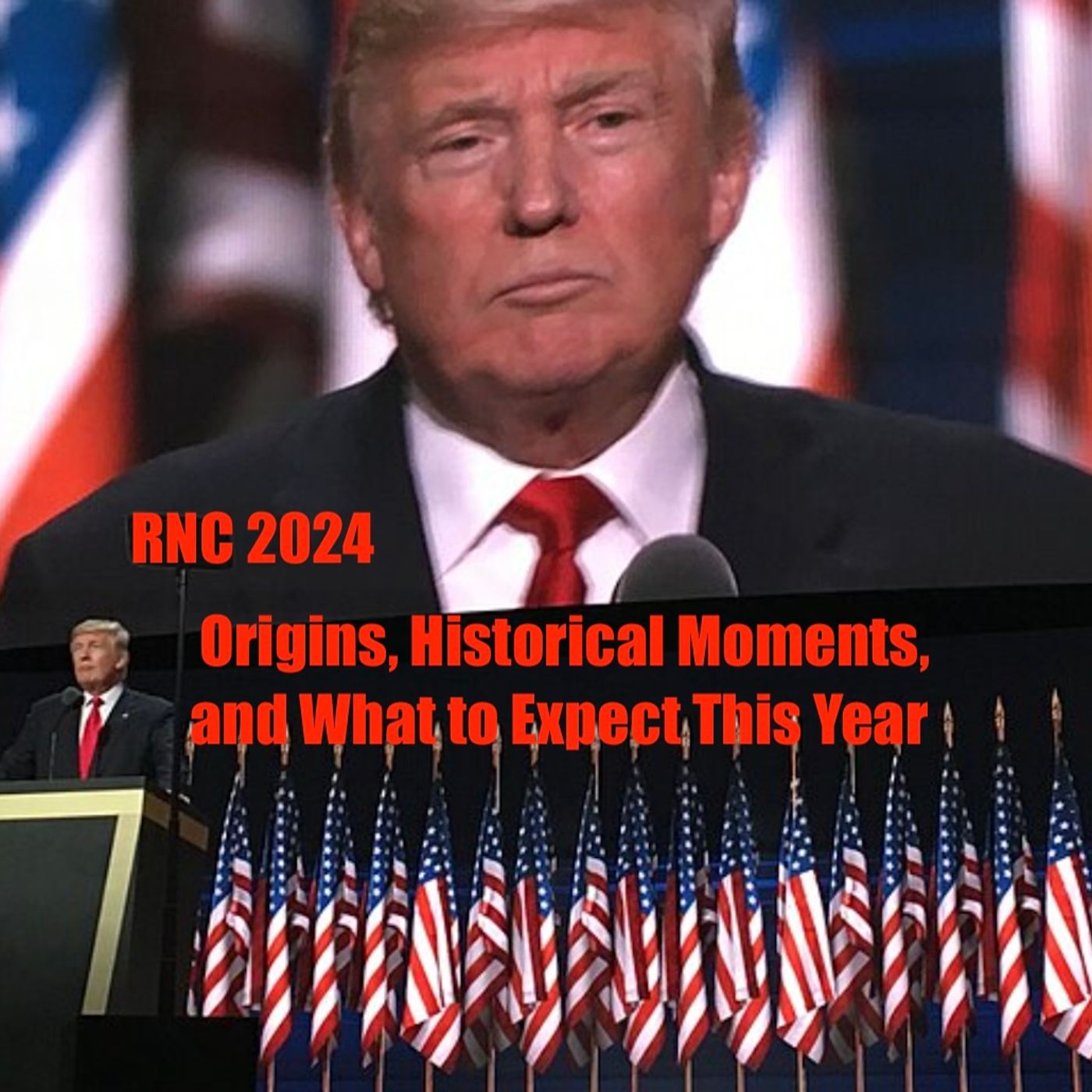
The Republican National Convention: Origins, Historical Moments, and What to Expect This Year
Origins of the Republican National Convention The Republican National Convention (RNC) is a pivotal event in the American political landscape, serving as the platform where the Republican Party nominates its presidential and vice-presidential candidates and outlines its policy agenda. The origins of the RNC date back to the mid-19th century, a period marked by significant political upheaval and the emergence of new political entities.
The Republican Party was founded in 1854, in the wake of the Kansas-Nebraska Act, which threatened to expand slavery into new territories. This act, which effectively repealed the Missouri Compromise of 1820, galvanized opposition to the expansion of slavery and led to the formation of the Republican Party. The party quickly gained traction among Northern voters who were concerned about the spread of slavery and the power of the "slave states" in national politics.
The first Republican National Convention was held in 1856 in Philadelphia, Pennsylvania. This inaugural convention nominated John C. Frémont as the party's first presidential candidate. Frémont, known as "The Pathfinder" for his explorations of the American West, represented the party's anti-slavery stance. Although Frémont did not win the presidency, losing to Democrat James Buchanan, the convention marked the beginning of the Republican Party's ascent in American politics. The party's strong showing in the election, particularly in the Northern states, demonstrated its potential as a major political force.
The RNC has evolved significantly since its early days, reflecting the changing dynamics of the party and the broader political landscape. Initially, conventions were more informal and less structured, often lasting several days as delegates engaged in lengthy debates and multiple rounds of voting to select a nominee. Over time, they became highly organized and media-centric events, reflecting the importance of public image and mass communication in modern politics.
In the early years, convention delegates were largely party insiders and political elites. However, as the party grew and the democratic process evolved, the selection of delegates became more representative of the broader party membership. The introduction of primary elections and caucuses in the 20th century further democratized the nomination process, though the convention remained the final arbiter of the party's choice.
Significant Historical Moments
1860 – Abraham Lincoln's Nomination: The 1860 convention, held in Chicago, Illinois, was a watershed moment for the Republican Party. Abraham Lincoln, a relatively unknown figure at the time, emerged as the party's nominee. Lincoln was not the front-runner going into the convention; Senator William H. Seward of New York was considered the favorite. However, Lincoln's campaign team skillfully maneuvered to secure support from delegates, ultimately winning the nomination on the third ballot.
Lincoln's nomination and subsequent election as president played a crucial role in shaping the future of the United States, leading to the abolition of slavery and the preservation of the Union during the Civil War. His presidency defined the Republican Party for generations, establishing it as the party of national unity and equal rights.
1912 – Theodore Roosevelt's Bull Moose Campaign: The 1912 convention in Chicago was marked by a dramatic split within the Republican Party. Former President Theodore Roosevelt, dissatisfied with the policies of incumbent President William Howard Taft, challenged Taft for the nomination. Roosevelt had previously hand-picked Taft as his successor but had grown disillusioned with Taft's conservative policies.
The convention was rife with tension as Roosevelt's supporters accused Taft of using his presidential power to manipulate the delegate selection process. When Taft secured the nomination through what Roosevelt's camp deemed unfair means, Roosevelt and his supporters walked out and formed the Progressive Party, also known as the "Bull Moose Party." This division ultimately contributed to the Democratic victory of Woodrow Wilson in the presidential election, marking one of the few times in American history when a major party split led to electoral defeat.
1964 – Barry Goldwater's Nomination: The 1964 convention in San Francisco, California, saw the nomination of Barry Goldwater, a staunch conservative. Goldwater's nomination represented a significant shift towards a more conservative ideology within the Republican Party. His famous declaration that "extremism in the defense of liberty is no vice" electrified conservatives but alarmed moderates within the party.
Although he lost the general election to Lyndon B. Johnson in a landslide, Goldwater's campaign laid the groundwork for the conservative movement that would later bring Ronald Reagan to power. His emphasis on states' rights, limited government, and a strong national defense became key tenets of the modern Republican Party.
1980 – Ronald Reagan's Rise: The 1980 convention in Detroit, Michigan, was a turning point for the Republican Party. Ronald Reagan, a charismatic former governor of California, was nominated and went on to win the presidency in a landslide victory. Reagan had previously sought the nomination in 1976, narrowly losing to incumbent President Gerald Ford. His 1980 campaign successfully united various factions within the party, including social conservatives, fiscal conservatives, and foreign policy hawks.
Reagan's presidency ushered in an era of conservative policies, economic reforms, and a renewed emphasis on American exceptionalism. His vision of "Morning in America" and his ability to communicate complex ideas in simple terms reshaped the Republican Party and American politics more broadly.
2016 – Donald Trump's Unexpected Nomination: The 2016 convention in Cleveland, Ohio, was one of the most contentious in recent history. Donald Trump, a businessman and television personality with no prior political experience, secured the nomination amidst a crowded field of more traditional Republican candidates. Trump's unorthodox campaign style and populist message resonated with a significant portion of the Republican base, despite initial skepticism from party elites.
Trump's eventual victory in the general election marked a significant realignment within the party, emphasizing populist and nationalist themes. His presidency saw a shift in Republican priorities, with increased focus on immigration restriction, trade protectionism, and a more confrontational approach to international relations.
What to Expect at This Year's Convention
The 2024 Republican National Convention promises to be a dynamic and closely watched event, as the party gears up for the upcoming presidential election. Here are some key aspects to look forward to:
Location and Format: The convention will be held in Milwaukee, Wisconsin, a critical swing state in the upcoming election. The choice of location reflects the party's strategic focus on winning crucial battleground states. Wisconsin, which had been reliably Democratic in presidential elections for decades until Trump's victory in 2016, is seen as a key to Republican hopes of recapturing the White House.
The format of the convention is expected to blend traditional elements with modern technology and media strategies. While maintaining the ceremonial aspects of past conventions, organizers are likely to incorporate innovative presentation techniques and digital engagement tools to reach a broader audience.
Nomination Process: The convention will formally nominate the Republican candidates for president and vice president. While the primary season will provide a clearer picture of the leading candidates, the convention will be the final stage for solidifying the party's ticket. The nomination process itself is largely ceremonial at this point, as the presumptive nominee is usually determined well before the convention through the primary and caucus system.
However, the convention still plays a crucial role in unifying the party behind its chosen candidate and building momentum for the general election campaign. The roll call of states, where each delegation announces its vote totals, is a tradition that highlights the nationwide support for the nominee.
Policy Platform: The party's platform, outlining its policy priorities and vision for the country, will be a central focus. Key issues such as the economy, healthcare, immigration, and national security are expected to dominate the agenda. The platform development process involves input from various party factions and interest groups, aiming to create a document that reflects the party's core principles while appealing to a broad electorate.
In recent years, there has been debate within the party about the role and importance of the platform, with some arguing for a more concise statement of principles rather than a detailed policy document. The 2024 convention may see further evolution in how the party presents its policy agenda to the public.
Speakers and Presentations: The convention will feature a lineup of prominent speakers, including party leaders, rising stars, and influential figures from various sectors. Notable speakers include:
Donald Trump Jr. and Kimberly Guilfoyle Lara Trump Senators Tom Cotton, Rick Scott, Marco Rubio, Tim Scott, and Marsha Blackburn Representatives Elise Stefanik, Mike Johnson, Steve Scalise, Matt Gaetz, and Marjorie Taylor Greene Governors Ron DeSantis, Kristi Noem, Sarah Huckabee Sanders, and Greg Abbott Conservative personalities Tucker Carlson, Franklin Graham, and
287 Episodes
Reverse
This is your Republican News and info tracker podcast.President Donald Trump held a phone call with the British Prime Minister on December 21, discussing the war in Ukraine, efforts toward a peace deal, the situation in Gaza, and the appointment of a new U.S. ambassador from the UK. That same day, Trump delivered remarks in Rocky Mount, North Carolina, focusing on economic achievements like lower inflation and stronger growth, while boasting of his administration's impact on jobs and wages. On CBS's Face the Nation, White House National Economic Council Director Kevin Hassett addressed Trump's proposal for $2,000 checks to Americans funded by tariff revenue, noting it hinges on congressional action, amid polls showing mixed views on Trump's economic policies.Tensions simmer over the Justice Department's partial release of Jeffrey Epstein files, with some documents including a Trump photo now removed from the DOJ website for review and potential redactions. Republican Rep. Thomas Massie of Kentucky accused Attorney General Pam Bondi of flouting the law by excessive redactions, vowing congressional action like contempt proceedings, while Democrat Rep. Ro Khanna called it a slap to survivors and pushed for bipartisan fines against Bondi. Deputy Attorney General Todd Blanche defended the process, promising more releases soon.Vice President JD Vance spoke at Turning Point USA's AmericaFest on December 21, declaring America a Christian nation and pledging to fight left-wing violence, secure borders, and boost merit-based jobs, drawing cheers from MAGA supporters but highlighting rifts in the Republican Party as the group eyes Vance for the 2028 nomination. House Republicans, led by Speaker Mike Johnson, advanced a health care bill avoiding ACA subsidy amendments to cut costs for all Americans, unifying the conference despite conservative pushback.Trump also signed an order easing marijuana restrictions and announced most-favored-nation drug pricing developments, wrapping a year of immigration tightenings like halting diversity visas and expanding travel bans.Thanks for tuning in, listeners—please subscribe for more updates. This has been a Quiet Please production, for more check out quietplease.ai.For great Trump Merchhttps://amzn.to/49SJ3QsFor more check outhttp://www.quietplease.aiThis content was created in partnership and with the help of Artificial Intelligence AI
This is your Republican News and info tracker podcast.President Trump signed an executive order on December 18 directing the Attorney General to expedite rescheduling marijuana to Schedule III under the Controlled Substances Act, a move that positions Republicans as leaders on cannabis reform amid Democratic inaction. The White House released video footage of the signing, highlighting Trump's push for swift action on this long-debated issue. Transitioning to workforce matters, Trump issued another executive order on December 18 granting federal employees holidays on December 24 and 26, creating a five-day Christmas weekend for most feds, with exceptions for national security needs—this echoes a similar move by Obama in 2014 but adds Christmas Eve off.On healthcare, rebel Republicans joined Democrats to oppose a party-proposed bill expanding association health plans, with House Speaker Mike Johnson calling these not normal times amid the internal pushback. The administration also proposed major restrictions on gender-affirming care for minors, aiming to cut federal Medicaid and Medicare funding to hospitals providing such treatments, signaling a firm policy shift.A fresh Punchbowl News canvass from October 2025, reflecting recent sentiments, shows Republicans viewing their party as highly united at 77% among GOP respondents, far ahead of Democrats at 17%. GOP insiders predict strong midterm gains, with 98% expecting Republican Senate control in 2026 and 49% for the House. They largely back Trump's moves, like National Guard deployments (53% say it helps in midterms) and executive orders on nonprofits probing domestic terrorism networks, though broader voter blame for potential shutdowns tilts against Republicans at 60%.These developments underscore Trump's aggressive executive agenda and Republican cohesion heading into the holidays and beyond.Thank you for tuning in, listeners—please subscribe for more updates. This has been a Quiet Please production, for more check out quietplease.ai.For great Trump Merchhttps://amzn.to/49SJ3QsFor more check outhttp://www.quietplease.aiThis content was created in partnership and with the help of Artificial Intelligence AI
This is your Republican News and info tracker podcast.President Donald Trump faces mounting pressure from within the Republican Party over the impending expiration of Obamacare subsidies at year's end, with millions of Americans at risk of seeing their health insurance premiums double or more. Divisions deepened when four GOP senators backed a Democratic bill to extend the aid, highlighting a rift between Trump's base and establishment Republicans wary of the political fallout ahead of the 2026 midterms. House Republicans countered with their own proposal Friday, focusing on small business insurance pools, pharmacy reforms, and cost-sharing reductions starting in 2027, but excluding subsidy extensions—despite warnings from swing-district lawmakers that the move could hand Democrats a campaign edge. Trump, polling poorly on health care, signaled flexibility by offering talks with Democrats and pushing direct payments to individuals over insurance companies, though party leaders expect any extension amendment to fail next week's vote.Shifting to foreign policy, Trump vowed retaliation Saturday for the ambush killing of two U.S. soldiers and a civilian interpreter in Syria's Palmyra by an ISIS-linked gunman who had infiltrated local forces. Speaking before heading to the Army-Navy game, he mourned the losses and promised action, amid ongoing U.S. counterterrorism missions in the region.On immigration, the Department of Homeland Security announced Friday the immediate end to Family Reunification Parole programs for nationals from Cuba, Haiti, Venezuela, Nicaragua, and others, citing fraud, security gaps, and abuse of humanitarian parole. The move revokes status for hundreds of thousands, reverting to case-by-case reviews under an America First approach.Meanwhile, Trump issued a symbolic pardon for Colorado election official Tina Peters, convicted on state charges over 2020 voting machine breaches, though it holds no legal weight constitutionally—drawing criticism as a nod to his MAGA supporters amid slipping poll numbers tied to economic woes and health costs.Thank you for tuning in, listeners—please subscribe for more updates. This has been a Quiet Please production, for more check out quietplease.ai.For great Trump Merchhttps://amzn.to/49SJ3QsFor more check outhttp://www.quietplease.aiThis content was created in partnership and with the help of Artificial Intelligence AI
This is your Republican News and info tracker podcast.Donald Trump and the Republican Party have spent the last several days sharpening their economic and political message while also getting pulled into major legal and institutional battles that could reshape campaign politics.On the political front, Trump has been on the road pushing what the White House brands as an aggressive economic relief and growth agenda. According to CNBC’s coverage of his Pennsylvania event, he used a campaign-style rally there to tout lower inflation, rising take‑home pay, and new efforts to cut everyday costs, while claiming that his 2024 victory “saved America” from economic decline. Reporters at ABC News note that, even though the event was billed as an official push for economic policy, Trump quickly veered into familiar territory: attacking political rivals, mocking opponents, and revisiting past grievances in a tone that sounded more like a campaign stump speech than a traditional presidential policy event. The White House has signaled to outlets like ABC News that similar events are planned through the end of the month and into the new year, underlining that Trump and his team see these appearances as central to framing the 2026 midterms around the economy and public safety.Inside the administration, the official line has been that Republicans are delivering “progress on lowering costs,” with the White House highlighting a whole‑of‑government strategy aimed at cheaper energy, prescription drugs, and food, along with deregulation pitched as relief for small businesses and consumers. That messaging dovetails with plans, reported by Christian Broadcasting Network and other outlets, for Trump and Republican leaders to keep emphasizing economic strength, trade deals benefiting farmers, and a tougher line on overseas adversaries as the core of the party’s midterm argument.At the same time, a major development in the Supreme Court has pulled the national Republican apparatus, including the party’s top campaign committees, into the spotlight. Politico reports that the National Republican Senatorial Committee and the National Republican Congressional Committee are leading a high‑stakes challenge to federal limits on how much money party committees can spend in coordination with individual candidates. During oral arguments this week, several conservative justices signaled openness to striking down those limits, questioning whether current campaign‑finance rules have weakened political parties relative to super PACs and outside groups. Legal experts told Politico that a ruling for the GOP could fundamentally change how campaigns are financed in 2026 and beyond, allowing national party committees—particularly the RNC and its Hill counterparts—to pour far more coordinated money into key races, boosting candidates who align most closely with Trump’s agenda and party strategy.For the broader Republican Party, this case is more than an abstract legal fight. It arrives as the RNC and allied organizations look ahead to defending their narrow congressional margins and expanding power in states where redistricting and close statewide races will be decisive. A favorable Supreme Court ruling would give party committees, rather than outside groups, much greater control over the message and media strategy in those contests, potentially consolidating Trump‑aligned influence inside the official party structure.Culturally and symbolically, Trump has also been using the Christmas season and White House events to project unity inside the party. Conservative media such as Right Side Broadcasting Network have highlighted his appearances with Vice President JD Vance at holiday gatherings, his public support for allied Republican lawmakers, and his continued insistence that the GOP is now the party of “fighters” who embrace his combative style.Taken together, the latest developments show a Republican Party closely intertwined with Trump: his economic roadshow setting the tone for 2026, his political style dominating the news coverage of official events, and his party’s campaign arms fighting in court for new funding rules that could lock in his influence over GOP candidates for years to come.Thanks for tuning in, and don’t forget to subscribe. This has been a quiet please production, for more check out quiet please dot ai.For great Trump Merchhttps://amzn.to/49SJ3QsFor more check outhttp://www.quietplease.aiThis content was created in partnership and with the help of Artificial Intelligence AI
This is your Republican News and info tracker podcast.Donald Trump and the Republican Party have spent the past few days trying to show unity and momentum while managing growing divisions inside the GOP and fresh questions about Trump’s agenda and style of governance.According to CBS News political coverage, Trump has been using recent public appearances and media interviews to sell his new national security strategy and broader foreign policy vision, which includes a more accommodating stance toward Russia and an aggressive push to cut long‑term U.S. security commitments abroad. CBS Evening News reports that Moscow publicly praised Trump’s new national security plan as “largely consistent” with Russia’s own vision, after the administration stopped explicitly labeling Russia as a strategic threat and pushed a Ukraine peace framework that contemplates Ukrainian territorial concessions. This has triggered alarm among traditional Republican national security hawks and many U.S. allies, who worry the plan undercuts deterrence and signals a willingness to accept Russian gains in Ukraine.At the same time, Trump has been eager to project strength at home. Recent network interviews and live coverage on outlets like Fox News and Times Now have highlighted his efforts to argue that Republicans and the broader “MAGA movement” remain firmly behind him, even as some prominent conservatives question his tone and tactics. CBS News polling analysis over the weekend emphasized that Republican and MAGA‑aligned voters are still solidly with Trump personally, but it also noted that his marks on the economy and inflation have softened, with many voters saying he is not spending enough time on economic issues compared with immigration and cultural fights.Inside the Republican Party, that tension is spilling into candidate recruitment and House and Senate strategy. CBS News reporting on the 2025 political landscape points out that Trump has been deeply involved in efforts to reshape congressional maps and push for more pro‑Trump districts heading into the 2026 midterms, intensifying his hold over the party’s electoral machinery. At the same time, some Republicans on Capitol Hill and in swing states are expressing concern that closely tying themselves to Trump’s brand—especially his more controversial legal, foreign policy, and immigration moves—could complicate efforts to win suburban and moderate voters.The Republican National Committee sits at the center of this balancing act. While there have not been headline‑grabbing leadership shake‑ups in the past few days, reporting on GOP strategy stresses that the RNC is continuing to align its messaging, fundraising, and voter‑contact operations heavily around Trump’s priorities and the MAGA base. This includes support for Trump‑backed redistricting schemes and litigation, as well as coordination on messaging around the new national security strategy and the administration’s Ukraine and Russia stance. At the same time, party strategists, speaking to major outlets, are quietly debating how to protect vulnerable House Republicans in Biden‑leaning districts who may be uneasy with the party’s full embrace of Trump’s foreign policy pivot and combative style.All of this is playing out against a backdrop of ongoing personality clashes on the right. Longtime Trump allies who have broken with him, such as some former House Republicans, continue to air their concerns in television interviews, warning that the party’s near‑total dependence on Trump could limit its appeal if economic conditions worsen or foreign crises deepen. Yet new polling and on‑the‑ground reporting still show Trump as the undisputed center of gravity in the GOP, with the RNC and most elected Republicans operating on the assumption that his leadership will define the party’s message and strategy for the foreseeable future.Thanks for tuning in, and don’t forget to subscribe. This has been a quiet please production, for more check out quiet please dot ai.For great Trump Merchhttps://amzn.to/49SJ3QsFor more check outhttp://www.quietplease.aiThis content was created in partnership and with the help of Artificial Intelligence AI
This is your Republican News and info tracker podcast.Donald Trump and the Republican Party have spent the past several days trying to balance governing with intensifying political pressures, and the Republican National Committee sits at the center of that effort, working to keep the party unified behind Trump’s agenda while managing internal tensions.According to PBS NewsHour, the biggest development tied to Trump and the broader GOP is the rollout of the administration’s new national security strategy, which is now setting the tone for Republican messaging on foreign policy and America’s role in the world. The White House is framing this as an evolution of “America First,” and Republican leaders are echoing that language as they defend a more selective, interest-focused approach to global engagement on Capitol Hill and in conservative media.At the same time, Trump’s team has moved aggressively on Ukraine, which has become a defining test for both the administration and the party. PBS News Weekend reports that White House envoys have now met multiple times with Ukrainian officials in Miami to hammer out the contours of Trump’s proposed peace plan, including a post-war peacekeeping arrangement for Ukraine. That emerging framework is shaping how Republican lawmakers talk about NATO, spending, and U.S. commitments abroad, and it is pushing the party further toward a position that emphasizes negotiated endgames over open-ended support.Inside the Republican Party, this shift is exposing, but also clarifying, long‑running divisions between traditional national security conservatives and the more populist, restraint‑oriented wing that has grown in influence under Trump. Analysts interviewed by PBS note that the new national security document bears the fingerprints of both factions: it nods to classic GOP priorities like deterrence and strength while also downplaying the idea that Russia and China present the kind of systemic challenge many establishment Republicans once emphasized. This tension is playing out in congressional debates and in primary politics, where candidates are testing how closely to align with Trump’s positioning on foreign policy and global alliances.The RNC’s role in this moment is to translate these high-level moves into party infrastructure and election strategy. Committee officials and allied groups are working to build a unified message that ties Trump’s foreign policy, especially on Ukraine and the Middle East, to broader themes of economic stability, border security, and skepticism of “forever wars.” That message is being refined for fundraising pitches, voter outreach, and candidate support operations as Republicans prepare for upcoming election cycles and brace for potential Democratic attacks on Trump’s new strategy.Meanwhile, the broader Republican ecosystem is reacting in real time. Conservative media outlets are amplifying the administration’s framing of the new national security policy as a course correction from both Trump’s first term and prior administrations, while think‑tank conservatives and former officials debate whether the party is moving toward a durable new doctrine or simply following Trump’s instincts case by case. Those arguments are feeding into RNC discussions about platform language, surrogate talking points, and which experts and influencers to elevate at party events.All of this adds up to a pivotal stretch for Trump, the Republican Party, and the RNC: foreign policy decisions are driving the headlines, but the underlying story is about whether Republicans can stay unified behind Trump’s evolving vision while managing their own internal ideological rifts and preparing for the next major electoral test.Thanks for tuning in, and don’t forget to subscribe. This has been a quiet please production, for more check out quiet please dot ai.For great Trump Merchhttps://amzn.to/49SJ3QsFor more check outhttp://www.quietplease.aiThis content was created in partnership and with the help of Artificial Intelligence AI
This is your Republican News and info tracker podcast.President Trump held a wide-ranging cabinet meeting on December 2nd where he discussed several key policy initiatives. During the meeting, Trump highlighted his administration's economic achievements, noting that inflation has been brought under control since January, marking a significant reversal from what he characterized as the worst inflation in 48 years. He announced plans for what he called the biggest tax cut ever signed, which includes provisions for no tax on tips, no tax on overtime, and no tax on social security benefits.On immigration enforcement, Trump described rapidly turning around the border situation, stating that illegal border crossings have plummeted to the lowest level ever after six months of consecutive declines. He emphasized that operational control of the border has been locked down to what he described as nearly zero crossings, representing a major policy achievement for his administration.Trade policy remained central to Trump's remarks. He discussed how tariffs are generating hundreds of billions of dollars for the country, which he frames as part of national security strategy. The administration plans to distribute refunds from tariff revenues during next year's tax refund season, which is projected to be the largest ever.Meanwhile, Congress returned from Thanksgiving recess focused on healthcare legislation. The Republican majority is working to address the expiring health insurance tax credits, with President Trump specifying he wants a solution by January 30, 2026. Senate appropriations committees are also drafting fiscal year 2026 legislation that includes cuts to IRS funding, though the Senate's proposed cuts of 4 percent are less severe than the House's proposed 23 percent reduction. The Senate version maintains stronger enforcement funding while increasing taxpayer services by 15 percent.Republicans on the House Oversight Committee advanced legislation that would limit congressional apportionment to citizens only, requiring a citizenship question on the census starting in 2030. This represents the latest effort in a broader Republican campaign to exclude noncitizens from census counts used for congressional representation.At the international level, the European Council adopted negotiating mandates to implement a United States-European Union trade framework, which eliminates customs duties on U.S. industrial goods and grants preferential market access for certain U.S. seafood and agricultural products.Additionally, sixteen Republican House members urged President Trump to take action against France's digital services tax, which the country is doubling from 3 percent to 6 percent, estimating this would impose at least 1.7 billion dollars annually in costs on American firms.Thank you for tuning in to this news update. Be sure to subscribe for the latest political developments and analysis. This has been a Quiet Please production. For more, check out quietplease.ai.For great Trump Merchhttps://amzn.to/49SJ3QsFor more check outhttp://www.quietplease.aiThis content was created in partnership and with the help of Artificial Intelligence AI
This is your Republican News and info tracker podcast.Several significant developments are reshaping the Republican Party and Trump's second term this week. Congress faces mounting pressure on healthcare subsidies as the deadline approaches, with President Trump creating uncertainty by saying he doesn't want to extend key insurance subsidies while acknowledging it might be necessary. House GOP centrists are preparing a discharge petition to force a floor vote on a subsidy extension, while Senate Finance Chair Mike Crapo is working to find a bipartisan pathway forward rather than pursuing a partisan approach. Democrats remain divided on their strategy, with some like Senator Jeanne Shaheen seeking bipartisan solutions while others, including Bernie Sanders, want to embrace a sweeping healthcare plan as a midterm rallying point.Meanwhile, Trump addressed reporters aboard Air Force One following the Thanksgiving holiday, discussing multiple pressing issues. He confirmed that his administration is pursuing direct talks with Ukraine and indicated those discussions are proceeding well. On immigration, Trump announced that his administration plans to pause asylum processing for an indefinite period, stating the country doesn't want certain people entering. He also discussed potential denaturalization of American citizens who entered through what he called Biden administration failures.The Trump administration is experiencing record-setting personnel challenges. The White House confirmed 57 nominee withdrawals, with officials attributing these to various reasons including clerical changes and new responsibilities. Despite these withdrawals, Trump is nominating individuals at a record pace and has gotten more nominees confirmed at this point than during his first term. Senate Republicans expressed surprise at the withdrawal numbers, with Senator Thom Tillis suggesting the rapid nomination pace contributes to inadequate vetting, while others noted that advice and consent remains their responsibility.Within Republican ranks, tensions are emerging that threaten party unity heading into the midterms. Representative Marjorie Taylor Greene announced her resignation from the House effective January 5th, citing frustration with how the White House team has treated members of Congress. According to reporting, unnamed senior House Republicans feel the administration and House Speaker Mike Johnson are running them "roughshod," and members recognize they face minority status after the midterm elections. This resignation signals broader discontent among congressional Republicans who worry about their future in Trump's political movement.On the state level, Indiana House Republicans are moving forward with redistricting efforts to convert the state's congressional delegation from seven Republican seats to nine, aligning with Trump's demands. However, Senate Republicans are resisting, with significant uncertainty about whether enough senators will support the new map. Trump has attacked Indiana senators on social media and threatened to endorse primary opponents of defecting lawmakers, adding pressure to what many Republicans view as an unnecessary mid-cycle redistricting.These developments collectively illustrate challenges facing Trump's second term, from healthcare policy uncertainty and personnel vetting issues to internal party frustrations and tension between the White House and congressional Republicans over redistricting priorities.Thank you for tuning in. Be sure to subscribe for the latest updates. This has been a Quiet Please production. For more, check out quietplease.ai.For great Trump Merchhttps://amzn.to/49SJ3QsFor more check outhttp://www.quietplease.aiThis content was created in partnership and with the help of Artificial Intelligence AI
This is your Republican News and info tracker podcast.President Trump has been escalating tensions with Venezuela over the past few days, declaring the nation's airspace closed in its entirety as part of what his administration calls a war on drug cartels. This announcement came despite Trump lacking legal authority to actually close another nation's airspace. The move represents a significant escalation in U.S.-Venezuela relations, with substantial military buildup happening in the region. U.S. aircraft have been actively unloading cargo at the reopened naval base in Puerto Rico, positioned just north of Venezuela in preparation for possible increased military activity. Earlier this week, Trump declared Venezuela's Cartel de Los Soles a foreign terrorist organization, accusing Venezuelan President Nicolas Maduro of leading it. Trump told troops during his Thanksgiving remarks that plans to stop drug traffickers on land in Venezuela would begin very soon.However, the Venezuela escalation has drawn criticism for an apparent contradiction in Trump's approach. Even as he targets Venezuela aggressively, Trump announced plans Friday to fully pardon former Honduran President Juan Orlando Hernandez, who is currently serving a 45-year sentence in the United States for helping heavily armed drug traffickers funnel hundreds of tons of cocaine into America. Hernandez was convicted under the Biden administration last year on these drug and weapons charges, which he has denied. Critics have pointed out the inconsistency of pursuing aggressive action against Venezuela for alleged drug trafficking while simultaneously pardoning a Latin American leader convicted of taking bribes from traffickers.On the domestic front, Trump delivered remarks on November 26th, and Vice President JD Vance celebrated Thanksgiving with servicemembers earlier this week. Trump and First Lady Melania Trump also participated in the 2025 Turkey Pardoning ceremony, maintaining the traditional White House holiday event.Meanwhile, economic concerns continue to mount. Despite second-quarter gross domestic product growth reaching 3.8 percent thanks to robust investment in information technology, job growth remains sluggish, creating what observers describe as an AI paradox where the economy is growing but jobs are harder to find. Additionally, many Americans who work full-time jobs still cannot afford a place to live, highlighting the disconnect between economic growth and worker prosperity.The broader geopolitical picture shows the Trump administration engaged on multiple fronts, from Venezuela to ongoing developments regarding Ukraine and discussions about potential peace negotiations set for the coming days.Thank you for tuning in to this update. Be sure to subscribe for more news and analysis. This has been a quiet please production, for more check out quiet please dot ai.For great Trump Merchhttps://amzn.to/49SJ3QsFor more check outhttp://www.quietplease.aiThis content was created in partnership and with the help of Artificial Intelligence AI
This is your Republican News and info tracker podcast.President Donald Trump delivered remarks on Thanksgiving Day regarding the tragic shooting of two National Guard members in Washington D.C. this week. U.S. Army Specialist Sarah Beckstrom, a 20-year-old from West Virginia, was killed in the attack near Farragut Square Metro Station on Wednesday afternoon. U.S. Air Force Staff Sergeant Andrew Wolfe, 24, was also wounded and remains in critical condition following surgery. Trump called Beckstrom a highly respected and magnificent person who began her service in June 2023.The suspect in the shooting, identified as Rahmanullah Lakanwal, is an Afghan national who was paroled into the United States under Operation Allies Welcome on September 8, 2021, during the Biden administration. However, it's worth noting that Lakanwal applied for asylum in 2024 and was granted asylum in April 2025 under Trump's current administration. Homeland Security Secretary Kristi Noem characterized the suspect as a criminal alien and referenced the chaotic U.S. withdrawal from Afghanistan.Trump used the incident to renew his hardline stance on immigration. He called for a comprehensive reexamination of every Afghan immigrant admitted under Biden and vowed to take all necessary measures to ensure the removal of any foreign national who doesn't belong in or benefit the country. Trump stated that the attack underscores the greatest national security threat facing America and claimed the previous administration allowed twenty million unknown and unvetted foreigners into the country.The President also attacked the Somali community during his remarks, alleging that hundreds of thousands of Somalis in Minnesota are exploiting the country. This came amid his decision to attempt terminating temporary protected status for Somali nationals. Trump claimed billions of dollars are being lost due to what he characterized as criminal activity and gang violence within that community.However, advocacy groups and international observers have pushed back against the administration's broader targeting of immigrant communities. The UN Special Rapporteur for human rights in Afghanistan cautioned against punishing an entire Afghan community for one individual's actions. Afghan Evac, an organization helping Afghan immigrants resettle, emphasized that Afghan immigrants undergo some of the most extensive security vetting of any population entering the country and urged leaders not to demonize the entire community.Democratic leaders also criticized Trump's response. Minnesota Governor Tim Walz suggested the President was using the tragedy to change the subject and deflect from other issues, characterizing this as Trump's typical approach when facing scrutiny.During his Thanksgiving message to troops, Trump touted various administration accomplishments, including what he described as the most secure border in American history and record military spending and equipment orders. He highlighted that no illegal aliens have entered the country for nine months under his current policies.Thank you for tuning in to this update. Please be sure to subscribe for more news coverage. This has been a Quiet Please production. For more, check out quietplease dot ai.For great Trump Merchhttps://amzn.to/49SJ3QsFor more check outhttp://www.quietplease.aiThis content was created in partnership and with the help of Artificial Intelligence AI
This is your Republican News and info tracker podcast.Donald Trump has dominated Republican headlines over the last several days, issuing major policy actions and continuing to shape GOP priorities heading into the election year. Multiple news organizations, including the official White House news site and CBN News, have reported President Trump signed an executive order on Monday tasking the Secretaries of State and Treasury with producing a report on the Muslim Brotherhood and simultaneously began procedures to designate certain chapters as foreign terrorist organizations. This move, confirmed in official White House releases, underscores the administration’s continuing focus on national security and counterterrorism, while also sending a strong message about its foreign policy priorities.While traveling this week, President Trump spoke to reporters aboard Air Force One, addressing the ongoing Ukraine-Russia conflict and noting that negotiations with European partners are still underway. Trump repeated that Europe is eager for the war to end and indicated that the U.S. is backing continued talks but did not commit to any rigid deadlines. In the same exchange, Trump was asked about prospects for unveiling a comprehensive Republican health care plan. He responded that the White House is weighing several alternatives which would prioritize direct payments to people instead of insurance companies. Trump also argued that the Affordable Care Act, which the GOP has long campaigned to replace, remains a key focus and suggested bipartisan talks may move the issue forward.In the Republican National Committee, the party leadership has been navigating internal debates over policy messaging, particularly as recent polls, discussed on NBC’s Meet the Press NOW, reveal divided public opinion of the GOP. Even as Trump consolidates his grip on the party’s 2024 direction, some Republicans in Congress reportedly continue to express concerns over both health care affordability and broader economic issues. Trump has pointed to efforts in the White House to address economic anxieties, touting what he claims are recent improvements in safety and business activity in Washington, D.C., and suggesting that these efforts demonstrate GOP leadership on domestic issues.On the foreign policy front, CBN News highlighted Trump’s willingness to tie U.S. foreign aid to the protection of Christian communities abroad, particularly in crisis spots like Nigeria, elevating religious freedom as part of American diplomacy. Trump’s warnings that the U.S. might cut aid or impose sanctions if governments do not protect minorities have drawn strong reactions both internationally and from within the Republican Party.Listeners should also note the symbolic events of the week, including President Trump and the First Lady’s participation in the annual Thanksgiving turkey pardoning, a moment that received its usual attention but was used by the White House to reinforce administration priorities and recent accomplishments.As the Republican primary season approaches, these moves show Trump’s command of both the RNC’s agenda and wider GOP messaging, though questions remain about how his party will reconcile its various factions, especially as polls show mixed views of Republican favorability. The White House’s push on national security, health care reform, and religious freedom is likely to remain at the center of Republican debate in the days to come.Thank you for tuning in, and don’t forget to subscribe. This has been a quiet please production, for more check out quiet please dot ai.For great Trump Merchhttps://amzn.to/49SJ3QsFor more check outhttp://www.quietplease.aiThis content was created in partnership and with the help of Artificial Intelligence AI
This is your Republican News and info tracker podcast.Listeners, major developments around the Republican Party, Donald Trump, and the RNC have taken center stage over the past few days. The leading spotlight continues to shine on Donald Trump’s aggressive push for a Ukraine peace deal, which is generating intense international debate. According to Sky News, significant progress has been made in Geneva diplomatic talks, where Trump’s envoy, Steve Witoff, is taking a front-row seat alongside U.S. Secretary of State Marco Rubio. The United States is pressing Ukraine to accept a 28-point peace plan, which would require major concessions from Kyiv, including substantial cuts to their military. The Financial Times and Sky News both highlight that Trump is demanding more flexibility from the Ukrainians, signaling impatience and putting pressure on President Zelenskyy to keep American support and aid flowing.Christian Leuprecht, speaking with CBC News, pointed out that many of Ukraine’s allies see Trump’s plan as strikingly favorable to Russia, but he also notes that Ukraine’s increasingly precarious military situation might make this the best deal they can get. A key part of Trump’s proposal is reportedly the release of $100 billion in frozen Russian assets to Ukraine, but this would come with strings attached, including Western allies bearing most of the post-war reconstruction burden. Trump has set deadlines for Ukraine’s response, upping the diplomatic pressure, but has recently indicated some flexibility on the timing if negotiations show progress.Meanwhile, Trump remains highly vocal on his Truth Social account. As recapped by iHeart’s Real Time Crime podcast, Trump’s online activity has ramped up, directly addressing supporters and pushing his agenda on Ukraine, the economy, and criticisms of Washington’s political establishment. This barrage of messaging underscores his hands-on, confrontational style, a hallmark of his leadership in the Republican Party.Back at home, there are growing tensions within the GOP over the party’s direction. The Republican National Committee finds itself navigating these foreign policy challenges while dealing with domestic political fallout from Trump’s stance. According to Fox News coverage, some traditional party figures worry Trump’s willingness to force through controversial foreign policy could alienate moderate voters and international partners alike. At the same time, Trump’s supporters within the RNC argue that his direct approach reasserts American leadership on the global stage and clarifies the party’s intent ahead of pivotal elections.This swirling mix of high-stakes diplomacy, intraparty maneuvering, and Trump’s relentless communication campaign make this a pivotal period for the Republican Party. With ongoing diplomatic deadlines, intense media scrutiny, and internal debates over the party’s identity and foreign policy, listeners can expect the news cycle to remain fast-paced as the situation evolves.Thank you for tuning in, and don’t forget to subscribe for the latest updates. This has been a quiet please production, for more check out quiet please dot ai.For great Trump Merchhttps://amzn.to/49SJ3QsFor more check outhttp://www.quietplease.aiThis content was created in partnership and with the help of Artificial Intelligence AI
This is your Republican News and info tracker podcast.Donald Trump has once again captured the national spotlight as allies and major Republican figures are appointed to powerful positions, including a wave of Trump-aligned newcomers joining the board of the Los Angeles 2028 Olympic Games, according to reporting by LAist and Politico. This shift triggered criticism from progressive local groups, including prominent labor and community coalitions, who argue the new board makeup poses risks for Los Angeles’ diverse communities. The LA28 board now features high-profile Trump allies such as former House Speaker Kevin McCarthy and ex-White House Chief of Staff Reince Priebus, alongside major Republican donors like Diane Hendricks and Patrick Dumont. Their arrival means that Trump supporters now have representation on par with city appointees, intensifying the perception of rising Trump influence over the Olympics and its federal funding linkage. Local groups and union leaders, like Unite Here Local 11, responded by warning that the “Olympics are losing control” to MAGA-leaning leadership, while Mayor Karen Bass took a more diplomatic approach, stating she looks forward to collaborating with all new board members.Meanwhile, President Trump remains highly active and visible, both in policy and media. Over the weekend, NBC News’s “Meet the Press” featured a widely viewed interview with New York City Mayor-elect Zohran Mamdani, who described a surprisingly productive Oval Office meeting with Trump. Despite a campaign marked by sharp criticism of the president, Mamdani noted that Trump appeared willing to pull back previous threats to cut federal aid to the city and expressed openness to working together on issues like housing, public safety, and affordability. However, Mamdani maintained his long-standing criticism of Trump, calling him a “fascist” and a “despot” but also emphasizing the need for productive partnership for the good of New Yorkers.On social media, Donald Trump’s Truth Social feed continues to dominate conservative headlines, with iHeart Radio’s hosts noting that Trump, true to form, uses the platform to broadcast policy positions, rally his base, and issue warnings to opponents. This non-stop stream of messages demonstrates Trump’s ongoing hold on the party narrative, and his direct connection to supporters remains unfiltered and immediate.At the federal level, Trump’s push for strong immigration enforcement has injected new tension into both local and national politics. PBS News Weekend reported that Trump’s administration has escalated pressure on federal law enforcement, leading Immigration and Customs Enforcement to offer major recruitment incentives and resulting in a staff exodus from other federal agencies like the Bureau of Prisons. Simultaneously, policy debates continue over whether federal funds for critical events, like the Olympics, could become bargaining chips in broader political battles.Internal party tensions also linger, as the Republican National Committee navigates these events amidst ongoing power consolidation around Trump and his circle. While the RNC is not currently in the midst of a leadership shakeup, it remains closely aligned with Trump’s priorities, focusing on messaging unity ahead of the upcoming election season.Listeners, thank you for tuning in, and don’t forget to subscribe. This has been a quiet please production, for more check out quiet please dot ai.For great Trump Merchhttps://amzn.to/49SJ3QsFor more check outhttp://www.quietplease.aiThis content was created in partnership and with the help of Artificial Intelligence AI
This is your Republican News and info tracker podcast.Republican Party leaders and strategists are sounding alarms over low enthusiasm among their base following November’s elections, as Politico reports growing concerns about whether dropping momentum could hurt their prospects in upcoming midterms. With former President Donald Trump remaining central to party debates, some operatives believe his absence from the campaign trail has contributed to the slump in energy—fueling speculation about how the party will rally support as it faces key legislative fights and the pressure of maintaining party unity.In a significant development, the House of Representatives voted overwhelmingly for the public release of files related to Jeffrey Epstein, marking what ABC News Australia describes as Trump’s first major political setback since his return to office. Trump had campaigned vigorously on transparency regarding the Epstein affair but reversed his position as president, resisting the release. What unfolded was a notable split within the Republican caucus, with prominent figures like Marjorie Taylor Greene and Tucker Carlson openly supporting the release and pushing investigations that allege possible connections between Epstein’s activities and foreign intelligence services. The House vote landed heavily in favor—427 to 1—demonstrating the wide support for transparency that overruled Trump’s opposition, a development many analysts see as exposing fractures within the party’s MAGA wing.Political friction in the GOP continues to mount over Trump’s legislative ambitions. According to Politico, Trump’s plans for sweeping new Republican priorities are clashing with hard realities on Capitol Hill, as both intra-party squabbles and procedural hurdles impede progress. His efforts to push major redistricting initiatives, particularly in Texas, have run into roadblocks. Politico details resistance not only from Democrats but also from within the party, with some calling the strategy “utterly foolish” amid legal and political complications.On the economic front, Trump is promoting a plan to issue $2,000 “tariff dividend checks,” aimed at redistributing revenue from tariffs to Americans. Fox News reports that Trump has provided more details on this proposal, which is emerging as a centerpiece of his pitch to address inflation and cost-of-living pressures. Despite public skepticism and opposition from Democratic leaders who question both its feasibility and fairness, Trump is positioning it as evidence of the party’s commitment to working-class Americans.Meanwhile, some Republican leaders insist there’s no affordability crisis, as covered by WOUB, maintaining that concerns over the party’s policies, messaging, or Trump’s leadership are misplaced. This stance reflects an ongoing internal debate about the direction the GOP should take amid economic strain and shifting public sentiment.As Trump and the RNC navigate these internal divisions, and as the Epstein file controversy intensifies scrutiny, the Republican Party finds itself at a crossroads—trying to balance high-profile policy proposals with the real challenges of sustaining unity and voter enthusiasm.Thank you for tuning in. Be sure to subscribe for more. This has been a Quiet Please production, for more check out quiet please dot ai.For great Trump Merchhttps://amzn.to/49SJ3QsFor more check outhttp://www.quietplease.aiThis content was created in partnership and with the help of Artificial Intelligence AI
This is your Republican News and info tracker podcast.Donald Trump remains at the forefront of U.S. political news, driving major developments within the Republican Party and setting the tone for the Republican National Committee’s direction. Over the past several days, political headlines have focused on both domestic and international arenas, with Trump engaging in policy pushes, legislative battles, and party dynamics signaling shifting alliances and internal debates.CBS News reports that Trump and the GOP are facing mixed public reactions after the recent resolution of the government shutdown, with Republican lawmakers and the president fielding criticism over handling the shutdown, health care, and border security. Exit polls from elections in states like New Jersey and Virginia also show that Trump and economic issues remain top-of-mind for voters, suggesting the Republican Party’s national appeal continues to be shaped by Trump’s policies and persona. Despite fluctuating ratings due to economic pressures like rising prices and inflation, Trump’s hold on GOP voters appears strong, especially among the MAGA base, as highlighted by the CBS News poll.At the party leadership level, Trump made headlines late Friday by withdrawing his endorsement from Rep. Marjorie Taylor Greene, signaling a sharp break with one of his most vocal—and until now, allied—party members. Trump indicated he might even support a primary challenge to Greene, marking a significant shift and increasing speculation about future endorsements and internal party discipline, as described by CBS News. This move reflects ongoing realignment within the party as Trump distances himself from former allies who have criticized him or the broader party leadership.In legislative news, Trump has thrown his weight behind releasing Justice Department files on Jeffrey Epstein. According to To Vima, this represents a reversal for the president, now urging GOP lawmakers to support transparency efforts, which garnered bipartisan action in the House, with a minority of Republican members joining Democrats to force the issue to a vote.Foreign policy developments have also been prominent. ILTV Israel News reports that Trump is pushing for normalization between Saudi Arabia, Israel, and Syria, following a historic visit by Syria’s new president to Washington. Trump has tied negotiations over F-35 jet sales to Saudi Arabia to their participation in the Abraham Accords, indicating an aggressive push for Middle East deals that combine diplomatic normalization with major arms agreements. The White House is advancing a draft U.N. resolution that would support a pathway to Palestinian statehood, conditional on Palestinian reforms and Gaza reconstruction. Trump’s international strategy is generating both opportunity and friction among traditional allies and adversaries in the region.On the economic front, Trump addressed reporters in Palm Beach, as shared by The White House press briefing, claiming credit for recent decreases in grocery prices compared to previous administrations. He also highlighted ongoing negotiations with lawmakers about healthcare, saying he is in talks with Democrats about a proposal to redirect substantial funds directly to Americans for purchasing health insurance. Trump described this as an innovative approach to tackling rising healthcare costs and signaled an impending Senate vote on new Affordable Care Act tax credits, according to CBS News.The Republican National Committee's future continues to be shaped by Trump’s influence, with potential 2028 presidential hopefuls including names like Marco Rubio and JD Vance, both positioning within a party still dominated by Trump’s rhetoric and policy priorities. As reported by Wikipedia’s latest update on the 2028 election, JD Vance currently leads GOP primary aggregates by a wide margin.Thank you for tuning in, and don’t forget to subscribe. This has been a Quiet Please production, for more check out quiet please dot ai.For great Trump Merchhttps://amzn.to/49SJ3QsFor more check outhttp://www.quietplease.aiThis content was created in partnership and with the help of Artificial Intelligence AI
This is your Republican News and info tracker podcast.Donald Trump has seized the national spotlight over the past several days, catalyzing new tensions within the Republican Party and bringing the RNC’s internal divisions into sharp focus. According to PBS News Weekend, Trump very publicly broke with one of his highest-profile allies, Representative Marjorie Taylor Greene, after she joined a small group of House Republicans partnering with Democrats to force a Justice Department release of Jeffrey Epstein files. President Trump labeled Greene a “RINO” and a “disgrace to the Republican Party” following their social media spat. Greene later revealed, in an interview with FOX, that she has received a wave of death threats in the wake of the dispute, which has amplified a sense of instability within the GOP’s far-right faction and raised questions about the party’s unity.While the party’s internal rifts make headlines, Trump has also showcased recent judicial and policy wins. At a White House press briefing covered by Times Now, Trump celebrated a Supreme Court ruling that cuts back federal judges’ authority to impose nationwide injunctions, describing it as a significant constitutional victory and a “big week” for the administration. He also emphasized progress on border security and highlighted several foreign policy initiatives, preparing the ground for the upcoming battles both in Congress and on the campaign trail.In Congress, attention has shifted as Republicans and a small cohort of Democrats moved to end the lingering government shutdown, as reported by PBS and the Cook Political Report. This bipartisan cooperation on reopening the government marked a momentary truce but also signaled that some vulnerable Democrats are willing to break with their party when facing tough elections in battleground districts. Although GOP leaders are calling the deal a victory, the real fight over health care policy—particularly key provisions of the Affordable Care Act—will now shift to the Senate, where Democrats were promised a vote on subsidies in exchange for reopening the government.Meanwhile, Republican National Committee dynamics have intensified with the looming impact of Project 2025, a set of sweeping proposals crafted by the Heritage Foundation and associated conservative groups. As summarized by Wikipedia and recent policy briefings, Project 2025 envisions consolidating executive power under the president, sharply cutting federal regulations, and executing major changes to agencies such as Homeland Security and Education. Russell Vought, now policy director of the RNC platform committee, has played a pivotal role in drafting proposals geared toward rapid action should Trump regain the presidency. The scale and boldness of Project 2025 is generating debate even among Republican strategists, some of whom worry about the implications for federal oversight and the balance of power in Washington.On the state level, California Republicans have recently wrapped up their convention, where, as LAist reports, the party unified in opposition to Governor Gavin Newsom’s proposed redistricting measure, Proposition 50. The fight over redistricting in California is seen as critical by both parties because it could determine the balance of power in the House of Representatives. GOP strategists, donors, and activists are pouring resources into the battle and framing it as an existential issue for the state party’s survival.In summary, the Republican Party is simultaneously managing Trump-driven controversies, an ongoing ideological battle over its future direction, and high-stakes legislative fights at every level. Party leaders are grappling with both persistent intraparty divisions and external challenges from Democratic-led initiatives, while Trump’s influence remains strong but increasingly complicated—raising questions about GOP unity as the next major election cycle approaches.Thank you for tuning in, and don’t forget to subscribe. This has been a Quiet Please production. For more, check out quietplease dot ai.For great Trump Merchhttps://amzn.to/49SJ3QsFor more check outhttp://www.quietplease.aiThis content was created in partnership and with the help of Artificial Intelligence AI
This is your Republican News and info tracker podcast.House Republicans are preparing for a high-stakes vote on the release of the Epstein files. MSNBC reports that a bipartisan coalition in Congress forced a vote to make public all Department of Justice files related to Jeffrey Epstein, with both parties predicting significant Republican defections to support the measure. The topic has triggered national protests and grassroots activism in Republican districts, putting pressure on GOP House leadership. Representative Maxwell Frost stated that opposing the release would be seen as covering up for powerful individuals accused of grave crimes, indicating that this issue could have immediate political repercussions.Meanwhile, former President Donald Trump has signed legislation to end the government shutdown. NBC News highlights that Trump placed full responsibility for the shutdown on Democrats and continued to criticize the Affordable Care Act, vowing there would be no compromise regarding expiring ACA subsidies. As part of a handshake agreement between congressional leaders, there will be upcoming floor debates on these subsidies, but Trump made it clear he has little patience for negotiation on this front. Democrats in the Senate are now in active talks with Republicans about what can garner enough bipartisan support, but Trump’s adamant stance raises the possibility of another government funding showdown in the coming months.CBS News confirms that federal agencies are now reopening and government workers are returning, following passage and signing of a temporary funding bill that will last through January 30th. The White House also released video footage of Trump, joined by First Lady Melania Trump, signing an executive order focused on foster care. According to CNBC, Trump emphasized that his administration is rolling back what he called “ridiculous woke policies” affecting foster care eligibility for faith-based and Christian families.Amid these legislative developments, records released this week have renewed scrutiny regarding Donald Trump and his reported interactions with Jeffrey Epstein. CBS Evening News reports that newly disclosed documents include emails and thousands of pages referencing Trump multiple times, escalating questions about their association. House Speaker Mike Johnson has announced plans to bring a vote to the floor concerning full release of the DOJ’s Epstein records. The mounting pressure from both Democratic and Republican lawmakers and a surge in public activism suggest that the outcome of the vote could reshape the political environment and draw renewed focus to the GOP’s internal divisions.As Republican leadership navigates these challenges, national attention is focused on how the party will respond to the Epstein file demands, upcoming negotiations around healthcare subsidies, and ongoing investigations that have the potential to impact its leading figures. All this unfolds while preparations begin for the upcoming election cycle and primary contests, with messages around accountability and government transparency taking center stage.Thank you for tuning in, and don’t forget to subscribe. This has been a Quiet Please production, for more check out quiet please dot ai.For great Trump Merchhttps://amzn.to/49SJ3QsFor more check outhttp://www.quietplease.aiThis content was created in partnership and with the help of Artificial Intelligence AI
This is your Republican News and info tracker podcast.The Republican Party is currently navigating a highly dynamic period as a historic government shutdown reaches 43 days. There are active discussions around a bipartisan, Senate-passed continuing resolution to fund the government, and a decisive vote in the U.S. House of Representatives is expected soon, potentially ending the stalemate, according to Atlanta News First.In the realm of Donald Trump’s ongoing influence, the former president has issued pardons to more than 70 alternate electors who were allegedly involved in efforts to certify the 2020 election in his favor. These pardons come at a crucial moment, just hours before a deadline in Georgia to appoint a new prosecutor in Trump’s election interference case. The move has significant implications both for the legal processes underway and for the 2024 campaign climate. Atlanta News First explains that questions remain about the practical impact of these pardons, particularly in Georgia where several legal battles over election interference are ongoing and decisions regarding who will prosecute Trump and his associates are set to be made imminently.Within the Republican National Committee, leadership and strategy conversations are intensifying as the party prepares for next year’s elections and adjusts to the implications of the government shutdown and the legal developments surrounding Trump. While the RNC has been working to consolidate party messaging and resources, the pardons and legal events continue to dominate the political narrative, shaping public discourse and the internal dynamics of the party. The convergence of the government shutdown, partisan negotiations on Capitol Hill, and legal maneuvering tied to Trump and his inner circle is sustaining a sense of uncertainty and urgency across the party’s ranks.Thank you for tuning in and don’t forget to subscribe. This has been a quiet please production, for more check out quiet please dot ai.For great Trump Merchhttps://amzn.to/49SJ3QsFor more check outhttp://www.quietplease.aiThis content was created in partnership and with the help of Artificial Intelligence AI
This is your Republican News and info tracker podcast.Republicans are facing serious political setbacks following Tuesday’s elections, as Democrats outperformed expectations in key states like Virginia and New Jersey. In Virginia, Democrat Abigail Spanberger won the governor's race decisively over Winsome Earle-Sears, and Democrat Jay Jones took the attorney general’s office despite controversy over personal text messages. Analysts at The Daily Signal urge listeners not to dismiss these Democratic victories as isolated incidents, arguing they reflect a deeper dissatisfaction with Trump’s Republican Party among educated, urban and government-employed voters, especially in regions like Northern Virginia. These trends could signal future trouble for Republicans in suburban counties across swing states such as Pennsylvania, Michigan, and Wisconsin.The Supreme Court is now considering whether to sustain Donald Trump’s claimed executive power to unilaterally impose and lift tariffs, citing ambiguities in a 1977 law. While the court leans Republican in appointment, observers are questioning whether it will reject Trump’s argument just as a Democratic-appointed court rejected a similar claim by Harry Truman in the steel seizure case decades ago. Some political strategists think a rebuff by the court could help Trump and the GOP by easing public concerns of authoritarian overreach, especially if Trump accepts an adverse ruling, thereby appearing less of a threat to democratic norms.Tensions rose sharply after Trump issued a public ultimatum over Christian killings in Nigeria, ordering the U.S. Department of War to prepare for possible military intervention if Nigerian authorities fail to stop attacks by Islamist groups like Boko Haram and ISWAP. Trump’s remarks on Truth Social promised any U.S. response would be swift and forceful, alarming both the Nigerian government and international diplomatic circles. Nigeria’s President Bola Tinubu has dismissed U.S. accusations and China has publicly sided with Nigeria, denouncing foreign interference. Commentators suggest Trump’s rhetoric is calculated to energize his evangelical base while risking a wider international confrontation.On the domestic front, the ongoing government shutdown has stretched well past a month, with Republican lawmakers using Senate floor time to renew attacks on Obamacare. Senators Lindsey Graham, Ron Johnson, and Rick Scott lambasted the Affordable Care Act's costs and called for comprehensive reform or replacement. Democrats, meanwhile, continue to block short-term funding packages from Republicans, insisting on renewal of COVID-era tax subsidies for Obamacare policyholders. Donald Trump himself injected fresh debate by proposing that those subsidies be paid directly to consumers, not insurance companies, sparking further Republican criticism of the current system as wasteful.The shutdown has dramatically affected social welfare programs, with President Trump’s administration—backed by a Supreme Court decision—halting the distribution of food benefits through SNAP to millions of low-income Americans. Advocacy groups like the Food Research & Action Center condemn these moves as harmful to vulnerable populations, noting the confusion after some states began distributing benefits per court orders, only to have the administration intervene to stop them.Exit polls released by The Detroit News indicate the GOP is losing the ground Trump made with Latino voters during his reelection campaign last year. The results have dampened Republican optimism about translating Trump’s economic messages into broader electoral support among Latinos, which had previously been hailed as a historic breakthrough.Thanks for tuning in—be sure to subscribe for the latest updates and news as events continue to unfold. This has been a quiet please production, for more check out quiet please dot ai.For great Trump Merchhttps://amzn.to/49SJ3QsFor more check outhttp://www.quietplease.aiThis content was created in partnership and with the help of Artificial Intelligence AI
This is your Republican News and info tracker podcast.Republicans are facing mounting challenges after disappointing performances in the recent off-year elections across multiple states. According to OPB, President Trump and leading Democrats both acknowledged the government shutdown as a major factor behind the GOP’s losses, with Trump telling Republican senators that the absence of his name on the ballot may have contributed, but the shutdown had a far greater negative impact. Democrats scored decisive wins in Virginia, New Jersey, and several local races, focusing their messaging on opposing Trump administration policies and government spending cuts, which resonated with voters, particularly in states dependent on federal workers.The ongoing government shutdown is exerting significant pressure on both the Republican Party and the Trump administration. Democrats have grown emboldened by their recent victories and insist the Republican-led Congress must act to prevent Affordable Care Act insurance subsidies from expiring. House Minority Leader Hakeem Jeffries and Senate Minority Leader Chuck Schumer sent a letter to President Trump demanding bipartisan negotiations to resolve the shutdown and address the burgeoning healthcare crisis. In response, Trump continues to blame Democrats for holding the country “hostage,” emphasizing the need for urgent legislative action.President Trump is actively urging Senate Republicans to abolish the legislative filibuster, reiterating at a party breakfast that it is the only way to advance his agenda. Senate Majority Leader John Thune and most GOP senators remain opposed to this nuclear option, warning such a move could backfire if Democrats gain control of Congress in the future. Meanwhile, the House faces the expiration of its temporary funding measure on November 21 and has been out of session for weeks, leaving crucial government services in jeopardy as agencies run out of money and staffing shortages grow more severe.A major headline emerging from the shutdown is the fate of SNAP benefits, America’s largest food assistance program. NBC News reports that U.S. District Judge John McConnell just ordered the Trump administration to fully fund November’s SNAP benefits, responding to last weekend’s historic lapse that put 42 million Americans at risk. The administration had planned to only partially fund November payments, but the judge’s ruling requires them to source enough money for the entire month, though logistical and administrative hurdles remain before the payments are actually distributed.According to Politico and CBS News, the Trump administration notified states that contingency funds would only cover about 65 percent of November’s food stamp payments. The federal judge’s intervention now forces the administration to tap alternative funding, though there is uncertainty about how quickly recipients will receive the benefits. There is growing anxiety among millions relying on this program as the political standoff drags on.As these issues unfold, President Trump continues to make public appearances, including a major announcement and a summit with Central Asian leaders. Fox News highlights Trump’s comments blaming the shutdown and down-ballot messaging for GOP losses, acknowledging that Republicans are “getting killed over the government shutdown,” and calling for a strategic shift. Representative Marjorie Taylor Greene echoed the sentiment in a CNN interview, warning the election was a “major wakeup call” for Republican leadership and urging her party to rethink its approach to ending the shutdown and passing legislation.In summary, the past several days have seen the Republican Party grappling with election losses linked to the government shutdown, tense negotiations over ACA subsidies, internal debate about the filibuster, and judicial intervention in support of SNAP recipients. President Trump faces intensifying pressure from both parties and the public to resolve the funding crisis, as critical federal services and aid programs hang in the balance.Thanks for tuning in, and be sure to subscribe. This has been a Quiet Please production; for more, check out quietplease dot ai.For great Trump Merchhttps://amzn.to/49SJ3QsFor more check outhttp://www.quietplease.aiThis content was created in partnership and with the help of Artificial Intelligence AI

Comments

Download from Google Play

Download from App Store
 United States