


 Claim Ownership
Rhyming Chaos
Subscribed: 14Played: 348
Subscribe

© Jeremy Goldkorn
Description
Interviews with people who have lived through or studied periods of great change, upheaval, chaos, and authoritarian takeover.
www.rhymingchaos.com
www.rhymingchaos.com
39 Episodes
Reverse
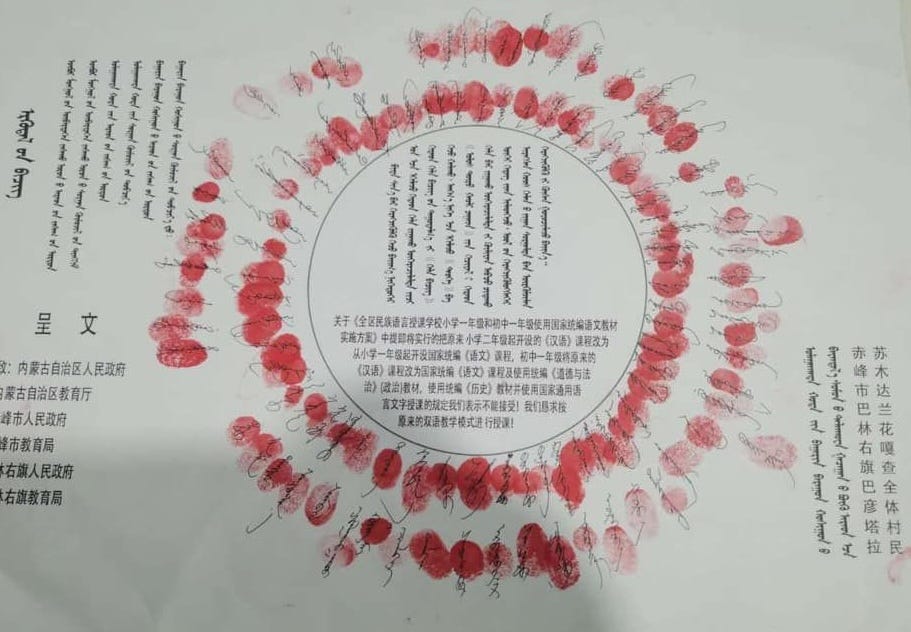
Soyonbo Borjgin is from Hohhot, Inner Mongolia, China, where he worked as a journalist at the state-owned, Mongolian-language Inner Mongolia Life Weekly in the last few years of its existence. He later moved to New York, where has peed in a bottle while delivering packages for Amazon and worked for VOA’s Mongolian language service before getting DOGEd. It’s a long way from home: His grandfather was an illiterate shepherd who kept 30 dogs and ate wolf hearts; his father became a professor at Inner Mongolia University, then a prisoner for protesting in the 1989 demonstrations.The Inner Mongolia Life Weekly went defunct after the Chinese government’s reversal of long-standing policies of encouraging ethnic minority language learning, which resulted in the cancellation of classes taught in Tibetan, Uyghur, and Mongolian languages, shuttering of vernacular media, and removal of street signs. Soyonbo had to attend re-education classes, and his career as a journalist in China was over.He now writes a newsletter on Mongolian issues and recently published a fascinating piece in Equator that describes his experiences being re-educated in Xi Jinping thought after the crackdown on Mongolian identity.In this conversation, we discuss:* Growing up in a Mongolian-speaking community in Hohhot* Working as a journalist at Inner Mongolia Life Weekly* Storytelling and navigating censorship* Scandal and corruption at state media* Changes in China’s ethnic policies and language rights and the 2020 campaign against Mongolian language and identity* Shaman curses and creative resistance against language suppression* End of the Inner Mongolia Life Weekly* Cultural identity and language among Mongolians abroad* “Re-education” and the ways authoritarianism affects daily lifeExile and cultural adaptationThe Rhyming Chaos podcast is produced by Jeremy Goldkorn and Maria Repnikova, and edited by Cadre Scripts. The theme music is Paper Boy, composed and performed on the guzheng by Wu Fei. Our closing music is Erik Satie’s Gymnopédie No. 1, arranged and performed by Wu Fei. Our cover art is by Li Yunfei.Please subscribe wherever you get your podcasts, leave us a review, and if you want to support what we’re doing, take out a paid subscription at rhymingchaos.com. Get full access to Rhyming Chaos at www.rhymingchaos.com/subscribe

Stuart Reid is author of The Lumumba Plot, a rip-roaring read about the CIA plan to assassinate the newly independent Congo’s charismatic prime minister Patrice Lumumba in 1960. Stuart is a Senior Fellow for History and Foreign Policy at the Council on Foreign Relations. He has written for many publications including The New York Times and Bloomberg Businessweek, and interviewed world leaders for Foreign Affairs, including former Congo president Joseph Kabila, African billionaire mobile phone entrepreneur Mo Ibrahim, and French far-right leader Marine Le Pen. In this podcast we discuss: * Congo’s independence, Prime Minister Patrice Lumumba, Belgian military intervention, and the Katanga secession* The misreading of Lumumba’s Soviet outreach and Cold War paranoia * Eisenhower’s assassination order* The poison plot * The torture and assassination of Lumumba, and the destruction of his body * The return of Lumumba’s tooth to the Congo* Mobutu’s three decades of U.S.-supported rule and its legacy * The Congo today* A pattern of failed American-sponsored regime change * Blowing up boats in the Caribbean and the history of failed U.S. covert actions For more on the Congo, listen to our episode Mobutu: The dictator who wanted to make Zaire great again, with scholar Pedro Monaville. The Rhyming Chaos podcast is produced by Jeremy Goldkorn and Maria Repnikova, and edited by Cadre Scripts. The theme music is Paper Boy, composed and performed on the guzheng by Wu Fei. Our closing music is Erik Satie’s Gymnopédie No. 1, arranged and performed by Wu Fei. Our cover art is by Li Yunfei.Please subscribe wherever you get your podcasts, leave us a review, and if you want to support what we’re doing, take out a paid subscription at rhymingchaos.com. Get full access to Rhyming Chaos at www.rhymingchaos.com/subscribe

Moshik Temkin is the author of The Sacco-Vanzetti Affair: America on Trial, and Warriors, Rebels, and Saints: The Art of Leadership from Machiavelli to Malcolm X, based on a course which he taught at Harvard University for over a decade. He is currently Distinguished Visiting Professor of Leadership and History at Schwarzman College, Tsinghua University.In the podcast, we discuss:* Defining leadership beyond the Great Men * Senators Wayne Morse and Ernest Gruening—whose names few remember, the lone dissenters against the 1964 Gulf of Tonkin Resolution* Trump as a product of historical and socio-economic forces, a symptom of the disease* The rise of authoritarianism in America* Why historical analogies can be weak toolst o understand contemporary politics; the constructive use of comparisons* The Democratic Party’s problems and inability to unite behind Mamdani * Local resistance against authoritarianismSurveillance and control around the world The Rhyming Chaos podcast is produced by Jeremy Goldkorn and Maria Repnikova, and edited by Cadre Scripts. The theme music is Paper Boy, composed and performed on the guzheng by Wu Fei. Our closing music is Erik Satie’s Gymnopédie No. 1, arranged and performed by Wu Fei. Our cover art is by Li Yunfei.Please subscribe wherever you get your podcasts, leave us a review, and if you want to support what we’re doing, take out a paid subscription at rhymingchaos.com. Get full access to Rhyming Chaos at www.rhymingchaos.com/subscribe

Clarissa Ward is a British-American journalist who frequently reports on global conflicts and crises as CNN’s Chief International Correspondent, including the fall of Kabul to the Taliban, the overthrow of the Assad regime by rebel forces in Syria, and the Russian invasion of Ukraine. Clarissa is the recipient of multiple Peabody and Murrow awards, and the author of the 2020 book On All Fronts: The Education of a Journalist.In this interview we talk about:* The fall of Kabul and the atmosphere in the city * The role of women in Afghanistan, and being a female journalist in Muslim countries* Code switching and reporting* The end of the Assad regime in Syria* Lessons the Syrian rebels took from the Taliban* Reporting from Kharkiv as the 2022 Russian invasion * Perceptions of war and media coverage of different wars Challenges for American media The Rhyming Chaos podcast is produced by Jeremy Goldkorn and Maria Repnikova, and edited by Cadre Scripts. The theme music is Paper Boy, composed and performed on the guzheng by Wu Fei. Our closing music is Erik Satie’s Gymnopédie No. 1, arranged and performed by Wu Fei. Our cover art is by Li Yunfei.Please subscribe wherever you get your podcasts, leave us a review, and if you want to support what we’re doing, take out a paid subscription at rhymingchaos.com. Get full access to Rhyming Chaos at www.rhymingchaos.com/subscribe

Dr. Natalya Chernyshova is author of the book Soviet consumer culture in the Brezhnev era, and the upcoming The most Soviet republic: Belarus in the long 1970s. She is a historian of the Soviet Union and Eastern Europe, and Senior Lecturer in Modern European History, Queen Mary University of London. In this podcast we discuss: * A brief history of Belarus and its quarrelsome but dependent relationship with Russia* Belarusian president Alexander Lukashenko’s populist appeal as an outsider and anti-corruption fighter, and his rise to power* Belarusian national identity; Soviet identity, nostalgia, and legacies* The 2020 protests, sometimes called the Anti-Cockroach Revolution, triggered by the government’s COVID-19 response, the contested 2020 elections, and pent up dissatisfaction with Lukashenko’s rule * Jews in Belarus* Memories, censorship, and internet controls* Stuck between Russia, Poland, Ukraine, Latvia, and Lithuania * Media and opposition in exile The Rhyming Chaos podcast is produced by Jeremy Goldkorn and Maria Repnikova, and edited by Cadre Scripts. The theme music is Paper Boy, composed and performed on the guzheng by Wu Fei. Our closing music is Erik Satie’s Gymnopédie No. 1, arranged and performed by Wu Fei. Our cover art is by Li Yunfei.Please subscribe wherever you get your podcasts, leave us a review, and if you like what we’re doing, please take out a paid subscription at rhymingchaos.com. Get full access to Rhyming Chaos at www.rhymingchaos.com/subscribe

Edward Schatz is author of the book Slow Anti-Americanism: Social Movements and Symbolic Politics in Central Asia, and other influential books and articles in political science, and on Kazakhstan. He is a professor of Political Science at the University of Toronto, and directs the Centre for European and Eurasian Studies at the Munk School. In this conversation we discuss: * The significant differences between authoritarian regimes in Central Asia* The Soviet inheritance of Central Asian states* The hopes of the 1990s and mistaking the whiff of a weak state for the smell of freedom * What authoritarianism means* Clan Politics in Central Asia* The nature of Kazakhstan’s government and responsive authoritarianism* The 2022 protests in Kazakhstan * Russia’s role in suppressing the protests and the influence of Russian media * Acts of resistance * The shift from pro- to anti-Americanism * Defending democracy The Rhyming Chaos podcast is produced by Jeremy Goldkorn and Maria Repnikova, and edited by Cadre Scripts. The theme music is Paper Boy, composed and performed on the guzheng by Wu Fei. Our closing music is Erik Satie’s Gymnopédie No. 1, arranged and performed by Wu Fei. Our cover art is by Li Yunfei.Please subscribe wherever you get your podcasts, leave us a review, and if you like what we’re doing, please take out a paid subscription at rhymingchaos.com. Get full access to Rhyming Chaos at www.rhymingchaos.com/subscribe

Julia Sonnevend is the author of Charm: How Magnetic Personalities Shape Global Politics, one of the New Yorker’s Best Books of 2024. She is an associate professor of sociology and communications at the New School, and currently a CARGC Visiting Scholar at the Annenberg School for Communication at the University of Pennsylvania. In this conversation we discuss: * Viktor Orbán’s political journey and charm* Defining charm, charisma, and soft power* Techniques of charm in politics* Liberal vs. illiberal charm: Jacinda Ardern and Viktor Orbán* Jacinda Ardern and the perils of charm in politics* The anti-corruption “zebra protests” mocking the corruption of Viktor Orbán* Iran’s Mohammad Javad Zarif, Germany’s Angela Merkel, North Korea’s Kim Jong-un, and other world leaders* The impact of digital media on political charm* Gender dynamics in political charm* Everyday courage in politicsThe Rhyming Chaos podcast is produced by Jeremy Goldkorn and Maria Repnikova, and edited by Cadre Scripts. The theme music is Paper Boy, composed and performed on the guzheng by Wu Fei. Our closing music is Erik Satie’s Gymnopédie No. 1, arranged and performed by Wu Fei. Our cover art is by Li Yunfei.Please subscribe wherever you get your podcasts, leave us a review, and if you like what we’re doing, please take out a paid subscription at rhymingchaos.com. Get full access to Rhyming Chaos at www.rhymingchaos.com/subscribe
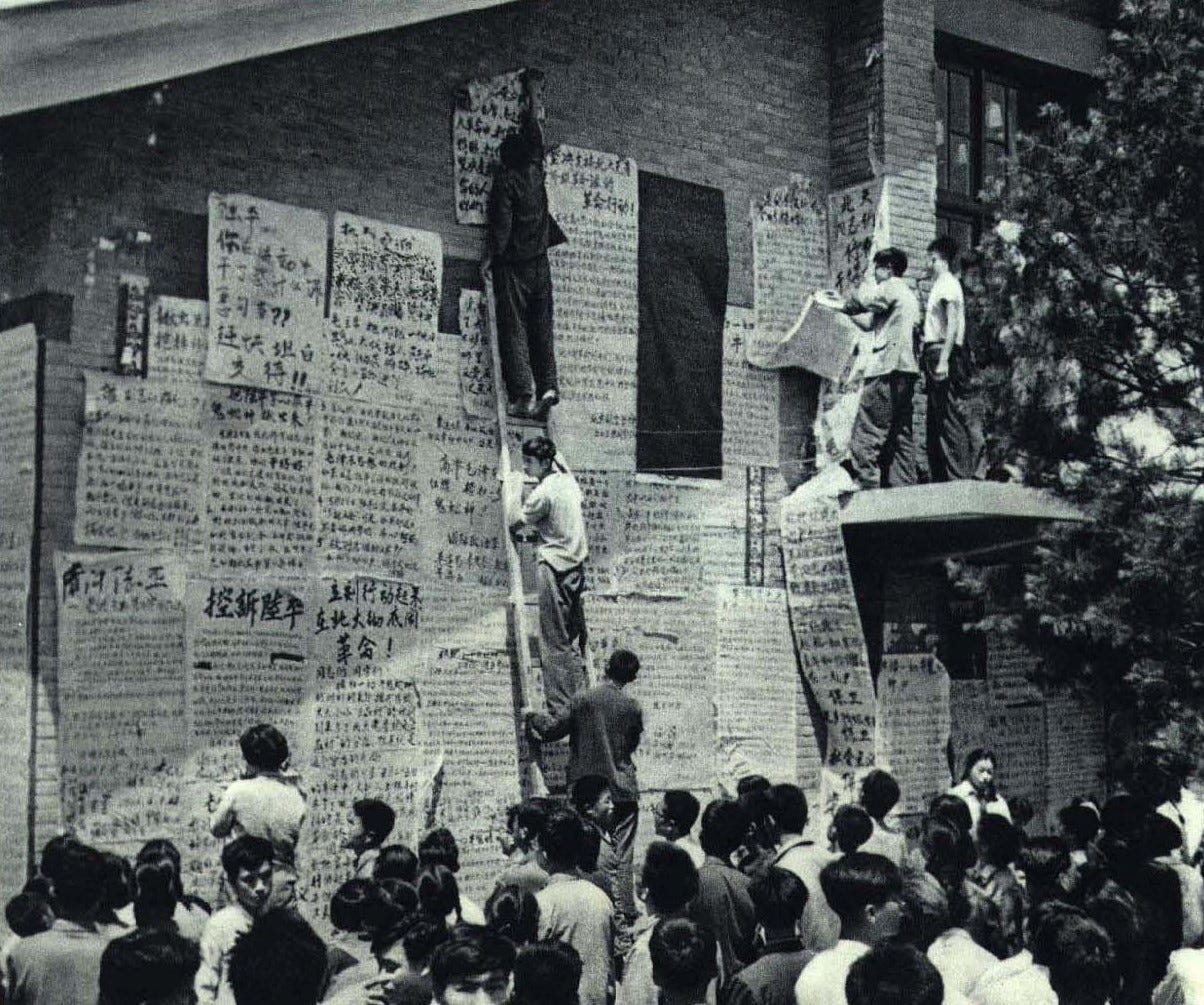
The daily onslaught of outrageous news of corruption, destruction of government capacity, and attacks on science and education in the U.S. right now is dizzying. “What now?” you scream as you scroll through the morning’s news. It’s a little like the world Geremie R. Barmé stepped into in 1974, when he arrived in China as an exchange student from Australia. The late Cultural Revolution was a “constant bombardment of noise and information” that likewise made one dizzy before breakfast. Geremie is a Sinologist, historian, filmmaker, translator, and author of a number of books on Chinese culture and politics. You can read a recent interview with him on his work here, and find his most recent writings at China Heritage. He was the guest on the first episode of Rhyming Chaos, released on February 20, 2025: How to commit a self-coup, in the U.S. and in China. In this follow-up podcast, recorded on September 30, the same day Donald Trump told a gathering of senior leaders of the U.S. armed forces that they must target “the enemy within,” we discussed:* The relentless daily “bombardment of noise and information” in 1970s China.* The “Hall of One Voice” 一言堂: Deng Xiaoping’s term for when only Mao’s voice mattered, and the sycophants around him ensured he heard nothing that might upset him. * Snitching in the Cultural Revolution, JD Vance, and Laura Loomer.* The surveillance state in China and the U.S., and Larry Ellison’s vision. * Big character posters 大字报 and Twitter. * Attacks on expertise, science, and learning under Mao and Trump. * The progress of Project 2025; Russell Vought and Stephen Miller’s radical plans to reshape America. * Perpetual anger: Why Trumpists remain furious and the maintenance of grievance culture in China. * The Mao-era disconnect between rhetoric and reality; current American conspiracy theories and inability to distinguish fact from fiction. * Lin Biao’s militarization of China (1968-1971), and increasing military control of American society.The Rhyming Chaos podcast is produced by Jeremy Goldkorn and Maria Repnikova, and edited by Cadre Scripts. The theme music is Paper Boy, composed and performed on the guzheng by Wu Fei. Our closing music is Erik Satie’s Gymnopédie No. 1, arranged and performed by Wu Fei. Our cover art is by Li Yunfei.Please subscribe wherever you get your podcasts, leave us a review, and if you like what we’re doing, please take out a paid subscription at rhymingchaos.com. Get full access to Rhyming Chaos at www.rhymingchaos.com/subscribe

Pedro Monaville is a historian of modern Africa and an associate professor at McGill University who researches colonial and postcolonial Congo, revolutionary movements, and the connections between art and history, among other subjects.He is the author of Students of the World: Global 1968 and Decolonization in the Congo, which one review called “a fine-grained examination of the radicalization of Congolese students, their slow maturation during the fin d’empire…that put them on a collision course with the dystopian regime of President Mobutu.” Mobutu Sese Seko was the president and dictator of Zaire from 1971 to 1997. He changed the country’s name from Congo to Zaire as part of an “authenticity campaign” to remove colonial influence. In some ways, he was a cartoonish dictator, with palaces, gold tchotchkes everywhere, yachts, fleets of limousines, a personality cult, and self-bestowed titles such as “Father of the Nation,” “Helmsman,” and “Supreme Combatant.” Despite his anti-colonial ideological rhetoric, Mobutu controlled an incompetent government that caused misery and hunger for ordinary people. But above all, Mobutu was corrupt, and he saw a phenomenal business deal for himself in the proxy conflicts and power plays in Africa during the Cold War. He presented himself as a bulwark against communism, which allowed him to loot his country and commit human rights abuses with the tacit blessing of the U.S. In 1988, the New York Times cited a State Department estimate of Mobutu’s personal wealth: $5 billion (equivalent to $13.65 billion in 2025).Mobutu surrounded himself with corrupt lackeys, whose loyalty was partly assured by fear, and partly by his blessing of their place at the trough. He is said to have once admonished officials whose corruption was becoming excessive: “If you want to steal, steal a little in a nice way, but if you steal too much to become rich overnight, you will be caught.” In the podcast we discuss: * Mobutu’s rise from journalist to military chief to dictator* Congo’s brutal exploitation under King Leopold II, Belgian colonial rule, and the assassination of independence leader Patrice Lumumba in 1961* Mobutu’s early legitimacy building: “authenticity” campaigns involving cultural nationalism, renaming cities, and economic nationalization * The Congolese student movement, and how it developed into a credible opposition force through the 1960s* Student identity and elitism * Systematic violence against intellectuals: The June 4, 1969 student massacre in Kinshasa and the destruction of universities* Mobutu’s control mechanisms: His use of complicity, unpredictable cycles of punishment and reward, and keeping elites “on their toes” to maintain power* Language and cultural politics: The role of Lingala as a unifying language through military, music, and Mobutu’s political communication* Mobutu’s tactics and current threats to higher education and intellectual freedom in the United States* Congo’s ongoing conflicts The Rhyming Chaos podcast is produced by Jeremy Goldkorn and Maria Repnikova, and edited by Cadre Scripts. The theme music is Paper Boy, composed and performed on the guzheng by Wu Fei. Our closing music is Erik Satie’s Gymnopédie No. 1, arranged and performed by Wu Fei. Our cover art is by Li Yunfei.Please subscribe wherever you get your podcasts, leave us a review, and if you like what we’re doing, please take out a paid subscription at rhymingchaos.com. Get full access to Rhyming Chaos at www.rhymingchaos.com/subscribe

Huey Li is the author of Dividing the Rulers: How Majority Cycling Saves Democracy, and a popular explainer of U.S. and Chinese politics on TikTok, YouTube, and Substack. He regularly debunks misguided ideas that trend on those platforms, pouring cold water on some of the excessive enthusiasms of his audience, and helping them to understand the way authoritarian rulers and dictators exercise their power. In this show, we discuss: * Majority cycling* The state of American politics* Misguided perceptions of China* Political polarization * TikTok and whether the Chinese government is manipulating its algorithm * Constraints on presidential power in the U.S. * The importance of voting* The illusion of benevolent dictatorshipThe Rhyming Chaos podcast is produced by Jeremy Goldkorn and Maria Repnikova, and edited by Cadre Scripts. The theme music is Paper Boy, composed and performed on the guzheng by Wu Fei. Our closing music is Erik Satie’s Gymnopédie No. 1, arranged and performed by Wu Fei. Our cover art is by Li Yunfei.Please subscribe wherever you get your podcasts, leave us a review, and if you like what we’re doing, please take out a paid subscription at rhymingchaos.com. Get full access to Rhyming Chaos at www.rhymingchaos.com/subscribe

Katie Stallard is the author of Dancing on Bones: History and Power in China, Russia, and North Korea, which was named political book of the year 2022 by the Financial Times, Sunday Times, and BBC History magazine. She was previously based in Russia and China as a foreign correspondent for Sky News, and is now Senior Editor, China and Global Affairs, at the New Statesman. She is also an endurance athlete.In this show, we discuss: * The role of history in authoritarian regimes* Symbolism and power in military parades* Trump and authoritarian spectacles* The mechanics of narrative control* The disturbing trends in American history education* The courage of dissent in authoritarian regimes* Journalism in hostile environments* Lessons for American dissenters from running ultramarathons The Rhyming Chaos podcast is produced by Jeremy Goldkorn and Maria Repnikova, and edited by Cadre Scripts. The theme music is Paper Boy, composed and performed on the guzheng by Wu Fei. Our closing music is Erik Satie’s Gymnopédie No. 1, arranged and performed by Wu Fei. Our cover art is by Li Yunfei.Please subscribe wherever you get your podcasts, leave us a review, and if you like what we’re doing, please take out a paid subscription at rhymingchaos.com. Get full access to Rhyming Chaos at www.rhymingchaos.com/subscribe

Howard French has reported for the Washington Post and New York Times from nearly every country in Africa; all over the Caribbean; Japan; and Korea. He is the author of several books, including Disappearing Shanghai: Photographs and Poems of an Intimate Way of Life, and China's Second Continent: How a Million Migrants are Building a New Empire in Africa His latest book, The Second Emancipation: Nkrumah, Pan-Africanism, and Global Blackness at High Tide is an examination of the life of Ghanaian Prime Minister Kwame Nkrumah, who in 1957 became the first leader of a post-colonial country in sub-Saharan Africa. On this show, we discuss: * Kwame Nkrumah’s rise from the son of a goldsmith in a small town to activist to leader of Ghana * Nkrumah's role in Ghana's independence* Pan-Africanism* If there are any lessons from Ghana for Trump’s America Get full access to Rhyming Chaos at www.rhymingchaos.com/subscribe

William de Jong Lambert is a historian of science whose research focuses on evolution, genetics and heredity. He is the author of many papers and books including The Cold War Politics of Genetic Research: An Introduction to the Lysenko Affair. Trofim Lysenko was a Soviet agronomist and promoter of kooky theories that greatly exacerbated the famines of the Stalin era. Which makes William the perfect guest for Rhyming Chaos this week, as the destruction of the U.S. science and healthcare system accelerates under the leadership of U.S. Health Secretary Robert F. Kennedy Jr. and Donald Trump. As Rick Wilson put it:RFK, Jr., heroin addict, sex addict, anti-vaccination lunatic and aspiring architect of millions of deaths purged the CDC last night. He gutted the world’s premiere public-health agency in his endless quest to destroy vaccine science and plunge this nation into the Middle Ages.It is widely reported that Kennedy has ordered a clampdown on reporting of COVID and human cases of H5N1 bird flu, and that he plans to entirely ban COVID-19 vaccines in the coming months. In this podcast, we discuss:* Lysenko’s background and rise to prominence in Soviet agriculture* Lysenko’s animus against genetics and his theories about plant reproduction and animal husbandry* Stalin's Great Plan for the Transformation of Nature, which was supposed to turn Siberia into a Garden of Eden * The stifling of scientific progress in the Soviet Union under Lysenkoism, and how long it took to recover* Why American institutions are vulnerable to anti-science sentiments* The challenges of communicating complex scientific ideas to the public * Life on American campuses in 2025 The Rhyming Chaos podcast is produced by Jeremy Goldkorn and Maria Repnikova, and edited by Cadre Scripts. The theme music is Paper Boy, composed and performed on the guzheng by Wu Fei. Our closing music is Erik Satie’s Gymnopédie No. 1, arranged and performed by Wu Fei. Our cover art is by Li Yunfei.Please subscribe wherever you get your podcasts, leave us a review, and if you like what we’re doing, please take out a paid subscription at rhymingchaos.com. Get full access to Rhyming Chaos at www.rhymingchaos.com/subscribe

Andrea Pitzer is the author of One Long Night: A Global History of Concentration Camps, among other books, host of the excellent podcast Next Comes What, and writer and publisher of the newsletter Degenerate Art. In this podcast we discuss: * How the ethics of journalism as taught in the U.S. system empower Trump * The definition of “concentration camp” and if Trump’s camps meet the definition* Forced labor in Nazi Germany and Trump’s America * How Trump uses the perception of crisis in America for political gain.* The economic incentives behind the ICE bonanza and how companies profit from detention systems (in history and now)* Vladimir Nabokov and what he might think of Trump’s America * And much more… Other links: Andrea Pitzer on How to Get ICE Out of Your Town: text, video.Nazi Republican candidate for California governor Kyle Langford’s Auschwitz tweet: Screenshot by AuschwitzMuseum. The Rhyming Chaos podcast is produced by Jeremy Goldkorn and Maria Repnikova, and edited by Cadre Scripts. The theme music is Paper Boy, composed and performed on the guzheng by Wu Fei. Our closing music is Erik Satie’s Gymnopédie No. 1, arranged and performed by Wu Fei. Our cover art is by Li Yunfei.Please subscribe wherever you get your podcasts, leave us a review, and if you like what we’re doing, please take out a paid subscription at rhymingchaos.com. Get full access to Rhyming Chaos at www.rhymingchaos.com/subscribe

Christina Pagel has a PhD in space physics and is a professor of operational research in health care at University College London. Operational research is a pragmatic branch of mathematics used to help people solve real-life problems.She has an excellent newsletter called Diving into Data and Decision Making, where she has recently turned her attention to mapping and explaining the Trump administration’s retreat from science, and its authoritarian attacks on universities. She also produces the Trump Action Tracker, which documents “the actions, statements, and plans of President Donald Trump and his administration that may pose a threat to American democracy.” The Rhyming Chaos podcast is produced by Jeremy Goldkorn and Maria Repnikova, and edited by Cadre Scripts. The theme music is Paper Boy, composed and performed on the guzheng by Wu Fei. Our closing music is Erik Satie’s Gymnopédie No. 1, arranged and performed by Wu Fei. Our cover art is by Li Yunfei.Please subscribe wherever you get your podcasts, leave us a review, and if you like what we’re doing, please take out a paid subscription at rhymingchaos.com. Get full access to Rhyming Chaos at www.rhymingchaos.com/subscribe

Derek R. Peterson is Ali Mazrui Collegiate Professor in the History Department and the Department of Afro-American and African Studies at the University of Michigan. He is the author of many books and articles on East Africa, including A Popular History of Idi Amin’s Uganda, just published this year, and co-author of The Unseen Archive of Idi Amin: Photographs from the Uganda Broadcasting Corporation. In this episode we cover:* Idi Amin's rise to power * Amin's charismatic personality * The new technology of radio—the Twitter of Uganda in the 1970s—that allowed Idi Amin to communicate directly with the populace* How the Amin government relied on local officials to implement policies without providing necessary resources * The expulsion of the Asian community, and Amin’s “Economic War”* Zohran Mamdani’s Ugandan background* The media environment of Amin's Uganda and contemporary America * Lessons for America from the Rwenzururu Kingdom about living off the grid The Rhyming Chaos podcast is produced by Jeremy Goldkorn and Maria Repnikova, and edited by Cadre Scripts. The theme music is Paper Boy, composed and performed on the guzheng by Wu Fei. Our closing music is Erik Satie’s Gymnopédie No. 1, arranged and performed by Wu Fei. Our cover art is by Li Yunfei.Please subscribe wherever you get your podcasts, leave us a review, and if you like what we’re doing, please take out a paid subscription at rhymingchaos.com. Get full access to Rhyming Chaos at www.rhymingchaos.com/subscribe

Arash Azizi is a writer and historian who grew up in Iran and now lives in the U.S. His first book, The Shadow Commander, is about Qassem Soleimani, the head of the country's elite Quds Force who was killed by a U.S. drone strike near Baghdad International Airport in January 2020, in the last days of Trump’s first presidency. His second book, What Iranians Want: Women, Life, Freedom, is an account of the uprising that began after a young woman, Mahsa Amini, died in September 2022 while detained by Iran’s morality police for allegedly not wearing the hijab in accordance with government standards.In this episode we cover:* Daily life and activism in Iran* Women's rights and misogyny * Feminism and other activism in Iran* Iran and global right-wing movements* The role of the Supreme Leader in Iran* The end of the Islamic Republic * Pro- and anti-Americanism, anti-Zionism and philosemitism* Apathy and political engagement in Iran and the U.S. The Rhyming Chaos podcast is produced by Jeremy Goldkorn and Maria Repnikova, and edited by Cadre Scripts. The theme music is Paper Boy, composed and performed on the guzheng by Wu Fei. Our closing music is Erik Satie’s Gymnopédie No. 1, arranged and performed by Wu Fei. Our cover art is by Li Yunfei.Please subscribe wherever you get your podcasts, leave us a review, and if you like what we’re doing, please take out a paid subscription at rhymingchaos.com. Get full access to Rhyming Chaos at www.rhymingchaos.com/subscribe

Richard Poplak is an author, investigative journalist, and filmmaker based in Johannesburg, South Africa, and a regular Rhyming Chaos guest. In this episode, we catch up after half a year of Trump 2.0 and of this podcast. Topics include: * State capture in South Africa and the U.S.* Trump’s bullying of the tiny and crushingly poor nation of Lesotho. * Science denialism in South Africa and America. * How the middle class suffers and survives in South Africa and the future of the American middle class.* The scapegoating and persecution of immigrants in South Africa and the U.S. * Why the U.S. is looking like a developing country.The Rhyming Chaos podcast is produced by Jeremy Goldkorn and Maria Repnikova, and edited by Cadre Scripts. The theme music is Paper Boy, composed and performed on the guzheng by Wu Fei. Our closing music is Erik Satie’s Gymnopédie No. 1, arranged and performed by Wu Fei. Our cover art is by Li Yunfei.Please subscribe wherever you get your podcasts, leave us a review, and if you like what we’re doing, please take out a paid subscription at rhymingchaos.com. Get full access to Rhyming Chaos at www.rhymingchaos.com/subscribe

Misha Glenny reported on the 1989 revolutions and the wars in the former Yugoslavia for the BBC. He has written a number of bestselling books on Eastern European history, the Balkan wars, and organized crime, and is regularly consulted by governments and law enforcement agencies on the Balkans and Eastern Europe and on transnational organized crime. In this wide-ranging episode we discuss:* The fragmentation of Yugoslavia and the political and cultural factors behind the Balkan wars* Slobodan Milošević's rise to power and his control of the media* Scapegoating as a political tool* The current political climate in the U.S. and historical patterns of authoritarianism and populism.* Organized crime and state capture* Cybercrime and cryptocurrencies * The prognosis for AmericaThe Rhyming Chaos podcast is produced by Jeremy Goldkorn and Maria Repnikova, and edited by Cadre Scripts. The theme music is Paper Boy, composed and performed on the guzheng by Wu Fei. Our closing music is Erik Satie’s Gymnopédie No. 1, arranged and performed by Wu Fei. Our cover art is by Li Yunfei.Please subscribe wherever you get your podcasts, leave us a review, and if you like what we’re doing, please take out a paid subscription at rhymingchaos.com. Get full access to Rhyming Chaos at www.rhymingchaos.com/subscribe

Megan K. Stack has been a foreign correspondent in China, Russia, Egypt, and Israel, and covered the post-9/11 wars in Pakistan and Afghanistan, after which she wrote the book, Every Man in This Village is a Liar: An Education in War. Her second book is Women's Work: A Personal Reckoning with Labor, Motherhood, and Privilege.Megan is a contributing opinion writer to the New York Times, and recently published a piece there: Can we see our future in China’s cameras? In this podcast, we discuss: * Living under state surveillance in Moscow and Beijing * Being a foreign correspondent in Beijing from 2010 to 2013* Traveling in the Chinese panopticon in 2025 * Algorithmic policing in China* The perils of data centralization * DOGE and U.S. government surveillance and AI policy * How to cope The Rhyming Chaos podcast is produced by Jeremy Goldkorn and Maria Repnikova, and edited by Cadre Scripts. The theme music is Paper Boy, composed and performed on the guzheng by Wu Fei. Our closing music is Erik Satie’s Gymnopédie No. 1, arranged and performed by Wu Fei. Our cover art is by Li Yunfei.Please subscribe wherever you get your podcasts, leave us a review, and if you like what we’re doing, please take out a paid subscription at rhymingchaos.com. Get full access to Rhyming Chaos at www.rhymingchaos.com/subscribe

Comments

Download from Google Play

Download from App Store
 United States