


 Claim Ownership
SCI PHI Podcast
Subscribed: 73Played: 1,134
Subscribe

Description
SCI PHI is a weekly philosophy of science podcast featuring interviews with prominent and up-and-coming philosophers of science who engage with scientists in interesting ways.
100 Episodes
Reverse

On Episode 101, Nick chats with David Thorstad, Assistant Professor of
Philosophy at Vanderbilt University, about his research at the intersection
between bounded rationality and inquiry that addresses what rationality
requires of bounded agents with limited cognitive abilities, normative and
descriptive challenges to longtermism, the ethical view that we should give
significant moral weight to positively impacting the future, and his new
book, Inquiry Under Bounds, which takes as its starting point a five-point
bounded rationality program inspired by recent work in cognitive science.
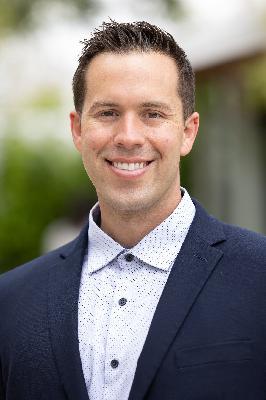
In this special 100th episode, guest host Katie Plaisance interviews Nick
Zautra, the host and producer of the SCI PHI Podcast, as he reflects on the
journey of the podcast and insights gained from interviewing 99
philosophers of science. Nick shares his personal story—from his childhood
interests to the spark that ignited his creativity and passion for
combining both philosophy and science. Nick delves into what he’s learned
about what it means to do good philosophy of science, exploring the
methodologies and approaches that define the discipline today. Nick also
reveals insightful patterns he's observed within the scientific community,
personal and professional challenges faced by researchers, the human
element of science, and what he envisions for the future.
Timestamps:
(0:00) - Introduction with Dr. Katie Plaisance (Guest Host)
(1:18) - Nick’s early life and interest in science
(3:39) - Educational background and career decisions: neuroscience,
philosophy, and comedy writing
(7:11) - Research with animal models and first experience with a
philosopher of science
(9:21) - Origin story of the SCI PHI Podcast
(12:21) - Patterns and insights gathered after interviewing 99 philosophers
of science
(19:24) - Personal challenges and successes of philosophers of science
(26:20) - The human element in science and why it’s so important
(33:06) - Biggest surprises regarding the background and impact of
philosophers of science
(38:29) - Nick’s take on the two greatest challenges facing philosophy of
science today
(44:24) - Katie’s elevator pitch for “what is philosophy of science?”
(47:18) - Are there certain types of scientists who seem to “get”
philosophy of science?
(51:23) - Missed opportunities for collaboration resulting from the “PR
problem”
(56:04) - How the podcast has shaped Nick’s research and collaborations
(1:01:37) - Toward philosophy with science
(1:03:34) - Looking back: what Nick would have done differently
(1:06:24) - Looking back: what Nick envisions for the future
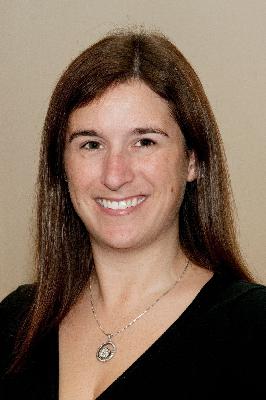
On Episode 99, Nick chats with Katie Plaisance, Professor in the Department
of Knowledge Integration at the University of Waterloo, about her research
understanding and developing best practices for collaborating and engaging
with scientists, engineers, policy-makers, and a wide range of publics to
foster epistemically and ethically responsible scientific research.
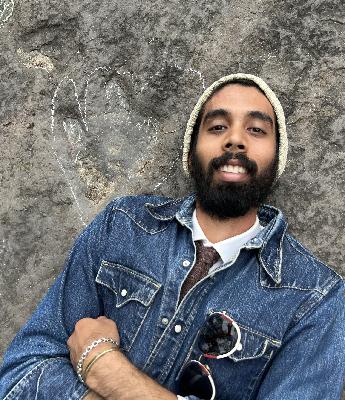
On Episode 98, Nick chats with Ali Mirza, Fellow and Visiting Lecturer at
the Center of Humanistic Inquiry and Department of History at Amherst
College, about his interdisciplinary work in the field of Ichnology, the
study of how our actions (as animals) affect the future structure of the
Earth, in which he challenges our standard accounts of how science
functions.

On Episode 97, Nick chats with Mazviita Chirimuuta, Senior Lecturer in
Philosophy at the University of Edinburgh, about her new book, The Brain
Abstracted: Simplification in the History and Philosophy of Neuroscience,
in which she argues that due to the brain's complexity, neuroscientific
theories have only captured partial truths and that “neurophilosophy” is
unlikely to be achieved. Rather than seeking to reform neuroscience or
offer neuroscientists advice, Mazviita offers a new framework for
interpreting the philosophical significance of present-day neuroscience
research, and draws important lessons for debates over explanations of
consciousness and the mind-body problem.
Timestamps:
(0:00) - Introduction
(2:20) - Life in Edinburgh, festivals and teaching
(4:56) - Upcoming new project, collaborating with scientists
(8:22) - Life growing up, Mazviita’s background and getting into philosophy
(16:29) - Mazviita’s decision to pursue philosophy professionally
(18:30) - The shift to the sciences
(21:10) - How Mazviita coupled the sciences with philosophical interest
(25:26) - Philosophical questioning of color
(28:05) - Transitioning to a career in philosophy
(35:07) - Writing in history and philosophy of neuroscience, challenges of
turning research into a book
(39:34) - Mazviita’s new book, ‘The brain abstracted’, criticizing ideas
from abstractions and idealizations
(42:19) - Idealizations in the field of philosophy of neuroscience
(46:55) - “Normative” lessons for neuroscience?
(51:30) - The reception of the book
(54:00) - The greatest challenge facing philosophy of science today
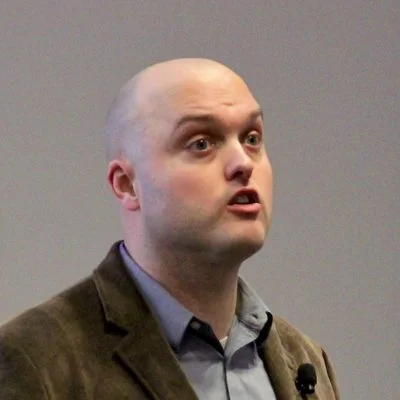
On Episode 96, Nick chats with Charles Pence, Chargé de cours at the
Université catholique de Louvain in Brussels, about his work on the causal
structure of natural selection, digital humanities and “taking the pulse”
of what biologists are up to, and his book, The Rise of Chance in
Evolutionary Theory, which takes a historical look at the development of
evolutionary theory and its extensive reliance on a wide array of concepts
of chance.
Timestamps:
(0:00) - Introduction
(1:53) - Life in Brussels and at Université catholique de Louvain
(8:51) - Charles’s life growing up and getting into philosophy
(17:30) - The shift from the sciences to philosophy
(21:01) - How Charles transitioned from philosophy of physics to philosophy
of biology
(25:27) - The importance of the history and philosophy of science
(29:29) - What were the main projects driving Charles towards philosophy of
biology
(35:23) - What of Charles’s current works are best representative of him
and his thinking
(39:26) - Side projects including digital humanities and gene regulation
(49:14) - The greatest challenge that philosophy of science faces today
On Episode 95, Nick chats with Sam Fellowes, Senior Lecturer at Lancaster
University, about drawing on his own experience being diagnosed with autism
at the age of 24 to motivate his research into methodological issues in
psychiatric diagnoses, the challenge of establishing accuracy with
self-diagnosis in psychiatry, psychiatric diagnoses as models,
neurodiversity, the importance of including what he terms
“experts-by-experience” in psychiatric research, and his upcoming book, “In
Defense of Psychiatric Diagnoses.”
Timestamps:
(0:00) - Introduction
(1:56) - Sam’s new book
(8:34) - Sam’s life growing up, his background and early interests
(14:56) - Sam’s introduction to philosophy
(22:43) - Sam’s Dissertation
(30:57) - Generalizations of autism in diagnoses
(38:23) - Sam’s advice for thinking about autism
(45:10) - Sam’s new work in philosophy of psychiatry, including
“expert-by-experience”
(51:47) - Philosophically and epistemology examining self-diagnoses in both
autism and substance abuse
(1:10:53) - The greatest challenge that philosophy of science faces today
(1:17:05) - Sam’s YouTube and potential future podcast
On Episode 94, Nick chats with UCLA chemist and authority on the history
and philosophy of the periodic table Eric Scerri, about the reduction of
chemistry to quantum mechanics, the philosophical nature of the periodic
table, and recent developments in quantum chemistry.
Timestamps:
(0:00) - Introduction
(2:03) - Welcoming Eric and recent life at UCLA
(4:33) - Eric’s life growing up and early interests
(13:13) - Eric’s journey through school into philosophy of science
(25:55) - Proudest works and moving into professional philosophy
(30:05) - The journey into the chemistry department at UCLA, philosophy of
chemistry as a discipline
(38:18) - Eric’s involvement in film and TV
(39:37) - Current projects
(44:35) - Advice for people considering chemistry and philosophy
(45:33) - The greatest challenge that philosophy of science faces today
(49:59) - Recent developments in quantum chemistry
On Episode 93, Nick chats with Alan Love, Distinguished McKnight University
Professor of Philosophy and Winton Chair in the Liberal Arts at the
University of Minnesota, as well as Director of the Minnesota Center for
Philosophy of Science, about assembling philosopher, theoretician, and
experimentalist research teams for the $14M Templeton Foundation grant
project, "Agency, Directionality, and Function,” his work in evolutionary
developmental biology, the forthcoming release of new perspectives on the
Human Genome Project, and organizing the upcoming conference, “Philosophy
of Science: Past, Present, and Future.”
Timestamps:
(0:00) - Introduction
(2:30) - Alan’s life in Minnesota and current projects
(10:50) - Upcoming conference in October : Philosophy of Science: Past,
Present, and Future
(17:20) - Alan’s life growing up in San Diego
(21:33) - Early philosophical questions
(23:15) - University life
(27:42) - Starting to consider philosophy as a profession
(32:10) - Formal Master’s degree vs. lab time
(34:20) - Favorite research projects over the years
(37:55) - Side interests (philosophical methodology)
(42:41) - The relationship between philosophical methodology and philosophy
of science
(45:20) - Upcoming projects that Alan is currently most excited about
(47:00) - Collaborating with scientists
(52:00) - Upcoming release of projects (Human genome project)
(55:11) - The greatest challenge that philosophy of science faces today,
and ways to move forward
On Episode 92, Nick chats with Prasanta Bandyopadhyay, Professor at Montana
State University, about his work developing a Bayesian account of
scientific methodology, in which he applies statistical/probabilistic
notions to a long-standing conundrum of methodological issues in the
sciences.
Timestamps:
(0:00) - Introduction
(1:45) - Prasanta Bandyopadhyay and life in Montana
(6:10) - Prasanta’s background, upbringing, and family
(10:00) - Early interests and early school years
(15:44) - Journeying into philosophy in India
(23:57) - Getting into professional training in philosophy and moving to
the UK
(32:20) - The big questions that Prasanta is attempting to
address/clarify/resolve
(37:55) - Theory of acceptance in Prasanta’s dissertation
(39:26) - Prasanta’s approach to collaboration with researchers and
statisticians
(44:07) - Prasanta’s main works and book
(46:15) - Current projects
(51:34) - Applying philosophy to the real world
(55:18) - The greatest challenge that philosophy of science faces today
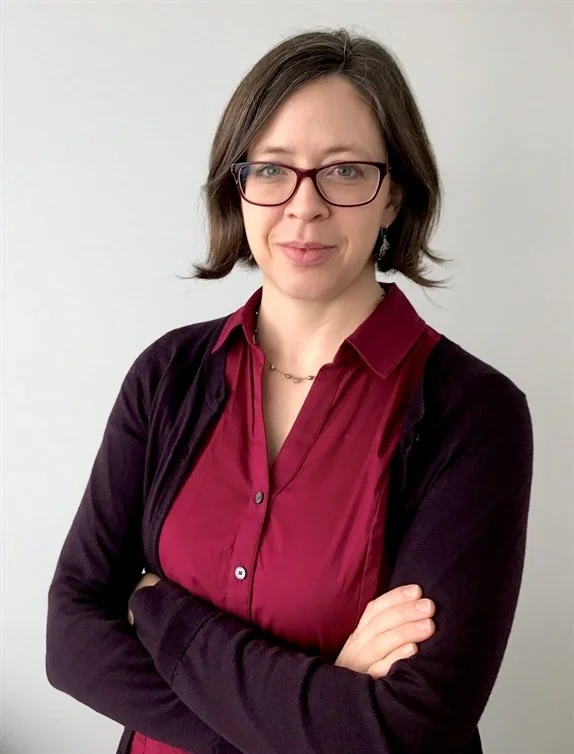
On Episode 91, Nick chats with Holly Andersen, Associate Professor at Simon
Frasier University, about her cutting edge work on causation: including her
research on causal explanations and causal modeling in the biomedical
sciences, pattern recognition, causal questions in sports analysis, and
problems related to mental causation and to the connections between action
and causation.
Timestamps:
(0:00) - Introduction - We’re back!
(2:36) - Holly Andersen and life in Vancouver
(5:05) - Reflections on the 2022 PSA Meeting and upcoming 2024 meeting
(9:06) - Holly’s background and upbringing in Montana
(15:14) - Holly’s academic journey pre-philosophy of science
(23:26) - Challenges in graduate school at Pitt
(27:47) - The big questions that Holly is attempting to
address/clarify/resolve
(33:16) - The work that Holly is proudest of
(39:04) - What is the future of causation in philosophy
(43:11) - Causation within Holly’s upcoming work
(48:45) - Link with causation and dynamical systems
(50:03) - Upcoming book on causation
(51:43) - Side interests (science fiction and history)
(57:25) - The greatest challenge that philosophy of science faces today
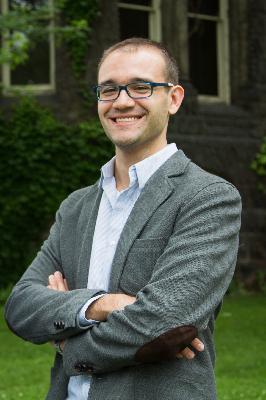
On Episode 90, Nick chats with Jonathan Fuller, Assistant Professor in
History and Philosophy of Science at the University of Pittsburgh, about
his experience as both a clinician and a philosopher in an MD/PhD training
program, philosophy in medicine, and his upcoming book The New Modern
Medicine that analyzes distinctive problems in scientific medicine around
the turn of the twenty-first century.
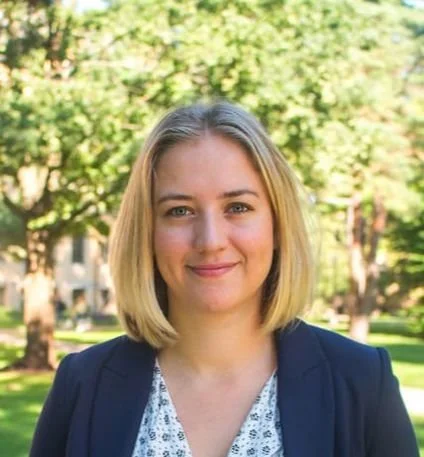
On Episode 89, Nick chats with Jamee Elder, Postdoctoral Fellow at the
Black Hole Initiative (BHI) at Harvard University, about the methodology
and epistemology of large astrophysical experiments, especially
those—including LIGO-Virgo and the EHT—that involve "observing" black
holes.
On Episode 88, Nick chats with Eleanor Knox, Reader in Philosophy of
Physics at King's College London, about her view she calls Spacetime
Functionalism, which she thinks solves problems in classical theories as
well as dealing with the challenges to standard accounts raised by emergent
spacetime structure in theories of quantum gravity.
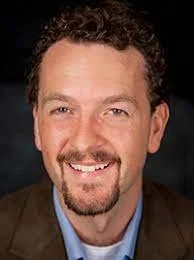
On Episode 87, Nick chats with Cameron Buckner, Associate Professor of
Philosophy at the University of Houston, about his work in the philosophy
of deep neural networks, a type of machine learning that is currently the
most widespread and successful technology in artificial intelligence.

On Episode 86, Nick chats with Sarah Robins, Associate Professor of
Philosophy at the University of Kansas, about her work on the concept of
the memory trace, or engram, and the role it plays in both everyday and
scientific thinking about remembering.
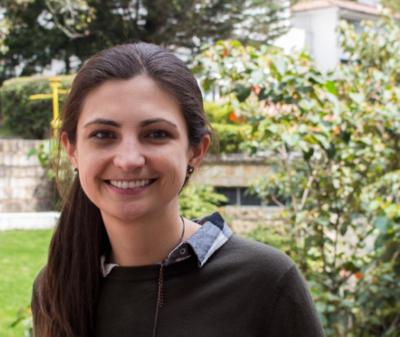
On Episode 85, Nick chats with Manuela Fernández Pinto, Associate Professor
in the Department of Philosophy and the Center for Applied Ethics at
Universidad de los Andes (Bogotá, Colombia), about her work in
agnotology—the study of ignorance—and the epistemic and social consequences
of commercially-driven scientific research.
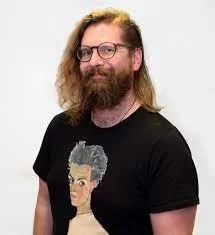
On Episode 84 Nick chats with Adrian Currie, Senior Lecturer in the
Department of Sociology, Philosophy, and Anthropology at Exeter, about his
research on the 'historical' sciences: paleontology, archaeology, geology
and so forth, and how both philosophers and methodologically reflective
scientists have underestimated the epistemic resources available for
uncovering the deep past.
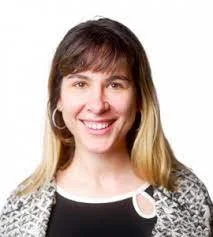
On Episode 83, Nick chats with Sarah Arnaud, Postdoctoral Associate at the
Rotman Institute of Philosophy at Western University, about how first
person perspectives can provide important and necessary knowledge in
psychiatry.
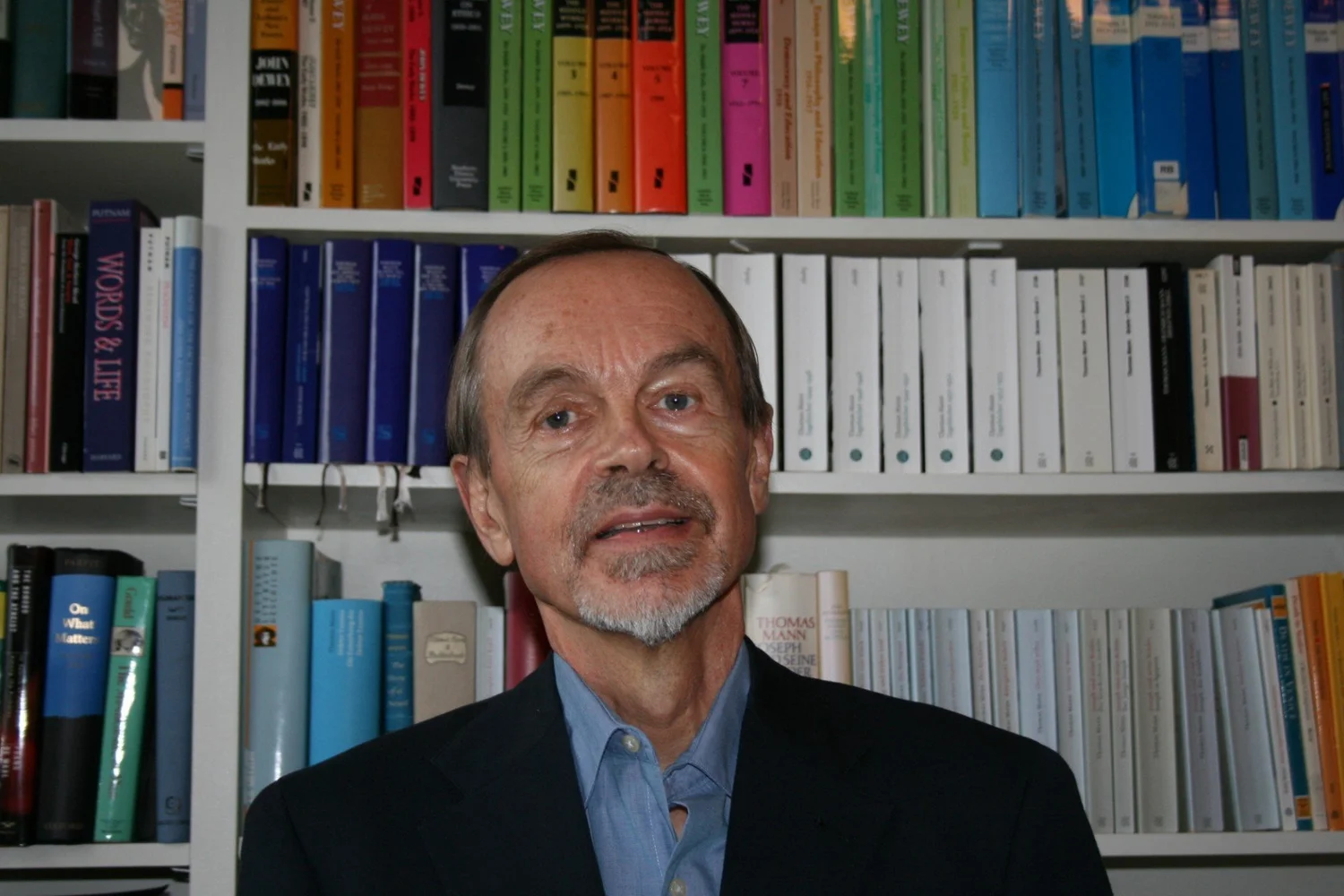
On Episode 82, Nick chats with Philip Kitcher, the John Dewey Professor
Emeritus of philosophy at Columbia University, about the the ways in which
science interfaces with the world, the new demarcation problem, and
scientific progress.

Comments

Download from Google Play

Download from App Store
 United States