


 Claim Ownership
SEA of Startups
Subscribed: 2Played: 0
Subscribe

© Sea of Startups
Description
🎙 SEA of Startups
Decoding the pulse of founders, capital, and conviction in Southeast Asia.
This isn’t another “startup success” show — it’s the real conversation behind what actually works (and what doesn’t) when you’re building, funding, or navigating the region’s wild, ambitious ecosystem.
From Singapore’s capital corridors to Jakarta’s chaos, Manila’s energy to Ho Chi Minh’s grit — we unpack how ambition, culture, and capital collide. Expect deep dives into founder psychology, venture strategy, and the unspoken truths shaping Southeast Asia’s next decade.
Hosted by Kim Yeoh and Kevin Brockland, it’s where strategy meets psychology — a mirror to the builders and believers shaping Southeast Asia. Part strategy, part soul — unfiltered, intelligent, and entirely real.
seaofstartups.substack.com
Decoding the pulse of founders, capital, and conviction in Southeast Asia.
This isn’t another “startup success” show — it’s the real conversation behind what actually works (and what doesn’t) when you’re building, funding, or navigating the region’s wild, ambitious ecosystem.
From Singapore’s capital corridors to Jakarta’s chaos, Manila’s energy to Ho Chi Minh’s grit — we unpack how ambition, culture, and capital collide. Expect deep dives into founder psychology, venture strategy, and the unspoken truths shaping Southeast Asia’s next decade.
Hosted by Kim Yeoh and Kevin Brockland, it’s where strategy meets psychology — a mirror to the builders and believers shaping Southeast Asia. Part strategy, part soul — unfiltered, intelligent, and entirely real.
seaofstartups.substack.com
66 Episodes
Reverse
Heyyyy guys,🧠 TL;DR — What Actually Changed* SGX × NASDAQ dual listing is a real regulatory breakthrough — but U.S. liquidity remains unproven* The fintech “funding collapse” was actually capital consolidation into Singapore* Southeast Asia is shifting from emerging → maturing, with real scaffolding for a capital stack* Founders + investors have a 24-month window before this becomes table stakesThe Setup: Why This Moment MattersSGX and NASDAQ just launched a dual-listing bridge — something Southeast Asia’s growth-stage founders have wanted for a decade.But here’s the twist:This isn’t about IPO convenience.It’s about Singapore silently building its own version of Silicon Valley’s capital stack — adapted for Southeast Asia’s geopolitical reality.And it’s happening while the rest of the ecosystem is still parsing the headline.We are at an inflection point,but not for the reasons most people think.1. SGX × NASDAQ Dual ListingReal Liquidity or Ego Liquidity?**What It IsA streamlined structure allowing ~$2.5B+ companies to list simultaneously on SGX and NASDAQ without:* duplicate filings* conflicting disclosures* multi-jurisdictional legal chaosA real regulatory achievement.What Everyone Assumes“Finally! A viable U.S. exit path for Southeast Asia tech.”What It Actually IsA partial solution — with one massive unanswered question:Does this create real U.S. liquidity, or just better press releases?Regulatory friction? Solved.Liquidity, analyst coverage, and market-making? Not solved.Let’s be blunt:* Who in New York is covering a $3B ASEAN B2B SaaS they’ve never used?* Who is trading your stock at 2 a.m. EST?* How do you compete for attention against trillion-dollar tickers?In Singapore, you matter.In the U.S., you are… a symbol on a screen.Who Wins (Right Now)?* SGX — they can pitch “NASDAQ access” to the entire region* Founders — they gain optionality and cleaner paperworkWill U.S. liquidity appear?TBD.Yes, AvePoint dual-listed in 2025 — but one data point does not equal a trend.2. The Fintech Funding ‘Collapse’ That Wasn’tIf you only saw the headline:“SEA fintech funding down 39% YoY.”You missed the real story:Singapore captured 84–88% of all fintech dollars.Capital didn’t disappear — it moved to safety.The Numbers* $829M raised (SEA fintech, first 9 months of 2025)* Singapore → 84% (with multiple quarters at 88%)* Mega rounds continued quietly:* Thunes — $150M Series D* Airwallex — $150M Series FThis isn’t contraction. It’s radical selectivity.When markets tighten, capital flies to clarity.In Southeast Asia, clarity has a postal code — Singapore.The Nuance No One MentionsMany “Singapore rounds” are Singapore TopCos with operations elsewhere.But even adjusting for that, the trend is undeniable:Singapore is becoming the gravitational center of SEAs capital stack.If You’re Building Outside Singapore…You need a Singapore strategy now, not “when we hit Series B.”* Entity structure* Regulatory setup* Investor relationships* Capital accessYou cannot retrofit a cap table at scale.If You’re a Seed Investor…Your job just became extremely difficult.You must identify the 10–15% of founders who:* can reach late stage* understand jurisdiction strategy* can navigate regulatory complexity* know how to design an intelligent capital stackMost seed funds will not do this.The ones who do will win disproportionately.3. From Emerging → MatureIs Southeast Asia Finally Growing Up?**Silicon Valley is built on a simple assumption:Build → Scale → Exit on NASDAQ.Because the infrastructure exists.Southeast Asia has never had that luxury.Grab went to NASDAQ.Sea went to NYSE.No major regional champion listed on SGX — because the liquidity + coverage didn’t justify it.What’s Shifting Now?Singapore is positioning itself as the region’s public-market on-ramp:* SGX × NASDAQ dual listing* Extreme fintech capital concentration* Temasek + GIC reallocating toward deep tech and infrastructure* Robust IP protection* $28B RIE2025 deep-tech planTo become a mature ecosystem, you need:* A complete capital stackSeed → A → Growth → Pre-IPO → Public markets* Exit pathways that convertNot theory — execution.* Signaling mechanismsReal wins → real returns → capital recycling.We’re not fully there.But for the first time, the scaffolding is real.4. The Implicit Geopolitical SubtextU.S.–China decoupling has reshaped global capital flows.China still owns ~75% of Asia biotech funding…but diversification is accelerating fast.And Singapore is playing its hand masterfully- clever and very typical.Singapore is now:* Neutral* Globally aligned* Legally predictable* Highly trustedSignals:* Biotech capital shifting to Singapore & South Korea* Flagship Partnering × A*STAR: $100M deep-tech commitment* Talent and IP migrating to strong-jurisdiction hubsThis isn’t incremental.It’s a generational repositioning. (See it now?)5. What Founders Should Actually Do(Immediately)**1. Five-Decision AuditLabel your last 5 decisions: Offense or Defense.If you’re 4–1 defensive, you’re playing not to lose.2. Entity Structure ReviewMake your TopCo dual-listing ready:clean cap table → clean governance → clean audit trail.3. Live Capability Target ListEvery month, update your list of 10 companies/tech you may:Acquire → Partner → Replicate.4. Board Transformation AgendaShift board meetings from quarterly KPIs → 3–5 year capability maps.This is how category-defining companies build.6. What Investors Should DoLate-Stage InvestorsDual listing optionality changes your entire underwriting model:* valuation ceilings shift* secondary liquidity widens* crossover investor interest increases* exit horizons changeAudit portfolio readiness now.This advantage won’t last long.Seed InvestorsYour edge becomes:jurisdiction strategy + regulatory guidance + capital stack architecture.This is no longer “nice-to-have.”It’s competitive advantage.7. The 24-Month WindowHere’s the uncomfortable truth:The founders and investors who move now will define the next decade.Infrastructure windows don’t stay open:* SGX is motivated today* NASDAQ is paying attention today* Capital is concentrating today* Regulations are flexible todayIn 3–5 years?This either becomes table stakes —or a missed opportunity we’ll reference for a generation.8. The Question Southeast Asia Has Been Asking WrongFor years the ecosystem asked:“Can Southeast Asia produce the next Google?”Wrong question.The real one is:“Can Southeast Asia build systems that consistently produce category-defining companies?”For the first time, the answer is trending toward yes — cautiously, but convincingly.Not because of one unicorn.But because the infrastructure is finally being built.* dual listing bridge* capital consolidation* sovereign repositioning* regulatory maturity* talent density* deep-tech investmentTogether, they form the early blueprint of a Southeast Asian capital stack.Purpose-built for this region.Not imported.Before You GoThis year stretched us — in the best way.We decoded:* orbital compute* fintech infrastructure* regional capital flows* AI rails* cross-border regulationA pattern emerged:Southeast Asia isn’t catching up.It’s reshaping itself.We’re taking a short break — a reset, a recalibration (maybe even one day off our phones… maybe).But 2026?We’re coming back with the founders building the next layer of infrastructure — the kind that defines decades.Stay curious.Stay ambitious.Keep building.The ecosystem is leveling up.All we need now is you.— Kim & KevinSEA of StartupsSGX NASDAQ dual listing, Singapore capital markets, Singapore fintech funding 2025, Southeast Asia IPO pathways, SEA startup ecosystem, Singapore dual listing strategy, capital stack Southeast Asia, NASDAQ Asian companies, Singapore startup hub, venture capital SEA, fintech Singapore trends, deep tech Singapore RIE2025, Singapore TopCo structure, regional tech IPO strategy, Southeast Asia exits, liquidity Singapore market, Singapore economic strategy This is a public episode. If you would like to discuss this with other subscribers or get access to bonus episodes, visit seaofstartups.substack.com
THIS WEEK'S REALITY CHECKGoogle just published research that makes every data center in Southeast Asia look obsolete.Project Suncatcher: Space-based AI data centers hitting cost parity with terrestrial operations by 2035. Launch costs dropped from $10,000 to $1,500 per kilogram. SpaceX is targeting $200/kg.This isn't science fiction. It's a $100 billion economic shift happening right now—and Southeast Asia has exactly 24-36 months to position itself as the ground station hub or watch the value flow elsewhere.This episode breaks down why orbital compute is inevitable, what it means for AI and agriculture in the region, and the moves founders need to make before the infrastructure moats lock in.WHAT WE COVER🚀 The Economics That Just FlippedLaunch costs: $10K → $1.5K per kg (and falling to $200/kg by 2035)Why Google's betting on orbital over terrestrial8x more solar efficiency + free cooling in vacuum of spaceHow SpaceX made the impossible economically viable☀️ Project Suncatcher BreakdownWhat Google's actually building (and why now)Technical challenges: maintenance, thermal radiation, data latencyWhy StarCloud just launched NVIDIA-powered mini data center into orbitThe radiation hardening problem (and how it's getting solved)🌾 The $400B Agriculture Angle Nobody's ConnectingHow satellite-based Earth observation transforms Southeast Asian farmingThailand could gain $8-12B annually from precision agricultureReal-time insights: soil health, planting windows, pest predictionWhy AcerX raised $30M+ to build this infrastructure now🏗️ Infrastructure Gets Its God's-Eye ViewMining companies using orbital imaging for mineral explorationUtilities gaining real-time grid monitoring capabilitiesWhy Southeast Asia's equatorial position = massive strategic advantageGround station networks as the next critical infrastructure moat💰 Who's Building What (And Who's Getting Funded)AcerX (Singapore): $30M+ for satellite data platformsOne Orbit: $12M for environmental monitoringLunaSat (Malaysia): Affordable small satellite manufacturingPlanet Labs: $500M raised, largest Earth observation constellation⏰ The 24-36 Month WindowWhy regional coordination matters right nowWhat happens when infrastructure moats lock inFive tactical moves for AI, agriculture, and infrastructure foundersPolicy frameworks that need to exist yesterdayKEY QUOTES"While Malaysia debates water usage for data centers and Singapore worries about electricity grids, Google's preparing to bypass all of it with orbital compute." - Kim"Southeast Asia is either positioning itself as the ground station hub for the orbital economy, or it's watching $100 billion in economic value flow elsewhere." - Kevin"Agriculture in this region is a $400 billion industry that's been fundamentally inefficient for centuries. Space-based analytics running in orbit and beaming down real-time insights changes everything." - Kim"The window for Southeast Asia to position itself in this ecosystem is 24-36 months. After that, the players are locked in and we're customers, not builders." - Kevin"I have to give credit where it's due: Elon Musk basically came in and inspired everyone to look at space as economically viable. Nobody was thinking about private sector space before SpaceX." - KevinFEATURED DATA POINTS🚀 Launch cost trajectory: $10,000/kg (2005) → $1,500/kg (2025) → $200/kg target (2035)☀️ Solar collection efficiency: 8x more productive in space than terrestrial panels💰 Economic opportunity: $100B+ potential GDP contribution to Southeast Asia🌾 SEA agriculture market: $400B annually📊 Thailand agriculture gains: $8-12B potential annual productivity increase⚡ Power advantage: Constant solar (if positioned in dawn-dusk synchronous orbit)❄️ Cooling advantage: Thermal radiation in vacuum = no water consumption💸 Funding activity:AcerX: $30M+ raised (Singapore satellite data platforms)One Orbit: $12M raised (environmental monitoring)Planet Labs: $500M raised (largest Earth observation constellation)⏱️ Latency advantage: 1-7ms orbital (vs 150ms trans-Pacific)🛰️ StarCloud: NVIDIA-powered orbital data center launched November 2025TACTICAL TAKEAWAYS FOR FOUNDERSIf you're building AI:Map which workloads could migrate to orbital compute (training jobs especially)30-40% cost reduction potential on frontier model trainingBuild relationships with space tech companies now (AcerX, One Orbit)Factor orbital into your Series B infrastructure assumptionsIf you're in agriculture:Pilot satellite data integration immediately (don't wait for perfect tech)Partner with companies deploying Earth observation analyticsOperational knowledge compounds—5-year head start mattersThailand, Vietnam, Indonesia = massive precision agriculture TAMIf you're infrastructure/utilities:Real-time satellite analytics for grid monitoring, pipeline integrityGround station partnerships should be strategic priorityAsset tracking, disaster resilience, environmental complianceGovernment engagement needed now for spectrum/site allocationFor all founders:Don't assume compute stays terrestrial foreverEngage policy conversations on orbital infrastructure earlyBuild optionality: not all-in on space, but not ignoring itThe companies learning to operationalize space-based insights now win in 2030For VCs:Space tech is no longer government-only domainLaunch costs dropped to venture-backable levelsRegional companies competing against Silicon Valley with 1/10th the capitalGround station infrastructure = strategic moat worth backingRESOURCES MENTIONED📄 Google X: Project Suncatcher Research Paper📄 SpaceX Launch Cost Analysis 2025📄 Southeast Asia Agriculture Market Report📄 Singapore Space Agency: Industry Updates📄 StarCloud: NVIDIA Orbital Data Center Launch Announcement📄 Planet Labs: Southeast Asia Partnership Programs📄 AcerX: Satellite Data Platform for SEA Supply Chains📄 One Orbit: Environmental Monitoring Constellation📄 Malaysia LunaSat: Small Satellite ManufacturingCOMPANIES TO WATCHBuilding in Southeast Asia:AcerX (Singapore): $30M+ raised, satellite data platforms for supply chains & agricultureOne Orbit: $12M raised, AI-powered environmental monitoring constellationLunaSat (Malaysia): Affordable small satellite manufacturing for regional deploymentGlobal Players Seeking SEA Partnerships:Planet Labs: $500M raised, largest Earth observation network, actively seeking SEA partnershipsStarCloud: Just launched NVIDIA-powered orbital data center (Nov 2025)SpaceX: Targeting $200/kg launch costs by 2030Blue Origin: Ramping up commercial launch operations🔗 CONNECT WITH US📧 Newsletter: https://seaofstartups.substack.com💼 LinkedIn:Kim (WeiiSyuen) Yeoh: https://www.linkedin.com/in/weiisyuenyeohacmacgma/Kevin Brockland: https://www.linkedin.com/in/kbrockland/🎧 Listen:Spotify: [Link]Apple Podcasts: [Link]YouTube: [Link]💬 Comment below: Is your five-year plan accounting for orbital compute? Or are you assuming infrastructure stays terrestrial forever?TAGSspace tech, orbital computing, Google Project Suncatcher, AI data centers, SpaceX, satellite technology, Southeast Asia startups, agriculture technology, precision farming, infrastructure innovation, venture capital, deep tech, AcerX Singapore, space industry, renewable energy, AI infrastructure, LEO satellites, Earth observation, ground station networks, digital infrastructure, ELon Musk, Steve Jobs WHAT'S NEXTNext episode: Interviewing the CEO of a solar company that just IPO'd—directly relevant to space-based power infrastructure discussion.Upcoming: More deep dives on infrastructure shifts reshaping Southeast Asia's tech ecosystem.📌 PIN THIS: If you're building in AI, agriculture, logistics, or infrastructure in Southeast Asia, this episode is required listening. The decisions made in the next 24-36 months determine who participates vs. spectates in the $100B orbital economy.Share this with:Founders building deep tech or AI infrastructureVCs evaluating space tech investment opportunitiesGovernment officials planning digital infrastructure policyAnyone who thinks data centers will stay on Earth forever⚡ VIRAL SHARE QUOTE:"Southeast Asia has 24-36 months to position itself as the ground station hub for orbital compute—or watch $100 billion in economic value get built elsewhere while we're still debating cooling systems." This is a public episode. If you would like to discuss this with other subscribers or get access to bonus episodes, visit seaofstartups.substack.com
Episode Title: 400% Returns vs S&P: The 6 M&A Habits Turning Acquisitions Into Capability MachinesTHIS WEEK'S REALITY CHECKCompanies that transform while they transact are delivering 400%+ returns vs the S&P 500 over the last decade.That's not incremental. That's a different category of value creation entirely.Deloitte just mapped how they do it: Six habits that separate transformational acquirers from traditional ones. Grab mastered 5 out of 6. Most Southeast Asian corporates? Still haven't shown up to the fight.This episode breaks down the playbook—and why Southeast Asia keeps getting M&A backwards.WHAT WE COVER📊 The Numbers That MatterWhy 400% outperformance isn't a fluke—it's a patternHow transformational M&A differs from traditional sequential approachesWhy most Southeast Asian corporates are still using outdated playbooks🎯 The Six Habits of Transformational AcquirersLeadership Mandate: C-suite strategy, not finance functionAlways-On Portfolio: Capability P&Ls, not just revenue P&LsTransform As You Transact: Concurrent, not sequentialAI at the Core: Business model shift, not cost optimizationPower in Collaboration: Ecosystem plays, not solo executionWorkforce for Tomorrow: People as bedrock, not afterthought🏢 Southeast Asia Case StudiesGrab: Programmatic capability stacking (but still not profitable)PropertyGuru: Pre-SPAC ecosystem building that attracted $1.1B private take-outDBS Bank: The 27,000-person tech company that happens to do banking🤖 The AI M&A FutureHow AI changes targeting, diligence, integration, and synergy captureWhy build vs buy calculus is shifting (and M&A volume will increase)The vibe coding question and what it means for Southeast Asia⏰ The 24-Month WindowWhy the next 2 years determine the next decadeWhat founders should do this quarterWhy most local corporates will still get it wrongKEY QUOTES"If your M&A strategy is still 'integrate first, transform later,' you're bringing a butter knife to a lightsaber fight." - Kevin"Dead weight kills optionality. And Southeast Asian corporates are carrying a LOT of dead weight." - Kimberley"You're not buying revenue. You're buying capabilities. You're not integrating headcount. You're integrating ecosystems." - Kevin"Grab didn't succeed because they had the best technology. They succeeded because they built teams that understood Jakarta differently than Singapore." - Kimberley"The companies that move in the next 24 months will define the next decade. The ones that wait will watch the window close." - KevinFEATURED DATA POINTS📈 Transformational M&A returns: 400%+ vs S&P 500 (over 10 years) 📊 Deloitte report: Six habits of transformational acquirers 🏢 Grab acquisitions: Kudo, Bento, GrabInvest, Jaya Grocer, digital bank license 💰 PropertyGuru exit: $1.1B private take-out by EQT (2024) 🏦 DBS workforce: 27,000 people (tech company that does banking) ⏱️ Traditional integration timeline: 18+ months ⚡ AI-enabled integration: Near real-time synergy capture 📉 SEA M&A volume: Historically low, ticking up slowly 🎯 Timeline prediction: 3-5 years for local corporates to adopt programmatic M&ATACTICAL TAKEAWAYSFor Founders:Five Decision Audit: Label last 5 strategic calls as defense vs offense. Rebalance if skewed.Live Capability Target List: 10 companies/partners/tech you could buy/partner/replicate. Refresh monthly.Board Agenda: Put transformation on board agenda with 3-5 year capability map.For Corporates:Treat M&A as C-suite strategy, not finance functionBuild capability P&Ls, not just revenue P&LsStart transformation pre-deal, not post-integrationEmbed AI at the core of M&A processBuild corp dev function if you don't have oneFor Investors:Track which companies are stacking capabilities vs chasing revenuePrioritize teams that understand ecosystem playsWatch for AI-enabled M&A processes as competitive advantageRESOURCES MENTIONED📄 Deloitte Transformational M&A ReportSHOW NOTES (DETAILED TIMESTAMPS)[00:00] Cold open: The gut check every SEA founder needs [01:01] The 400% number: Why transformational M&A outperforms [01:30] Six practices from Deloitte's new playbook [02:32] Old M&A vs transformational M&A: What actually changed [04:38] Southeast Asia receipts: Grab, PropertyGuru, DBS [08:21] PropertyGuru's capability thesis pre-SPAC [09:48] DBS masterclass: 27,000-person tech company [11:39] The build vs buy calculus is shifting [13:57] Vibe coding and what it means for M&A in SEA [17:12] Deloitte's six habits breakdown begins [18:30] Always-on portfolio: Capability P&Ls vs revenue P&Ls [21:20] Will startups still want to be acquired? [24:09] AI at the core: Not cost-out, business model shift [25:17] Power in collaboration: Why SEA is designed for this [27:34] The next 3-5 years: M&A volume predictions [28:52] AI-enabled M&A: Targeting, diligence, integration [31:05] Programmatic M&A: Will SEA corporates adopt it? [33:31] Catalyst analysis: What drives M&A volume increase [34:44] Family businesses and relationship-based economies [36:01] Why corporates keep losing: Bad tech experiences [37:12] Three reps to build your transformation muscle This is a public episode. If you would like to discuss this with other subscribers or get access to bonus episodes, visit seaofstartups.substack.com
THIS WEEK'S REALITY CHECKThe 47th ASEAN Summit just wrapped in Kuala Lumpur. Trump was there. China's Premier showed up. Everyone talked about integration.Meanwhile, the smartest founders in Southeast Asia are betting on something completely different: That the chaos isn't a bug—it's the entire competitive moat.This episode unpacks why ASEAN's fragmentation might be its biggest strategic advantage, and what founders need to do in the next 24 months before the window closes.WHAT WE COVER🌏 The ASEAN Integration ParadoxWhy 58 years of "working toward unity" might be missing the pointThe middle child syndrome: Too big to ignore, too fragmented to dominateWhy EU-style integration would probably destroy what makes SEA interesting💰 Why Silicon Valley Keeps Failing HereGoogle, Uber, Amazon—the graveyard of Western tech in Southeast AsiaHow Grab succeeded where Uber failed (hint: it's not just execution)The competitive moat that only local players understand🎯 The Strategic Non-Alignment PlaybookMalaysia's simultaneous partnerships with China, UK, and U.S.Singapore's multi-ecosystem strategyHow to become the Switzerland of the tech cold war🏙️ The Tier One City ThesisWhy KL has more in common with Bangkok than with Alor SetarHow to think about regional expansion without waiting for perfect alignmentThe borderless team concept that actually works⏰ The 24-Month WindowWhy the next 2 years determine the next 2 decadesWhat happens when ecosystems lock inFive tactical moves that separate exits from shutdownsKEY QUOTES"What looks like chaos is just Southeast Asia building its own operating system." - Kevin"Grab took 12 years to navigate 11 different regulatory systems. That's not a bug. That's the training ground that creates anti-fragile companies." - Kimberly"The tier one cities have more in common with each other than they do with tier two cities in their own countries." - Kevin"Strategic non-alignment isn't fence-sitting. It's positioning yourself as the translator when two superpowers don't speak the same language." - KimberlyFEATURED DATA POINTS🌏 ASEAN population: 680 million people (3rd largest market globally) 💰 Combined GDP: $4+ trillion 📊 ASEAN age: 58 years old (middle-aged in geopolitical terms) 🚀 Grab market presence: 12 years across 8 countries 🏢 SEA Group: 10+ years building in fragmented markets 🏛️ Number of ASEAN regulatory systems: 11 different frameworks 💳 Payment structures: 10+ different systems across regionTACTICAL TAKEAWAYS FOR FOUNDERSIf you're fundraising:Default to regional thinking from day onePlan for 24-30 month runways (not 18)Map policy advantages across markets systematicallyIf you're scaling:Build borderless teams with deep local knowledgeStudy government priorities in each marketEngage regulators as partners, not obstaclesIf you're entering SEA:Don't wait for perfect alignment—it's never comingFocus on tier one cities firstBuild for fragmentation, not uniformityRESOURCES MENTIONED📄 47th ASEAN Summit Outcomes (May 2025) 📄 Malaysia-US Trade Agreement Details 📄 ASEAN Digital Economy Framework 📄 Startup ASEAN Summit Agenda🔗 CONNECT WITH US:💼 LinkedIn: Kim Yeoh and Kevin Brockland 📧 Newsletter:https://seaofstartups.substack.com/ALSO ON: Apple Podcast and Youtube TAGS:ASEAN, Southeast Asia, startups, venture capital, regional expansion, fragmentation, competitive strategy, market entry, emerging markets, Grab, SEA Group, government relations, cross-border business, tech ecosystem, strategic partnerships This is a public episode. If you would like to discuss this with other subscribers or get access to bonus episodes, visit seaofstartups.substack.com
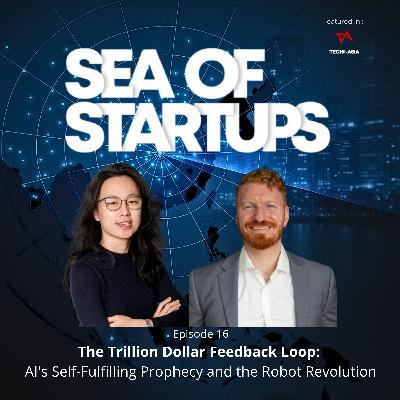
Your grandmother probably thinks AI is just fancy autocomplete. Your investors think it’s the next industrial revolution. Both might be right. And that’s exactly the problem.Welcome to the most expensive game of musical chairs in human history.In October 2025, OpenAI—the company that made you question whether your job is safe—signed roughly $1 trillion worth of deals. Not over decades. Not in theoretical future value. One trillion dollars in commitments that locked together the biggest names in tech like a high-stakes game of Twister.Nvidia committed up to $100 billion to OpenAI’s data centers. AMD followed with tens of billions more. Oracle inked a $300 billion cloud contract. Each company took equity stakes in OpenAI while simultaneously becoming its customer and supplier.It’s beautiful. It’s terrifying. And if you’re building anything in Southeast Asia, it’s about to force your hand.The Flywheel That Might Break the WorldHere’s what’s actually happening beneath the surface of those press releases.OpenAI needs computing power—not just a lot, but an almost incomprehensible amount. We’re talking 20 gigawatts worth of data centers. That’s the output of 20 nuclear reactors, running continuously, just to train the next generation of AI models.They can’t pay for this upfront. So they’ve structured deals where chipmakers like Nvidia essentially finance OpenAI’s infrastructure in exchange for guaranteed orders. Nvidia’s money buys data centers filled with... Nvidia chips. Which OpenAI uses to train AI models. Which drives demand for more Nvidia chips. Which justifies Nvidia’s stock price. Which gives Nvidia more currency (in the form of valuable equity) to invest in... OpenAI.See the loop?Now multiply this across AMD, Oracle, Microsoft, and a web of cloud providers and startups. Everyone is simultaneously the investor, the customer, and the supplier. Capital flows in a perfect circle, each deal reinforcing the next, each rising stock price validating the previous bet.This is either the most sophisticated value-creation flywheel ever constructed, or it’s vendor financing on steroids.The Cisco Parallel Nobody Wants to Talk AboutIf you’re over 35, you remember what happened to Cisco Systems.Late 1990s. Internet boom. Cisco was the arms dealer of the dot-com gold rush—selling routers and networking equipment to every startup that raised venture capital. Their stock went parabolic. They briefly became the most valuable company on Earth.Then came the vendor financing strategy. Cisco would invest in or loan money to internet companies... so those companies could turn around and buy Cisco equipment. Revenue exploded. Wall Street cheered. Cisco executives became billionaires.Until the music stopped.When the dot-com bubble burst in 2000, Cisco discovered that a huge chunk of their “revenue” was actually just their own money cycling through customer companies. Those customers went bankrupt. Cisco’s stock dropped 90%. The playbook that seemed genius became the textbook example of bubble economics.Nvidia’s $100 billion stake in OpenAI looks uncomfortably similar.Is this time different? Maybe. AI is real in a way many dot-com businesses weren’t. ChatGPT has 200 million users. Companies are deploying AI in actual workflows, not just buying vaporware.But here’s the uncomfortable question: How much of AI’s current growth is real demand versus artificially inflated demand created by these circular financing arrangements?Why This Matters for Southeast Asia (And Why You Have Less Time Than You Think)While this trillion-dollar poker game plays out in Silicon Valley and Shenzhen, Southeast Asia is being forced to make a choice it didn’t ask for.Do we join this ecosystem on whatever terms we can get? Or do we try to build our own capabilities knowing we’re years behind?The honest answer: We need to do both. And we have maybe 24 months before the window closes.Here’s why the timeline is so tight.Right now, these mega-deals are still being structured. Standards are still fluid. The technology stack is still evolving. There’s room for regional players to position themselves as integration layers, deployment partners, or specialized service providers.But once these circular deals lock in—once Nvidia’s chips only work seamlessly with Microsoft’s cloud which only optimizes for OpenAI’s models—the interoperability window slams shut. You’re either inside the ecosystem or permanently outside it.And if you’re outside? Good luck competing when your opponent has access to computing power you can’t afford, AI models you can’t replicate, and partnership networks you can’t penetrate.This is the new digital divide, and it’s being drawn right now.The Robot Revolution Nobody’s Pricing InIf the AI investment loop was just about software and cloud services, we could debate whether it’s sustainable. But there’s a second wave coming that changes everything: embodied AI.Translation: Robots with AI brains, walking around in the physical world.July 2025. Shanghai. World Artificial Intelligence Conference. Over 150 humanoid robots on display. Chinese companies selling working humanoids for $16,000. Some models as low as $5,900.Morgan Stanley just published research projecting the humanoid robotics market could hit $5 trillion in annual revenue by 2050. That’s twice the size of the global automotive industry.Let that sink in. We’re not talking about science fiction or distant futures. We’re talking about a trillion-dollar manufacturing ecosystem that needs to get built in the next 10-15 years.And Southeast Asia has a real shot at being a major player—but only if we move now.Why China Is Winning the Robot Race (And What We Can Learn)Here’s the uncomfortable geopolitical truth: China is currently best-positioned to dominate “embodied AI.”Not because they have the best AI research (though they’re closing the gap fast). But because they’ve cracked three things that matter more than pure technology:1. Manufacturing ecosystem at scale. China can produce robots cheaper and faster than anyone else. Their supply chains for motors, sensors, batteries, and materials are unmatched.2. Guaranteed internal demand. Chinese state-owned enterprises will buy domestic robots as a matter of policy. That gives Chinese robotics companies a market to refine their products before going global.3. Strategic patience combined with tactical speed. Beijing identified robotics as a national priority years ago. They’re playing a 20-year game with 6-month sprints.Meanwhile, American robotics CEOs went to Congress in 2025 literally begging for a national strategy, warning that without coordinated policy and investment, the U.S. will lose both the robotics race and, by extension, the AI race.The robots are where AI’s economic value gets captured. If you lose robots, you lose AI.Where does that leave Southeast Asia?The Strategic Non-Alignment PlaybookHere’s the move: Southeast Asia should become the Switzerland of the AI-robotics cold war.Not in the sense of being neutral and boring. In the sense of being the place where East meets West, where interoperability gets figured out, where multiple tech ecosystems coexist and connect.Malaysia is already doing this. They signed AI cooperation agreements with China while simultaneously licensing chip design technology from UK-based Arm and partnering with U.S. firms on industrial automation. They’re building relationships on all sides while developing domestic capability so they’re not completely dependent on anyone.Singapore is even more sophisticated. They use Chinese robotics for some infrastructure, Western AI for financial services, and invest heavily in their own research. They’re building genuine optionality.This isn’t fence-sitting. It’s strategic positioning.Because here’s what most people miss: The company or country that can integrate Chinese hardware with Western software with local applications becomes incredibly valuable. You’re the translator in a world where two superpowers speak different languages.But this only works if you have actual capability, not just diplomatic skill. You need engineers who understand both ecosystems. You need companies that can deploy and maintain robots regardless of where they’re manufactured. You need software that works across platforms.Building that takes time. Hence: 24 months.What Founders Should Actually Do This QuarterEnough strategy. Let’s get tactical.If you’re a founder or operator in Southeast Asia right now, here are five moves that matter:1. Pilot robots now, even if they’re imperfect.Don’t wait for mature technology. If you’re in manufacturing, logistics, or warehousing, start testing robot deployment today. The companies that learn how to integrate robots with human workflows now will have compounding advantages by 2030.The cost of being five years behind in operational knowledge will vastly exceed the cost of adopting imperfect technology today.2. Build the integration layer, not the hardware.Unless you’re exceptionally well-funded, don’t try to compete with Chinese firms on robot hardware or Western firms on foundational AI. Instead, build the software and services that make those technologies useful in Southeast Asian contexts.A robot designed for a Japanese factory doesn’t automatically work in an Indonesian palm oil plantation. Someone needs to adapt it. That someone could be you.3. Make your pitch anti-fragile.If you’re fundraising, assume it will take twice as long as you think and that 80% of pitches will fail. That’s not pessimism—that’s the new baseline.Series A deal volume is down 18%, dollars deployed down 23%, and median fundraising timeline has stretched to 20+ months. Build your financial model assuming you need 24-30 months of runway, not 18.4. Get specific about your AI story—or drop it entirely.VCs are getting sophisticated about AI-washing. If you claim to be an AI company, you’ll get grilled on model architecture, training data, and inference costs. If you can’t defend those clai
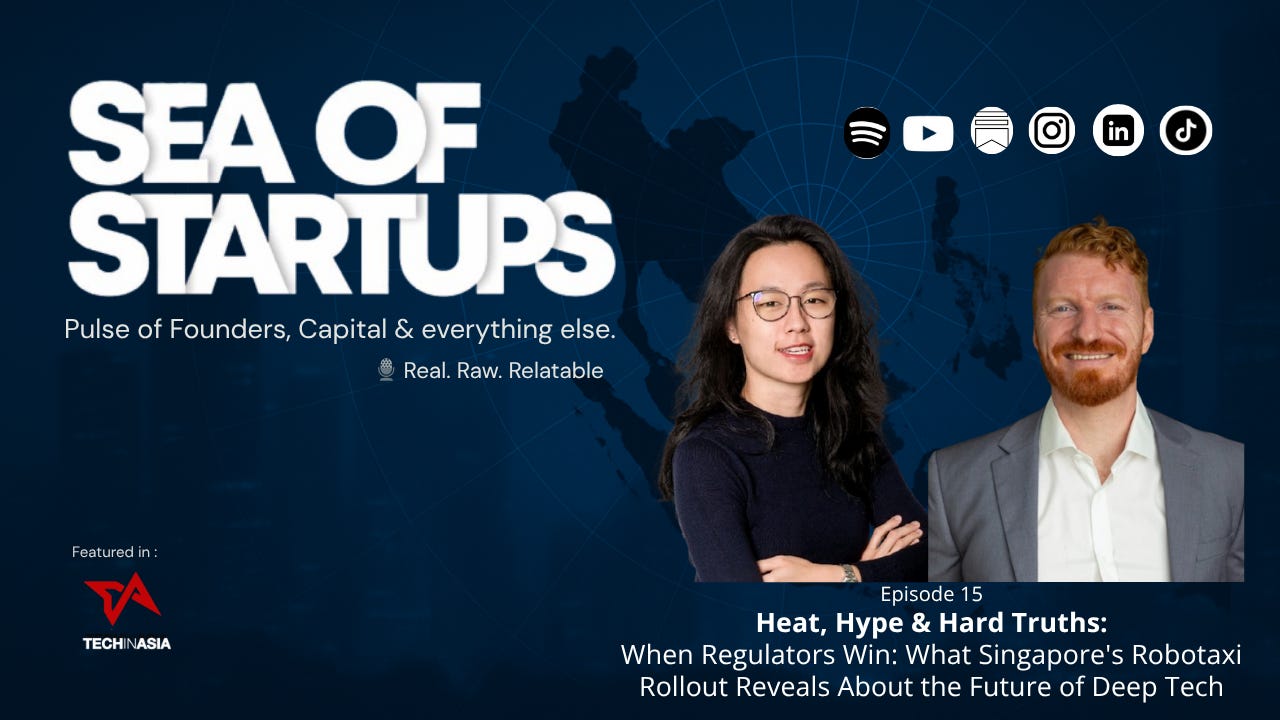
When Regulators Win: What Singapore's Robotaxi Rollout Reveals About the Future of Deep TechWhile Silicon Valley's AV companies fought regulators and burned billions, Singapore just orchestrated the future of transportation. WeRide partnered with Grab. Pony.ai partnered with ComfortDelGro. Both launching in 2025.This isn't just about self-driving cars. It's about how deep tech scales when you work WITH regulators instead of against them.Meanwhile, Series A funding collapsed 23% year-over-year. Fundraising timelines stretched to 3.5 years for many companies. The easy money era is over.This episode connects autonomous vehicles, strategic partnerships, and the brutal fundraising reality of 2025. If you're building deep tech or raising in Southeast Asia, this is required listening.WHAT WE COVER🚗 The Singapore AV StrategyWhy WeRide + Grab partnership changes everythingWhat Pony.ai brings to ComfortDelGroHow Singapore's Land Transport Authority orchestrates (not just approves) innovation💸 The Series A ApocalypseFunding down 23%, deal volume down 18%Median time Seed→Series A: 20 months (but 3.5 years for many)Hot sectors vs cold sectors: Where money is actually flowing🎯 Strategic Partnerships vs Solo ExecutionThe question every deep tech founder must askWhy being a vendor means you have no leverageHow to become a strategic partner instead🔥 The AI Hype Reality CheckWhat investors actually ask about AI startupsHow to tell if you're AI-washing your pitchWhen to force the AI angle (hint: never)📊 What's Actually Working in 2025The death of triple-triple-double-double-double5 things Southeast Asia founders must internalizeWhy government backing is your fastest path to scaleIn This Episode:[00:00] Intro: Continuing from climate tech and policy dynamics [02:01] WeRide + Grab and Pony.ai + ComfortDelGro partnerships in Singapore [05:22] US vs Singapore AV playbook: Chaos vs orchestration [10:13] Why Punggol is the perfect testbed for autonomous vehicles [15:16] Building trust through strategic partnerships and familiar brands [18:24] The fundraising apocalypse: Series A down 23%[22:06] Hot vs cold sectors: What's actually getting funded in 2025 [25:12] The death of triple-triple-double-double growth expectations [27:24] Why Southeast Asia needed this correction[31:52] Practical advice: Extended runway planning for founders💡 KEY TAKEAWAYS:✅ Strategic partnerships > solo execution in deep tech✅ Series A funding is down 23% YoY—plan for 2x longer fundraising timelines ✅ If you're a vendor, you have no leverage. Be a strategic partner. ✅ Singapore's government-orchestrated approach scales faster than Silicon Valley's chaos ✅ Extended runway (24-30 months) isn't optional—it's survival📊 FEATURED DATA POINTS & SOURCES :📉 Series A dollars deployed: Down 23% YoY 📉 Series A deal volume: Down 18% YoY ⏱️ Median Seed→Series A time: 20 months (up to 3.5 years for many) 🚗 WeRide autonomous driving: 50M+ kilometres 🚗 Waymo 2024 rides: 4M+ rides, 96M projected miles by mid-2025 🇸🇬 Pony.ai-ComfortDelGro MoU: July 2024 🇸🇬 Grab Ai.R launch: September 2025SOURCES: Grab Singapore press release (Sept 2025) Pony.ai investor relations announcements (Sept 2025)Land Transport Authority AV trial dataCarta Series A market reportWaymo operational metricsFOR FOUNDERS LISTENINGIf you're fundraising right now:Plan for timelines 2x longer than you thinkRaise 24-30 months runway, not 18Have burn reduction plan BEFORE you need itIf you're building deep tech:Identify established players who need youPosition as strategic partner, not vendorWork WITH regulators, not around themIf you're in Southeast Asia:Stop copying Silicon Valley playbooksGovernment isn't your enemy—it's your accelerantBuild for the market you're actually in🎙️ ABOUT SEA OF STARTUPS:Sea of Startups is your weekly reality check for building in Southeast Asia. Hosted by Kimberly Yeoh and Kevin Brockland, we cover what's actually happening in the ecosystem—no fluff, no hype, just the truth about fundraising, regulation, and what it takes to build here.🔗 CONNECT WITH US:💼 LinkedIn: Kimberly Yeohhttps://www.linkedin.com/in/weiisyuenyeohacmacgma/ | Kevin Brockland:https://www.linkedin.com/in/kbrockland/📧 Newsletter: https://seaofstartups.substack.com 📌 MENTIONED IN THIS EPISODE:WeRide (autonomous vehicle technology)Grab (Southeast Asia ride-hailing)Pony.ai (Chinese AV company)ComfortDelGro (Singapore transportation)Waymo (Google's AV division)Cruise (GM's AV company - shut down SF operations)Land Transport Authority SingaporeCarta (startup cap table platform)🏷️ TAGS:#AutonomousVehicles #Singapore #StartupFunding #SeriesA #SoutheastAsia #VentureCapital #Waymo #Grab #WeRide #PonyAI #DeepTech #AIStartups #FundraisingTips #StartupStrategy #TechInvestment #SmartCities #Robotaxi #ComfortDelGro #LandTransportAuthority #SEAStartups💬 JOIN THE CONVERSATION:What are you seeing in your market? Are strategic partnerships the new playbook, or are you still going solo? Drop a comment below.Subscribe for weekly insights on building in Southeast Asia 👇⚠️ DISCLAIMER:All views expressed are personal opinions and do not represent any organizations mentioned. This content is for informational purposes only and should not be considered investment advice. This is a public episode. If you would like to discuss this with other subscribers or get access to bonus episodes, visit seaofstartups.substack.com
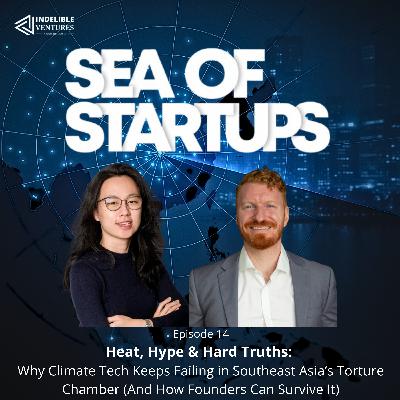
Your battery just died. Not your phone—your entire business model. This week on Sea of Startups, we're diving into why most climate tech fails within months in Southeast Asia, how tropical conditions are a torture chamber for hardware, and why the smartest founders are turning brutal constraints into billion-dollar competitive advantages. Plus: Why Chinese AV companies are playing a completely different game in Singapore, and fresh Series A data that might make you cry into your pitch deck (but also why this might be the best time to build).What You'll Learn:Why 90% of battery technologies fail in tropical conditions and what to do about itThe four frameworks climate tech founders need to survive Southeast Asia's regulatory mazeHow software-defined adaptation is beating hardware brute forceWhy Singapore's autonomous vehicle strategy looks nothing like Silicon Valley's approachThe brutal truth about Series A fundraising in 2025Featured Topics:Tropical Batteries Report 2025 from Malaysia's SEDA and CiceroClimate tech hardware survival strategiesEnergy policy challenges across Southeast Asia marketsAutonomous vehicle partnerships in Singapore (Pony.ai, WeRide)Series A fundraising reality check with Carta dataTimestamps: 00:00 - Introduction: Heat, Hype, and Hard Truths 01:15 - The Adapter That Couldn't Adapt 05:30 - Tropical Batteries Report 2025: Why Hardware Dies in SEA 09:45 - Three Engineering Strategies (And Why Software Wins) 15:20 - The Policy Problem: When Regulators Block Innovation22:40 - Four Frameworks for Climate Tech Survival 28:48 - Segment Transition: From Climate Heat to AV HypeKey Quotes:"Southeast Asia isn't just a market. It's a torture chamber for hardware.""If your adapter can't survive Southeast Asia, neither can your startup.""Don't think of tropical conditions as a constraint. Think of them as a feature.""The real competitive advantage isn't having the best technology. It's having technology that regulators understand, incumbents can partner with, and customers can actually deploy."Resources Mentioned:Tropical Batteries Report 2025 (SEDA Malaysia & Cicero)Malaysia's Sustainable Energy Development Authority (SEDA)PTT, EGAT, Petronas, Pertamina energy programsShell LiveWire programHosts:Kimberley (Kim) Yeoh - @WeiiSyuenYeohKevin Brockland - @KevinBrocklandSEGMENT 1: TROPICAL CLIMATE TECH - THE TORTURE CHAMBER (00:00 - 28:48)The Core Problem: Most battery storage technologies were designed for temperate climates (Silicon Valley garages, German engineering labs), not Southeast Asia's brutal conditions:Daily temperatures: 35°C+ (surface temps hit 60°C on rooftops)Humidity: 90% for months at a timeSalt spray near coastsBiblical rain patternsThermal cycling causing mechanical stressReal-World Impact:Lithium-ion cells that should last 10 years only reach 60% of expected lifespanElectronic components corrode rapidlyHousing cracks from thermal cyclingWarranty claims sink company valuationsThe Report: Tropical Batteries Report 2025 from Malaysia's SEDA (Sustainable Energy Development Authority) and CSIRO provides the first comprehensive playbook for hardware founders building in tropical markets.https://www.csiro.au/en/research/technology-space/energy/Electricity-transition/Southeast-Asia/tropical-batteries-MalaysiaMalaysia's Context:Target: 70% renewable energy by 2050Battery storage is critical for grid stabilityBut current technologies aren't built for these conditionsThree Engineering Strategies:Engineer the Environment (Reactive)Active cooling systemsHeat-dissipating materialsSmarter packagingProblem: Adds cost and complexity without solving root causeDifferent Chemistry (Better, but limited)Sodium-ion batteries: Better heat tolerance, less energy denseIron-air batteries: Incredibly robust, slower charge/dischargeSand batteries: Trap and hold heat (Vietnam example)Problem: Still competing on manufacturing scale with Chinese giantsSoftware-Defined Adaptation (The Winner)Predictive thermal managementDynamic load balancingWeather-aware charge/discharge algorithmsAdvantage: Compete on intelligence, not manufacturing scaleStartup-friendly and defensibleThe Policy Elephant: Technology is only half the battle. Energy policy often works against startups:Thailand Example:Ambitious renewable goals on paperReality: Energy sector dominated by massive incumbentsPeer-to-peer energy trading technically feasible but legally grayResult: "Behind-the-meter" projects only (on-site consumption, can't scale to grid)The Structural Challenge:What works in Singapore doesn't work in IndonesiaWhat's legal in Malaysia might be restricted in VietnamDifferent regulatory approaches across 11 Southeast Asian marketsDifferent incumbent interests and political sensitivitiesFour Survival Frameworks:Framework 1: Environmental Design ThinkingDon't just stress test in labsGet into real tropical conditions ASAPPartner with universities in Malaysia, Indonesia, PhilippinesSet up test installations in actual field conditionsFail fast and cheap in R&D, not after scaling manufacturingFramework 2: Regulatory Arbitrage StrategyFind pockets where policy already supports your modelMalaysia: Feed-in tariffs and net metering policies support distributed solar + storageSingapore: Regulatory sandboxes for energy innovationStart there, prove model works, then expand to trickier marketsFramework 3: Stakeholder Ecosystem MappingMap key players for every target market: regulators, incumbent utilities, local partnersThailand: Partner with PTT or EGAT instead of disrupting themMalaysia: Work with PetronasIndonesia: Engage with PertaminaAll have CVC arms and innovation programs looking for partnershipsShell's LiveWire program operates across the regionFramework 4: Climate Adaptation as Competitive AdvantageDon't view tropical conditions as constraint—it's a featureIf hardware survives 35°C heat + 90% humidity, it works anywhereTropical market = Southeast Asia + huge chunks of Africa, Latin America, India, Middle EastTorture chamber produces the strongest survivorsThe Meta Lesson: Climate tech is a systems challenge, not just engineering:Building better batteries that work within political, regulatory, climate realitiesBuilding systems that intelligently adapt vs. brute-forcing solutionsBuilding partnerships with incumbents vs. declaring warBuilding for business model sustainability from day oneSmart Founder Strategy: Spend as much time in government ministries as in labs. Don't just build tech—help shape regulations that determine whether tech can scale. Become part of the policy conversation, not an obstacle to it.SEGMENT 2: AUTONOMOUS VEHICLES IN SINGAPORE (Teased at 28:48)The Setup: Chinese companies Pony.ai and WeRide launching autonomous shuttles in Punggol, Singapore. But their strategy looks nothing like Silicon Valley's "move fast and break things" approach.Key Insight Preview: They're playing a completely different game—and it might be genius. (Full segment to be covered in next episode)SEGMENT 3: SERIES A FUNDRAISING REALITY CHECK (Teased)What's Coming:Fresh data from CartaInsider commentary from VC circlesNumbers that might make you cry into your pitch deckWhy this might actually be the best time to build if you're smart about it(Full segment to be covered in next episode)ACTIONABLE TAKEAWAYSFor Climate Tech Founders: ✅ Test in real tropical conditions early—don't wait until post-manufacturing ✅ Consider software-defined adaptation over hardware brute force ✅ Map regulatory landscape before scaling—find friendly markets first ✅ Partner with incumbents rather than fighting them ✅ Position tropical durability as global competitive advantageFor Investors: ✅ Due diligence must include field testing in deployment environments ✅ Account for regulatory risk, not just technology risk ✅ Demand unit economics from day one, not just deployment numbers ✅ Evaluate founder's understanding of policy landscapeFor Corporate Executives: ✅ Partner with startups solving real problems, not pitching moonshots ✅ Ensure digital transformation infrastructure works in actual operating conditions ✅ Make strategic investments that support ecosystem resilienceCONNECT WITH USSubscribe to Sea of Startups: 🎧 Spotify: https://open.spotify.com/show/0k6pc3PvXDeSltPINsBkJy?si=abfb938374b64ca7 Apple Podcasts https://podcasts.apple.com/us/podcast/sea-of-startups/id1641090926 YouTube: https://www.youtube.com/@SEAofStartupsFollow the Hosts: 💼 Kim (WeiiSyuen Yeoh) on LinkedIn 💼 Kevin Brockland on LinkedInJoin the Conversation: Is your hardware actually tropical-ready, or did you just check a box on a spec sheet? Share your experiences in the comments.MENTIONED IN THIS EPISODEOrganizations:Malaysia's Sustainable Energy Development Authority (SEDA)CSIROPTT (Thailand)EGAT (Thailand)Petronas (Malaysia)Pertamina (Indonesia)Shell LiveWire programTopics:Tropical Batteries Report 2025Lithium-ion vs sodium-ion vs iron-air batteriesSand battery technology (Vietnam)Feed-in tariffs and net meteringBehind-the-meter projectsRegulatory sandboxesPeer-to-peer energy tradingUpcoming:Pony.ai and WeRide autonomous vehicle partnershipsSeries A fundraising with Carta dataSpecial guest on distributed energy (launching end of year)TAGS & KEYWORDS#ClimateTeч #TropicalBatteries #HardwareStartups #SoutheastAsiaStartups #RenewableEnergy #EnergyStorage #MalaysiaTech #BatteryTechnology #CleanEnergy #StartupStrategy #RegulatoryStrategy #EnergyPolicy #SEDA #TropicalConditions #SustainableTech #SEAofStartupsNext Episode Preview: We'll dive into why Chinese AV companies are taking a radically different approach in Singapore, plus the Series A data that's separating winners from cautionary tales. Stay tuned.Disclaimer: All views and opinions expressed are those of the hosts and do not represent any organizations mentioned. Content is for informational and entertainment purposes only and should not be considered professional, investment, or legal advice. This is a public episode. If you would like to discuss this wi
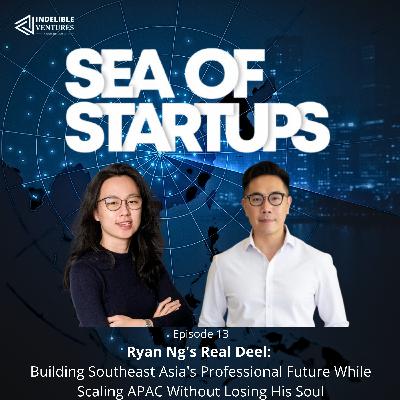
This conversation explores the messy middle of entrepreneurship through Ryan Ng’s unique journey of building YouDigital while leading APAC expansion at $12B unicorn Deel. We dive into cultural barriers holding back Southeast Asian professionals, the myth of work-life balance, and what it really takes to build something meaningful while maintaining financial stability.⏱️ Key Topics DiscussedThe Deel Experience (05:00–10:30)Inside the world’s largest remote companyScaling across ASEAN’s complex regulatory landscapeFrom LinkedIn’s “bullet train” to Deel’s “rocket ship”Managing 24/7 Slack notifications across time zonesThe Paiseh Problem (17:00–22:30)Southeast Asia’s cultural humility vs. global visibility requirementsWhy opportunities go to the most visible, not the best personThe cost of staying silent in today’s professional landscapeBreaking free from “let your work speak for itself” mentalityThe YouDigital Origin Story (20:00–27:00)The moment Ryan couldn’t not build somethingFrom LinkedIn DMs to TikTok content in Bahasa MalaysiaThe nine-month transformation of a bypassed professionalExpanding from Malaysia to inquiries from Botswana and SpainBuilding While Employed (27:00–35:00)Why Ryan didn’t quit his day job (and why that’s strategic)The unfair advantage of financial stability while buildingTransparency with managers and avoiding conflicts of interestChoosing harmony over balance: “Balance is a trap”Family Dynamics (35:00–47:00)Honest conversations with his wife about opportunity costsThe end of weekly “Fridates” and adjusted holiday schedulesRaising a three-year-old while juggling two demanding rolesWhen your toddler crashes Zoom calls with enterprise clientsThe Visibility Challenge (47:00–52:00)“You don’t have to be loud to be powerful”Leadership without a leadership titleThe infrastructure of professional development in Southeast AsiaCultural authenticity as competitive advantage💬 Memorable Quotes“The opportunities always go to not the best person but the person that’s most visible.”“You shouldn’t try to aim for balance, right? Try to aim for harmony instead, because balance is a trap.”“Hit that post button. Post something honest. Just post that being genuine and hit that button.”⚡ Rapid Fire InsightsBiggest fear holding back SEA professionals: Fear of being visible before feeling 100% readyMonthly question every professional should ask: “What do they want to be known for? And how are they showing up?”Key mindset shift for side project builders: Don’t be a perfectionist – be comfortable with uncertainties and different seasonsOne action to improve visibility this week: Hit publish on something honest and genuine🔗 Resources MentionedYouDigital → youdigital.asiaDeel → Global HR tech unicorn valued at $12BTikTok Content → Career advice in Bahasa MalaysiaSlush’D Penang → Where Kim and Ryan first connected👤 Connect with Ryan NgYouDigital → youdigital.asiaLinkedIn → Ryan Ng LinkedIn Profile📝 About Ryan NgRyan Ng is a Southeast Asian thought leader in career and personal branding, with over 18 years of experience spanning Canon, LinkedIn, Deel, and now YouDigital. Followed by more than 35,000 on TikTok and widely recognised for his thought leadership on LinkedIn, Ryan makes career insights relatable, practical, and actionable for today’s talent.Currently Founder & CEO of YouDigital, Ryan partners with universities, corporates, and government agencies to help students, founders, mid-careerists, and professionals build visibility and opportunity readiness. He also serves as an Adjunct Mentor at INTI, guiding design-thinking projects and mentoring the next generation of leaders.Previously at LinkedIn, Ryan led public sector workforce programmes across Malaysia, working alongside government agencies to shape employability and economic growth strategies. At Deel, the world’s fastest-growing HR tech startup, he drove regional expansion across ASEAN, advising multinationals on global hiring and compliance.Ryan has been a speaker at Slush’d Penang, AmCham, Taylor’s University, UiTM, MDEC, and TalentCorp events, and served as a panel judge for TalentCorp’s Life at Work Awards, underlining his commitment to strengthening Malaysia’s and ASEAN’s talent ecosystem.Through his work, Ryan believes in a simple truth: the best opportunities don’t always go to the most qualified — they go to the most visible. His mission is to ensure Southeast Asians are not just ready for opportunities, but noticed and chosen. In a world where AI can replicate skills, the one thing it can’t replace is your brand.🌊 SEA of Startups — Support & Stay Connected🙌 Support the ShowIf this episode made you rethink what “ecosystem building” really means:👉 Tap Follow on Spotify🔔 Turn on notifications so you never miss a new drop⭐ Leave us a 5-star rating & review📤 Share this episode with a founder or operator navigating cross-border challenges💬 Let’s ConnectKim Yeoh → LinkedInKevin Brockland → LinkedInNewsletter → Subscribe on Substack🌐 Follow us for more stories:Spotify → Follow SEA of StartupsLinkedIn → SEA of Startups LinkedIn PageSubstack → seaofstartups.substack.com🌊 SEA of Startups is where the region’s real startup stories live. No puff pieces. No fluff. Just what’s actually happening under the surface. This is a public episode. If you would like to discuss this with other subscribers or get access to bonus episodes, visit seaofstartups.substack.com
"We went from the whole growth at all costs mentality to, can you actually make money? All within the span of about 18 months."Hey everyone, News flash- That's not some venture capitalist pontificating from a Palo Alto coffee shop. That's Kevin Brockland describing the most dramatic pendulum swing in tech history—happening right now, in Southeast Asia, while everyone else is still arguing about AI regulations.Here's the uncomfortable truth Silicon Valley doesn't want to admit: While they've been obsessing over who gets to build the next ChatGPT, SEA quietly solved the profitability problem. Not through another productivity hack or growth framework, but through something much more radical: growing the hell up.Forward this to anyone ready for the adult conversation about tech growth.The 18-Month Reckoning Nobody Saw ComingPicture this: You're hosting the ultimate tech house party. Microsoft, Amazon, Google all show up. But so do Tencent, Huawei, Alibaba. Everyone wants cheap land, low electricity, and proximity to Singapore's financial hub.Sounds perfect, right?Then reality crashes the party.Malaysia—capturing 60% of Southeast Asia's new data center capacity—suddenly realizes something Silicon Valley forgot decades ago: infinite growth meets finite resources. Water that keeps data centers cool is the same water Singapore needs to drink. Energy that powers AI training is the same energy families need for air conditioning.The result? Malaysia did something unthinkable in today's tech landscape: they pumped the brakes voluntarily.Not because they lacked demand. Not because they couldn't raise capital. But because sustainable growth beats breakneck expansion every single time.The $30 Million Reality CheckWhile Silicon Valley founders pitch "AI for everything" with hockey stick projections, Vietnam's FPT Corporation just signed a $30 million, multi-year AI transformation deal with one of Southeast Asia's largest industrial conglomerates.Not $30 million in potential future revenue. Not $30 million in theoretical market size. $30 million in actual, committed, pay-the-bills revenue.This isn't venture theater. This is what happens when you skip the "fake it till you make it" phase and jump straight to "build something people will actually pay for."The difference? FPT didn't try to revolutionize everything overnight. They proved value at each step, built capabilities layer by layer, and focused on problems that keep CFOs awake at night.The Death of Growth-at-All-Costs (And Why That's Actually Good News)Here's the data that should terrify every burn-rate optimized startup:* First half of 2024: Only 229 equity deals in SEA, totaling $1.85 billion* That's the weakest deal-making pace in over six years* Yet late-stage companies with strong fundamentals are still raising at good valuationsTranslation: The tourist capital left. The hot money chasing momentum disappeared. What remains is capital that actually understands the region and believes in building durable businesses.This isn't a bug. It's a feature.Remember the e-fisheries scandal that rocked the ecosystem? The alleged fraud at companies everyone thought were poster children for Southeast Asian innovation? That wasn't a market failure. That was the market working exactly as designed—punishing unsustainable models and rewarding authentic value creation.The B2B Revolution Nobody PredictedWhile consumer super apps burned billions chasing the next billion users, something interesting happened in the shadows: B2B services became profitable.Enterprise SaaS. AI transformation consulting. Cloud migration services. Digital infrastructure for traditional industries.All the "boring" stuff Silicon Valley VCs wouldn't touch because it didn't have hockey stick user growth? That's where the actual money was hiding.Vietnam's largest energy corporation didn't want a consumer app with millions of downloads. They wanted their factories to run more efficiently. FPT delivered that. For $256 million over five years.The Geopolitical Chess Game (Or: How to Win When Superpowers Fight)Here's where it gets interesting. While the US and China wage their trade war through semiconductor export bans and data center restrictions, Southeast Asia is playing a different game entirely.Chinese data center giant GDS Holdings spun off their overseas operations into "Day One"—literally starting fresh to avoid geopolitical pressure. Meanwhile, Thailand built their own Large Language Model called Typhoon, backed by one of the country's largest banks.Not copying OpenAI. Not licensing from Google. Building their own.This isn't East versus West. This is Southeast Asia writing its own playbook while everyone else fights over yesterday's rules.What This Means for Your Career (Whether You Realize It or Not)If you're entering the workforce without AI skills, you're already behind. Not because AI will replace you, but because someone who understands AI integration will replace you.If you're a startup founder still chasing vanity metrics instead of unit economics, you're playing a game that ended 18 months ago.If you're a corporate executive who thinks digital transformation is optional, your competitors are already signing $30 million deals with companies that figured it out.The fundamentals aren't changing. They're becoming the only thing that matters.The Millennial Startup EcosystemTwenty-something founders break things fast and iterate quickly. Thirty-something founders build things that last and scale sustainably.Southeast Asia just hit thirty.The region still wants to build great companies, attract investment, and drive innovation. But strategies have gotten smarter. More intentional. More resilient.This isn't about lowered ambitions. It's about grown-up ambitions that create solutions lasting longer than the next funding round.The Real Opportunity (That Everyone's Missing)While Silicon Valley debates AI safety regulations and China implements social credit systems, Southeast Asia is quietly building the infrastructure for sustainable tech growth.Climate tech. Energy tech. B2B services for traditional industries. AI transformation that actually transforms something.The companies winning aren't chasing Silicon Valley metrics. They're solving problems specific to their markets with technologies that work for their users.Malaysia's vetting committee for data centers isn't red tape. It's strategic thinking.Vietnam's methodical approach to AI isn't lack of ambition. It's sustainable execution.Thailand's Typhoon LLM isn't copying ChatGPT. It's competitive differentiation.Back to the Trust Equation … againInnovation isn't just about speed anymore. It's about trust—the invisible kind you feel before a term sheet gets signed.Easy money is gone. Hot takes won't save you. Growth hacking is dead.What remains is the hard work of building things people need, want, and will pay for. Repeatedly. Profitably. Sustainably.Southeast Asia learned this lesson in 18 brutal months. The rest of the world is about to follow.The future belongs to builders who embrace complexity rather than fight it. Whether you're ready or not.🎯 THE BOTTOM LINESoutheast Asia didn't slow down. It grew up. While others chase unicorn valuations, the region is building sustainable, profitable businesses that solve real problems for real money.The pendulum has swung from burn rates to profit rates. The tourist capital left. The hot money disappeared. What remains are companies that understand unit economics aren't optional—they're the entire game.This isn't a market correction. It's market maturation.See you in the next one! -Kim and Kevin 🔥 SUBSCRIBE & ENGAGEFound this valuable? Share it with that founder still explaining away negative unit economics.Want more insights like this? Subscribe to SEA of Startups on your preferred platform:🎧 Spotify | Apple Podcasts | YouTube💼 LinkedIn: Follow (Kim) WeiiSyuen Yeoh & Kevin BrocklandJoin the conversation: What are you seeing in your market—sustainable growth or hockey stick theater?📊 SEO KEYWORDSSoutheast Asia startups, AI transformation consulting, Malaysia data centers, Vietnam FPT Corporation, B2B services boom, startup profitability, venture capital SEA, sustainable growth, unit economics, digital transformationDisclaimer: All views shared are personal opinions and don't represent any organizations mentioned.What's your take? Are you seeing this shift toward sustainable growth in your market, or is everyone still chasing unicorn valuations? The comments section might be more honest than the quarterly reports.Share this if you know someone still burning cash and calling it growth strategy. This is a public episode. If you would like to discuss this with other subscribers or get access to bonus episodes, visit seaofstartups.substack.com
The Trust Equation: Why Corporate VCs Aren't the Villain in Your Startup Story"One yes can open doors you didn't know existed. One no from the wrong person can kill dreams before they start." — Pavel Veselovsky, Corporate Venture StrategistHey everyone,Let's address the elephant in every founder's pitch deck.You know that moment when a corporate VC shows interest in your startup? That split second where you feel simultaneously validated and terrified? Like getting asked to prom by the most popular kid in school who also happens to be your biggest competition.Yeah, that feeling. We need to talk about it.🚀 Thanks for diving into SEA of Startups. If you're into raw convos, sharp takes, and real stories from Southeast Asia's startup trenches—Subscribe for free to get new drops straight to your inbox. No fluff. No FOMO. Just the good stuff.The Great Corporate VC MythologyHere's what every founder whispers at startup events:"Corporate money comes with strings attached." "They'll steal your idea and build it themselves." "It takes six months to get a decision, then they want to control everything."Sound familiar? I thought so.But here's the plot twist: Pavel Veselovsky, who's navigated both sides of this equation—from running PWC's venture programs to now advising startups across Southeast Asia—just shattered every assumption I had about this space.The numbers tell a different story than the horror stories:28% of all venture-backed companies globally now have at least one corporate investorSoutheast Asia is seeing explosive CVC activity, especially in ThailandYet 95% of founders are still operating on outdated Silicon Valley mythologyThe Real Game: One Yes vs One NoHere's the insight that stopped me cold during our Bangkok recording:Traditional VCs: You need ONE yes. One believer who writes the check. That's your path to success.Corporate VCs: You can have every executive saying yes, but ONE no from legal, cybersecurity, or procurement can kill everything.It's not about speed versus slowness. It's about offensive disruption versus defensive innovation. Two completely different games with completely different rules.Pavel put it perfectly: "Corporates can spend one year discussing which color the button should be."The irony? This "weakness" might actually be your startup's protection, not your threat.The Corporate Zombie PhenomenonWe discovered something I've never heard anyone discuss: corporate zombies.These aren't the walking dead. They're innovation projects that become impossible to kill even when they've clearly failed. Pavel explained it like this:"Sometimes it's easy to start funding an initiative, but it's harder to stop funding. We spent so much money on this for five years—it can't be easy to say it's not viable anymore."Think about that. While founders fear corporates will steal their ideas and execute them faster, the reality is most corporates struggle to execute anything quickly. They're often drowning in their own bureaucratic complexity.Your real competitive advantage isn't just your speed—it's your ability to pivot, kill projects that don't work, and start over. Corporates often can't.Why Southeast Asia Is Playing Chess While Silicon Valley Plays CheckersWhile everyone assumes Singapore is the only game in town, Thailand is quietly becoming a CVC powerhouse. And it's not copying anyone.The data Pavel shared from TechSauce Summit:K-Bank, SCBX, Krungsifineret: dozens of internal innovations in just one yearRetail giants like CP Group and Lotus: building their own innovation enginesEnergy companies like Big Rim and Banpoo: leading corporate innovationBut here's the kicker: Thailand built its own Large Language Model called Typhoon (backed by one of the country's largest banks). Not copying OpenAI. Not licensing from Google. Building their own.This isn't about East versus West. It's about integrated global innovation networks where the best ideas win, regardless of geography.The Five-Element Framework That Actually WorksWhen traditional VCs and corporate VCs co-invest (which happens more than you think), Pavel breaks down what makes it work into five elements:Strategy: Clear mission, vision, and alignment with leadershipPeople: Right hires with the right mindset and backgroundOrganization: Formal structure connecting to VC networksOperations: Processes, tools, decision-making mechanicsMetrics: Performance measurement and reportingIt's like competitive ballroom dancing. Both partners need the same vision, complementary skills, structured choreography, flawless execution, and a way to measure performance.When it works, it's electric. When it doesn't, everyone steps on each other's toes.The Authenticity AdvantageHere's what caught me off guard: the best corporate VCs aren't playing defense anymore. They're actively seeking disruption.Pavel's insight: "Most of the time, corporates are not capable to do the same because they can spend one year discussing which color the button should be. From my side, it's really a myth that corporates will easily hijack an idea."The real dynamic? If that corporate is investing, it's because they need what you have. You're not the weaker party—you're the solution to their innovation problem.The future belongs to founders who understand this shift and corporates who can move beyond zombie projects toward authentic partnerships.What Keeps You Up at Night?Here's my rapid-fire reality check for founders:Most underrated opportunity: Climate tech and energy tech in Southeast AsiaBest advice for corporate money: Find the right stakeholder (not the biggest checkbook)Hard truth: Good numbers aren't enough anymore. Good storytelling often beats good metrics.Five-year prediction: More major acquisitions where corporate investors played crucial early-stage roles. More Southeast Asian founders succeeding globally, not just regionally.The Real RevolutionThe AI startups are capturing 37% of all CVC-backed funding globally. Southeast Asia is following similar patterns, but with local twists—like Thailand's Typhoon LLM.The companies winning aren't chasing Silicon Valley metrics. They're solving problems specific to their markets with technologies that actually work for their users.🎧 Full deep dive conversation with Pavel Veselovsky drops today on Apple Podcasts, Spotify, YouTube, and Substack Audio.The Trust EquationInnovation isn't just about speed or strategy. It's about trust—the invisible kind you feel in a room before a term sheet gets signed.One yes can open doors you didn't know existed. One no from the wrong person can kill dreams before they start. That's the dance between corporates and startups.It's not always elegant, but when it works, it's electrifying.For founders: Your employees are already using AI tools in secret. Instead of fighting it, give them sanctioned tools that learn and improve.For corporates: Stop funding zombie projects. Start funding solutions to problems that keep you awake at night.For everyone else: Southeast Asia isn't copying anyone's playbook anymore. We're writing our own.The future belongs to builders who embrace complexity rather than fight it. Whether you're a founder considering corporate money or a corporate executive thinking venture strategy, the opportunity is massive—but only if you understand the actual game being played.What's your take? Are you seeing real collaboration between corporates and startups, or just expensive theater? The comments might be more honest than the quarterly reports.Next week: We're exploring how Southeast Asian fintech is quietly revolutionizing financial inclusion while everyone debates crypto regulations. Spoiler: the real innovation isn't happening where you think.Until then, maybe focus on building trust that lasts longer than the demo.— KimDisclaimer: All views shared are personal opinions and don't represent any organizations mentioned.If this hit different, share it with that one founder who's scared of corporate money or that exec who swears they understand startups.Share This is a public episode. If you would like to discuss this with other subscribers or get access to bonus episodes, visit seaofstartups.substack.com
🎙 EP 10: The $40 Billion AI Reality Check | MIT's Brutal Wake-Up Call on Enterprise AI's 95% Failure Rate🛰 Everyone's chasing AI transformation. 95% are just burning money.This week, Kevin Brockland and Kim Yeoh tear apart MIT's Project NANDA report — the most brutal reality check the AI industry has seen. Despite $30-40 billion in enterprise AI spending, 95% of companies have exactly zero ROI to show for it.No buzzwords, no consulting deck theater, just the uncomfortable truth about why most AI initiatives die in "pilot purgatory" while a shadow economy of employees quietly uses free tools anyway.Kevin is a tech investor and startup advisor focused on Southeast Asia's emerging markets. Kim is an ACMA, CGMA qualified finance professional turned startup ecosystem builder. Together, they've watched the AI hype cycle from the inside — and they're not buying the LinkedIn transformation posts.This episode is raw honesty about: How the "GenAI Divide" became wider than the Grand Canyon Why your expensive AI tools can't remember yesterday's feedback The beautiful rebellion of employees using ChatGPT in secret And what the 5% getting AI right actually do differently💡 What You'll LearnWhy 95% of AI projects are expensive screensavers that never leave pilot phase What MIT calls "the learning gap" — and why your AI has goldfish memory How 68% of workplace ChatGPT users are flying under corporate radar Why Southeast Asia's experimental culture beats Western AI ethics committees The difference between AI that demos well vs AI that delivers ROI Why augmentation > replacement for sustainable AI adoption🔎 Key TakeawaysThird-party AI tools have significantly higher success rates than in-house builds Back-office automation drives more ROI than sexy front-end applications Smaller companies dominate AI success because they lack bureaucratic friction The real opportunity lies in AI agents that learn your business context Southeast Asia's speed advantage could leapfrog Western AI adoption🧠 Sound Bites"It's like the Emperor's new AI clothes — all slides, no substance" "95% of AI projects are expensive screensavers tucked into the 'didn't work' folder" "Your 10X dev is now 100X, but the bottom tier hasn't changed at all" "People are reverting to ChatGPT because the enterprise tools don't fit their workflow" "We're performing AI transformation rather than actually doing it" "Easy money is gone, but the real money is just getting started"⏱ Chapters00:00 – Kevin's Radical Honesty: The AI Theater Performance 01:28 – MIT Drops the 95% Zero ROI Bombshell04:35 – Why Most Companies Are Just Pretending to Transform 06:59 – The Learning Gap: Why AI Has Amnesia 12:24 – Pilot Purgatory vs The 5% Success Club 18:51 – Third-Party vs In-House: The Failure Rate Divide 25:43 – Back-Office Gold Mine: Where Real ROI Lives 29:25 – The Shadow AI Economy: 68% Flying Under Radar 36:28 – Southeast Asia's Speed Advantage 43:00 – Tough Love for AI Startup Founders 46:32 – The GenAI Divide: Temporary or Permanent? 49:03 – What to Remember: Revolution is Real, Just Messier🙌 Support the ShowIf this reality check saved you from becoming part of the 95%: 👉 Tap "Follow" 🔔 Turn on notifications ⭐ Leave us a 5-star rating📤 Share this with someone stuck in pilot purgatory💬 Let's Connect🎙 Kim Yeoh → https://www.linkedin.com/in/weiisyuenyeohacmacgma/ 🎙 Kevin Brockland → https://www.linkedin.com/in/kbrockland/ 📬 Join 500+ founders & VCs reading our newsletter → Subscribe on Substack - https://seaofstartups.substack.com/🌊 SEA of Startups is where the region's real startup stories live. No puff pieces. No fluff. Just what's actually happening under the surface. This is a public episode. If you would like to discuss this with other subscribers or get access to bonus episodes, visit seaofstartups.substack.com
🎙 EP 9a: You Can’t Copy-Paste Trust | Chi Chi Wong on Cross-Border VC, Founder Support, and Building the Human Infrastructure Behind Southeast Asia’s Startup Ecosystem🛰 Everyone’s chasing unicorns. Chi Chi Wong is building something rarer: real cross-border trust.This week, Kim Yeoh sits down with Chi Chi Wong — the one-man APAC ecosystem team at Huawei Cloud — to unpack what ecosystem building actually means in Southeast Asia. No buzzwords, no frameworks, just the human infrastructure that keeps startup bridges standing when MOUs fade and headlines shift.Chi Chi is the Ecosystem Lead for Huawei Cloud’s Startup and Developer Programs, driving initiatives across Asia-Pacific and beyond. With experience spanning New York University, Singapore military service, and a Master’s from Tsinghua University, he now works across governments, startups, VCs, incubators, and media to build a more resilient, inclusive tech ecosystem.This episode is a rare inside look into:How cultural fluency, emotional infrastructure, and patience matter more than pitch decksWhat Hong Kong founders keep missing about Southeast AsiaWhy 2AM founder calls beat demo-day soundbitesAnd what most “regional strategies” get dangerously wrong💡 What You’ll LearnWhy “Singapore ≠ Southeast Asia” — and what Hong Kong startups often get wrongWhat a 240:1 competition ratio in China teaches you about resilience and restraintHow Chi Chi reverse-engineered a Huawei job offer from a Tsinghua thesis interviewWhy trust travels slower than capital — but compounds harderThe difference between ecosystem optics and actual founder supportWhy showing up in hard times > big headlines🔎 Key Takeaways“Regional-first” strategies often fail without local presence and emotional bandwidthSoutheast Asia is not a monolith — scaling across cultures requires more than translationThe best ecosystem builders aren’t chasing visibility — they’re chasing reliabilityTrust is your true moat in Asia-Pacific’s fragmented, high-context markets🧠 Sound Bites“I wasn’t there to compete. I was there to connect.”“Most people try to stand out. I tried to disappear — and learn from the room.”“Southeast Asia isn’t one market. It’s hundreds. With real people, real pain points, and real pace.”“Ecosystem building is 2AM calls, not conference panels.”“The job came not because I pitched well, but because I listened better.”⏱ Chapters00:00 – Kevin’s Intro: Why Chi Chi Isn’t Your Typical Ecosystem Builder01:20 – Kim’s Welcome: From NYU to Tsinghua to Huawei04:45 – How a Thesis Turned into a Huawei Job Offer10:15 – What Most Founders Get Wrong About Scaling Regionally14:30 – Emotional Infrastructure > Regional Strategy PDFs19:10 – Founder Support at 2AM vs Demo Day Theater24:00 – Hong Kong’s Blind Spots in Southeast Asia29:30 – Why Local Trust Takes Time — But Outlasts Capital35:00 – Building Human Systems for the Long Game🙌 Support the ShowIf this episode made you rethink what “ecosystem building” really means:👉 Tap “Follow”🔔 Turn on notifications⭐ Leave us a 5-star rating📤 Share this with a founder struggling to scale cross-border💬 Let’s Connect🎙 Kim Yeoh → https://www.linkedin.com/in/weiisyuenyeohacmacgma/🎙 Kevin Brockland → https://www.linkedin.com/in/kbrockland/📬 Join 500+ founders & VCs reading our newsletter → Subscribe on Substack-https://seaofstartups.substack.com/🌊 SEA of Startups is where the region’s real startup stories live.No puff pieces. No fluff. Just what’s actually happening under the surface. This is a public episode. If you would like to discuss this with other subscribers or get access to bonus episodes, visit seaofstartups.substack.com
Read up on our newsletter!🎙 Most VCs think ESG stories are too noble to fact-check. That's how you lose $600 million. — Kim Yeoh🛰 Southeast Asia's startup ecosystem just got a reality check that makes WeWork look like a rounding error. E-Fishery — Indonesia's sustainable aquaculture darling backed by SoftBank and Temasek — somehow turned $150 million in real revenue into $750 million on paper.This week, Kim and Kevin dissect how an entire investment ecosystem got so drunk on ESG narratives that apparently nobody thought to count the actual fish feeders.The truth? When trust breaks in relationship-driven markets, the damage spreads faster than a TikTok trend.💡 What You'll Learn Why ESG halos can blind even sophisticated investors — and how noble missions became get-out-of-jail-free cards for basic due diligence. How fabricated revenue scales exponentially — from 2x inflation to 5x fantasy, with receipts to match. Why Southeast Asia's trust networks amplify fraud damage — and how one scandal sets back an entire regional ecosystem. How institutional investors missed obvious red flags — when SoftBank and Temasek-level due diligence still isn't enough.🔎 Key Takeaways ESG stories aren't immune to fraud — sustainability missions require the same verification as any other business model. Regional trust damage compounds — unlike Silicon Valley's forgive-and-forget culture, broken trust in SEA stays broken. Due diligence can't be outsourced to lead investors — even big names get it spectacularly wrong. Authenticity is now a competitive advantage — in a world of fabricated metrics, radical transparency wins long-term.🧠 Sound Bites "Math that would make Elizabeth Holmes blush." "Apparently fraud has a universal playbook." "In Silicon Valley, Adam Neumann crashes WeWork and still raises another fund. In Southeast Asia? Once trust breaks, it's gone." "The most important business advice is also the most uncomfortable: verify, don't just trust." "While we're explaining why counting fish feeders should be standard due diligence, Silicon Valley is buying AI researchers for $1.5 billion."⏱ Chapters00:00 – The $600M Fish Farm Scandal Explained 08:15 – How ESG Stories Became Too Good to Question15:30 – When SoftBank and Temasek Miss the Red Flags 22:45 – Regional Trust Networks and Fraud Amplification 29:20 – The Silicon Valley vs SEA Redemption Gap 35:10 – Why Authenticity is the New Competitive Advantage 41:30 – Next Week Preview: Chi Chi Wong on Substance Over Spectacle🙌 Support the ShowIf this episode made you rethink your due diligence process: 👉 Tap "Follow" 🔔 Turn on notifications ⭐ Leave us a 5-star rating 📤 Share this episode with that investor friend who thinks big-name lead investors mean automatic credibility💬 Let's Connect 🎙 Kim Yeoh → https://www.linkedin.com/in/weiisyuenyeohacmacgma/ 🎙 Kevin Brockland → https://www.linkedin.com/in/kbrockland/ 📬 Join 500+ founders & VCs reading our newsletter → https://seaofstartups.substack.com/SEA of Startups is where the region's real startup stories live. No puff pieces. No fluff. Just what's actually happening under the surface. This is a public episode. If you would like to discuss this with other subscribers or get access to bonus episodes, visit seaofstartups.substack.com
EP 7: The Enterprise Sales Reality Check You’ve Been Avoiding | The Enterprise Sales Playbook No One Talks About: Why Your Perfect Product Still Can't Close Corporate Deals in SEARead up on our newsletter!🎙 Most founders think enterprise sales is about having the best product. That’s adorable. — Axel Winter, former CTO Cisco APAC🛰 Enterprise sales in Southeast Asia isn’t a meritocracy.It’s a game of timing, politics, and trust — and if you don’t understand how the buying side really works, you’re setting yourself up for slow, expensive heartbreak.This week, Kevin sits down with Axel Winter — ex-CTO at Cisco, global IT strategy lead at Standard Chartered, and the man who built a 450-person startup inside Central Group — to unpack how big corporates actually choose their vendors.The truth? It’s not pretty. But it’s necessary.💡 What You’ll LearnWhy 63% of RFPs already have a winner before they even start — and how to make sure you’re not just filling up the compliance quota.How budget cycles can outweigh product features — and why December can be your best sales month of the year.Why your elevator pitch is make-or-break — and how to nail it in 30 seconds or less.How trust compounds differently in Southeast Asia’s relationship-driven markets — and why breaking it can cost you years.🔎 Key TakeawaysNot every RFP is worth chasing — qualify your effort based on your odds.Budget beats brilliance — know your buyer’s fiscal calendar better than your own.Trust > Tech — in Asia, your WhatsApp access might be worth more than your product roadmap.The default decision in enterprise is often no decision — learn to spot it early.🧠 Sound Bites“I haven’t been in any RFP where the outcome was totally open.”“December can save you 50% — if you know who’s desperate to spend.”“If you can’t explain your value between floors 1 and 3, you’re not ready for enterprise.”“In Asia, once trust breaks, it stays broken.”“Don’t just build features. Build relationships that outlast features.”⏱ Chapters00:00 – Why Most Founders Get Enterprise Sales Wrong07:45 – Axel’s Background: From Netscape to Cisco to Central Group12:20 – Defining “Legacy” from the Business Side16:50 – RFP Theatre and How to Play It Smart23:30 – Innovators vs Safe Choices in Corporate Buying28:40 – The Budget Cycle Advantage31:45 – The Make-or-Break Elevator Pitch35:00 – Relationship-Driven Markets in Southeast Asia🙌 Support the ShowIf this episode made you rethink your sales playbook:👉 Tap “Follow”🔔 Turn on notifications⭐ Leave us a 5-star rating📤 Share this episode with a founder stuck in RFP purgatory💬 Let’s Connect🎙 Kim Yeoh → https://www.linkedin.com/in/weiisyuenyeohacmacgma/🎙 Kevin Brockland → https://www.linkedin.com/in/kbrockland/📬 Join 500+ founders & VCs reading our newsletter →https://seaofstartups.substack.com/SEA of Startups is where the region’s real startup stories live.No puff pieces. No fluff. Just what’s actually happening under the surface. This is a public episode. If you would like to discuss this with other subscribers or get access to bonus episodes, visit seaofstartups.substack.com

From Apps to Infrastructure: 3 Startup Shifts Rewiring Southeast AsiaRead up on our newsletter! https://seaofstartups.substack.com/🎙️ EP 6: The Invisible Unicorns: Why Southeast Asia's Biggest Startup Stories Are Happening Behind Your Phone Screen🛰 The next big story in Southeast Asia’s startup scene isn’t an app.It’s the infrastructure humming underneath.In this jam-packed episode, Kim Yeoh and Kevin Brockland unpack the quiet pivot happening across the region — from flashy B2C apps to the invisible rails powering how we travel, invest, and build.This isn’t a trend. It’s a tectonic shift.💡 What You’ll Learn:How Airalo became the world’s first eSIM unicorn—and why it’s not just a travel app, it’s global telco infrastructure.Why Arta Finance is building the AWS of private wealth—and how Singapore fits into their playbook.What Lovable’s “vibe coding” model tells us about the future of dev infra—and what it means for SEA founders.🔎 Key Takeaways:Infrastructure is the new battleground—and Southeast Asia is exporting it.The best startups don’t just build apps. They build rails.“Freemium” tools today could become tomorrow’s lock-in traps.Smart founders build optionality into their stack: rent wisely, own strategically.🧠 Sound Bites“From SIM cards to APIs—Southeast Asia isn’t just using infrastructure. It’s building it.”“If one platform powers every MVP, who’s really innovating?”“Selective independence is the name of the game. Build what you must, rent what you can.”“Infrastructure isn’t sexy—until it breaks. Then it’s everything.”“The next breakout isn’t another super app. It’s the rails they all run on.”“Don’t just scale fast. Scale smart. Own your margins.”⏱️ Chapters00:00 – Southeast Asia's Infrastructure Revolution12:29 – AI and Wealth Management Innovations23:13 – The Future of No-Code Development27:01 – The Rise of Vibe Coding29:23 – Democratizing Access to Technology32:20 – The Future of AI and Market Dynamics35:55 – Empowering the Next Generation of Entrepreneurs40:23 – Building for the Future: Infrastructure and Innovation42:16 – Exploring Infrastructure PlaysSubscribe to our newsletter: https://seaofstartups.substack.com/Partner with us → weiisyueny@gmail.com🙌 Support the ShowIf this episode gave you something to think about:👉 Tap “Follow”🔔 Turn on notifications⭐ Leave us a 5-star rating📤 Share this episode with a founder or operator rethinking their stack💬 Let’s Connect🎙 Kim Yeoh →https://www.linkedin.com/in/weiisyuenyeohacmacgma/🎙 Kevin Brockland → https://www.linkedin.com/in/kbrockland/ 📬 Join 500+ founders & VCs reading our newsletter → https://seaofstartups.substack.com/SEA of Startups is where the region’s real startup stories live.No puff pieces. No fluff. Just what’s actually happening under the surface. This is a public episode. If you would like to discuss this with other subscribers or get access to bonus episodes, visit seaofstartups.substack.com
🎙️ Episode TitlePhilippines Startup Shift with Joseph De Leon 📌 Episode Summary (100–150 words)In this episode, Joseph De Leon (JDL) shares strategic insights into the evolution of the Philippine startup ecosystem: why $5K angel checks still teach more than $5M rounds, how conservative capital is learning to take risks, and what separates founders who pitch beautifully from those who can actually execute. We unpack how the Manila Angel Investor Network was built from the ground up, common red flags in founder profiles, and what’s next in climate tech and AI. If you're building in Southeast Asia—or exploring where to place your next bet—this conversation blends grit, strategy, and real-world lessons from the trenches.🔑 Key TakeawaysWhy small bets matter: A $5,000 angel check often teaches more than flashy multi-million‑dollar rounds—in part because it surfaces execution risk early.Capital learning curve: Conservative investors in the Philippines are cautiously shifting toward higher-risk startup bets by getting closer to founders with measurable traction.Execution over charisma: Plenty of founders pitch beautifully, but real dollars flow to those who can ship and scale.Red flags that kill deals: “Airport‑test” personalities, grant-chasing founders, and ideas without real customer insight quickly turn seasoned investors away.Ambition is rising: Startups are transitioning from local lifestyle plays to globally-oriented scale businesses focused on climate-tech, AI, and human-centric platforms.Ecosystem leverage: Over half a billion dollars in institutional capital stands ready—if founders can meet the institutional investor readiness bar.🚀 Why You Should ListenGet candid insights from someone who’s built the largest active angel network in the Philippines.Understand how the region’s investment thesis is evolving, amid risk-averse capital, system friction, and emerging ambition drivers.Discover what early-stage founders often overlook—and what seasoned investors demand.👤 Guest & Host InfoGuest: Joseph De Leon (JDL) — Partner at Gravitas Prime, Director of Founder Institute Philippines, and founder of consulting practice Bullet Day. Built MAN, syndicated angel capital, and currently prepping Filipino startups for institutional scaling.Host: Kevin Brockland, CFA — Co‑host of SEA of Startups, focused on SEA capital flows and founder narratives.Co‑Host: Kimberley (Kim) Yeoh — Producer & Editor, known for sharp framing and narrative tone.🔑 SEO KeywordsPhilippine startup ecosystemAngel investing PhilippinesStartup execution vs pitchingClimate tech Southeast AsiaASEAN early‑stage foundersJoseph De Leon PhilippinesManila Angel Investor Network (MAN)Southeast Asia venture insights📎 Resources & LinksManila Angel Investor NetworkFounder Institute Philippines & Google Cloud partnershipBullet Day consultingKumu (startup referenced in episode)Related episode: SEA of Startups #4A – Infrastructure shift in Jakarta & Malaysia✅ Call to ActionIf you found the episode useful, rate and subscribe, and drop a review to help others discover it.Interested founders: email your 5-minute pitch deck to pitch@main.ph.Investors wanting exposure to Philippine capital flows: book a chat at cal.com/bulletday.🎧 Link to full episode is at the top of this page—or check it in your favorite podcast app.📜 Transcript & QuotesFor accessibility and SEO, the full transcript is embedded below in an expandable section.Highlight quotes:“Sometimes a $5,000 check teaches you more than a $5 million one.”“Ambition without discipline isn’t brave. It’s just recklessness.” This is a public episode. If you would like to discuss this with other subscribers or get access to bonus episodes, visit seaofstartups.substack.com
“You can’t build AI without compute. And you can’t build trust with slogans.”— Kevin Brockland“Singapore can’t handle everything. It really can’t.”— Kimberley YeohHey everyone,Last week we talked cold hard cash, where it's flowing and why seed founders are getting squeezed while unicorns feast. This week? We're going deeper. Past the money, into the guts of what's actually getting built.Episode 4B is about the unsexy stuff that'll make or break SEA's next act: compute power, policy theater, and who gets to control the digital future.Let's start in Jakarta. There's a $2.3B hyperscale AI datacenter going up at breakneck speed. 144 megawatts of raw compute. Kevin calls it "a hyperscaler on steroids" — and honestly, that's not hyperbole. This thing is massive.But here's the thing about infrastructure — it doesn't exist in isolation. Which brings us to Malaysia's latest reinvention attempt. Fund-of-funds? Yep. VC tax breaks? Sure. ASEAN chair flex with a cross-border startup platform? Obviously.The playbook feels familiar. Kevin's not wrong when he says: "Same playbook, new name, new slogan... Let's just do more of the same."Look, I get the skepticism. Malaysia's had a few false starts. But I actually think there's something here worth watching. They're not trying to out-Singapore Singapore ,they're carving out their own lane. Intent matters. Execution matters more.The reality is this: if SEA wants to ride the next wave — AI, IoT, green data, whatever comes after ; We need more than VC dollars. We need the boring stuff. The cables. The cooling systems. The regulatory frameworks. The sovereign compute strategies that let countries control their own digital destiny.This episode digs into those foundations. The less flashy bets that determine what becomes possible.🧠 What You’ll Learn in This Episode:* Why Jakarta's AI beast could flip the regional power dynamic* What Malaysia's policy refresh actually means (and where it'll probably stumble)* How "sovereign compute" became the new national bragging rights* Why Singapore might be hitting scale limits despite its strengths* What this all means for founders trying to build on top🧩 Key Founder Insights:📌 Infrastructure isn't backend anymore- it's competitive advantage📌 Policy theatre only works if you can actually execute📌 Pay attention to infra shifts - they determine your costs, speed, and scale potential📌 Singapore still leads but alternatives are getting real📌 Sovereign cloud, tax structures, data laws — this stuff will matter way more going forward🎧 Listen Now: "Infra Bets & Policy Plays: What's Next for SEA's Startup Ecosystem" on [Spotify] • [YouTube] • [Substack Audio]🔮 Up Next:Episode 5: From Infra Bets to Founder Grit — Why the Philippines Might Be SEA’s Next BreakoutPhilippines deep dive with Joseph De Leon-angel investor, strategist, and ecosystem whisperer. Everyone sleeps on this market — but something’s stirring. We’re going to find out what.🔁 Missed Episode 4A?Episode 4A was all about SEA's capital flows and why the funding game is so lopsided right now.🎧 Listen to Episode 4A on Spotify📺 Watch it on YouTube📩 Subscribe. Share. You know a founder who needs this — go ahead and hit send.This is SEA of Startups — where we skip the fluff and get real about what's happening.Build smart. Build deep.— Kim and KevinUsual disclaimer: This isn't investment advice. Just real talk from people who live this stuff.🌐 Supporting Sources & Citations* Jakarta’s $2.3 B AI Megacenter* Edgnex (Damac Group) is investing US $2.3 billion in a 144 MW AI-focused data center in Jakarta, with phase one expected to launch in late 2026 BERNAMA+15DataCenterDynamics+15Capacity Media+15.* Confirmed by the Indonesian government’s Ministry of Communications and Digital, calling it a key investment that will bridge digital infrastructure gaps Antara News.* Malaysia’s VC Reboot via Jelawang Capital & Tax Incentives* Khazanah’s Jelawang Capital has selected five VC firms under the Emerging Fund Managers Programme (EMP) and Regional Fund Managers Initiative, including Vynn Capital, Kairous Capital, AppWorks, and Granite Asia Capacity Media+13Jelawang Capital+13Jelawang Capital+13.* The Malaysian government has approved concessionary VC tax incentives: a 5 % tax rate (for 10 years) for funds investing at least 20 % locally, plus a 10 % rate for fund management companies bloomberg.com+3thestar.com.my+3BERNAMA+3.🚀 Thanks for diving into SEA of Startups. If you're into raw convos, sharp takes, and real stories from Southeast Asia’s startup trenches Subscribe for free to get new drops-straight to your inbox. No fluff. No FOMO. Just the good stuff.Heard something that hit? This post is public — pass it on.Thoughts? Let us know what’s brewing? Lets go This is a public episode. If you would like to discuss this with other subscribers or get access to bonus episodes, visit seaofstartups.substack.com
🎧 Episode 4A: Funding’s Up, Startups Down? Southeast Asia’s Barbell Economy in 2025Welcome to Part 1 of our two-part deep dive on the state of startup funding in Southeast Asia.One month into the SEA of Startups podcast, we’re marking the milestone with a special two-parter that cuts through the noise — and goes straight to where the money’s moving (or not moving).In this episode, we unpack the hard numbers behind Southeast Asia’s $2B funding snapshot for H1 2025 — and what it reveals about the barbell effect:→ Fat late-stage rounds.→ Starved early-stage pipeline.→ Not much in between.Spoiler: If you’re raising a seed round, this might explain a few things.🧠 What We Cover:The 80% drop in seed deals since 2022Why Singapore accounted for 92% of all VC fundingFlight-to-quality behavior: big checks only for proven betsWhy the unicorn drought may signal a longer-term innovation gapWhat this barbell dynamic means for the future of the SEA ecosystem🔍 Key Stats:$2B total raised in H1 202556 seed-stage deals (vs. 200 in H1 2024, 245 in H2 2022)Only 1 unicorn minted: Sygnum Bank (Singapore)10 late-stage deals accounted for $1.4B — avg. $140M per deal92% of all funding routed through Singapore entities🎧 Listen now on your favorite platform:Spotify | YouTube | Substack | Apple Podcasts🛎️ Stay tuned for Part 2 — where we dig into Jakarta’s $2.3B AI data center, Malaysia’s startup policy reboot, and the infrastructure tailwinds shaping what comes next.📌 Disclaimer: Everything discussed reflects personal perspectives only. This is not financial advice, and we’re not speaking on behalf of any organization. This is a public episode. If you would like to discuss this with other subscribers or get access to bonus episodes, visit seaofstartups.substack.com
“These APIs are pretty cool… they allow people to sell quickly without having to go through bureaucratic buying processes.”— Chris Birrell🧠 Episode 3: Deep, Narrow & Agentic — with Chris Birrell (FUNC Ventures)In this episode of SEA of Startups, we dig into the quiet revolution happening inside the software stack — where smart APIs, agentic AI, and vertical SaaS are giving focused founders an edge over generic platforms.Our guest this week: Chris Birrell, Managing Partner at FUNC Ventures — a multi-exit founder and deep-tech operator who’s seen this shift from both the enterprise buyer’s seat and the founder’s side of the table.This isn’t about building big.It’s about building specific.Precision, embedded value, and leverage — not noise.💡 What You'll Learn✅ What agentic AI actually is — and how it goes beyond automation to full-stack decision-making✅ How APIs act as distribution tools, not just plumbing✅ Why deep-and-narrow beats “all-in-one” in vertical SaaS✅ How to stay defensible as OpenAI and the majors keep moving fast✅ What founders in Southeast Asia need to do differently — mindset, model, and moats🧩 Real-World Examples We Cover• Using APIs to bypass enterprise red tape• Agentic flows for KYC, gym memberships, and onboarding• How Stripe and Twilio scaled by staying narrow, then expanding• What an “AI-native” stack might look like in healthtech, fintech, and transport• Why founders with specialist insight are best positioned to win the agentic future🎧 Listen or Watch📺 Watch on YouTube: https://www.youtube.com/@SEAofStartups🎧 Listen on Spotify: https://lnkd.in/gmMi2NyR 📨 Subscribe on Substack:https://lnkd.in/gVfiXaPzIf Episode 2 explored the funding terrain,Episode 3 dives into the stack itself —where the real leverage is quietly being built.And if this feels like a calm before the storm… you’re not wrong. 💥 This is a public episode. If you would like to discuss this with other subscribers or get access to bonus episodes, visit seaofstartups.substack.com
🎙️ EPISODE 2: The Road Less Funded – Seed-Strapping with StrategyWelcome back to SEA of Startups — where Southeast Asia’s startup game gets real. No hype. No fluff. Just raw conversations with the people building and backing what’s next.If Episode 1 was our reset, Episode 2 is the reframe — and we’re calling it: Seed-Strapping. That gritty middle ground between bootstrapping till burnout and fundraising your way into a diluted cap table (or a derailed vision).This week, Kevin takes the hot seat as we unpack:💡 What is Seed-Strapping?Not bootstrapping, not blitzscaling — it’s raising just enough to move fast without losing your soul (or equity).🌏 Why it matters more in Southeast AsiaLess capital, more constraint = sharper strategy. Tools like AI are leveling the playing field.📉 The risk of raising too much too soonIndigestion kills more startups than starvation. Go big only if the market demands it.You’ll also hear Kevin’s story — from Wall Street to launching Indelible Ventures in Malaysia — and his deeper take on capital efficiency in his Tech in Asia article: “How seed-strapping is killing endless funding rounds" a must-read companion to this episode.Cheat Sheet for Seed-Strappers:Be ruthless with capital.Hire with intent, not ego.Just say no — especially to dumb money.Default alive > Growth theater.Build fast. Don’t fall down the mountain.👀 Next up: What happens when your co-founder isn’t even human? We deep dive into Agentic AI with Chris Birrell. Think founder energy… made of code. This is a public episode. If you would like to discuss this with other subscribers or get access to bonus episodes, visit seaofstartups.substack.com

Comments

Download from Google Play

Download from App Store
 United States