DiscoverSHE MD
SHE MD
Claim Ownership

SHE MD

Author: Dear Media

Subscribed: 1,210Played: 10,240
Share

Description


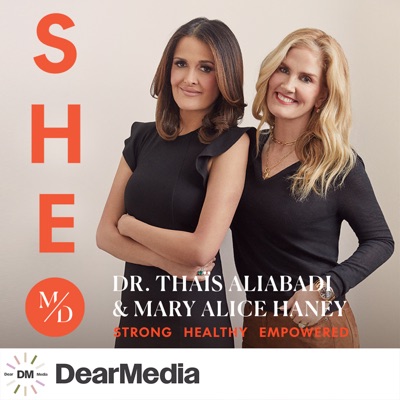
SHE MD is a weekly podcast hosted by world-renowned OBGYN, Dr. Thais Aliabadi, “Dr. A,” and women's advocate and influencer, Mary Alice Haney. Their candid conversations with celebrity guests and today's leading experts about women's health topics, such as menopause, endometriosis, PCOS, and fertility empower their audience with the knowledge and tools to become their own health advocates.

Dr. A and Mary Alice dive deep into critical health issues, offering women the knowledge and tools to become their best health advocates.

At SHE MD, we believe that every woman deserves access to the latest medical insights, personalized care strategies, and expert advice to navigate their health journey. From breaking down myths to providing practical tips, Dr. Aliabadi and Mary Alice Haney create a welcoming and informative space for women to take control of their health. The podcast features exclusive interviews with top-tier celebrity guests and leading experts across the medical, wellness, and health industries. Together, they explore real-world stories, struggles, and successes to ensure that every listener can feel heard and supported.

SHE MD aims to change that by providing a platform where women can receive trustworthy, expert advice on key health issues affecting their lives. Whether you’re dealing with painful menstrual cycles, navigating fertility challenges, or going through menopause, SHE MD brings clarity to these topics in a way that feels personal, approachable, and actionable. Dr. Thais Aliabadi provides expert insights into the most pressing women’s health issues, offering listeners a chance to learn from one of the leading voices in the field. Her knowledge is complemented by Mary Alice Haney's ability to relate to everyday challenges, offering a compassionate and approachable perspective on complex topics.

Meet the Hosts

Dr. Thais Aliabadi, "Dr. A"

Dr. Thais Aliabadi is a renowned board-certified OBGYN, known for her compassionate, patient-first approach. Specializing in fertility, high-risk pregnancies, menopause, and minimally invasive surgeries, Dr. A has spent her career guiding women through all stages of life. With experience treating high-profile patients and a commitment to public health education, she’s a trusted voice advocating for better healthcare access for women globally. Dr. Aliabadi frequently appears in major media to discuss key women’s health issues.

Mary Alice Haney

Mary Alice Haney is a prominent women's advocate and lifestyle influencer who empowers women to take control of their health and wellness. With a background in fashion and lifestyle, she brings a holistic approach to well-being. As co-host of SHE MD, Mary Alice fosters open, relatable conversations on often-overlooked women's health topics, helping women break down barriers and gain the knowledge they need to advocate for themselves. Her commitment to providing practical, actionable advice has made her a trusted figure in the health community.


Resources

SHE M/D- https://www.shemdpodcast.com

SHE M/D YouTube- https://www.youtube.com/@SHEMDPodcast

Instagram- https://www.instagram.com/shemdpodcast/

Mary Alice Haney Instagram- https://www.instagram.com/haneyofficial/

Dr A Instagram- https://www.instagram.com/drthaisaliabadi/

Tik Tok- https://www.tiktok.com/@shemdpodcast

Facebook- https://www.facebook.com/profile.php?id=61556530329981&sk=about

Twitter- https://x.com/shemdpodcast


#SHEMDPodcast #WomensHealth #HealthAdvocacy #DrThaisAliabadi #MaryAliceHaney #MenopauseMatters #EndometriosisAwareness #PCOS #FertilityJourney #OBGYN #HealthAndWellness #MedicalInsights #HealthEducation #EmpoweringWomen #HealthcareSelfAdvocacy #HealthTips #BreakingHealthMyths #WomenSupportingWomen #HealthJourney


137 Episodes
Reverse
She's 70 years old, holds a PhD she earned in her late 60s, and looks like she cracked the code on aging. But Dr. Catharine Arnston isn't selling a beauty secret she's sharing 17 years of research into two of the most scientifically documented superfoods on Earth: spirulina and chlorella.In this episode of SHE MD, Mary Alice Haney and Dr. Aliabadi sit down with Dr. Catharine Arnston, Chief Scientific Officer of ENERGYbits, for one of the most eye-opening conversations we've had on this show. It started with her sister's breast cancer diagnosis and a pivot away from a 25-year corporate career. What she found in the research changed everything she thought she knew about energy, brain health, aging, and women's bodies.This isn't wellness fluff. There are over 100,000 peer-reviewed studies on these two algae. NASA has been feeding them to astronauts for 50 years. The United Nations endorsed spirulina as the answer to world hunger. And yet most women in the Western world have never heard of them.Learn More Here: https://energybits.com/discount/SHEMD?rfsn=9096638.6abd9cc1&utm_source=refersion&utm_medium=affiliate&utm_campaign=9096638.6abd9cc1What You'll LearnWhy algae was the first life on Earth and why that matters for your bodyThe difference between macroalgae (seaweed, kelp) and microalgae (spirulina, chlorella)How spirulina creates cellular energy without the crash of caffeine or sugarWhat phycocyanin is and how this blue pigment behaves differently in healthy versus unhealthy cellsWhy mitochondria decline with age and how to protect them with nutritionThe role of superoxide dismutase (SOD) and why your body stops making it after age 30Why menopause damages women's mitochondria twice as fast as men'sHow chlorella detoxes heavy metals, glyphosate, aluminum, and other environmental toxinsWhy chlorella is essential for anyone on a GLP-1 or any weight loss journeyHow chlorella naturally supports serotonin, melatonin, sleep, and bowel motilityThe right dosage of each algae by age, condition, and time of dayWhy high heat in processing kills the benefits of most algae on the marketThe truth about excess stored iron, inflammation, and "rusting from the inside" after menopauseHow ENERGYbits are sourced in Taiwan in triple-filtered mountain spring waterHow to use algae for weight loss, sleep, brain fog, skin health, and longevityKey Timestamps00:00 Welcome Dr. Catharine Arnston & Why Algae Matters00:25 Catharine's Sister, Cancer, and the Origin of ENERGYbits01:49 Plant-Based Nutrition and the Otto Warburg Discovery02:46 Why People Don't Eat Vegetables (and What to Do About It)03:28 Why No One Knows About Algae Despite 100,000 Studies04:19 Why NASA Feeds Algae to Astronauts04:43 Algae Is Food, Not a Supplement06:45 "Aging Is Natural, Declining Is Not"07:08 Macroalgae vs. Microalgae Explained08:24 Why Lake & Ocean Algae Can Be Toxic09:27 Spirulina: Energy at the Cellular Level10:22 Why Algae Protein Beats Animal Protein10:49 Dosage 101: When and How Much to Take12:13 Phycocyanin: The Blue Pigment That Targets Unhealthy Cells14:34 The Electron Transport Chain & ATP (The "Ferrari" Analogy)15:48 Aging, Mitochondria & Cellular Decline16:13 Superoxide Dismutase (SOD): The Hidden Antioxidant17:53 Why Menopause Hits Women's Mitochondria Twice as Hard19:38 Brain Fog, Depression & Damaged Mitochondria20:37 Mary Alice's Family History & The Case for Prevention22:10 How Fast You'll Feel It & Mitochondrial DNA Regeneration23:16 Anti-Angiogenesis & Stopping Tumor Blood Supply24:10 Chlorella: The Body's Tow Truck for Toxins27:45 Chlorophyll, Hemoglobin & Building Your Blood28:35 Glutathione, Liver Health & Tryptophan29:03 Chlorella, Serotonin & Mood29:34 Chlorella for Bowel Motility30:25 The Athlete Protocol (NHL & NFL Dosing)31:12 Sleep, Melatonin & Why Chlorella Works at Night32:54 Chlorella for Chemotherapy Recovery36:01 Pricing, Daily Cost & the Discount Code36:45 Important: Talk to Your Oncologist Before Combining38:17 Algae for Weight Loss & GLP-1 Support40:32 Safety, Sourcing & Why ENERGYbits Are Grown in Taiwan42:20 Catharine's Trip to Taiwan & Why It Matters43:31 Excess Iron, Menopause & "Rusting From the Inside"46:07 Final Thoughts & Why Consistency Wins47:32 Absorption, Exosomes & Why Algae Works So Fast48:39 Dosage for Kids, Husbands & Pets49:41 Beauty Bits: The Pink Spirulina for Skin & Hair51:07 Mary Alice Starts Her Algae JourneyKey TakeawaysAging is natural, declining is notAlgae is food, not a supplement, so your body recognizes and absorbs it instantlySpirulina nourishes & energizes, chlorella detoxes & repairsYou need both algaes for different reasons, especially after 40Most brain issues trace back to damaged mitochondriaWomen lose antioxidant and hormone protection twice as fast as men in menopauseThe right dosage matters more than the right ingredientConsistency beats intensity, your body is not a light switchMost supplements are artificial, your body wastes up to 90% of themToxins live in your fat, so detoxing is part of any weight loss journeyThe science exists, the connection between scientists and women is what's missingMother Nature provided answers long before pharmaceutical companies didWhat you can't see at the cellular level is often what's hurting you mostGuest BioDr. Catharine Arnston is the founder and Chief Scientific Officer of ENERGYbits, the medical-grade algae company she launched 17 years ago after pivoting from a 25-year international corporate career to research plant-based nutrition for her sister, who had been diagnosed with breast cancer. Her research led her to spirulina and chlorella, two microalgae backed by more than 100,000 scientific studies, and to a mission of bringing clean, hand-sourced algae nutrition to women, families, and elite athletes around the world. Catharine earned her health coaching certificate from the Institute for Integrative Nutrition and went on to complete her PhD in her late 60s, becoming one of the most credentialed and outspoken advocates for algae nutrition in the world. Her upcoming book, Love Your Health to Bits with Algae, set for an October release, distills 17 years of research into accessible, "science with sarcasm" guidance for the everyday reader. Catharine lives by the philosophy that "aging is natural, declining is not" and is on a mission to make algae as common in the Western world as it has been in Asia for the past 60 years.See Privacy Policy at https://art19.com/privacy and California Privacy Notice at https://art19.com/privacy#do-not-sell-my-info.
In this special Mother’s Day episode of SHE MD, Kris Jenner sits down for a raw, emotional, and deeply insightful conversation about motherhood, resilience, and building a life you’re proud of. From raising six children to navigating divorce and launching a global empire at 52, Kris shares the real story behind the woman the world thinks it knows.The conversation dives into everything from her highly publicized hysterectomy and approach to proactive health, to how she built an unbreakable bond with her children. She opens up about the hardest moments of her life, how she pushed through them, and why surrounding yourself with strong women is one of the most important decisions you can make.This episode is ultimately about perspective: motherhood as a lifelong journey, success as something you build step by step, and the reminder that it’s never too late to start over. Whether you're a new mom, navigating a tough season, or redefining your purpose, Kris shares the mindset shifts that helped her turn challenges into opportunities and create a life filled with meaning, connection, and joy.Subscribe to SHE MD Podcast for expert tips on PCOS, endometriosis, fertility, hormonal balance, mental health, and more. Share with friends and visit SHE MD website and Ovii for research-backed resources, holistic health strategies, and expert guidance on women’s health and well-being.Sponsorships:Transcendental Meditation: Release stress at the root with a natural, effortless technique practiced 20 minutes twice a day. Visit tm.org to find a certified teacher near you and learn more about getting started.Babbel: Make fast, lasting progress on a new language with a science-backed app designed by over 200 language experts. Get up to 55% off your Babbel subscription at Babbel.com/SHEMD. Rules and restrictions may apply.OSEA: Clean, clinically tested, seaweed-powered body care made in Malibu — including the award-winning Undaria Algae Body Oil and the new Dream Bio-Retinol Body Serum. Get 10% off your first order sitewide with code SHEMD at OSEAMalibu.com.Midi Health: Specialized, virtual, expert care for women navigating perimenopause and menopause — created by women, for women. Book your virtual visit today at joinmidi.com.Momentous: Fiber Plus is a complete 3-in-1 formula with soluble fiber, insoluble fiber, and prebiotic resistant starch to support gut health from multiple angles. Get up to 35% off your first order with promo code SHEMD at livemomentous.com.Myriad Genetics: The MyRisk Hereditary Cancer Test with RiskScore can help you understand your risk for 11 different types of cancer, including breast and ovarian. Most patients face no out-of-pocket costs. Learn more at GetMyRisk.com and talk with your healthcare provider about whether the MyRisk test might be right for you.What You’ll LearnHow Kris approached her hysterectomy decision and why proactive health mattersThe difference between hysterectomy vs. ovary removal (and why it matters)How to navigate fear and uncertainty when it comes to your healthWhy financial independence and awareness are essential for womenHow to rebuild your life after divorce or a major life shiftThe mindset that helped Kris go from overwhelmed mom → global businesswomanHow to raise confident, ambitious, and emotionally connected childrenWhy being “friends” with your kids can actually strengthen your relationshipHow to balance motherhood and career (without sacrificing connection)The importance of female friendships and building a support systemWhy your 50s (and beyond) can be your most powerful eraHow to handle chaos, stress, and “fires” as a parentThe role of routine, discipline, and energy management in successKey Timestamps0:00 Introduction to SHE MD02:58 Introducing Kris Jenner — "America's Mother"07:57 Kris's Hysterectomy Story09:08 Why Postmenopausal Ovarian Cysts Matter11:39 Hysterectomy vs. Salpingo-Oophorectomy Explained13:25 Becoming a Mom (Six Times Over)16:48 From Stay-at-Home Mom to Working Mom19:28 Learning Financial Literacy After Divorce27:25 Confidence, Grandma's Candle Store & a Donut Shop30:20 Raising Strong Daughters by Example32:10 Pivotal Moments, Faith & "Show Me Who Your Friends Are"36:32 The Decision to Bring Cameras Into Their Lives39:36 The Stripper Pole Heard 'Round the World43:14 Turning Lemons Into Lemonade46:29 Kris's 4:30 AM Morning Routine55:00 The LA Fires: What She'd Grab From Her Closet57:12 Working With Family — No Boundaries, Just Love1:05:21 Advice for Moms Who Are Struggling1:11:13 It's Never Too Late1:13:31 Rapid Fire: The Daughters1:15:24 Khloé's Sneaky Side & Big Heart1:17:10 Facelifts, Peptides, Hormones & Supplements1:20:25 Strength Training, Pilates & Walking1:21:30 Non-Negotiables for Health: Get the Scan1:23:22 Protecting Mental Health & Brain Health1:25:32 A Mother's Day MessageKey TakeawaysEverything in life builds & no experience is wastedYou can start over at any age (Kris started her show at 52)Motherhood is not a phase, it’s a lifelong relationshipYour kids learn more from what you do than what you sayAdversity is inevitable & resilience is a skill you buildKeep your circle small, but meaningful and supportiveStrong female friendships are a lifelong lifelineIt’s okay to feel overwhelmed, those moments passPreparation (financial, emotional, physical) creates freedomSuccess comes from consistency, not perfectionHealth is non-negotiable. Don’t ignore warning signs!Loving yourself makes you a better parentGuest BioKris Jenner is a globally recognized businesswoman, producer, and media personality best known for building one of the most influential families and brands in modern pop culture. As the manager behind her children’s multi-billion-dollar ventures, Kris has redefined what it means to be both a mother and an entrepreneur.Kris turned a family reality show into a global empire, becoming a pioneer in personal branding, media, and business strategy. Beyond her professional success, she is a devoted mother of six and grandmother of thirteen, known for her unwavering commitment to family, resilience through adversity, and ability to lead with both strength and heartSee Privacy Policy at https://art19.com/privacy and California Privacy Notice at https://art19.com/privacy#do-not-sell-my-info.
In this episode of SHE MD, we sit down with entrepreneur and founder Emma Grede to unpack what it really takes to build success from the ground up. From growing up in East London to co-founding billion-dollar brands, Emma shares the unfiltered truth about ambition, confidence, and what actually creates success.We talk about the myths holding women back… from work-life balance pressure to money mindset, imposter syndrome, and the idea that you have to “feel ready” before you start. Emma breaks down why confidence isn’t something you wait for, it’s something you build through action, failure, and repetition. She also shares how motherhood, leadership, and building businesses all collide in real life, not the curated version we see online.Subscribe to SHE MD Podcast for expert tips on PCOS, endometriosis, fertility, hormonal balance, mental health, and more. Share with friends and visit SHE MD website and Ovii for research-backed resources, holistic health strategies, and expert guidance on women’s health and well-being.SponsorsPeloton: Let yourself run, lift, sculpt, push and GO. Explore the new Peloton Cross Training Tread+ at onepeloton.com David: Buy 4 cartons of Protein Bars and get the 5th free when you go to davidprotein.com/SHEMD. Kachava: Treat yourself to the flavor and nutrition your body craves. Go to kachava.com and use code SKINNY for 15% off your first order. Use code SHE MD at checkout. Prolon: For a limited time, Prolon is offering She MD listeners 15% off sitewide plus a $40 bonus gift when you subscribe to their 5-Day Program!Cotton: Learn more at TheFabricOfOurLives.com, and follow @discovercotton with the hashtag #ShopCotton.Sera: To learn more you can visit PreTRM.com talk with your provider about whether the PreTRM Test might be right for you.What You’ll LearnWhy confidence is built after you take action, not beforeThe real reason most people stay stuck (and how to break out of it)Why “work-life balance” might be holding you backThe mindset shift that helped Emma Grede build billion-dollar brandsHow to stop overthinking and start making real progressWhat actually matters when building a successful career in today’s worldThe truth about manifestation (and what works instead)How to develop resilience through failure, not avoid itWhat young professionals should focus on in the age of AIWhy your relationship with money can determine your futureKey Timestamps0:00 Introduction to SHE MD02:08 Meet Emma Grede02:31 Career, Motherhood and Reinvention04:08 Growing Up Without Traditional Path06:28 Finding Confidence at a Young Age08:19 Confidence Comes From Taking Action10:43 Manifestation vs Putting in Real Work12:26 Thinking in Long-Term 10 Year Goals13:19 Taking Ownership of Your Success14:44 Managing Emotions and Fear in Business20:42 The Journey to Building Good American22:29 Spotting Opportunities Others Don’t See23:37 When Selling Out Becomes a Problem25:18 Fixing Mistakes and Listening Customers26:43 How AI Is Changing Work Today28:20 Skills That Matter More Than Ever30:55 Why Women Need Better Money Mindset42:47 The Failure That Changed Everything49:25 What’s Next for Emma GredeKey TakeawaysSuccess comes from repetition, failure, and learning. Not perfection!Most fear is self-created and doesn’t reflect realityAmbition without action leads nowhere. Execution is everything!Curiosity and adaptability are more valuable than expertise todayBuilding a strong reputation creates opportunities money can’t buyCommunity and connection are powerful drivers of business successThe biggest breakthroughs happen when you get out of your own wayGuest BioEmma Grede is an entrepreneur, investor, and business leader known for building and scaling globally recognized brands across fashion and consumer goods. Raised in East London and largely self-made, she began working at a young age and built her career from the ground up, eventually launching multiple successful companies and achieving several exits before the age of 31. She is the co-founder and CEO of Good American and a founding partner of SKIMS, with a track record rooted in understanding customers, building community, and executing at a high level. A mother of four, Emma is known for her candid perspective on ambition, leadership, and modern work, and continues to champion a practical, action-driven approach to success.See Privacy Policy at https://art19.com/privacy and California Privacy Notice at https://art19.com/privacy#do-not-sell-my-info.
If you’re constantly bloated, tired, or struggling with hormone imbalances, your gut might be the missing piece. In this episode of SHE MD, we sit down with double board-certified physician Dr. Amy Shah to break down the powerful connection between gut health, hormones, metabolism, and brain function, and why so many women are overlooking it. From IBS and SIBO to PCOS and endometriosis, this conversation reveals how inflammation and gut imbalance can silently drive so many common symptoms.Dr. Shah shares her simple, science-backed “30-30-3” framework (30g of protein at your first meal, 30g of fiber daily, and 3 probiotic foods) to help you rebuild your microbiome and feel better fast. We also dive into the truth about probiotics, why fiber is essential (and why most people aren’t getting enough), and how everyday habits like sleep, sunlight, and movement can dramatically improve your gut health.Plus, we cover magnesium for stress and sleep, the role of antibiotics, how to approach SIBO and elimination diets, and the easiest (and most overlooked) ways to support your brain and body long-term. If you’ve been feeling off and can’t figure out why, this episode will give you actionable steps to start healing from the inside out.Subscribe to SHE MD Podcast for expert tips on PCOS, endometriosis, fertility, hormonal balance, mental health, and more. Share with friends and visit SHE MD website and Ovii for research-backed resources, holistic health strategies, and expert guidance on women’s health and well-being.SponsorsMidi: Ready to feel your best and write your second act script? Visit JoinMidi.com today to book your personalized, insurance-covered virtual visit. Talkiatry: Head to Talkiatry.com/shemd and complete the short assessment to get matched with an in-network psychiatrist in just a few minutes. Premier Protein: Find your favorite flavor at PremierProtein.com or at Amazon, Walmart, and other major retailers.Myriad: List GetMyRisk.com to learn more about hereditary cancer testing and how you can use Myriad’s virtual care option for fast, at-home testing - no office visit required. UnF*ck Your Brain: Listen to UnF*ck Your Brain wherever you get your podcasts. What You’ll LearnThe gut-hormone connection (and why it affects everything)Dr. Shah’s “30-30-3” method for better healthWhy 95% of people aren’t eating enough fiberThe difference between probiotics and prebioticsHow antibiotics impact your gut microbiomeSigns of SIBO and gut imbalanceHow gut health affects mood, anxiety, and brain functionThe best foods to support your microbiomeWhy walking is one of the best things you can do for your brainHow magnesium supports sleep, stress, and hormone healthKey Timestamps(0:00) Introduction to SHE MD(2:19) Welcome, Dr. Amy Shah!(6:23) Why Gut Health Matters(9:02) Best High-Fiber Foods(10:37) The 30-30-3 Rule Explained(16:52) Apple Cider Vinegar Benefits(22:00) Prebiotics vs Probiotics(24:19) SIBO, Hormones & Gut Inflammation Explained(30:07) Gut Health & Antibiotics Impact(36:00) Organic vs Non-Organic Foods(40:50) Magnesium Benefits, Foods, Supplements & Sleep Support(45:19) Walking for Brain Health(46:39) Top 5 Health Habits for Women(47:52) Top 5 Foods(49:27) Where to Find Dr. Amy ShahKey TakeawaysGut health is directly tied to hormones, metabolism, and brain healthFiber is essential and most people are severely deficientYou can’t out-supplement a poor diet (food first always wins)Probiotics alone won’t fix your gut—lifestyle matters moreInflammation is the root cause linking many chronic conditionsStart small… Gradually increase fiber to avoid digestive issuesExercise, sleep, and sunlight are just as important as nutritionSimple daily habits can dramatically shift your health in daysHealing your gut often improves symptoms you didn’t realize were connectedGuest BioDr. Amy Shah is a double board-certified physician in allergy, immunology, and internal medicine, trained at Cornell, Columbia, and Harvard. She is a leading voice in gut health, nutrition, and women’s wellness, known for translating complex science into practical, everyday strategies. After experiencing her own health struggles, she shifted her focus to lifestyle medicine and has since helped millions optimize their energy, metabolism, and hormones through diet and simple daily habits. She is also the bestselling author of I’m So Effing Tired and I’m So Effing Hungry.See Privacy Policy at https://art19.com/privacy and California Privacy Notice at https://art19.com/privacy#do-not-sell-my-info.
Disclaimer: This interview includes in-depth discussions of serious mental health topics, such as personality disorders and other highly sensitive subjects. These topics may be distressing or triggering for some listeners.In this episode of SHE MD, Mary Alice Haney and Dr. Thaïs Aliabadi sit down with Dr. Suzanne Wallach, a leading expert in Dialectical Behavior Therapy (DBT), to unpack what every woman should understand about emotional regulation, trauma, and personality disorders. From the difference between borderline personality disorder, bipolar disorder, and narcissism to the real signs of emotional dysregulation, this conversation brings clarity to topics that are often misunderstood and misdiagnosed.Dr. Wallach breaks down how trauma shapes behavior, why narcissists rarely seek help, and what narcissistic abuse and gaslighting actually look like in relationships. The conversation also explores how to recognize unhealthy patterns, why you should never stay in a relationship where you’re being disrespected, and how emotional overwhelm impacts your ability to think clearly or problem-solve in the moment.You’ll also learn practical, science-backed tools you can start using immediately, including DBT techniques like the TIPP method for panic attacks and emotional distress. The episode expands into parenting and generational trauma, offering insight on how to raise emotionally healthy children through validation, boundaries, and consistency. If you’ve ever struggled with your emotions, relationships, or mental health, this episode is filled with actionable strategies to help you regain control and build a more stable, grounded life.Subscribe to SHE MD Podcast for expert tips on PCOS, endometriosis, fertility, hormonal balance, mental health, and more. Share with friends and visit SHE MD website and Ovii for research-backed resources, holistic health strategies, and expert guidance on women’s health and well-being.SponsorsMidi: Ready to feel your best and write your second act script? Visit JoinMidi.com today to book your personalized, insurance-covered virtual visit. Ka'Chava: Get 15% off your first order at kachava.com with code SHEMD.Talkiatry: Head to Talkiatry.com/shemd and complete the short assessment to get matched with an in-network psychiatrist in just a few minutes. Ancient + Brave: Go to Ancientandbrave.com/planet and use the code SHEMD for 10 dollars off any purchase. MudWtr: Head to mudwtr.com and grab your starter kit today! Right now, our listeners get an exclusive deal—up to 43% off starter kits, plus free shipping and a free rechargeable frother when you use code SHEMD.Gusto: Try Gusto today at gusto.com/SHEMD, and get three months free when you run your first payroll.What You’ll LearnThe difference between borderline personality disorder (BPD), bipolar disorder, and narcissismWhy narcissists rarely self-diagnose, and why they’re difficult to treatSigns you may be experiencing emotional dysregulation or unresolved traumaWhat narcissistic abuse and gaslighting actually look likeWhy BPD is often misdiagnosed as bipolar disorderThe role of childhood trauma in personality disordersHow to tell if someone is a narcissist. or just not treating you wellWhy you should never stay in a relationship where you’re being disrespectedThe DBT “TIPP” method for panic attacks and emotional overwhelmHow to lower distress quickly and regain control of your thoughtsWhy you can’t problem-solve while emotionally floodedThe importance of sleep, nutrition, and physical health in emotional regulationHow to raise emotionally healthy children without shame or overpraiseWhy validation and boundaries must coexist in parentingHow generational trauma develops, and how to break the cycleKey Timestamps(0:00) Introduction to SHE MD(3:16) Welcome Dr. Suzanne Wallach!(4:54) What Is Narcissism?(6:36) Is Narcissism Based On Childhood Trauma?(8:27) Borderline Personality Disorder vs Narcissism?(12:41) Borderline vs Dependent Personality Disorder(13:37) Cluster B Disorders: Higher Risk of Self-Harm & Suicide(14:05) Women Are Overdiagnosed With Personality Disorders(15:58) Many Therapists Avoid Treating Borderline Personality Disorder(22:15) DBT Skills Coaching: 24/7 Support in Crisis Moments(23:36) Thoughts vs Ideation(27:00) How Dr. Suzanne Handle Patients With Suicide Plans(30:29) Does Trauma Come First in Treating Cluster B Disorders(37:35) How to Avoid Raising a Narcissist as a Parent(38:20) Praise Parenting: Where’s the Healthy Balance?(42:24) Opposite Parenting Styles After Divorce(48:01) Should Trauma Be the First Focus in Treating DBT?(58:54) How to Recognize BPD or Narcissism: Key Signs & Diagnosis(1:02:44) What Is Bipolar Disorder?(1:04:40) Bipolar vs BPD: Genetics vs Trauma(1:05:05) The TIPP Skill(1:13:45) Rapid Fire QuestionsKey TakeawaysYou can’t think clearly during emotional distress. Regulation must come firstPersonality disorders are treatable, and many can go into remissionTrauma often drives behavior, but it doesn’t excuse staying in harmful situationsEmotional regulation is a skill that can be learned with the right toolsBoundaries are essential, even when you understand someone’s painParenting requires both emotional validation and consistent consequencesSmall daily tools (like breathing or cold exposure) can dramatically reduce anxietyGuest BioDr. Suzanne Wallach is a clinical psychologist and DBT specialist based in Los Angeles. She is the founder of SoCal DBT, where she and her team provide high-fidelity, evidence-based Dialectical Behavior Therapy for individuals, couples, and families. Her work focuses on helping patients regulate emotions, heal from trauma, and build healthier relationships through practical, science-backed tools.See Privacy Policy at https://art19.com/privacy and California Privacy Notice at https://art19.com/privacy#do-not-sell-my-info.
In this episode of SHE MD, Mary Alice Haney sits down with preventative neurologist Dr. Kellyann Niotis to unpack what every woman needs to know about brain health, memory, and dementia prevention. From understanding the difference between normal forgetfulness and early warning signs to breaking down how working memory changes with age, this conversation offers clarity, reassurance, and actionable insight. Dr. Niotis explains why women are disproportionately affected by Alzheimer’s disease and how factors like hormones, genetics, and lifestyle all play a role.They explore the most powerful, research-backed ways to protect your brain, starting with the basics: sleep, exercise, nutrition, and stress management. You’ll learn why strength training is critical for long-term brain health, how the Mediterranean diet can reduce dementia risk by up to 35%, and why your genes are not your destiny, even if you carry high-risk markers like APOE4. The episode also dives into mental health, social connection, and the surprising link between hearing loss and cognitive decline.Dr. Niotis shares what actually works (and what doesn’t) when it comes to supplements, brain games, and trending “quick fixes,” along with emerging research on medications, biomarkers, and preventative care. If you want to stay sharp, protect your memory, and take control of your long-term brain health, this episode is filled with practical tools you can start using today.Subscribe to SHE MD Podcast for expert tips on PCOS, endometriosis, fertility, hormonal balance, mental health, and more. Share with friends and visit SHE MD website and Ovii for research-backed resources, holistic health strategies, and expert guidance on women’s health and well-being.SponsorsMidi: Ready to feel your best and write your second act script? Visit JoinMidi.com today to book your personalized, insurance-covered virtual visit. Myriad: List GetMyRisk.com to learn more about hereditary cancer testing and how you can use Myriad’s virtual care option for fast, at-home testing - no office visit required. Osea: Get 10% off your first order sitewide with code SHEMD at oseamalibu.com. Momentus: Get up to 35% off your first order at livemomentous.com with code SHEMD.Ka'Chava: Get 15% off your first order at kachava.com with code SHEMD.What You’ll LearnThe difference between normal forgetfulness and early signs of dementiaWhy working memory declines and how to support itHow sleep quality (not just quantity) impacts brain healthThe best types of exercise for protecting your brain long-termWhy strength training is critical (and often overlooked) for womenHow the Mediterranean diet can reduce dementia risk by up to 35%The connection between hormones, perimenopause, and brain healthWhy women are more affected by Alzheimer’s disease than menHow stress, isolation, and mental health impact cognitive declineThe truth about supplements, nootropics, and “brain boosters”How alcohol, marijuana, and emerging therapies affect the brainWhy hearing loss is a major (and surprising) risk factor for dementiaThe role of biomarkers, genetics, and preventative testingKey Timestamps(0:00) Introduction to SHE MD(3:47) Meet Dr. Kellyann Niotis (Brain Health Expert)(5:01) Genetics, Risks, and APOE4(8:34) Brain Diseases: Alzheimer’s vs Parkinson’s vs ALS(10:28) How Doctors Assess Brain Health Risk(12:01) Sleep & Brain Health(19:05) Best Type of Exercise for Your Brain(29:05) Nutrition & The Mediterranean Diet(29:50) Alcohol, Marijuana & Brain Impact(33:53) GLP-1s & Brain Health Benefits(36:37) Mental Health, SSRIs & Dementia Risk(39:17) Why Women Are More Affected(43:31) Memory Loss vs Normal Forgetfulness(45:13) Hormone Therapy & Brain Health(49:19) Supplements That Actually Help(51:58) Omega-3 Testing & Recommendations(57:38) Is There a Dementia Epidemic?(1:00:59) Working Memory Explained(1:02:45) Rapid Fire Questions(1:06:11) Audience Q&A (Prevention, Diet, Memory)(1:08:06) Future of Brain Health & New Research(1:10:23) Where to Find Dr. NiotisKey TakeawaysYour genes are not your destiny. Lifestyle plays a major role in brain healthSleep, exercise, diet, and social connection are the most powerful prevention toolsStrength training is just as important as cardio for cognitive healthChronic stress and poor sleep are both highly damaging to the brainHormonal changes in perimenopause may increase dementia risk in womenBrain games alone won’t prevent dementia, holistic lifestyle changes are keyEven small improvements in daily habits can significantly reduce riskPrevention is currently the most effective strategy against neurodegenerative diseaseGuest BioDr. Kellyann Niotis is a leading expert in preventative neurology and brain health. She specializes in identifying early risk factors for neurodegenerative diseases like Alzheimer’s and Parkinson’s and helping patients take proactive steps to protect their cognitive health. Through her research and clinical work, she focuses on translating cutting-edge science into practical, everyday strategies for long-term brain optimization.See Privacy Policy at https://art19.com/privacy and California Privacy Notice at https://art19.com/privacy#do-not-sell-my-info.
In this episode of SHE MD, Mary Alice Haney sits down with Jessie Inchauspé, also known as the Glucose Goddess, to break down the powerful role blood sugar plays in your energy, hormones, mood, and overall health. Jessie explains what glucose actually is, why spikes and crashes lead to cravings, fatigue, and inflammation, and how simple, science-backed habits can help you feel better without restrictive dieting.They walk through easy, actionable “glucose hacks,” including why a savory breakfast is key, how the order you eat your food can reduce spikes by up to 75%, and simple habits like walking after meals or using vinegar to stabilize blood sugar. The conversation also explores how glucose impacts women’s health, including perimenopause and menopause, and why blood sugar becomes harder to manage as hormones shift.Jessie also shares insights from her new book, ‘The Nine Months That Count Forever,’ revealing how nutrition during pregnancy directly shapes a baby’s brain, metabolism, and long-term health. She highlights critical nutrients like protein and choline, nutrients that up to 90% of pregnant women are missing, and explains how small dietary changes can make a lifelong difference.Subscribe to SHE MD Podcast for expert tips on PCOS, endometriosis, fertility, hormonal balance, mental health, and more. Share with friends and visit SHE MD website and Ovii for research-backed resources, holistic health strategies, and expert guidance on women’s health and well-being.SponsorsProlon:  For a limited time, Prolon is offering She MD listeners15% off sitewide plus a $40 bonus gift when you subscribe to their 5-Day Program!R+Co:  Visit randco.com and use code SheMD20 at checkout for 20% off your first purchase. Use code SheMD20 for 20% off your first orderTalkiatry: Head to Talkiatry.com/shemd and complete the short assessment to get matched with an in-network psychiatrist in just a few minutes. Premier Protein: Find your favorite flavor at PremierProtein.com or at Amazon, Walmart, and other major retailers.Ancient + Brave: Go to Ancientandbrave.com/planet and use the code SHEMD for 10 dollars off any purchase. Care.com: Start your senior care journey with confidence. When it’s not you, it’s Care.com. For a limited time, go to Care.com and use code SHEMD for 20% off of your initial care.com subscription or a Senior Care Advisor Plan.What You’ll LearnWhat glucose is and why it’s your body’s primary energy sourceWhat causes blood sugar spikes and why they lead to crashes, cravings, and fatigueWhy a sweet breakfast sets you up for a full day of sugar cravingsThe simple “food order” hack that can reduce glucose spikes by up to 75%How walking or moving after meals helps stabilize blood sugarWhy vinegar before meals can significantly reduce glucose spikesHow blood sugar impacts hormones, mood, inflammation, and agingWhy glucose regulation becomes more important during perimenopause and menopauseThe connection between blood sugar and mental health, including anxiety and brain fogHow nutrition during pregnancy shapes a baby’s brain, metabolism, and long-term healthWhy most pregnant women are deficient in key nutrients like protein and cholineHow to optimize your diet before and during pregnancy for better outcomesKey Timestamps(00:00) Introduction to SHE MD(02:16) Meet The Glucose Goddess Story(04:48) How A Glucose Monitor Changed Everything(06:49) What Glucose Really Does In Your Body(08:36) Why Glucose Spikes Are Dangerous(10:54) The Powerful Savory Breakfast Hack(12:23) The Truth About Fruit And Sugar(13:39) Why Orange Juice Is Misleading(15:05) How Morning Sugar Ruins Your Day(16:21) The Food Order Hack Explained(17:51) Vinegar Trick To Reduce Spikes(27:22) How Glucose Impacts Your Sleep(29:15) The Truth About Intermittent Fasting(32:49) What GLP-1 Drugs Really Do(35:40) Blood Sugar And Mental Health Link(40:16) The Truth About Pregnancy Nutrition(59:51) Top Glucose Hacks To Start TodayKey TakeawaysGlucose is your body’s primary source of energy, but spikes and crashes can negatively impact your mood, energy, hormones, and long-term health.A sweet breakfast leads to a glucose spike and crash, increasing cravings and fatigue throughout the day.Eating foods in the right order… vegetables first, then protein, then carbs… can reduce glucose spikes by up to 75%.Simple habits like walking after meals or drinking vinegar before carbs can significantly stabilize blood sugar.Blood sugar regulation becomes more difficult during perimenopause and menopause, making these strategies even more important.Nutrition during pregnancy directly impacts a baby’s brain development, metabolism, and lifelong health.Choline and protein are critical nutrients during pregnancy, yet most women are not getting enough.Blood sugar stability is a powerful, immediate lever to improve energy, reduce cravings, and support overall health.Guest BioJessie Inchauspé, also known as the Glucose Goddess, is a French biochemist, bestselling author, and founder of the Glucose Goddess movement. With a background in mathematics and biochemistry, she is dedicated to translating complex science into simple, actionable tools to help people improve their metabolic health. Her books, including ‘Glucose Revolution’ and ‘The Glucose Goddess Method,’ have sold millions of copies worldwide, and she reaches over 7 million people across her platforms with practical strategies to balance blood sugar, improve energy, and support overall well-being.See Privacy Policy at https://art19.com/privacy and California Privacy Notice at https://art19.com/privacy#do-not-sell-my-info.
In this episode of SHE MD, Mary Alice Haney sits down with Dr. Thaïs Aliabadi to break down endometriosis, an often misunderstood condition that goes far beyond painful periods. Dr. A explains why endometriosis is a systemic inflammatory disorder, the wide range of symptoms it can cause, and why so many patients are dismissed or misdiagnosed for years before getting answers.They discuss how endometriosis presents, from chronic pelvic pain and bloating to bladder, bowel, and even mental health symptoms, and why it can’t reliably be detected through standard imaging. Dr. A also covers how the condition can impact fertility, ovarian reserve, and overall quality of life if left untreated.The episode also walks through treatment options, including hormonal therapies, IUDs, medications that suppress estrogen, and the importance of finding a highly trained surgeon for laparoscopic excision. This conversation offers both validation and clear guidance for anyone struggling with symptoms and looking for real answers.Subscribe to SHE MD Podcast for expert tips on PCOS, endometriosis, fertility, hormonal balance, mental health, and more. Share with friends and visit SHE MD website and Ovii for research-backed resources, holistic health strategies, and expert guidance on women’s health and well-being.SponsorsPremier Protein: Find your favorite flavor at PremierProtein.com or at Amazon, Walmart, and other major retailers. Butcherbox: As an exclusive offer, new listeners can get their choice between chicken breast or top sirloin for a year OR  ground beef for life, PLUS $20 off when you go to ButcherBox.com/shemdMill: Try Mill risk-free for 90 days and get $75 off at mill.com/SHEMD and use code SHEMD at checkout.Myriad: List GetMyRisk.com to learn more about hereditary cancer testing and how you can use Myriad’s virtual care option for fast, at-home testing - no office visit required. Gusto: Try Gusto today at gusto.com/sheMD, and get three months free when you run your first payroll. That’s three months of free payroll at gusto.com/sheMD.Ancient + Brave: Go to Ancientandbrave.com/planet and use the code SHEMD for 10 dollars off any purchase. What You’ll LearnWhy painful periods are not normal, and when to take them seriouslyThe most common (and often overlooked) symptoms of endometriosisWhy it can take up to a decade to get properly diagnosedHow endometriosis affects the gut, brain, and mental healthThe connection between endometriosis and infertilityWhy ultrasounds and tests often miss endometriosisThe difference between hormonal treatments and surgical optionsHow to advocate for yourself and find the right specialistKey Timestamps(0:00) Introduction to SHE MD(2:33) What Is Endometriosis?(4:33) Key Symptoms You Shouldn’t Ignore(7:58) Stages of Endometriosis Explained(8:53) What Causes Endometriosis?(13:10) Painful Sex Explained(23:56) How Do You Treat Endometriosis?(26:18) Stromal Endometriosis Explained(28:05) Understanding Endometriosis Treatment Options(37:50) Why Removing Endometriosis Helps Fertility(40:09) What Happens During Perimenopause and Menopause(47:47) How Tamoxifen Affects Endometriosis(49:14) Questions From ListenersKey TakeawaysEndometriosis is a systemic inflammatory condition, not just a reproductive issue.Pain is the most common symptom, including painful periods, sex, bowel movements, and urination.Many patients are misdiagnosed with IBS, anxiety, or “normal cramps” before receiving the correct diagnosis.Diagnosis often takes 9-11 years due to lack of awareness and limitations in imaging.Endometriosis can impact fertility by affecting egg quality, ovarian reserve, and the pelvic environment.Laparoscopic excision surgery is the gold standard for treatment, but requires a highly trained specialist.Hormonal treatments, including progestin IUDs and medications that suppress estrogen, can help manage symptoms.Early diagnosis and treatment are critical to prevent disease progression and long-term complications.See Privacy Policy at https://art19.com/privacy and California Privacy Notice at https://art19.com/privacy#do-not-sell-my-info.
In this episode of SHE MD, Mary Alice Haney and Dr. Thaïs Aliabadi sit down with colorectal surgeon Dr. Beth Moore to talk about colon cancer, colonoscopies, and the importance of screening. Dr. Moore explains how colon cancer develops, why it affects women just as much as men, and why most people diagnosed with colon cancer do not have a family history of the disease.The conversation breaks down how colonoscopies work and why they remain the gold standard for screening. Dr. Moore also explains the different types of colon polyps, what symptoms to watch for, and how colon cancer is staged and treated depending on how advanced it is.They also discuss lifestyle risk factors, newer screening options like Cologuard and virtual colonoscopy, and emerging topics including GLP-1 medications and digestive health. This episode offers clear, practical information to help women better understand colon cancer risk, screening options, and why early detection is so important.To learn more about MyRisk, visit this link: https://myriad.com/genetic-tests/myrisk-hereditary-cancer-risk-test/Subscribe to SHE MD Podcast for expert tips on PCOS, endometriosis, fertility, hormonal balance, mental health, and more. Share with friends and visit SHE MD website and Ovii for research-backed resources, holistic health strategies, and expert guidance on women’s health and well-being.SponsorsPremier Protein: Find your favorite flavor at PremierProtein.com or at Amazon, Walmart, and other major retailers. R+Co: Visit randco.com and use code SheMD20 at checkout for 20% off your first purchase. Use code SheMD20 for 20% off your first orderMidi: Ready to feel your best and write your second act script? Visit JoinMidi.com today to book your personalized, insurance-covered virtual visit. Peloton: Let yourself run, lift, sculpt, push and GO. Explore the new Peloton Cross Training Tread+ at onepeloton.com Warby Parker: Our listeners get 15%+ free shipping when they buy 2 or more pairs of prescription glasses at WarbyParker.com/SHEMD Babbel: Get up to 60% off your Babbel subscription at Babbel.com/SHEMD What You’ll LearnWhy colon cancer affects women just as much as menHow colonoscopies can actually prevent colon cancerThe symptoms of colon cancer you should never ignoreWhy most colon cancer cases occur without a family historyThe biggest lifestyle risk factors for colon cancerThe truth about Cologuard and other screening alternativesHow GLP-1 medications may impact digestive health and cancer riskWhat your bowel habits can reveal about your healthKey Timestamps(00:00) Introduction to SHE MD(01:23) Colon Cancer Affects Women Too(02:16) Personal Story: Losing a Grandfather to Colon Cancer(03:08) Meet Colorectal Surgeon Dr. Beth Moore(05:15) What the Colon Actually Does(05:44) How Colon Cancer Starts (Polyps Explained)(06:25) Colon Cancer Stages Explained (1–4)(09:27) Immunotherapy: A Breakthrough in Colon Cancer Treatment(10:08) Why Colonoscopies Can Prevent Cancer(12:26) Colonoscopy Prep: What to Expect(18:27) What Happens During a Colonoscopy(20:33) Early Warning Signs of Colon Cancer(42:13) Cologuard Test: Does the “Poop Test” Really Work?(58:16) HIPEC Surgery: Heated Chemotherapy Explained(1:05:24) How Often You Should Actually PoopKey TakeawaysColon cancer is the third most common cancer in women.Nearly 80% of colon cancer cases occur without a family history.Colonoscopies not only detect cancer but prevent it by removing precancerous polyps.Screening should begin at age 45, or earlier for higher-risk individuals.Lifestyle factors such as diet, obesity, alcohol, smoking, and low fiber intake can increase colon cancer risk.Paying attention to symptoms like rectal bleeding, changes in bowel habits, or unexplained weight loss is important.Preventive screening and early detection dramatically improve survival rates.Guest BioDr. Beth A. Moore is a colon and rectal surgeon in West Hollywood, California, affiliated with Cedars-Sinai Medical Center. She received her medical degree from the Lewis Katz School of Medicine at Temple University and has been in practice for more than 20 years. She has expertise in treating colonoscopies, colon removal, and other conditionsSee Privacy Policy at https://art19.com/privacy and California Privacy Notice at https://art19.com/privacy#do-not-sell-my-info.
In this episode of SHE MD, Mary Alice Haney and Dr. Thaïs Aliabadi sit down with Dr. Steven Storage to unpack one of the most common mental health misdiagnoses affecting women today: ADHD being mistaken for anxiety or depression. Dr. Storage explains why ADHD is often overlooked in girls and women, and how many patients spend years being treated for anxiety before discovering the real cause of their symptoms.The conversation explores how ADHD can present differently in women, including emotional overwhelm, chronic stress, brain fog, and difficulty focusing. Dr. Storage also discusses the role of brain imaging in ADHD diagnosis and how different brain patterns may require different treatment approaches, highlighting why traditional symptom checklists often miss the full picture.They also discuss how hormonal changes, especially during perimenopause, can intensify ADHD symptoms, which is why many women first seek answers later in life. This episode sheds light on the importance of accurate diagnosis and brain-based approaches to better support women navigating ADHD.Subscribe to SHE MD Podcast for expert tips on PCOS, endometriosis, fertility, hormonal balance, mental health, and more. Share with friends and visit SHE MD website and Ovii for research-backed resources, holistic health strategies, and expert guidance on women’s health and well-being.SponsorsPremier Protein: Find your favorite flavor at PremierProtein.com or at Amazon, Walmart, and other major retailers. R+Co:  Visit randco.com and use code SheMD20 at checkout for 20% off your first purchase. Use code SheMD20 for 20% off your first orderButcherBox: As an exclusive offer, new listeners can get their choice between organic ground beef, chicken breast or ground Tucker in every box for a year, PLUS $20 off when you go to ButcherBox.com/SHEMDPique Tea:  Redefine your standard of health. Secure 20% off your order and begin your intentional wellness journey today at Piquelife.com/shemd. Bobbie:  If you want to feed with confidence too, head to hibobbie.com - to the formula trusted by parents and loved by their babies - 700k and counting. Myriad:  GetMyRisk.com to learn more about hereditary cancer testing and how you can use Myriad’s virtual care option for fast, at-home testing - no office visit required. What You’ll LearnWhy ADHD is so often misdiagnosed as anxiety or depression in womenThe key differences between ADHD and anxiety symptomsWhy many women are diagnosed with ADHD later in lifeHow hormonal shifts like perimenopause can worsen ADHD symptomsHow brain imaging may help identify different types of ADHDKey Timestamps(0:00) Introduction to SHE MD(03:09) What ADHD Actually Is (And Why the Name Is Misleading)(07:05) ADHD in Women: Why It’s Often Missed or Misdiagnosed(11:35) The ADHD Brain Explained: Dopamine & the Prefrontal Cortex(18:08) ADHD Medications: Stimulants vs Non-Stimulants Explained(21:28) ADHD vs Bipolar Disorder: Why Misdiagnosis Happens(30:12) The 7 Different Types of ADHD(39:12) Alcohol, Cannabis & the ADHD Brain(45:46) How to Naturally Increase Dopamine(47:45) Sleep, Exercise & Diet for ADHD Brain Health(57:10) Perimenopause, Hormones & ADHD Symptoms in Women(01:03:30) ADHD During Pregnancy & Natural Treatment Strategies(01:12:30) Final Thoughts: Rethinking ADHD & Brain HealthKey TakeawaysADHD in women is frequently misdiagnosed as anxiety or depression.Symptoms can present differently in women, often showing up as overwhelm, brain fog, and emotional dysregulation rather than hyperactivity.Hormonal changes, particularly during perimenopause, can make ADHD symptoms significantly worse.Traditional diagnostic methods may overlook ADHD, especially in adults.Brain imaging may help identify different ADHD patterns and support more personalized treatment.Guest BioDr. Steven Storage is a board-certified psychiatrist specializing in brain health and ADHD in both adults and children. His work focuses on helping patients who are often overlooked or misdiagnosed better understand the root causes of their symptoms. Using a comprehensive, brain-based approach, he works with patients to identify patterns in attention, mood, and behavior and develop more personalized treatment strategies.See Privacy Policy at https://art19.com/privacy and California Privacy Notice at https://art19.com/privacy#do-not-sell-my-info.
In this episode of SHE MD, Mary Alice Haney and Dr. Aliabadi sit down with Hailey Bieber to discuss a terrifying health scare at 25. She experienced a TIA (mini-stroke) with classic stroke symptoms, and the chain of testing that led to finding (and closing) a PFO.Hailey also shares how her pregnancy was a surprise. It was complicated by a uterine septum and conversations about miscarriage risk. She explains how her care team monitored her for preterm risk.Hailey discuss induction tools like the Foley balloon, how she handled the epidural, and what it felt like when she couldn’t stop bleeding after delivery. Dr. Aliabadi breaks down postpartum hemorrhage and the Jada device that was used to stop it quickly.They also cover postpartum life, including anxiety, pumping/breastfeeding, PMDD months later, postpartum rehab (including pelvic floor therapy), and Hailey’s approach to balancing motherhood with building her company.Subscribe to SHE MD Podcast for expert insight on women’s heart health, stroke warning signs, and what to know about PFOs, plus real talk on pregnancy risk, labor and delivery, postpartum hemorrhage, PMDD, and recovery after birth. Share this episode with a friend, and visit the SHE MD website and Ovii for research-backed resources, practical guidance, and expert support for women’s health and well-being.Sponsors:Premier Protein: Find your favorite flavor at PremierProtein.com or at Amazon, Walmart, and other major retailers.Gusto: Try Gusto today at gusto.com/sheMD, and get three months free when you run your first payroll. That’s three months of free payroll at gusto.com/sheMD.Care.com: Start your senior care journey with confidence. When it’s not you, it’s Care.com. For a limited time, go to Care.com and use code SHEMD for 20% off your initial Care.com subscription or a Senior Care Advisor Plan.Osea: She MD listeners get 10% off your first order site wide with code SHEMD at OSEAMalibu.comMidi: Ready to feel your best and write your second act script? Visit JoinMidi.com today to book your personalized, insurance-covered virtual visit.What You’ll Learn: What a TIA can look like at 25, and the stroke symptoms Hailey experienced What a PFO is, why it can be missed on early testing, and how closure works What a uterine septum is, and why 3D imaging can matter for diagnosis How preterm-risk screening was explained, plus the monitoring/support plan discussed What postpartum hemorrhage can feel like in real time, and how rapid intervention can change outcomesKey Timestamps:(01:51) Hailey joins the show + why she wanted to share her story(03:41) The TIA at 25 and the stroke symptoms she experienced(05:20) PFO basics and why the first bubble study missed it(06:33) PFO closure surgery and how the closure device works(11:06) “Let’s move on to the pregnancy” and why it was a surprise(12:11) What a uterine septum is and the miscarriage risk discussed(14:03) Why septums get missed on ultrasound and why 3D imaging matters(15:30) The preterm blood test explained and what it measures(16:59) What happens if you test high-risk, including progesterone, aspirin, and closer monitoring(27:03) Induction details, including the Foley balloon and epidural timing(31:51) “I couldn’t stop bleeding” after delivery and what that moment felt like(33:05) Sensing panic in the room, getting meds “to clot,” and asking “am I okay?”(35:57) Postpartum hemorrhage explained and why the Jada device was used(45:12) Postpartum PMDD, diagnosis, and what it felt like(56:19) Postpartum rehab and why pelvic floor therapy mattered(59:58) Working through pregnancy and easing back in after baby(01:02:35) Closing advice on trusting your intuitionKey Takeaways:A TIA can present with classic stroke symptoms, even in a young patient.PFOs can be missed on initial testing. Additional imaging/testing can change the diagnosis.A uterine septum can be underdiagnosed on standard ultrasound, and may meaningfully affect pregnancy risk.Postpartum hemorrhage can escalate fast. Quick intervention matters.Postpartum care is more than “bouncing back.” Mental health (like PMDD) and physical rehab deserve real attention.Guest Bio:Hailey Bieber is a mom and founder who shares her experience navigating a TIA, pregnancy, birth, and postpartum recovery with Dr. Aliabadi. She says she first started seeing Dr. Aliabadi at 19, developed her company idea in 2020, and launched it in 2022. She later worked through her pregnancy in 2024 and returned when she felt ready.See Privacy Policy at https://art19.com/privacy and California Privacy Notice at https://art19.com/privacy#do-not-sell-my-info.
In this episode of SHE MD, Mary Alice Haney and Dr. Thaïs Aliabadi welcome back Dr. Kelly Casperson to discuss perimenopause, menopause, and hormone therapy with clarity and science instead of fear.Dr. Casperson explains why perimenopause is a clinical diagnosis, not simply a lab result, and why so many women are dismissed as “too young” or “too old” when their symptoms are real. She addresses the biggest myth about hormone replacement therapy and reframes the conversation around individualized, science-backed risk-benefit decisions.The discussion dives into testosterone for women, including its impact on libido, motivation, muscle mass, and mood, along with the risks of high-dose hormone pellets. They explore progesterone for sleep, the hysterectomy myth, and why vaginal estrogen is one of the safest and most effective treatments for dryness, painful sex, bladder urgency, and recurrent UTIs.The episode also tackles the midlife brain, brain fog, and how estrogen influences glucose metabolism. From restoring desire in long-term relationships to navigating alcohol, supplements, and exercise, this conversation reinforces one powerful truth: women are not broken. With the right knowledge and support, midlife can be a season of clarity, strength, and transformation.Subscribe to SHE MD Podcast for expert tips on PCOS, Endometriosis, fertility, and hormonal balance. Share with friends and visit SHE MD website and Ovii for research-backed resources, holistic health strategies, and expert guidance on women’s health and well-being.Sponsors: Premier Protein: Find your favorite flavor at PremierProtein.com or at Amazon, Walmart, and other major retailers.Prolon: Ready for your own reset? For a limited time, Prolon is offering SHE MD listeners15% off site wide plus a $40 bonus gift when you subscribe to their 5-Day Program! Just visit ProlonLife.com/SHEMD to claim your 15% discount and your bonus gift.Mill: Try Mill risk-free for 90 days and get $75 off at mill.com/SHEMD and use code SHEMD at checkout.Peloton - Let yourself run, lift, sculpt, push, and go. Explore the new Peloton Cross Training Tread+ at onepeloton.com Talkiatry: Head to Talkiatry.com/shemd and complete the short assessment to get matched with an in‑network psychiatrist in just a few minutes.Warby Parker: Warby Parker gives you quality & better-looking prescription eyewear at a fraction of the going price. Our listeners get 15% + Free Shipping when they buy 2 or more pairs of prescription glasses at WarbyParker.com/SHEMD. What You’ll Learn:What perimenopause actually is and why labs are not required for diagnosisThe biggest myth about hormone therapy and how fear shaped menopause careHow testosterone supports libido, motivation, and muscle strength in womenWhy vaginal estrogen is safe and essential for preventing dryness and UTIsWhat happens to the brain in midlife and why brain fog occursKey Timestamps:(01:30) Introduction and why Dr. Casperson wrote The Menopause Moment(04:10) The biggest myth about hormone therapy and why fear still shapes menopause care(09:25) Meet the hormones: testosterone, estrogen, and progesterone in midlife(11:50) Testosterone for women: libido, motivation, muscle, and dosing concerns(14:45) Hormone pellets explained: side effects, hair loss, and why removal is difficult(17:15) Progesterone for sleep and the hysterectomy myth clarified(24:25) Symptoms of too much estrogen(26:00) “Senile Vagina” - the “use it or lose it” myth(33:05) Vaginal atrophy, bladder symptoms, UTIs, and why vaginal estrogen matters(34:00) How to properly apply vaginal estrogen and why cream can be more effective(41:20) Great sex in midlife: lube and honest communication(50:30) Responsive vs spontaneous desire and bringing novelty back to long-term relationships(56:15) The midlife brain: estrogen, glucose metabolism, and brain fog(01:02:50) Alcohol, supplements, exercise, and non-hormonal tools for cognitive health(01:05:00) Final advice for women entering midlife and why you are not brokenKey Takeaways:Hormone therapy decisions should be individualized and based on science, not fearPerimenopause is common, real, and often underdiagnosedTestosterone plays a significant role in women’s well-being beyond libidoVaginal estrogen is one of the safest and most effective preventive treatments in menopauseMidlife can be a powerful reset when women prioritize their health and mindsetGuest Bio:Dr. Kelly Casperson is a urologist, educator, and top international podcaster whose mission is empowering women to live their best love lives. In her podcast, You Are Not Broken, she combines science, humor, and candor to dismantle the myths women have learned about sex, intimacy, midlife, and hormones.Dr. Casperson earned her medical degree from the University of Minnesota and completed her surgical training and residency at the University of Colorado. She is a proud member of the American Urological Association, International Society for the Study of Women’s Sexual Health, and the Society of Women in Urology.See Privacy Policy at https://art19.com/privacy and California Privacy Notice at https://art19.com/privacy#do-not-sell-my-info.
What does a pap smear test for, and what happens after an abnormal pap smear? In this episode of SHE MD, Mary Alice Haney interviews Dr. Thaïs Aliabadi to break down exactly what a pap smear is, how HPV affects cervical cancer risk, and what women need to know about abnormal results.  A pap smear is a cervical cancer screening test that checks for precancerous and cancerous cells on the cervix. A pap smear does not test for ovarian cancer, uterine conditions, or all sexually transmitted infections. HPV testing is often performed at the same time because high risk HPV is the leading cause of cervical cancer.Can you have HPV with a normal Pap smear? What actually happens after an abnormal result? Dr. A answers these questions and more, explaining that while most HPV infections clear on their own within one to two years, monitoring and follow-up are key. The bottom line: cervical cancer is highly preventable with routine Pap and HPV screening—but annual well-woman visits are still essential for protecting your long-term health.Subscribe to SHE MD Podcast for expert tips on PCOS, Endometriosis, fertility, and hormonal balance. Share with friends and visit SHE MD website and Ovii for research-backed resources, holistic health strategies, and expert guidance on women’s health and well-being.Sponsors:Premier Protein: Find your favorite flavor at PremierProtein.com or at Amazon, Walmart, and other major retailers.Midi Health - Ready to feel your best and write your second act script? Visit JoinMidi.com today to book your personalized, insurance-covered virtual visit. Bobbie: If you want to feed with confidence too, head to hibobbie.com — to the formula trusted by parents and loved by their babies — 700k and counting.Peloton - Let yourself run, lift, sculpt, push, and go. Explore the new Peloton Cross Training Tread+ at onepeloton.com What You’ll Learn:What a pap smear actually tests for and what it does not screenHow HPV and pap smear testing work together to prevent cervical cancerWhat abnormal pap smear results like ASCUS, CIN1, CIN2, and CIN3 meanWhen a normal pap smear still requires follow up or colposcopyWhy regular pap smear screening makes cervical cancer almost entirely preventableKey Timestamps:00:00 Introduction02:00 What a pap smear tests for and what it does not check03:40 HPV explained: low risk vs high risk and why it’s common05:15 Screening guidelines and why pap smear alone is not enough07:15 What types of results you can get back from a pap smear 17:20 When you need a colposcopy and what happens during the procedure22:15 Biopsy results and CIN staging explained34:00 Treatment options: cryotherapy, LEEP procedure, and cold knife cone35:40 Risks of aggressive LEEP and pregnancy considerations38:00 HPV dormancy and common misconceptions41:45 HPV vaccine recommendations and prevention43:00 Final takeaway: pap smear schedule vs well woman examKey Takeaways:A pap smear screens for cervical cancer and HPV, not STDs, ovarian cancer, or uterine conditionsHigh risk HPV, especially types 16 and 18, may require colposcopy even with a normal pap smearColposcopy and cervical biopsy confirm whether precancer cells are present and guide treatmentMost HPV infections clear naturally within one to two yearsCervical cancer is preventable with routine pap smear and HPV screening, but annual well woman exams remain essentialResources Mentioned in This Episode:🌐HPV Vaccine Information (CDC): https://www.cdc.gov/vaccines/vpd/hpv/index.html🌐Cervical Cancer Screening Guidelines (ACOG): https://www.acog.org/womens-health/infographics/cervical-cancer-screeningSee Privacy Policy at https://art19.com/privacy and California Privacy Notice at https://art19.com/privacy#do-not-sell-my-info.
In this episode of SHE MD, Mary Alice Haney and Dr. Thaïs Aliabadi sit down with Hospice Nurse Julie, a hospice and palliative care nurse who has supported thousands of patients and families at the end of life. Together, they gently explore what dying actually looks like, both physically and emotionally, and how understanding the process can help reduce fear.Julie explains common signs seen in the final days, including terminal lucidity, changes in breathing, the “death rattle,” and decreased awareness, helping listeners understand that many of these experiences are natural and not signs of suffering. They discuss terminal agitation, how hospice teams manage comfort, and the thoughtful use of medications like morphine.The conversation also emphasizes the importance of end of life planning, including advance directives, family conversations, and making wishes known to reduce guilt and conflict later. Julie shares how her work has changed the way she lives, encouraging presence, gratitude, and honest conversations about mortality. This episode offers comfort, clarity, and reassurance for anyone caring for a loved one, facing serious illness, or simply wanting to approach death with less fear and more understanding.Subscribe to SHE MD Podcast for expert tips on PCOS, Endometriosis, fertility, and hormonal balance. Share with friends and visit SHE MD website and Ovii for research-backed resources, holistic health strategies, and expert guidance on women’s health and well-being.Sponsors:Ka’Chava - Stick with your wellness goals. Go to kachava.com and use code SHEMD for 15% offPeloton - Let yourself run, lift, sculpt, push, and go. Explore the new Peloton Cross Training Tread+ at onepeloton.com ButcherBox - As an exclusive offer, new listeners can get their choice between organic ground beef, chicken breast or ground turkey in every box for a year, PLUS $20 off when you go to ButcherBox.com/SHEMD Talkiatry: Head to Talkiatry.com/shemd and complete the short assessment to get matched with an in‑network psychiatrist in just a few minutesWhat You’ll Learn:How hospice care works and when it’s appropriateWhat terminal lucidity is and why it happensWhat the “death rattle” is and why it usually does not indicate sufferingHow hospice manages comfort, pain, and terminal agitationWhy advance directives and end of life planning matter for familiesHow talking about death can reduce fear and guiltHow working with dying patients can change the way we liveKey Timestamps:00:00 Introduction to hospice care and why understanding death reduces fear06:25 What does hospice really mean and when is it appropriate10:00 What is terminal lucidity and why do some patients suddenly rally11:30 Julie’s journey as a nurse14:40 The difference between dying in the ICU and in hospice19:30 The stages of dying21:50 What actually happens during the actively dying phase39:10 Explanation of “visioning”42:30 What causes the death rattle and is the patient suffering48:50 When is morphine used and is it always necessary50:00 What is terminal agitation and how is it managed53:00 How can families prepare emotionally and practically for end of life01:00:25 How working with dying patients changes the way you live01:07:10 Advice for someone who is scared they are dying01:09:30 Is hospice covered by insurance and Medicare01:10:30) Final reflections on making death less frightening and more meaningfulKey Takeaways:Many physical changes at the end of life are natural and not signs of sufferingComfort, dignity, and presence are the core goals of hospice carePlanning ahead helps families feel confident and united in difficult momentsBeing present with a loved one can be more meaningful than trying to control every detailUnderstanding death can help us live more fully and with deeper gratitudeGuest Bio:Julie McFadden, RN, is the bestselling author of Nothing to Fear and a hospice/palliative care nurse with more than fifteen years of experience. Passionate about normalizing death and dying, she has more than one million followers on TikTok as @hospicenursejulie. She has been featured in Newsweek, Time, USA Today, and The Atlantic, and has appeared on Dr. Phil Primetime, Howie Mandel Does Stuff, and elsewhere.Links:Hospice Nurse Julie Social Media: https://www.instagram.com/hospicenursejulieWebsite: https://www.hospicenursejulie.comNothing to Fear Book: https://www.penguinrandomhouse.com/books/734126/nothing-to-fear-by-julie-mcfadden-rn/Nothing to Fear Journal: https://www.penguinrandomhouse.com/books/777758/the-nothing-to-fear-journal-by-julie-mcfadden-rn/See Privacy Policy at https://art19.com/privacy and California Privacy Notice at https://art19.com/privacy#do-not-sell-my-info.
Disclaimer: This episode contains discussions on body image, food and disordered eatingIn this deeply personal episode of SHE MD Podcast, host Mary Alice Haney welcomes Mikayla Nogueira, beauty influencer, MN and mental health advocate. Mikayla opens up about her journey navigating disordered eating, body image struggles, and the pressures of social media, offering an honest and compassionate perspective on self-worth, recovery, and empowerment.They talk about the tools that helped her get back to a healthier place, like therapy, journaling, better nutrition support, and taking intentional breaks from social media. Mikayla reminds us that healing isn’t a straight line, and that self-compassion, patience, and having the right support system really matter.This episode offers real-life insight on handling social pressure, building emotional resilience, and learning to show up as your true self. If you’ve ever struggled with self-image, online comparison, or personal growth, this conversation is a supportive reminder to take care of your mental and emotional well-being while honoring your own journey.Subscribe to SHE MD Podcast for expert tips on PCOS, Endometriosis, fertility, and hormonal balance. Share with friends and visit SHE MD website and Ovii for research-backed resources, holistic health strategies, and expert guidance on women’s health and well-being.Sponsors:Premier Protein: Find your favorite flavor at PremierProtein.com or at Amazon, Walmart, and other major retailers.Babbel: Here's a special, (limited time) deal for our listeners. Right now get up to 55% off your Babbel subscription–at Babbel.com/SHEMDPique Tea: Redefine your standard of health. Secure 20% off your order and begin your intentional wellness journey today at Piquelife.com/shemd.Osea:  Give your skin a rest with clean, clinically tested skincare from OSEA. And right now we have a special discount just for our listeners. Get 10% off your first order sitewide with code SHEMDat OSEAMalibu.comMidi Health - Ready to feel your best and write your second act script? Visit JoinMidi.com today to book your personalized, insurance-covered virtual visit. What You’ll LearnHow to navigate social media and societal pressures without losing self-worthPractical tools for emotional resilience and personal growthStrategies for cultivating self-compassion during recoveryHow to embrace authenticity and redefine personal beauty standardsKey Timestamps00:00 Disclaimer: This episode contains discussions on body image, food and disordered eating08:00 How social media impacted her self-worth and confidence10:50 Mikayla shares her early experiences with disordered eating and body image struggles20:40 What helped Mikayla start her recovery journey: therapy, journaling, and self-reflection27:45 Navigating setbacks and learning patience in the recovery process39:00 Mindful social media use and creating healthy boundaries49:20 Wellness hacks and self care50:00 Advice for others facing similar challenges with confidence and self-image55:25 Final reflections and empowering takeawaysKey TakeawaysRecovery and growth are non-linear but achievable with self-compassionSocial media boundaries support emotional and mental well-beingJournaling, therapy, and intentional self-reflection are powerful tools for confidenceAuthenticity and self-acceptance create lasting empowermentSharing personal stories can inspire and uplift others facing similar challengesGuest Bio – At just 27 years old, Mikayla's impact on the global beauty sector is unparalleled– her engaging tutorials, honest product reviews, and candid content have garnered a massive following of more than 21 million fans on her personal socials and counting.  Seamlessly blending entertainment with her passion to educate, Mikayla has made her love for beauty accessible to a diverse audience around the world; she has not only generated trends but also inspired a new generation of beauty enthusiasts to express themselves through makeup.  Her influence has been recognized through prestigious awards and platforms, including winning the 2023 Streamy Award for Beauty Creator of the Year, as well as recognitions in the inaugural TIME100 Creators list for 2025, the Forbes 30 Under 30 list in 2024, and the Forbes Top Creators list for four years in a row since its inception in 2022.  In March 2025, Mikayla’s expertise and entrepreneurial spirit culminated in the record-breaking launch of her own beauty brand, Point of View Beauty, which embodies her commitment to her core values: celebrating authenticity over approval, creating a safe space for experimentation and connection, and encouraging self-expression through beauty without boundaries.Linkshttps://www.instagram.com/mikaylajmakeup/?hl=en https://www.tiktok.com/@mikaylanogueira?lang=enhttps://povbeauty.com/https://www.nationaleatingdisorders.org/See Privacy Policy at https://art19.com/privacy and California Privacy Notice at https://art19.com/privacy#do-not-sell-my-info.
In this episode of SHE MD Podcast, Dr. Thaïs Aliabadi and Mary Alice Haney welcome Dr. Gabrielle Lyon to explore the critical role of muscle, protein, and metabolic health in women’s longevity. Dr. Lyon challenges conventional narratives around aging and reframes strength as a foundation for long-term health, independence, and resilience.The conversation dives into why muscle is far more than an aesthetic goal and how it supports hormonal balance, metabolic health, and functional longevity. Dr. Lyon explains how prioritizing strength can help women protect their health as they age, reduce disease risk, and maintain vitality across every stage of life.  Listeners gain clarity on how protein intake, resistance training, and proactive health strategies work together to build resilience. Dr. Lyon emphasizes that the ultimate goal is not simply muscle growth, but creating stronger, more capable humans who can thrive physically, mentally, and emotionally.This episode empowers women to rethink aging, move away from reactive healthcare, and adopt a proactive approach to strength and longevity. By focusing on function, resilience, and long-term health, Dr. Lyon offers a powerful framework for women to invest in their future selves and redefine what healthy aging truly looks like.Subscribe to SHE MD Podcast for expert tips on PCOS, Endometriosis, fertility, and hormonal balance. Share with friends and visit SHE MD website and Ovii for research-backed resources, holistic health strategies, and expert guidance on women’s health and well-being.Sponsors:Premier Protein: Find your favorite flavor at PremierProtein.com or at Amazon, Walmart, and other major retailers.Bobbie: If you want to feed with confidence too, head to hibobbie.com — to the formula trusted by parents and loved by their babies — 700k and counting.Prolon: Just in time for the new year, Prolon is offering SHEMD listeners 15% off their 5-day nutrition program for your post-holiday glow-up when you go to Prolon.com/SHEMDPeloton - Let yourself run, lift, sculpt, push, and go. Explore the new Peloton Cross Training Tread+ at onepeloton.com Talkiatry: Head to Talkiatry.com/shemd and complete the short assessment to get matched with an in‑network psychiatrist in just a few minutesWhat You’ll LearnWhy muscle is essential for women’s longevity and metabolic healthHow protein supports strength, function, and resilienceThe connection between strength and long-term independenceHow to take a proactive approach to aging wellKey Timestamps00:00 Introduction03:15 Why muscle is a critical organ for longevity13:00 Muscle mass and GLP-1s23:00 Common misconceptions about strength training for women25:50 How muscle supports hormonal and metabolic resilience30:15 Strength, aging, and long-term independence39:45 How what you are doing in your muscles is affecting your brain45:00  Reframing longevity through proactive strength building46:15 Dr. Lyon’s new book The Forever Strong PLAYBOOK47:45 Final takeaways on resilience, strength, and longevityKey TakeawaysMuscle is foundational to women’s long-term health and resilienceStrength supports independence, vitality, and quality of lifeProtein and resistance training are tools for longevity, not aestheticsProactive health strategies create stronger, more capable humansAging well starts with investing in strength earlyGuest BioDr. Gabrielle Lyon – Founder of Muscle-Centric Medicine®  Dr. Gabrielle Lyon is a board-certified, fellowship-trained physician and New York Times bestselling author of FOREVER STRONG: A New, Science-Based Strategy for Aging Well. She is also the author of the upcoming book, The Forever Strong PLAYBOOK (Atria Books, Jan 27, 2026).Her Muscle-Centric Medicine® approach places skeletal muscle at the center of disease prevention, metabolic health, and longevity. She works with elite athletes, military operatives, public figures, and everyday women, focusing on practical strategies to maintain muscle, strength, and resilience at home while raising her two children with her husband, a retired Navy SEAL.  Dr. Lyon’s training includes dual clinical fellowships in geriatrics and nutritional sciences at Washington University, as well as undergraduate studies in nutritional sciences at the University of Illinois. She is a highly sought-after educator and consultant, specializing in protein optimization, functional movement, and evidence-based strategies to preserve muscle and metabolic health throughout life.LinksInstagram: @drgabriellelyon Tiktok: @drgabriellelyon Linkedin: Dr. Gabrielle Lyon YouTube: @DrGabrielleLyonWebsite: drgabriellelyon.comTHE FOREVER STRONG PLAYBOOK (Atria Books) on January 27, 2026 as a follow-up to her New York Times bestselling book, FOREVER STRONG. See Privacy Policy at https://art19.com/privacy and California Privacy Notice at https://art19.com/privacy#do-not-sell-my-info.
In this episode of the SHE MD Podcast, Dr. Azadeh Shirazi joins Dr. Thaïs Aliabadi and Mary Alice Haney for a real, science-backed conversation about skincare, anti-aging, fillers, retinol, vitamin C, and hair, lash, and brow health. They break down what actually works, how to build a smart daily routine, and why small tweaks can make a big difference in your results.Dr. Shirazi clears up common filler myths, explains how to keep results looking natural, and shares easy tips for using retinol and vitamin C without irritation. The conversation also covers safe, practical options for supporting hair and lash growth.If you’re dealing with acne, curious about cosmetic treatments, or just want healthier skin and hair, this episode offers clear, expert advice you can actually use—without the overwhelm.Subscribe to SHE MD Podcast for expert tips on PCOS, Endometriosis, fertility, and hormonal balance. Share with friends and visit SHE MD website and Ovii for research-backed resources, holistic health strategies, and expert guidance on women’s health and well-being.Sponsors:Ka’Chava - Rewild your nutrition at kachava.com and use code SHEMD. New customers get  $20 off an order of two bags or more, now through Jan 31st!Midi Health - Ready to feel your best and write your second act script? Visit JoinMidi.com today to book your personalized, insurance-covered virtual visit. ButcherBox - As an exclusive offer, new listeners can get their choice between filet mignon,NY strip or chicken breast in every box for a year, PLUS $20 off when you go to ButcherBox.com/SHEMD Mill - Try Mill risk-free for 90 days and get $75off at mill.com/SHEMD and use code SHEMD at checkout.Peloton - Let yourself run, lift, sculpt, push, and go. Explore the new Peloton Cross Training Tread+ at onepeloton.com What You’ll LearnHow fillers affect lymphatic drainage and the risks of overuseRetinol staging techniques to reduce irritation and maximize benefitsEffective skincare routines: cleanse, treat, protectHair, lash, and eyebrow growth tips and risks of prostaglandin-based serumsKey Timestamps00:00 Introduction with Dr. Thaïs Aliabadi and Mary Alice Haney05:00 Dr. Azadeh Shirazi’s background and how she started her dermatology practice07:00 Discussion around CO2 lasers09:00 Difference between BBL and CO2 lasers27:00 Does red light therapy work?29:00 Safe use of hydrophilic vs. non-hydrophilic fillers under the eyes34:00 Lymphatic drainage and vascular occlusion risks explained42:30 Eyelash and eyebrow growth: effective and safe options50:30 Retinol staging and vitamin C tips to prevent irritation1:04:30 Teen acne management: simple routines and treatment strategies1:09:20 Hair loss and cosmetic solutions for women1:13:10 Foreign cosmetic treatments1:18:00 Rapid fire questions and takeaways for maintaining healthy skin and hairKey Takeaways Cosmetic treatments must be patient-specific to prevent complicationsConsistent, simple routines are key to maintaining healthy skinRetinol and vitamin C provide major anti-aging benefits when used correctlyFillers replace volume rather than lifting, requiring careful planningHair and lash treatments need proper evaluation and safe applicationGuest BioDr. Azadeh Shirazi, MD is a board-certified dermatologist specializing in cosmetic dermatology and the inventor of EyeGlow® for dark circles. She completed her Dermatology Medical training at the Mayo Clinic and UC San Diego after receiving her medical degree from the University Of Kentucky College of Medicine. She developed and patented a brightening under-eye treatment called EyeGlow® using a white opaque filler blend to treat under-eye hollowness & dark circles. Dr. Shirazi completed a research fellowship at Harvard Medical School at the Wellman Center for Photomedicine. Her research involved investigating the effects of light and laser therapies on human biology. Dr. Shirazi specifically focused on innovative ways of using various wavelengths of light in the reduction of inflammation. She worked closely with Dr. Hamblin at the Harvard Medical School looking at new diagnostic and therapeutic uses of laser energy in wound healing, cancer cells, and atherosclerotic plaques.LinksInstagram – @skinbydraziFacebook – La Jolla Med SpaTikTok - @skinbydrazi La Holla Laser DermSee Privacy Policy at https://art19.com/privacy and California Privacy Notice at https://art19.com/privacy#do-not-sell-my-info.
In this episode of the SHE MD Podcast, Nita Singh Kaushal joins Dr. Thaïs Aliabadi and Mary Alice Haney for an honest conversation about leadership, advocacy, and negotiating with confidence. As the founder of Miss CEO and NSK Leadership, Nita brings real-world insight from coaching executives, teaching at Stanford University, and supporting more than 200,000 students around the world.They dive into what it really takes for women to advocate for themselves, build confidence, and navigate high-pressure professional environments. Nita shares practical tips on visibility, mentorship, and sponsorship, helping listeners better understand their worth, negotiate strategically, and lead in a way that feels authentic—without falling into the common traps that can hold women back.The episode is packed with approachable, actionable takeaways for gaining clarity, confidence, and purpose in both work and life. Nita also reminds listeners that leadership isn’t just about personal success, but about opening doors for others and creating opportunities for the next generation of changemakers, especially women and underrepresented leaders.Subscribe to SHE MD Podcast for expert tips on PCOS, Endometriosis, fertility, and hormonal balance. Share with friends and visit SHE MD website and Ovii for research-backed resources, holistic health strategies, and expert guidance on women’s health and well-being.Sponsors:Premier Protein: Find your favorite flavor at PremierProtein.com or at Amazon, Walmart, and other major retailers.Momentous: Right now, Momentous is offering our listeners up to 35% off  your first order with promo code SheMDBobbie: If you want to feed with confidence too, head to hibobbie.com — to the formula trusted by parents and loved by their babies — 700k and counting.Midi Health: Ready to feel your best and write your second act script? Visit JoinMidi.com today to book your personalized, insurance-covered virtual visit.What You’ll LearnRecognize your value and advocate for it confidentlyReframe negotiation as a strategic leadership skillBuild visibility, mentorship, and sponsor networksCultivate clarity, confidence, and purpose in leadershipKey Timestamps00:00 Introduction02:32 Nita’s journey and teaching at Stanford for 15+ years06:15 How Nita learned leadership the hard way11:00 Why women have mental roadblocks when it comes to advocating for ourselves13:40 Helping students overcome noise and distractions19:16 Collecting data to empower and advocate for yourself 23:00 Tips for how to negotiate to a boss or leadership29:45 How to deal with rejection33:30 Difference between a sponsor and a mentor35:30 Learning from advice of admired leaders42:42 Advocating for yourself and others in professional settings46:09 Using strategic silence in negotiation47:27 Is pushing helpful or hurtful in negotiation52:00 Closing reflections and advice for young womenKey TakeawaysLeadership is about creating space for yourself and othersNegotiation is a strategy, not a confrontationAdvocating for yourself is essential, not braggingVisibility and sponsors amplify career impactConfidence comes from preparation, action, and supportGuest BioNita Singh Kaushal is a leadership expert and advocate empowering women and the next generation of changemakers. She is Founder and Principal of NSK Leadership and the founder of Miss CEO, which has trained over 200,000 students globally. Nita teaches leadership and negotiation at Stanford University and has held senior roles at Yahoo! and Intel. She helps women and executives recognize their value, advocate effectively, and cultivate authentic leadership.LinksNita Singh Kaushal’s Substack – Practical tips on negotiation and leadershipNita Singh Kaushal’s LinkedIn Nita Singh Kaushal’s InstagramNita Singh Kaushal’s Website NSK Leadership Miss CEO Registration link for Nita Singh Kaushal’s Stanford Continuing Studies course Advocate for More: Strategic Negotiation to Advance Your Career. See Privacy Policy at https://art19.com/privacy and California Privacy Notice at https://art19.com/privacy#do-not-sell-my-info.
In this episode of SHE MD Podcast, Nikki Reed sits down with Dr. Thaïs Aliabadi and Mary Alice Haney to discuss PCOS, stress, anxiety, fertility, and holistic approaches to women’s health. They explore how chronic stress and hormonal imbalances influence symptoms, the importance of comprehensive hormone testing, and the limitations of relying solely on birth control as first-line therapy. Nikki shares her experience with integrative care and the impact of validation and listening in managing complex conditions like PCOS and endometriosis.Learn guidance on managing stress, understanding adrenal PCOS, identifying early signs of anxiety and depression, and supporting self-care and energy through lifestyle and supplementation. Nikki discusses her approach to wellness, the creation of The Absorption Company with Ian Somerhalder, and the importance of community and sustainability in health practices. The episode also touches on practical strategies for optimizing daily routines, mindful living, and holistic supplementation for healthcare workers and educators.Subscribe to SHE MD Podcast for expert tips on PCOS, Endometriosis, fertility, and hormonal balance. Share with friends and visit SHE MD website and Ovii for research-backed resources, holistic health strategies, and expert guidance on women’s health and well-being.Sponsors:Premiere Protein: Find your favorite flavor at PremierProtein.com or at Amazon, Walmart, and other major retailers.Babbel: Babbel is offering our listeners 55% off of your Babbel subscription at Babble.com/SHEMD. Pique: Commit to intentional health. Unlock 20% off and establish your powerful foundation for sustained well-being at Piquelife.com/shemd. Graza: Take your food to the next level with Graza Olive Oil. Visit graza.co/SHEMD and use promo code SHEMD today for 10% off your first order.Osea: She MD listeners get 10% off your first order sitewide with code SHEMD at OSEAMalibu.comMidi: Visit JoinMIDI.com today to book your personalized, insurance-covered virtual visit.What You’ll LearnHow stress and anxiety influence PCOS symptomsStrategies for managing adrenal PCOS and chronic stressHow to support self-care, energy, and holistic wellnessPractical approaches to supplementation and mindful livingKey Timestamps00:00 Introduction02:43 Why Nikki needed to step away from acting05:20 Nikki’s sustainable jewelry brand Bayou With Love07:15 The strange health crisis that led to The Absorption Company12:45 Merging together integrative and Western medicine16:30 How The Absorption Company is creating wellness that women deserve27:30 Nikki’s home birth and understanding the differences between home and hospital birth39:30 Integrating doctors and midwives for more well rounded care41:00 Difference between midwives and doctors51:20 Responsibly navigating the world of social media for children and teens56:45 Why women’s health needs more support 1:07:33 How women are dismissed with their health concerns01:12:03 Three symptoms for PCOS diagnosis01:14:40 Discussion on adrenal PCOS  01:20:06 Final reflections and closing thanks to women using their platforms to make changeKey TakeawaysPCOS and chronic stress are interconnected with anxiety, fertility, and overall wellnessListening to patients and validating experiences improves care and mental healthLifestyle, mindfulness, and supplements can support holistic wellnessCommunity, sustainability, and practical self-care are essential for long-term healthGuest BioNikki Reed is the co-founder of The Absorption Company, an actress, environmentalist, and lifelong health and wellness enthusiast. Driven by a passion for optimizing how we fuel our bodies, she co-founded The Absorption Company with her husband, Ian Somerhalder, to create supplements formulated for superior absorption. Nikki is also the founder of Bayou, her sustainable fine jewelry brand committed to ethical craftsmanship. She is dedicated to sustainability, mindful living, and holistic health in business and daily life.Links:🌐 The Absorption Company: https://www.absorbmore.com/🌐 Instagram: https://www.instagram.com/nikkireed/🌐 Instagram: https://www.instagram.com/absorb.more/🌐 Instagram: https://www.instagram.com/bayouwithlove/🌐 Bayou Jewelry – https://www.bayouwithlove.comSee Privacy Policy at https://art19.com/privacy and California Privacy Notice at https://art19.com/privacy#do-not-sell-my-info.
In this episode of SHE MD Podcast, Katelin Dial sits down with Dr. Thaïs Aliabadi and Mary Alice Haney to discuss managing PCOS, insulin resistance, inflammation, and hormonal health through nutrition. Katelin shares her expertise in anti-inflammatory eating and integrative health, explaining how balanced meals with protein, fiber, and healthy fats can improve energy, stabilize blood sugar, and support overall wellness.She explains how to identify and reduce ultra-processed foods and added sugars, the role of low-glycemic foods in blood sugar balance, and practical ways to incorporate fermented foods for gut health. Katelin offers advice on navigating intermittent fasting safely, making healthy versions of favorite foods, and planning meals for busy lifestyles. She also shares insights from her Clean Life Collective and anti-inflammatory meal delivery service in Washington, DC, highlighting simple strategies to feel nourished and energized every day.This episode delivers actionable guidance for women seeking to support hormonal balance, manage PCOS and insulin resistance, and improve overall health through mindful eating. Listeners leave with practical tools for creating easy, delicious meals, stocking healthy snacks, and making gradual lifestyle changes that support long-term wellness.Subscribe to SHE MD Podcast for expert tips on PCOS, Endometriosis, fertility, and hormonal balance. Share with friends and visit SHE MD website and Ovii for research-backed resources, holistic health strategies, and expert guidance on women’s health and well-being.Sponsors:Cymbiotika: Cymbiotika.com/Shemd for 20% off plus free shippingVibrant Wellness: ask your provider for the Hormone Zoomer by Vibrant Wellness — or find a Vibrant-certified provider today at vibrant-wellness.com/SheMDWhat You’ll Learn How to support hormonal health with anti-inflammatory eating Ways to manage PCOS and insulin resistance through diet Tips for reducing ultra-processed foods and added sugars Incorporating probiotics and fermented foods into daily mealsKey Timestamps 00:00 Introduction and podcast disclaimer 01:30 Katelin Dial’s background in integrative nutrition and Clean Life Collective 02:20 Using food as medicine to manage PCOS and inflammation 04:00 Anti-inflammatory diet examples: proteins, vegetables, healthy fats 10:00 Understanding insulin resistance and its impact on energy 18:30 Intermittent fasting considerations for women 19:45 Eating organic: practical tips and affordability strategies 20:40 How to identify ultra-processed foods and avoid them 29:45 Probiotics, fermented foods, and gut health tips 33:00 Five actionable nutrition tips for women with PCOS, inflammation, or insulin resistance 34:40 Closing remarks and podcast resourcesKey Takeaways Anti-inflammatory meals support blood sugar balance and hormonal health Low-glycemic vegetables, protein, and fiber reduce insulin spikes Fermented foods naturally support gut health and immunity Meal planning and healthy snack prep prevent cravings and overeating Gradual, sustainable changes to eating habits improve overall wellnessGuest Bio Katelin Dial is a health and wellness coach and founder of the Clean Life Collective, specializing in integrative nutrition and holistic health solutions for women. She focuses on anti-inflammatory eating, managing PCOS, supporting insulin resistance, and promoting hormonal balance. Katelin also runs a boutique anti-inflammatory meal delivery service in Washington, DC, helping clients achieve better health through delicious, balanced meals. She shares recipes, nutrition tips, and wellness insights on her website and Instagram, providing practical tools to support daily healthy living.Links: Website: thecleanlifecollective.com Instagram: @cleanlifecollectivedcSee Privacy Policy at https://art19.com/privacy and California Privacy Notice at https://art19.com/privacy#do-not-sell-my-info.
loading
Comments
