


 Claim Ownership
Salvation and Stuff
Subscribed: 1Played: 33
Subscribe

Description
Salvation and Stuff is a weekly podcast hosted by Micah Coate. It's aim is to engage, encourage, and enlighten all people towards a deeper faith in Jesus.
32 Episodes
Reverse

William Episode 27: Hello, thank you for joining us today! It takes a near act of God for someone to stand back and view themselves, and their culture with a wide angle lens - To rise above their own time and view things from an eternal or heavenly perspective. Everyone can and usually does critique history quite well when they look back on time… But it’s something special and rare for one to do it in real time and space with grace and with truth. It is nearly impossible for people to internally realize the their own personal short comings, or their blind spots, and then to recognize it externally, in their own time and culture, without having adopted it, or more often, become complacent to it. Above this, it is even more difficult to not only see the changes that need to be made but then do the hard work in implementing them - to actually change the cultural and political norm of one’s day. To try this and fail, and get up and fail again, time and time again…..To get back up and try over and over…. until your life is spent….with no promise of success. This is what we’ll look at in today’s narrative.I was going to say that this is “a” story…. but really, due to its immense scope, its nature, and its extreme rarity, this is “the” story of a man’s life given to change a worldwide and institutional practice, so openly accepted and ingrained in cultures times-past, that to identify it and capture it, would be like trying to separate the air surrounding you from the air inside your lungs…. Slavery was normal. It was in the air that all people breathed. Although practiced by all people in all of history, the very small framed William Wilburforce determined to change that. By the grace of God, William would spearhead the movement that would change the world forever.Eric Metaxas wrote, that “[William] Wilberforce overturned not just European civilization’s view of slavery but its view of almost everything in the human sphere; and that is why it’s nearly impossible to do justice to the enormity of his accomplishment: it was nothing less than a fundamental and important shift in human conscience.” Intro XVLet’s look into William’s life and times and ask God to give us clarity, and vision for what He may have for us in our life and times today.……Episode 27, William, starts now.William Wilberforce was born on August 24th, 1759. He was an abnormally small and fragile boy — in fact he would never grow taller than 5’ 3”. From his childhood, William would suffer from a weak and sickly constitution accompanied with poor eyesight. So, with the recent death of his eldest sister and his father, the young and ill-looking eight-year-old, William, felt even smaller. On top of this all, William’s mother was becoming very sick. With her nearing the verge of death, his relatively comfortable world that he had known was crashing down around him.As a result of losing his father, sister, and now, possibly his mother, little William was forced to move from his small town of Hull close to the large city of London with his Aunt Hannah and Uncle William. Not only was he moving to a completely new environment, with a new school, and new caretakers, but his Aunt as Uncle were Methodists.The new break off sect of the Church of England started by John Wesley nearly three decades before was largely viewed with contempt. At the time, Methodists were considered to be religious radicals - fanatics who took the gospel of Jesus seriously and passionately in a time where Bibles were only opened on Sunday mornings and where Christian teachings stayed safely within church walls. Both Anglicans and non-religious people frowned upon Methodists and their zeal of God. Later, William wrote about this time in his life saying, “It’s impossible for you to have any idea of the hatred in which the Methodists were then held. I cannot better explain it to you than by than saying that it is more like the account given in Ivanhoe of the persecutions against the Jews, than anything else I know.” (Metaxas, p. 12).At the time, the prospect for the small and fatherless boy seemed overwhelming. Yet, this was the plan of God for William, without which he would never be the same - nor would the world.___________________________________________________________________________William’s Aunt and Uncle had a profound influence upon the young boy — and it was precisely because they were not, what William’s mother had hoped, just nominal Anglicans. Besides being extremely wealthy, and befriending many notable people in both the church and state, it was from them that William truly saw the Christian faith put into everyday practice. His Aunt and Uncle were also friends with some of the most dominate Christian figures of the century, namely, John Newton and George Whitefield.Whitefield had traveled to America several times and was on his 13th and last trip to America when William came to live with his Aunt and Uncle. Whitefield, had an impact on William, although indirectly, as it’s doubtful the two ever met. But young William did meet John Newton, the slave trader-turned-pastor and author of “Amazing Grace”. Throughout the years, the two became very close. William regarded Newton as his spiritual father. By the age of fourteen, William wrote a paper against the slave trade. No doubt, much of his knowledge of it came from Newton’s influence.Concerned that William was being overly affected by her Methodist relatives, William’s mother and grandfather moved him back to Hull. William had only spent two years with his Aunt and Uncle but he had grown to cherish them dearly. He wrote them shortly after leaving London saying, “I can never forget you as long as I live.” (Metaxas 12). Soon after William reluctantly returned to Hull, to his delight, the headmaster of his school, Joseph Milner, had become a passionate Methodist as well. And so, despite being in Hull, mostly surrounded by people who were nothing like his Aunt and Uncle, William still found encouragement in these formative years while his young faith and biblical worldview were developing.Just 3 months after the rebels in the United States declared their independence from Britain, the seventeen year old William entered St. John’s College in Cambridge in 1776.___________________________________________________________________________Typical of young men his age, college for William began with much socializing, singing, card playing and late night drinking. In these years, William was blossoming into a charismatic man. Because he could sing quite well and charm people with his speech, he was always looked on with favor and gladly received by all people. William had the unique ability to captivate those around him with the rare and welcomed capability to be both moral and entertaining. With the recent death of his grandfather, William was left with a large inheritance which not only allowed William to throw extravagant parties, but would be crucial in his future in politics, where money played a big part in being elected.William’s induction into Parliament came earlier than he probably intended. In college, William became close friends with William Pitt. Pitt, a statesmen himself, was the son of the famed Prime Minister, William Pitt the Elder. Throughout college, the two young Williams became very close and maintained a devoted friendship that would last for years to come. It was with Pitt’s encouragement that William decided to try his hand in politics — getting the idea to represent the city of Hull in the House of Commons. Having just turned 21, and throwing a birthday party sparing no expense, William found himself elected as a member of Parliament, having received more votes than his two challengers combined. And within only a few years, his dear friend advanced in his own career as a politician. The twenty four-year-old, William Pitt, would become the youngest Prime Minister in English history, being appointed by the King on December 18, 1783.But in the midst of all the limelight and success, William began to question his existence, namely his faith and purpose in life. As he mused on the simple faith he once had as a child, he could not help but notice the dreadful gap between himself and God’s holiness. He read the Bible often leading him to confess in his diary, “I believe all the great truths of the Christian religion, but I am not acting as though I did.” (Metaxas, p. 53). Wanting to have a real faith like his Aunt and Uncle, William found himself in a predicament as Methodists and their ilk were still not welcomed in Parliament or high society, both of which William was deeply entwined.It’s no wonder then that William spent much of his time reading, praying, and writing in his diary, about the looming decision awaiting him. William knew that he wanted to pursue and follow God above all else. This was the “Great Change” that William would refer to years later. Having reached out to his close fiends and mentors for advice, William laid out the problem that he wanted to be a faithful Christian but that it was probably incompatible with a life of a politician. His dear friend Pitt acknowledged William’s desire to live as a Christian unfettered by social or political constraints but encouraged him to stay in Parliament. Heartened, William was still not convinced and decided to converse with his old friend John Newton, who was now sixty years old. Newton, like Pitt, advised William that a life of politics and religion can indeed coexist. Soon after, speaking of William, Newton wrote a friend, “I hope the Lord will make him a blessing both as a Christian and a statesman. How seldom do these characteristics coincide!! But they are not incompatible.” (Metaxas p. 61).With that, William had decided to remain in parliament — resolved to let his faith in God dictate not only his character but more importantly the policies he would soon put forward. It was a balance act. With diligence, William now had to let his biblical theology o
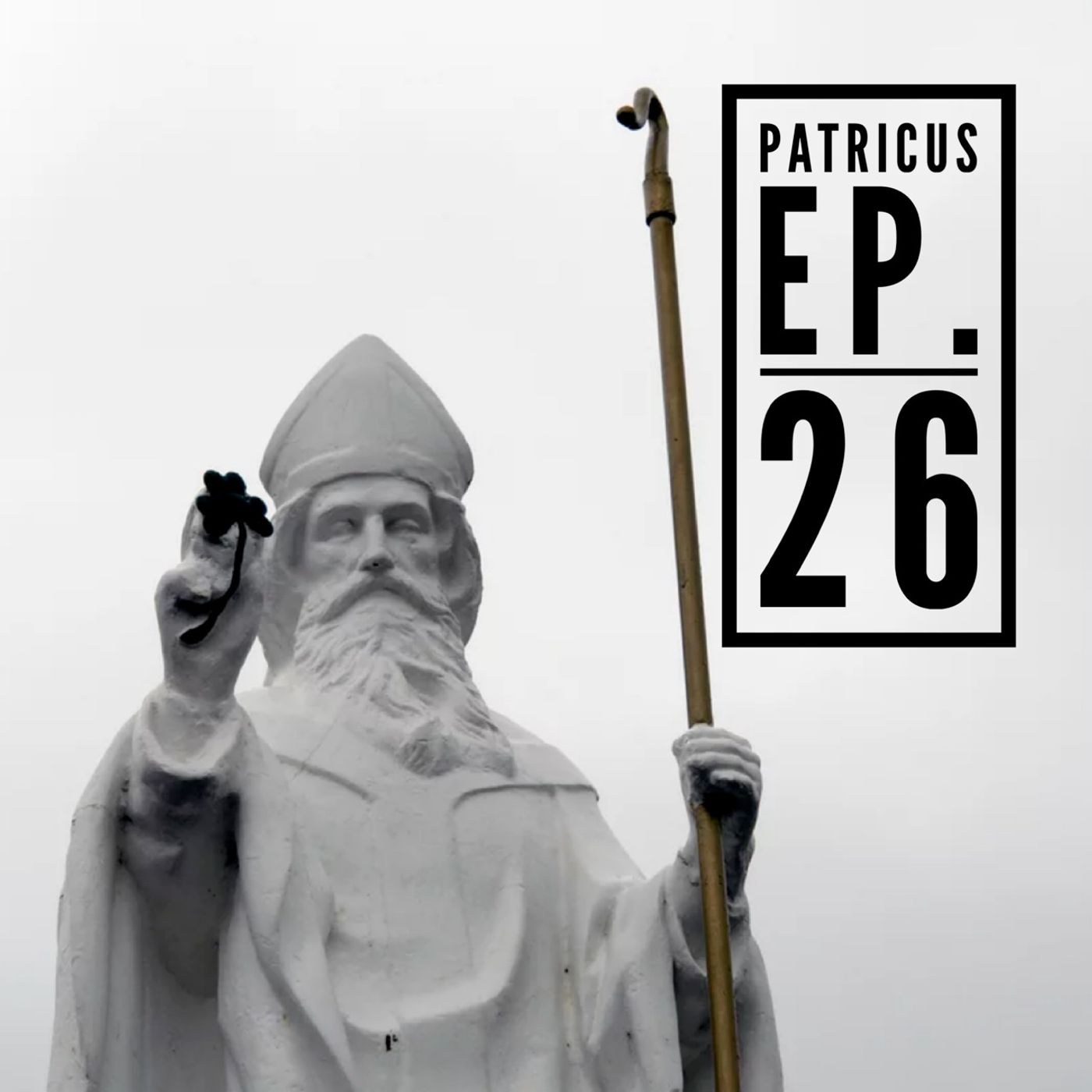
Deep feelings and endless thoughts of revenge captivated the young man’s mind. For two weeks now, all he had thought about was the retribution he would inflict upon his captors when he got free, if he ever got free — something he knew would never happen.Just a fortnight ago the sixteen-year-old had been enjoying his fairly sheltered life as a Roman citizen on the west coast of Britain near the small town of Bannaventa Berniae. From all the comforts that came with having a father who was a local magistrate and living in a country villa with servants to do most of the work, mindlessly playing on the beach close to his home was only one of many leisurely activities. But in a flash without any warning, all the happiness and comforts were replaced by fear and hardship when Patricus was attacked by a gang of professional Irish slave raiders.It was efficient, violent, and traumatic.Rome had begun its decline a decade before; as a consequence its ships no longer secured the Western Sea surrounding the Celtic Islands. Without Roman rule, other ships were free to sail unmolested. As such, no political authority was concerned about Irish kidnappers. During the one-day journey across the sea, and now in iron shackles, all Patricus could think about were the stories he had heard as a child concerning the heathen culture of the Irish. While he never thought they were all true — how they would eat human flesh, shamelessly commit incest, and smear the blood of slain victims on their faces — he now seriously questioned them. As his kidnapping alone revealed, the Irish were not considered barbarians for nothing. And although Patricus claimed to be an atheist or just apathetic to Christianity, he couldn’t help harboring bitterness towards his Christian parents and ironically, their God. The timeless question swirled in his maturing mind: How can a loving God allow evil things to happen? The fear of being forsaken incessantly bore upon his fragile conscience too, for Patricus really was alone. Most of the slaves taken by the Irish were women and children as most men were not easily secured. Patricus wasn’t a boy, but he wasn’t quite a man. And yet, it was in this time of his life, against the backdrop of Irish captivity, that God would forge something powerful within him — something so unexpected and so beautiful that it would not only change his destiny but the destiny of an entire pagan country.______________________________________________________________________________________________________________________But that was in the future. In the present, the very start of the the 3rd century, the only destiny Patricus was in charge of was the one hundred sheep he was made to shepherd in a cold and wet place somewhere on the west coast of Ireland. In coming to this new land it was like traveling back in time four hundred years. Although the primitive accommodations were difficult to get used to, it wasn’t long after arriving that Patricus’ anger surprisingly simmered down into a place somewhere between ambivalence and acquiescence. In the many days and nights that Patricus spend alone, the growing boy began to consider God, His will, His plan, and His love for the lost. But as he drew nearer to God, the shame of his past sins weighed heavily on him. One sin grieved Patricus in particular. With some time, though, he finally arrived at being at peace with God. He wrote about this process, “After I came to Ireland I watched over sheep. Day by day I began to pray more frequently — and more and more my love of God and my faith in him and reverence for him began to increase.”After six years of captivity, the twenty-two-year old was now a young man and had been forged into someone new. He was a new creation of sorts; the faith of his parents and grandparents had become his own. Fasting and praying were regular practices in his new life as a Christian. Looking back, Patricus wrote, “God used the time to shape and mold me into something better. He made me into what I am now — someone very different from what I once was,… before I was a slave, I didn’t even care about myself.”And then on one unspectacular night, as Patricus was falling asleep, God clearly spoke to him in a dream saying, “You have fasted well — soon you will be going home.” Confused by this, as Patricus knew it was nearly impossible to escape and that the New Testament taught slaves to be obedient to their masters, he didn’t immediately respond. But the next night God spoke again saying, “Behold, your ship is ready.” Putting aside all the questions and difficulties surrounding how a successful escape could actually happen, and there were many, Patricus succumbed to the conviction of God’s leading. Simply put, if God spoke, then Patricus had to obey.But because no ships sailed to Britain from the west coast of Ireland, he would have to make the the 200 mile trek across the island. The arduous journey would take over a month to complete and would be slow and dangerous for anyone making the trip, let alone an escaped slave who had to avoid being seen. How he would get on the ship, and under what circumstances, were all unknown to Patricus. But as God called him to obedience, Patricus believed God would somehow provide a way — and He did. After getting on a ship, sailing for three days across the sea, and walking through Britain with the sailors for a few weeks, Patricus finally arrived to his home and to his family.“They took me in — their long-lost son — and begged me earnestly that after all I had been through I would never leave them again.”But although no one knew at the time, that was just what he was going to do.Once at home, after the many sweet celebrations and reunions with both friends and family, life for Patricus slowly returned to a comfortable normalcy. But that leisurely time didn’t last for long. God spoke to Patricus again in another dream. Although this time it wasn’t a call to leave Ireland, it was a call to return.The Irish were in much need of the gospel of Jesus as their island was cut off from much of the many other progressing civilizations. But it was the dream he received of the Irish people calling him back to walk among them that truly convicted Patricus to once again accept the strange but clear call of God. Once he resolved to preach the gospel to the people of Ireland, to the very people who kidnapped and made him a slave, Patricus believed he needed to undergo a theological education. Not only did he need this time of academic preparation to mature his faith and knowledge of the Lord, he needed some ecclesiastical weight behind him as he would be evangelizing alone in relatively uncharted and hostile territory. Within the church, Patricus most likely started as a layman and deacon, progressing to priest and finally being ordained as a bishop. After these years, Patricus, a more mature Christian servant, was ready to make his way back to the cold and wet lands of Ireland. Now not unwillingly as a slave for men, but willingly as a slave for Christ.While Patricus learned much about Irish civilization during his previous six-year stint, it seemed much had changed in the time he was away. As a slave and shepherd, Patricus was relatively distanced from the local wars and overall spiritual darkness of the landscape. The culture now awaiting him would be filled with feuding kings, political druids, and witches — many if not all their pretensions being opposed to the knowledge and rule of a Jewish rabbi, who claimed to be the Son of God. Thus, as is common in the Kingdom of Heaven, many of Paticus’ first converts were societal outcasts, women and poor. In general, most tribal kings across the land were not receptive to the gospel or the Briton who brought it. Yet some were indifferent enough to allow churches to be built on their land. Season after season Patricus continued to travel throughout Ireland, preaching the gospel to anyone who would hear and planting house churches where he was received. Slowly and with much toil, Patricus was spiritually building the first body of Christ in Ireland. And as the years came and went, so did the decades.As an elderly man, the white-haired Patricus had now begun to baptize the sons and daughters of those parents he had converted years before. And as every generation presents its own unique and special challenges to the gospel, this one did as well. But from all the opposition Irish culture could throw at the British Bishop and to the Christian faith in general, the most hurtful and violent assault came not from their pagan hands, but from the hands of Christian tyrants from Patricus’ own homeland.By 460 AD Rome was on its last leg — the empire was nearly all but collapsed. Britain was under attack on every front and from every direction. From the north and west, the Irish and Picts (Scottish) were pushing their raids south. From the east, German warriors were amassing in numbers. And from the south, around London, Saxons and Jutes had even begun building settlements. All these attacks from the outside were too much for the Britons to effectively and systematically handle. In this unprecedented time of political and social disarray, the old inhabitants of the island found themselves being protected from the foreign intruders by men of British-Roman nobility. As such, these men were Christian, although most were purely nominal. These few leaders who scraped together local armies and defended their communities against external threats became known as tyrants, warlords that protected their people with little to no oversight.For generations, the west coast of Britain was seasonally attacked by the barbarians from Ireland; but now tyrants, those specifically living on the west coast, not only wanted to force their enemies back but exact retribution for the years of unanswered assaults upon their people.The tide had turned.And during springtime, when the sea separating Briton and Ireland was calm, one particularly bruta
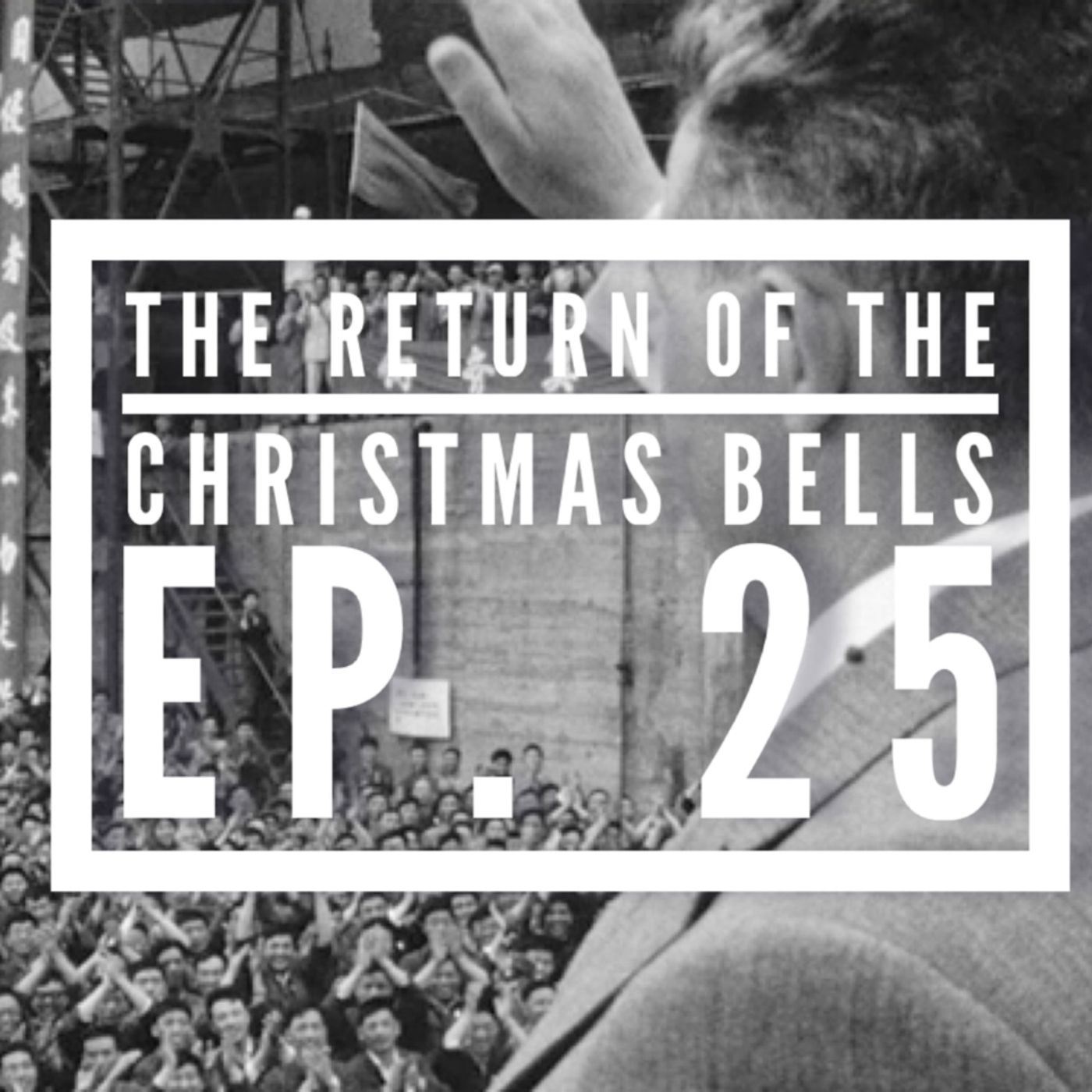
While the coming of December once evoked warm sentiments for the upcoming celebration of the birth of Christ, it had been overshadowed by the harsh weather that was only going to get colder. “One of the season's jokes was that Dante had been wrong, and that hell was not hot at all, it was, in fact, as cold as a Romanian apartment in winter.” (1) But, even if the apartments were warm, Christmas was not celebrated, and even though ninety percent of Romanians belonged to the Christian Orthodox faith, church bells did not ring. By the 1980’s, the most celebrated day in Romania was no longer the birth of Jesus the Christ, but under compulsion, the birth of its dictator, Nicolae Ceausescu - who was aptly nicknamed, the antichrist. (2) But as 1989 was coming to a close in mid December, as we all know now, the people of Romania were unknowingly on the brink of not only openly celebrating the birth of their Christ, but the death of their antichrist. But what many don’t know, was that this Romanian Revolution all started by the humble but powerful convictions of a Hungarian pastor named Laszlo Tokes.Only Romanians forty-five years and older could remember the sweet sounds of church bells ringing! For under Nicolae Ceausescu’s Romanian Communist Party, they were no more. Romania had been in the grips of Communism for some time, but by the 1980’s it had become intolerable. Despite the country being very fertile, like most Communist countries food was scarce and people were starving. Most of the nation’s raw materials were being exported to foreign creditors to pay off debts that Nicolae had accumulated. Because of this debt, Nicolae’s aim was to strengthen the work force, causing Romania to reach a population of 100 million. To do so, he outlawed abortion and contraceptives.And in massive block apartments that housed the growing nation, hot water was only available one day of the week and the electricity only worked when the government wanted it to. Every winter, hundreds of people froze to death in their apartment or died from “asphyxiation as gas stoves were shut off, only to be then turned back on without warning, filling sleeping apartments with gas.” (3) Meanwhile, the secret police, the Securitate, had made Romania into a police state. It is believed that one in four citizens would alert the Securitate of anyone suspected of being un loyal to the Government. Actions, speech, and even opinions that did not approve Nicolae were strictly forbidden. Because of the overwhelming numbers of the police state, organizing dissent was nearly impossible, and “Even by Soviet Bloc standards, the Securitate was exceptionally brutal.” (4)But on December 16th, in the western city of Timisoara a public protest was being held in response to the government’s crackdown against the Reformed church pastor, Laszlo Tokes. He had been critical of Nicolae’s government - mainly that the people of Romania not only, could not exercise their God-given rights, but did not even know what they were. The Romanian Communist Party charged the pastor with enticing ethnic hatred and sought to have him forcibly removed. But his parishioners, (who just two years before only numbered a few dozen had now grown to nearly five thousand), protected their pastor and his pregnant wife Edith by surrounding their church with a human shield. Tokes knew of the plan for his capture so he encouraged his church a few days beforehand stating, “I have been issued a summons of eviction. I will not accept it, so I will be taken from you by force…They want to do this in secret because they have no right to do it. Please, come… and be witnesses of what will happen. Come, be peaceful, but be witnesses.” (5)And the church came in numbers. So much that their collective resistance rendered the Securitate unable to remove the pastor. And as the hours past into nightfall, more and more people from other churches joined the protest into the next day. By now, many other supportive spectators had joined the cause and began to take the message further. Within a day the demonstration for the pastor sparked a protest in the city. And within a few more days the protest in the city would in turn spark a wild fire of dissent among a brutalized nation.Pro Romanian chants and songs that had long been outlawed, broke out among the people. The crowd grew so large and cantankerous around the church that a large portion decided to take their protest to the central square of Timisoara. This was when the Securitate made their move. In the pre-dawn hours of December 17th, the secret police burst through the crowd, broke the church door, and captured Tokes and his wife. Just as fast as they came, the secret police then disappeared into the darkness from where they emerged.But as the sun began to rise the public outcry was only beginning.By early morning the central square of Timisoara was filled with protestors confronting the Securitate with candles of unity and songs proclaiming freedom - but others objectors were not as peaceful. Having heard the uprising was becoming too much for the local police, the military was called in with armored carriers and tanks. At the command of Nicolae’s wife, Elena, the military then opened fire into the protestors killing men, women, and children.By the next few days, the uprising in Timisoara was nearly squashed by military force. But the cries for freedom and justice from those who perished had been heard throughout the whole nation. Having been in Iran, Nicolae quickly returned to his palace in Bucharest on the evening of December 20th to publicly condemn the unrest in Timisoara the following morning. Nicolae addressed a gathering of approximately 100,000 people packed upon the door steps of his nearly 4 million square foot palace on December 21st. (6) But it was too late.In the middle of his speech which praised his communist country and condemned the protestors at Timisoara as being “Fascists”, panic broke out among the crowd. It was the first time that Nicolae had ever been booed by a crowd - and it would be his last. There was 3.5 minutes of confusion that interrupted the speech as the cameras stopped visually recording. Whatever the mysterious disturbance was, it clearly signaled the end of Nicolae’s reign. Confusion and violent protests continued throughout the night in Bucharest. The House of the Republic was being overrun.Around noon on December 22nd Nicolae, his wife, and four others were rushed into a helicopter and extracted from their stately home. As a revolution was evident and now unstoppable, the military soon defected. The Ceausescu’s were forced to land and arrested only three and a half hours later. While all this was taking place a new Government Council was being formed and a military tribunal placed the couple in court martial. They were charged with the genocide of 60 thousand Romanians and other fiscal crimes.The trial, which was largely a spectacle was held on December 25th. It lasted for about two hours and delivered death sentences to the Dictator and his wife. Because the Ceausescu’s didn’t recognize the court’s authority they declined to have any legal aid. Throughout the trial Nicolae kept looking at his wrist watch as if waiting to be rescued. It never came. From the make-shift courtroom, the couple was then handcuffed and shuffled outside. Nicolae was complacent, while Elena was quite bitter and kept commanding the guards to be gentle with her lest they break her wrists. While many military personal offered to execute them, only three paratroopers were selected. With their service rifles in hand, the three opened fire on the elderly couple just outside the courtroom. Nineteen bullets were fired in total. Although the trial and executed bodies were televised, the actually execution was not caught on camera since the paratroopers didn’t wait for the command to shoot, causing the cameraman to miss the moment.By midday on December 25th, the antichrist and his wife were dead. And for the first time in 40 years, the streets of Romania were filled with people crying in sincere celebration! Make shift Christmas trees were being erected and throughout the country a familiar carol played, as the church bells were once again ringing. But now they pealed more loud and deep: as if to say, “God is not dead, nor doth He sleep; The wrong shall fail, The right prevail, With peace on earth, good-will to men.”___________________________________________________________________________Pastor Tokes and his wife were soon released from where they were taken. Laszlo would go on to serve in the Reformed Church and extend his influence within Romania’s European Parliament. He received numerous awards and was even honored in Washington D.C. in 2009 being awarded the Truman-Reagan Medal of Freedom for his role in helping to overthrow Romanian communism. He is 69 year old and continues to live in Romania today.In the immediate wake of the Revolution, a large bronze statue of a Soviet soldier that domineered a public square, was taken down, melted, and recast into church bells. (7) And their continued sound has inspired more to be cast even today. In just 2017 Romania's Redemption Cathedral dedicated one of the biggest church bells in the world weighing in at 25 tons. Half of Bucharest’s nearly 2 million free citizens can hear it when rung. (8)And hearing bells when they ring is much more than just something we sense with our ears but something we can sense and comprehend with our hearts. In was in Cambridge, Massachusetts, 1863, that Henry Wadsworth Longfellow heard the church bells ring on Christmas. Hearing them stirred his depressed heart and revived a belief in a promise that he had stopped believing. He put pen to paper and wrote the now famous poem, “Christmas Bells”. He authored it in an extremely painful time of his life and the nation’s as it was in the very middle of a bloody Civil War. The war mixed with personal loss made the grace and love of
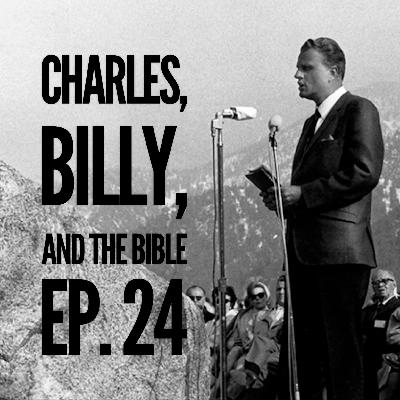
Charles - Part 1Charles Templeton was born October 7th, 1915 in Toronto Canada. With four other siblings in the midst of the depression, the family learned to adapt on meager wages. Everyone in the family had to do their part. Young Charles, picked up drawing and was quite talented at it. So, after failing to pass the 9th and 10th grade, he pursued his knack of drawing sketches, hoping that someone might find value in his work and purchase them. Charles was pleasantly found right - the 17 year old artist was hired onto the Toronto Globe as a sports cartoonist.Overnight, the teenager was making good money and was thoroughly enjoying his job. Charles found himself in the very midst of the sports news world, and everything else associated with it. Notoriety, late night drinking, and fawning women were all bonuses. He would later write about this time in his life, “To a boy in his late teens, it was the best of all possible worlds.”But after four years, the underbelly of his envied job and lifestyle began to show. Returning home one morning at 3:00 a.m. from a party, the young man feeling quite depressed looked into a mirror. He didn’t like the reflection. As he walked to his room his mother heard him in the hallway and called out to him. She talked to him about her own faith in Christ.Charles would later write about this event: “As I went down the hall, I was forming a prayer in my head, but as I knelt by my bed in the darkness, my mind was strangely vacant; thoughts and words wouldn't come to focus. After a moment, it was as though a black blanket had been draped over me. A sense of enormous guilt descended and invaded every part of me. I was unclean. Involuntarily, I began to pray, my face upturned, tears streaming. The only words I could find were, "Lord, come down. Come do[wn]. Come down. . . .”______________________________________________________________________________Billy - Part 1At this same time, in the United States near Charolette North Carolina, Billy Graham had just graduated from high school. As he struggled through school being the son of a Dairy Farmer, his graduation was a feat that many questioned. And while the young man had grown up in a godly and Christian environment he had just made a personal commitment to Jesus during a revival two years earlier, under the preaching of Baptist evangelist Mordecai Ham. Like his future friend and preaching partner, Charles Templeton, Billy was also convicted by his sin and his need for forgiveness. That night at the diner table, Billy stopped to inform his family that he had been saved that day.While he first enrolled at Bob Jones College in Cleveland Tennessee, since it was closet to home and less expensive than Wheaton, he quickly felt the school too legalistic and rigid. So, after only one semester, and racking up nearly enough demerits to be kicked out, he transferred to Florida Bible Institute. And it was there in 1937, that Billy would begin to preach.Having become mentored by the academic Dean of the school, John Minder, Billy joined him to attend a Baptist conference in Palatka Florida. When Minder was asked to speak that night to a small church of Baptist preachers, he politely declined saying that Billy would be pleased to preach in his place. So, with no real choice in the matter, the 19 year old awkwardly preached for the first time - it was a mixture of four different sermons he had memorized from Moody Press. He would later remember that the sermon was very “Raw”. The next few years in Billy’s life would be transformational. He was baptized on December 4, 1938 in Silver Lake, Florida, ordained to the ministry in a Southern Baptist church a year later, and graduated from Florida Bible Institute in 1940. And so began his humble and long journey into becoming one of the most influential evangelist in America. But there was another great evangelist being formed in Canada - and the two were soon to meet and unite their passion and calling to preach the truths of the Bible to a world on the brink of another World War. ______________________________________________________________________________Charles - Part 2By this time, Charles had left the Toronto Globe to enter the ministry and to give himself fully to the preaching of the gospel. He had evangelized all over - Michigan, New York, Indiana, Illinois, and even further south, probably very close to where Billy was himself beginning his career as a preacher. Charles had met his wife in Grand Rapids Michigan and the couple was married 6 weeks later. But soon after in 1941, in the midst of starting a new church with his new wife, Charles read a number of books written by famous secular authors. And for the first time in his short life as a follower of Jesus, his faith in the veracity and miraculous claims of the Bible was challenged. But Charles soon stuffed these troubling questions behind the success of becoming one of North America’s top evangelist and so, he continued to do what he knew best.And before long, notable people began to take notice of Charles’ ministry. In the Spring of 1945 he was invited by a local pastor named Torrey Johnston to speak at Chicago Stadium to a crowd full of young people. It was a Youth for Christ rally and attendance was steadily growing into the thousands. Backstage, among the noise of a boisterous crowd, Torrey introduced the young Canadian evangelist to the slightly younger Billy Graham and the two preachers become instantaneous friends. On the platform, just before Billy was about to speak, he leaned over to his new friend Charles and said, "Pray for me. I'm scared to death." Soon after, a Youth for Christ team was selected to take the message of the gospel to a war torn Europe. Torrey Johnston would serve as the president while Billy and Charles would alternate as preachers. The tour went well and over the months Charles’ and Billy’s friendship grew as did their success and influence. But the questions, that had bothered Charles years before could no longer be ignored. So, at thirty three years of age, and without formal education for the last 15 years, Charles was accepted into the theologically liberal Princeton University to formally seek answers to those doubts “that were [secretly] eroding his faith.” Charles remembers these three years at Princeton as some of the best in his life. Among his enjoyable courses, Charles would often see Albert Einstein, who lived only three houses away from the Campus Seminary. But although he throughly liked his new environment, Charles couldn’t escape the fact that he was experiencing a real crisis of faith about the Bible and the person of Jesus. And his fears of possibly believing and preaching something not empirically, historically or spiritually true, was being shared by his friend Billy as well.______________________________________________________________________________Billy - Part 2It was August of 1949, and Billy was 30 years old in Forest Falls, California in a Christian Camp speaking to a crowd inside Hormel Hall. No one knew it, but having been recently challenged by his friend and fellow evangelist, Billy was now internally questioning the veracity of the Bible and whether he believed it to really be God’s spoken word to humanity. It was a shocking blow to Billy’s confidence that his friend, fellow pastor and Bible teacher now believed the Scriptures to be flawed, outdated and full of superstitions. The two had discussed their disagreements and had been civil about their opposite conclusions, but if Billy was really honest, he still had lingering doubts.The weight and the enormity of it all bore down on Billy’s soul. So in the dark woods of the night at Forest Home Billy placed his bible on a random tree stump and cried out: “O God! There are many things in this book I do not understand. There are many problems with it for which I have no solution. There are many seeming contradictions. There are some areas in it that do not seem to correlate with modern science. I can’t answer some of the philosophical and psychological questions Chuck and others are raising.” Falling to his knees, Billy then resolutely confessed “Father, I am going to accept this as Thy Word—by faith! I’m going to allow faith to go beyond my intellectual questions and doubts, and I will believe this to be Your inspired Word!”Billy later recalled in this moment that the Holy Spirit was moving within him and he felt his presence and power in a new and fresh way - one that he hadn’t experienced in months. For Billy “A major bridge had been crossed.” On the next day, 400 people made a commitment to Jesus and Henrietta Mears, the woman who invited Billy to speak at the camp noted that he “taught with [more] authority” than she had ever seen before.And while at first, Billy had reluctantly accepted Henrietta’s invitation to speak at Forest Home, he now knew why God led him into the forest. Like Jesus being led into the Desert - a test was finished and a decision was made - a decision that would effect the course of Billy’s calling and in turn, the eternity of millions. While Billy was calling people to trust and follow Christ, Christ was calling Billy to trust and follow His word.Billy’s heart and mind were now settled. And his friend Charles was settling his. While the two friends remained courteous, they grew apart from each other knowing their views of the Bible and the person of Jesus were diametrically opposed to each other.______________________________________________________________________________Charles - Part 3By the end of Charles’ three years at Princeton in 1951, his doubts about the Bible had nearly solidified and his faith was no more. And yet, because of his success and influence, he was still offered positions on numerous platforms. Radio and Television ministries, as well as churches all sought him out. In 1953, Charles found himself living in Manhattan as the Director of Evangelism for the Presbyterian Church USA. But i

John Gresham Machen was born on July 28, 1881. It was prosperous time - the gilded age of America. Skyscrapers were going up as well as wages. The Machen family was affluent. John’s mother Mary came from a wealthy family and was a devote Presbyterian. She was a voracious reader and had even published a work on the Bible and poetry. She was 21 years younger than her husband, Arthur Webster Machen, a successful lawyer and an Episcopalian. But despite the couple’s different Christian affiliations, Mary taught John along with her other two sons, the Westminster Shorter Catechism from an early age. The family attended Franklin Street Presbyterian Church, and in time, John came to make the Presbyterian Church his own. But in a twist of fate as only God could know, much of the Presbyterian church would one day make Machen their own. As an adolescent, he received a classical education and was taught in Greek and Latin. It would serve as formational to his future career as a New Testament scholar. At seventeen years of age, John enrolled at the newly founded, John Hopkins University where he excelled in his studies. In 1901 he decided to pursue Theology at Princeton University.After four years there, John found himself doing his post study in Germany - the very home of Protestantism. It was there that John learned under Professor and Lutheran Theologian, Wilhelm Herrmann. For better or worse, Herrmann was one of many Theologians in Europe greatly influenced by Immanuel Kant. In general, Herrmann’s Theology viewed God as an ultimate power and source of goodness, but was less concerned with the accuracy or the inherency of the Christian Scriptures, or even the historicity of the person of Jesus. To make things more confusing for young Machen, Herrmann was a passionate and devoted Christian whose preaching deeply moved John’s heart. Because of this, the young theology student had a hard time reconciling a real Christian faith that was not built upon historical and biblical truths. To Machen, Herrmann’s philosophy of Christian faith was a bit illogical. John knew that a substantial and vibrant faith in Jesus should not be separated from what the Bible clearly revealed. History and Doctrine must be integrated. He would later write, “Christ died"--that is history; "Christ died for our sins"--that is doctrine. Without these two elements, joined in an absolutely indissoluble union, there is no Christianity.”(J. Gresham Machen, Christianity and Liberalism)While it tested his faith, it would seem that John’s time in Germany only strengthened his convictions that modern or liberal theology was not just a different form of the historic Christian faith, but a growing threat to it. But even by this time in John’s young life, he still seemed to be somewhat aimless concerning his career. In letters written to his parents, John conveyed that he found many fields of study to be intriguing and worth engaging in. He loved sports as well. Thus, the young, wealthy academic was not convinced that the life of a Theologian / Teacher or Pastor was a life he really wanted to pursue. But upon his return to the states in 1906, Machen had decided on a career having joined Princeton Seminary as an instructor in New Testament studies. And so began for John, not only a personal and spiritual struggle against the rising tide of Modernism’s influence of Theology but an academic and vocational one as well.As the years past, Machen was becoming a notable New Testament scholar and one, even more rare, that could post a solid intellectual, historical, and exegetical defense for the foundations of the Christian Faith against the progressive theology that had spread and was continuing to infiltrate academia and churches all across America. And While Machen’s influence and controversy became more widespread and although the Presbyterian Church in the United States of America (PCUSA) was growing more tolerant of Modernism, John was promoted as Princeton’s Assistant Professor of New Testament studies in 1914 - on the eve of WW1.So just as soon as he advanced in Princeton, Machen left to help the war efforts in France. John didn’t want to serve from the guarded position of a Chaplain, so he chose to work though the YMCA as a secretary. But for all practicality, he was a literal waiter, making and serving hot chocolate to the soldiers all day and night. While John was located near the front lines of the war, and was never in combat, he was close enough to the action to see death and suffering firsthand. Thankfully the war was relatively short lived and John left for home. But upon his return, another war was in full swing - a theological one in John’s mind, that while it didn’t destroy the human body, had every potential to destroy the soul. There were clearly two camps of Protestants now, each preaching two different and oppositional interpretations of the gospel. And in May of 1922, Baptist and modernist preacher, Harry Emerson Fosdick made that even more apparent by preaching a now famous sermon against his theological opponents entitled, “Shall the Fundamentalists Win?"And indeed, that was the question - one that John would try and answer. But frustratingly, it seemed that he would do it mostly alone. John was not only philosophically distressed at the open front that Modernist Theology posed to the Historic Christian faith, but personally disheartened, by the fact that he didn’t see many others trying to defend it with him. The Conservative Church was largely apathetic which was leading to its ruin. He would later write, “The mass of the Church here is still conservative — but conservative in an ignorant, non-polemic, sweetness-and-light kind of way which is just meat for the wolves.”So, in continuing to shepherd the flock of God, Machen wrote the short but powerful book, Christianity and Liberalism in 1923. In the introduction, he clarified, “In my little book, Christianity and Liberalism, I tried to show that the issue in the Church of the present day is not between two varieties of the same religion, but, at bottom, between two essentially different types of thought and life.” A few years later, Machen wrote another similar book entitled, What Is Faith? In it, Machen tried to reveal that real Christian faith should not only capture one’s heart and emotions but must engage one’s mind and knowledge as well. Even though his books were received relatively well, there was more work to be done. So, besides teaching on weekdays, preaching on weekends, and publishing in the time between, Machen also took advantage of the air waves. The Radio was not even a decade old, and John made effective use of it. So much so, that by his numerous teachings on what makes Christianity authentically Christian, he became known as Dr. Fun-da-men-ta-lis or (The Dr. of the Fundamentals).But in the very midst of all of this, the more liberal Northern Presbyterians were doing their own work to break free from fundamentalism’s long hold on their denomination. And in May of 1924, the Auburn Affirmation was dated and presented to the General Assembly - the authoritative body of the Presbyterian church. The Auburn Affirmation sought to liberate the Presbyterian Church from the requirements of those seeking ordination. Since the church’s beginning, every ordained minister had to believe and confess five fundamentals of the Christian faith. 1. The Inerrancy of the Scriptures, 2. The Virgin birth of Jesus, and His deity, 3. The Substitutionary Atonement, 4. The bodily resurrection of Jesus, and 5. The authenticity of Jesus’ miracles - (belief in the supernatural). Although the affirmation was authored by an eleven-member Conference Committee, it was signed by over twelve hundred ministers of the PCUSA, and supported by many other clergymen. The General Assembly convened to consider the affirmation and set about to probe deeper into the division within their church that had now been brewing for nearly 30 years.But just after this, in 1925, the American mood towards the Modernist / Fundamentalist theological controversy drastically changed over the Summer of that year. And it happened outside the walls of the Church.In July, William Jennings Bryan, the three time Democratic Presidential candidate, the Conservative Christian, and long time Presbyterian elder, participated in the highly publicized Scopes Trial - or the Scope’s Monkey Trial. While the Trial technically debated the legality of teaching the theory of evolution in public schools, the case was much bigger than that. It highlighted, and nationalized the ongoing controversy of Liberal VS. Conservative, and Modernist VS. Fundamentalist. The aging Bryan represented the prosecution, arguing against evolution being taught in schools where the famed Clarence Darrow defended John Scope’s right to instruct and teach the theory. But on the seventh day of the trial, Darrow unorthodoxly questioned Byran as a witness to basically defend the Bible, and the miracles described within it. Byran, although relatively well versed in the Bible, was not ready for this line of questioning - and it embarrassingly showed. The news coverage, namely led by Henry Mencken ridiculed and branded Bryan as a Southern, anti-intellectual, Bible believing dope. On the eight and last day of the trial, the jury took only nine minutes to deliberate. Although Mr. Scope’s was found guilty on a technicality and fined one hundred dollars, the American public believed the media coverage that largely portrayed fundamentalist Christians as naive, rigid, and unscientific.William Bryan died five days after the trial in his sleep from a stroke. He was 65 years old.In the aftermath of the Scope’s case, what was once a nation that had grown somewhat indifferent to theological fundamentalism had now become openly opposed to it. With the movement presently on the side of the Progressives in every aspect of the culture and now in the Church, (as the General Assembly ended up su

Comments

Download from Google Play

Download from App Store
 United States