


 Claim Ownership
Scienceline
Subscribed: 3Played: 74
Subscribe

© All rights reserved
Description
The Scienceline podcast is produced by the Science, Health and Environmental Reporting Program in the Arthur L. Carter Journalism Institute at New York University. For more information, e-mail us at [email protected].
103 Episodes
Reverse

When I moved to New York City last summer, one of the first things I noticed was the fervor with which East Coasters are trying to stomp out invasive spotted lanternflies.
These bugs were detected in the United States in 2014, and made their way to New York during the pandemic.
As this invasive species’ range continues expanding, they’re causing agricultural damage — according to a worst-case scenario estimate from the New York’s Department of Agriculture and Markets, the spotted lanternfly could cost the state up to $300 million dollars each year.
To this day, they’ve been at the center of widespread media campaigns urging people to stomp them out.
I wanted to know where this whole stomping idea came from, and how New York got to this point. I also couldn't help but wonder — have we been talking about spotted lanternfly all wrong?
IMAGE: A spotted lanternfly perches on a branch. This invasive species arrived in the United States in 2014, and has been spreading ever since. [Credit: Magi Kern via Upsplash]
MUSIC: Slimheart [Blue Dot Sessions] | Thimble Rider Theme [Blue Dot Sessions] | The Cornice [Blue Dot Sessions] | Scienceline theme by Jahzzar at the Free Music Archive
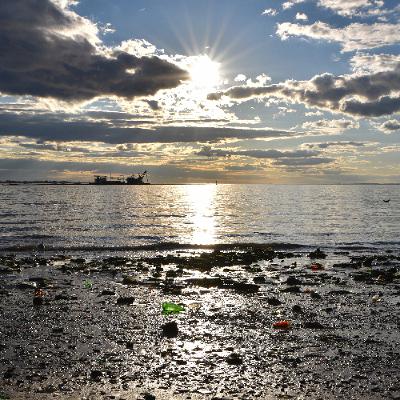
In 2020, the National Park Service announced the closure of Dead Horse Bay, a section of water and shoreline within the Gateway National Recreation Area in Brooklyn.
Survey results had shown radiological and chemical contamination at the popular beachcombing spot, and the park service said that a federal cleanup effort would follow.
More than five years later, the closure is still active, the paths are overgrown and the beach appears to be untouched. Here's a look at what's happening — or not — down at Dead Horse Bay.
MUSIC: Sudden Courier [Eltham House | Blue Dot Sessions] | Under The Wire [Transistor Radio | Blue Dot Sessions] | Scienceline theme by Jahzzar at the Free Music Archive
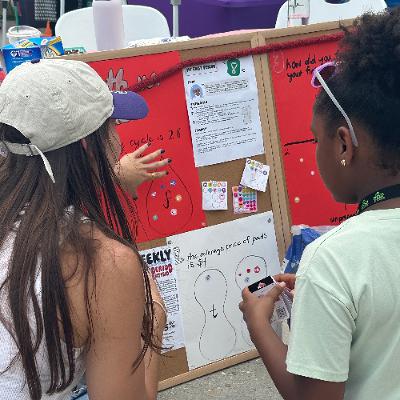
Hannah Chiu might only be a medical student at Tulane University, but she is using her platform to make sure young menstruators know everything from how to use a tampon to birth control options.
With only 29 states mandating any form of sex education, Chiu joins the many people around the country looking to teach about menstrual periods, a topic that is not federally required to be taught in sex education curricula and often goes overlooked.
From Trish Hutchinson taking up-and-coming doctors into the classroom, to Andrew Lupo, a pediatric gynecologist, teaching his patients firsthand, discover the ways menstruation education is reaching young people when they need it most.
UPDATE FROM OCTOBER 2025 TAPING:
Period Prepared is a menstruation education program co-founded by Hannah Chiu and Olivia French, both medical students in New Orleans, and their mentor, Dr. Stephanie Shea. The interview features
Hannah Chiu and reflects the work of the organization as a whole. As of February 2026, Chiu is still working within the menstrual education space, but is not using Period Prepared branding.
MUSIC:
Delmendra by Blue Dot Sessions
Roundpipe by Blue Dot Sessions
Borders - Marimba Happy Song by DanielHComposer
Scienceline theme by Jahzzar at the Free Music Archive
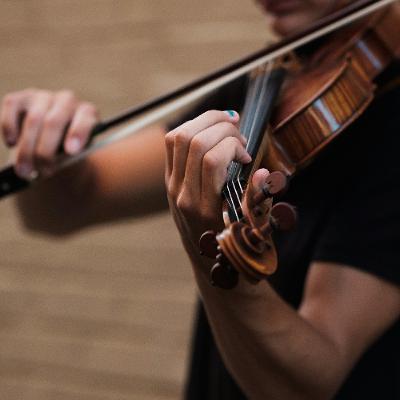
Lots of research has tried to break down how music toys with the emotions of any audience, but have you ever thought about how music makes the musicians playing it feel? A group of researchers from Italy recently noticed this gap in the science and decided to answer it.
They found that when violinists play more emotional pieces, their bow movements are rougher. Nicola di Stefano, the cognitive scientist who led the study, thinks that this effect might come from musicians reacting strongly to the emotions in the pieces they play. He suggests that psychological pressure is the root cause.
Professional violinist Curtis Macomber, though, doesn't see these results echoed in reality. He thinks of emotion as an overwhelmingly positive tool in his arsenal, something that makes his playing better, rather than worse. While Nicola and his team found that emotions can hamper a violinist, Curt actually looks forward to encountering them.
Listen in as we dive into how playing emotional pieces affects musicians.
Music:
• Bach - Prelude and Fugue in C minor - BWV 847 - The Well-Tempered Clavier, No. 2 - Arranged for Strings [Gregor Quendel | Free Music Archive]
• Mozart - Eine Kleine Nachtmusik / Serenade No. 13 - KV 525.mp3 [Gregor Quendel | Free Music Archive]
• György Kurtág - Kafka Fragmente op. 24 [Divertimento Ensemble]

Have you ever wanted to take a trip to the Arctic? Every year, tourists from around the world make their way to the region. But the ships carrying these tourists bring an invisible pollutant with them — one that’s impossible to see and impossible to ignore: noise.
How does this unseen phenomenon affect animals that call the Arctic home? And what role do even the most environmentally conscious travelers play in this story? Researchers and cruise industry officials are working to uncover the answers.
Join us as we dive into this noisy crisis and hear from the experts navigating its challenges — and exploring ways to protect the Arctic’s pristine, icy wilderness.
Check the associated article on Scienceline.org
Music:
"Cold Summers", "Digital Compass", "Arctic Draba" by Blue Dot Sessions | CC BY-NC 4.0

Comments

Download from Google Play

Download from App Store
 United States