


 Claim Ownership
Scott Bessent - News and Info Tracker
Subscribed: 5Played: 113
Subscribe

© Copyright 2025 Inception Point Ai
Description
This is your Scott Bessent - News and Information podcast.
Discover the latest updates and insights on Scott Bessent with the "Scott Bessent News and Info Tracker" podcast. Stay informed with regular episodes that cover breaking news, in-depth analysis, and expert commentary on Scott Bessent’s ventures and influence in the financial world. Perfect for investors, industry enthusiasts, and anyone fascinated by the strategies and successes of this leading figure. Tune in to keep your knowledge current and gain a deeper understanding of the financial landscape with Scott Bessent as your focal point.
For more info go to
https://www.quietplease.ai
Check out these deals https://amzn.to/48MZPjs
Discover the latest updates and insights on Scott Bessent with the "Scott Bessent News and Info Tracker" podcast. Stay informed with regular episodes that cover breaking news, in-depth analysis, and expert commentary on Scott Bessent’s ventures and influence in the financial world. Perfect for investors, industry enthusiasts, and anyone fascinated by the strategies and successes of this leading figure. Tune in to keep your knowledge current and gain a deeper understanding of the financial landscape with Scott Bessent as your focal point.
For more info go to
https://www.quietplease.ai
Check out these deals https://amzn.to/48MZPjs
183 Episodes
Reverse
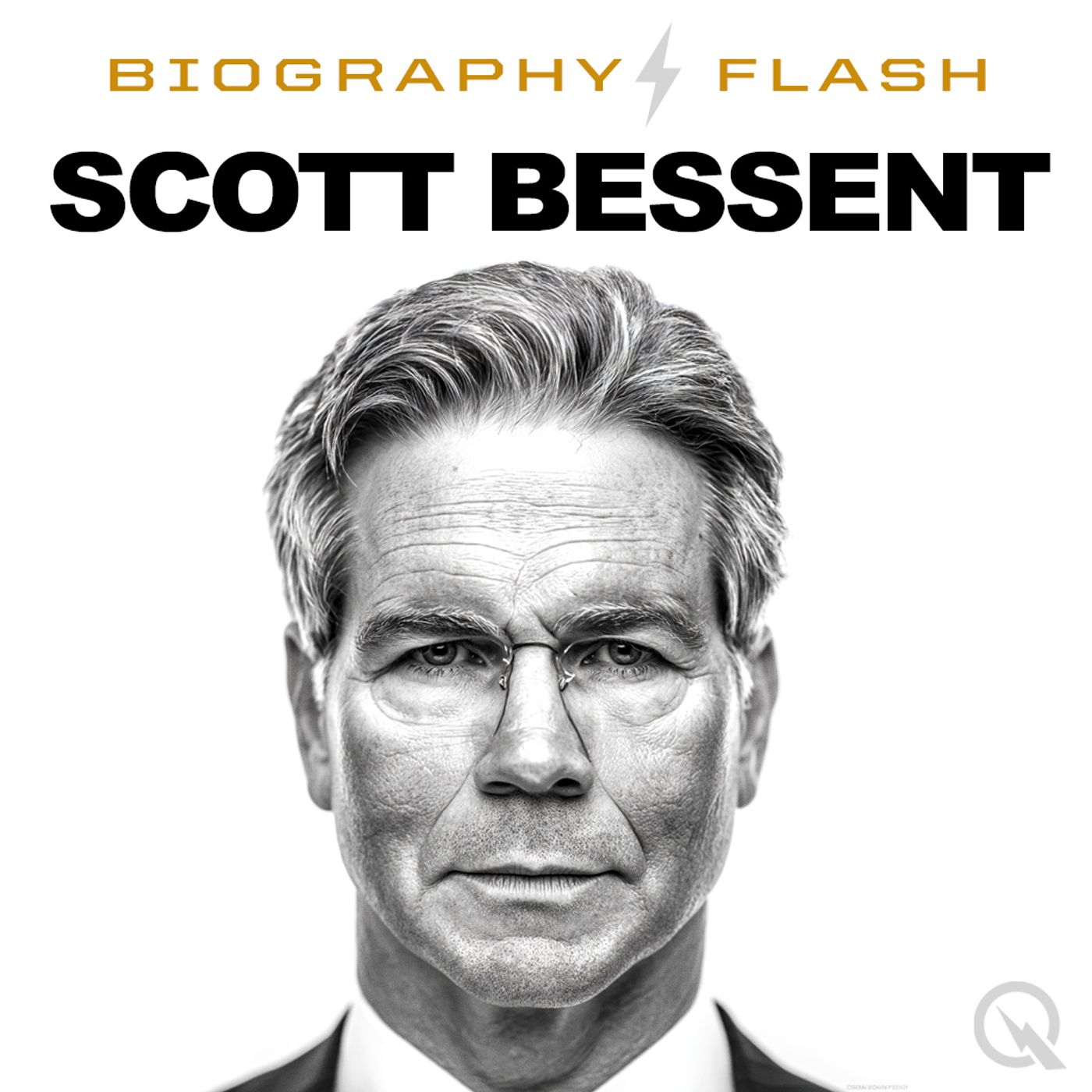
Scott Bessent, the United States Treasury Secretary, is leading efforts to influence the next Federal Reserve Chair selection. According to Rootdata, President Donald Trump announced the choice will come in early January, with Bessent organizing the process to push for interest rate cuts and shift more monetary policy control toward the Treasury. Rootdata reports Bessent aims to screen candidates who favor the Federal Reserve returning to traditional behind the scenes operations, potentially giving the Treasury greater say in large scale asset purchases and sales known as quantitative easing and quantitative tightening.KuCoin news flash details Bessent's strategy to install a cooperative Fed Chair, expanding Treasury influence on liquidity decisions that could impact cryptocurrency markets and regulatory coordination against terrorism financing. This move positions Bessent at a key point in his career, balancing risks with opportunities for expanded executive branch powers long considered off limits.On December seventeenth, Bessent stated federal officials are working with governors from twenty states considering additional contributions to Trump Accounts, tax advantaged savings for children born between January first twenty twenty five and December thirty first twenty twenty eight. Planadviser reports the Treasury provides a one time one thousand dollar seed payment per eligible child, with accounts launching July fifth twenty twenty six. Companies like Charles Schwab are matching the federal contribution for employees children, while billionaires Michael and Susan Dell pledged six point two five billion dollars to top up up to twenty five million accounts.The Treasury Department also issued guidance allowing businesses to round cash transactions to the nearest nickel amid penny shortages, as noted by American Banker.Listeners, thank you for tuning in, and please subscribe for more updates. This has been a quiet please production, for more check out quiet please dot ai.For more http://www.quietplease.aiGet the best deals https://amzn.to/3ODvOtaThis content was created in partnership and with the help of Artificial Intelligence AI
Scott Bessent has used his early months as Secretary of the Treasury to push for a more activist role in both domestic monetary discussions and long term household savings policy, and recent reports show that pace accelerating over the last several days.According to a recent KuCoin Markets brief, Bessent is now deeply involved in shaping the selection of the next Federal Reserve chair, pressing for a candidate who would coordinate closely with the Treasury on interest rate policy and liquidity management. The brief reports that he is advocating for rate cuts sooner rather than later, arguing that a more growth oriented stance is needed to stabilize credit markets while keeping funding conditions loose enough to support small business lending and investment in new technologies. The same coverage notes that Bessent wants a more formal role for the Treasury in decisions around quantitative easing and quantitative tightening, which would mark a notable shift away from the traditional independence of the central bank.That push links to another area where Bessent has been active, the intersection of regulation, crypto assets, and national security. KuCoins writeup highlights his interest in using closer coordination between the Treasury and the Federal Reserve to tighten controls on illicit finance and crypto based funding channels for terrorism and sanctions evasion, while still leaving room for regulated innovation in digital assets and payment systems.On the household side, Bessent continues to promote the new Trump Account savings program as a cornerstone of his economic agenda. PlanAdviser reports that the Treasury is seeding tax advantaged accounts with a one time one thousand dollar federal contribution for children born between 2025 and 2028, and that major employers like Charles Schwab have just announced they will match that federal deposit for their own workers children. In remarks cited by PlanAdviser, Bessent said he is working with about twenty governors on options for states to add their own top up funding, with the goal of turning the pilot into a broad wealth building tool for lower and middle income families.These recent moves depict a Treasury Secretary willing to blur traditional lines between fiscal and monetary policy, while also experimenting with new public private partnerships to expand long term savings.Thank you for tuning in, and remember to subscribe so you never miss an update.This has been a quiet please production, for more check out quiet please dot ai.For more http://www.quietplease.aiGet the best deals https://amzn.to/3ODvOtaThis content was created in partnership and with the help of Artificial Intelligence AI
Scott Bessent has spent the last few days emphasizing a message of resilience about the United States economy, even as financial markets react nervously to new trade and immigration policies. In a recent interview highlighted by AOL Finance, the Treasury Secretary said he expects the United States to finish the year with economic growth of around three percent, despite what he called short term volatility tied to the administrations tariff strategy and shifts at the southern border. According to that report, Bessent argued that investors are underestimating the strength of household balance sheets and ongoing consumer spending, which he sees as the core engine keeping growth on track.In the same conversation, Bessent acknowledged that tariffs are creating uncertainty for manufacturers and importers but framed them as a negotiation tool rather than a long term policy direction. He suggested that once new trade terms are settled, supply chains will stabilize and business investment could rebound. Media coverage has noted that his tone is more optimistic than that of some Wall Street strategists, who have warned about slowing global growth and the risk of a sharper market correction. Bessent has responded by pointing to strong employment data and still solid retail sales as evidence that underlying demand remains healthy.Another theme in Bessents recent public comments has been fiscal discipline paired with targeted support. Outlets covering his remarks report that he is resisting calls for sweeping new stimulus, arguing instead for focused measures aimed at infrastructure, permitting reform, and incentives for domestic production. He has also reiterated the administrations commitment to keeping borrowing costs manageable, saying that a credible path for the federal budget will help anchor interest rates and support private sector investment.Financial press coverage has paid close attention to how Bessent communicates with the bond market. Analysts note that his assurances about growth and inflation have become a key reference point for expectations around future interest rate moves by the Federal Reserve, even though the central bank sets policy independently. For now, his consistent message is that the economy is bending but not breaking, and that policy turbulence will not derail the broader expansion.Thanks for tuning in, and do not forget to subscribe so you never miss an update. This has been a quiet please production, for more check out quiet please dot ai.For more http://www.quietplease.aiGet the best deals https://amzn.to/3ODvOtaThis content was created in partnership and with the help of Artificial Intelligence AI
Treasury Secretary Scott Bessent recently predicted the United States will finish 2025 with three percent gross domestic product growth. According to an AOL article, Bessent made this statement despite economic volatility from tariffs and immigration policy changes. He expressed confidence in the economy's resilience as the year ends.In recent days, Bessent has focused on steadying markets amid President Trump's aggressive trade agenda. Bloomberg reports Bessent held talks with top bankers to calm Wall Street concerns over potential tariff impacts on global supply chains. He emphasized that targeted tariffs aim to protect American manufacturing without sparking widespread inflation.The Wall Street Journal notes Bessent's role in advising on a new fiscal package, including tax cuts for middle-income families set to take effect next month. This move, per the Journal, seeks to boost consumer spending and offset any short-term tariff costs.Fox Business highlights Bessent's appearance on a morning show where he defended the administration's immigration stance, linking it to wage growth for U.S. workers. He stated stricter border controls could add up to one percent to GDP by reducing labor market pressures.Reuters coverage details Bessent's meeting with Federal Reserve officials, urging a measured approach to interest rates. He argued current data supports no immediate cuts, prioritizing long-term stability over quick fixes.CNBC reports Bessent dismissed recession fears, pointing to strong holiday retail sales as evidence of consumer strength. His comments align with recent Commerce Department figures showing robust November spending.These developments underscore Bessent's proactive stance in navigating policy shifts while projecting economic optimism.Thank you for tuning in, listeners. Please subscribe for more updates. This has been a Quiet Please production, for more check out Quiet Please dot ai.For more http://www.quietplease.aiGet the best deals https://amzn.to/3ODvOtaThis content was created in partnership and with the help of Artificial Intelligence AI
Scott Bessent is quickly reshaping the agenda at the United States Department of the Treasury, and the past few days have highlighted just how aggressively he is moving as Secretary of the Treasury.According to the official Treasury press releases, Scott Bessent was recently sworn in as the seventy ninth Secretary of the Treasury, and he is already putting his stamp on financial regulation, national security, and consumer protection. One of his most talked about moves is a push to loosen what he views as excessive financial regulation in order to unlock more credit for businesses and households. In a recent appearance covered by Fox Business, Bessent described a major deregulatory overhaul aimed at freeing up what he said could be trillions of dollars in new lending capacity across the economy. He argued that capital rules and compliance burdens imposed after the global financial crisis have gone too far, and that a more streamlined framework could support faster growth without sacrificing core safeguards.In another Fox Business interview, Bessent reacted sharply to a recent Supreme Court decision on tariffs. He warned that the ruling, which limits some aspects of executive branch authority over trade restrictions, could weaken the United States bargaining power and create vulnerabilities in a period of intense global competition. Bessent framed tariffs as a critical national security tool as well as an economic one, and suggested the administration and Congress may need to respond with new legislation to preserve flexibility in dealing with strategic rivals.On the home front, the Treasury press office reports that under Bessents direction, the department has issued its annual cybersecurity and holiday scam advisory, warning listeners about sophisticated frauds that target online shoppers, digital wallets, and peer to peer payment apps. Bessent has emphasized that expanded credit and lighter regulation must be matched with robust protections against cybercrime and financial fraud, especially during the peak shopping season.Treasury also announced final rules implementing the Tribal General Welfare Exclusion Act and clarifying the treatment of entities wholly owned by Indian tribal governments. Bessent has highlighted this as part of a broader effort to provide more certainty and fairness for tribal nations in the tax system, reducing red tape around benefits and community programs while respecting tribal sovereignty.Together, these moves paint a picture of a Secretary focused on faster growth, strong national tools on trade, and targeted consumer and tribal protections, all while signaling that the era of ever tighter financial regulation may be reversing.Thank you for tuning in, and please remember to subscribe. This has been a quiet please production, for more check out quiet please dot ai.For more http://www.quietplease.aiGet the best deals https://amzn.to/3ODvOtaThis content was created in partnership and with the help of Artificial Intelligence AI
Scott Bessent has had a busy few days as United States Secretary of the Treasury, with several major moves that could reshape both domestic finance and international tax policy.According to the United States Treasury Department, Bessent used his December remarks before the Financial Stability Oversight Council to press for what he called a more growth focused approach to regulation. He argued that post crisis rules have constrained lending and that recalibrating capital and liquidity requirements could safely expand credit to households and businesses. He also emphasized monitoring risks from private credit funds and digital assets, but warned against what he described as regulating innovation out of existence.Fox Business reports that in a recent television appearance, Bessent outlined a sweeping deregulatory overhaul aimed at unlocking trillions of dollars in credit. He discussed easing certain banking and capital markets rules, encouraging securitization, and streamlining approvals for infrastructure and energy projects that rely on private financing. He framed the effort as a way to boost long term growth and help small and midsize companies that struggle to access capital.On the international front, International Tax Review notes that Bessent has been pushing hard in talks over the Organization for Economic Cooperation and Development global minimum tax, known as pillar two. In a post on the social platform X and in closed door meetings, he has urged skeptical countries to accept what Treasury calls a side by side approach that would reconcile the United States tax system with the Organisation for Economic Co operation and Development framework. He has argued that a deal completed this week would reduce uncertainty for multinational companies and prevent new digital services taxes that could hit large United States technology and consumer firms.At the same time, Bessent has been sounding alarms about trade policy. In another Fox Business interview, he warned that a recent Supreme Court ruling limiting presidential authority over tariffs could, in his view, weaken a key tool of United States economic statecraft. He suggested Congress may need to rewrite tariff statutes to preserve the governments ability to respond quickly to unfair trade practices and national security threats.Taken together, these developments show Bessent trying to balance an aggressive pro growth, pro deregulation agenda at home with complex negotiations and legal questions abroad, from global tax rules to the future of United States tariff power.Thank you for tuning in, and make sure to subscribe. This has been a quiet please production, for more check out quiet please dot ai.For more http://www.quietplease.aiGet the best deals https://amzn.to/3ODvOtaThis content was created in partnership and with the help of Artificial Intelligence AI
Scott Bessent, the United States Treasury Secretary, is pushing for a key international tax agreement. According to International Tax Review, he urged countries opposing the United States and Organization for Economic Cooperation and Development side-by-side pillar two arrangement to join the consensus and finalize a deal this week. Pillar two aims to ensure large multinational companies pay a minimum fifteen percent tax globally.Fox Business reports that Bessent is advocating a major deregulatory overhaul. He wants to unlock trillions of dollars in credit by easing financial rules, as stated in a recent video interview. This move supports President Trump's economic agenda.Bessent also issued a warning on trade policy. Fox Business notes he told Mornings with Maria that a Supreme Court ruling on tariffs could risk national security. He stressed the need for strong tariff measures to protect American interests.On the official Treasury website, Bessent spoke before the Financial Stability Oversight Council on December eleventh. He addressed risks to the banking system and outlined steps for stability amid market changes.These actions highlight Bessent's focus on tax reform, deregulation, and safeguarding United States economic security in his early days as Treasury Secretary.Thank you for tuning in, listeners. Please subscribe for more updates. This has been a Quiet Please production, for more check out quiet please dot ai.For more http://www.quietplease.aiGet the best deals https://amzn.to/3ODvOtaThis content was created in partnership and with the help of Artificial Intelligence AI
Scott Bessent has had a busy stretch as Secretary of the Treasury, with two major storylines emerging in the past few days that listeners should know about.First, Bessent is moving aggressively on financial crime and terrorism financing. Alpha News reports that on December twelfth he announced new enhanced reporting requirements for certain money transfer businesses that send funds to high risk regions such as Somalia. According to that report, the Treasury Department and the Internal Revenue Service will issue notices of investigations to some money service businesses, bringing them under closer scrutiny for potential welfare fraud, money laundering, and possible links to terrorist groups. Bessent said Treasury personnel are already on the ground in Minnesota as part of a broader federal probe into allegations that fraudulent welfare payments were routed through informal transfer networks and that terrorists in Somalia may have taken a cut of those funds. He emphasized that under President Donald Trump the department intends to fully investigate, analyze, and permanently shut down what he called a massive fraud ring.At the same time, Bessent is at the center of a very different kind of money story that could hit listeners wallets in a positive way early next year. Fox Business and the Economic Times both report that he is forecasting what he calls very large tax refunds for American households in the upcoming filing season. In an interview with NBC Ten Philadelphia, cited by Fox Business, Bessent explained that changes in the One Big Beautiful Bill Act, passed in July, included retroactive tax relief that most workers did not adjust their paycheck withholding for. As a result, he expects total refunds of roughly one hundred billion to one hundred fifty billion dollars, which he estimated could translate to about one thousand to two thousand dollars per household when those refunds go out in early twenty twenty six. The Economic Times notes that this surge in refunds is being likened by some observers to a kind of de facto stimulus, arriving at a time when many families are still strained by higher prices for housing, groceries, and health care.Bessent has linked these tax changes to a broader Trump administration effort to extend the earlier twenty seventeen tax cuts, avoid an automatic tax hike in twenty twenty six, and support consumer spending going into the new year. Taken together, his recent moves show a dual focus on tightening the net around illicit financial flows while loosening the tax burden on working households.Thank you for tuning in, and remember to subscribe so you never miss an update. This has been a quiet please production, for more check out quiet please dot ai.For more http://www.quietplease.aiGet the best deals https://amzn.to/3ODvOtaThis content was created in partnership and with the help of Artificial Intelligence AI
Listeners, Scott Bessent has been in the headlines over the past few days for two big moves as Secretary of the Treasury, one focused on cracking down on suspected fraud and terror finance links, and another centered on promising unusually large tax refunds for American households next year.According to Alpha News and a report originally published by The Epoch Times, Bessent announced on December twelfth that the Treasury Department will impose what he called enhanced reporting requirements on certain money transfer businesses that send funds to high risk regions such as Somalia. He said some money service firms will also receive formal notices of investigations, with Internal Revenue Service teams brought in to scrutinize flows that may be tied to what he has described as a massive welfare fraud ring based in Minnesota. That probe was launched after City Journal published an investigation alleging that Minnesota taxpayer funded welfare fraud was helping finance the extremist group Al Shabaab. Bessent has emphasized that under President Donald Trump the Treasury will use geographic targeting orders to force more detailed reporting from money transmitters in specific locations, funneling that information to the Financial Crimes Enforcement Network and then to law enforcement to pursue potential money laundering and terror finance networks.At the same time, Bessent has been making news on the domestic tax front. In an interview highlighted by Fox Business and also covered by outlets such as AOL and The Economic Times, he said American households should expect what he called very large refunds in the tax filing season early next year, thanks to the One Big Beautiful Bill Act, a recent Trump backed tax law. Because the law was passed in July and included retroactive tax relief, many workers did not adjust their paycheck withholding. Bessent projected that total refunds could reach one hundred billion to one hundred fifty billion dollars, which he estimated could translate into roughly one thousand to two thousand dollars per household. He also pointed out that once workers do change their withholding, they should feel a more permanent boost in take home pay in twenty twenty six. The law also extends lower tax rates and higher standard deductions that were set to expire, preventing what would have been a broad tax hike.These two stories together show Bessent trying to balance aggressive enforcement on suspected fraud and terror linked money flows, while simultaneously selling a message of tax relief and higher disposable income for working Americans.Thank you for tuning in, and make sure to subscribe. This has been a quiet please production, for more check out quiet please dot ai.For more http://www.quietplease.aiGet the best deals https://amzn.to/3ODvOtaThis content was created in partnership and with the help of Artificial Intelligence AI
Scott Bessent has quickly become one of the most scrutinized figures in Washington as he settles into his role as Secretary of the Treasury under President Donald Trump. In the last few days, public attention has zeroed in on a controversial set of decisions tying together farm policy, trade tensions, and an aggressive intervention in foreign currency markets.According to a December statement from Congressman David Scott of Georgia, the Trump administration has moved forward with a twelve billion dollar farm aid package aimed at easing the damage from tariffs and the ongoing trade war. Scott argues that farmers are suffering billions in losses due to these policies and that the aid package falls far short of what is needed to offset the long term harm to American agriculture. He criticizes the administration for offering what he calls short term relief instead of reversing the underlying trade measures that are hurting producers.What has drawn even sharper scrutiny to Secretary Bessent is the timing and scale of a separate decision. Congressman Scott notes that this twelve billion dollar package followed close on the heels of a forty billion dollar commitment by the Trump administration to help backstop Argentinas collapsing currency, a move coordinated through the Treasury Department under Bessents watch. Scott warns that this exposes United States taxpayers to what he terms extraordinary risk, especially when farmers at home are being asked to get by with far less support.In October, Scott sent a formal letter directly to Treasury Secretary Scott Bessent questioning the rationale and safeguards around the Argentina support package. He argued that the administrations trade war has already pushed global buyers to shift away from American farm products and toward competitors like Argentina. From his perspective, the combination of tariffs at home and financial lifelines abroad sends a troubling message about priorities.So far, the Treasury Department has not publicly reversed course on either the Argentina commitment or the farm aid structure, and listeners can expect continuing debate in Congress over whether Bessents approach adequately protects domestic producers while managing global financial risks. The clash between trade policy, farm stability, and international rescue efforts is likely to define much of the early narrative around his tenure as Secretary of the Treasury.Thank you for tuning in, and remember to subscribe so you never miss an update. This has been a quiet please production, for more check out quiet please dot ai.For more http://www.quietplease.aiGet the best deals https://amzn.to/3ODvOtaThis content was created in partnership and with the help of Artificial Intelligence AI
Scott Bessent has been back in the spotlight in recent days as he works to define the Trump administrations economic message while confronting political and legal storms around federal money.In an interview on the Sunday program Face the Nation, highlighted by Fox Business and WTHR, the Treasury Secretary said the United States is on track to finish the year with roughly three percent real gross domestic product growth, despite a turbulent year marked by new tariffs, a government shutdown, and shifts in immigration policy. He pointed to strong consumer spending during the holiday season and noted that several quarters have already shown around four percent growth. At the same time, he acknowledged what he called an affordability problem, arguing that inflation has come down from its peak but many families still feel squeezed by higher prices.According to Fox Business, Bessent defended the administrations record by saying that real incomes are up slightly and that the goal for next year is to move from affordability concerns toward renewed prosperity. He repeated his claim that the Biden administration was responsible for the worst inflation in fifty years for working Americans, while insisting that current policy has helped pull inflation down from its previous highs.Bessent has also been drawn into a politically charged fraud scandal in Minnesota. The National News Desk reports that he used his Face the Nation appearance to detail a Treasury Department investigation into more than one billion dollars in alleged pandemic era and state level fraud, including the Feeding Our Future case that prosecutors have called one of the largest pandemic frauds in United States history. Bessent said Treasury is tracking whether diverted funds were sent overseas to the Middle East and Somalia, and whether any of that money may have reached terrorist organizations.His comments sparked a sharp exchange with Minnesota Representative Ilhan Omar. According to coverage from The National News Desk, Bessent accused Omar of gaslighting the American people about the seriousness of the allegations. Omar responded that if stolen funds were tied to terrorism, that would represent a failure of the Federal Bureau of Investigation, not her own conduct, and noted that her campaign has returned donations from individuals charged in the Feeding Our Future case. The House Oversight Committee, led by Chairman James Comer, has opened its own inquiry into how state officials handled whistleblower warnings.Together, these developments show Bessent trying to balance a confident economic narrative with an aggressive posture on financial enforcement and political accountability.Thank you for tuning in, and be sure to subscribe so you do not miss the next update. This has been a quiet please production, for more check out quiet please dot ai.For more http://www.quietplease.aiGet the best deals https://amzn.to/3ODvOtaThis content was created in partnership and with the help of Artificial Intelligence AI
Treasury Secretary Scott Bessent continues to establish himself as the defining economic figure of the Trump administration, making headlines across multiple fronts this week.On Sunday, Bessent appeared on CBS News Face the Nation where he predicted the United States will finish 2025 with three percent real GDP growth despite economic headwinds from tariffs and immigration policy changes. He noted that the economy has performed better than expected, with the country seeing four percent GDP growth in a couple of quarters. This projection comes despite a rocky start to the year that saw a contraction in the first quarter, followed by a strong rebound in the second quarter.When pressed about inflation concerns and polling showing Americans disapprove of the administration's handling of the economy, Bessent acknowledged that affordability remains a challenge. However, he separated the issue into two components, pointing out that while inflation occurred during the Biden administration, real incomes have risen about one percent. He indicated the administration plans to move toward prosperity in the coming year.Bessent also used his Sunday appearance to discuss a significant fraud investigation involving Minnesota. He revealed that the Treasury Department is investigating whether taxpayer money connected to massive fraud schemes totaling over one billion dollars may have been funneled to terrorist organizations linked to Somalia. Bessent stated that tracked money has gone overseas to both the Middle East and Somalia. This escalated into a public clash with Democratic Representative Ilhan Omar of Minnesota, who pushed back on suggestions of terrorism connections, arguing that any such linkage would be the responsibility of the FBI rather than the Treasury Department.The fraud investigation, which dates back to 2022, includes nearly three hundred million dollars stolen from the nonprofit organization Feeding Our Future. Omar acknowledged that people involved in the scheme had donated to her campaign but stated those donations have been returned.Beyond these recent comments, Bessent has solidified his position as perhaps the most influential economic figure in Trump's circle. His background as a hedge fund manager and former chief investment officer at Soros Fund Management has given him credibility both on Wall Street and within the administration. He has played significant roles in managing tariff announcements, stabilizing Treasury markets, and shaping broader economic policy direction.Thank you for tuning in to this economic update. Be sure to subscribe for more coverage of Treasury Department activities and economic policy decisions. This has been a Quiet Please production. For more, check out quiet please dot ai.For more http://www.quietplease.aiGet the best deals https://amzn.to/3ODvOtaThis content was created in partnership and with the help of Artificial Intelligence AI
Treasury Secretary Scott Bessent has been at the center of several significant policy announcements and economic debates over the past week. On December 1st, Bessent announced that the Treasury Department would be opening an investigation into Minnesota Governor Tim Walz's oversight of state social programs that have been impacted by fraud. Federal prosecutors have charged dozens of people with defrauding Minnesota social programs since 2020, with recent reporting highlighting connections to the Somali American community. This investigation marks a major federal response to what officials are calling a massive scandal.Bessent has also been heavily involved in defending the Trump administration's tariff agenda. He insists that Trump's tariff plan is permanent, claiming the White House can recreate it even if the Supreme Court rules against the administration. The tariff dispute centers on whether President Trump has the legal authority to impose duties under the International Emergency Economic Powers Act, a 1977 law that does not explicitly mention tariffs. Bessent has argued that tariffs are not taxes, a position that contradicts most economists and major dictionaries including Oxford English Dictionary and Merriam Webster.Since baseline tariffs took effect in April, economic data has shown troubling trends. Hiring has slowed, unemployment has increased, manufacturing activity has declined, and inflation has accelerated each month. Consumer sentiment has plunged to record lows, with the University of Michigan Index averaging only 57.6 in 2025, the lowest annual average in history. Despite these headwinds, the stock market has advanced 17 percent this year, though economists warn of potential volatility.The average tariff rate has climbed to 16.8 percent on US imports, up from 2.5 percent last year, representing the highest level in 90 years. Bessent argued that tariffs are good for labor and will bring manufacturing jobs back to the United States to strengthen national security. However, economic data suggests the opposite effect has occurred.If the Supreme Court determines the president exceeded his authority under IEEPA, roughly 90 billion dollars in tariff revenue collected in fiscal 2025 would need to be repaid. This could force the government to borrow money by issuing Treasury bonds, potentially driving up interest rates and impacting the stock market negatively. The Supreme Court heard arguments in November and is expected to issue a decision in the coming weeks.Thank you for tuning in. Please remember to subscribe for more updates on Treasury Department policy and economic news. This has been a quiet please production. For more check out quiet please dot ai.For more http://www.quietplease.aiGet the best deals https://amzn.to/3ODvOtaThis content was created in partnership and with the help of Artificial Intelligence AI
Scott Bessent has quickly become one of the most visible figures in the Trump administration as Secretary of the Treasury, and the last few days have highlighted the scale of the economic and political battles he is leading.According to Fortune, Bessent is aggressively defending President Donald Trumps sweeping tariff program as a permanent feature of United States economic policy, even as it faces a high stakes legal challenge at the Supreme Court. In recent remarks, he argued that the administration could simply redesign and reimpose its tariff structure using other legal authorities if the Court strikes down the current version that relies on the International Emergency Economic Powers Act. Fortune reports that Bessent has framed these tariffs as central to reshoring manufacturing and strengthening national security, insisting that they are good for American labor and warning that abandoning them would undercut working class gains.Nasdaq, summarizing the broader economic context, notes that since the baseline tariff took effect in April, hiring has slowed, unemployment has risen, inflation has accelerated, and consumer confidence has slid toward record lows. The article highlights that Bessent has pushed back on the widespread economic view that tariffs function as a tax on imports, recently saying that he does not believe tariffs are a tax, a statement that puts him at odds with most economists and standard dictionary definitions. Nasdaq also reports that Bessent has called a possible Supreme Court rejection of Trumps tariff authority a loss for the American people, even though many large companies are now suing to recover tens of billions of dollars in duties that might have been collected illegally.Beyond tariffs, Bessent has moved the Treasury into politically sensitive territory at home. The newsletter Tangle reports that on December first, he announced a new Treasury investigation into Minnesota Governor Tim Walzs oversight of state welfare programs following high profile fraud cases tied to federal funds. By opening this probe, Bessent has put the weight of the federal financial apparatus behind a case that blends questions of program integrity, immigration, and counterterrorism financing, intensifying scrutiny on how social funds are monitored and audited.These moves together show Bessent using the Treasury not only as an economic manager but as a central instrument in the administrations broader agenda on trade, law, and domestic governance. His decisions in the coming weeks, especially as the Supreme Court ruling on tariffs approaches, are likely to have significant consequences for markets, federal finances, and the political climate.Thank you for tuning in, and please remember to subscribe. This has been a quiet please production, for more check out quiet please dot ai.For more http://www.quietplease.aiGet the best deals https://amzn.to/3ODvOtaThis content was created in partnership and with the help of Artificial Intelligence AI
Scott Bessent continues to shape Treasury policy as he navigates significant economic challenges facing the nation. Recent developments show the Treasury Secretary actively engaged in fiscal management and international economic coordination.In early December, Bessent has been focused on addressing inflation concerns and maintaining economic stability as the Federal Reserve continues its policy deliberations. The Treasury Department under his leadership has been monitoring financial markets closely, particularly given volatility in bond markets and shifting interest rate expectations. Bessent has emphasized the importance of sound fiscal policy while working to manage the nation's debt obligations.One key area of Bessent's attention involves international economic relations. He has maintained dialogue with counterparts from major economies to coordinate on financial stability issues. The Treasury under his direction continues to monitor global supply chains and their impact on American economic conditions. Bessent has also been engaged in discussions regarding trade relationships and tariff policies as the administration shapes its economic agenda.Domestically, the Treasury has been working on implementation of various tax and spending policies passed by Congress. Bessent has advocated for fiscal responsibility while acknowledging the need for strategic investments in infrastructure and economic growth. His team at Treasury has been analyzing economic data to provide recommendations to the President and Congress on pressing fiscal matters.The Secretary has also focused on financial regulation and banking stability following recent banking sector challenges. Treasury officials under Bessent have worked with the Federal Reserve and other regulatory agencies to ensure the soundness of the financial system. He has emphasized the importance of maintaining confidence in American financial institutions both domestically and internationally.Bessent's background as a hedge fund manager and former Deputy National Security Advisor brings a unique perspective to Treasury operations. His experience in financial markets has informed his approach to economic policy during what remains a period of uncertainty for many Americans facing inflation and cost of living challenges.As listeners continue to follow economic developments, Bessent's leadership at Treasury will remain central to how the administration addresses ongoing fiscal challenges. Thank you for tuning in and please remember to subscribe for more updates on Treasury policy and economic news.This has been a Quiet Please production. For more check out quietplease dot ai.For more http://www.quietplease.aiGet the best deals https://amzn.to/3ODvOtaThis content was created in partnership and with the help of Artificial Intelligence AI
Treasury Secretary Scott Bessent is making headlines this week with a significant investigation into potential fraud involving federal tax dollars in Minnesota. Bessent announced that his office is launching a probe to determine whether taxpayer money was diverted to the terrorist organization Al-Shabaab under the Walz administration. In a post on X, Bessent stated that thanks to President Trump's leadership, they are acting fast to ensure Americans' taxes are not funding acts of global terror.The allegations stem from reports indicating that portions of money taken from Minnesota's Medicaid and social service programs were routed overseas to Somalia, where Al-Shabaab operates as an al-Qaeda-linked terrorist group. Minnesota Governor Tim Walz expressed openness to an investigation if such a connection existed. The U.S. Attorney's Office in Minnesota has already charged dozens of defendants across multiple fraud schemes, including housing assistance fraud, pandemic child nutrition fraud, and false billing for autism therapy, with prosecutors estimating taxpayers have lost billions collectively.Beyond the Minnesota investigation, Bessent has also found himself addressing questions about President Trump's proposed tariff dividend. When Trump announced on social media that tariffs would generate enough revenue to pay at least two thousand dollars per person to Americans, Bessent appeared caught off guard. During an appearance on ABC's This Week, he indicated he had not discussed the dividend plan with Trump and suggested it might not result in direct government checks. Instead, he proposed the rebate could take the form of tax cuts. He later indicated the payments, if they occur, would target individuals and families making one hundred thousand dollars or less annually.Budget experts and policy analysts have expressed skepticism about the tariff dividend proposal, noting that the numbers do not add up mathematically. The Trump administration has faced criticism over similar proposals in the past, including the DOGE dividend checks tied to billionaire Elon Musk's proposed budget cuts. Meanwhile, the Supreme Court recently heard arguments questioning the legality of Trump's sweeping global tariffs, which place rates sometimes exceeding one hundred percent on goods from nearly every country.Bessent's tenure as Treasury Secretary is shaping up to involve significant financial oversight challenges, from investigating potential fraud schemes to managing expectations around controversial revenue proposals and defending the administration's trade policies.Thank you for tuning in and please remember to subscribe. This has been a Quiet Please production. For more, check out Quiet Please dot AI.For more http://www.quietplease.aiGet the best deals https://amzn.to/3ODvOtaThis content was created in partnership and with the help of Artificial Intelligence AI
Treasury Secretary Scott Bessent is launching a significant investigation into potential fraud involving Minnesota state tax dollars. The Treasury Department is examining whether funds from Minnesota's Medicaid and social service programs were diverted to the terrorist organization Al-Shabaab, an al-Qaeda-linked group operating in Somalia.Bessent announced the investigation through social media, stating that the administration is acting quickly to ensure American tax dollars are not funding acts of global terror. The allegations emerged from a report by the City Journal, which detailed how portions of money taken from Minnesota programs may have been routed overseas to Somalia, potentially connecting to Al-Shabaab operations.Minnesota Governor Tim Walz responded to the investigation by telling Fox News Digital that he would be open to an investigation if there was any connection between Minnesota tax dollars and the terrorist organization. However, Walz has also characterized the focus on Somali Americans as unfair, pushing back against broader claims linking the Somali population to financial crimes.The investigation comes amid a broader crackdown on fraud in Minnesota. The U.S. Attorney's Office in Minnesota has already charged dozens of defendants across multiple schemes, including housing assistance fraud, pandemic child nutrition fraud, and millions of dollars in false billing for autism therapy services. Prosecutors estimate that taxpayers have lost billions of dollars through these various fraud schemes.President Donald Trump has made Minnesota's situation a focal point of recent criticism, specifically targeting the state's Somali population. Trump stated to reporters that Somalis have caused significant problems for the state and that tremendous amounts of money are being sent back to Somalia, questioning why the U.S. pays money to Somalia at all.This investigation represents one of Bessent's first major actions as Treasury Secretary, signaling a focus on preventing tax dollars from potentially funding terrorist organizations. The Treasury Department's involvement indicates the seriousness with which the administration is treating these allegations and the broader fraud concerns in Minnesota.Thank you for tuning in. Be sure to subscribe for the latest updates on Treasury Department actions and financial policy. This has been a Quiet Please production. For more, check out quiet please dot ai.For more http://www.quietplease.aiGet the best deals https://amzn.to/3ODvOtaThis content was created in partnership and with the help of Artificial Intelligence AI
Treasury Secretary Scott Bessent has been making significant policy announcements over the past few days that reflect the Trump administration's priorities on immigration, financial system access, and economic support.On Friday, November 28th, Bessent announced a major crackdown on federal benefits for undocumented immigrants. The Treasury Department will issue proposed regulations to cut off refunded portions of several key tax credits including the Earned Income Tax Credit, the Additional Child Tax Credit, the American Opportunity Tax Credit, and the Saver's Match Credit for individuals in the country illegally. Bessent emphasized that these benefits should be preserved exclusively for United States citizens, stating that illegal aliens have no place in the American financial system. He also announced efforts to prevent undocumented immigrants from using financial institutions to move funds, calling such activity exploitation that will end.These announcements came in response to President Trump's Thanksgiving declaration to pause migration from third world countries and his promise to end all federal benefits and subsidies to noncitizens. Trump cited census data indicating the United States hosts a foreign population of 53 million people.Beyond immigration policy, Bessent has been involved in broader economic initiatives. The Treasury Secretary has been leading the interview process for candidates to lead the Federal Reserve, with the president set to meet with finalists soon. Additionally, Bessent has announced plans to prioritize digital assets within the administration's financial policy framework.On the domestic front, Bessent has promoted proposed two thousand dollar tariff checks aimed at working families as part of the administration's affordability agenda. He has credited the president's deregulation and pro private sector policies for lowering inflation and raising real incomes. The administration has highlighted selective economic wins, including an eighty six percent drop in egg prices and nearly fourteen percent reduction in housing costs since Trump took office.The Treasury Secretary also played a central role in a controversial currency support package for Argentina. In September, Bessent publicly promised Argentina large and forceful American support, followed by Treasury announcements of a twenty billion dollar currency swap and subsequent additional support totaling up to forty billion dollars. These actions occurred as Argentina faced political challenges, with President Javier Milei's party trailing in elections. Trump explicitly tied the bailout to Argentina's electoral outcome, stating if Milei won, the United States would stay with him, otherwise they would be gone. After the October election, Milei's party won decisively, raising questions about the relationship between the financial support and electoral intervention.Thank you for tuning in. Please remember to subscribe for more updates on Treasury policy and economic news. This has been a Quiet Please production. For more, check out Quiet Please dot ai.For more http://www.quietplease.aiGet the best deals https://amzn.to/3ODvOtaThis content was created in partnership and with the help of Artificial Intelligence AI
Treasury Secretary Scott Bessent has been making significant moves in recent days that are shaping American financial policy and international relations. Over the past week, Bessent confirmed that legislation would be required for the proposed two thousand dollar direct deposit payments to U.S. citizens, stating during a Fox News interview on November sixteenth that no bill authorizing such payments has yet been introduced in Congress.In a major international development, Bessent announced a substantial financial package for Argentina totaling forty billion dollars in support. On September twenty-second, he publicly promised Argentina large and forceful American support, and one week later the Treasury announced a twenty billion dollar currency swap financed through America's Exchange Stabilization Fund. This swap allowed Argentina to make its November first IMF debt payment. The Treasury subsequently spent four hundred million dollars propping up the Argentine peso, and on October fourteenth, Bessent announced plans for an additional twenty billion dollar private debt facility.The timing of this intervention proved significant for Argentina's October twenty-sixth congressional elections, which Bessent's support helped influence. Milei's coalition won decisively with forty-one percent of the vote versus thirty-one percent for the opposition, and in Buenos Aires province, where libertarians had lost by thirteen points in September, they won by a half point. President Trump explicitly tied the bailout to Argentina's election outcome, stating that if Milei won, America would stay with him, and if not, they would be gone.The intervention also served geopolitical purposes. Argentina controls the world's second largest lithium reserves, which are critical for electric vehicle batteries and defense systems. The Treasury's forty billion dollar package came with conditions requiring Argentina to exclude China from ports and military installations and potentially replace its eighteen billion yuan swap line with U.S. support.Additionally, Bessent announced his agency's crackdown on undocumented migrants receiving federal tax benefits. He has also promoted the proposed two thousand dollar tariff checks, explaining that these would be aimed at working families as part of the Trump administration's economic policy.Bessent's recent actions demonstrate an aggressive Treasury strategy combining domestic economic initiatives, international financial intervention, and geopolitical positioning against China. His use of the Exchange Stabilization Fund represents an unprecedented application of this mechanism for directly influencing electoral outcomes in sovereign nations.Thank you for tuning in and please subscribe. This has been a quiet please production, for more check out quiet please dot ai.For more http://www.quietplease.aiGet the best deals https://amzn.to/3ODvOtaThis content was created in partnership and with the help of Artificial Intelligence AI
Treasury Secretary Scott Bessent has been actively shaping major economic policy decisions this week as President Trump's administration moves forward on multiple fronts. Most notably, Bessent completed a crucial second round of interviews on Tuesday for the next Federal Reserve Chair, narrowing the field down to five strong candidates from an initial group of eleven. Bessent told CNBC that there is a good chance President Trump will announce his selection before Christmas, with the current term of Federal Reserve Chair Jerome Powell set to expire in May 2026.The five finalists being considered include White House economic adviser Kevin Hassett, who is seen by allies and advisers as the frontrunner. Other candidates include former Federal Reserve Governor Kevin Warsh, current Federal Reserve Governors Christopher Waller and Michelle Bowman, who also serves as vice chair for supervision, and Rick Rieder, who is BlackRock's chief investment officer for global fixed income. Bessent has emphasized that he wants to see candidates who are forward-looking rather than backward-looking on regulation. Christopher Waller recently met with Bessent and described the conversation as focused on economics rather than politics, while noting that the administration is seeking someone with merit, experience, and strong knowledge of the job.In trade matters, Bessent indicated on Tuesday that Chinese purchases of American soybeans are proceeding on schedule, citing an existing agreement between the two nations. This statement came following discussions between Presidents Trump and Xi, suggesting ongoing negotiations in trade relationships despite recent tensions.Looking ahead, Bessent will attend Supreme Court oral arguments regarding President Trump's sweeping tariffs, demonstrating the Treasury Department's direct involvement in defending the administration's trade policies at the highest legal level. The Treasury Secretary has also positioned himself as a key figure in the administration's deregulatory efforts in financial services.Bessent became Treasury Secretary effective January 27, 2025, and continues to play a central role in shaping economic policy across multiple domains including monetary policy selection, international trade, and financial regulation.Thank you for tuning in to this economic update. Be sure to subscribe for more news about Treasury Secretary Bessent and other financial policy developments. This has been a Quiet Please production. For more check out quiet please dot ai.For more http://www.quietplease.aiGet the best deals https://amzn.to/3ODvOtaThis content was created in partnership and with the help of Artificial Intelligence AI

Comments

Download from Google Play

Download from App Store
 United States