


 Claim Ownership
Scripture On Creation podcast
Subscribed: 114Played: 2,761
Subscribe

© Copyright 2018 . All rights reserved.
Description
Scripture on Creation is a Q&A format radio program discussing Biblical and scientific perspectives on Creation, as well as other scientific current events.
328 Episodes
Reverse

Psalm 96 speaks about Man making his gods in the form of idols. In contrast the true God is the One who made Man and all things. Scott and Ben share some experiences they've had in Haiti and India where so many people do not know the Creator.

This program is several years old, but hopefully is still an encouragement to do what Psalm 96 tells us to do; "tell of His glory among the nations." Scott and Dr. Scripture had such opportunities shortly before recording this program.

Evolutionists claim that the 2nd law of thermodynamics-all closed systems become less ordered over time-doesn't apply to the evolution of life on earth because Earth is not a closed system. This idea is discussed in light of available research.

We learn from a listener the reason the Hebrew word for Adam's wife is translated "Eve" in English. We hear from several listeners about their favorite part of creation.
This familiar call to worship highlights the work of the Lord in creation. He is worthy of our worship, praise and obedience, and He has the right to make His commandments as owner of all He has created--including all people.

This Psalm highlights the judgment of the wicked. The wicked deceive themselves saying God does not hear or see what they are doing, but God responds--the One who made the ear and the eye--does He not hear or see?
The glory and power displayed in creation is compared to the characteristics of the Creator Himself.
Many accounts in the Old Testament state that God spoke to people. Just how did that happen--a voice from heaven, through a theophany? We consider details of some of those accounts, and what Scripture says about how God communicates to most people.

Were there other women on earth Cain could have married besides one of his sisters? Eve's name can help answer the question. Why did God reject Cain's offering?

More evidence that unfossilized tissue in dinosaur fossils is indeed dinosaur protein. Using a new laser technique, hemoglobin has been identified in dinosaur soft tissue.

Is the idea that "we'll fly away" at death from the Bible? It actually is; it comes from Psalm 90:10. However, the New Testament believer is blessed to know much more about the afterlife than did the Old Testament saints.
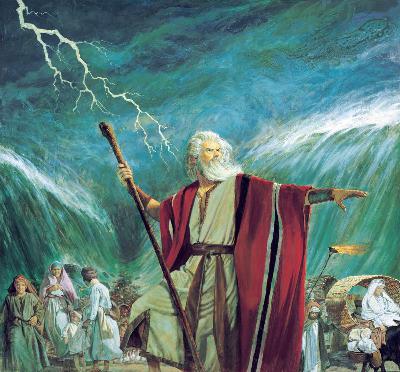
As Moses reflects on the Lord, he identifies the Lord as the transcendent Creator. He then "reminds" the Creator that Man is just dust, and cannot bear up under the Lord's scrutiny.

Because we know from the introductory line that this is the prayer of Moses, we have a lot of context surrounding the Psalm that helps us understand it.
This Psalm cites the principle that the One who makes something owns it, (vss 11-12), however, the main theme of the Psalm is a concern that the promises made to king David are not being fulfilled.
The permanency of the foundation of the earth is compared to the promises of God, in particular in Psalm 78, to David. Some of the promises to David, however, are fulfilled in his Son, Jesus Christ.

Can you reason with a person who believes in a flat earth (and uses the Bible as their authority)? A student asks about evolutionary proposals claiming to explain how life emerged from non-life.
God is faithful; He is also trustworthy. Are the courses of the stars in space faithful and trustworthy too? 1st Peter 4:19 refers to God as a "faithful Creator," would we say that about the sun, moon and stars?

The Lord warns the arrogant to cease their boasting. A common boast in this modern era is that "Science" has explained the origin of the universe without any necessity for God. We discuss how accurate such claims are, and what the Creator's response might be.
The Psalmist praises the Lord for His power displayed in His wondrous works (miracles). The Lord warns the arrogant that He who laid the pillars (foundations) of the earth will be the impartial Judge of all.
This Psalm was most likely written during the 400 year "silent period" before John the Baptist proclaimed Jesus Christ's presence on earth. The Psalmist pleads with the Lord to once again do mighty works as He did in creation.

Comments

Download from Google Play

Download from App Store
 United States