


 Claim Ownership
Secure Talk Podcast
Subscribed: 244Played: 3,512
Subscribe

© All rights reserved
Description
Secure Talk reviews the latest threats, tips, and trends on security, innovation, and compliance.
Host Justin Beals interviews leading privacy, security and technology executives to discuss best practices related to IT security, data protection and compliance. Based in Seattle, he previously served as the CTO of NextStep and Koru, which won the 2018 Most Impactful Startup award from Wharton People Analytics. He is the creator of the patented Training, Tracking & Placement System and the author of “Aligning curriculum and evidencing learning effectiveness using semantic mapping of learning assets,” published in the International Journal of Emerging Technologies in Learning (iJet). Justin earned a BA from Fort Lewis College.
265 Episodes
Reverse
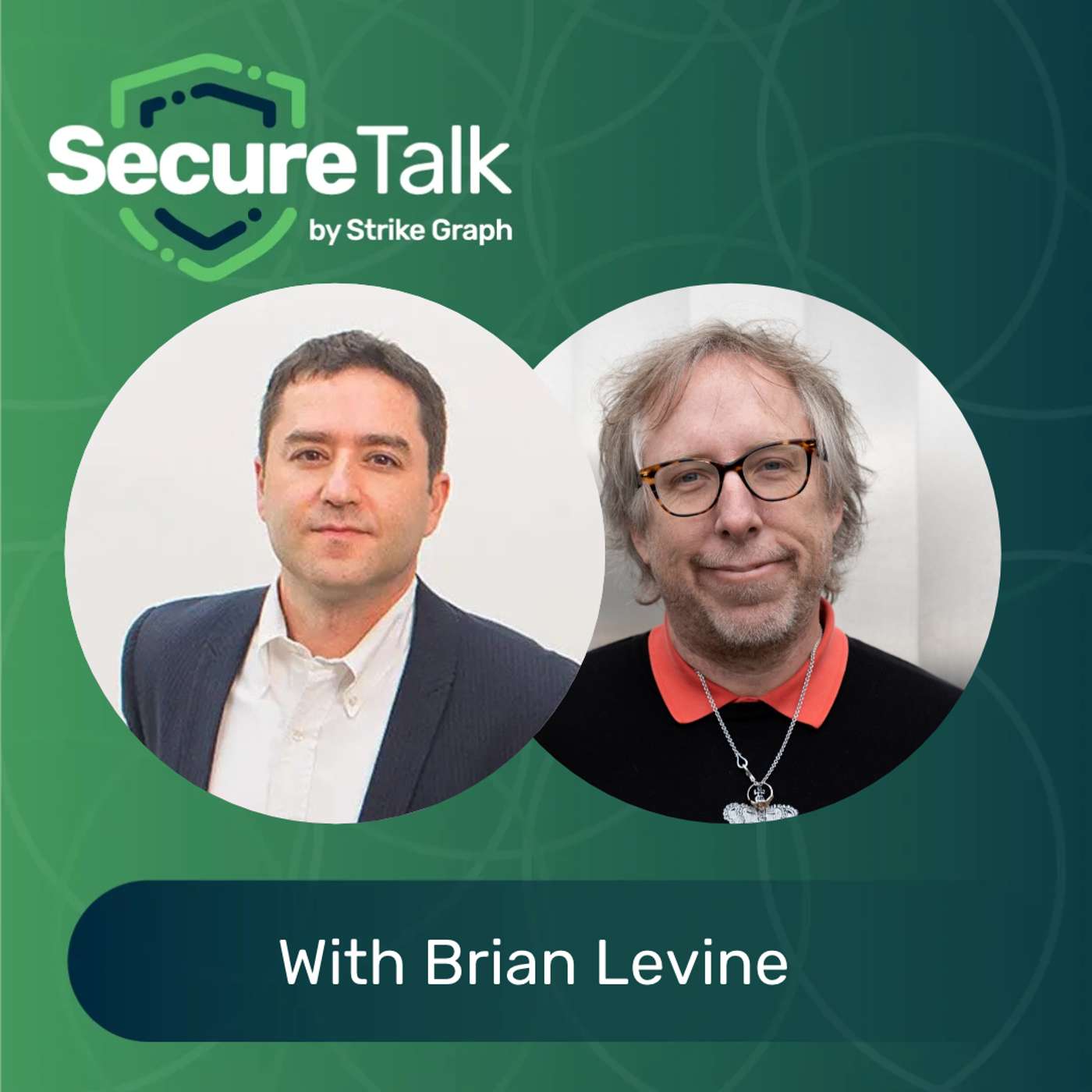
One of the most respected voices in online child safety research just called Tor "a piece of junk" — and he has the math to back it up.Brian Levine — Distinguished Professor at UMass Amherst, ACM Fellow, and Director of the UMass Cybersecurity Institute — joins Justin Beals to explain why two decades of fighting online child exploitation convinced him that one of tech's most trusted anonymity tools does more harm than good.Chapters00:00 Levine challenges common claims about Tor02:13 The peer-to-peer research that revealed online abuse05:36 Rescue Lab and safety by design07:41 Investigating with public data, lawfully10:40 Why university research helps - and its funding limits14:30 Peer-to-peer networks, moderation, and accountability16:27 Tor Browser versus Tor Onion Services18:53 Levine’s critique of Tor’s protections and governance22:38 How online platforms are exploited25:50 Who controls Tor, and why terminology matters31:24 Privacy for whistleblowers and dissidents36:18 AI-generated abuse and designing safer platformsLevine's core claim lands hard for a security audience: cryptography isn't the weak point — governance is. "You don't break the encryption of Tor. You disrupt its routing through the network. And it's a very weak system," he explains, arguing the Tor Project has known about documented abuse for years without meaningfully addressing it.For CISOs and compliance leaders, the takeaway extends beyond Tor: any platform — anonymity tool, marketplace, or SaaS product — has to be designed assuming bad actors will exploit it. "Safety by design," Levine says, isn't optional anymore.🔔 StrikeGraph builds the compliance infrastructure that turns "safety by design" into practice for defense-industrial-base companies. [Subscribe / Events / Newsletter →]About the guest: Brian Levine holds a PhD in Computer Engineering (UC Santa Cruz, 1999) and directs the UMass Cybersecurity Institute. Elected ACM Fellow in 2020; sole author of a 2022 NIJ Report to Congress on internet-based crimes against children. Featured in the New York Times, Wall Street Journal, and other major outlets.Related episodes: CMMC Phase 2 suspension: https://youtu.be/V-eiHMJiYbs?si=L82UtGOJSTFynXQGAI governance with Fran Berman: https://youtu.be/2_iRwe_AUp0?si=hdFv85muCRWQcxNPNon-human identity with Dan Cinnamon: https://youtu.be/UQKYuKpE6lo?si=Fkvsr8A1mE2GX24S#CyberSecurity #Compliance #TorNetwork #ChildSafety #AIThreats #DigitalForensics #OnlineSafety #SecureTalk
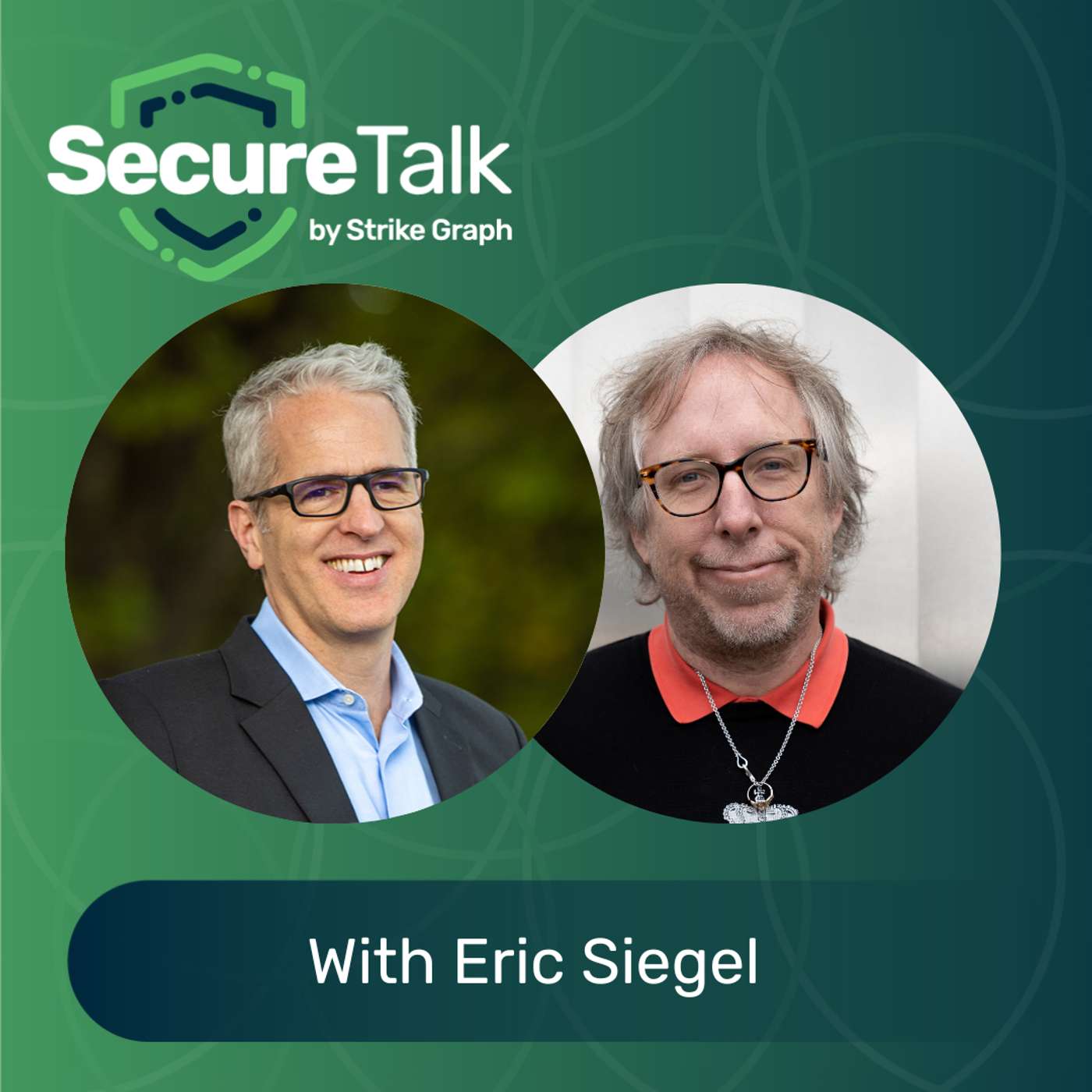
The trillion-dollar AI story is about autonomy. The real value — in fraud detection, security triage, and risk scoring — is hiding in the AI almost nobody is talking about.Most machine learning models built to be deployed never get deployed. Meanwhile, budgets pour into generative AI pilots that dazzle in the demo and stall in production. Data scientist and author Eric Siegel estimates the real value of today's AI may be closer to 5% of what current valuations imply- still enormous, but a lot of disillusionment waiting to happen.If you lead security, GRC, compliance, or data teams — or you've been told to "do AI" without a clear business case — this conversation is your reality check.📖 Eric's book: The AI Playbook: Mastering the Rare Art of Machine Learning Deployment. Chapters00:00 Predictive and generative AI as complementary tools02:33 What predictive AI does that generative AI does not06:32 How hype around intelligence and agents creates scope creep09:16 Risk scores and human review for more reliable automation11:22 Why model accuracy is not the same as business value13:30 BizML’s six-step path from project idea to deployment16:08 The second wow: proving operational impact19:20 AGI claims, uncertainty, and the limits of prediction23:14 AI investment, business sustainability, and the bubble27:08 Why predictive and generative AI work better together31:35 Ethics, protected classes, and machine bias37:20 Why hiring models cannot repair workplace culture39:08 How to interpret probabilities without mistaking them for certaintySOURCES & REFERENCES• The AI Playbook by Eric Siegel → https://mitpress.mit.edu/author/eric-siegel-39891/• Gooder AI (Eric's startup) → https://gooder.ai• Eric's op-eds on discriminatory models → https://civilrightsdata.com• Cory Doctorow, coiner of "enshittification" → https://pluralistic.net• ProPublica, "Machine Bias" → https://www.propublica.org/article/machine-bias-risk-assessments-in-criminal-sentencing• EEOC guidance on AI in hiring → https://www.eeoc.gov/sites/default/files/2024-04/20240429_Employment%20Discrimination%20and%20AI%20for%20Workers.pdf• Nate Silver's 2016 election forecast → https://www.youtube.com/watch?v=nVNEz0W-Ud4THE STORY▶ The first "wow" is easy. The second is rare.AI pilots knock everyone's socks off — and then die before deployment. Siegel argues that teams obsess over technical benchmarks and lose sight of business outcomes: "It's like being more excited about the rocket science than the launch of the rocket."▶ AGI and the autonomy sales pitchUsing a chatbot with a human in the loop is valuable. But that's not what's being sold. "AGI is, by definition, the ultimate autonomous story," Siegel says — and that's where the hype outruns the technology.▶ The mirror problemStrip out a protected-class column and a model can still discriminate through proxies. Siegel revisits ProPublica's recidivism investigation, which found higher false-positive rates for Black defendants. Justin shares how a hiring model exposed a company quietly weeding curiosity out of its own culture.🔐 SecureTalk is brought to you by Strike Graph — compliance and security that scales → https://strikegraph.comABOUTGuest: Eric Siegel is a 35-year machine learning veteran, a former Columbia University professor, founder of Machine Learning Week, co-founder of Gooder AI, and author of The AI Playbook and Predictive Analytics.Host: Justin Beals is the founder and CEO of Strike Graph and a career builder of machine learning products in education, hiring, and security.📄 Full transcript: https://www.strikegraph.com/secure-talk-podcast/ai-is-worth-5-of-its-hype-agi-myths-machine-bias-predictive-ais-untapped-value🔔 Subscribe for weekly conversations on cybersecurity, compliance, and the tech reshaping risk.#AIhype #PredictiveAI #MachineLearning #Cybersecurity #AIgovernance
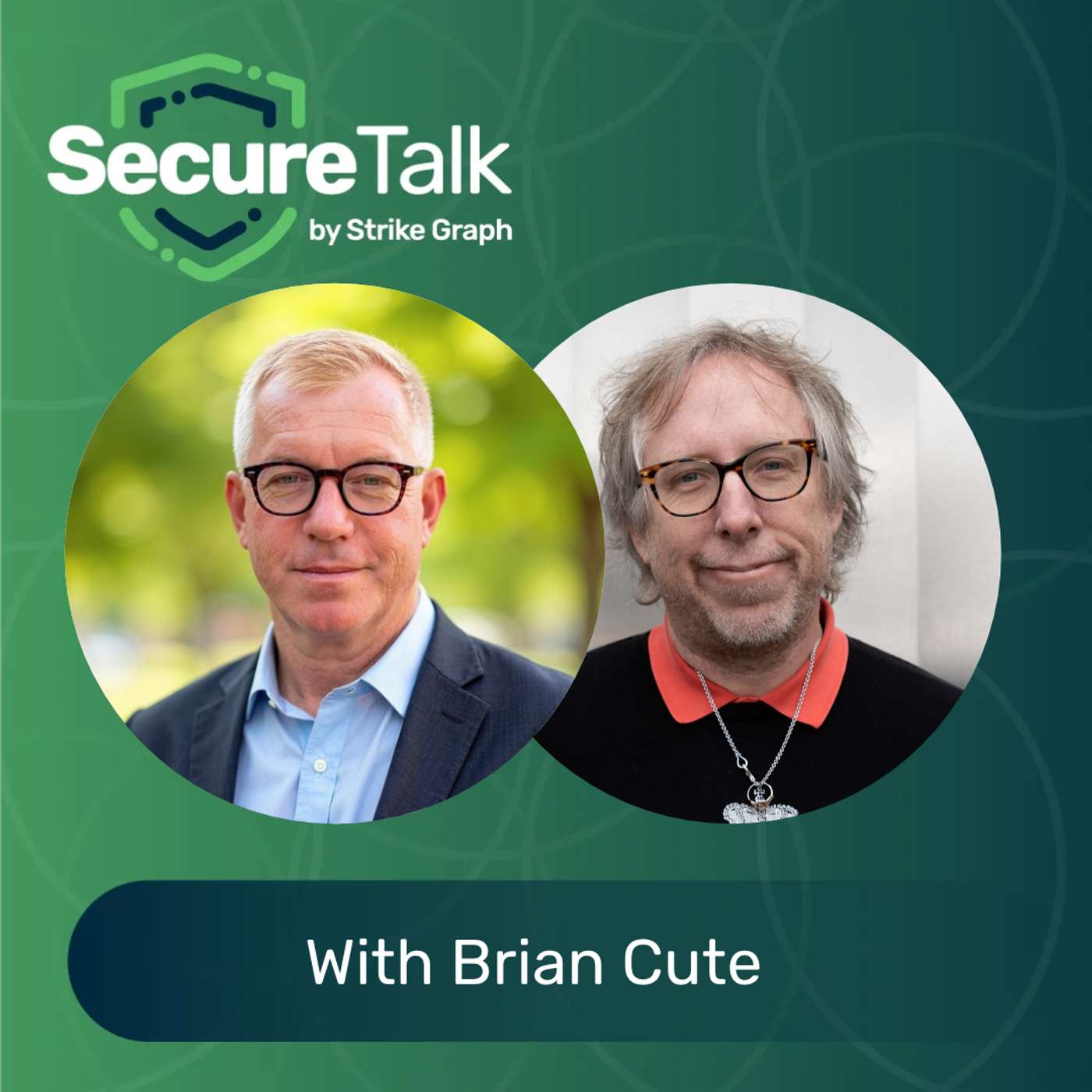
The internet was built for a handful of universities, with no security where it seemed unnecessary. We’re now making the same mistake with AI, only faster.The Problem: Once a technology spreads, it’s “humpty dumpty.” You can’t put security back in. Brian Cute has watched this happen from the inside: at a submarine cable carrier during the dot-com crash, at Network Solutions when it was the only domain seller on Earth, and inside ICANN. This Cybersecurity Awareness Month, he explains why the rush to adopt AI is repeating the internet’s original design mistake, and what history says we should do instead.Who is this for: Security architects, GRC and compliance professionals, policy watchers, and technology leaders adopting GenAI and agentic AI without a clear risk model.Summary: The Original SinVint Cerf and the early internet’s designers built for scale within a closed group of universities, and some security features were left out. When the network went global, criminals found those gaps. “Getting everybody to adopt a security fix is really, really hard, next to impossible,” Brian says. Everyone rushing to deploy AI, he warns, is watching “a similar movie, yet again.”Take the Word “Governance” AwayICANN worked because the DNS is a scarce, single-operator namespace. AI has none of those attributes. Brian argues the real work is building collaboration mechanisms: a defined problem, a shared outcome, and clear roles for government, industry, civil society, and engineers. Justin adds that existing privacy, fraud, and IP law already covers much of what’s needed.Bring a Tool, Then Get Out of the WayBrian’s lesson from rural communities: “All of the knowledge that is required to address these problems already exists.” Outsiders should bring a tool that’s fit for purpose and let the community adapt it.📩 Subscribe to Secure Talk:🔐 Brought to you by Strike Graph: www.strikegraph.comChapters00:00 Introduction and guest background04:22 Starting the conversation on internet evolution09:27 Lessons from the domain name system and security challenges12:27 AI's impact on cybercrime and automation17:30 Scaling cybersecurity tools for small organizations21:47 Measuring security impact and behavior change25:35 AI as a tool for protection and learning36:08 Governance of AI and internet infrastructure40:07 Collaborative approaches to AI governance43:58 Closing remarks and future outlook📚 SOURCESGlobal Cyber Alliance: https://globalcyberalliance.orgIETF: https://www.ietf.orgMicrosoft Digital Defense Report 2025: https://cdn-dynmedia-1.microsoft.com/is/content/microsoftcorp/microsoft/msc/documents/presentations/CSR/Microsoft-Digital-Defense-Report-2025.pdfCISA Cybersecurity Awareness Month: https://www.cisa.gov/cybersecurity-awareness-monthICANN: https://www.icann.orgModel Context Protocol: https://modelcontextprotocol.ioABOUT THE GUESTBrian Cute is CEO of the Global Cyber Alliance and former CEO of Public Interest Registry, operator of .org. He spent decades in ICANN policy work, beginning as director of policy at Network Solutions.Hosted by Justin Beals, founder and CEO of StrikeGraph.#CybersecurityAwarenessMonth #InternetGovernance #AIGovernance #AISecurity #SecureTalk
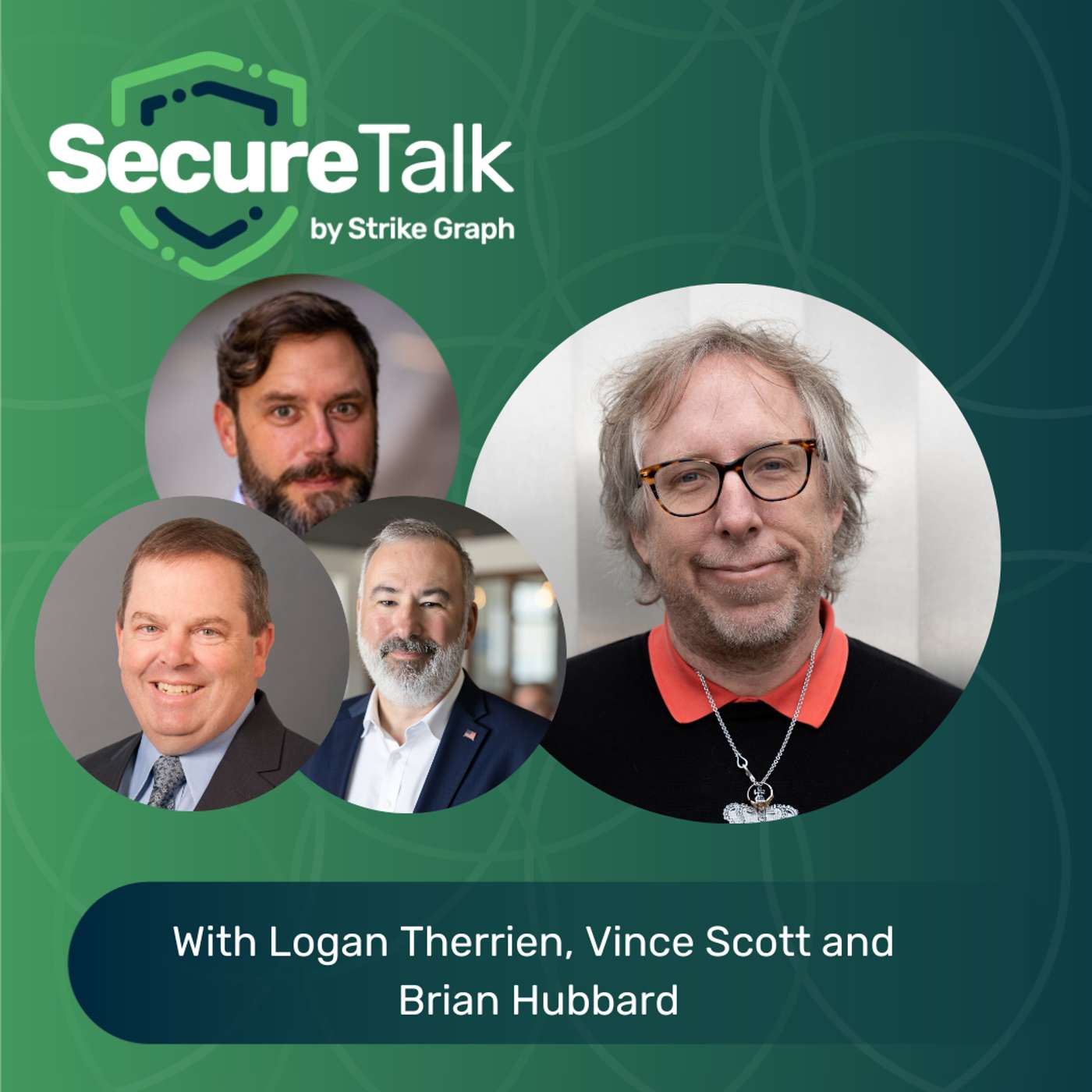
CMMC wasn't suspended. Only one piece of it was, and the defense contractors acting like the whole program went away are the ones taking on the most risk.Eighty days after the DoD CIO paused CMMC Phase 2, the 60-day review has closed, a class deviation has written the pause into contracts, and the Reform Task Force's recommendations are still not public. Contracting officers and primes aren't waiting. Some solicitations now require a posted SPRS score before you can even open the RFP.In this SecureTalk panel, host Justin Beals sits down with three NIST SP 800-171 practitioners (a C3PAO strategist, a lead CCA and instructor, and a former Navy cryptologist turned enclave provider) to separate what DoD actually decided from what the internet decided for it.WHO THIS IS FORDefense contractors and subcontractors, compliance and IT leaders preparing Level 1 or Level 2 self-assessments, MSPs and MSSPs serving the DIB, and anyone trying to make sense of CMMC after the Phase 2 pause.TIMESTAMPS00:00 Why this episode is a panel00:39 Meet the guests04:11 "We're NIST 800-171 experts, not CMMC experts"05:16 80 days after the pause: where things stand07:21 What hasn't changed: Level 1 and Level 2 self-assessments08:26 Myth: "CMMC was suspended"11:33 No SPRS score, no RFP documents14:08 CMMC is a floor, not a ceiling14:26 The FAR overhaul and retired clauses still in contracts18:29 Myth: "CMMC got pushed to November 2028"22:02 The class deviation most people misread24:14 What a defensible self-assessment looks like29:06 Reddit, Discord and the misinformation problem33:30 Myth: "My MSSP handles CMMC for me"36:40 Myth: "Our policies prove we're compliant"40:32 Myth: "We bought an enclave, so we're done"44:07 Where the real risk lies now51:13 How to choose outside helpSOURCES REFERENCED- DoD CIO memo suspending CMMC Phase 2 (July 13, 2026), via Federal News Network: https://federalnewsnetwork.com/cybersecurity/2026/07/pentagon-suspends-cmmc-phase-two-requirements-launches-review-of-program/- Sept. 3 acquisition memo codifying the pause, via MeriTalk: https://www.meritalk.com/articles/dod-codifies-pause-of-cmmc-phase-2-dod-cio-says-more-work-needed-on-cmmc/- 32 CFR Part 170, the CMMC Program rule (phased rollout in §170.3): https://www.ecfr.gov/current/title-32/subtitle-A/chapter-I/subchapter-G/part-170- NIST SP 800-171 Rev. 2: https://csrc.nist.gov/pubs/sp/800/171/r2/upd1/final- NIST SP 800-171A, the assessment methodology: https://csrc.nist.gov/pubs/sp/800/171/a/final- CMMC Program Final Rule: https://www.federalregister.gov/d/2024-22905/p-1876- Free executive level class: https://www.evolvedcyberacademy.com/courses/Rev3Leadership- CMMC Level 2 Self- Assessment: Step-by-step with Templates: https://www.strikegraph.com/blog/conduct-cmmc-level-2-self-assessmentWHAT YOU'LL LEARNThe requirement never moved. The pause hit third-party C3PAO assessments, not NIST SP 800-171 compliance and not Level 1 or Level 2 self-assessments. Brian Hubbard sets the bar at a self-assessment you could defend "if the DIBCAC walked in the next day after you posted your score."November 2028 is not a new deadline. Logan Therrien explains it has always been the end of CMMC's four-year phased rollout. Reading it as a two-year reprieve is one of the costliest misreadings in the market.The market is moving faster than the policy. Vince Scott compares it to oil moving through the Strait of Hormuz: there are months of supply in the system before anyone feels the change. Primes are already asking to see SSPs and SPRS scores.GUESTSLogan Therrien, Chief Strategy Officer, Kieri Solutions (C3PAO); 24-year military veteranBrian Hubbard, President, Evolve Cyber; Lead CCA and CMMC instructor; 40+ years in cybersecurityVince Scott, CEO, Defense Cybersecurity Group; retired Navy cryptologistHOSTJustin Beals, founder of Strike Graph and host of SecureTalk, a podcast focused on security news, innovation, and excellence.🔔 Subscribe for conversations where cybersecurity, compliance and national security meet.#CMMC #NIST800171 #DefenseIndustrialBase
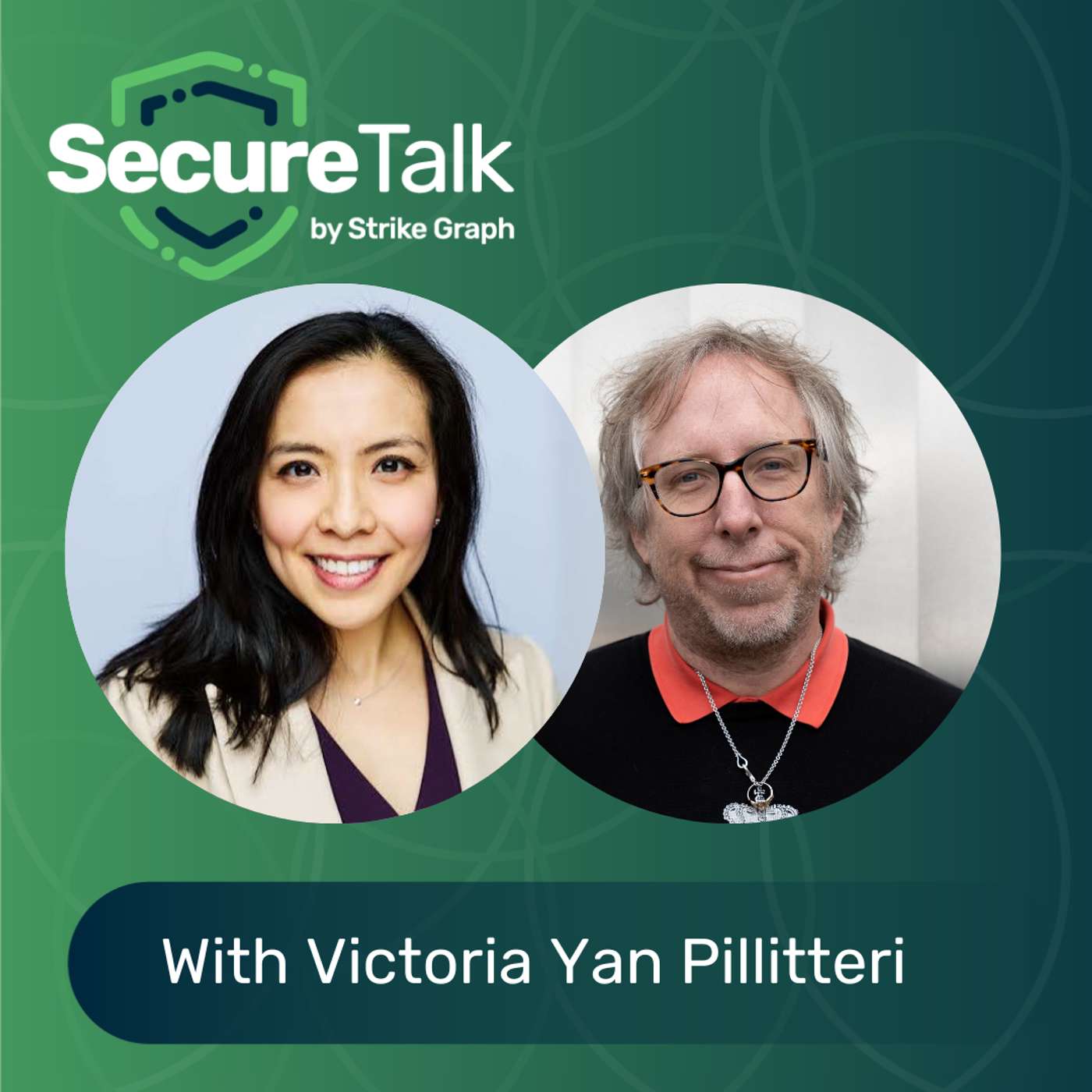
She helps write the rules the entire U.S. defense industrial base gets assessed against — and she's telling you compliance is the floor, not the finish line.Victoria Yan Pillitteri leads the Risk Management Framework/FISMA team at NIST and co-chairs the Joint Task Force uniting DoD, the Intelligence Community, and civilian agencies on one cybersecurity framework. In this episode, she and Justin Beals go inside how NIST actually builds SP 800-53 and 800-171 — what gets cut, what stays, and why "just copy the control language" is a losing strategy for anyone trying to pass an assessment.In this episode:Why 853 is "the Cheesecake Factory menu" of cybersecurity controls — and why that's a feature, not a bugThe real difference between NIST 800-171 Rev 2 and Rev 3, and why "organization-defined parameters" changed everythingWhy writing your own control (not just quoting NIST's language) is the only way to actually pass an assessmentHow FedRAMP 20x, OSCAL, and continuous monitoring are quietly replacing the point-in-time ATONIST's upcoming AI control overlays for predictive, generative, and agentic AI systemsChapters00:00 Introduction00:34 The purpose of NIST standards and measurement science02:24 Cybersecurity outcomes as a Rosetta Stone03:14 The challenge of measuring risk in cybersecurity04:55 Frameworks as operating systems for risk management06:58 The iterative process of developing cybersecurity standards08:11 Interpreting control statements for organizations09:36 The importance of tailoring controls to risk profiles12:30 The relationship between compliance and good risk management14:37 The development process of cybersecurity standards17:27 Differences between Rev2 and Rev3 of NIST 800-17120:01 Broad versus specific requirements in cybersecurity controls22:36 Supporting small businesses with guidance and tools27:23 The balance between prescriptive and flexible standards30:24 Cybersecurity in public-private partnerships34:53 Moving from point-in-time to continuous authorization40:23 AI risks and the development of tailored controls44:53 The future of cybersecurity standards and AI securityResources referenced:NIST SP 800-53 (Security and Privacy Controls) — [link]NIST SP 800-171 Rev 2 & Rev 3 (Protecting CUI) — [link]NIST Risk Management Framework — [link]NIST Cybersecurity Framework — [link]NIST AI Risk Management Framework — [link]FedRAMP 20x Program — [link]OSCAL (Open Security Controls Assessment Language) — [link]#NIST80053 #NIST800171 #CMMC #FedRAMP #CyberCompliance #RiskManagement #CUI #SecureTalk

Comments

Download from Google Play

Download from App Store
 United States