


 Claim Ownership
Selling in the Paddock
Subscribed: 6Played: 37
Subscribe

© Georgia Stormont
Description
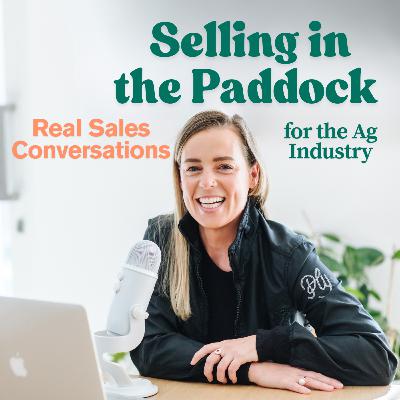
Selling in the Paddock is a podcast about real sales in agriculture. Hosted by Georgia Stormont, The Ag Sales Coach, it cuts through the noise and gets to the point—how to sell better, lead stronger, and get results.
Guests include Paul Roos, AFL premiership coach turned leadership consultant, and Troy Williams, CEO of the National Farmers’ Federation, plus top ag reps, buyers, and business owners.
If you work in ag and want to sell smarter and build better teams, this podcast is for you.
Guests include Paul Roos, AFL premiership coach turned leadership consultant, and Troy Williams, CEO of the National Farmers’ Federation, plus top ag reps, buyers, and business owners.
If you work in ag and want to sell smarter and build better teams, this podcast is for you.
86 Episodes
Reverse
What happens when a farmer tells you to stop mucking around and build something that will actually help him?For Gavin Leersen, that conversation eventually became BaleTime.Gavin is a shearer, electronics tinkerer and the founder of BaleTime — an Australian agtech product designed to help hay producers monitor conditions in the windrow and know when it’s time to bale.In this episode of Selling in the Paddock, Georgia sits down with Gavin to unpack the wonderfully unconventional story behind BaleTime — from building his first unit for a farmer he was shearing for, to discovering that word of mouth had been doing much of his selling for him. They explore what happens when you have a genuinely useful product but suddenly realise building it and selling it are two very different skill sets.Gavin shares what he’s learnt from field days, talking directly with farmers, digital marketing and simply listening to the problems customers are trying to solve. They also discuss why you can’t convince every farmer they have a problem, the importance of understanding what an individual customer actually values, and why sometimes the best sales conversation isn’t really a sales conversation at all. There’s also a great conversation about perfectionism, innovation and knowing when something is good enough to get into the paddock. As Gavin puts it, if he’d waited until BaleTime was perfect, some of his customers would have missed out on a decade of better sleep. Plus, Gavin shares where the technology could go next, including flood irrigation monitoring and potential applications well beyond hay.It’s a very Selling in the Paddock conversation about curiosity, solving real problems, learning from your customers and figuring out how to sell something you genuinely believe can make their lives better.How Gavin went from shearing sheep to developing agtechThe farmer conversation that sparked BaleTimeWhy Gavin's first customers became his unofficial sales teamLearning to sell when you don't naturally see yourself as a salespersonWhy field days are about much more than making salesSelling innovation to sceptical agricultural customersWhy the problem you see isn't necessarily a problem your customer valuesPrice objections versus the cost of getting hay wrongUsing customer feedback to improve a productPerfectionism, AI and knowing when to shipThe future of BaleTime and Gavin's other agricultural technology ideasWhy Gavin is starting to think “farmers first” rather than “Australia first” as he looks towards international markets BaleTime website:Gavin Leersen on LinkedIn:BaleTime on Facebook:Selling in the Paddock website:Georgia Stormont on LinkedIn:[ADD LINK]Selling in the Paddock book:Selling in the Paddock Instagram:I reckon “if I’d waited until it was perfect, they would have missed out on 10 years of it making their life better” is also the clip I'd be hunting for from this episode. That's a cracking little founder/innovation moment, especially paired with his story about the farmer's wife thanking him because her husband was finally getting better sleep. In this episode:Connect with Gavin & BaleTimeConnect with Selling in the Paddock
My Sales Numbers Don’t Lie: What My Pipeline Is Teaching MeWe’re nine months into 2026, so I thought it was time to take you behind the scenes of Selling in the Paddock.In this solo episode, I’m looking back at what has already been a massive year — the agricultural businesses I’ve worked with, the travel, workshops, conferences, keynotes, launching the Selling in the Paddock book and continuing to grow the business.But more importantly, I’m opening up my own sales pipeline.Because I’m not standing on the sidelines teaching sales. I’m in it.I’m prospecting. I’m following up. I’m writing proposals. I’m getting ghosted. I’m hearing no. I’m winning work. And sometimes, I’m losing it.Recently, I sat down and properly interrogated my Pipedrive CRM and my sales numbers. I had a gut feeling about where I was strong — particularly once an opportunity reached proposal stage — but I wanted to know whether the data actually backed me up.It did.And it also showed me where the bigger opportunities are in my own sales process.In this episode, I unpack:What 2026 has looked like behind the scenes at Selling in the PaddockWhy I use Pipedrive to manage my sales pipelineWhat I actually track in my CRM — and what I don’tWhy every genuine opportunity needs a next actionWhy I don’t assign a dollar value to every lead immediatelyThe difference between a genuine pipeline and a list of people you hope might buyWhy marking an opportunity as lost can actually help you sell betterWhat my own conversion numbers revealed about my strengthsWhy closing isn’t currently the biggest opportunity in my sales processHow knowing where you’re strong helps you decide where to put your time, energy and resourcesOne of my biggest takeaways?A pipeline isn’t a list of people you’d like to buy from you. It’s a list of genuine commercial opportunities at different stages.And when you understand those stages — and your own strengths within them — you can become much more deliberate about where you put your energy.If this episode gets you thinking about your own sales pipeline, send me a DM. I’d love to know: where are you strongest in your sales process, and where are your opportunities getting stuck?
What separates a good agricultural salesperson from a great one?For Bonita Everts, Grower Business Development Manager at Netafim Australia, it starts with listening.Originally from South Africa, Bonita has built her career across fertiliser, vegetable seed and now precision irrigation — learning how to sell into agricultural markets where relationships, trust and credibility matter.In this episode of Selling in the Paddock, Georgia and Bonita unpack the difference between pushing a product and creating genuine pull from the market.Bonita shares why the best salespeople don't walk onto farm and unload everything they know. They listen first, understand what the grower actually needs, and then offer the right solution.They also explore the complexity of selling through a dealer or reseller network. How do you create demand with the grower while bringing the dealer along for the journey? Bonita's answer is simple: get alongside them. Jump in the ute. Visit growers together. Educate. Support. Make it easier for everyone to do business.And then there's the part of sales nobody avoids forever: when things go wrong.Bonita shares the story of a major fertiliser delivery that didn't arrive when a customer needed it. After a heated phone call — and admitting she didn't handle the initial conversation particularly well — she chose to face the situation head-on, drove to see the customer and worked to make it right.That customer ultimately became one of her best clients.Georgia and Bonita discuss why difficult conversations can actually strengthen relationships when we're prepared to show up, take responsibility and work towards a solution rather than putting our head in the sand.They also dig into persistence, confidence and one of the most valuable questions a salesperson can ask:“If you're telling me no, I want to understand why.”Because a no isn't necessarily a failure. Sometimes it's feedback. Sometimes it's timing. And sometimes it's simply a delayed yes.In this episode:Why great salespeople listen before they sellThe difference between push selling and creating pullSelling effectively through dealers and resellersBecoming the “voice of the grower”Why product knowledge alone doesn't make a great salespersonWhat to do when something goes wrong with a customerManaging expectations and having difficult conversationsPersistence without simply pushing harderWhy you should understand the reason behind a “no”Bonita's journey from South Africa to Australian agricultureA brilliant conversation about sales, agriculture, relationships and the willingness to keep learning — because ultimately, great agricultural sales isn't about pushing product.It's about understanding people.
What do 500+ conversations with people across Australian agriculture teach you about selling?Quite a lot, as it turns out.In this episode of Selling in the Paddock, Georgia sits down with Oli Le Lievre, founder of Humans of Agriculture, to unpack what years of interviewing people across the industry have taught him about curiosity, trust, relationships and what makes people open up.Oli shares why genuine curiosity is one of the fastest ways to build connection — and why people can tell when you're asking questions because you're truly interested versus simply waiting for your opportunity to sell. They explore the difference between listening and actually hearing someone, why there are no shortcuts to trust, and how your reputation in agriculture often arrives at the farm gate before you do. The conversation also gets into an interesting tension Oli is experiencing as Humans of Agriculture grows: how do you remain deeply relationship-focused while being unapologetic about the fact that business ultimately needs a transaction? And then there's the question that might just require a whole new podcast…Apparently, according to the next generation, when you're doing something brilliantly, you're “cooking”.When you're doing something terrible?You're “selling”. 😂Which raises a much bigger question: if so many people have a negative reaction to the word selling, particularly in agriculture, do we need to rethink what great selling actually looks like?This episode is ultimately a conversation about people — understanding them, listening to them, earning their trust and building relationships that last.Because as Oli puts it, in agriculture there may not really be sales roles at all.They might just be relationship management roles. 🎧 If you work in agricultural sales, leadership, recruitment or simply spend your days building relationships across the industry, this one's worth a listen.
What separates a good salesperson in agriculture from a great one?According to Edward O’Dwyer, it might be something surprisingly simple: patience.In this episode of Selling in the Paddock, I sit down with agribusiness capital markets strategist Edward O’Dwyer for a wide-ranging conversation about agriculture, sales, relationships, investment and the value of knowing when to stop talking and start listening.Edward’s career has taken him from growing up on a cattle property south of Toowoomba, to jackarooing, horse racing stables, selling LandCruisers, working in major agribusiness real estate and negotiating multi-million-dollar agricultural transactions.And through all of it, one theme keeps coming back: people.We talk about why some of the best salespeople Edward has worked with have been calm, patient listeners who are genuinely more interested in their customer than themselves.We also unpack:🌱 Why patience can get you everywhere in agricultural sales👂 Why listening is one of the most underrated sales skills🤝 What turns a sales rep into a genuine trusted advisor💰 Why knowing your own value matters when you sell🚜 How Edward went from the farm to major agricultural property transactions🐂 Why understanding both sides of a deal matters📈 How the capital landscape in Australian agriculture is changing🌏 Where Edward sees opportunities emerging across agriculture, sustainability and investment💡 Why farmers need to continually adapt, take calculated risks and go back to the drawing board✈️ Edward’s advice for young people wanting to build a career in agricultural salesOne of my favourite parts of this conversation is Edward’s story about the rural sales rep who essentially managed his farming calendar for him — knowing what he needed, when he needed it and, importantly, understanding where Edward could afford to cut a corner and where he absolutely couldn’t.That’s not order-taking.That’s becoming a trusted advisor.There’s plenty of gold in this one for anyone working in agricultural sales, agribusiness or simply interested in what makes great relationships work.🎧 Grab a coffee — piccolo if you're joining Edward — and enjoy this episode of Selling in the Paddock.

Comments

Download from Google Play

Download from App Store
 United States