


 Claim Ownership
Sensing the Signal
Subscribed: 3Played: 13
Subscribe

© All rights reserved.
Description
Sensing the Signal is a bi-weekly podcast produced by Atreides. In conversations with expert practitioners, we discuss the overlap between data, technology, intelligence, and national security and what it all means for analysts everywhere. How do we know AI is trustworthy? Can battlefield debris hunt down weapon transfers? How is technology transforming national intelligence? Find out answers to these questions and more from leaders in the field.
20 Episodes
Reverse
Disinformation presents a pervasive and growing threat that is increasingly undermining our fundamental security, affecting us in ways that might not be obvious. More than ever we need to address the vital question: how do we defend our national security (and our own minds) against disinformation? In this episode of Sensing the Signal we talk to Rachele Gilman, an expert who has investigated cases of disinformation and is developing standards and frameworks that help us better understand and analyse the threat.
Human trafficking is a multi-billion dollar illegal industry that operates in plain sight. Yet most people very rarely notice the signs, let alone consider how this criminal activity can be stopped. Fortunately, one organisation is dedicated to uncovering and preventing human trafficking. In this episode, we talk to Neil Giles and Alice Nottage from Stop the Traffik and delve into the work of this small yet remarkable organisation, which has built an innovative and unique data analysis and intelligence-sharing capability. By understanding the lived experience of victims, Stop the Traffik creates a rich data picture that results in positive real-world impact across the globe, with many people freed from exploitation.
For this episode, we took the show on the road - to DSEI UK 2025, 'the flagship defence event for the UK' which is a global platform for the entire defence industry. This year saw an expanded Tech Zone that gave us several indicators of how defence tech is developing, particularly driven by current wars in Ukraine and elsewhere. We took the opportunity of having thousands of interesting people in the same place to talk to a selection of expert guests: Clay Hicks from Zignal Labs, Enrique Oti from Second Front Systems, Tony Reeves from Maiar, and Neil Sinclair, spokesperson for DSEI.
Ahead of the DSEI 2025 show, we talk to retired Rear Admiral Jon Pentreath, currently a Senior Military Advisor to DSEI, about the key trends in defence technology. In particular, we discuss innovative adoption of hardware and software solutions from non-traditional suppliers and what that means for military end-users. The trends are signified at DSEI by the Tech Zone being the fastest growing sector, with over 100 companies signed up. The range of companies involved also demonstrates how innovation in defence technology is happening outside the traditional defence sector, especially with increased involvement from SMEs.
The UK’s Strategic Defence Review (SDR) signals a significant shift in defence posture, with the aim of gearing the UK’s military to be ready to fight a war - perhaps the next ‘World War’ - against a near-peer adversary. The SDR provides an insight into how the UK aims to reshape the military, particularly in light of a stated increase in overall defence spending, and how it will position itself in relation to NATO and other allies. The strategy is to pivot towards an “Integrated Force”, with “constant innovation”, while encouraging a “whole of society” approach. In a world of increasing geopolitical uncertainty, what does this tell us about the military capabilities that are needed to face current and future threats and challenges? On this episode, Matt Lane, a founder of 325X, a venture studio specialising in defence and cyber, addresses this question and gives his perspective on the UK’s SDR and what it means for the defence tech sector.
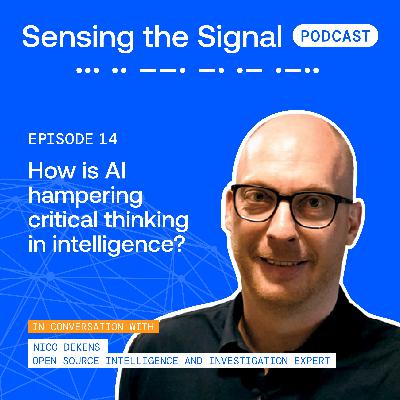
As AI tools become more commonplace in all types of knowledge work, including intelligence, they create benefits, but also risks. Nico Dekens (@dutchosintguy), an expert in open source intelligence and investigations has written about how AI tools are affecting critical thinking and analytical abilities. In this episode, we talk to Nico about his experiences in using AI tools and his recommendations for mitigating the potential risks of the unknown and the ‘black box’ character of AI.
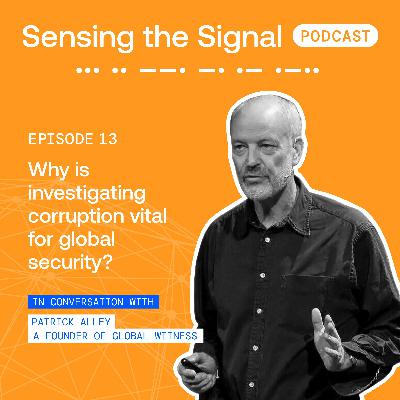
How did an NGO going undercover help to bring down the brutal Khmer Rouge? And how did they go on to uncover corporate complicity in producing blood diamonds? And, more recently, how did they use commercially available data to identify the companies supplying jet fuel to the Russian planes that bombed civilians in Ukraine? In this episode of Sensing the Signal, we talk to Patrick Alley, a founder of Global Witness, who spent three decades investigating corruption and catching Very Bad People at the nexus of war, environmental crimes, and human rights abuses. We discuss how corruption underpins many of the world's conflicts and security problems.
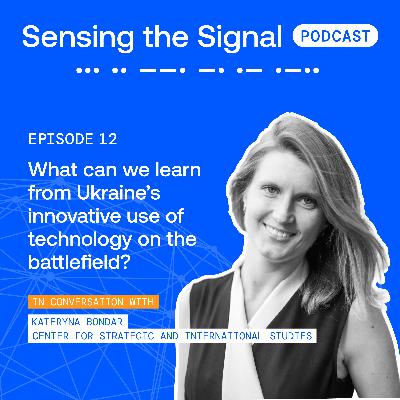
As Ukraine defends itself from an existential threat, it has deployed a variety of technology solutions on the front line to support war fighters, often at high speed and with great effect. In this episode, we talked to Kateryna Bondar from the Center for Strategic and International Studies about her research into military technology in Ukraine, including unmanned systems and command and control platforms, and the impact of battlefield-driven innovation, AI integration, and allied collaboration. Through the discussion of these themes, we explore what other countries can learn from the rapid capability advancements made by the Ukrainian Armed Forces.
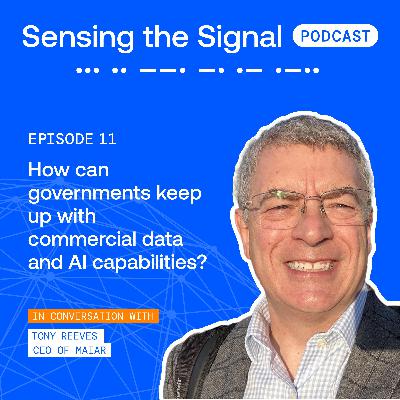
The breadth and depth of commercial intelligence capabilities is expanding at a dizzying rate, especially with the rapid growth of AI products coming into the market. These capabilities can have a huge impact on national security and defence, but only if they can be implemented before they are superseded. How can government organisations keep pace with these capabilities and use them effectively, particularly in classified environments? On this episode of Sensing the Signal, we discuss this with Tony Reeves, CEO of Maiar, a defence technology, intelligence analysis, and systems engineering company.
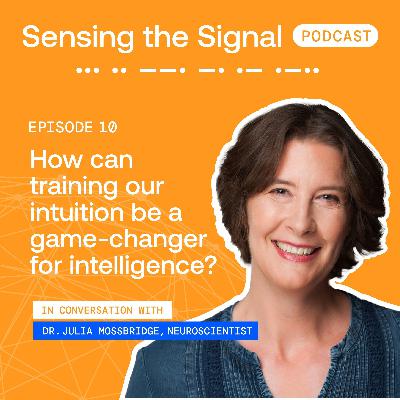
Intelligence analysis is all about using structured techniques to apply logic to help us understand uncertainty. But are we applying the full potential of human cognition? In this episode, Dr. Julia Mossbridge, a neuroscientist working at the edge of scientific research describes how intuition can be improved through training and why we should re-consider our perspectives on pre-cognition to help us analyse future events. Julia is one of a group of scientists and former intelligence officials advocating for a groundbreaking new initiative, Research and Innovation at the Scientific Edge (RISE), which aims to push the boundaries of scientific exploration: https://thedebrief.org/u-s-advocates-urge-white-house-support-for-rise-initiative-to-keep-u-s-ahead-in-edge-science/
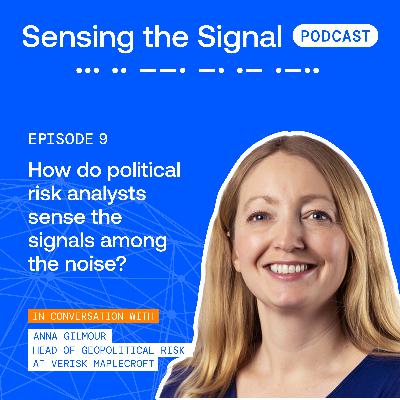
Conflict, domestic unrest, climate change, geopolitical shifts… these are all among the drivers of change that shape the world around us. In this episode, we talk to Anna Gilmour, Head of Geopolitical Risk at Verisk Maplecroft about how political risk analysts are continually tracking and monitoring hundreds of data points and combining these with their own expertise and experience to create effective analysis that enables decision-makers to plan for and mitigate the most critical risks.
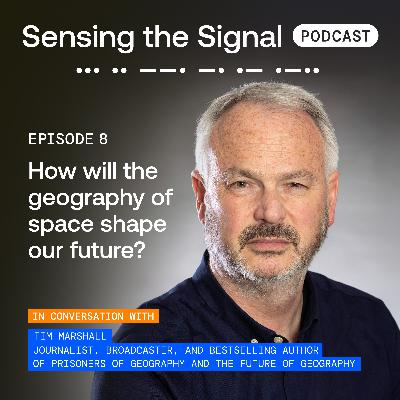
China plans to begin building a base on the moon in 2028, with the help of Russia. The US launched its Space Force in 2019 amid expanding interest in space exploration. More countries are developing highly capable space programmes, while an increasing range of private actors are putting satellites into orbit. What will all this mean for geopolitics and the intensifying great power competition on Earth? These are among the issues we discuss with journalist, broadcaster, and bestselling author of Prisoners of Geography and The Future of Geography, Tim Marshall, on this episode of Sensing the Signal.
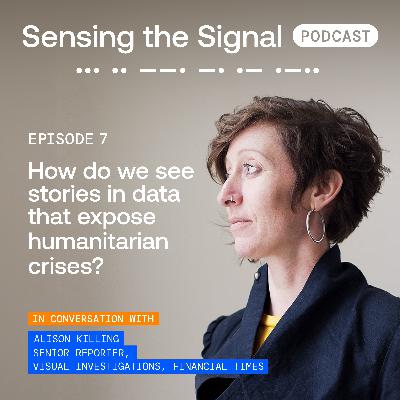
In this episode of Sensing the Signal, Terry Pattar speaks with Alison Killing, a Pulitzer Prize-winning journalist who transitioned from architecture to investigative journalism. Alison shares insights into her unique career journey, starting with her background in architecture and spatial analysis, which influenced her investigative journalism techniques using satellite imagery and data visualization. Now at the Financial Times, Alison is using visual and data-driven storytelling to expose and explain complex topics, such as ongoing humanitarian crises and environmental violations in sensitive regions. She emphasizes the importance of blending visual evidence with traditional reporting to navigate a restrictive global information environment while pushing investigative journalism boundaries.
In the latest episode of Sensing the Signal, host Terry Patar sits down with satellite imagery expert Allison Puccioni to explore how cutting-edge technology is reshaping intelligence work. Allison shares insights and experiences from her 30-year career, starting as an imagery analyst in the U.S. Army to now running her own consultancy, Armillary Services. They explore the continuing rise of commercial satellites, how AI is helping (but not replacing) human analysts, and examples like tracking Boko Haram’s movements across Nigeria and identifying nuclear facilities in Iran. They also address a fundamental challenge: even though commercial satellite imagery is growing in quantity and quality, how and why are intelligence organisations failing to make the most of these capabilities?

In this episode Dr. Matthew Ford, an Associate Professor for Strategy Division at Swedish Defence University, explores the role of smartphones in modern warfare, particularly in the context of the conflict in Ukraine. He discusses how smartphones and the Internet of Things transformed the battlefield, making war more participatory and decentralized. Civilians, through smartphones, have become major players in the information space, blurring the lines between military and civilian roles.
Parts of weapons, including drones, litter the battlefields of Ukraine, yet each fragment is potentially an important clue that can help us understand the dynamics behind the conflict. Damien Spleeters, Deputy Director of Operations at Conflict Armament Research has devoted his career to investigating these ‘little pieces of truth’, using them to hunt down sources of illicit weapons transfers.
As the world comes to increasingly rely on AI systems for generating and handling information, we may become more beholden to systems that we simply don’t understand. Dave Sully, CEO of adversarial AI company Advai, talks us through how and why we need to ‘break’ AI to fully understand and mitigate the potential risks, if we’re going to take advantage of all the potential upsides.OutlineAI systems, their vulnerabilities, and testing methods with a UK-based adversarial AI company. (0:00)AI systems, their limitations, and the current state of experimentation and development. (4:09)AI capabilities, including language translation and agent systems, with a focus on unpredictability and potential risks. (11:58)Challenges in deploying AI systems due to lack of understanding of their strengths and weaknesses. (17:02)Limitations of current AI tools in generating creative content. (23:35)AI systems vulnerability to manipulation through adversarial attacks. (30:19)AI security risks and potential flaws. (36:05)Integrating AI systems with potential limitations and risks. (40:39)AI regulation and ethics, with a focus on potential risks and gaps in current regulations. (46:55)AI potential and risks with a focus on mitigating downsides. (52:57)
Intelligence is about understanding the future, but what does the future hold for intelligence? Can the agencies keep up with the rapidly evolving world around us? We discuss these questions with Shay Hershkovitz, author of the Future of National Intelligence and delve into how the combination of new technology, generational shifts, climate change, and the competition for attention are changing the art of intelligence.OutlineIntelligence, technology, and national security (0:00)Future of intelligence profession, focusing on emerging technologies and their impact. (5:04)Transforming intelligence gathering in a rapidly changing world. (10:54)Emerging technologies impacting intelligence work, with AI and IoT as key areas of focus. (16:28)AI and IoT impact on national security and intelligence, with a focus on the limitations of AI and the importance of human cognition. (20:21)Using AI to enhance structured analytic techniques for better insights. (25:19)Using large language models to mimic adversary thinking in geopolitical scenarios. (32:04)Intelligence failures and the need for a new framework to evaluate effectiveness. (36:33)Limitations of early warning systems in predicting strategic surprises. (41:08)Using crowdsourcing and AI to improve intelligence gathering. (49:07)Outdated intelligence cycle model and its challenges in modern era. (57:54)The role of AI in intelligence work, potential benefits and limitations. (1:02:08)Transforming intelligence agencies with AI and collaboration. (1:07:59)Climate change's impact on national security and intelligence agencies. (1:16:29)
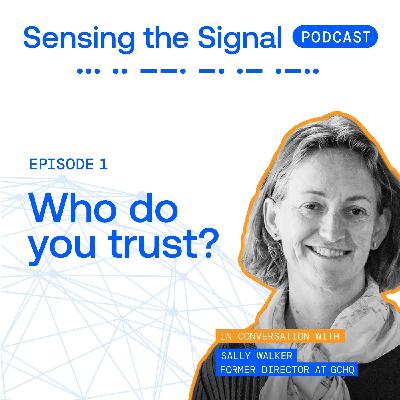
New technology, particularly generative AI, is enabling us to produce and collect information faster and in greater quantities than ever before. But how do we trust what we see and hear? This is the key question we discuss with Sally Walker, a former director at GCHQ, who now advises organisations on creating human-centric information environments.OutlineUsing data and technology to inform decision-making, with a focus on human capacity and effective leadership. (0:03)Challenges in analyzing large amounts of data in various industries. (9:47)Diversity, values, and decision-making in intelligence organizations. (14:47)Values in organizations and society, with a focus on the challenges of establishing and maintaining values in the modern world. (21:03)Information overload and media literacy in the digital age. (29:29)Teaching children critical thinking in the digital age. (37:10)Social media's impact on decision making and leadership. (42:14)Balancing tech advancements with human potential. (47:57)Improving critical thinking skills and verifying information in the digital age. (53:14)
Sensing the Signal is a bi-weekly podcast produced by Atreides. In conversations with expert practitioners, we discuss the overlap between data, technology, intelligence, and national security and what it all means for analysts everywhere. How do we know AI is trustworthy? Can battlefield debris hunt down weapon transfers? How is technology transforming national intelligence? Find out answers to these questions and more from leaders in the field.
Comments


Download from Google Play

Download from App Store
 United States