


 Claim Ownership
Sentient: The Podcast
Subscribed: 9Played: 56
Subscribe

© 2021-Sentient Media
Description
Sentient is a nonprofit, nonpartisan news organization that publishes stories and solutions to explain factory farms and their effect on climate, animals, public health, politics and more.
Join us as we meet the people who are changing the way we think about and interact with animals and our world.
Join us as we meet the people who are changing the way we think about and interact with animals and our world.
25 Episodes
Reverse

What can science tell us about how animals see the world? Independent journalist Brandon Keim meets Sentient’s Ana Bradley and Jenny Splitter to discuss his new book, “Meet the Neighbors,” and how our understanding of animals is evolving in episode no. 36 of Sentient: The Podcast.Brandon Keim is an independent journalist specializing in science, nature and animals.Watch on YouTube: https://youtu.be/8bzBPKHaTCQBuy Meet the Neighbors here: https://wwnorton.com/books/9781324007081Follow Brandon here:Substack: https://brandonkeim.substack.com/X: http://twitter.com/9brandonInstagram: https://www.instagram.com/9brandon/Facebook: https://www.facebook.com/brandonkeimauthorLinks for further reading:https://brandonkeim.net/https://ig.ft.com/ai-animals/https://psycnet.apa.org/record/2020-25935-010 Hobaiter, Catherinehttps://www.theatlantic.com/science/archive/2024/06/new-anthropomorphism/678611/

Since May 2020, the instance of orcas ramming boats, biting off bits of vessels, sinking yachts, has off the coast of Portugal and Spain in the Gibraltar Strait has gone from a handful of encounters to 100s. In this episode, Sarah DeWeerdt explains what might be happening and reflects on the tragic death of the captive orca known many as Lolita. Sarah DeWeerdt is a freelance science journalist in Seattle covering biology, medicine and the environment. She is working on a book of essays about the family history of the southern resident orcas of the Salish Sea.Watch on Youtube: https://youtu.be/E21BOxagB2k The conversation: Overview.The number of orcas in the gibraltar strait in Portugal and Spain has gone from a handful of incidents to getting into the hundreds.About 20% of these orca boat interactions have resulted in enough damage to the boats that they couldn't get back to port on their own.A total of five boats have sunk as the results of these interactions, but there have been no human fatalities.The media’s perception of orcas as rebels.There has been an increase in interactions between orcas and boats over the years. The media attention is making people aware of the phenomenon.The role that orcas play in society.Scientists are calling orcas gladiators. The idea that orcas are doing this to punish and target the rich is often tongue in cheek.The southern resident killer whale population of orcas in the waters around Seattle and British Columbia is the most talked about.Scientists have identified three threats to the iberian orcas at the moment, lack of food, toxins and vessel noise.Females are thought to be able to live for potentially as long as 100 years, while males tend to live shorter than 50 to 60 years.How did the orcas react to the quieter ocean?It is feasible that there are workers who remember when the ocean was quieter and there was less human activity.In the north sea, there hasn't been a healthy calf in over a decade.Is there any evidence to back up the idea that the COVID-19 lockdown was a good thing for the orcas?There was an increase in boats around the southern residents during lockdown.Are the orcas playing with the boats?There is no evidence that their interactions could just be them playing with the boats, but scientists suspect that it might be play.One of the orcas, gladys nigra, has been injured.There has been a lot of whale news this summer and throughout the year. Here are a few examples of whale stories that have been in the media.There has also been a sea otter in Santa Cruz who was labelled as a menace.How do we frame the orca uprising?The idea of an orca uprising is often couched in positive terms. It is a different culture, especially as a positive thing, is a really different narrative for western culture.Orca scientists are becoming increasingly concerned about the media framing of the narrative and the way that it has been presented.The boat was recorded to have been shooting something at the orcas, which is evidence that they are sentient.Orcas are highly social creatures. They are also very tactile, constantly in touch with members of their families, and they have very sensitive skin.The story of the orca known as LolitaToki, the southern resident killer whale, passed away recently in her tank in Miami, after 53 years in captivity.Toki was captured in 1970 in penn cove, seattle.Toki was named after the nabokov novel. She performed with hugo for 10 years and never had a calf.Toki is the oldest southern resident killer whale at the moment, 95 years old.Retirement and release to a sea pen.Toki was finally retired from doing shows in 2022, and then the Sea Aquarium announced an agreement with a nonprofit called friends of toki.A strange phenomenon happened in the time leading up to her death.These gatherings would have been more common in the past as the salmon populations chinook salmon population that the southern residents rely on has declined.Very few of the southern resident killer whale population were alive at the time of the capture of her mother.Sarah wants to hold open a space for the unexplainable. She wants to take her rage and grief and use it to end cetacean captivity and ensure the continued survival of the southern resident killer whale population.Sarah shares her thoughts on the death of her mother.Further Reading:Sentient Media Coverage: Inside the Fight to Release the Orca Some Called Lolita. By Grace Hussain. Are Orcas Smart Enough to Plot Against Humans? Their Intelligence, Explained. By Björn Ólafsson Are Orcas Endangered? Some Are, and the Species Appears to Be Fighting Back. By Björn Ólafsson Discussed: orcaiberica.org -- info about the Iberian orcas, their boat interaction behavior, and efforts to reduce human-orca conflict in this area. Essays by Emily Gambone: https://www.nonhumanrights.org/blog/lolita-orca-part-1/ https://friendsoftoki.org/ https://www.orcanetwork.org/ https://sacredsea.org/Snake River dams work: https://damsense.org/Open letter to media: https://awionline.org/sites/default/files/uploads/documents/Open-Letter-Iberian-Orcas.pdf
 1
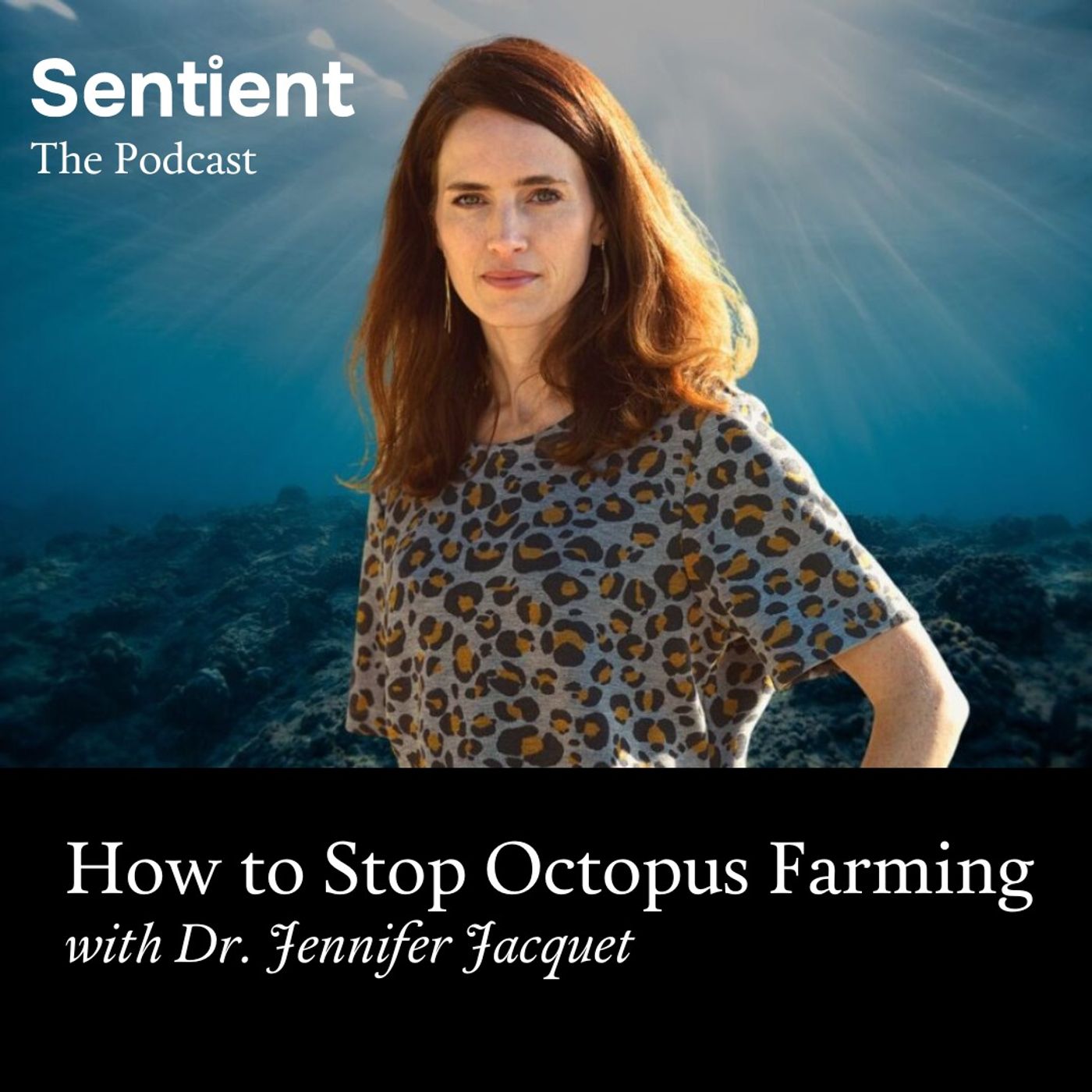
In this episode of the Sentient Media Podcast, host Ana Bradley interviews Dr. Jennifer Jacquet about the controversial topic of octopus farming. Dr. Jacquet discusses the reasons behind the resistance to octopus farming in the 21st century and the ethical implications of mass-producing a beloved animal species. They explore the current status of proposed octopus farms in different countries, including the world's first factory farm for octopuses in Gran Canaria. Dr. Jacquet shares insights into what an octopus factory farm might look like and the potential impact on the animals' well-being. They also discuss the reasons for choosing a land-based facility for octopus farming and the public's response to this issue. This episode provides valuable perspectives on the challenges and ethical considerations surrounding octopus farming.Dr. Jennifer Jacquet is a professor in Department of Environmental Science and Policy at the University of Miami. She is the recipient of a 2015 Alfred P. Sloan research fellowship and a 2016 Pew fellowship in marine conservation. Along with Becca Franks, Peter Godfrey-Smith and Walter Sanchez-Suarez, she published an article on “The Case Against Octopus Farming” in 2019.

In this conversation, @moby — musician, songwriter, producer and animal rights activist — and Sentient Media’s founder, Mikko Järvenpää discuss punk rock’s tie to veganism, animal agriculture’s impact on the world around us, American media’s coverage of animals (or lack thereof) and Moby’s new film. Watch the interview here: https://youtu.be/1BNTBjjMKL8 Links: Punk Rock Vegan Movie: https://www.youtube.com/watch?v=W9q1IidazY8 Moby’s website: https://moby.com/ Follow Moby on Instagram: https://www.instagram.com/moby/ Follow Moby on Twitter: https://twitter.com/thelittleidiot

George Monbiot and Sentient Media Executive Director, Ana Bradley, discuss in detail the link between the far-right and farming and why these conspiracy theories being spread by influencers like Brand are so damaging. Watch the video short here: https://m.youtube.com/watch?v=khAs-mpZ0nU Monbiot’s work: Monbiot’s column in the GuardianRegenesis: Feeding the World Without Devouring the PlanetTED Talk: Can We Feed Ourselves Without Devouring the PlanetFeral: Rewilding the Land, Sea and Human LifeThe Age of Consent; Heat: How to Stop the Planet BurningOut of the Wreckage: A New Politics for an Age of CrisisTED Talk: "How Wolves Change Rivers" Follow Monbiot on Twitter

Comments

Download from Google Play

Download from App Store
 United States