


 Claim Ownership
Shifting Schools: Conversations for K12 Educators
Subscribed: 146Played: 6,728
Subscribe

© Jeff Utecht Consulting Inc. 2022
Description
Shifting Schools is a thought-provoking podcast that explores the latest trends, strategies, and tools in K-12 education. Hosted by educators Jeff Utecht and Tricia Friedman, the podcast provides a platform for teachers, administrators, and education thought leaders to share their experiences and insights on how to improve teaching and learning. From innovative approaches in classroom management to leveraging technology for personalized learning, Shifting Schools tackles the most pressing issues facing K12 educators today. Whether you are a seasoned teacher or a new educator, this podcast will inspire you to think outside the box and shift your educational approach. Tune in to Shifting Schools to gain new perspectives, share ideas, and join a community of passionate educators who are committed to making a positive impact in the lives of their students.
Follow us at @shiftingschools on Twitter and @shiftingschoolspod on Instagram and Tiktok
Follow us at @shiftingschools on Twitter and @shiftingschoolspod on Instagram and Tiktok
305 Episodes
Reverse
You know Pentatonix – the multi-platinum selling acapella group is the number one most listened to musical acct of the holiday season. Co-founder and Grammy winner Scott Hoying is currently starring in Season 34 of Dancing with the Stars. Scott Hoying and his husband Mark are now also authors of an innovative picture book which features text that doubles as lyrics to a new, original Christmas song. FA LA LA FAMILY celebrates the spirit of Christmas with a look at nontraditional families. The reviews are loving their new book: "A fun and festive dive into Christmas celebrations with diverse families."―School Library Journal "Cozy and filled with love." ―Kirkus In this episode of Shifting Schools, Tricia Friedman sits down with Scott and Mark Hoying, creators and authors of a new children's book that challenges traditional definitions of family and centers love, creativity, and chosen community. Together, they explore why representation in children's literature matters, how creative collaboration shapes healthy partnerships, and what their journey toward modern, inclusive parenthood has taught them about patience, communication, and imagination. This conversation is especially relevant for educators, parents, and caregivers seeking stories that reflect diverse families—and for anyone curious about how creativity prepares us for life's biggest transitions. Chapters 00:00 What Defines Family Today? 02:51 Creativity, Collaboration, and Partnership 05:46 Communication in Creative Relationships 08:51 Preparing for Parenthood Through Art 11:42 Why Representation in Children's Books Matters 14:27 Stories, Holidays, and Belonging ABOUT: Scott Hoying is a GRAMMY award winning and Emmy-nominated singer, songwriter, and arranger from the multi-platinum selling acapella group, Pentatonix. He co-founded the group in 2010 and has headlined hundreds of shows all around the world. He is currently starring in Season 34 of Dancing with the Stars. He is very active in the LGBTQ+ community and works closely with The Trevor Project. How Lucky Am I? is his first picture book. Mark Hoying is a writer and marketing professional from Seattle, Washington. After graduating from the University of Washington, he met and began developing projects with his husband, Scott Hoying. He co-wrote the original Christmas single "Thank You" on Pentatonix's holiday album and currently manages the girl group Citizen Queen. Fa La La Family is published by Macmillan Children's Publishing Group
In this episode of Shifting Schools, bestselling author Alan Gratz joins Tricia Friedman to explore the craft of storytelling, the role of creativity in education, and why curiosity is the engine behind both great writing and great learning. Gratz shares how baseball has quietly shaped the structure of many of his novels, how he approaches character development with authenticity, and why understanding a character's background is essential for emotional truth. The conversation also digs into the need for interdisciplinary learning in today's classrooms and the value of teacher collaboration. Gratz argues that creativity isn't a mysterious talent—it's a skill that can be nurtured, practiced, and strengthened when schools design learning experiences that cross traditional subject boundaries. Whether you're an educator, writer, or lifelong learner, this episode offers fresh insights into how storytelling helps us understand the human experience and how curiosity fuels both art and education. 🔑 Key Takeaways Alan Gratz's novel has stayed on the bestseller list for five years, a longevity he describes as "never taken for granted." He uses baseball as a metaphorical framework when structuring narratives. Creativity is a teachable practice—not an innate gift. Interdisciplinary learning increases student engagement and deepens understanding. Strong character development depends on knowing a character's background, motivations, and contradictions. Reading diverse perspectives cultivates empathy, curiosity, and creative thinking. Gratz encourages exploring multiple creative pathways in writing and education. Schools benefit when teachers collaborate across disciplines to build rich learning experiences. 🕒 Chapters 00:00 – The Legacy of a Best-Selling Author 02:57 – Baseball as a Creative Influence 05:43 – The Teachability of Creativity 08:46 – Interdisciplinary Learning in Education 11:37 – Character Development and Authenticity 14:20 – Curiosity and the Human Condition ALAN GRATZ is the #1 New York Times bestselling author of several highly acclaimed books for young readers, including Heroes: A Novel of Pearl Harbor, Two Degrees, Ground Zero, Allies, Grenade, Refugee, Projekt 1065, Prisoner B-3087, Code of Honor, and Captain America: The Ghost Army, an original graphic novel. Alan lives with his family in the Pacific Northwest. Look for him online at alangratz.com. Huge thanks to our show sponsor Poll Everywhere! Learn more
In this episode of Shifting Schools, Jeff Utecht reconnects with Marcus DiPaola, a successful content creator and documentary filmmaker. They discuss Marcus's journey from working in news to becoming a prominent influencer on platforms like TikTok, where he has amassed over 4 million followers. The conversation delves into the challenges of content creation, the importance of writing skills, and the role of AI in enhancing creative processes. Marcus shares insights on his documentary work, including a recent project on protests and his upcoming film about food insecurity. He emphasizes the value of internships for aspiring creators and the dedication required to succeed in the industry. Connect with him: https://www.tiktok.com/@marcus.dipaola?lang=en https://www.youtube.com/c/marcusdipaola Takeaways Content creation requires strong writing skills. Consistency is key in content creation. The journey to becoming an influencer is not instant. Internships provide invaluable experience for aspiring creators. AI can assist but cannot replace creativity. Documentary filmmaking involves significant research and planning. Understanding audience engagement is crucial for content success. Passion is essential to avoid burnout in content creation. Networking from internships can lead to lasting professional relationships. The landscape of content creation is constantly evolving. Sound bites "You have to be super consistent." "I make one 60 second video a day." "You have to be better than that." Chapters 00:00 Reconnecting and Backgrounds 02:39 The Journey of Content Creation 05:29 Documentary Filmmaking and Its Challenges 08:23 The Role of AI in Content Creation 10:58 Advice for Aspiring Creators and Future Projects Thank you to our Sponsor Poll Everywhere Learn more about them: https://www.polleverywhere.com/plans/education?utm_source=referral&utm_medium=shiftingschools&utm_campaign=shiftingschools
Are micro schools the future of personalized learning? In this high-impact episode of Shifting Schools, Jeff Utecht sits down with David K. Richards, CEO of ChangeMaker Education, to break down one of the fastest-growing movements in the education ecosystem: microschools. With over 125,000 micro schools and 1.5 million students already learning in small, relationship-centered environments across the U.S., this episode delivers a deeply practical and future-focused look at why educators, parents, and policymakers are paying attention. What You'll Learn in This Episode What a micro school really is — and why its flexible size (5–150 learners) unlocks personalization How the pandemic accelerated the movement, doubling homeschooling rates and driving families to seek community-based alternatives. Why micro schools are not new—they're the modern reimagining of the one-room schoolhouse. How micro schools fit across sectors: private, charter, district-partnered, and homeschool learning centers. The regulatory landscape educators must understand—voucher programs, ESAs, accreditation, and state-by-state flexibility. Key Insight From David Richards Teachers often underestimate how many entrepreneurial skills they already have—project management, relationship-building, instructional design, crisis navigation, and creative problem-solving. Micro schools simply give them a pathway to use those skills with autonomy, community connection, and purpose. Featured Guest David K. Richards CEO, ChangeMaker Education Charter school founder • Former Chief of Schools • Micro school accelerator • Host of Changemaker EDU Podcast Learn more or apply to launch a micro school at: changemakereducation.com Huge thank you to our show sponsor, learn more about Poll Everywhere: https://www.polleverywhere.com/plans/education?utm_source=referral&utm_medium=shiftingschools&utm_campaign=shiftingschools
What if our pets are communicating complex ideas—and technology is finally catching up? In this episode of the Shifting Schools Podcast, cognitive scientist and FluentPet founder Leo Trottier joins us to explore how breakthroughs in animal cognition, inter-species communication, and speech-button interfaces are reshaping the way humans understand pets. Trottier unpacks the science behind communication-enhancing tools for animals, drawing from research in cognitive psychology, comparative cognition, and linguistics to explain how dogs and cats may be expressing needs, feelings, and even intentions. He also discusses how this emerging field could deepen human–animal bonds, strengthen empathy, and influence the future of animal welfare and education. Listeners will learn: How cognitive science informs FluentPet's design What behavioral research reveals about dogs' communicative abilities Why emotional connection with animals supports childhood empathy development The ethical and rights-based implications of interspecies dialogue How next-generation technology could expand communication across species Perfect for educators, future-focused parents, animal lovers, and anyone curious about the intersection of science, empathy, and emerging technology. Thank you to our show sponsor for making episodes like these possible. Learn more about Poll Everywhere today
Summary In this episode, Jeff Utecht discusses the critical importance of understanding where schools stand on the AI adoption curve. He emphasizes the need for leadership to actively engage with AI and for educators to integrate AI into their teaching practices. The conversation highlights the transformative potential of AI in education, urging schools to move from mere conversation to meaningful integration. Learn more about our amazing show sponsor: Poll Everywhere Takeaways AI adoption is crucial for schools today. Leadership must model AI usage and curiosity. Schools are on a curve of AI adoption. Teachers should empower students to engage with AI. AI can enhance learning, not replace teachers. Starting small with AI can lead to significant progress. The goal is to move from conversation to integration. AI tools should be used daily by educators. Understanding AI is essential for future readiness. Schools must not fall behind in AI integration. Chapters 00:00 The Journey of AI in Education 02:37 Understanding the AI Adoption Curve 06:01 Empowering Schools to Embrace AI
Discover how educators are using generative AI not to automate, but to elevate critical thinking and collaboration in K-12 schools. In this episode of Shifting Schools, host Tricia Friedman shows how "disagreement by design" and intentional prompt-engineering transform student and leadership learning. What you'll learn: What disagreement by design looks like in real classrooms and leadership teams How prompt engineering unlocks student curiosity and systems-thinking mindset in K-12 Why writing bespoke GPT bots might just be the 'new essay' of our times Who this episode is for: Any educator, school leader or district-innovator exploring how to responsibly integrate companion AI, AI avatars and prompt-driven dialogue into a learning ecosystem. 🧭 Key Topics What "disagreement by design" looks like in real classrooms How prompt engineering can unlock student curiosity Why generative AI needs to serve learning, not automation Examples of schools using AI for civic and digital literacy Mindsets for leading change with courage and care Want to try out the chatbots? 'All about Avatars' https://chatgpt.com/g/g-69000b1682a8819188039180edcc55ce-all-about-avatars On the Rise of Livestreaming: https://chatgpt.com/g/g-68ffd3cfb750819197dfa42090d38076-making-sense-of-fanum-and-the-rise-of-streaming Learn more about our amazing show sponsor: Poll Everywhere Keep learning with Shifting Schools Chapters 00:00 Introduction to Generative AI and Its Misunderstandings 01:36 The Importance of Designed Disagreement in AI 03:57 Prompt Engineering: Thinking Like a Designer 09:26 Creating Custom Chatbots for Specific Needs 13:52 AI Literacy and Community Building Through Technology

A conversation that reminds us how curiosity, art, and iteration can reshape are necessary and may even be assets for our school leadership and the ways we nurture creative courage in young learners.... In this episode, Tricia Friedman sits down with author-illustrator Christy Mandin to explore what school leaders can learn from the creative process behind children's literature. Together they unpack how curiosity fuels empathy, how messy iteration sparks innovation, and how embracing the dark and uncertain moments of creativity can make us more compassionate educators. What You'll Learn Why boredom and unstructured time are essential ingredients for student creativity. How to help students (and ourselves) become friends with the dark—embracing uncertainty as a path to growth. Why modeling curiosity, reflection, and open-mindedness is one of the most powerful leadership moves. Christy Mandin is the author and illustrator of multiple picture books. She's grown many interesting plants in her garden over the years but, so far, none with teeth or tentacles. She currently lives in Georgia with her husband and four children. Visit Christy online at christymandin.com or Instagram @christymandin Learn more about our amazing show sponsor: Poll Everywhere Keep learning with Shifting Schools.
The conversation about AI in education often starts—and stops—with cheating. But what if that's the least interesting part of the story? In this episode, Tricia Friedman speaks with the team behind the new show: The Homework Machine, MIT's Justin Reich and journalist Jesse Dukes. They unpack how generative AI is reshaping what we mean by integrity, creativity, and student voice. Together they explore how teachers can balance innovation with empathy, and what schools might learn from students already living in the AI age. Chapters 00:00 Introduction to The Homework Machine 02:47 The Importance of Listening to Students 05:45 AI and Academic Integrity: A Deeper Look 08:23 The Role of Relationships in Education 10:59 Challenges in Teacher-Student Relationships 13:46 Navigating AI in Education 16:38 The Need for Empathy in Educational Policy 19:15 The Impact of the Pandemic on Education 22:17 Engaging Skeptics in AI Discussions 24:41 Finding Balance in Educational Priorities 27:45 Creating Safe Spaces for Student Voices 30:27 Looking Ahead: Future of The Homework Machine The Homework Machine is a mini series from TeachLab, a podcast that investigates the art and craft of teaching. Hosted by Justin Reich, MIT Professor and director of the MIT Teaching Systems Lab. https://www.teachlabpodcast.com/ Jesse Dukes is a journalist and comedian who has done (nearly) all the jobs in podcasting and audio including producer, editor, executive producer, reporter, mix engineer, and teacher. Along with other projects, He's currently working with the Teaching System's Lab at MIT on The Homework Machine, a research and podcasting project about the arrival of generative AI in schools. He has taught audio storytelling at the Center for Documentary Studies at Duke and Denison University. Justin Reich is an associate professor of digital media in the Comparative Media Studies/Writing department at MIT and the director of the Teaching Systems Lab. He is the author of Failure to Disrupt: Why Technology Alone Can't Transform Education, and the host of the TeachLab Podcast. He earned his doctorate from the Harvard Graduate School of Education and was the Richard L. Menschel HarvardX Research Fellow. He is a past Fellow at the Berkman-Klein Center for Internet and Society. His writings have been published in Science, Proceedings of the National Academy of Sciences, Washington Post, The Atlantic, and other scholarly journals and public venues. He started his career as a high school history teacher, and coach of wrestling and outdoor adventure activities. We are grateful to our sponsors: Poll Everywhere for supporting us this season, learn more: https://www.polleverywhere.com/plans/education?utm_source=referral&utm_medium=shiftingschools&utm_campaign=shiftingschools
In this episode Tricia Friedman talks listeners through an example of how she vibe coding an app from start to finish. Her vibe coding process of building an app blends AI literacy, digital humanities, and leadership design thinking. What does this tell us about the future of using generative AI for projects in K12? This episode is sponsored by our amazing friends at Poll Everywhere. Join over 1 million educators using Poll Everywhere. Try it risk free for 30 days—we'll refund you if it's not a good fit. Listeners will gain insight into: how AI-assisted app design reshapes collaboration and imagination in schools what happens when storytelling meets software in project-based learning why ethical AI, digital well-being, and student agency must anchor innovation Ultimately, this episode challenges educators to think differently about what it means to "build." Tricia frames vibe coding as an invitation to design with empathy — where app creation, futures literacy, and educator creativity merge to model a more human-centered approach to technology in learning. If you're curious about AI in education, digital storytelling, women in edtech, or the future of creative leadership, this episode offers a front-row seat to the evolving intersection of art, code, and compassion.
In this conversation, Tricia Friedman speaks with authors Dylan Thuras and Jennifer Swanson about their ambitious book that explores the evolution of invention and technology. They discuss the importance of collaboration in science, the interdisciplinary nature of learning, and how curiosity drives innovation. The conversation also highlights the role of play in the invention process and how everyday objects can inspire new perspectives. Dylan Thuras is the cofounder and creative director of Atlas Obscura. He lives in Rosendale, NY Jennifer Swanson is an award-winning children's author of more than forty-five nonfiction and fiction books, including National Geographic Kids Brain Games and Outdoor School: Rocks, Fossils, and Shells. She is also the creator and co-host of the award-winning podcast Solve It for Kids. Visit her online at jenniferswansonbooks.com and @jenswanbooks. Chapters 00:00 The Ambitious Project Begins 02:52 Exploring the Evolution of Invention 05:56 The Power of Collaboration in Science 08:38 Interdisciplinary Learning and Curiosity 11:30 The Role of Play in Invention 14:23 A New Perspective on Everyday Objects
In this episode of Shifting Schools, Jeff Utecht and Tricia Friedman discuss their upcoming training sessions focused on integrating AI into education. They emphasize the importance of understanding AI's impact on the job market, the necessity of prompt engineering as a new skill for educators, and the need for AI literacy among students. The conversation also touches on the evolving nature of AI tools and the importance of addressing mental health concerns related to technology use among students. You can learn more about the five part series: https://web.cvent.com/event/19d647db-557e-4502-8a0c-17bd3325fe0b/summary Takeaways AI is reshaping the educational landscape and job market. Understanding AI's impact is crucial for educators and students. Prompt engineering is a vital skill for effective AI use. Generative AI can enhance learning and career exploration. Educators must engage with students about AI and its implications. AI literacy is essential for preparing students for future careers. The evolution of AI tools requires ongoing adaptation in teaching. Interdisciplinary approaches can enrich AI education. Mental health concerns related to technology must be addressed. Local context is important in AI training for educators. Chapters 00:00 Introduction to AI in Education 02:51 The Driftwood: Navigating AI's Impact 08:38 Understanding Job Market Changes 14:19 Prompt Engineering: The New Skill 20:05 AI Literacy and Its Importance 25:57 Engaging with Students on AI and Mental Health
On April 13th, 2018, Nepali New Year's Eve, the University of Texas at Tyler revoked full-ride scholarships it had previously awarded to 60 Nepali students. The university described it as "an administrative oversight." But the global education community knew that it was an unprecedented admissions crisis. The scholarships, which included tuition as well as room and board, were revoked well after most other US university application deadlines had passed. Thus, Nepali students had already declined offers from other institutions they had previously applied to. The moment UT Tyler's mass email hit the inboxes of these high-need, high-performing students, some were already midway through the visa process to attend UT Tyler, and all had celebrated the momentous feat of a hard-earned Presidential Scholarship. In the days following, Selena Malla at USEF-Nepal, Kathmandu, issued a call on social media for help. After seeing a call for support from Selena, Joan Liu, a university advisor at the United World College of South East Asia, Singapore, stepped forward to help. Joan assembled a group of counselors from several corners of the world to form a volunteer crisis management team. Joan Liu is on the show to explain how we can step up this September to support Second Chance. Ready to learn more? https://www.secondchance.global/
In this episode, Jeff Utecht, Tricia Friedman, and Dr. Curt Merlau discuss the transformative role of AI and data literacy in education and employment. They explore how Pivot, an AI-powered tool, helps unemployed individuals find better job opportunities and training. The conversation emphasizes the importance of data literacy for educators and the potential of AI to personalize learning and improve educational outcomes. They also highlight real-world applications of data in education and the need for teachers to embrace AI responsibly to prepare students for the future. Connect with our guest on LinkedIN: Vice President @ Resultant | EdD, Organizational Leadership and Learning Former Educator, Administrator, and now Consultant. Interoperability Nerd. AI Enthusiast Connect with the work Dr. Curt does. Chapters 00:00Introduction to Pivot and AI in Employment 02:15The Importance of Data and AI Literacy 06:27AI's Role in Education and Personalized Learning 10:08The Power of Data in Student Success 12:42Emerging Pathways and Career Opportunities 19:36Preparing Teachers for an AI-Driven Future Connect with Jeff and Tricia on LinkedIN Jeff: https://www.linkedin.com/in/jeffutecht/ Tricia: https://www.linkedin.com/in/tricia-friedman/
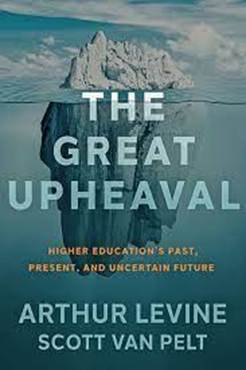
Today, a college diploma is no guarantee that graduates have the competencies that businesses need, including using emerging technologies, communicating, working in teams, and other necessary skills. So, it's fair to ask, "Do students really need a college degree"? Brandeis University President, and nationally respected higher education leader and researcher, Arthur Levine has been at the forefront of the changing role of higher education. Co-author of THE GREAT UPHEAVAL, HIGHER EDUCATIONS PAST PRESENT AND UNCERTAIN FUTURE, Levine argues that in the next 20 years, consumers of higher education will determine what higher education will be, and that every institution will have to change. Today, the United States is undergoing change of even greater magnitude and speed than it did during the Industrial Revolution as it shifts from a national, analog, industrial economy to a global, digital, knowledge economy. At the same time, public confidence in higher education has declined. Threatened by a demographic cliff in most states where fewer students will be graduating from high school over the next 20 years, the increased competition for students means that a larger number of higher education institutions will be closing or merging with other institutions. It is expected that as many as 20 to 25 percent of colleges, particularly liberal arts colleges and comprehensive regional colleges, will close in the coming years. Learn more about The Great Upheaval: The book reveals that five new realities, none of higher education's own making, will characterize the coming transformation: Institutional control of higher education will decrease, and the power of higher education consumers will increase. In a range of knowledge industries, the advent of the global, digital, knowledge economy multiplied the number of content providers and disseminators and gave consumers choice over what, where, when, and how of the content they consumed. The same will be true of higher education. The digital revolution will put more power in the hands of the learner who will have greater choice about all aspects of their own education. With near universal access to digital devices and the Internet, students will seek from higher education the same things they are getting from the music, movie and newspaper industries. Given the choice, consumers of the three industries chose round-the-clock over fixed-time access, consumer- rather than producer-determined content, personalized over uniform content, and low prices over high. In the emerging higher education environment, students are placing a premium on convenience—anytime, anyplace accessibility; personalized education that fits their circumstances and unbundling, only purchasing what they need or want to buy at affordable prices. For instance, during the pandemic, while college enrollments were declining, enrollment in institutions with these attributes, such as Coursera, an online learning platform, saw the number of students they serve jump. In the United States and abroad, Coursera enrollments jumped from 53 to 78 million. That 25 million student increase is more than the entire enrollment in U.S. higher education. New content producers and distributors will enter the higher education marketplace, driving up institutional competition and consumer choice and driving down prices. We are already seeing a proliferation of new postsecondary institutions, organizations and programs that have abandoned key elements of mainstream higher education. These emphasize digital technologies, reject time and place-based education, create low-cost degrees, adopt competency or outcome-based education, and award nontraditional credentials. Increasingly, libraries, museums, media companies and software makers have entered the marketplace, offering content, instruction and certification. Google offers 80 certificate programs and Microsoft has 77. The American Museum of Natural History has its own graduate school, which offers a Ph.D. in comparative biology, a Master of Arts degree in teaching, and short-term online courses that teachers can use for graduate study or professional development credit. The new providers are not only more accessible and convenient, offering a combination of competency- and course-based programs, they are also cheaper and more agile than traditional colleges and universities which will lead to more contraction and closings? The industrial era model of higher education focusing on time, process and teaching will be eclipsed by a knowledge economy successor rooted in outcomes and learning. In the future, higher education will focus on the outcomes we want students to achieve, what we want them to learn, not how long we want them to be taught. This is because students don't learn at the same rate and because the explosion of new content being produced by employers, museums, software companies, banks, retailers and other organizations inside and outside higher education will be so heterogeneous that what students accomplish cannot be translated into uniform time or process measures. The one common denominator they all share is that they produce outcomes, whatever students learn as consequence of the experience. The dominance of degrees and "Just-in-case" education will diminish; non-degree certifications and "Just-in-time" education will increase in status and value. American higher education has historically focused on degree granting programs intended to prepare their students for careers and life beyond college. This has been called "just-in-case education" because its focus is teaching students the skills and knowledge that institutions believe will be necessary for the future. In contrast, "just-in-time education" is present-oriented and more immediate, teaching students the skills and knowledge they need right now. "Just-in-time education" comes in all shapes and sizes, largely diverging from traditional academic time standards, uniform course lengths and common credit measures. The increasing need for upskilling and reskilling caused by automation, the knowledge explosion and Covid promises to tilt the balance toward more "just-in-time education, which is closely aligned with the labor market and provides certificates, micro-credentials, and badges, not degrees. This episode is made possible by our partner Poll Everywhere Poll Everywhere's new version makes student engagement faster, simpler, and smarter. With AI-powered poll creation and seamless LMS integration, it's built to transform lectures into truly interactive learning experiences. Try it out today with special promo code '25OFF'
On this episode Jeff and Tricia catch up on all the learning they did last summer. Hear them talk about gardening...and of course generative AI Learn more about how to catch them this year: https://www.shiftingschools.com/
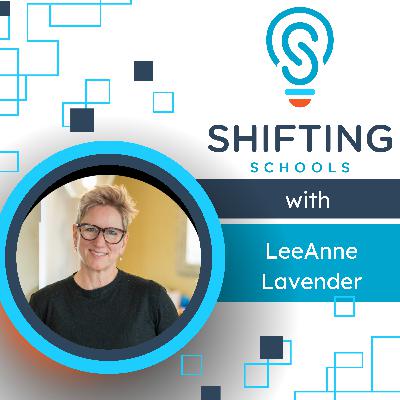
In this conversation, Tricia Friedman and LeeAnne Lavendar discuss the evolving landscape of service learning and education. They explore the importance of experiential learning, community engagement, and the need for transformative teaching practices that resonate with students. LeeAnne shares practical examples and insights on how educators can adapt their approaches to foster curiosity, joy, and meaningful connections in the classroom. The discussion also touches on the significance of future-proofing education by equipping students with essential skills for the complexities of the modern world. Chapters 00:00 The Future of Service Learning 05:52 Transformative Learning Experiences 11:33 Future-Proofing Education 14:30 Community Engagement in Education 19:16 Practical Approaches to Curriculum Design 22:39 Embracing Change in Education Thank you to our amazing show sponsor: Alongside
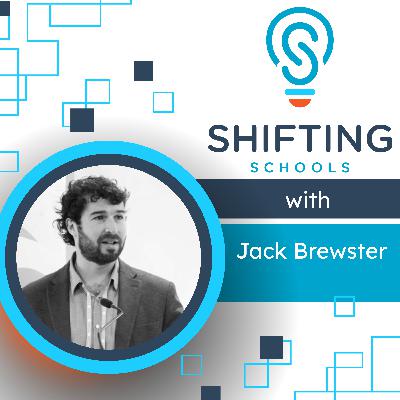
In this episode, Jeff Utecht interviews Jack Brewster, CEO of Newsreel, discussing the importance of news literacy, the impact of misinformation, and how Newsreel aims to engage students with high-quality news. They explore the role of social media and AI in journalism, the skills needed for future journalists, and how educators can utilize Newsreel to enhance students' critical thinking and media consumption habits. Chapters 00:00 Introduction to Newsreel and Its Mission 02:29 The Role of News Literacy in Education 05:09 Engaging Students with Newsreel 09:00 Misinformation on Social Media 09:49 Skills for Future Journalists 14:04 AI's Role in Journalism 17:32 Data Insights for Educators 21:49 Ensuring Accurate News Reporting Jack has written for The Wall Street Journal, Forbes, Time Magazine, Vice, Fortune, Newsweek, and The New York Daily News. His reporting has been covered by The New York Times, Bloomberg, CNN The Washington Post, and other news outlets. In September 2024, Jack and his then-colleague Sam Howard broke the story uncovering the source of the viral claim that Haitian migrants were eating pets in Springfield, Ohio. In 2022, he led the team that conducted a landmark study on TikTok's algorithm, which revealed its propensity to feed misinformation to young users. Jack was previously a Fulbright scholar in Germany conducting research on news avoidance and young people's changing media habits. Get started exploring NewsReel today: https://newsreel.co/about
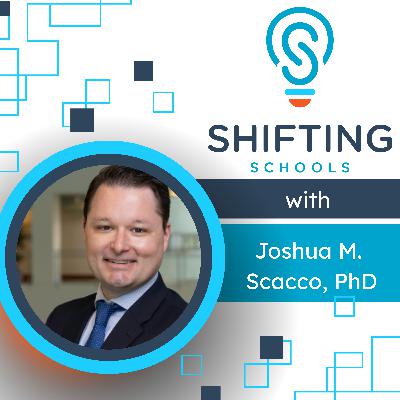
Tricia Friedman and Dr. Joshua Scacco explore the evolving landscape of political communication, emphasizing the impact of technology and attention fatigue on democracy. They discuss the dual nature of change in political engagement, the importance of understanding human behavior, and the challenges posed by the entertainmentification of politics. Scacco highlights the need for future researchers to adapt to new communication styles and the role of regulation in shaping political messaging. The conversation concludes with a focus on building community and preparing individuals for meaningful democratic engagement. Joshua M. Scacco (PhD, University of Texas at Austin) is the founding Director of the Center for Sustainable Democracy at the University of South Florida. He also is an Associate Professor in the Department of Communication. Dr. Scacco specializes in political communication, media content and effects, and quantitative research methods. He is the co-author, with Kevin Coe, of "The Ubiquitous Presidency: Presidential Communication and Digital Democracy in Tumultuous Times" (Oxford, 2021). Dr. Scacco also serves as a Faculty Researcher with the award-winning Center for Media Engagement at the University of Texas at Austin. Chapters 00:00 The Evolution of Political Communication 03:02 Navigating Attention in Modern Politics 06:54 Emerging Technologies and Political Engagement 12:30 Understanding Human Behavior in Politics 17:15 The Entertainmentification of Politics 21:28 Preparing Future Researchers 27:12 Regulating Information in Democracy 32:58 Building Community for Democratic Resilience Connect with our guest https://www.linkedin.com/in/jscacco/ Learn more about our show sponsor https://www.alongside.care/shifting?utm_campaign=Shifting
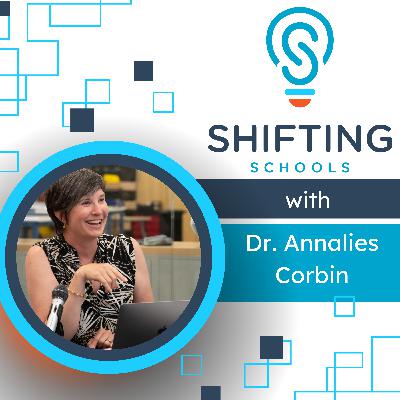
In this episode of Shifting Schools, Jeff Utecht interviews Dr. Annalies Corbin, author of 'Hacking School: Five Strategies to Link Learning to Life.' They discuss the origins of the PAST Foundation, the importance of STEM identity, and the five key strategies for educational reform. Annalies emphasizes the need for cultural relevance, student agency, and problem-based learning in education. They also explore the challenges educators face in implementing these changes, the impact of standardized testing, and the concept of wicked problems in education. The conversation highlights the importance of community involvement and the future of education in preparing students for their roles as engaged citizens. Dr. Annalies Corbin is the Chief Goddess, Founder & CEO the PAST Foundation. In 2000, Dr. Corbin founded the PAST Foundation, an organization she envisioned could lead the way to connecting scientific research with classrooms, schools and communities. From 2000-2006, Annalies concurrently led the PAST Foundation and taught at East Carolina University's Program in Maritime Studies. In 2005, when PAST opened its headquarters in Columbus, Annalies turned all efforts to building the PAST Foundation, assembling a team that could grow the reach and mission of linking learning to life. From a single school partnership in 2006, Annalies has grown PAST's supporters across the nation, building a reputation for both transforming teaching and learning by understanding tomorrow's education needs. In 2015, Annalies' commitment to transforming schools led to the development of PAST Innovation Lab. Connecting directly with teachers through online professional development courses, MAEd program and on- site workshops, PAST Innovation Lab impacts more classrooms and expands learning opportunities for teachers and students everywhere. In 25 years, PAST has impacted more than 3,000,000 students, over 25,000 teachers across 42 states, hosting nearly 20,000 visitors and building hundreds of partnerships. Chapters 00:00 The Genesis of Hacking School 02:54 Understanding STEM Identity 05:47 The Five Key Strategies for Education 08:28 Challenges in Implementing Change 11:24 The Impact of Standardized Testing 14:09 Wicked Problems in Education 18:55 Understanding Wicked Problems 21:21 The Role of Educators in Navigating Complexity 23:39 Shifting Mindsets in Education 27:25 Building Community Support for Change 31:18 Preparing Future Citizens and Thinkers 34:22 The Importance of Educator Authenticity Learn more about our sponsors and opportunities to connect with Jeff and Tricia this academic year: https://pod.shiftingschools.com/


Download from Google Play

Download from App Store
 United States
I'm a parent in Arizona. My son's high school is 1:1. I would love to take your parent curriculum.