


 Claim Ownership
Sketchnote Podcast
Subscribed: 98Played: 2,464
Subscribe

© All rights reserved
Description
Mike Rohde interviews visual thinkers about tools, techniques, and their approach to the practice and craft of sketchnoting.
197 Episodes
Reverse
Hey everyone, it’s Mike Rohde, and I’m here with another All The Tips episode, this one wrapping up Season 1 of the Sketchnote Podcast.
One of the most popular episodes is “All The Tips.” I think hearing tips from all the guests in one single episode with a little inspirational music is a great way to wrap up the season. It’s always one of my favorite episodes to put together because I know how well it’s received by all of you listening or watching.
Danny Gregory
Embrace constraints and personal projects. Constraints challenge your mind and spark problem-solving. Limit yourself to drawing only food on your next trip, or use only two colored pencils. Create a daily list of ten ideas, such as dishes you could cook with radishes or dead people you’d like to have dinner with. Do this for a year, and you’ll have 3,650 ideas (maybe five of them are great). Combine constraints with personal projects to create a sense of obligation and purpose that keeps you motivated.
Break through plateaus with a beginner’s mind. After a year of drawing, you’ll hit a plateau where your improvement stalls. To overcome this, try new subjects, tools, or styles, breaking your routine. Danny’s weekly YouTube stream, Draw With Me, encourages this by drawing 40 different items in an hour, upside down, with your non-dominant hand, or watercolor.
Redefine practice: drawing exercises like eggs, grids, cubes, and shading charts are just tools, not fun activities. Think of practice as professionals do… something you simply do and apply. To improve at drawing noses, fill a sketchbook with varied portraits of interesting noses. Keep it engaging and relevant to what you care about.
Sarah Greer
Learn to navigate the shitties. The creative process is a roller coaster. Every project (whether it takes a day or a year) will have a low point. The shitties are real, but they’re also just part of the process. Go for a walk, step away, hang in there. It’s always darkest before the dawn. Knowing that the low is coming means you won’t be surprised when it arrives, and you’ll know it will pass.
Challenge yourself often. Growth comes from discomfort. Sarah’s example: picking up an iPad for the first time and going straight into a live client meeting with it a week later. Or diving into Mental Canvas with no experience. Whatever tool or skill you’re curious about, dive in. Don’t wait until you feel ready because you won’t. Just go.
Find inspiration outside your daily practice. Go to museums, plays, musicals, and shows. Get fresh eyes on the world. Even crawling around on the floor with a grandchild and seeing things from a different height can shift your perspective. Inspiration rarely comes from staring at the same thing every day.
Adrian Peryer
Set the environment up right. If you want to do more and do it better, create the conditions for flow. Figure out what space, setup, or ritual gets you and others into a productive, creative state. Don’t leave your environment to chance — design it intentionally.
Find your wise mind every day. Try to be balanced, level, and check your ego at the door. For Adrian, that path led to yoga (inspired by Sarah), and it’s been the single best way to start each day in the right mode. Your path may be different, but finding something that centers you before creative work matters.
Remember that emotions are a wave. It never goes according to plan. Under pressure, when things don’t go the way you expected, pause. Remember that emotions — frustration, disappointment, overwhelm — are a wave. They will pass. It will get better. Give it time before reacting.
David Armano
Use AI to get unstuck, but push it. AI is sycophantic by default and will tell you what you want to hear. But if you know yourself well enough, you can push it to give you genuinely useful counsel. David has found it a surprisingly good substitute for a human career coach when used selectively and with self-awareness. The key is knowing what you want from it before you ask.
Protect your ability to be intentional. Step away from screens regularly. Consider going analog: David switched from an iPad to a Remarkable tablet that feels like paper and found it helped him be more deliberate and focused. Our biggest nemesis these days is technology and distractions that erode our ability to be intentional with our time. Watch out for brain fry (the opposite of flow state) that comes from multitasking across too many AI tools at once.
Make yourself memorable in person. Find ways to be experiential, distinctive, and ownable. Remote work and podcasting are great, but when there’s an opportunity to show up in person, take it. Face-to-face connection is more valuable than ever. Find your thing — wear the unusual sport coat, bring personality, and do something that makes people remember the experience of being with you.
Andrew Tan
Draw directly with a pen. Skip the pencil rough and go straight to pen. A diary comic or a sketchnote is spontaneous. You don’t pre-plan a diary; you just let it flow. A pen prevents overthinking and over-editing. Whatever mistakes appear, cancel them or leave them. The imperfections look more charming and more honest, and drawing directly builds your confidence in ways that penciling first never will.
Add black to create contrast and focus. A common problem in illustration is too many mid-tones and not enough contrast. Find the most important area in what you’re drawing and make it darker, almost solid black. A hat, a pair of eyes, or a shadow area. When everything is outlined in gray, the viewer’s brain has to work harder to figure out where to look. A little black makes the focal point clear.
Give yourself permission to be imperfect. Beating yourself up over small mistakes slows everything down. Give yourself little permissions as you draw; if it’s a bit distorted or a bit off, just leave it. Andrew found that accepting imperfection helped him draw better over time. And sometimes the wonky line or the slightly off proportion is what makes a drawing look human, warm, and alive.
Tabitha Walker
There is no right or wrong way to do this work. Everyone processes information and puts it on the page in their own unique way. The way you sketchnote won’t look like anyone else’s, and that’s not a problem; it’s the point. Don’t get caught up in whether you’re doing it correctly. Just start.
Practice to find your unique style and let it evolve. Your style will change over time, and that’s okay. The way Tabitha’s work looks now is different from how it looked five or ten years ago. Sketchnoting and graphic recording are living practices. Keep doing the work, and trust that your voice will continue to develop.
Don’t try to look like someone else. It’s tempting to look at the best in the field and think your work has to match theirs. It doesn’t. Whether you work in black and white, full color, all caps, or cursive… that’s your style. Own it. When your work has its own identity, people will recognize it as yours. That recognition is one of the most valuable things you can build.
Atom Brum
Let go of the filter. Just get it out. When you’re sketchnoting a live talk or lecture, overthinking headers and lettering means you miss what’s being said. The purpose of a sketchnote is visual communication and recall, not a finished piece of art. Let it flow. Accept what comes out. The act of doing it is already the benefit.
Make it easy for yourself with the right materials. Are you prepared? Do you have paper on hand? Do you have pens that feel satisfying to write with? The materials matter more than people realize. Adam’s go-tos: the Marvy Le Pen for a uniquely satisfying writing feel, and Micron 01, 03, and 08. Keep your toolkit simple and portable, and make sure it’s always with you.
Georgina Dean
Struggle first, then ask AI. Don’t go to AI for the answer before you’ve genuinely tried to work it out yourself. The struggle is where learning and memory happen. Georgina spent three hours fighting with a printer before finally asking for help, and she’ll never forget that experience. Creative friction is valuable. Give yourself a real shot before turning to a tool for the answer.
Use AI to analyze, not just to answer. Once you’ve done the work, AI can be a useful coach, helping you understand what went wrong, what you could do differently, and how to improve the process next time. It doesn’t have to be just a shortcut to the answer. Used reflectively, it becomes more like a mentor than a search engine.
When stuck on a visual, ask AI for words, not images. If you can’t visualize a concept, request text suggestions, such as metaphors or descriptions, instead of images. Your imagination, based on words, yields personalized results. Also, upload a finished sketchnote for feedback, but note that files uploaded to non-enterprise OpenAI may be used for training, so protect your work.
Zsofi Lang
Follow your passion. Sophie posted science comics on Instagram out of love, which led to a deal with a publisher. The journey from personal hobby to career isn’t direct but begins with consistent effort and sharing. Try new things and pursue what excites you.
Subscribe to the Sketchnote PodcastYou can subscribe to the podcast through iTunes, Google Podcasts, Spotify, Amazon Music, YouTube or your favorite podcast listening source.Support the PodcastTo support the creation, production, and hosting of the Sketchnote Army Podcast, buy one of Mike Rohde's bestselling books. Use code ROHDE40 at Peachpit.com for 40% off!Sketchnote Lab is Mike Rohde’s space designed to bridge the gap between sketchnote theory and practice. You don’t need to be an artist to think visually. Join Mike and learn to use sketchnotes to clarify your thinking, solve problems, and move forward. Learn more about Sketchnote Lab.Mike is the author of The Sketchnote Handbook and The Sketchnote Workbook, bestselling books that teach regular people how to start sketchnoting and build a regular
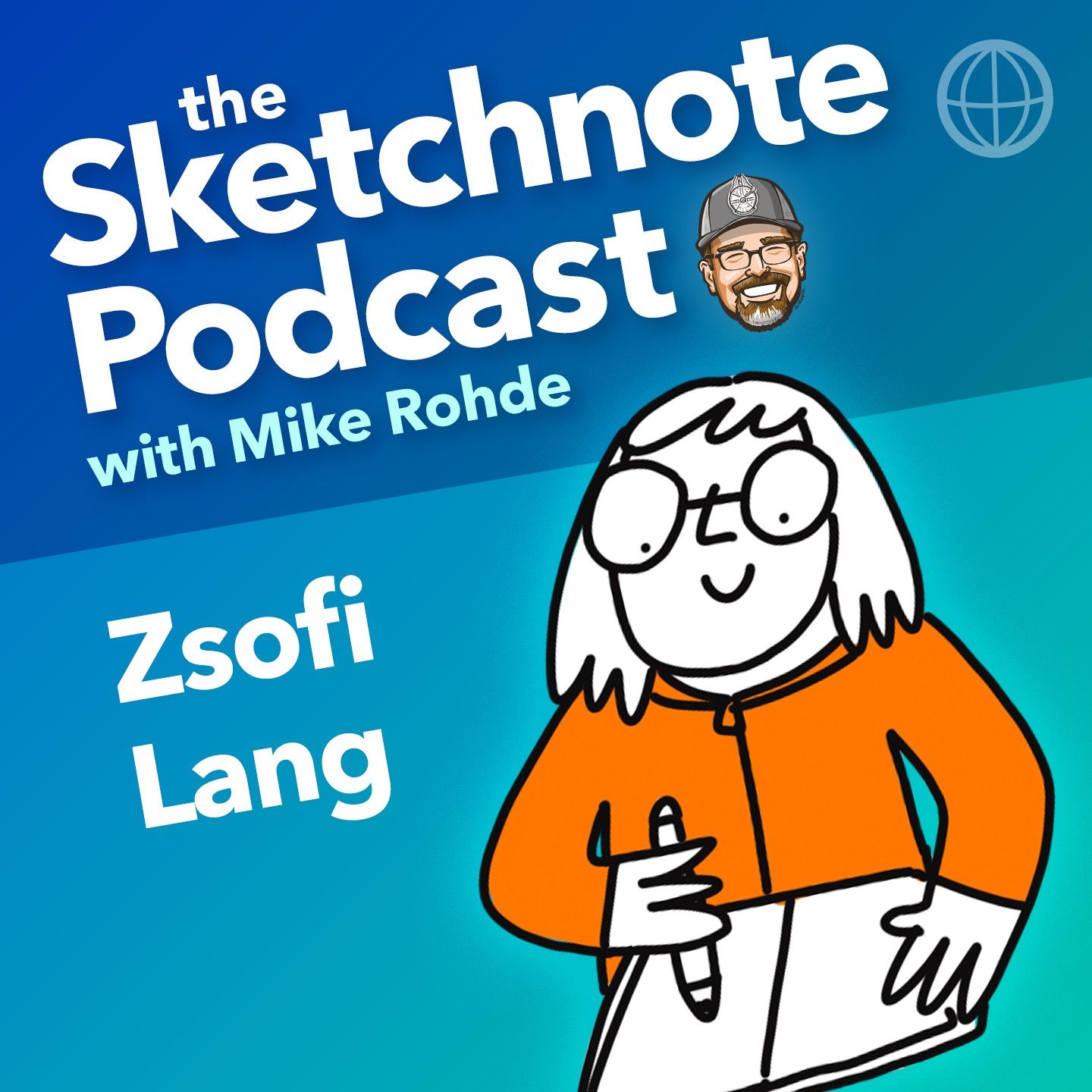
In this episode, I welcome back Zsofi Lang, a Brussels-based illustrator and graphic recorder who shares how a personal passion project, drawing science comics for her daughter during COVID, unexpectedly led to a six-part children's book deal with UK publisher Flying Eye Books.
We dig into what made her sketchnote-influenced style attractive to a publisher, why self-disqualification holds so many visual thinkers back, and how following your curiosity can open doors you didn't know existed.
Running Order
Introduction to Zsofi Lang and her return to the podcast
What Zsofi does: live illustration, graphic recording, and a new shift into children's books
The origin of her science comics series on Instagram during COVID
Discovering publisher Flying Eye Books through Adam Ming's Substack
How reaching out to a publisher led to a six-part book deal
The reframing: from "How to Explain Science to a Five Year Old" to "How to Explain Anything to Grown-ups"
Writing and illustrating for seven to ten year olds
Why a sketchnote style was exactly what the publisher wanted
The danger of self-disqualification and discounting your own work
Passion as the key ingredient: doing 20 comics before ever pitching
Kevin Kelly's quote on becoming the most improbable person you can be
AI, authenticity, and leaning into your unique perspective
Privilege, accessibility, and finding ways to express creative passions
The practical process: working with subject consultants, visualizing facts, and adding personality
Experimenting with personal projects and reviving buried work
The Milwaukee party at South by Southwest: a story about doing things without permission
Collaborative murals: team building through paint-by-numbers style projects
Where to find Zsofi
Resources & Links
Zsofi Lang on Substack
How to Explain Book
ZL Drawings (graphic recording and illustration)
Flying Eye Books
Adam Ming on Substack [Need Correct URL]
Kevin Kelly
Sponsored by The Reflective Travel Workshop Video
Have you ever wanted to create travel sketchnotes from an experience you've had, just using the photos and memories you've got?
In the Reflective Travel Workshop Video Replay, I'll guide you through my process for creating travel sketchnotes and then help you reflect on your own photos and memories so that you can make travel sketchnotes of your own trips, too!
This 2-hour recorded video includes a set of downloadable, printable sketching templates and a process to kickstart your own travel sketchnoting practice.
All this for just $20.
Get the Reflective Travel Workshop Video
Subscribe to the Sketchnote PodcastYou can subscribe to the podcast through iTunes, Google Podcasts, Spotify, Amazon Music, YouTube or your favorite podcast listening source.Support the PodcastTo support the creation, production, and hosting of the Sketchnote Army Podcast, buy one of Mike Rohde's bestselling books. Use code ROHDE40 at Peachpit.com for 40% off!Sketchnote Lab is Mike Rohde’s space designed to bridge the gap between sketchnote theory and practice. You don’t need to be an artist to think visually. Join Mike and learn to use sketchnotes to clarify your thinking, solve problems, and move forward. Learn more about Sketchnote Lab.Mike is the author of The Sketchnote Handbook and The Sketchnote Workbook, bestselling books that teach regular people how to start sketchnoting and build a regular sketchnoting practice.He founded the Sketchnote Army and hosts the Sketchnote Podcast, where he interviews visual thinkers to understand what makes them tick.Mike teaches recorded, live, and in-person workshops to accelerate your sketchnoting practice and provides personalized coaching for your specific visual-thinking challenges.He is the illustrator of bestselling books like REWORK, REMOTE, The $100 Startup, Honest SEO, The Culture Playbook, and The Future Begins with Z.Become a Supporting or Founding Lab Partner to support Mike’s work.Some links in Sketchnote Lab posts are affiliate links. If you purchase through them, I may earn a small commission at no extra cost to you. I only recommend tools and resources I use and believe in.©2026 Mike Rohde, Sketchnote Lab
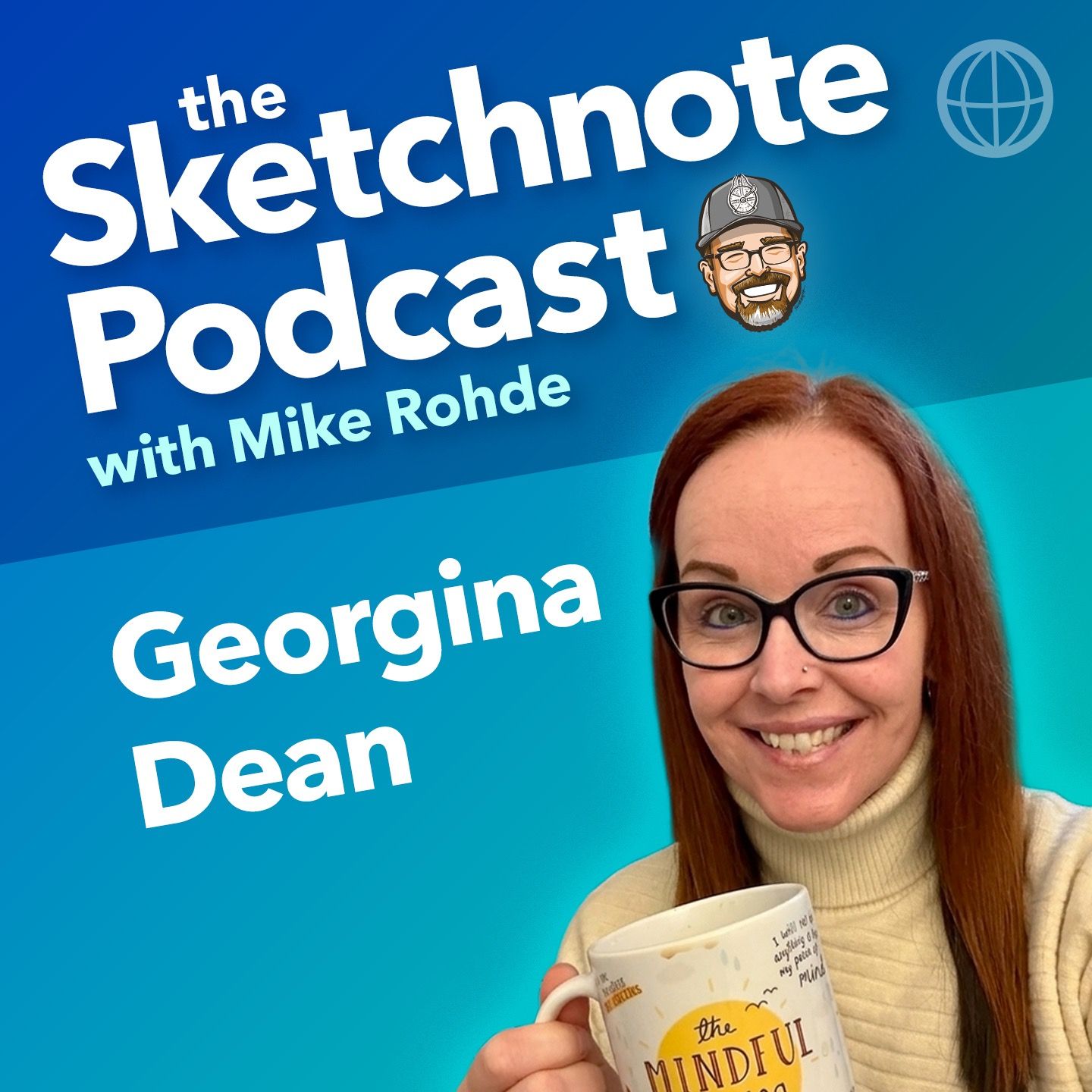
This episode with Georgina Dean explores how visual thinking, digital balance, and project-based learning can transform education and personal growth.
Georgina’s insights highlight the importance of tactile exploration, the balance between analog and digital, and the power of visual tools to enhance memory and engagement, especially in a rapidly evolving tech landscape.
Running Order
Welcome and Georgina’s background in education and sketchnoting
How COVID-19 triggered Georgina’s journey into visual thinking
The science of memory, metacognition, and multimodal learning strategies
Pedagogy explained: How we learn and teach across ages
The impact of drawing and annotation on information retention and recall
Balancing digital tools with analog experiences for children’s development
The return to tactile activities and the influence on human connection
The importance of balance between technology and humanity in a digital age
The cultural shift from analog to digital and back to equilibrium
How companies and parents can support responsible tech use and understanding
The era of creativity and innovation — exploring new learning playgrounds
The role of visual thinking in teacher training and classroom engagement
Real-world applications: sketchnoting in classrooms during lockdown and beyond
The importance of in-person teacher workshops and community building
Creative projects with students: from anime to storytelling and visual summaries
Project-based learning as a tool for real-world skills and critical thinking
Scaffolding and differentiation through project work and digital tools
Learning from struggle: the importance of perseverance and exploration
Using AI tools for feedback, brainstorming, and visualizing ideas
Integrating reading, writing, drawing, and tech in a cohesive practice
The power of community events like Sketchnote Camp to inspire and connect
Final thoughts: transforming education with visual thinking and purpose-driven technology
Resources & Links
Wonder with Georgina — Substack
Georgina’s Website
Georgina on Instagram
Georgina on LinkedIn
Adobe Fresco
Sponsored by The Reflective Travel Workshop Video
Have you ever wanted to create travel sketchnotes from a trip, using only photos and memories you already have?
In this 2-hour recorded video replay, I walk you through my process for creating travel sketchnotes, then guide you through your own photos and memories so you can do the same for your trips.
You'll also get a set of downloadable, printable sketching templates to help you get started.
The full video replay and templates are just $20.
https://rohdesign.com/travel
Subscribe to the Sketchnote PodcastYou can subscribe to the podcast through iTunes, Google Podcasts, Spotify, Amazon Music, YouTube or your favorite podcast listening source.Support the PodcastTo support the creation, production, and hosting of the Sketchnote Army Podcast, buy one of Mike Rohde's bestselling books. Use code ROHDE40 at Peachpit.com for 40% off!Sketchnote Lab is Mike Rohde’s space designed to bridge the gap between sketchnote theory and practice. You don’t need to be an artist to think visually. Join Mike and learn to use sketchnotes to clarify your thinking, solve problems, and move forward. Learn more about Sketchnote Lab.Mike is the author of The Sketchnote Handbook and The Sketchnote Workbook, bestselling books that teach regular people how to start sketchnoting and build a regular sketchnoting practice.He founded the Sketchnote Army and hosts the Sketchnote Podcast, where he interviews visual thinkers to understand what makes them tick.Mike teaches recorded, live, and in-person workshops to accelerate your sketchnoting practice and provides personalized coaching for your specific visual-thinking challenges.He is the illustrator of bestselling books like REWORK, REMOTE, The $100 Startup, Honest SEO, The Culture Playbook, and The Future Begins with Z.Become a Supporting or Founding Lab Partner to support Mike’s work.Some links in Sketchnote Lab posts are affiliate links. If you purchase through them, I may earn a small commission at no extra cost to you. I only recommend tools and resources I use and believe in.©2026 Mike Rohde, Sketchnote Lab
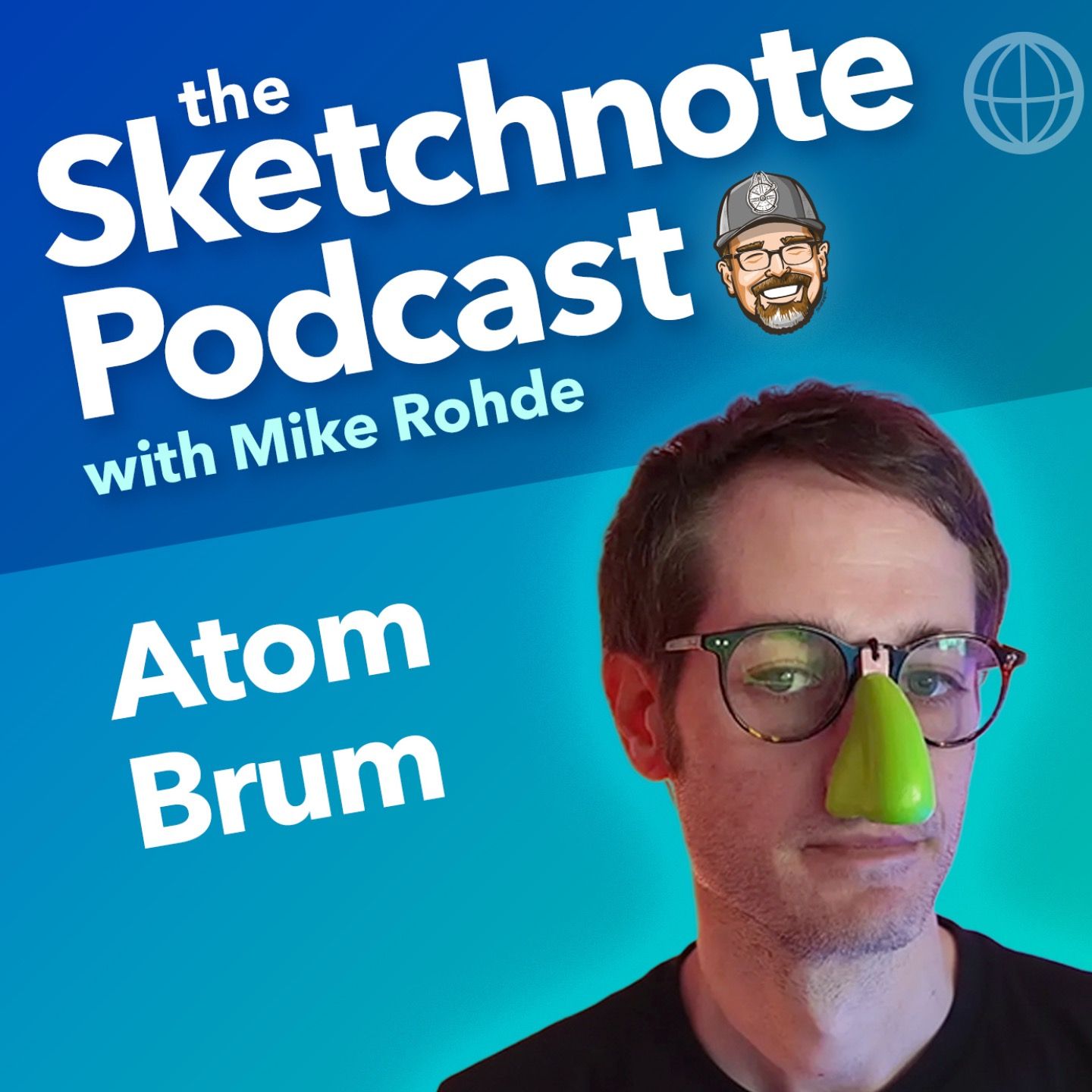
In this episode, I talk with Atom Brum of Studio Heartfelt to talk about how he's built a deeply personal creative practice that blends hand-drawn illustration, needle felting, and AI tools, without losing the heart and intention that make his work uniquely his.
We dig into his origin story, his workflow, why story always comes first, and what it means to stay a creative person through a period of real upheaval.
Running Order
Introduction to Atom Brum and his unique artistic approach
How AI amplifies Atom's visual storytelling and character design
The multifaceted nature of AI: helpful tool vs. distracting fad
The importance of capturing emotion over technical perfection
Stories that defy Hollywood conventions, rooted in authenticity
Atom's visual and narrative style — simple moments, deep messages
Finding inspiration through everyday observation and mindfulness
The origin of the "green nose" signature and playful branding
Atom's creative background and how it influences his process
The importance of organic, unfiltered creation and embracing imperfections
Practical tools: drawing on paper, digital platforms, and AI workflows
Using AI platforms like Nano Banana for character stylization and scene building
The challenges and opportunities of AI in creating complex scenes with many characters
The limitations of current tools and the importance of human oversight
Moving from digital characters to physical needle felt creations
The impact and ethics of AI — control, control, control, and environmental considerations
Tips for creatives: letting go of filters, preparing materials, and trusting the process
The significance of humor, playfulness, and authenticity in artistic expression
Atom's playful "green nose" as a symbol of fun and spontaneity
Building resilience and a positive mindset amid rapid technological change
Final thoughts and encouragement for fellow creatives
Resources & Links
Studio Heartfelt
Atom on Substack
Procreate
Concepts App
Flora AI Platform
Sponsored by The Reflective Travel Workshop Video
Have you ever wanted to create travel sketchnotes from a trip, using only photos and memories you already have?
In this 2-hour recorded video replay, I walk you through my process for creating travel sketchnotes, then guide you through your own photos and memories so you can do the same for your trips.
You'll also get a set of downloadable, printable sketching templates to help you get started.
The full video replay and templates are just $20.
https://rohdesign.com/travel
Subscribe to the Sketchnote PodcastYou can subscribe to the podcast through iTunes, Google Podcasts, Spotify, Amazon Music, YouTube or your favorite podcast listening source.Support the PodcastTo support the creation, production, and hosting of the Sketchnote Army Podcast, buy one of Mike Rohde's bestselling books. Use code ROHDE40 at Peachpit.com for 40% off!Sketchnote Lab is Mike Rohde’s space designed to bridge the gap between sketchnote theory and practice. You don’t need to be an artist to think visually. Join Mike and learn to use sketchnotes to clarify your thinking, solve problems, and move forward. Learn more about Sketchnote Lab.Mike is the author of The Sketchnote Handbook and The Sketchnote Workbook, bestselling books that teach regular people how to start sketchnoting and build a regular sketchnoting practice.He founded the Sketchnote Army and hosts the Sketchnote Podcast, where he interviews visual thinkers to understand what makes them tick.Mike teaches recorded, live, and in-person workshops to accelerate your sketchnoting practice and provides personalized coaching for your specific visual-thinking challenges.He is the illustrator of bestselling books like REWORK, REMOTE, The $100 Startup, Honest SEO, The Culture Playbook, and The Future Begins with Z.Become a Supporting or Founding Lab Partner to support Mike’s work.Some links in Sketchnote Lab posts are affiliate links. If you purchase through them, I may earn a small commission at no extra cost to you. I only recommend tools and resources I use and believe in.©2026 Mike Rohde, Sketchnote Lab
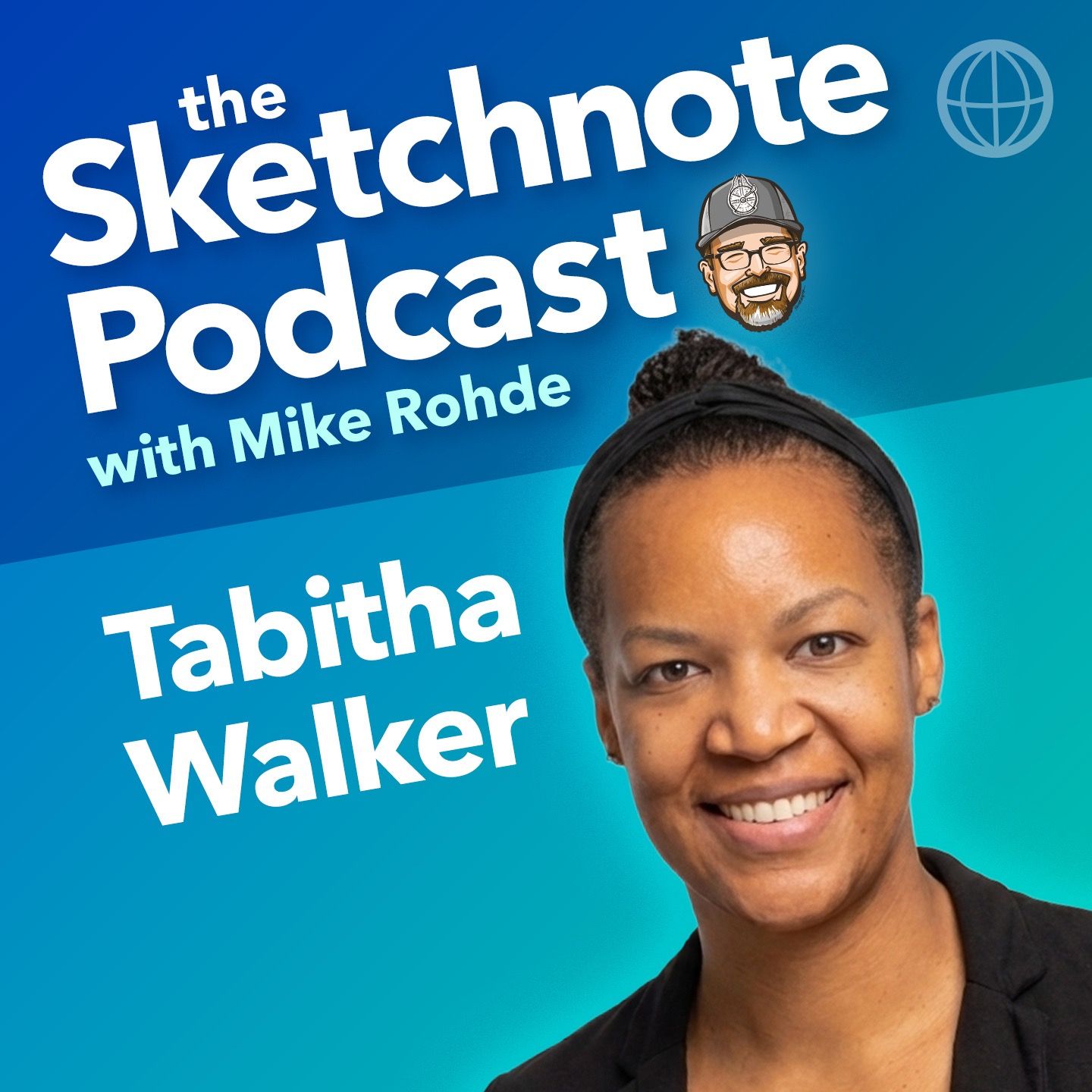
I sit down with Tabitha Walker a professional graphic recorder, instructional designer, and travel artist based in the Washington DC area. We talk about how her background as an analyst shaped her approach to visual work, the toolkit she's developed, and why her travel journal from Mongolia became the spark for Sketch Journeys. We dig into developing a personal style, staying impartial in the room, and why there's no single right way to do this work.
Running Order
Introduction to the podcast style and guest
Who is Tabitha Walker, and her background
How travel journaling sparked her visual work
The story behind her Mongolia trip and visual travel log
Early artistic influences and formative childhood experiences
Transition from analysis to graphic recording
Challenges of large-scale drawing and building confidence
The meditative state during recording sessions
Developing a personal style and learning from others
The role of randomness and serendipity in career paths
Impartiality and filter skills in graphic recording
Handling logistical challenges with tools and venue surfaces
Building adaptable workflows and preparing for mobile recording
Managing equipment and logistical planning, including vetting venues
Exploring digital tools like iPad and Procreate for remote work
Techniques for digital versus analog recording
Creating effective readouts and summaries post-event
Innovating with digital presentations and paid add-ons
Practical advice for visual thinkers: practice, style, authenticity
Three tips for aspiring visual thinkers
Connecting with Tabitha and her online presence
Closing remarks and appreciation
Resources & Links
Sketched Journeys — Substack
Sketched Journeys — Business Website
Procreate
Neuland Markers
Faber-Castell 9000 Pencils
Pentel Slicci 0.25
Uni-ball Signo DX 0.38
Watercolor Pencils — Faber-Castell
White Acrylic Markers
Subscribe to the Sketchnote PodcastYou can subscribe to the podcast through iTunes, Google Podcasts, Spotify, Amazon Music, YouTube or your favorite podcast listening source.Support the PodcastTo support the creation, production, and hosting of the Sketchnote Army Podcast, buy one of Mike Rohde's bestselling books. Use code ROHDE40 at Peachpit.com for 40% off!Sketchnote Lab is Mike Rohde’s space designed to bridge the gap between sketchnote theory and practice. You don’t need to be an artist to think visually. Join Mike and learn to use sketchnotes to clarify your thinking, solve problems, and move forward. Learn more about Sketchnote Lab.Mike is the author of The Sketchnote Handbook and The Sketchnote Workbook, bestselling books that teach regular people how to start sketchnoting and build a regular sketchnoting practice.He founded the Sketchnote Army and hosts the Sketchnote Podcast, where he interviews visual thinkers to understand what makes them tick.Mike teaches recorded, live, and in-person workshops to accelerate your sketchnoting practice and provides personalized coaching for your specific visual-thinking challenges.He is the illustrator of bestselling books like REWORK, REMOTE, The $100 Startup, Honest SEO, The Culture Playbook, and The Future Begins with Z.Become a Supporting or Founding Lab Partner to support Mike’s work.Some links in Sketchnote Lab posts are affiliate links. If you purchase through them, I may earn a small commission at no extra cost to you. I only recommend tools and resources I use and believe in.©2026 Mike Rohde, Sketchnote Lab

Comments

Download from Google Play

Download from App Store
 United States