


 Claim Ownership
Sleep Matters Podcast
Subscribed: 5Played: 247
Subscribe

©Sleep Matters Podcast
Description
Sleep Matters is a mocktail of snarky honesty and straight talk in dental sleep medicine you’ve been looking for.
We jump on the grenades most professionals avoid, from medical and dental turf wars and insurance headaches to calling out the latest industry “snake oil.”
Sit down with movers, shakers, and iconoclasts as we dive into the clinical and political issues that keep dentists up at night.
You’ll learn.
You’ll laugh.
And you’ll actually look forward to the next episode.
SLEEP MATTERS
We jump on the grenades most professionals avoid, from medical and dental turf wars and insurance headaches to calling out the latest industry “snake oil.”
Sit down with movers, shakers, and iconoclasts as we dive into the clinical and political issues that keep dentists up at night.
You’ll learn.
You’ll laugh.
And you’ll actually look forward to the next episode.
SLEEP MATTERS
27 Episodes
Reverse
Breathing happens automatically, but the way we breathe can tell us more than we realize. In this episode, Jason Tierney and Dr. Erin Elliott sit down with author and breathing expert Patrick McKeown to explore nasal breathing, mouth breathing, dysfunctional breathing patterns, and why these conversations belong in dentistry and sleep medicine.Patrick shares how his own experience with asthma and chronic mouth breathing led him to study breathing more than two decades ago. He explains why the goal of breathing exercises should be to improve the way a person breathes throughout everyday life, not simply during a few minutes of structured practice.The conversation also explores tongue posture, CPAP mask leak, myofunctional therapy, stress regulation, physical performance, and childhood development. Throughout the episode, Patrick encourages clinicians to look beyond individual treatments and consider whether the patient’s underlying breathing pattern may be another important part of the picture.What’s on the MenuWhy everyday breathing patterns matterNasal breathing, mouth breathing, and tongue postureBreathing patterns in sleep medicine and CPAP therapyDysfunctional breathing, stress, and physical performanceWhat dentists can notice in children and adultsThe Value AddPatrick’s central message is that breathing should not be viewed only as an exercise or technique. The larger goal is to improve the underlying pattern so breathing becomes lighter, slower, more comfortable, and more functional throughout the day and night.For dentists and other clinicians, this creates an opportunity to pay closer attention to signs that may otherwise be overlooked. Mouth posture, tongue position, facial development, sleep complaints, and breathing habits can all contribute to a more complete understanding of the patient.Clinical Concepts & TerminologyNasal BreathingUsing the nose as the primary pathway for breathing rather than relying on an open-mouth breathing pattern.Dysfunctional Breathing / Breathing Pattern DisorderBreathing that may become faster, harder, irregular, upper-chest dominant, or more dependent on the mouth.Overbreathing / Chronic HyperventilationA habitual pattern of breathing more intensely than necessary, rather than the dramatic hyperventilation commonly associated with an acute panic attack.Low Tongue-Resting PostureA tongue position lower in the mouth rather than resting against the palate. Patrick discusses its potential relevance to mouth breathing and airway function.Nasal Respiratory RehabilitationRetraining or improving nasal breathing patterns when mouth breathing has become habitual or continues after another intervention.Professional Organizations & CollaborationPatrick emphasizes that breathing should not belong to one specialty. Dentists, orthodontists, physicians, sleep professionals, myofunctional therapists, and other clinicians may each see a different part of the same patient.His message is not that one profession should own the entire problem, but that greater awareness and collaboration can help clinicians recognize when breathing deserves further attention.Featured Experts to FollowPatrick McKeownAuthor, breathing educator, and founder of Oxygen Advantage.Konstantin ButeykoThe Ukrainian physician whose work introduced Patrick to breathing retraining and reduced breathing techniques.Recommended Tools & ReadingThe Oxygen Advantage by Patrick McKeownExplores breathing in relation to health, physical performance, and mental performance.Close Your Mouth by Patrick McKeownPatrick’s earlier work focused on nasal breathing and breathing retraining.MyoTapeA product discussed during the episode that is designed to encourage lip closure while still allowing the mouth to open.The Big IdeaBreathing is easy to overlook because it happens automatically. Patrick’s challenge to clinicians is to start paying attention to how patients breathe throughout the day and night, and to consider whether the underlying breathing pattern may be relevant to the care they are already providing.Resources and Links MentionedOxygen AdvantageMyoTapeButeyko ClinicReferenced by Patrick during the episode.
Dr. Keith Thornton has spent several decades challenging how dentistry thinks about sleep, breathing, and the airway. In this episode, he joins Jason Tierney and Dr. Erin Elliott to look back at the origins of his work and explain why he sees oral device therapy as much more than a dental treatment.Dr. Thornton traces his approach to his early training in Navy anesthesia, where airway management meant understanding how the jaw, tongue, and surrounding anatomy influence airflow. That experience shaped the way he later approached sleep patients and eventually led him to view devices such as the TAP as tools for managing the airway rather than simply repositioning the teeth or jaw.The conversation also explores nasal breathing, mouth position, CPAP leak, titration, long-term patient management, and the evolution of dental sleep medicine. Dr. Thornton shares his perspective on where the field has improved, where he believes it has fallen short, and why dentists should think beyond delivering an oral device and instead build systems that follow the patient over time.What’s on the MenuHow anesthesia shaped Dr. Thornton’s approach to airway managementWhy he sees oral devices as breathing and airway devicesNasal breathing, mouth position, and CPAP leakThe importance of titration, testing, and follow-upMoving from appliance delivery to lifetime airway managementThe Value AddOne of the clearest ideas in this conversation is that the device itself is only one part of treatment. Dr. Thornton repeatedly brings the discussion back to airway function, breathing, patient response, and what happens after the device is delivered.His approach challenges clinicians to think beyond a single intervention and consider how oral devices, nasal breathing, CPAP, testing, follow-up, and collaboration with medical providers can fit into a broader system of care.Clinical Concepts & TerminologyAirway ManagementDr. Thornton uses this term to describe maintaining or improving an open airway through attention to jaw position, tongue position, breathing, and other anatomical and functional factors.Physiologic Breathing DeviceKeith’s preferred framing for devices designed around breathing and airway function rather than traditional dental or orthodontic concepts alone.TitrationThe process of gradually adjusting an oral device and evaluating the patient’s response rather than assuming the initial position will provide the best outcome.Mouth ShieldA component discussed by Dr. T that is intended to encourage nasal breathing and reduce mouth breathing while using an oral device.CPAP Mask LeakDr. Thornton discusses both intentional and unintentional air leakage and argues that leakage should be considered when evaluating CPAP tolerance and breathing.Professional Organizations & CollaborationThe conversation touches on the American Academy of Dental Sleep Medicine, the American Academy of Sleep Medicine, the American Dental Association, dental schools, ENTs, sleep physicians, and primary care providers.Keith and Erin both emphasize the need to reduce professional silos and create more practical pathways for patients to receive appropriate evaluation, treatment, and follow-up.Recommended Tools & Topics MentionedTAP and TAP-PAPDevices discussed in relation to airway management, titration, and combining oral device therapy with positive airway pressure.myTAPDiscussed as an accessible starting point for some patients and as part of a broader treatment pathway.FlexTAPDr. T describes the FlexTAP as a breathing-focused device designed around tongue space, jaw position, and airway function.Mouth ShieldDiscussed as a way to encourage nasal breathing while managing mouth position.AM AlignerDiscussed in relation to morning bite management after oral device use.The Big IdeaDr. Thornton’s central argument is that dental sleep medicine should not stop at delivering an oral device. He believes clinicians should focus on the airway, evaluate how the patient is actually breathing, titrate and test therapy, collaborate when additional treatment is needed, and continue managing the patient over time.In his view, the goal is not simply to make an appliance. It is to build a system capable of managing the airway throughout the patient’s changing needs.
Sleep medicine has gotten very good at diagnosing conditions. Dr. Dave McCarty thinks the bigger challenge is remembering that the diagnosis is only part of the story.McCarty started as a primary care internist before finding his way into sleep medicine, eventually training under Dr. Andrew Chesson and becoming deeply involved in the field. But one patient changed the way he thought about care. She had spent years using CPAP because she had been told she had sleep apnea and feared having a stroke. The problem was that her real issue had been missed. She actually had type 1 narcolepsy.That experience eventually led McCarty to develop what he calls the five-finger approach, a framework designed to keep clinicians from getting trapped by the first diagnosis that seems to fit. Instead of caring for the label, he argues that providers need to keep coming back to the patient's story, asking what still isn't working and what else could be going on.He also gets into why sleep care needs better communication between physicians, dentists, primary care providers, and other disciplines. McCarty's work with the Empowered Sleep Apnea Project and Rebis Health is built around creating a common language so those different worlds can stop operating in silos and start solving the patient's actual problem together.The bigger lesson is about agency. The goal shouldn't be getting someone onto a machine or forcing compliance. It's helping people understand their situation, identify their reasons for treatment, see their options, and make an informed decision about what happens next.What's on the MenuHow a primary care internist found his way into sleep medicineThe patient story that led to the five-finger approachWhy a diagnosis can become a cognitive trapThe difference between diagnosis-based and narrative-based careWhy "compliance by coercion" misses the pointWhat crows can teach healthcare providers about collaborationBringing dentistry, sleep medicine, and primary care into one conversationA Few Threads You'll HearDon't confuse the diagnosis with the patient. McCarty explains how clinicians can find an answer that seems satisfactory, stop looking, and spend years managing the label instead of revisiting whether it actually explains the patient's experience. His five-finger approach grew directly out of seeing how badly that can go wrong.Give patients their agency back. The goal isn't simply getting somebody to use CPAP, a device, or any other treatment. McCarty wants patients to understand why they might treat, what their options are, and what matters to them personally. Sometimes an informed decision may even be to do nothing.Be a crow, not the smartest person in the room. McCarty uses crows as a model for lateral learning. Instead of one expert handing down every answer, he wants clinicians from different disciplines to share a common structure, teach one another, and bring their individual expertise to the same problem.Different disciplines need a common language. Airway dentistry, traditional sleep medicine, primary care, and integrative medicine often look at the same patient from very different angles. Rebis Health is McCarty's attempt to bring those "rivers" together so treatment planning starts with the whole person rather than whichever silo they entered first.Resources & LinksDr. David McCarty - physician, sleep medicine educator, creator of the five-finger approach, and founder of the Empowered Sleep Apnea ProjectEmpowered Sleep Apnea Project - McCarty's educational platform designed to make complex sleep concepts understandable through conversation, storytelling, illustrations, and unconventional teachingRebis Health - McCarty's clinical project focused on creating a common language across sleep medicine, airway dentistry, primary care, and integrative careThe Beautiful Blue Book - the Empowered Sleep Apnea handbook for patients and the people who care about them, built around the five-finger approach and five reasons to treatEmpowered Sleep Apnea Presents The Nose Rules - a children's picture book created to start conversations about nasal breathing earlierDr. Andrew Chesson - sleep medicine physician and past AASM president who trained McCarty during his transition into sleep medicineTom Colquitt - early airway-focused dentist McCarty credits with helping shape his appreciation for collaboration between medicine and dentistry.. The Big IdeaGood sleep care isn't about finding a diagnosis and then spending the rest of the patient's life managing that label. It's about continuing to ask whether the story still makes sense.Listen to the patient. Understand their reasons for treatment. Expect more than one moving part. Bring the right disciplines into the conversation. Then give the patient enough understanding to decide what they want to do next.As McCarty puts it: “My goal is not to get you onto a machine, my goal is to help you find your agency.”Press play.
Sleep apnea, for sleep professionals, feels EASY to diagnose - but what about when it isn’t cut and dry? For patients who don't fit the stereotype, don't respond perfectly to CPAP, or need more than one provider involved in their care, the path can feel impossible.Emma Cooksey spent roughly a decade living with undiagnosed obstructive sleep apnea. She was exhausted, waking with headaches, struggling to stay awake, and treating anxiety and depression without getting to the underlying problem. It wasn't until she fell asleep at the wheel with her newborn baby in the car that she finally received a referral to a sleep specialist and got diagnosed.In this episode, Emma joins Jason Tierney and Dr. Erin Elliott to share how her experience eventually led to Sleep Apnea Stories and her advocacy work with Project Sleep. What started as a podcast became a much broader look at the gaps patients face, from insurance problems and disconnected providers to limited awareness of treatment options beyond CPAP.They also get into one of the biggest disconnects in sleep care: what the numbers say versus how the patient actually feels. Emma explains why a great AHI or strong CPAP data doesn't necessarily mean the patient feels great, and why clinicians need to ask what outcome the patient is actually looking for instead of assuming the metric tells the whole story.The bigger lesson is about creating a system that works for real people. That means breaking down silos between providers, making more treatment options accessible, educating primary care providers, listening to patient experiences, and ensuring people can see themselves represented in the sleep apnea conversation.What's on the MenuEmma's 10-year journey with undiagnosed obstructive sleep apneaWhy sleep symptoms can be mistaken for anxiety, depression, or personal failureWhat happens when patients need options beyond CPAPWhy great sleep data doesn't always mean a great patient outcomeThe importance of asking patients what success actually looks likeBreaking down silos between sleep physicians, dentists, and other providersHow Project Sleep is working to challenge stereotypes and expand awarenessA Few Threads You'll HearListen to the patient, not just the numbers. Emma spent years telling her sleep specialist that she was still significantly sleepy while being reassured that her CPAP data looked great. Her point is simple: good numbers matter, but the person sitting in front of you matters too.Patients need more than one pathway. CPAP worked well enough for Emma to make a major difference, but it wasn't the end of her treatment journey. She explains how difficult it can be to coordinate multiple treatment options across providers, even when you have knowledge, resources, and connections.Stop deciding who "looks like" they have sleep apnea. Emma's Sleep Apnea: Let's Face It campaign is built around breaking the stereotype of who gets the condition. Patients are still avoiding testing, and even being dismissed by providers, because they don't fit the expected profile.Patient voices can change the system. Through Project Sleep, Emma has moved from sharing her own story to helping other patients speak up, educating providers, advocating for research and funding, and pushing for patients to have a seat at the table when sleep care is being shaped.Resources & LinksEmma Cooksey - sleep apnea patient advocate, creator of Sleep Apnea Stories, and staff member with Project SleepProject Sleep - patient advocacy nonprofit supporting education, awareness, research advocacy, and programs for people living with sleep disordersSleep Apnea: Let's Face It - Project Sleep awareness campaign focused on challenging stereotypes around who can have sleep apneaSleep Apnea Squad & Coffee with Emma - free Project Sleep education and support resources for people navigating sleep apnea careThe Big IdeaSleep apnea care can't stop at getting the diagnosis, handing someone a CPAP, or bringing their AHI down. The real question is whether the patient is getting the outcome they need.Ask how they're functioning. Ask what they're still struggling with. Make sure they understand their options. Build relationships with other providers so patients aren't left to connect the dots on their own.As Emma puts it: “This journey was hard enough for me, but for most people out there, it's impossible. So we have to do better.”
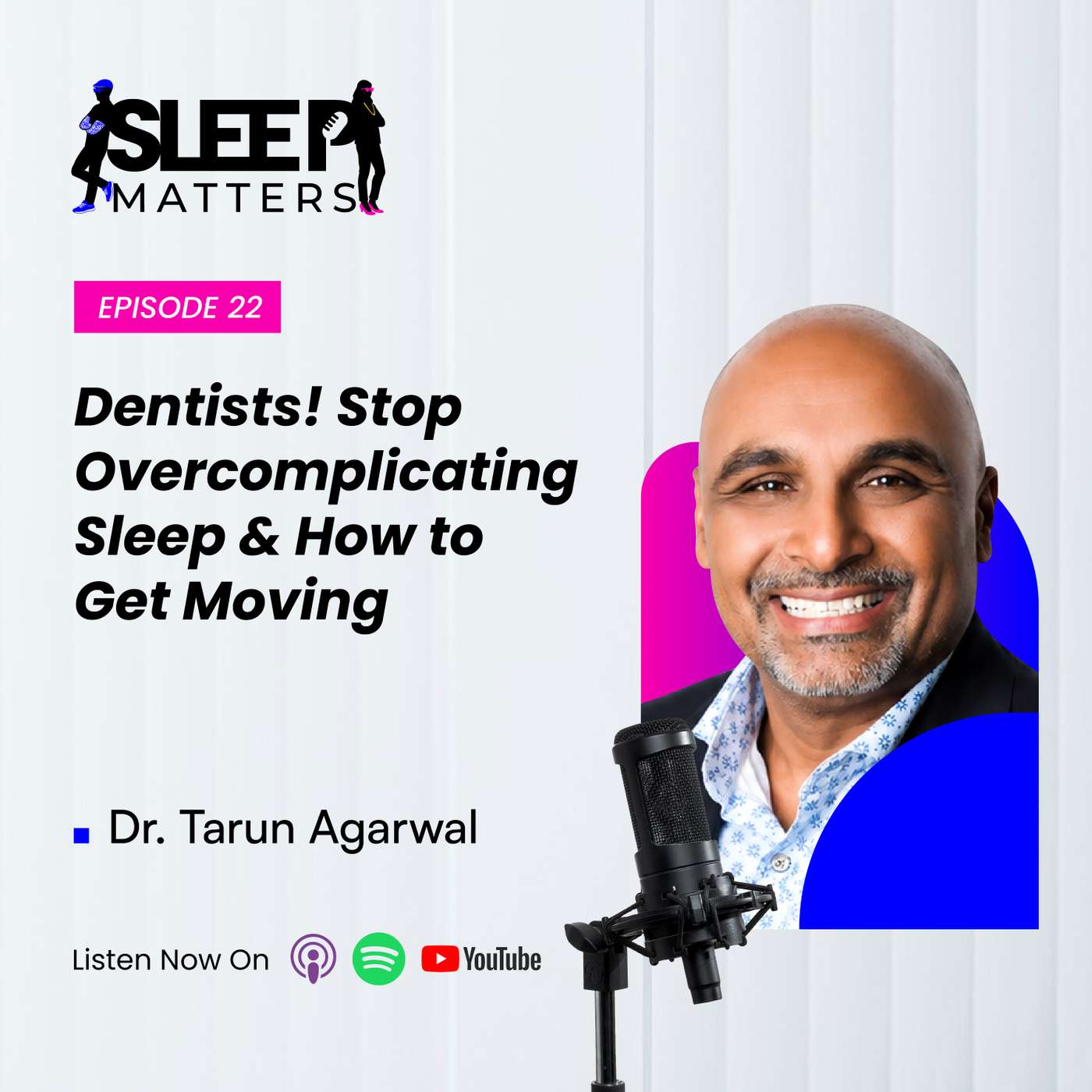
Dentists have a habit of making sleep harder than it needs to be. They get buried in medical insurance, device details, referrals, and clinical workflows before they've even figured out how to consistently get patients tested.Dr. Tarun Agarwal has spent years building a successful sleep practice and teaching others how to add sleep into their general practice, and his approach is refreshingly direct: treat it like a real business inside your business. In this episode, he joins Jason Tierney and Dr. Erin Elliott to break down why so many dentists never get their sleep program off the runway.For Tarun, success didn't happen in the first few months. It took six months, nine months, even a year before the program started gaining real traction. Instead of squeezing sleep between existing appointments, he funded it like a startup, gave a team member ownership, and built a process that could eventually run with very little intervention from him.They also get into one of dentistry's biggest blind spots: money. Tarun explains why dentists shouldn't make financial decisions for their patients, why leading with insurance often creates unnecessary friction, and why understanding the patient's real reason for wanting treatment matters more than explaining every clinical detail.The bigger lesson is about how dentists define success. You don't need to become a sleep-only practice or match the biggest names in the industry. Sometimes success is adding a few thousand dollars, stacking small wins, and building something sustainable over time.What's on the MenuWhy dentists overcomplicate sleep before they ever get startedThe runway most practices underestimate when building a sleep programTreating sleep like a startup inside your existing practiceWhy financing belongs in the treatment conversationThe difference between a chief complaint and a chief disabilityWhy your team shouldn't be asked to "sell" sleep devicesThe comma-not-decimal mindset for making better business decisionsA Few Threads You'll HearGive the program a real runway. Tarun didn't see meaningful success overnight. He explains why sleep needs time, resources, clear goals, and someone who actually owns the process, rather than trying to squeeze it between other responsibilities.Stop making financial decisions for patients. Patients may have insurance and still choose to pay. Tarun's approach is to explain the benefit, present the price, offer monthly payment options, and let the patient decide what works for them.Find the chief disability. The clinical details matter, but they're rarely what moves someone to act. Tarun explains why the better question is how sleep is affecting the patient's actual life, whether that's getting kicked out of the bedroom, feeling exhausted, or wanting to be around for their kids.Think in commas, not decimals. Dentistry can get obsessed with saving a few dollars while missing much bigger opportunities. Tarun shares the mindset his father taught him: stop chasing home runs, stack smaller wins, and make decisions based on the bigger picture.Resources & LinksDr. Tarun Agarwal - practicing dentist, practice owner, educator, and co-host of sleep apnea implementation training through 3D DentistsDr. Erin Elliott - general dentist and dental sleep educator who teaches alongside Dr. Agarwal through 3D Dentists3D Dentists - referenced throughout the episode for its sleep apnea training and business educationPaul Homoly - credited by Dr. Agarwal for the concept of focusing on a patient's "chief disability" rather than only the traditional chief complaintThe Big IdeaSleep doesn't fail because dentists can't learn the clinical side. It fails when they treat it as an occasional procedure rather than something that requires attention, ownership, and time.Give it a runway. Put someone in charge. Get more patients tested. Understand what actually matters to them. Then let the process build.As Tarun puts it: if you treat it like a stepchild in the practice, you will get stepchild results.Press play.

Comments

Download from Google Play

Download from App Store
 United States