


 Claim Ownership
Small College America
Subscribed: 0Played: 7
Subscribe

© @2025 Small College America
Description
Small College America is a podcast series that presents critical discussions at the forefront by interviewing small college higher education leaders, policy experts, and innovators. The podcast will delve into the evolving role of small colleges, their economic impact, innovative strategies for sustainability, and how they can continue to provide a highly personalized educational experience. The series is co-hosted by Dean Hoke, Co-Founder of Edu Alliance Group and a Senior Fellow with the Sagamore Institute, and Kent Barnds, Executive Vice President for Strategy & Innovation and Vice President of Enrollment & Communication for Augustana College.
30 Episodes
Reverse
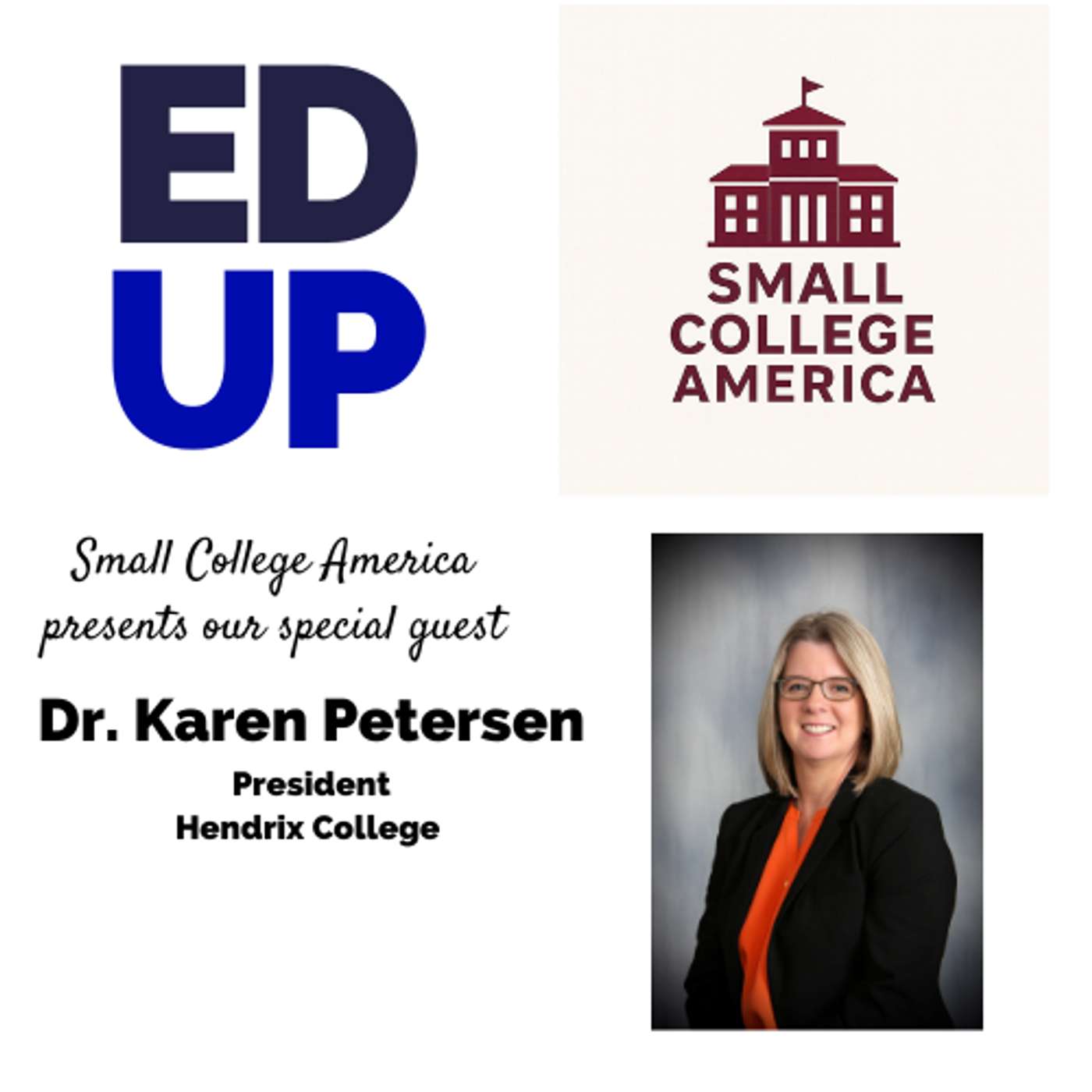
Joining us today Dr. Karen Petersen is the 13th President of Hendrix College, taking office on June 1, 2023. A native of northwest Arkansas, she joined the Hendrix community from the University of Tulsa, where she served as Dean of the Henry Kendall College of Arts and Sciences and was a professor of political science.Before her time in Tulsa, Karen spent 16 years at her undergraduate alma mater, Middle Tennessee State University, rising through progressively senior leadership roles and ultimately serving as Dean of the College of Liberal Arts, the university’s largest academic unit. She earned both her master’s degree and Ph.D. in political science from Vanderbilt University.She and her husband, Joey Keasler, a northeast Arkansas native, are the parents of two children.
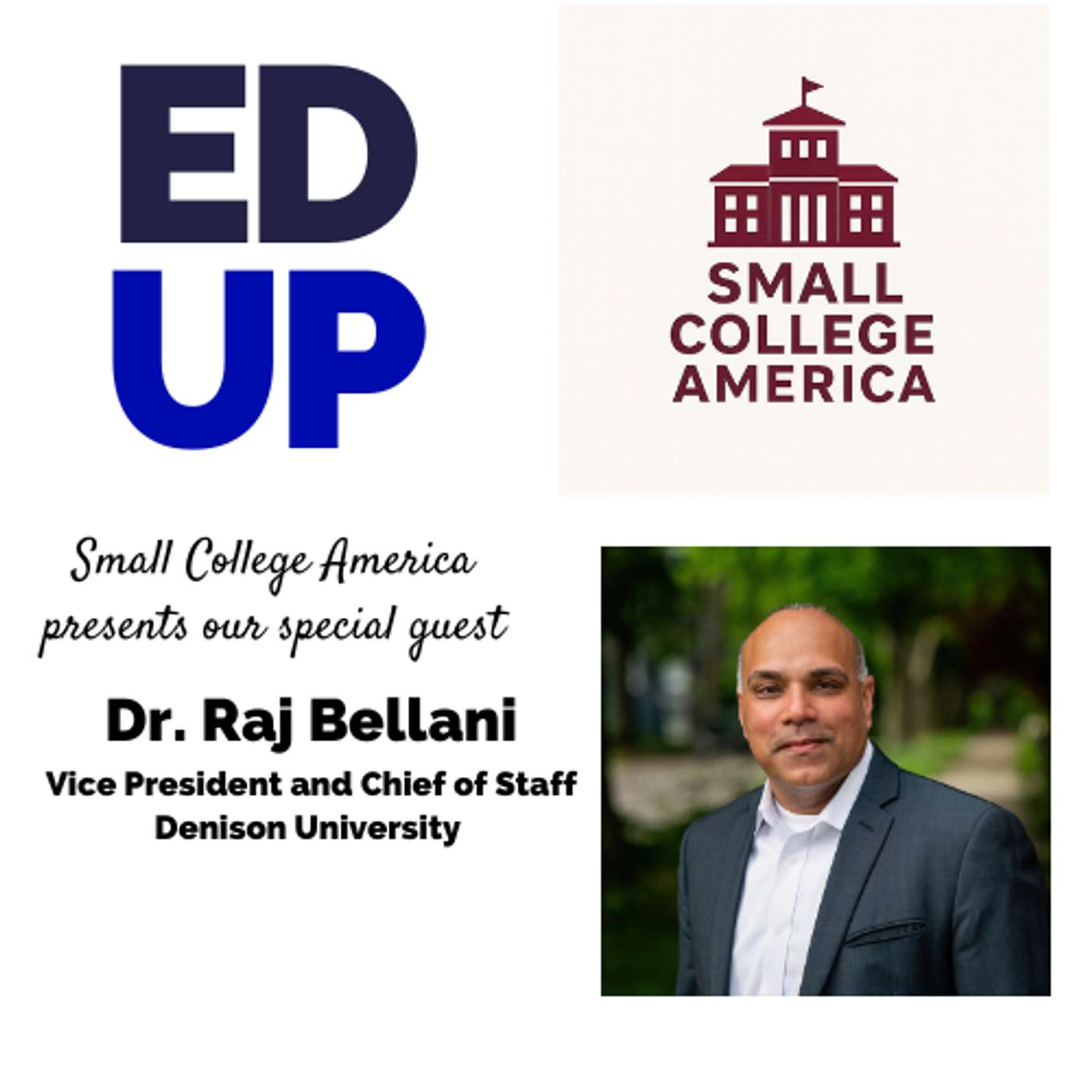
Today's guest is Dr. Raj Bellani, Vice President of External Affairs, Career Outcomes, and Chief of Staff at Denison University in Ohio. At Denison, Raj plays a key role in advancing the university’s strategic plan—strengthening its global engagement, enhancing faculty and staff mentoring, and promoting innovation and wellness across campus.Before arriving in Granville, Raj served as Dean of Experiential Learning and Career Planning at DePauw University’s Hubbard Center for Student Engagement, overseeing career services, service-learning programs, national fellowships, and alumni initiatives.Earlier in his career, he held senior leadership positions at the Rhode Island School of Design—including International Recruitment Director, Associate Provost, and Dean of Students—and served in a variety of administrative roles at Colgate University.Beyond campus, Raj contributes his expertise to several boards in the Columbus area, including the Greater Columbus Arts Council. He earned degrees from SUNY Geneseo, Western Illinois University, and the University of Pennsylvania.
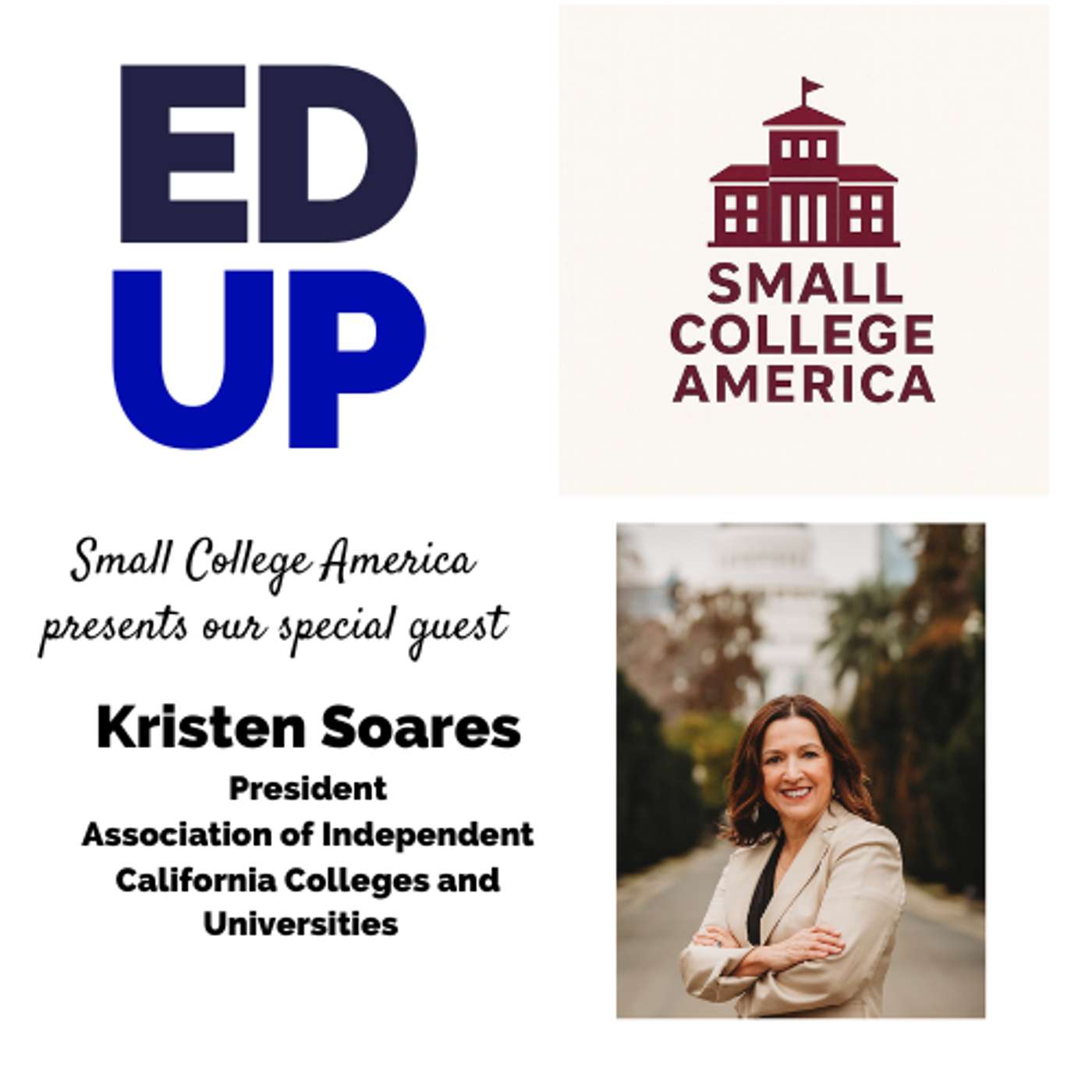
Kent Barnds: Welcome to Small College America, a podcast dedicated to exploring the role and value of small colleges in the higher education landscape. I'm Kent Barnds, and I’m joined by my co-host, Dean Hoke.Dean Hoke: Kristen Soares is the fourth president of the Association of Independent California Colleges and Universities (AICCU), representing more than 85 nonprofit institutions dedicated to the public good. As president, she works with leaders across the state to shape higher education policy and serves as the sector’s chief spokesperson. Under her leadership, AICCU partnered with the California Community Colleges Chancellor’s Office to implement the Associate Degree for Transfer pathway, expanding opportunities and improving access for transfer students.Soares plays a prominent role in statewide and national higher education leadership, serving as a member of the California Education Round Table, the Governor’s Council for Career Education, and the NAICU State Executives Council. She previously spent nearly 25 years at the University of Southern California (USC), where her career in higher education began with a federal Work-Study job, one she credits with landing her in the university’s senior administration and setting her on a lifelong path in higher-ed leadership. During her tenure, she led government and civic engagement efforts across California and Washington, D.C. Kristen earned her Bachelor of Science in Public Administration from USC. Kristen, we’re delighted to have you with us on Small College America. Kent - Q1: Kristen, for those who may not be familiar, could you start by telling us about the role of the Association of Independent California Colleges and Universities (AICCU) and how it supports its member institutions? What is AICCU’s top legislative priority this session?Dean – Q2: California has one of the most complex and influential higher education ecosystems in the country, with the University of California (UC) system, the California State University (CSU) system, and the independent sector each serving distinct missions. How does AICCU advocate for independent colleges within this landscape, and what opportunities or challenges arise in coordinating with state agencies and legislators?Kent – Q3: Many small colleges are rethinking their academic portfolios to meet changing student and workforce demands. What innovations or program models are you seeing that balance tradition with transformation—without losing institutional identity?Dean – Q4: With rising concerns about college affordability and ROI, how should small private colleges articulate their value proposition to skeptical families? What alternative business models or revenue streams show the most promise for achieving long-term financial sustainability?Kent – Q5: Higher education has faced increased political scrutiny nationwide. How do you advise independent college leaders to communicate their value and relevance to the public and policymakers in today’s polarized climate?Dean – Q6: Kristen, after you looked into your crystal ball, before meeting with the leaders of over 85 nonprofit institutions from AICCU, what's the most important piece or pieces of advice you'd offer them about the future?ClosingKent: Kristen, thank you for joining us and for sharing your insight into California’s independent higher education community and the issues shaping small colleges nationwide.For those listening or viewing, if you'd like to learn more about Small College America, go to our web page at www.smallcollegeamerica.net, where you can find details on upcoming episodes, contact us, and suggest topics you’d like us to cover.This episode of Small College America is made possible with underwriting support from Edu Alliance Group — a higher education consulting firm that champions small colleges and the communities they serve.On behalf of our guest, Kristen Soares, my co-host Dean Hoke, and myself, thank you for joining us.
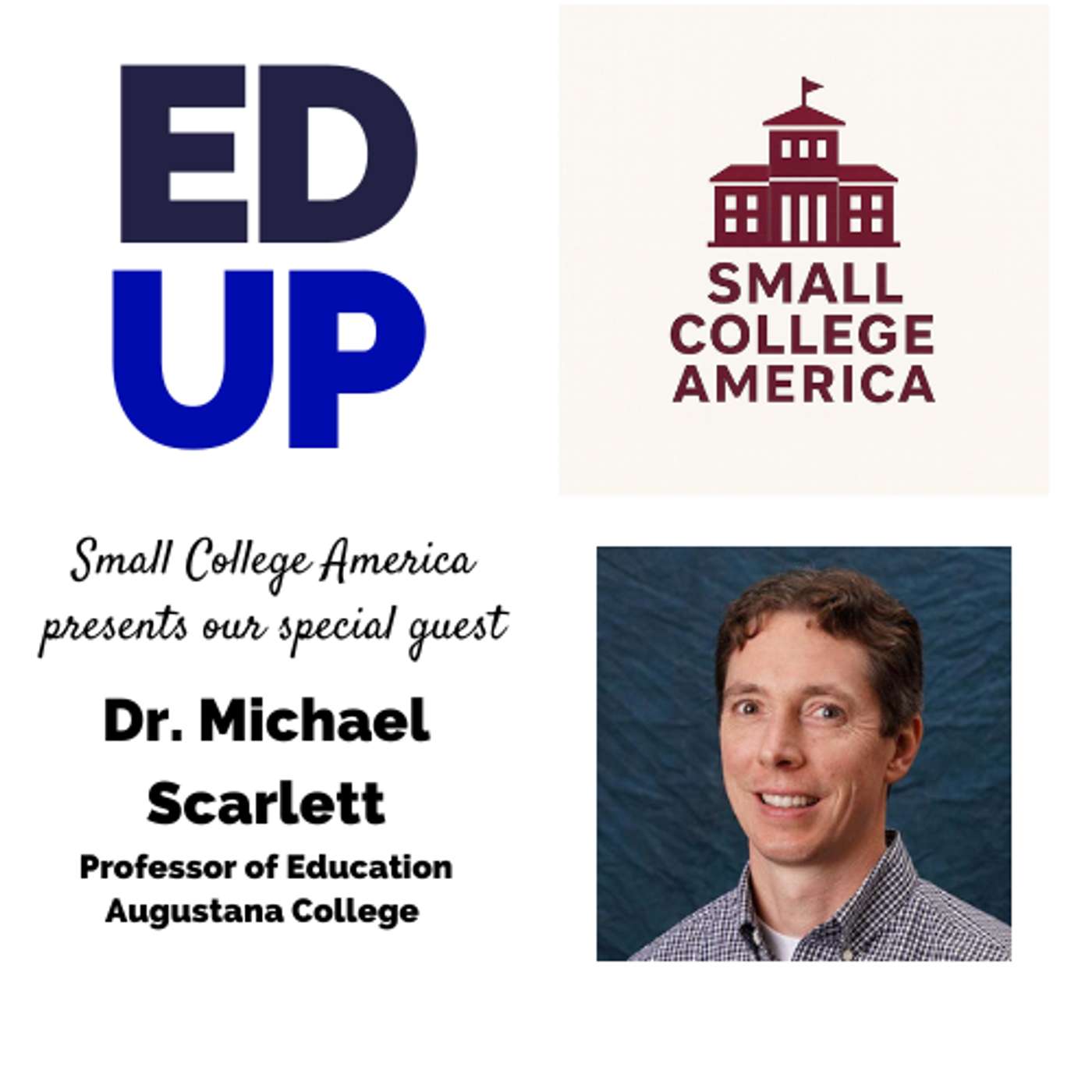
Welcome to Small College America, a podcast dedicated to exploring the role and value of small colleges in the higher education landscape. I'm Dean Hoke, and I’m joined by my co-host, Kent Barnds. Today, we’re joined by Michael H. Scarlett, Professor of Education at Augustana College. Michael supervises student teachers and teaches educational psychology and assessment, social studies methods, and educational technology. Before coming to Augustana, he spent four years on the faculty at Montana State University, Billings. He began his career teaching middle-school social studies—American history, world geography, humanities, and state history—and later taught secondary social studies in St. Paul Public Schools.Michael earned his B.A. from Macalester College in St. Paul and his M.A. and Ph.D. in Curriculum & Instruction (Social Studies Education) from the University of Minnesota–Twin Cities.Off campus, he’s a proud husband, dad of two, beagle wrangler, avid runner and kayaker, and former soccer player and youth coach with 15+ years on the pitch. I understand you have served as a history judge many times over the years, including as a National History Day judge at Bettendorf Middle School in Bettendorf, Iowa. :)Q1: Michael, tell us about the Augustana Education program. What does it offer, how many students are in the program, and what makes it distinct Q 2: What drew you into education—and how has your role at Augustana evolved? Follow-up: As a teacher, was there a moment that confirmed you’d chosen the right path? Q3: How would you describe today’s job market for new teachers, and where is the greatest teacher shortage? Quick follow-up, is there something school districts or private and charter schools can do to address these shortage? Q4: What are the biggest challenges education majors face as they prepare for the classroom, and what strategies or supports do you emphasize to help them thrive?Q5: A recent student wrote in a review that you made them feel they belonged in the program—especially after a rough start—and praised your respectful, nonjudgmental style. What practices do you recommend to support struggling students, whether a college professor or a middle school teacher?Q6: We like to end with the future. Looking 5–10 years ahead, what gives you the most hope that more high school students will choose teaching, especially through pathways at small colleges like Augustana?Michael, thank you for sharing your journey and your vision for teacher education at Augustana. Your commitment to making every student feel they belong in the classroom is exactly what education needs right now."For those listening or viewing, if you'd like to learn more about Small College America, go to our web page at www.smallcollegeamerica.net, where you can find details on upcoming episodes, contact us, and suggest topics you’d like us to cover.“This episode of Small College America is made possible with underwriting support from Edu Alliance Group — A higher education consulting firm that champions small colleges and the communities they serve.” On behalf of our guest, Michael Scarlett, my co-host Kent Barnds, and Dean Hoke, thank you for joining us.”
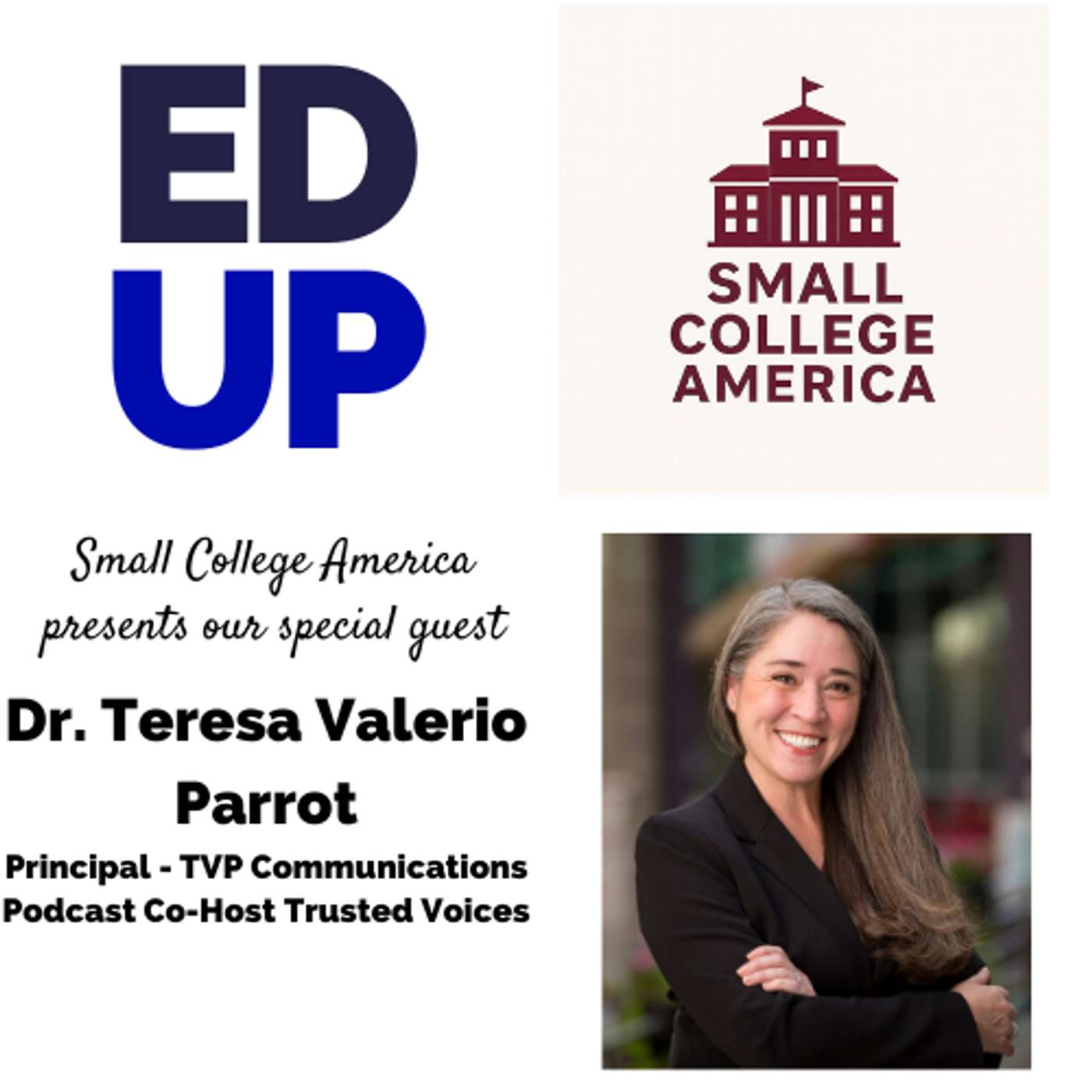
Welcome to Small College America, a podcast dedicated to exploring the role and value of small colleges in the higher education landscape. I'm Kent Barnds, and I’m joined by my co-host, Dean Hoke. Dean: Our guest today is Dr. Teresa Valerio Parrot, APR, the Principal of TVP Communications. She is co-host of the Trusted Voices Podcast and co-editor of Call to Action for Inside Higher Ed, has numerous media bylines, and is a frequent keynote speaker.She is writing a book on higher-education governance for the Harvard Academic Press and co-editing a book on public scholarship for the Cambridge Press. CASE awarded her the Crystal Apple Award for Teaching Excellence, and she serves as a CASE Laureate. In 2024, PR News honored her as an industry leader and for her strategy work, and in 2025, Diverse listed her among women making a difference in academe.She is secretary of the board for the Public Relations Society of America, co-chairs the American Marketing Association’s Higher Education Symposium, and also serves on the board of the PRSA Foundation. Teresa enjoys spending time outdoors in Colorado with her husband and dogs and volunteering with arts and community organizations in the Denver, Colorado area. Question 1: Tell me about your journey into higher-education communications, what led you into this field, and what experiences have most shaped your perspective on how colleges tell their stories? And then, tell us about your firm, TVP Communications, and the work you and your team do with colleges and universities. Question 2: Many small private colleges are mission-driven but resource-limited. What are the most common messaging or positioning missteps you see when they try to stand out? Is there a recent example where a smaller institution got its narrative right? Question 3: You’ve said higher education doesn’t have a storytelling problem — it has a truth-telling problem. For small colleges that struggle to articulate their value in a crowded marketplace, how does that idea translate into practical communications or marketing strategy? Follow-up: For small colleges that struggle to articulate their value in a crowded marketplace, how does ‘truth-telling’ translate into practical communications or marketing strategy? Question 4: You and Erin Hennessy launched the Trusted Voices podcast, which has become one of the most insightful conversations about leadership and communication in higher education. How has podcasting shaped your own view of authentic communication — and do you see opportunities for smaller colleges to use podcasting as a platform for storytelling or leadership visibility?Question 5: Your upcoming book with Harvard Academic Press focuses on governance. What governance or communication patterns do you see break down most often at smaller, tuition-dependent institutions?Question 6: Looking to the future of higher education — and especially the smaller private colleges that form its backbone — what gives you optimism, and what keeps you up at night?Kent: Teresa, thank you for joining us today. It’s been a pleasure hearing your insights on communication, leadership, and the future of higher education. We’ll be watching for your forthcoming book on higher-education governance and look forward to continuing the conversation when it’s released.For those listening or viewing, if you'd like to learn more about Small College America, go to our web page at www.smallcollegeamerica.net, where you can find details on upcoming episodes, contact us, and suggest topics you’d like us to cover.This episode of Small College America is made possible with underwriting support from Perspective Data Science, a firm specializing in AI-powered tools and data solutions, including the Financial Compass platform.On behalf of our guest, Teresa Valerio Parrott, my co-host Dean Hoke, and I, thank you for listening.”

Welcome to Small College America, a podcast dedicated to exploring the role and value of small colleges in the higher education landscape. I'm Dean Hoke, and I’m joined by my co-host, Kent Barnds. Today, we are speaking with Dr. Josh Hibbard, a higher education leader, strategist, and storyteller passionate about helping students and families navigate one of life’s biggest decisions: choosing a college. As Vice President for Enrollment Management at Whitworth University, located in Spokane, Washington, Josh oversees admissions, financial aid, and military and veterans outreach, helping students chart a path toward both education and purpose. With more than two decades of experience in enrollment strategy, leadership development, and brand building, Josh brings practical insight and a deep sense of mission to his work. He is a frequent speaker at national conferences, where he shares lessons on leadership, innovation, and student success. Beyond titles and roles, Josh sees himself as a guide—someone who believes curiosity, community, and faith have the power to transform lives. Josh was born and raised in Haines, Alaska. Population 1,700, and when he’s not working with students or cheering on his team at Whitworth, you’ll likely find him outdoors with his family. Question 1: Josh, what led you to Whitworth University, and what stood out to you? What do you think makes Whitworth distinctive among small, private liberal arts universities today? Question 2: Whitworth made national news with its decision to cut tuition nearly in half to make pricing more transparent. What drove that decision, and what has the impact been so far? How did you build consensus across campus for such a bold change? Have you seen measurable changes in applications or student perceptions of value? Question 3: You’ve called the traditional high-price, high-discount model “a silly game.” Why do you think this pricing system persisted so long in higher ed, and what will it take for more colleges to follow Whitworth’s lead? Question 4: Whitworth blends a strong Christian ethos with a liberal arts tradition. How do you stay true to that mission while navigating the competitive realities of enrollment and finance? Question 5: You often speak about curiosity, community, and faith as transformative forces. How do those values shape your leadership style and Whitworth’s campus culture? What lessons about leadership have you learned from your own mentors?Question 6: As you look to the next five years, what do you see as the biggest opportunities or challenges facing small and mid-sized private universities—and how is Whitworth preparing for them? Close: Josh, thank you for joining us today and getting the opportunity to learn more about you and Whitworth. For those listening, if you'd like to learn more about Small College America, go to our web page at www.smallcollegeamerica.net, where you can find details on upcoming episodes, contact us, and suggest topics you’d like us to cover.This episode of Small College America is made possible with underwriting support from Perspective Data Science, a firm specializing in AI-powered tools and data solutions, including the Financial Compass platform.On behalf of our guest, Josh Hibbard, my co-host Kent Barnds, and myself, thank you for listening.”

Welcome to Small College America, a podcast dedicated to exploring the role and value of small colleges in the higher education landscape. I'm Dean Hoke, and I’m joined by my co-host, Kent Barnds. Today, we are speaking with Jon Nichols, an author and educator whose work explores the intersection of personal narrative and institutional collapse in American higher education. He is the author of Requiem for a College: The Troubling Trend of College Closures in the United States, a deeply reflective and investigative account of the 2017 closure of Saint Joseph’s College in Indiana, where three generations of his family served as faculty and administrators. Drawing on his background as both an insider and journalist, Nichols illuminates the human cost behind financial and governance failures. He currently teaches English at Waubonsee Community College in Illinois, and his work has made him a frequent commentator on America's college closure crisis. He lives in Illinois with his wife, Debbie, and his dog, Tony.Welcome Jon. Your book, Requiem for a College, is described as part memoir, part institutional autopsy, and compelling reading. What drew you to blend personal narrative with investigative reporting, rather than writing a purely objective analysis of Saint Joseph's closure?Three generations of your family were connected to Saint Joseph’s College—your father, Dr. John Nichols, who taught and served there for five decades, and your brother Michael, who also taught there and now teaches at Purdue. How did you balance the emotional weight of losing a family institution with the analytical distance needed to understand what happened?Saint Joseph’s closed in 2017, relatively early in what’s become an accelerating wave of small-college closures. Looking back, what warning signs should have been taken more seriously—at your institution or across higher education in general?Jon, your book captures not just institutional failure but also human loss—the erasure of identity, community, and legacy. What has been the long-term impact on former students, faculty, and the Rensselaer community?As someone now teaching at a community college, how has your experience with Saint Joseph’s closure shaped your view of what sustainable higher education looks like in America?Looking into the future, what policies or systemic reforms do you believe could reduce the frequency of college closures—and who should take the lead in driving those reforms: federal or state agencies, accreditors, or institutional boards?Jon, thank you for joining us today and discussing your new book, Requiem for a College: The Troubling Trend of College Closures in the United States. For those listening, if you'd like to learn more about Small College America, go to our web page at www.smallcollegeamerica.net, where you can find details on upcoming episodes, contact us, and suggest topics you’d like us to cover.This episode of Small College America is made possible with underwriting support from Perspective Data Science, a firm specializing in AI-powered tools and data solutions, including the Financial Compass platform.On behalf of our guest, Jon Nichols, my co-host Kent Barnds, and Dean Hoke, thank you for listening.”
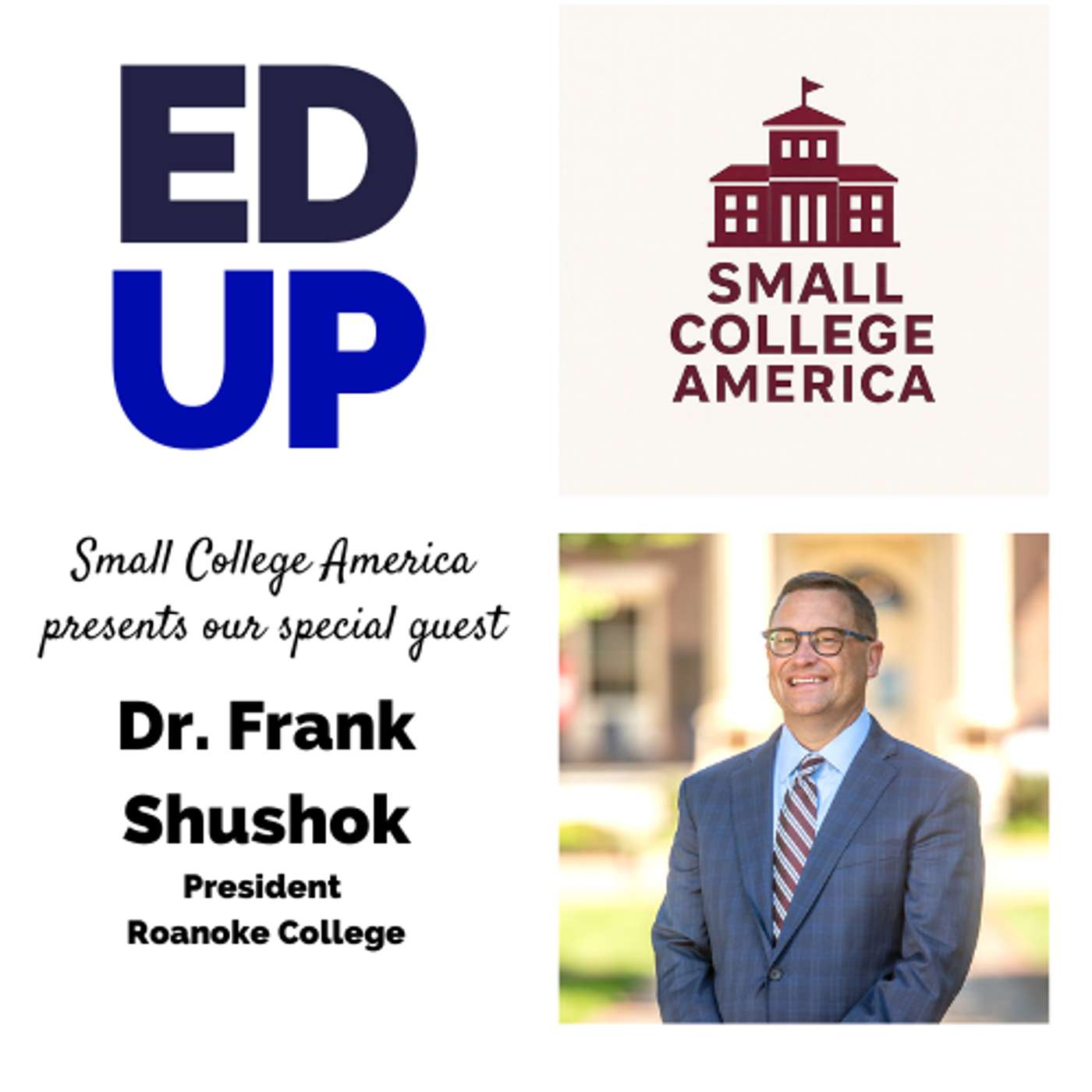
Today, we are speaking with Dr. Frank Shushok Jr., the 12th president of Roanoke College in Salem, Virginia, since 2022. He collaborates with the Board of Trustees, faculty, staff, students, alumni, and regional partners to position the College as an agile, innovative, and learner-centered institution. Under his leadership, the College launched Imagine Roanoke, a strategic plan that includes creating four transdisciplinary schools and transforming the residential campus into a 21st-century learning laboratory. The plan's signature initiative, Roanoke College–Roanoke Valley (RC-RV), expands access to continuing education and workforce development. The College has launched new programs, begun construction on the McConnon Discovery Center, and revitalized student life. Shushok has over 30 years of experience in higher education, including roles at Virginia Tech and Baylor University. He holds degrees from Baylor University, The Ohio State University, and the University of Maryland, College Park. He and his spouse, Kelly, have three adult children and two dogs. Q1: To begin, tell our audience about Roanoke College and what makes it different from other colleges? Q2: While there are no “non-traditional pathways” to the presidency anymore, your pathway is distinct. You’ve spent much of your career in student life and student success, when did you know you wanted to be a college president? Q3: Most of your career has been at large institutions. What are three or four big adjustments you had to make as you moved to work at a small college? Q4: You’ve made some big bets at Roanoke. You’ve worked with the community to add football and marching band. You’ve also been on what seems like a partnership tour as you’ve signed new agreements with all kinds of partners. What have you been so focused on, new programs?? Q5: At a small college, a president is usually expected to be everywhere twice. How do you handle the expectations to attend every event with the pressure to find and friend-raise? And what do you do to prevent burnout? Q6: Like many private institutions, Roanoke has experienced significant changes and survived and thrived in its 180-year history. If we were to look five years into the future, what gives you the most hope for Roanoke College and, more broadly, for the role of small colleges in American higher education?Closing: Frank, thank you for joining us today and getting the opportunity to learn more about you and Roanoke. For those listening, if you'd like to learn more about Small College America, go to our web page at www.smallcollegeamerica.net, where you can find details on upcoming episodes, contact us, and suggest topics you’d like us to cover.This episode of Small College America is made possible with underwriting support from Perspective Data Science, a firm specializing in AI-powered tools and data solutions, including the Financial Compass platform.On behalf of our guest, Frank Shushok, my co-host Kent Barnds, and Dean Hoke, thank you for listening.

“Welcome to Small College America, a podcast dedicated to exploring the role and value of small colleges in the higher education landscape. I’m Kent Barnds, and I’m joined by my co-host, Dean Hoke.”Today on Small College America, we’re joined by Dr. Gregor Thuswaldner, who serves as Vice President for Academic Affairs and Dean of the Faculty at La Roche University in Pittsburgh. He is the editor of "The Chief Academic Officer's Handbook: A Provost's Guide to Visionary Leadership," just released by Johns Hopkins University Press. Gregor previously was Provost and Executive Vice President at Whitworth University in Spokane, Washington, was Acting Provost and Dean at North Park University in Chicago, and was Department Chair and Professor at Gordon College. He actively serves on the boards of the American Association of University Administrators (AAUA) and, recently, as the President of the Association of Chief Academic Officers (ACAO). He holds memberships or fellowships in prestigious organizations, including the European Academy of Sciences and Arts and the Royal Historical Society. He has also served as Podcast host of EdUp Provost. Gregor, welcome to Small College America.”Q1: Gregor, to begin, could you tell our audience about La Roche University and what attracted you to the role of Vice President for Academic Affairs and Dean of the Faculty? Q2: During your first year at La Roche, what are your top academic priorities? Are there particular initiatives — whether in programs, partnerships, or student success — that you’re especially excited to advance?Q3: Much of your career has been spent in small college settings. How do the insights in The Chief Academic Officer’s Handbook especially resonate for provosts at smaller, tuition-dependent institutions?Q4: As well as serving as the book’s editor, you wrote a chapter titled Lifelong Learning for Provosts: Increasing One’s Toolbox. Tell our audience more about that, and discuss one of your takeaways — particularly the idea of ‘embrace being uncomfortable.’Q5: You’ve served in senior leadership roles at Whitworth, now at La Roche, and with the Association of Chief Academic Officers. What are the most critical skills provosts need today to succeed in such a complex environment? Q6: Looking ahead, how do you see the role of the provost evolving over the next decade, especially as institutions face current and future unknown challenges?“Gregor, thank you for joining us today and sharing your insights on leadership and the future of small colleges. For those listening, if you’d like to learn more about Small College America, go to our webpage at www.smallcollegeamerica.net, where you can find details on upcoming episodes, contact us, and suggest topics you’d like us to cover.This episode of Small College America is made possible with underwriting support from Perspective Data Science, a firm specializing in AI-powered tools and data solutions, including the Financial Compass platform.On behalf of our guest, Dr. Gregor Thuswaldner, my co-host Kent Barnds, and myself, thank you for listening.”

“Welcome to Small College America, a podcast dedicated to exploring the role and value of small colleges in the higher education landscape. I'm Kent Barnds, and I’m joined by my co-host, Dean Hoke. Dean: “Today, we are speaking with Dean McCurdy, president of Colby-Sawyer College in New Hampshire. Dr. McCurdy has been an innovative leader at small private liberal arts colleges and at large public community colleges. Prior to joining Colby-Sawyer in June, Dean was provost and senior vice president for academic affairs at Ivy Tech Community College in Indiana, which enrolls more than 200,000 students. In his various roles with the system, Dean spurred record enrollment and boosted student achievement through experiential education. At Kalamazoo Valley Community College, as associate vice president for instruction, Dean launched a health-focused campus that catalyzed community revitalization and workforce development through sustainable food education and preparation. Dean, an ecologist, was also a tenured biology professor at Albion College and an award-winning researcher of marine systems. Earlier in his career, he was a visiting professor of biology and field manager of the Coastal Studies Center at Bowdoin College. Dean holds a bachelor’s degree with honors in biology from Acadia University and a doctorate in biology from Carleton University. Q1: Dean, to begin, could you tell our audience about Colby-Sawyer and what makes it distinctive?Q2: At Ivy Tech you worked within a statewide system serving nearly 200,000 students. Now you’re leading Colby-Sawyer, with a student body of about 1,000. What lessons from managing at such scale do you see applying most directly to a small college like Colby-Sawyer?Q3: You’ve talked about the evolving role of small colleges in regional workforce development. Where do you see Colby-Sawyer’s strongest opportunities to contribute—whether through partnerships, academic programs, or community engagement?Q4: Colby-Sawyer is known for traditions like Mountain Day, which bring students, faculty, and staff together in unique ways. How do you balance honoring those traditions with ensuring students gain the skills and experiences needed for a changing workforce?Q5: In our prep conversation, you emphasized the importance of telling alumni success stories. Can you share an example that captures the impact of a Colby-Sawyer education and how those stories help define the college’s value to future students?Q6: If we were to look five years into the future, what gives you the most hope for Colby-Sawyer—and more broadly, for the role of small colleges in American higher education?Kent Barnds: “Dean, thank you for joining us today and sharing your vision for Colby-Sawyer and small colleges more broadly. For those listening, if you'd like to learn more about Small College America, go to our web page at www.smallcollegeamerica.net, where you can find details on upcoming episodes, contact us, and suggest topics you’d like us to cover.This episode of Small College America is made possible with underwriting support from Perspective Data Science, a firm specializing in AI-powered tools and data solutions, including the Financial Compass platform.On behalf of our guest, Dean McCurdy, my co-host Dean Hoke, and myself, thank you for listening.”
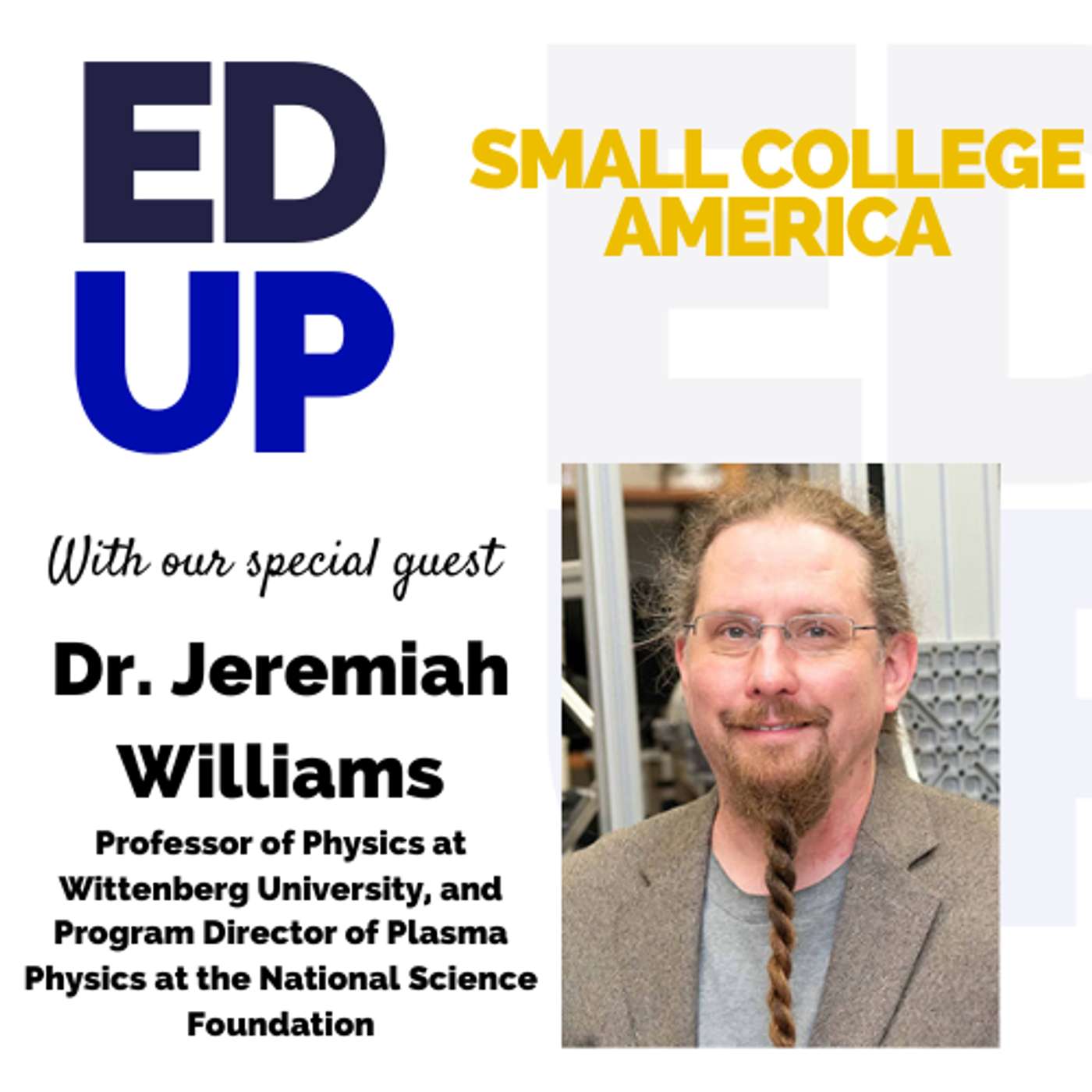
We welcome Dr. Jeremiah Williams, a Professor of Physics at Wittenberg University since 2007, where he teaches the full spectrum of undergraduate courses and leads an undergraduate-focused research program in plasma physics. He received a BS in Physics and Mathematics from Dickinson College, an MS in Physics from the University of California, Los Angeles, and a PhD in Physics at Auburn University. His area of research is experimental plasma physics with a focus on dusty plasmas, and the National Science Foundation, the US Department of Energy, and NASA have funded his work. He has also been active in the intermediate and advanced physics laboratory community. He has been an active member of the American Physical Society (Division of Physics), the American Association of Physics Teachers (AAPT), and the Advanced Laboratory Physics Association (AAPT), where he has served on a variety of committees and task forces. He is currently on detail to the National Science Foundation, where he serves as a program director for the Plasma Physics program. Q1: Jeremiah, you’ve had an impressive academic journey—from Dickinson to UCLA to Auburn—before joining Wittenberg in 2007. Could you talk about what drew you to a small liberal arts university, and what has kept you there for nearly two decades?Q2: You’re currently serving as a Program Director for the National Science Foundation’s Plasma Physics program. How does that experience benefit not only you professionally, but also Wittenberg and your students? Could you share one or two examples of how your NSF role has created opportunities or insights that you’ve brought back to campus?Q3: Wittenberg is known for its liberal arts ethos. In your view, how does that kind of education uniquely prepare physics students—who may go into research, industry, or even careers outside of science?Q4: One of the themes we return to on this podcast is the transformative power of small colleges. Could you share a story of a Wittenberg student who started in your classroom or lab and went on to do something remarkable?”Q5: Many small colleges have faced financial pressures — including difficult decisions about budgets, academic programs, and faculty positions. From your vantage point as both a professor and an NSF leader, what do you see as the biggest challenges facing small colleges today, particularly in sustaining strong STEM programs? And where do you see the greatest opportunities for them to thrive?Q6: As you reflect on your career at Wittenberg and your national work, what excites you most about the future of undergraduate science education? And on a personal level, what has been most rewarding for you in teaching, mentoring, and researching at a small college?”ClosingKent Barnds: Dr. Williams, thank you for being with us today. For those listening, if you’d like to learn more about Small College America, go to www.smallcollegeamerica.net where you can find details on upcoming episodes, connect with us, and suggest topics for future conversations. This episode of Small College America is made possible with underwriting support from Perspective Data Science, a firm specializing in AI-powered tools and data solutions, including the Financial Compass platform.On behalf of our guest, Dr. Jeremiah Williams, my co-host Dean Hoke, and myself, thank you for listening.
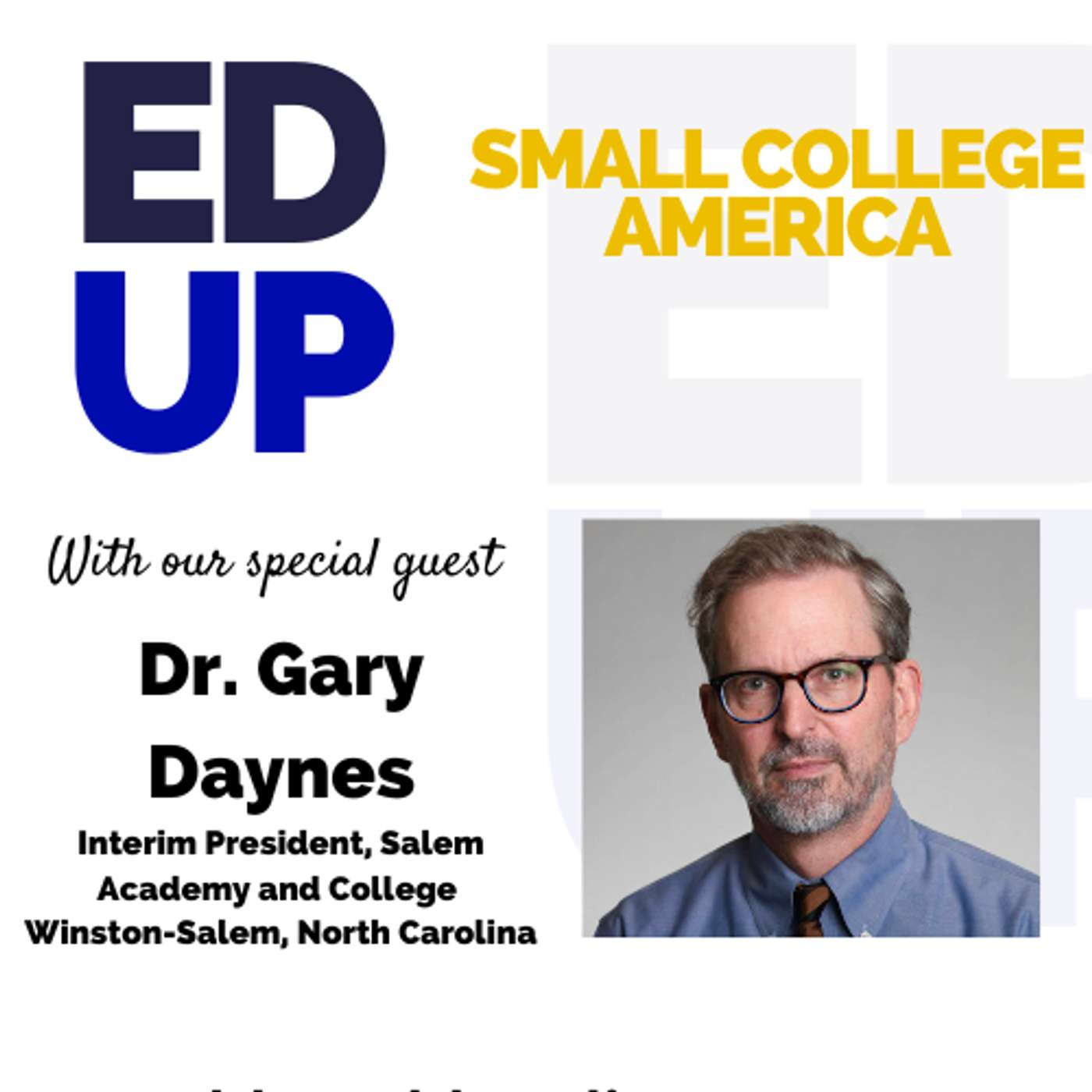
“Welcome to Small College America, a podcast dedicated to exploring the role and value of small colleges in the higher education landscape. I'm Kent Barnds, and I’m joined by my co-host, Dean Hoke. Today, we’re honored to welcome Dr. Gary Daynes, Interim President of Salem Academy and College, located in Winston-Salem, North Carolina. With a career devoted to leadership in small colleges, Gary has guided institutions through transformation and written extensively on higher education. Gary holds a PhD in American History from the University of Delaware. He is also the author of a new book, How to Be a Small College, a timely guide on how institutions like Salem can thrive by embracing distinctiveness, focus, and community.” Question 1: Salem’s Background and Gary’s Journey "Let’s start with some background. For those who may not know, can you tell us about Salem Academy and College, its history, and its unique place in the Winston-Salem community?” Follow-up: “You’ve led and advised several small colleges over your career. What made you decide to step into the interim presidency at Salem at this particular moment?”Question 2: Tradition and Transformation "Salem is the nation's oldest women's college and has deep Moravian roots. How do you balance honoring that historic mission—including your identity as a women's college—while also positioning Salem for the future? And how does that women's college identity factor into current enrollment and positioning discussions?"Question 3: The Book: How to Be a Small College “You’ve just released a new book, How to Be a Small College. What motivated you to write it, and what central message do you most hope leaders, faculty, and students will take away?”Question 4: Distinctiveness and the Student Experience "In the book, you argue that small colleges shouldn't try to mimic large universities but should embrace their distinctiveness. Can you give an example of a college, perhaps Salem or another, that has done this well?"Question 5: Partnerships and Community Engagement "Winston-Salem has a rich higher education landscape with Wake Forest, Winston-Salem State, and other institutions. I understand Salem has developed partnerships with some of these colleges. How are these collaborations currently benefiting Salem, and what role do you see partnerships and community engagement playing in Salem's strategic future?"Question 6: The Small College Challenge "Looking ahead five years, what gives you the most hope for the future of small colleges in America?"ClosingGary, thank you for being with us today. For those listening, if you'd like to learn more about Small College America, go to our LinkedIn site, where you can find details on upcoming episodes, contact us, and suggest topics you’d like us to cover." This episode of Small College America is made possible with underwriting support from Perspective Data Science, a firm specializing in AI-powered tools and data solutions, including the Financial Compass platform. On behalf of our guest, Gary Daynes, my co-host Dean Hoke, and I, thank you for listening.

Three presidents share candid strategies for leading small colleges through unprecedented challenges. Dr. Anita Gustafson (Presbyterian College), Dr. Andrea Talentino (Augustana College), and Dr. Tarek Sobh (Lawrence Technological University) discuss practical approaches to enrollment growth, financial sustainability, and strategic innovation.Key Topics:Enrollment strategies: transfer student recruitment and the "Four R's" frameworkManaging federal policy impacts on international students and financial aidAI integration at liberal arts vs. technical institutionsEvolving student support services and the shift to being "student ready"Bold institutional moves: new academic programs and community development partnershipsLeadership principles for uncertain times: transparency, cultural understanding, and institutional focusStandout Insights:How Presbyterian College increased transfer enrollment by making faculty "transfer friendly"Augustana's success achieving 85% of international student goals despite visa restrictionsLawrence Tech's creation of a fifth college after 50 yearsThe power of conservative budgeting and 11-year financial planningWhy articulating concrete student outcomes matters for institutional sustainabilityGuests:Dr. Anita Gustafson, President, Presbyterian CollegeDr. Andrea Talentino, President, Augustana CollegeDr. Tarek Sobh, President, Lawrence Technological UniversityHosts: Dean Hoke and Kent BarndsOriginally recorded as a live webinar on August 27, 2025
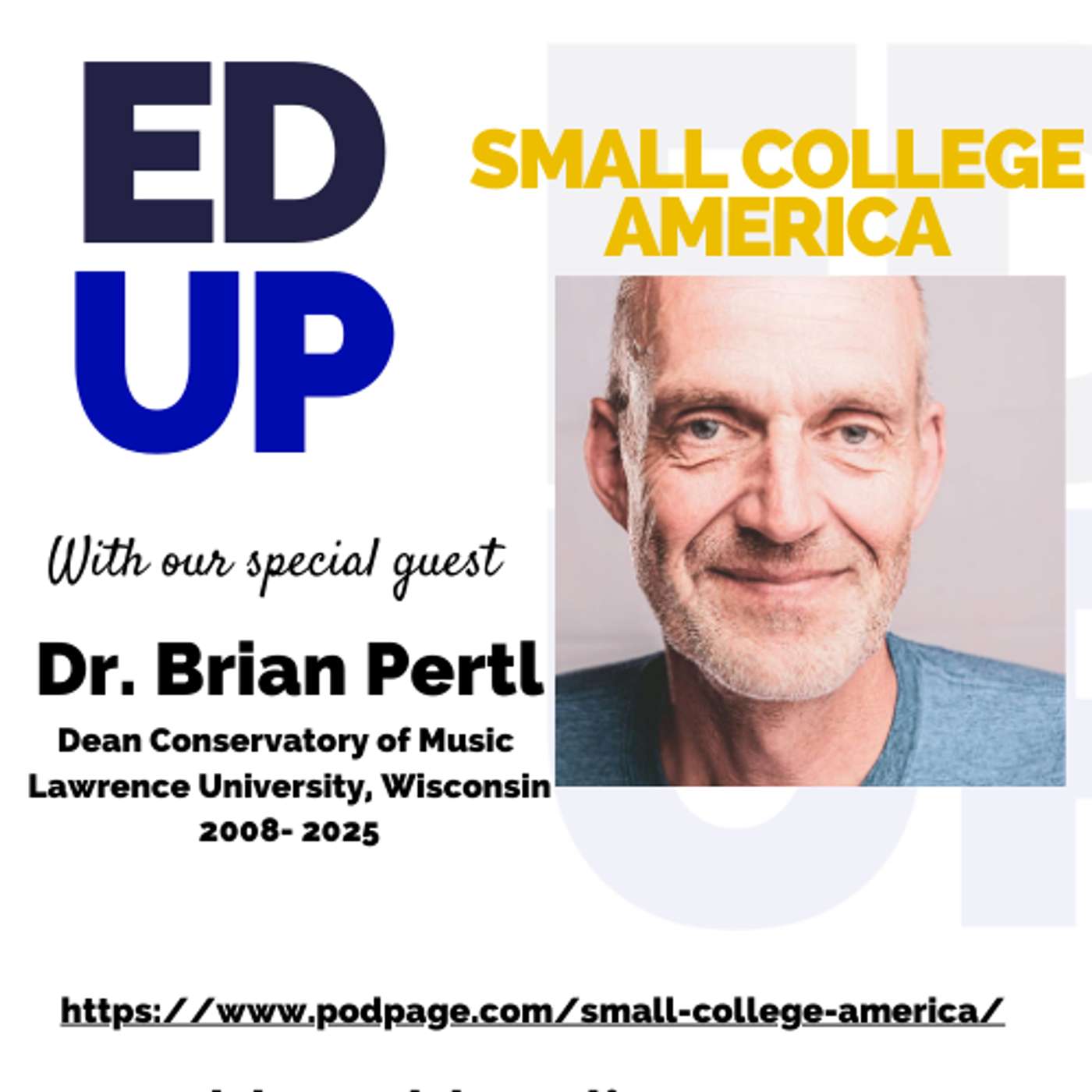
🎙 Small College AmericaEpisode Title: Radically Responsive Music Schools – A Conversation with Brian PertelGuest: Brian Pertel – Ethnomusicologist, author, and Dean of the Lawrence University Conservatory of MusicHosts: Dean Hoke & Kent BarndsEpisode SummaryIn this engaging conversation, Dean Hoke and Kent Barnds talk with Brian Pertel about his remarkable journey from Lawrence University student to Microsoft executive, and then back to Lawrence as Dean of the Conservatory of Music for 17 years. Brian shares how small colleges can foster innovation, collaboration, and cultural change in ways large institutions can’t match. He offers candid reflections on integrating liberal arts and music education, cultivating a culture of possibility, and empowering both students and faculty to take creative risks.Key Topics & TakeawaysLawrence University’s Distinctive ModelOne of the first U.S. coeducational institutions (founded 1847) Conservatory founded in 1874, celebrating its 150th anniversary 1,500 undergraduates; 400 are music majorsStrong integration of liberal arts and world-class music trainingSignature five-year dual degree program (music + another field) Brian Pertel, From Trombone to Tech Graduated with degrees in trombone performance & EnglishWon the Thomas J. Watson Fellowship – studied Aboriginal didgeridoo in Australia & Tibetan music in NepalSixteen-year career at Microsoft, leading media acquisitions and integrating multimedia into digital productsLessons for students: prepare for a world and jobs that don’t yet existKey Points: Building a Culture of Creativity Leadership principle: see the full potential in every studentFaculty hiring based on whole-person qualities and collaborative mindsetEncouraging students to launch new ensembles and cross-disciplinary projects (e.g., heavy metal ensemble, fiddle music in a classical setting)Shift from lecture-based learning to collaborative, creative environments Faculty Recruitment & EngagementLook for faculty who are excited to teach, collaborate, and explore outside their specialtiesFoster an environment where experimentation and interdisciplinary partnerships thriveThree Pieces of Advice for Small College LeadersBring joy, optimism, and transparency to leadershipShare challenges openly to build trust and collaborationCenter campus culture on creativity and possibility rather than fearStudent Success StoryViolinist/fiddler “Martha” developed her passion for fiddle music while at LawrenceBuilt a student following, auditioned for Sting’s The Last Ship, and won the role by adapting in real-time during the auditionNow a successful Broadway musician blending classical and fiddle expertiseWhy ListenIf you’re a small college leader, faculty member, or advocate for liberal arts education, this episode offers a blueprint for transforming campus culture into one that nurtures creativity, agility, and bold thinking.Resources & LinksGuest: Brian Pertel – Author of Radically Responsive Music SchoolsLawrence University Conservatory of Music: WebsiteSmall College America Podcast: LinkedIn
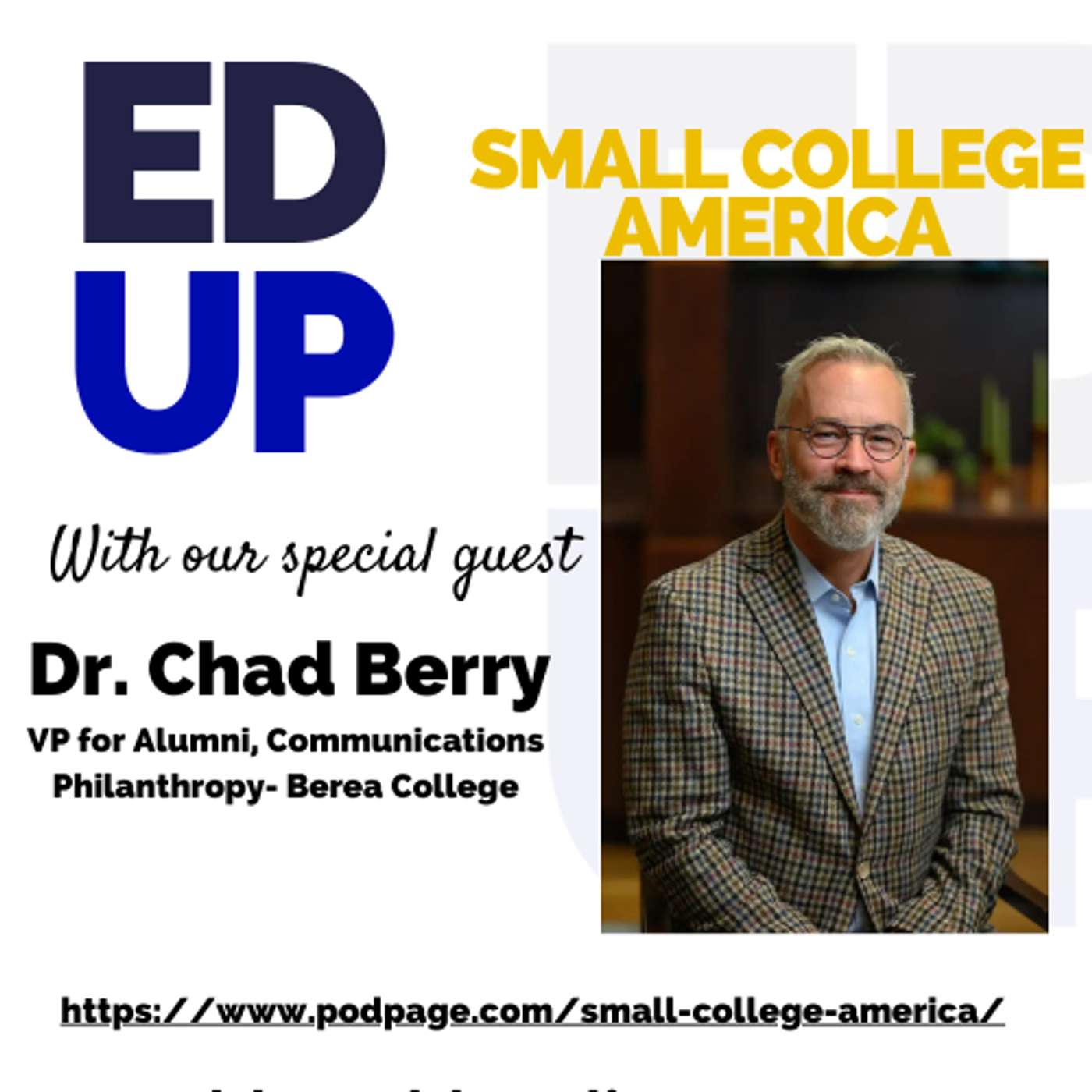
Today, we’re honored to welcome Dr. Chad Berry, Vice President for Alumni, Communications, and Philanthropy—and a distinguished scholar—at Berea College, a private, coeducational liberal arts college located in Berea, Kentucky. Berea currently serves 1,513 undergraduate students. Berea is one of the most mission-driven small colleges in the country, known for offering a no-tuition education to students from Appalachia and beyond. Dr. Berry has served Berea for nearly two decades in roles including Academic Vice President, Dean of the Faculty, and Director of the Loyal Jones Appalachian Center. He holds a Ph.D. in History from Indiana University and is the author or editor of four books, including Southern Migrants and Northern Exiles. A passionate educator, he has led student learning trips to over 45 countries and is a past president of the Appalachian Studies Association. Dr. Berry is a committed advocate for the transformative power of small colleges, and we’re delighted to have him with us today.Q1: Chad, our audience may not know much about Berea. Can you share the story of its founding in the 1850s, its student demographic today, and how its mission continues to guide the college?Q2: Berea stopped charging tuition in 1892, but it also has a unique Labor Program where students earn a paycheck for campus work. Berea is one of only ten federally recognized Work Colleges—and the only one where every student is paid. Tell us more about how this program complements the academic experience and how it prepares students for life after college. Does it challenge the perception that liberal arts don’t equip students with practical skills?Q3: Berea’s endowment—currently between $1.5 and $2 billion—is extraordinary, especially for a small college located in a non-urban region. How did the college build such a significant endowment? What strategies or philosophies have driven its growth, and how do you ensure it continues to sustain Berea’s mission?Q4: In a time of growing skepticism toward higher education—particularly the liberal arts—what role do small colleges like Berea play in restoring public confidence in the value of a college degree?Q5: In your role working with alumni, what trends are you seeing in how younger generations connect with their alma maters? Are they engaging differently or expecting new forms of communication and involvement?Q6: If you could share one powerful story—perhaps about a student or alum—that really illustrates the life-changing impact of Berea’s mission, what would it be?
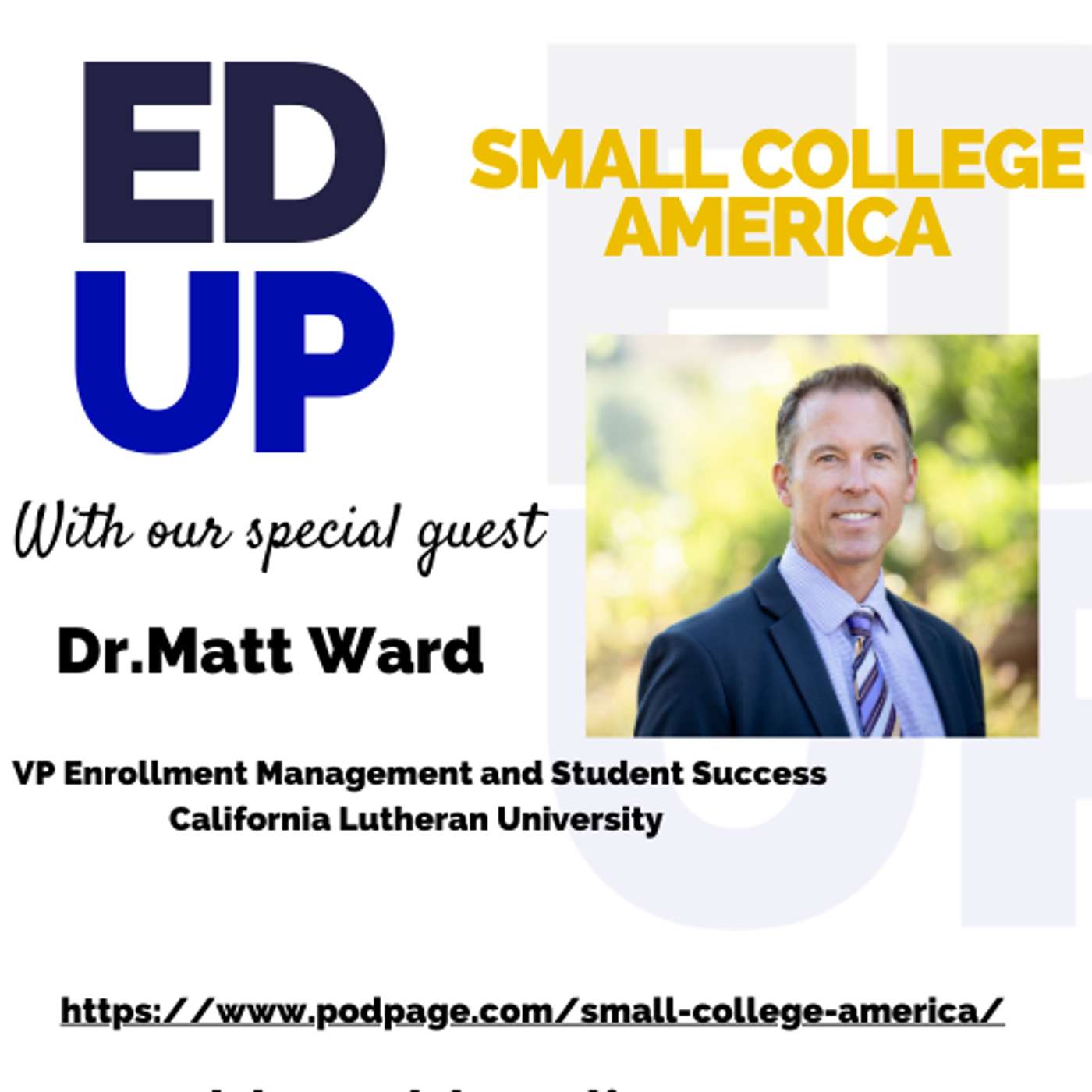
Introduction: Dr. Matt Ward, Vice President for Enrollment Management and Student Success at California Lutheran University, a private, coeducational, liberal arts college founded in 1959 and located in Thousand Oaks, California." Cal Lutheran serves approximately 3,500 undergraduate and graduate students.Matt leads a division of more than 180 staff across admission, academic services, financial aid, athletics, analytics, and marketing. A national voice on enrollment strategy, higher ed marketing, diversity, and Hispanic-Serving Institutions (HSIs), Ward teaches in Cal Lutheran’s Ed.D. program in Higher Education Leadership. He played a key role in Cal Lutheran’s HSI designation and has co-authored multiple successful Title III and V grants. He earned a doctorate in International Studies from the University of Miami and was a visiting scholar at the Center for Economic Research and Teaching in Mexico City.Matt is widely respected not just for his strategic mind but also for his deep commitment to student equity and success, which shines through in both his administrative work and his teaching.California is home to some of the most well-known public university systems in the country. Cal Lutheran’s public price match initiative is a bold response to that environment. Can you walk us through that strategy and how a small private college like yours competes—and thrives—within such a public-dominated marketplace?Small colleges often wrestle with the tension between financial sustainability and staying true to their mission. How do you navigate that balance at Cal Lutheran, particularly as it relates to enrollment goals and student support?You lead a large and multifaceted division at Cal Lutheran. What does “strategic enrollment management” look like at a small private university today, especially one designated as a Hispanic-Serving Institution (HSI)? What does it mean to truly serve Hispanic students beyond simply meeting the HSI threshold—and how do you guard against a ‘check-the-box’ approach? There’s ongoing public skepticism about the cost and value of higher education. Do you think small private colleges face a different kind of perception challenge compared to public institutions or larger universities—and how do you approach that in your communications and strategy?From your vantage point, what are some key enrollment or marketing trends that small colleges must be paying attention to in the next 3-5 years to remain competitive and relevant?Reflecting on your career journey, what’s a piece of advice you would offer to early- or mid-career professionals aspiring to lead enrollment or student success efforts at small institutions?For those listening, if you'd like to learn more about Small College America, go to our LinkedIn site, where you can find details on upcoming episodes, contact us, and suggest topics you’d like us to cover." This episode of Small College America is made possible with underwriting support from Perspective Data Science, a firm specializing in AI-powered tools and data solutions—including the Financial Compass platform.For Small College America, I’m Kent Barnds. On behalf of our guest, Dr. Matt Ward, my co-host Dean Hoke, and myself—thanks for listening.

Today, we’re honored to welcome Todd Jones, President and General Counsel of the Association of Independent Colleges and Universities of Ohio. Todd has served in this role since 2005 and is a nationally recognized advocate for independent higher education. Over the years, he has led impactful efforts to expand need-based aid, strengthen institutional collaboration, and promote the unique value of Ohio’s private colleges.Todd has been appointed by both the Obama and Trump administrations to negotiated rulemaking sessions at the U.S. Department of Education, representing the independent sector. He also served on Ohio’s State Board of Education, where he played a key role in developing graduation standards and accountability frameworks. Earlier in his career, he held senior positions in the U.S. Department of Education and worked as a congressional attorney on higher education policy.For those who may not be familiar, can you share the mission of the Association of Independent Colleges and Universities of Ohio? How does AICUO support its member institutions, and what are some of your top priorities right now?Ohio has seen the closure of several small colleges in recent years. From your vantage point, what are the major forces driving these closures—and what impact do they have on the local communities left behind?Like many northern states, Ohio faces demographic pressures—especially population decline in some regions. How are your member institutions adapting, and do you see new models emerging that help sustain enrollment and regional vitality?In our earlier conversation, you spoke about the evolving role of partnerships—particularly with community colleges. How are small private institutions rethinking collaboration today, and do you believe this approach can support long-term sustainability?Politics and public perception are playing a larger role in shaping higher education’s future. How should small private colleges—and associations like yours—engage more effectively across the political spectrum, especially with conservative leaders and voters?As you look to the future, what gives you hope for small private colleges? Are there recent success stories or promising trends that you believe deserve more attention?

Today, we welcome Liz Nino, Executive Director of International Enrollment at Augustana College, a private, coeducational liberal arts college in Rock Island, IL. Augustana enrolls approximately 2,600 students, and international students comprise nearly 20% of the college’s enrollment.Liz is a global leader in international student recruitment! She’s literally put Augustana College on the map for students from across the globe. She’s known worldwide for her commitment to liberal arts and science education and cross-cultural understanding. Liz grew up in the Quad Cities and attended St. Ambrose University, where she earned both her bachelor's and master's degrees. But, much of her education occurred across the globe—from Sweden, where she studied as a Rotary Exchange student in high school, to Spain, where she taught English. And, now, as Augustana’s lead global recruiter, she regularly fills all of the pages of her passport within just a couple of years. We are delighted to welcome Liz Nino. QuestionsYou are not the typical admissions professional who comes to the profession through serving as a tour guide or student worker. Can you tell us a little bit about your professional journey and how you found your way to working in admissions at Augustana College? Follow up: What attracted you to working in admissions? Augustana is not necessarily a place that one might think of when it comes to being a destination for international students. The college isn’t in a large city. It’s not on either coast. And, it’s predominantly an undergraduate institution. How in the world have you grown international enrollment to comprise nearly 20% of Augustana’s enrollment? Is there a formula for what you’ve been able to accomplish? Are small colleges a viable option for international students? And, if so, what are some of the resources that need to be in place in order to meet with success? Do you have any lessons you’ve learned from your work at Augustana? Many small colleges across the country specialize in the liberal arts, but most of the world doesn’t have much experience with liberal arts education. How have you handled that special challenge, and what advice do you have for others to help provide some clarity around describing what liberal arts colleges do? The world of international student recruitment has changed considerably over the course of the last decade. There’s greater acceptance of working with agents. There are new ways to connect with international students virtually. There are direct admit programs that are now emerging. There are many more international alumni (and non-international alumni) representing colleges abroad. Which of those changes and others do you view as the most impactful? The US has more than 1 million international students studying in the US right now. There’s been concern expressed about the current political climate and the need for those trends to continue. I know you just returned from Central America, and your teammate is currently traveling in Asia and Africa. What have you learned and heard during your travels about the perceived value of studying in the US? Has it changed considerably? And, what trends are you watching right now? If you'd like to learn more about Small College America, go to our LinkedIn site, where you can find details on upcoming episodes, contact us, and suggest topics you’d like us to cover." This episode of Small College America is made possible with underwriting support from Perspective Data Science, a firm specializing in AI-powered tools and data solutions, including the Financial Compass platform.For Small College America, I’m Kent Barnds. On behalf of our guest, Liz Nino, my co-host Dean Hoke, and myself—thanks for listening.
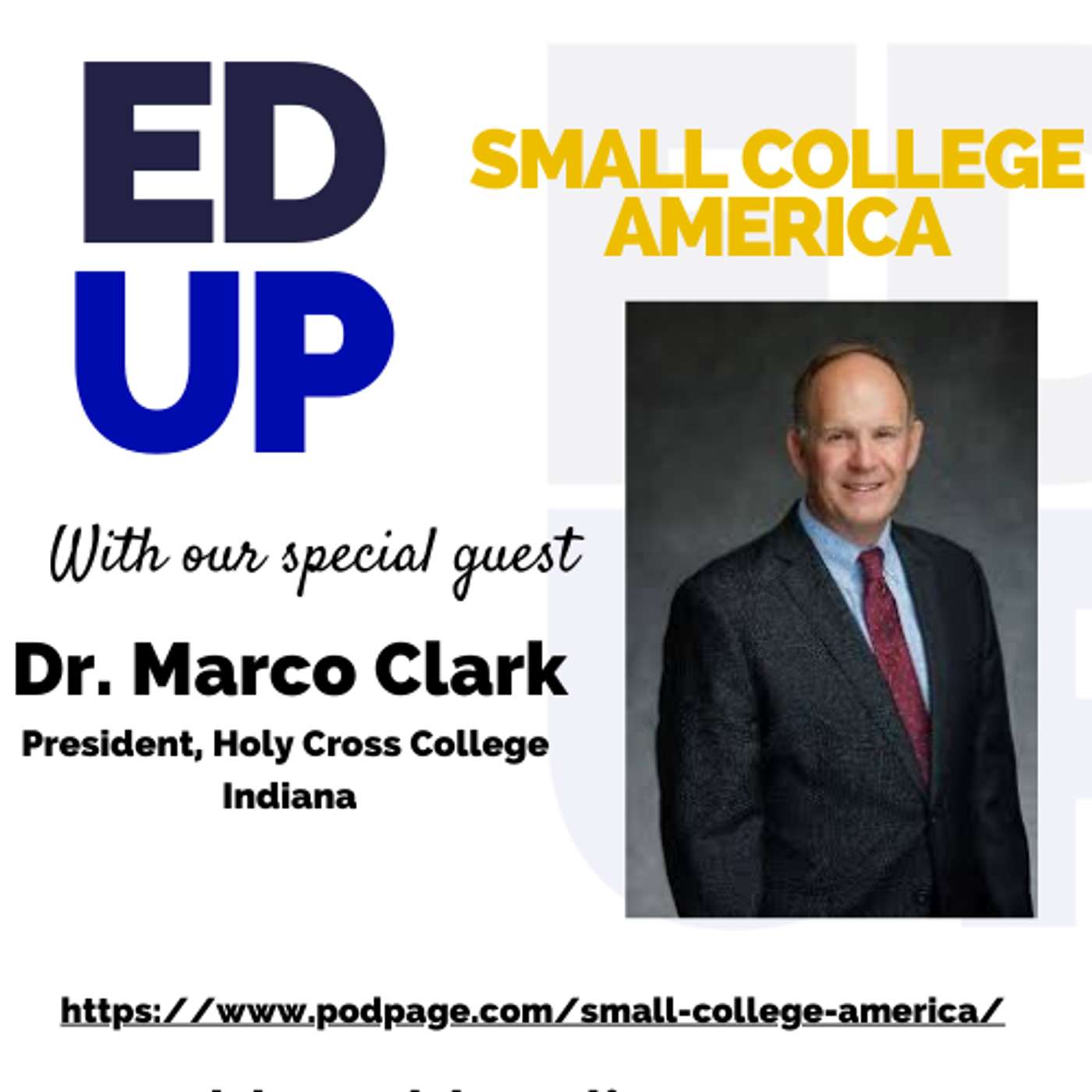
In this episode, we’re honored to welcome Dr. Marco J. Clark, President of Holy Cross College, a private, co-educational, liberal arts college located on a 70-acre wooded campus in South Bend, Indiana. With over three decades in Catholic education, Dr. Clark has become a visionary leader committed to academic innovation and mission-centered growth. Since becoming president in 2022, he has guided Holy Cross through transformative change—most notably with the launch of its strategic plan With Eyes of Faith, a roadmap shaped by the campus community that emphasizes mission, academic excellence, and student transformation. Under his leadership, Holy Cross has achieved record enrollment, expanded academic offerings, and deepened its partnerships with Notre Dame and Saint Mary’s. We’re excited to talk with him about leading in uncertain times, his “partner or perish” philosophy, and the future of faith-based small colleges.QUESTIONSMarco, let’s start with some background on Holy Cross College. Can you give us an overview of the institution and its evolution over the years?" Follow–up: For over twenty years, you served as a High School Principal in Maryland. What led you to Holy Cross?Let’s discuss your strategic plan with Eyes of Faith. Can you walk us through how Holy Cross conducted its strategic planning process and how that shaped your path forward?Holy Cross is experiencing notable growth in enrollment, facilities, and academic offerings. What key elements are driving this momentum, and how do you plan to sustain it? You’ve made faith formation a central theme of your leadership. How do you see the role of faith-based colleges evolving in today’s higher education landscape? You’ve said small colleges must “partner or perish.” Can you elaborate on what that means for you and how it has influenced Holy Cross’s strategy and collaborations?What do you believe are the biggest challenges facing small colleges today—and how can institutions like Holy Cross position themselves to meet those head-on?If you'd like to learn more about Small College America, go to our LinkedIn site, where you can find details on upcoming episodes, contact us, and suggest topics you’d like us to cover." Small College America receives underwriting support from Perspective Data Science, which develops cutting-edge AI tools and data solutions, including the Financial Compass "For Small College America, I’m Dean Hoke, with Edu Alliance and a Senior Fellow with the Sagamore Institute, and on behalf of Kent Barnds, Executive Vice President of Augustana University, Marco Clark, and Dean Hoke. Thanks for joining us!"
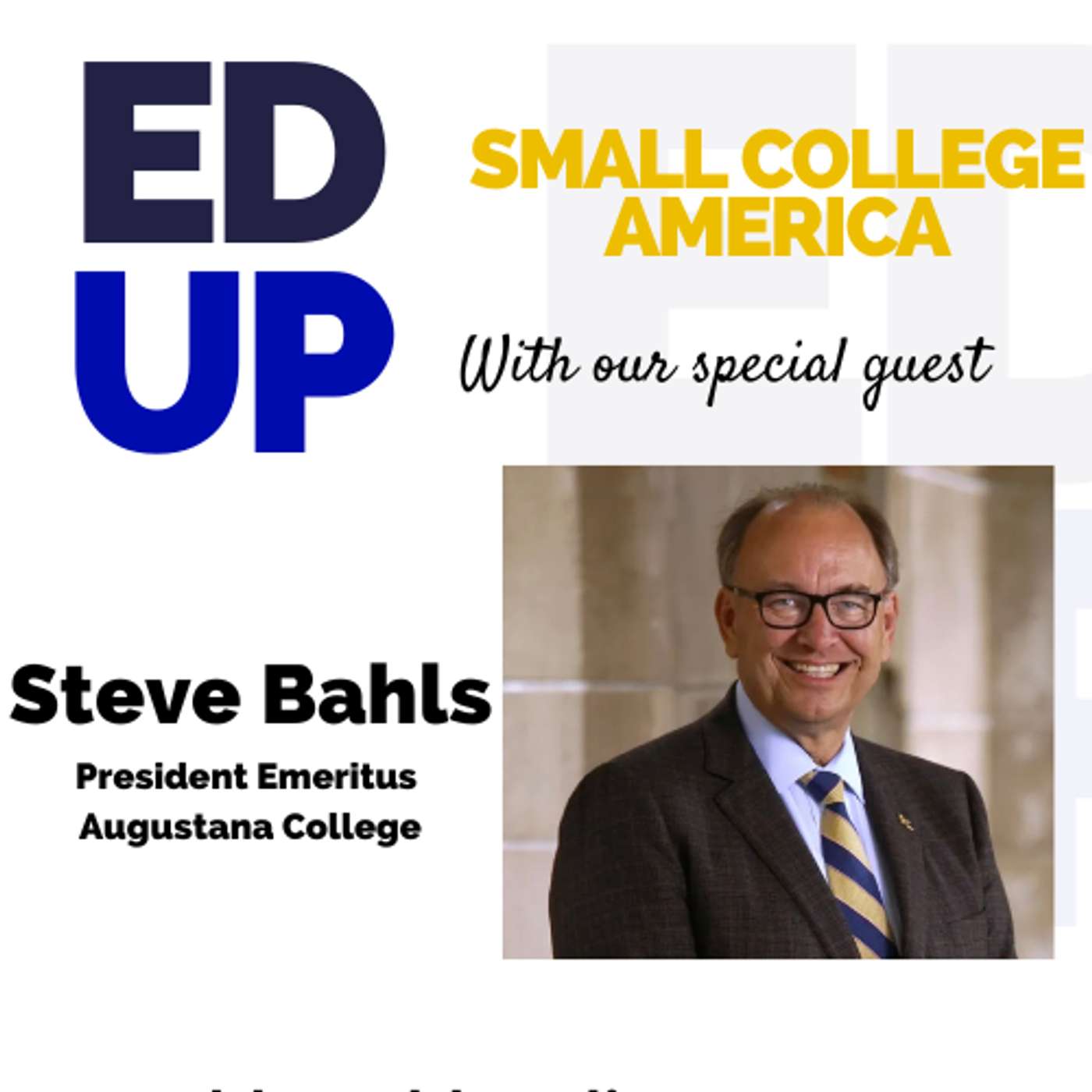
Today, we will speak about shared governance in small colleges with Steve Bahls.Steve Bahls is one of the nation’s leading authorities on shared governance. His writings on shared governance have been in publications such as Trusteeship, Inside Higher Ed, and the Chronicle of Higher Education. He is the author of the popular book Shared Governance for Agile Institutions: A Practical Guide for Universities and Colleges. Google Scholar lists him as one of the top three most cited scholars on shared governance, and he has consulted with more than 20 colleges and universities about shared governance. He served nineteen years as president of Augustana College, and earlier as dean of Capital University Law School and associate dean of the University of Montana School of Law. He now teaches the Art of Fundraising for Augustana each January term.He currently serves as the vice chair of the Capital University Board of Trustees and a member of the University of Montana Foundation Board of Trustees. Bahls holds a bachelor’s degree from the University of Iowa and a law degree from Northwestern University. He is a member of the State Bar of Montana.”Interview QuestionsYou've extensively written and spoken on shared governance. In today’s higher education environment, how has the role of shared governance evolved, and what do you see as the biggest misconceptions institutions have about it?Reflecting on your nearly two-decade tenure as President of Augustana College, what accomplishment do you feel best demonstrates effective institutional leadership, and why?Given your teaching and leadership experience in fundraising, what strategies do you recommend small colleges adopt to build sustainable financial health in increasingly uncertain economic times?Your 2024 article in Inside Higher Ed emphasizes careful deliberation when college presidents speak publicly about controversial issues. Could you elaborate on the key criteria you believe presidents should consider before making such statements?You serve as Program Director of the Presidential Vocation and Institutional Mission Program, the Council of Independent Colleges. Tell our audience about your role and what leadership qualities you emphasize most, particularly given the challenges facing smaller institutions today.Considering your involvement with various non-profits and educational boards, how do you see the role and impact of small colleges evolving over the next decade, particularly in terms of collaboration, mergers, or other strategic partnerships?If you'd like to learn more about Small College America, go to our LinkedIn site, where you can find details on upcoming episodes, contact us, and suggest topics you’d like us to cover." Small College America receives underwriting support from Perspective Data Science, which develops cutting-edge AI tools and data solutions, including the Financial Compass

Comments

Download from Google Play

Download from App Store
 United States