


 Claim Ownership
Solidarity Works
Subscribed: 11Played: 37
Subscribe

© We welcome you to download and play our podcast and share with others for personal use; please acknowledge Solidarity Works as the source of the material.
Description
Welcome to Solidarity Works, a podcast from the United Steelworkers (USW) union.
We're here to have conversations and start conversations about the past, present, and future of the labor movement, as well as talk about the work the union is doing, with USW activists leading the way.
Listen to us here or on your favorite podcast streaming service, like Spotify, Soundcloud, Apple Podcasts, and more.
We're here to have conversations and start conversations about the past, present, and future of the labor movement, as well as talk about the work the union is doing, with USW activists leading the way.
Listen to us here or on your favorite podcast streaming service, like Spotify, Soundcloud, Apple Podcasts, and more.
72 Episodes
Reverse
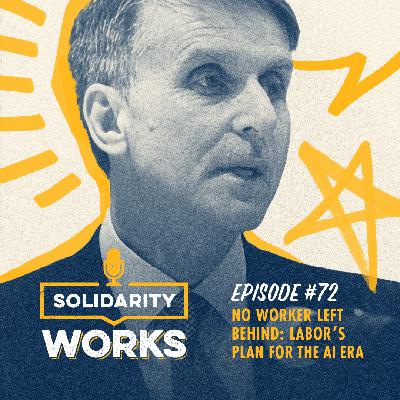
Artificial intelligence is changing how we work, how we communicate, and how we live — but who's making sure workers aren't left behind? In the latest episode of Solidarity Works, we sit down with Ed Wytkind, Interim Executive Director of the AFL-CIO Technology Institute, to talk about the federation's new Workers First Initiative on AI. The initiative lays out a bold plan to make sure technology serves people — not the other way around — by putting worker voices at the center of innovation, bargaining, and public policy. From protecting jobs and privacy to creating new opportunities for skill building and organizing, we explore what a fair and democratic AI future could look like when labor leads the way. To learn more about the Workers First Initiative on AI, visit aflciotechinstitute.org. Music in today's episode is by Ketsa.
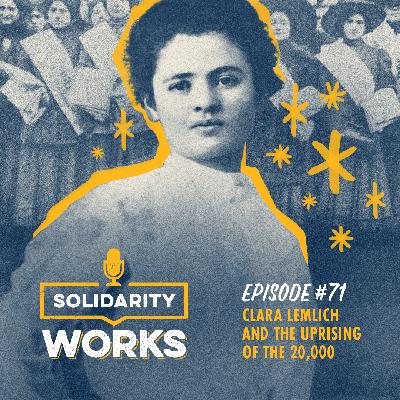
In 1909, a 23-year-old immigrant named Clara Lemlich stood up in New York's Cooper Union and said, "I have no more patience for talk—I move that we go on a general strike." The next morning, 20,000 garment workers—mostly young immigrant women—walked off the job. Their courage changed labor history forever. Tune into our latest episode to hear how their fight reshaped workers' rights for generations. --- Music from today's episode is by: Tar Sahno and Semion Krivenko-Adamo Sources: Jewish Women's Archive, "Uprising of 20,000 (1909)." Global Nonviolent Action Database (Swarthmore College), "Triangle Shirtwaist Factory women strike, win better wages and hours, New York, 1909." AFL-CIO, "Triangle Shirtwaist Fire." PBS American Experience, "Clara Lemlich and the Uprising of the 20,000."
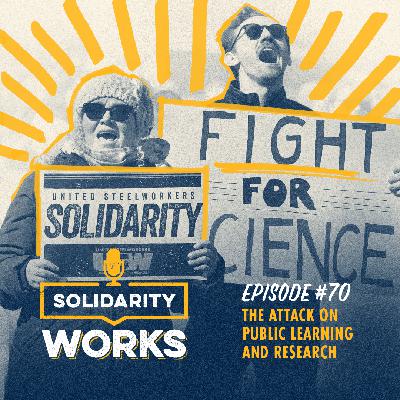
In the latest episode of Solidarity Works, we expose the Trump administration's sweeping cuts to public education and research funding—from K-12 schools to university labs. Educators, union leaders, and graduate researchers reveal how these attacks threaten working families, marginalized students, and the future of innovation itself. Tune in to learn firsthand how communities are being forced to fight back to defend learning, dignity, and the public good. Music in this episode is by Ketsa.
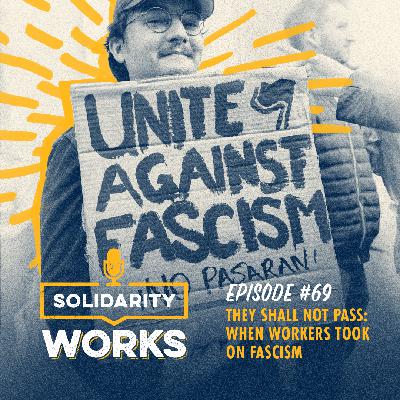
Long before World War II officially kicked off in 1939, trade unionists were already sounding the alarm. They saw fascism for what it was—racism, anti-Semitism, militarism, authoritarianism. Union workers and leaders resisted—they distributed leaflets, hid their Jewish neighbors and co-workers, sabotaged Nazi logistics, and even joined armed struggle. In the latest episode of Solidarity Works, we dive into this powerful—and often overlooked—period of resistance in modern history led by everyday workers who stood up against fascism and showed that solidarity is not merely a word; it's an action. Music from today's episode: Ketsa, Scott Holmes, Maarten Schellekens
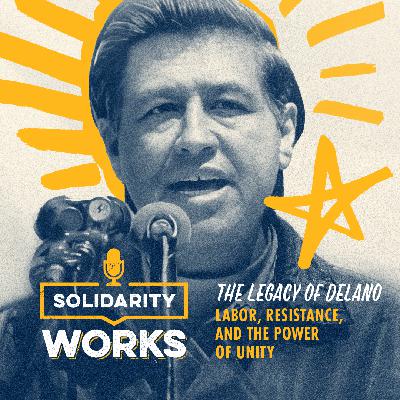
As ICE raids ramp up and communities across the nation are gripped by fear, we're looking back to a powerful legacy of worker resistance in the latest episode of Solidarity Works. The Legacy of Delano tells the story of how Filipino and Latino farmworkers united in 1965 to ignite a labor movement that changed history. Today, organizers like Local 675's Xochityl Cobarruvias carry that spirit forward, mobilizing against injustice and defending immigrant workers under attack. Tune in to hear how courage, unity, and nonviolence still light the path to justice.
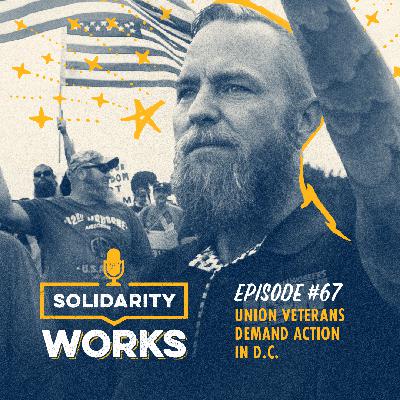
John Stevens has been a member of USW Local 341 in Newark, Ohio, for six years and works at an aluminum factory. On Thurs., June 5, he and fellow union members walked the halls of Congress to remind lawmakers about the promise the government made to veterans like him. This fight to preserve benefits and services for America's defenders is personal to John in many ways. He lost his older brother, also a military veteran, to suicide in 2017. Hear John's story and learn about some of the legislation that could help prevent similar losses and other hardships for U.S. veterans in the latest episode of Solidarity Works. Music in this episode is by Mr Smith. Special shout-out to Dropkick Murphys. Learn more about Veterans of Steel at usw.to/vetsofsteel.
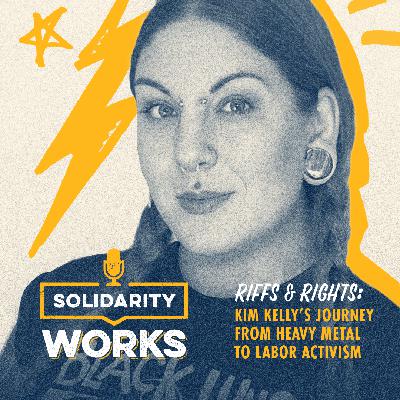
Kim Kelly began her writing career in the heavy metal world – she even adopted a moniker known as Grim Kim – but it wasn't long before her family's labor roots caught hold. She joined a union when writing for Vice, a digital publishing platform, and soon her stories took a turn toward more fervent working-class issues. Now, Kim is an author and public speaker with two books on the shelves focused on American labor history and a passion for speaking truth to power. In this episode of Solidarity Works, we'll learn about the journalist's unique career path, what inspires her dedication to justice, and why all Americans should be concerned about recent attempts to ban books and limit the free press. Learn more about Kim by visiting https://about.me/kimkelly. Music from this episode is by Ketsa.
On Friday, April 25, thousands of labor activists, including USW members, marched and chanted through the streets of Lázaro Cárdenas, Mexico, as part of an annual event commemorating the murders of two Los Mineros union members who were killed while on strike in 2006. In today's episode, we recount the mine explosion and consequential strike that led Los Mineros President Napoleon Gomez to live in exile for nearly a decade in Canada. We're also chatting with members who attended this year's trip to Mexico, as well as a USW activist who participated in a recent global youth exchange program co-hosted by the Steelworkers and Los Mineros. This episode features music by several artists, including Ketsa, Lobo Loco, and Greg Kirkelie.
From the 1800s to yesterday afternoon, women and girls across the United States have led historic organizing campaigns, and today we're honoring one of these powerful yet lesser known activists whose story deserves to be told. Emma Tenayuca was only 18 when she began organizing workers for the first time in San Antonio, Texas, in the 1930s, but even then she understood what a good wage could mean to the thousands of Mexican women keeping the city's pecan shelling thriving while they themselves lived in slums. Her story shows that anyone, no matter your age or gender, can lead a mass movement for economic justice and gain the trust of workers when sticking to your principles and keeping their fight at the center of your heart. Music from this episode by: Mr Smith IMLC Blue Dot Sessions Greg Kerkelie
This episode kicks off the first in a series we hope to continue featuring SOAR (Steelworkers Organization of Active Retirees) activists offering us their words of wisdom as the labor movement enters a time of great change and upheaval. Today we speak with Nellie Caraballo, a former USW staff rep and public sector worker who is now a proud SOAR member, about the early challenges she endured on the job that ended with her stepping up in her local union and in her community. She also reflects on what she learned about people during her organizing days, the hope she sees in the next generation, and her advice to them about the importance of fighting for positive social and economic change. To learn more about SOAR, make sure to check out usw.org/soar.
California musician and activist Jonny Miller Jr. is continuing his ancestors' legacy by making his mark on the labor movement. He sings on picket lines, writes songs about the working class, and teaches the next generation about the importance of labor history. In the latest episode of Solidarity Works, we talk with Jonny about his career, his love of labor, and the traditional connection between art and activism. Learn more and buy Jonny's labor album, IE Songs, at https://jonnymillerjr.com/.
From salt and copper to soda ash and iron ore, members of the USW mine the many crucial resources needed to keep the U.S, Canada, and the world moving. It's an industry that goes back 150 years, and it's an industry that has seen exponential change over the past several decades. In the latest episode of Solidarity Works, we're speaking with USW Vice President of Administration Emil Ramirez about all things mining. He talks about what the historic sector looks like in District 11, which he calls home, as well as what the future of the industry as a whole looks like as technology continues to expand.
Most people who are familiar with Karen Silkwood likely learned of the chemical technician through the 1983 film Silkwood starring Meryl Streep and Cher. But the movie is no mere Hollywood drama; it is based on the true story of a young woman and union member who fought to expose her employer for deliberately misleading workers and exposing them to harmful chemicals. This battle ended in Karen Silkwood's death on November 13, 1974, a death that few people see as accidental. Today we're recounting the legacy of Karen Silkwood as we approach the 50th anniversary of the fatal car crash that took her life. We're also talking with Jim Key, former head of the USW Atomic Workers Council and who, like Karen, became a whistleblower in the nuclear industry and who feared for his safety as he fought to protect himself and his co-workers.
Last month, members of the United Steelworkers union from across the U.S. traveled to the nation's capital in Washington, D.C., to talk to their elected officials about the importance of reauthorizing Trade Adjustment Assistance. This program, which expired in 2022, provides training and educational opportunities for workers who lost their jobs due to foreign countries like China circumventing trade rules. In today's episode, we're talking with David Van Pevenage, who was part of the D.C. coalition and who worked at a WestRock paper mill in Washington state until it was shuttered due to unfair trade. We'll also hear from USW Legislative Director Roy Houseman, who was fortunate enough to benefit from TAA years ago, about why this program is so vital to American workers and their communities. Music in this episode by BlueDot Sessions.

The USW partners with labor organizations around the world to connect workers with common employers and help them build power. In the latest episode of Solidarity Works, we talk with Local 12075 President Kent Holsing and USW retiree Mike Zielinski about some of these partnerships, including a years-long alliance with rubber workers in Liberia, and why this solidarity is vital for union members everywhere. Music in this episode was brought to you by IntraHealth International and Kevin MacLeod.

the podium at the state house in Lansing, Michigan, to give powerful testimony about his experience as a veteran. He and other activists were there to voice their support for Bill 5736, which would require employers to display a poster that outlines resources available for veterans and their families. This is just one of many pieces of legislation USW members are fighting to pass for workers and their families across the United States, and they're doing it through the union's Rapid Response program. Check out the latest episode of Solidarity Works to hear from Eric and other USW activists about what inspires them to take legislative action and why you should, too! Learn more at usw.to/rapidresponse.

In 1975, the United States was a leader in global shipbuilding. The industry employed 180,000 workers who built more than 70 commercial ships in American shipyards. In the early 1980s, that changed as federal spending on domestic manufacturing was slashed and foreign competitors like China employed predatory practices to dominate the industry. Of course, the USW isn't letting this go without a fight. In this episode, we talk to USW Sub-District 1 Director Jamie Walker about the union's campaign to restore domestic shipbuiding. Learn more at www.full-steam-ahead.org.

More than 80 years ago, U.S. Labor Secretary Frances Perkins identified silica dust as a deadly hazard. Finally, this past April 16, MSHA, through the Department of Labor, issued a final rule reducing silica dust exposure to better protect America's miners. The Occupational Safety and Health Administration, known as OSHA, also clarified a rule in another major victory for workers this month to ensure workers are able to choose their own representative to join OSHA agents during workplace inspections. Today, we're talking with two USW health and safety experts about both of these new rules' impacts and how the union has been fighting nonstop to keep workers safe, and will continue to do so in the future. Music in this episode is by Ketsa.
The USW's Next Gen program saw its humble yet historic beginnings in a resolution at the International union's Constitutional Convention in 2011. It endorsed the training and development of younger Steelworker activists to take on increasingly greater roles in their local unions, their governments and their communities. Since then, young and newer members of the USW across the United States and Canada have answered the call to become activists, and we're talking with three of them for our latest episode. They'll share how they became involved in their local unions, what they believe is currently driving young workers to organize, and why they believe the labor movement's future is bright because of the next generation's diversity.

When late International President Tom Conway took the helm of the USW in July 2019, he made a promise that his administration would work to reduce or eliminate tiered wage and benefit systems in union contracts. Many USW locals have heeded late President Conway's call and made great strides in eliminating these tiered systems in recent years. Today we're talking with USW Vice president Luis Mendoza about how members in the paper sector have done just that, including workers at WestRock, America's second-largest packaging company. We're also talking with Chris Frydenger, who works at a brass foundry in Illinois, about how his local was able to beat back a two-tier system implemented in 2016.

Comments

Download from Google Play

Download from App Store
 United States