


 Claim Ownership
Sounding Board
Subscribed: 1Played: 1
Subscribe

© Ali Raj
Description
Sounding Board is an audio series about South Asian music, Islamic sound arts and the Urdu literary tradition. It features readings of essays by influential Urdu scholars, musicologists, poets and critics from the 19th and 20th centuries, exploring themes of identity, inheritance and imagination.
The project is supported by Columbia University Society of Fellows/Heyman Center for the Humanities and Humanities New York.
Produced by Ali Raj
The project is supported by Columbia University Society of Fellows/Heyman Center for the Humanities and Humanities New York.
Produced by Ali Raj
19 Episodes
Reverse

Mufti Muhammad Shafi (1897-1976) was a leading scholar and jurist of the Deoband school in Pakistan. In this episode, we revisit an essay from his Arabic treatise on the permissibility of music, translated by Muhammad Abdul Muiz. The essay examines from a Hanafi standpoint the German philosopher Arthur Schopenhauer's proverbial phrase about music being food for the soul.Featured recitation:Muzaffar Warsi - Wohi Khuda Hai
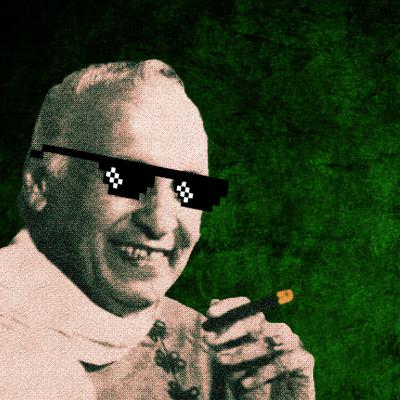
Rafiq Ghaznavi (1907-1974) was a pioneering musician and actor of Indian and Pakistani cinema. In this essay, written in 1953, Ghaznavi attends to a most fundamental question: can there be such a thing as Pakistani music? Ghaznavi holds Pakistan's broadcasting czar Zulfiqar Ali Bukhari responsible for deliberately pushing for a separate Pakistani musical identity, distinct from its Indian counterpart. The essay was republished as part of anthology by Professor Shahbaz Ali in 2012.Featured music:1. Ustad Shahid Pervez - Yaman Kalyan2. Aziz Mian Qawwal - Aasman se utara gaya
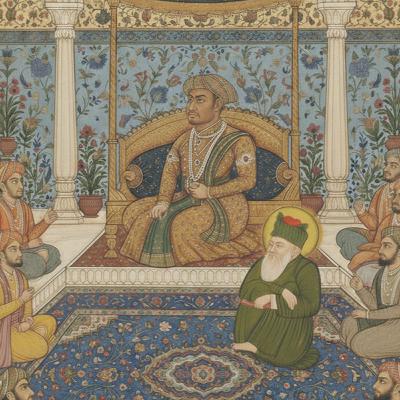
Muhammad Qasim Hindu Shah Firishta (d. circa 1623) was a Persian historian who served the Sultanate of Bijapur in the Deccan. His seminal work, the "Gulshan-i Ibrāhīmī" (The Garden of Ibrahim) is a long history of the Muslim conquest of India. It was named after his patron, Sultan Ibrahim Adil Shah II. The essay featured in this episode is based on an excerpt from the book's first volume. It tells the story of the famous trial of Nizamuddin Auliya (d. 1325) in the court of Sultan Ghyasuddin Tughluq at the Tughlaqabad Fort in Delhi. Displeased with Nizamuddin for failing to return an endowment, Sultan Tughluq convened a court to try him for his Sufi practice of samā' (listening). The excerpt was translated into Urdu by Khwaja Abdul Hameed Yazdani and published in 1966.

Zulfiqar Ali Bukhari (1904-1975) was a pioneering broadcaster, as well as a poet and musicologist. Born in Peshawar, Bukhari was among the earliest administrators of All India Radio, and the founder of Radio Pakistan. In this essay, excerpted from his autobiography that was serialized in an Urdu newspaper between 1962 and 1966, Bukhari recalls the days of Hindu-Muslim disputation over All India Radio airtime. He talks about his resentment for the harmonium, the origins and instant popularity of Muharram programming. Written many years after Partition, the essay’s tenor recalls the political atmosphere of 1940s British India, and the familiar trappings of Urdu musicology.Featured music and recitations:1. Ustad Shahid Parvez - Des2. Ustad Habibuddin Khan - Harmonium3. Agha Maqsood Mirza Dehlvi - Aye salami hashr ke din4. Aftab Ali Kazmi - Behek rahay ho kyun
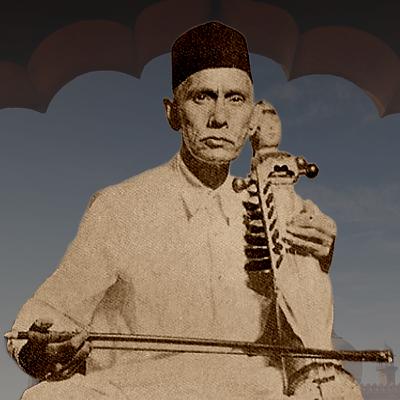
Muhammad Hasan Askari (1919-1978) was a critic, essayist and short story writer. Born in Bulandshahr, Askari spent his most productive years in Delhi, Lahore and Karachi. The essay featured in this episode was written circa 1956-57 as an ode to the sarangi legend Ustad Bundu Khan. Keeping Bundu Khan's person as a centerpiece, Askari meanders through his various intellectual preoccupations with Indo-Islamic culture, drawing upon Urdu musicology, Sufi practices, and his reading of Hindu metaphysics.Featured music:1. Bundu Khan - Yaman Kalyan2. Gundecha Brothers - Bhopali3. Salamat Ali Khan, Nazakat Ali Khan - Bhopali
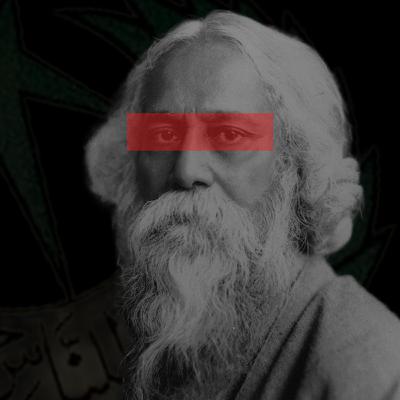
Abul Mansur Ahmad (1898–1979) was a Bengali politician, journalist and writer. He participated in the Pakistan Movement and later played a leading role in the struggle for East Pakistan’s political autonomy. The essay featured in this episode was written by Ahmad in August 1967, in the aftermath of the controversial Radio Pakistan ban on Rabindranath Tagore’s music. Historians sometimes describe — and at other times overstate — this controversy as one of the turning points in the turbulent history of East Pakistan (now Bangladesh). In the essay, Ahmad examines the claim that Tagore is essential to East Bengali culture from the standpoint of a staunch Muslim nationalist who, while acknowledging Tagore’s genius, rejects his idea of India and Indian nationalism—ideas that, in Ahmad’s view, leave no room for a distinct Bengali Muslim culture and identity.Featured music:1. Aji Bangladesher Hridoy Hote2. Amar Sonar Bangla – Poriborton Foundation
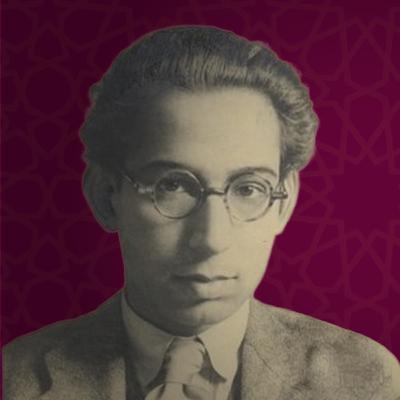
Sajjad Zaheer (1905–1973) was a Marxist poet and revolutionary who lived and worked in both India and Pakistan. The essay featured in this episode, written around 1958, explores the tradition of tarannum (melodic recitation) in the Urdu mushairah (poetic symposium). Zaheer examines why poets who recite their verses melodiously are so beloved by mushairah audiences, and whether tarannum allows listeners to overlook questions of literary merit. He discusses the performance styles of poets such as Jigar Moradabadi and Josh Malihabadi, his own introduction of full-fledged singing at a Calcutta mushairah, and the popularity of inferior or suggestive verse. Crucially, Zaheer argues for the cultivation of refined taste among mushairah audiences and emphasizes the crucial role of second-tier poetry in sustaining the Urdu literary tradition.Featured recitals and music:1. Khumar Barabankvi - Akele hain wo2. Jigar Moradabadi - Sad arzu-e khushgavar3. Barkat Ali Khan - Ah ko chahiye ik umr4. Josh Malihabadi - Mojid-o Mufakkir {6:103}

Muhammad Nurul Mustafa (1936–2000), known by his pen name M. N. Mustafa, was a Bengali journalist, scholar and diplomat. After studying journalism at Punjab University, Mustafa worked as an editor for the English-language dailies The Morning News and The Pakistan Observer, and later as an assistant regional director at Radio Pakistan’s Dacca station. In Bangladesh, he pursued a distinguished career in radio broadcasting and was appointed Director General of Bangladesh Betar in 1992. The essay featured in this episode was part of his 1977 book on music history, large parts of which were written in London during 1969-70. It provides an overview of the poet laureate Kazi Nazrul Islam’s contribution to Bengali music.Featured music:1. Bashori – Chol, Chol, Chol2. Kazi Nazrul Islam – Pashaner bhangale ghum3. Karar oi louho kopat4. Ferdausi Rahman – Poddar dheu re
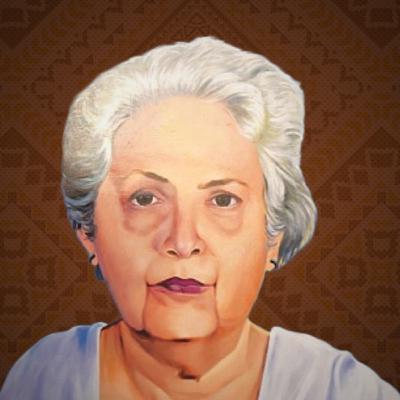
Nargis Khanum (1943-2017) was a pioneering arts and culture journalist in Pakistan. Born in Pune, she joined the daily Dawn as a staff reporter in 1966 and led a trailblazing career in writing and editing that spanned over 50 years. In this essay, written for the the Morning News in 1977, Khanum explains why the layperson finds it hard to appreciate classical music. She traces the art form’s roots to folk traditions and outlines ways in which a novice listener can cultivate a taste for the music's timeless beauty.Featured music:1. Roshan Ara Begum - Dadra in Mishr Pahari
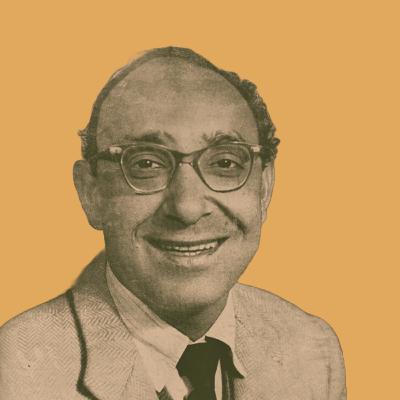
Krishan Chander (1914-1977) was an Indian writer of novels and short stories. The essay featured in this episode, titled "Gānā" (Singing), was part of an undated collection of essays. It is an acerbic and insightful take on the sociological dimensions of music, examining the class structure of musical practice and appreciation. True to his socialist and Progressive roots, Chander draws parallels between the pretentious musical soirees of the cultural elite, and the raw and emotive singing and merrymaking of the working classes.Featured music:1. C. Ramchandra, Meena Kapoor - Aana Meri Jaan Sunday ke Sunday2. Shahid Pervez - Des3. Jhatla Party - Aye Wangrari Wangan Charaiyan
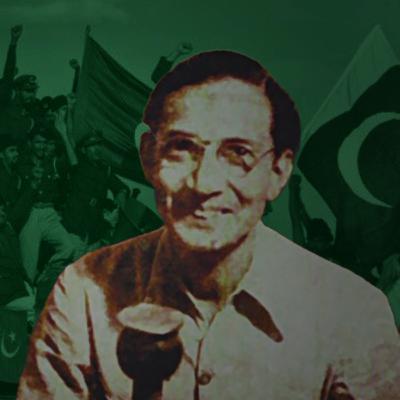
Abbasuddin Ahmed (1901-1959) was a renowned Bengali musician, scholar and recording artist. He was among the earliest Indian artists to take to the gramophone, and gained widespread acclaim in Calcutta before moving to Dacca in 1947. The essay featured in this episode is part of his 1961 autobiography, translated into English by his granddaughter, the musician and scholar Nashid Kamal. It talks about the early days of World War II propaganda department, the famine and political unrest in Calcutta, and the story behind the production of what is considered to be the first group of songs (millī naġhmāt) recorded for Pakistan. The perilous and alienating project was undertaken in 1946 by a group of young Bengali singers and poets, during the days of intense communal violence in the city. Chief among the songs was “Zamīñ Firdaus Pākistān ki Hogī Zamāne Meñ” (Pakistan will be Paradise on Earth). Penned by the poet and lyricist Fayyaz Hashmi and sung by Ahmed, the song was part of the All India Muslim League’s electoral campaign, and was aired by the Dacca radio station on the eve of August 14, 1947.Featured music:1. Abbasuddin Ahmed - Zameen Firdaus Pakistan ki Hogi(Courtesy of Absar Ahmed)
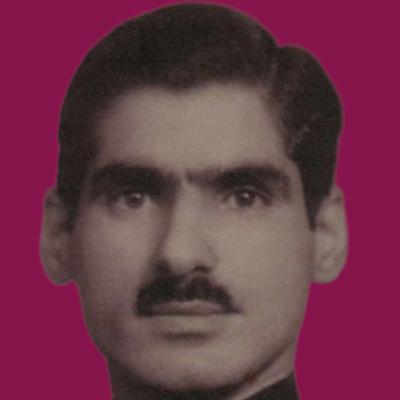
Daud Rahbar (1926-2013) was a Pakistani scholar of comparative religion who taught at various North American universities. In this fascinating essay, Rahbar distills for the Urdu reader a history of orchestral music in the Western tradition, and his reading of its relationship with premodern Christianity. Rahbar draws parallels between what he considers to be the Christian, Islamic and Hindu approaches to sound and performance, and makes the key argument about why the operatic form is alien to Indo-Islamic sensibilities. Furthermore, he elaborates on why and how Western conceptions of harmony have crept into Indian music, and how national radio serves as a platform for popularizing musical experimentation. The essay is part of Rahbar’s 1987 memoir “Bāteñ kuch surīlīsī” (Musical Conversations).Featured music:1. New York Classical Players – Mozart’s Symphony No. 40 in G minor, K. 5502. Orquestra de Cordas Laetare – Dimitri Shostakovich’s WaltzNo. 23. Pioneer Valley Symphony – Tchaikovsky’s Symphony No. 34. Janáček Philharmonic Orchestra - Tristan und Isolde,Act 3, “Isolde Kommt!”5. Anna Makhova - Tchaikovsky’s Swan Lake
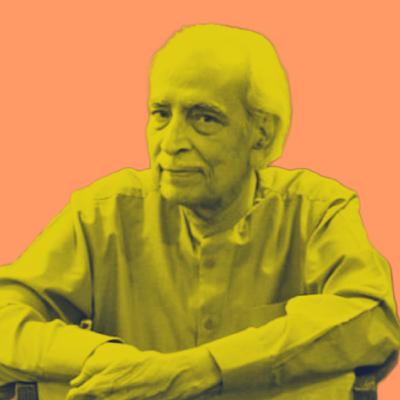
Lutfullah Khan (1916-2012) was an archivist and musician, who over multiple decades put together what is perhaps the biggest audio library of 20th century South Asia. The library, now housed at the Lahore University of Management Sciences, consists of rare recordings of political speeches, lectures, poetry recitals, music etc. The essay featured in this episode, has been extracted from Khan's 1997 memoir "Sur kī Talāsh." It recalls Khan’s audition and selection as a staff artist during the early days of the Madras radio station in 1936. It delves into the differences between North Indian and Carnatic classical musics, the social and cultural function of radio at that time, Khan’s relationship with his music teacher, the question of monetary compensation and patronage, and his commentary on the skillset of hereditary classical musicians vs that of ‘outsiders’ like himself.Featured music:1. Lutfullah Khan - Darbari Kanada
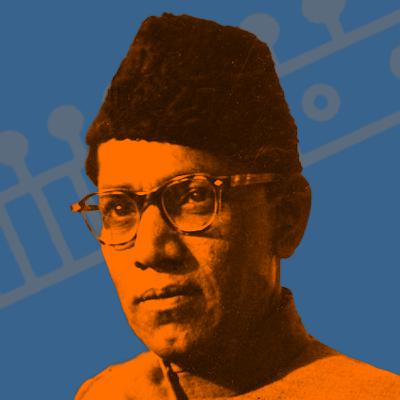
Shahid Ahmad Dehlvi (1906-1967) was a renowned editor and musicologist. The essay featured in this episode was published in August 1948 by the journal "Adab-e Lat̤īf" (Literary Subtleties). It focuses on the state of North Indian music on the cusp of Partition, delving into the historical origins of Indian music, its standardization in the modern period as a ‘classical’ art, its basic constituents of melodic modes and fixed compositions, and its associated mythologies and metaphysical dimensions. Dehlavi also elaborates on the causes of its 'decline' in the modern period, and suggests ways in which the music and its traditional practitioners can be saved. Dehlvi's historical account recalls familiar trappings of Urdu music scholarship and its 19th century inflections.Featured music:1. Ustad Nathu Khan - Jaijaiwanti2. Ustad Salamat Ali Khan - Bahar

Abdul Halim Sharar (1860-1926) was a renowned poet, novelist, journalist, historian and reformer of British India. The essay featured in this episode provides a history of sozkhwani, the elegiac recitation tradition associated with South Asian Shi’i Islam. It was part of a trailblazing cultural history of Awadh and its capital of Lucknow, written majorly to respond to cultural stereotyping, and serialized in the journal "Dilgudāz" (Melter of Hearts). The essay was later published in the collected work "Guzashtah Lakhnau" (The Lucknow of Yore). Written in the early 1900s, the essay is widely considered to be the first proper historical account of sozkhwani. It speculates on the tradition's origins, its development at the hands of hereditary musicians, its social and cultural function, and the role of women in its development and recognition as a classical art form. While many of its details and phrasings may seem dated, misleading or even disrespectful to some, it is a vital historical document of the sound art that is the lifeblood of North Indian Shi'i mourning culture.1. Ustad Mashooq Ali Khan - Kya pesh-e Khuda sahib-e tauqir hain Zehra2. Kajjan Begum - Mar jaye jo farzand to kya chara hai3. Kajjan Begum - Mujrai Sheh ne kaha pani jo pana Zainab

Ustad Sibte Jafar Zaidi (1957-2013) was a college professor and proponent of Islamic sound arts in South Asia. The essay featured in this episode comprises of two continuous sections from Zaidi's 1995 monograph, "Ṣautī ‘Ulūm-o Funūn-e Islāmī" (The Sciences and Arts of Sound in Islam). The sections delve into the historical background of poetry written in honour of Prophet Muhammad (pbuh), and the various genera of musical and literary traditions associated with it. Zaidi's essay is a rare, early introduction to the technical and literary aspects of Urdu naatkhwani, and gestures towards various lines of inquiry within this rich sonic tradition.Featured recitations:1. Manzoorul Konain - Banay hain dono jahan Shah-e dosara ke liye2. Ali Muhammad Rizvi Sachay - Azmat-e sidra dekhi3. Khursheed Ahmad and Siddiq Ismail - Mustafa jan-e rehmat pe lakhon salam

Aminur Rahman was a Pakistani musicologist who wrote extensively on the historical and comparative aspects of North Indian musical traditions. Rahman's Urdu and English writings were published across leading literary journals and art magazines. The essay featured in this episode was composed in the 1950s, and published in 1961, under the title "Pākistānī musīqī ke masā'il." Rahman lays out the terrain for what he saw as a developing Pakistani musical identity. He draws upon Pakistan’s ideological, cultural and intellectual challenges, and argues for ways in which it can draw upon UNESCO's global mission to identify collective structures of feeling, perception and experience in Pakistan. Rahman makes the crucial argument about how musical tendencies can be identified in the Islamic environment of Pakistani society, and the role that musical practitioners, artists and educationists can play in taking forward its thrust and spirit.Featured music: 1. Amjad Sabri - Live in Budapest, 20122. Ustad Bismillah Khan - Allah hi Allah 3. Urs Bhatti - Kohyari

Madame Azurie (1907–1998), born Anna Marie Gueizelor, was a pioneering actor and dancer in Pakistani, Indian, and Bengali cinema. The essay featured in this episode comprises a speech delivered by Azurie during a 1961–62 national music conference held in Karachi, which addressed the challenges of developing a robust system of notation for North Indian classical music. In her speech, Azurie advocates for the invention of notational symbols for Indian beat cycles and the use of sound recordings to create base texts for standardizing the vocal melodies of ragas. The speech was published the same year as part of the conference report.Salamat Ali Khan, Nazakat Ali Khan - DarbariProduced by Ali Raj
Salimullah Fahmi (1906-1975) was a Bengali poet and careercivil servant in the erstwhile East Pakistan (now Bangladesh). The essay featured in this episode surveys the various genres of Bengali music prevalent in the region. It provides insight into the representation of Bengali culture within the Urdu public sphere, and its parallels with West Pakistani folk and literary traditions. Crucially, it highlights the various possibilities ofnational harmony and union within the musical realm, that the turbulent years between 1947 and 1971 had to offer. The essay was published in 1963. Featured music:1. Abdul Alim and Jasimuddin – Ujan Ganger Naiya2. Ukil Boyati – Oki Ekbar3. Mongoler Mao, Agun Jalao, Mosha Mari4. Dokori Chowdhury - Gambhira 5. Bablu Sain – O Amar Chandar Kona6. Baul Selim - Shohid Karbala7. Abdul Ahad, Shahnaz Begum, Laila Arjumand Bano - O AmarDesh, Sonar Desh (Courtesy of Absar Ahmed)Produced by Ali Raj
Comments

Download from Google Play

Download from App Store
 United States