


SpaceTime with Stuart Gary
Subscribed: 9,005Played: 360,619
Subscribe


© Copyright bitesz.com
Description
Join host Stuart Gary for weekly explorations into Astronomy, Space, and Science News, featuring insights from 19 years on Australian Public Radio and industry experts.
Become a supporter of this podcast: https://www.spreaker.com/podcast/spacetime-with-stuart-gary--2458531/support.
Become a supporter of this podcast: https://www.spreaker.com/podcast/spacetime-with-stuart-gary--2458531/support.
1000 Episodes
Reverse

In this episode of SpaceTime, we uncover groundbreaking astronomical events and the latest advancements in space exploration.First Ever Super Kilonova DetectedAstronomers have made a significant discovery with the potential detection of the first ever super kilonova explosion. This extraordinary event, cataloged as AT 2025ULZ, is believed to have been triggered by a double supernova explosion, producing both gravitational waves and electromagnetic radiation. Lead author Manzi Kasliwal from Caltech's Palomar Observatory discusses how this unique phenomenon could reshape our understanding of stellar evolution and the formation of heavy elements in the universe. With only one confirmed kilonova event to date, this new discovery presents an exciting opportunity to explore the complexities of cosmic explosions.Blue Ghost 2 Spacecraft Shake TestFirefly Aerospace's Blue Ghost Mission 2 spacecraft has undergone rigorous shake testing at NASA's Environmental Test Laboratory. This critical assessment simulates the intense vibrations and acoustics experienced during launch, ensuring the spacecraft can withstand the harsh conditions of a rocket ascent. JPL engineer Michael Williams explains the importance of these tests in preparing spacecraft for successful missions, as the Blue Ghost 2 aims to deliver multiple payloads to the lunar far side next year.Shenzhou 20 Capsule Returns SafelyChina's Shenzhou 20 spacecraft has successfully completed an unmanned return to Earth after sustaining damage from space debris. Initially intended to bring a crew of Tigernauts back home, mission managers opted for a safe return without the crew due to concerns over a crack in the capsule's viewport. This decision highlights the importance of safety in space missions, while also providing valuable data for future flights.www.spacetimewithstuartgary.com✍️ Episode ReferencesAstrophysical Journal LettersNASA ReportsNature CommunicationsBecome a supporter of this podcast: https://www.spreaker.com/podcast/spacetime-your-guide-to-space-astronomy--2458531/support.(00:00:00) This is Space Time Series 28, Episode 152 for broadcast on 26 December 2025(00:00:47) Astronomers detect what could be the first ever super kilonova explosion(00:15:30) Firefly Aerospace's Blue Ghost 2 spacecraft undergoes shake testing at NASA's JPL(00:20:10) China's Shenzhou 20 capsule returns safely to Earth after damage from space debris(00:25:00) New study reveals the benefits of swearing during physical exertion
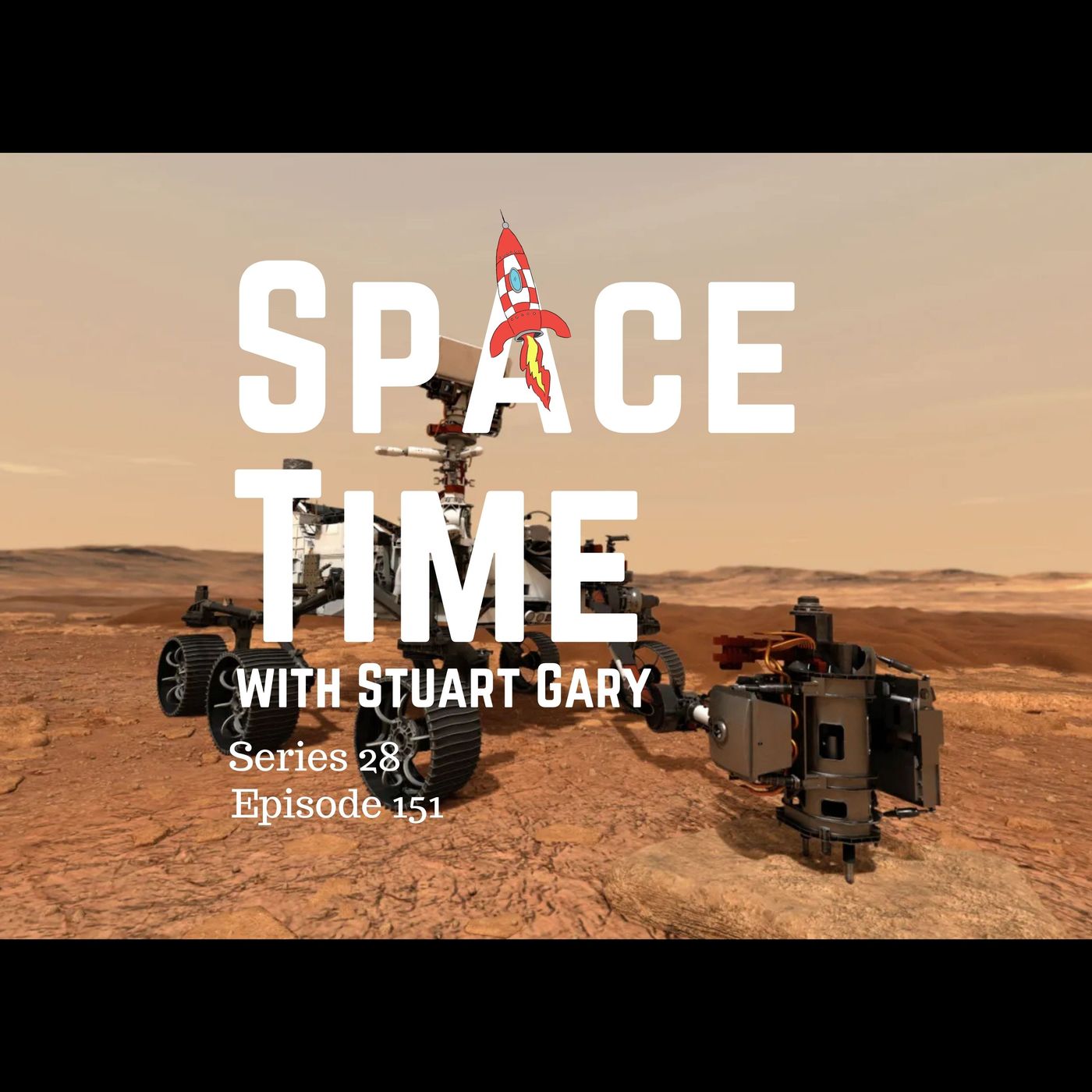
In this episode of SpaceTime, we explore significant advancements in space exploration and innovative scientific projects.Perseverance Rover's New JourneyAfter nearly five years on Mars, NASA's Perseverance Rover is on the move again, heading to a new site on the rim of Jezero Crater named Lac du Charm. Having traversed over 40 kilometres and collected vital rock core samples, the rover is undergoing extensive evaluations to ensure its longevity, with engineers confident it can operate until at least 2031. We discuss the rover's advanced autonomous driving capabilities and its mission to uncover signs of past microbial life.Fashion Meets Science: Microbial FabricsA groundbreaking project is set to merge fashion and science by sending specially designed fabrics made from bacteria into space. These innovative materials will change colour in response to radiation exposure, potentially protecting astronauts from harmful levels of UV radiation and offering new applications for skin cancer prevention on Earth. Lead researcher Giles Ballet shares insights into how this technology could revolutionise both space exploration and everyday fashion.Expedition 73 Crew ReturnsThe Expedition 73 astronauts have safely returned to Earth after an eight-month mission aboard the International Space Station. Their journey has contributed to over 250 experiments, including advancements in bioprinting and remote robotic operations. We also discuss the implications of recent challenges faced by Russia's manned space program.www.spacetimewithstuartgary.com✍️ Episode ReferencesJournal of ScienceNASA ReportsNature CommunicationsBecome a supporter of this podcast: https://www.spreaker.com/podcast/spacetime-your-guide-to-space-astronomy--2458531/support.(00:00:00) This is Space Time Series 28, Episode 151 for broadcast on 24 December 2025(00:00:47) NASA's Perseverance Rover begins a new journey on Mars(00:12:30) Innovative microbial fabrics set to be tested in space(00:19:15) Expedition 73 crew returns safely to Earth after eight months in orbit(00:24:05) New study suggests humans have been using fire for 400,000 years(00:27:30) Technology tips for buying the right printer for your needs
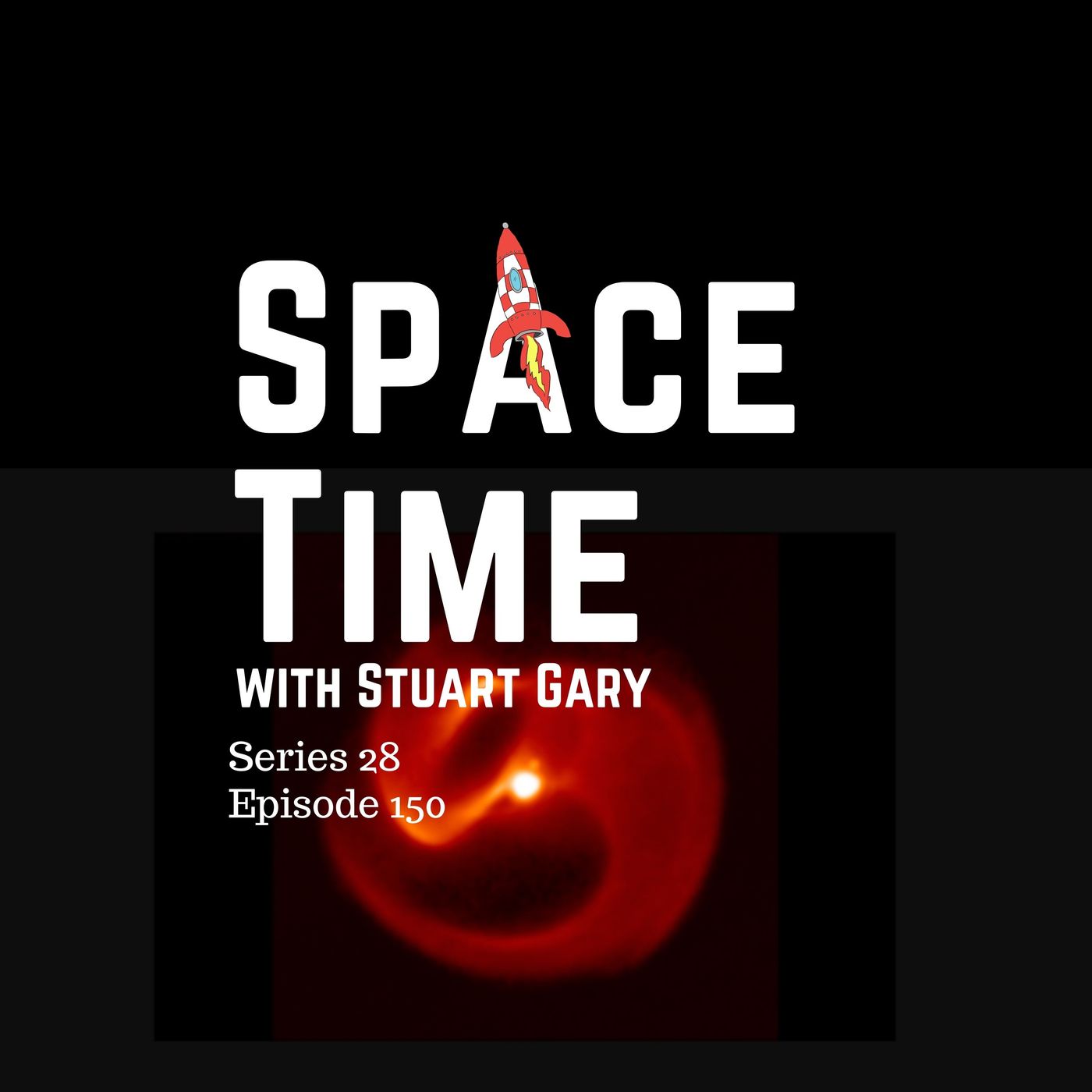
SpaceTime with Stuart Gary Gary - Series 28 Episode 150In this episode of SpaceTime, we delve into intriguing discoveries and ongoing challenges in the realm of astrophysics and planetary science.Cosmic Dance of Dying StarsAstronomers have made fascinating observations of a unique star system named Apep, located over 8,000 light years away in the constellation Norma. This rare system consists of three massive stars locked in a 190-year orbit, creating stunning spirals of cosmic dust. Using the advanced capabilities of NASA's Webb Space Telescope and the Very Large Telescope in Chile, researchers captured extraordinary images revealing four distinct dust shells spiraling outward from the stars. Lead author Ryan White from Macquarie University discusses how these findings enhance our understanding of stellar interactions and the evolution of massive stars over time.Titan's Liquid Ocean: A New PerspectiveA recent study challenges the long-held belief that Saturn's largest moon, Titan, harbors a vast underground ocean. Instead, researchers suggest that Titan may have a more complex internal structure characterized by slushy tunnels and pockets of meltwater rather than a global liquid water ocean. This revelation, based on a reanalysis of data from NASA's Cassini mission, could have significant implications for the search for potential life on Titan, indicating that any existing life forms might inhabit a more confined environment with concentrated nutrients.NASA's MAVEN: Communication ChallengesMission managers at NASA are working diligently to restore contact with the Mars Atmosphere and Volatile Evolution (MAVEN) spacecraft, which went silent during a routine pass behind Mars on December 6. Engineers are analyzing data from before the loss of signal to identify the cause and determine if the spacecraft can be salvaged. MAVEN has been crucial for studying Mars' atmosphere and has served as a vital communications relay for surface missions.www.spacetimewithstuartgary.com✍️ Episode ReferencesAstrophysical JournalNatureNASA TVBecome a supporter of this podcast: https://www.spreaker.com/podcast/spacetime-your-guide-to-space-astronomy--2458531/support.(00:00:00) This is space time series 28 episode 150 for broadcast on 22nd December 2025(00:00:47) NASA's Webb Space Telescope reveals four spectacular dust shells from distant star system(00:10:58) New study says Titan probably doesn't have a vast underground liquid water ocean(00:15:57) NASA mission managers continue efforts to restore contact with missing maven spacecraft(00:18:36) New study finds shared genetic patterns across 14 common psychiatric disorders(00:20:56) A new study claims acupuncture treatment for lower back pain reduces pain
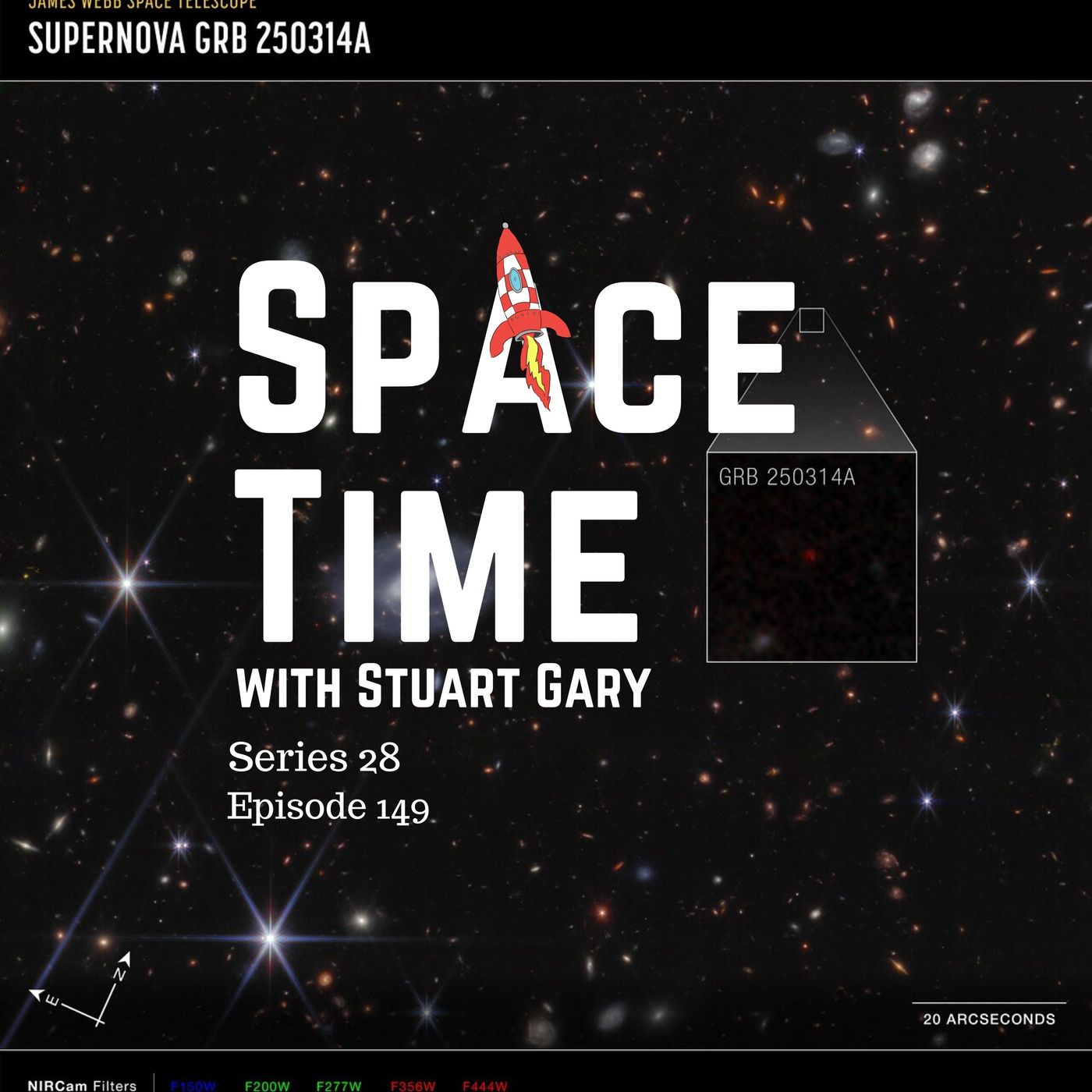
In this episode of SpaceTime, we uncover groundbreaking discoveries and exciting celestial events that illuminate our understanding of the universe.Earliest Supernova Ever DetectedAstronomers have achieved a remarkable milestone by detecting the earliest supernova ever observed, dating back to a mere 730 million years after the Big Bang. Using the powerful Webb Space Telescope, this supernova, cataloged as GRB250314A, emitted a gamma ray burst that has shattered previous distance records. Lead author Andrew Levin shares insights into how this discovery provides a glimpse into the universe when it was only 5% of its current age, revealing surprising similarities with modern supernovae despite the vast differences in their epochs.Liquid Water on Mars: New EvidenceNew seismic data from NASA's Mars InSight lander suggests that liquid water could still exist beneath the Martian surface, potentially providing a habitat for microbial life. The analysis of marsquakes has revealed boundaries in the Martian crust that indicate the presence of water-filled cracks, offering compelling evidence that life may persist on the Red Planet. We discuss the implications of these findings and the methodologies used to analyze the Martian subsurface.The Great Geminids Meteor Shower of 2025The annual Geminid meteor shower is reaching its peak, presenting stargazers with the chance to witness up to 100 meteors per hour under optimal conditions. Unlike many meteor showers that originate from comets, the Geminids are unique as they come from the asteroid 3200 Phaethon. Dr. Robert Massey provides tips on how to best observe this spectacular celestial event, emphasizing the importance of dark skies and the naked eye for optimal viewing.www.spacetimewithstuartgary.com✍️ Episode ReferencesAstronomy and AstrophysicsBritish Medical JournalNature CommunicationsBecome a supporter of this podcast: https://www.spreaker.com/podcast/spacetime-your-guide-to-space-astronomy--2458531/support.(00:00:00) New clues suggest that liquid water could still exist on Mars today(00:00:48) Astronomers have detected the earliest supernova ever seen using the Webb Space Telescope(00:05:10) New study based on seismic data suggests liquid water may still exist on Mars(00:09:12) The Geminids are visible between now and December 20th(00:13:10) New study finds coffee may slow down biological aging of people with mental illnesses
SpaceTime with Stuart Gary Gary - Series 28 Episode 147In this episode of SpaceTime, we delve into remarkable discoveries that significantly enhance our understanding of the cosmos.Longest Gamma Ray Burst Ever DetectedAstronomers have made headlines with the discovery of the longest gamma ray burst ever recorded, GRB 250702B, which lasted over seven hours. This unprecedented event is reshaping our understanding of stellar explosions and their aftermath. Initial observations indicate that this extraordinary burst may have originated from a black hole consuming a star, prompting new theories about the mechanisms behind these powerful cosmic phenomena. We explore the implications of this finding and how it challenges existing models of gamma ray bursts.Elemental Bounty in Supernova RemnantFor the first time, scientists have detected chlorine and potassium in the remnants of the supernova Cassiopeia A, utilizing the advanced capabilities of the CRISM spacecraft. This discovery sheds light on the elemental processes that occur during stellar explosions and their connection to the formation of elements crucial for life on Earth. We discuss the significance of these findings and their impact on our understanding of stellar nucleosynthesis.International Space Station Fully OccupiedIn a historic first, the International Space Station has reached full capacity, with all eight of its docking ports in use. We discuss the implications of this milestone, including the logistics of managing multiple spacecraft and the ongoing missions currently underway aboard the ISS.www.spacetimewithstuartgary.com✍️ Episode ReferencesMonthly Notices of the Royal Astronomical SocietyAstrophysical Journal LettersNature AstronomyBecome a supporter of this podcast: https://www.spreaker.com/podcast/spacetime-your-guide-to-space-astronomy--2458531/support.(00:00:00) This is space Time Series 28, Episode 147 full broadcast on 17 December 2025(00:00:47) Astronomers have detected the longest gamma ray burst ever detected(00:11:11) Astronomers have detected chlorine and potassium in a supernova remnant(00:18:27) International Space Station is fully occupied with all eight docking ports now in use(00:20:05) New study claims flavonoids may help improve insulin resistance(00:24:58) You're a multiple award winner. You've won in creative writing and controversy(00:26:05) Space Time is available every Monday, Wednesday and Friday through bitesz. com
In this episode of SpaceTime, we explore significant developments in space exploration and cosmic studies that could reshape our understanding of the universe.Nasa's MAVEN Mars Orbiter: Communication LossNASA's MAVEN (Mars Atmosphere and Volatile Evolution) spacecraft has gone silent, with contact lost on December 6th after passing behind Mars. The orbiter has been a vital asset for over a decade, studying the Martian atmosphere and solar wind interactions that have transformed Mars from a water-rich world to a cold desert. We delve into MAVEN's critical findings, including the mechanisms of atmospheric escape and the implications of its potential loss for ongoing Martian research.Galactic Neighbourhoods: Influencing EvolutionA new study reveals how a galaxy's local environment can significantly affect its evolution. The research, published in the Monthly Notices of the Royal Astronomical Society, demonstrates that galaxies situated in densely populated regions tend to grow more slowly and develop different structures compared to their isolated counterparts. By analysing data from the Deep Extragalactic Visible Legacy Survey, astronomers have gained insights into the complex dynamics of galactic interactions and their impact on star formation rates.Uranus and Neptune: More Richie than Icy?Challenging long-held classifications, a recent study suggests that the solar system's ice giants, Uranus and Neptune, may actually be more rocky than icy. Researchers from the University of Zurich conducted computer simulations that indicate a broader range of internal compositions for these planets, which could explain their complex magnetic fields. This new perspective could alter our understanding of planetary formation and evolution, paving the way for future explorations of these distant worlds.www.spacetimewithstuartgary.com✍️ Episode ReferencesMonthly Notices of the Royal Astronomical SocietyNASA TVBecome a supporter of this podcast: https://www.spreaker.com/podcast/spacetime-your-guide-to-space-astronomy--2458531/support.

In this episode of SpaceTime, we tackle some of the most intriguing cosmic mysteries and discoveries that could reshape our understanding of the universe.Unraveling Uranus: The Mystery of Its Radiation BeltsFor 39 years, the intense electron radiation belts surrounding Uranus have puzzled scientists since NASA's Voyager 2 flyby in 1986 revealed unexpectedly high levels of radiation. New analyses suggest these findings may be explained by a solar wind structure interacting with the Uranian system during Voyager 2's visit. This research opens up new questions about the fundamental physics governing these extreme energy levels and the unique characteristics of Uranus itself.Mapping Martian River Systems: A Historic FirstA groundbreaking study has mapped ancient river systems on Mars, identifying 16 large drainage basins that could have supported life billions of years ago. By synthesizing previous data on Martian river valleys, lakes, and canyons, scientists have outlined how these systems could have formed a global network, similar to Earth's most biodiverse river basins. This research enhances our understanding of Mars' geological history and its potential for past life.2026 Australasian Sky Guide ReleasedThe 2026 Australasian Sky Guide has officially been released, offering skywatchers a detailed monthly map of celestial events. Highlights include supermoons, planetary alignments, and eclipses, providing an exciting year ahead for astronomy enthusiasts. Dr. Nick Glom shares insights into the guide's features and the astronomical events to look forward to in the coming year.www.spacetimewithstuartgary.com✍️ Episode ReferencesProceedings of the National Academy of SciencesCommunications Earth and EnvironmentBecome a supporter of this podcast: https://www.spreaker.com/podcast/spacetime-your-guide-to-space-astronomy--2458531/support.(00:00:00) Scientists may have finally resolved 39 year old mystery about Uranus radiation belts(00:03:55) A new study has begun the task of mapping ancient river systems on Mars(00:08:06) The 2026 Australasian Sky Guide has just been released(00:10:23) The book tells readers what's up in the sky for each month(00:11:39) Total eclipse of the moon in March is spectacular and easy to photograph(00:14:22) A new study suggests volcanic activity may have paved the way for the Black Death(00:15:37) A new study claims people who want children are more likely to find older faces attractive(00:17:33) Tim Mendham warns about the dangers of taking medical advice on social media(00:20:08) Spacetime is available through bitesz.com and other podcasting platforms
SpaceTime with Stuart Gary - Series 28 Episode 145In this episode of SpaceTime, we explore groundbreaking discoveries that deepen our understanding of the origins of life and the dynamics of our galaxy.Sugars and Stardust: Insights from Asteroid BennuNASA's Osiris Rex mission has returned samples from the asteroid Bennu, revealing the presence of biologically essential sugars, including ribose and glucose, along with a unique gum-like substance never before seen in astromaterials. These findings, published in Nature Geoscience and Nature Astronomy, suggest that the building blocks for life were widespread throughout the early solar system. The discovery of ribose supports the RNA world hypothesis, indicating that RNA might have been the first genetic material. Additionally, the presence of glucose hints at the early energy sources available for life on Earth.Stars Defying the Black HoleAstronomers have observed numerous stars in stable orbits around Sagittarius A, the supermassive black hole at the center of our galaxy. This discovery, reported in Astronomy and Astrophysics, challenges previous assumptions that these objects were merely clouds of dust on a collision course with destruction. Instead, the new data from the ERIS Enhanced Resolution Imager and Spectrograph reveals a dynamic and stable environment around the black hole, providing a unique laboratory for studying interactions between black holes and stars.Martian Mystery Solved?A new radar technique employed by NASA's Mars Reconnaissance Orbiter has cast doubt on the existence of a suspected underground lake beneath the Martian South Pole ice cap. Initial signals that suggested the presence of liquid water have been reinterpreted as possibly being layers of rock and dust. This innovative approach opens new avenues for investigating subsurface resources on Mars, which could have significant implications for future exploration.www.spacetimewithstuartgary.com✍️ Episode ReferencesNature GeoscienceNature AstronomyAstronomy and AstrophysicsGeophysical Research LettersBecome a supporter of this podcast: https://www.spreaker.com/podcast/spacetime-your-guide-to-space-astronomy--2458531/support.
(00:00:00) Galactic Tug-of-War: The Small Magellanic Cloud's Struggle Against Gravitational Forces
(00:00:46) One of our nearest neighbouring galaxies being torn apart
(00:08:00) A giant spider on the Jovian Ice Moon Europa
(00:12:23) Mars could have been habitable for long periods
(00:14:14) The Science Report
(00:17:23) Skeptics guide to why some people are born suckers
(00:20:24) Episode Wrap
In this episode of SpaceTime, we delve into fascinating cosmic phenomena and groundbreaking discoveries that could reshape our understanding of the universe.The Small Magellanic Cloud: A Galaxy Under DuressAstronomers have uncovered that the Small Magellanic Cloud, a nearby dwarf galaxy, is being torn apart by gravitational forces from its neighbor, the Large Magellanic Cloud. This revelation, published in the Astrophysical Journal Letters, highlights the complex movements of Cepheid variable stars within the galaxy, indicating that it is being stretched in multiple directions. By utilizing data from the European Space Agency's Gaia satellite, researchers have gained unprecedented insights into the interactions between these two galaxies, prompting a reevaluation of their structural dynamics and gravitational relationships with the Milky Way.Europa's Spider: Signs of Subsurface Water?A striking spider-like feature on Jupiter's moon Europa has scientists buzzing with excitement. Researchers suggest this formation, found near the Menanan impact crater, may be evidence of subsurface water seeping through the moon's icy crust following an asteroid impact. The findings, reported in the Planetary Science Journal, could have significant implications for the moon's habitability and the presence of life. By drawing parallels with similar features on Mars, scientists are eager to explore Europa's subsurface properties further, especially with the upcoming Europa Clipper mission set to launch in April 2030.Mars: A Longer Habitable History?New research indicates that Mars may have been habitable for a much longer duration than previously believed. A study published in the Journal of Geophysical Research Planets reveals that ancient underground water may have flowed beneath the Martian sand dunes, creating conditions conducive to life long after its surface water disappeared. This discovery not only enhances our understanding of Mars' geological history but also highlights the potential of subsurface environments as targets for future exploration in the search for past life.www.spacetimewithstuartgary.com✍️ Episode ReferencesAstrophysical Journal LettersPlanetary Science JournalJournal of Geophysical Research PlanetsBecome a supporter of this podcast: https://www.spreaker.com/podcast/spacetime-your-guide-to-space-astronomy--2458531/support.
In this episode of SpaceTime, we explore groundbreaking discoveries and intriguing phenomena from Mars to the depths of space.Lightning Strikes on Mars: A Historic DiscoveryNASA's Perseverance Rover has made a remarkable find by detecting lightning in the Martian atmosphere for the first time. Recorded within two dust devils in Jezero Crater, the rover's Supercam microphone captured electromagnetic and acoustic signals indicative of electrical discharges. This discovery not only confirms long-held theories about Martian electrical activity but also reveals significant implications for the planet's atmospheric chemistry and potential hazards for future missions.NASA's Observations of Interstellar Comet 3I AtlasFollowing the European Space Agency's observations, NASA has released stunning images of interstellar comet 3I Atlas. As the comet passed close to Mars, NASA's MAVEN and Mars Reconnaissance Orbiter provided crucial data on its trajectory and chemical composition. These insights are helping astronomers piece together the comet's journey and origins, revealing potential clues about water in other star systems.Moss in Space: Resilience Against the VoidA new study has shown that moss can survive the harsh conditions of space for up to 15 years. Researchers sent moss spores to the International Space Station, where they thrived despite exposure to the vacuum and extreme temperatures. This remarkable resilience could have implications for understanding life's potential to endure in extreme environments beyond Earth.Skywatch: December HighlightsAs the December solstice approaches, we take a look at the night sky's highlights, including the Geminids meteor shower and the ticking time bomb of Eta Carina. We also discuss the significance of the December solstice and the celestial events that define this time of year.www.spacetimewithstuartgary.com✍️ Episode ReferencesJournal of NatureNASA ReportsJournal of Eye ScienceBecome a supporter of this podcast: https://www.spreaker.com/podcast/spacetime-your-guide-to-space-astronomy--2458531/support.(00:00:00) NASA's Mars Perseverance Rover has captured evidence of electrical discharges(00:03:47) NASA publishes its own observations of the Interstellar Comet 3I Atlas(00:07:26) Moss spores survive exposure to vacuum of space for up to 15 years(00:09:40) The December solstice marks the beginning of winter in both hemispheres(00:11:54) Axial precession causes a slow and continuous change in Earth's rotational axis(00:15:11) Astronomers describe stars in terms of spectral types based on temperature and characteristics(00:19:04) Two blue stars nearing end of their lives before exploding massive core collapse supernovae(00:24:23) Just above the horizon is the constellation of Orion the Hunter(00:34:04) Canopus talks about the effect of the Moon on stargazing(00:37:03) The Southern Cross starts near the celestial equator and wanders far south(00:39:06) There are two star clusters that we speak about quite often on the show(00:41:50) The only planet that's up in the early evening is Saturn
(00:00:00) Theia Unveiled: Tracing the Origins of Earth's Moon and Lucy's Journey to Jupiter's Trojans
(00:00:50) New study claims Theia and Earth were once neighbours
(00:06:16) Lucy’s mission to Jupiter’s trojan asteroids
(00:15:26) Starliner’s next mission to be limited to cargo only
(00:17:57) The Science Report
(00:23:17) Alex on Tech: Dooms Day clock countdown to Digital ID
In this episode of SpaceTime, we dive into the intriguing origins of our Moon and the latest developments in space exploration.Theia: The Lost Planet Behind the Moon's BirthA groundbreaking study reveals that Theia, the small planet believed to have collided with Earth to form the Moon, originated from the inner solar system. Researchers from the Max Planck Institute and the University of Chicago have analyzed isotopic compositions of Earth and Moon rocks, suggesting that Theia was likely composed of materials found closer to the Sun than Earth's orbit. This discovery sheds light on the nature of this celestial body and its dramatic impact on our planet's history.Lucy Mission Update: Journey to Jupiter's TrojansNASA's Lucy spacecraft, launched in October 2021, is on an ambitious 12-year mission to explore Jupiter's Trojan asteroids. These ancient remnants from the solar system's formation are crucial for understanding planetary development. Lucy will visit seven asteroids, including both leading and trailing Trojan swarms, providing unprecedented insights into the early solar system. Principal Investigator Hal Levison emphasizes that the mission will revolutionize our understanding of planetary formation and the origins of volatiles and organics on terrestrial planets.Starliner Mission Limited to CargoIn a significant setback, NASA has announced that Boeing's Starliner spacecraft will only carry cargo on its next mission to the International Space Station. This decision follows a series of technical issues that plagued Starliner's previous flights. With the total number of planned missions reduced from six to four, NASA aims to ensure safety and reliability before allowing crewed flights again.www.spacetimewithstuartgary.com✍️ Episode ReferencesJournal of ScienceNASA ReportsMax Planck Institute StudiesBecome a supporter of this podcast: https://www.spreaker.com/podcast/spacetime-your-guide-to-space-astronomy--2458531/support.
In this episode of SpaceTime, we explore groundbreaking advancements in our understanding of the universe and the challenges faced in space exploration.Detecting Dark Matter: A Major BreakthroughAfter nearly a century of speculation, scientists may have finally detected dark matter. A report in the Journal of Cosmology and Astroparticle Physics reveals that gamma rays emitted from dark matter particle collisions have been observed using NASA's Fermi Gamma Ray Space Telescope. This discovery aligns with predictions about dark matter's existence and could signify a new particle not included in the current standard model of particle physics. If confirmed, this finding would represent one of the most significant developments in astronomy and physics to date.CHEOPS Spacecraft Nears MilestoneThe European Space Agency's CHEOPS (Characterizing Exoplanet Satellite) is approaching another milestone as it enters its sixth year of a mission initially planned for three and a half years. Launched in December 2019, CHEOPS aims to determine the size and characteristics of known exoplanets. With its 30-centimeter optical telescope, the spacecraft has been crucial in observing transiting exoplanets and will now extend its search to include exomoons, enhancing our understanding of planetary systems beyond our own.Disaster at Baikonur CosmodromeA major disaster struck at the Baikonur Cosmodrome during the launch of the Soyuz MS.28 spacecraft to the International Space Station. The mobile service platform collapsed due to the rocket's exhaust plume, resulting in significant damage to the launch pad. This incident leaves Russia without a functional facility for manned space missions for the first time in 60 years, delaying upcoming launches and posing challenges for future missions.www.spacetimewithstuartgary.com✍️ Episode ReferencesJournal of Cosmology and Astroparticle PhysicsEuropean Space Agency ReportsNASA News ReleasesBecome a supporter of this podcast: https://www.spreaker.com/podcast/spacetime-your-guide-to-space-astronomy--2458531/support.
In this episode of SpaceTime, we delve into the latest discoveries and challenges in space exploration and Earth science.Tracking Interstellar Comet 3I Atlas from MarsThe European Space Agency has successfully monitored interstellar comet 3I Atlas from its ExoMars Trace Gas Orbiter, significantly improving the accuracy of its predicted trajectory by a factor of ten. The comet, which travels at speeds of up to 250,000 km/h, was observed from a unique vantage point, allowing astronomers to refine its path through our solar system. This remarkable achievement underscores the importance of multi-location observations in planetary defense efforts.Geomagnetic Superstorm Ganon's Impact on Earth's Plasma SphereA recent study reveals how the geomagnetic superstorm Ganon dramatically compressed Earth's plasmasphere, reducing its size to just a fifth of its normal extent. This event, which occurred in May 2024, provides crucial insights into the effects of extreme space weather on our planet's protective layers. The findings will enhance solar storm forecasts and help safeguard satellites and communication systems during such events.Delays for the Dream Chaser SpaceplaneSierra Space's Dream Chaser spaceplane faces further delays, now expected to launch its first orbital flight in approximately a year. Originally designed for crew transport, the spacecraft is now slated for resupply missions to the International Space Station. Despite setbacks, recent tests have demonstrated its systems' readiness for future operations, although challenges remain as the ISS's operational life nears its end.www.spacetimewithstuartgary.com✍️ Episode ReferencesEarth Planets and Space JournalJournal of the American Chemical SocietyNASA ReportsBecome a supporter of this podcast: https://www.spreaker.com/podcast/spacetime-your-guide-to-space-astronomy--2458531/support.
(00:00:00) Cosmic Speedsters: Unravelling Our Solar System's Surprising Velocity and Enceladus' Organic Secrets
(00:00:46) Our solar system is moving faster than expected
(00:04:38) Organic molecules discovered erupting from Saturn’s moon Enceladus
(00:08:29) A new satellite launched to study Earth’s oceans
(00:13:49) The Science Report
(00:15:52) Alex on Tech
In this episode of SpaceTime, we uncover groundbreaking insights into Earth's mysteries and the cosmos beyond.Mysterious Structures in Earth's MantleA new study reveals that enigmatic structures within Earth's mantle may hold vital clues about why our planet evolved the conditions necessary for life. These massive formations, known as large low shear velocity provinces and ultra low velocity zones, reside at the boundary between the mantle and outer core, approximately 2,900 kilometres beneath the surface. The research suggests these anomalies could be remnants of Earth's formative processes, providing a deeper understanding of how elements from the core influenced the planet's cooling, volcanic activity, and atmospheric evolution, ultimately setting Earth apart from Venus and Mars.Unprecedented View of the Milky WayAstronomers have achieved a remarkable new perspective of our home galaxy, the Milky Way, with the largest low-frequency radio image ever assembled. This extensive survey, conducted using the Murchison Wide Field Array radio telescope in Western Australia, captures the intricate birth, evolution, and demise of stars across the southern hemisphere. The new image, which boasts double the resolution and tenfold sensitivity compared to previous observations, offers valuable insights into stellar interactions and the cosmic landscape, revealing patterns in star formation and supernova remnants.Successful Return of Stranded TaikonautsIn a significant development, the three Chinese taikonauts stranded in orbit after their Shenzhou 20 spacecraft was struck by space debris have safely returned to Earth aboard the Shenzhou 21 capsule. The crew's return marks the end of a six-month mission at the Tiangong space station, with their extended stay setting a new record for the longest duration in space for Chinese astronauts. The episode highlights the challenges of space travel and the rapid response by Beijing to ensure crew safety.www.spacetimewithstuartgary.com✍️ Episode ReferencesNature GeosciencePublications of the Astronomical Society of AustraliaNew England Journal of MedicineBecome a supporter of this podcast: https://www.spreaker.com/podcast/spacetime-your-guide-to-space-astronomy--2458531/support.
(00:00:00) Cosmic Clues Beneath Us: The Mantle's Role in Life and the Milky Way Unveiled
(00:00:47) Mysterious structures within Earth's mantle may hold clues to life
(00:05:05) A new unprecedented view of the Milky Way Galaxy
(00:12:36) Stranded Chinese taikonauts return safely to Earth
(00:14:21) The Science Report
(00:16:58) Skeptics guide to the return of the haunted doll.
In this episode of SpaceTime, we uncover groundbreaking insights into Earth's mysteries and the cosmos beyond.Mysterious Structures in Earth's MantleA new study reveals that enigmatic structures within Earth's mantle may hold vital clues about why our planet evolved the conditions necessary for life. These massive formations, known as large low shear velocity provinces and ultra low velocity zones, reside at the boundary between the mantle and outer core, approximately 2,900 kilometres beneath the surface. The research suggests these anomalies could be remnants of Earth's formative processes, providing a deeper understanding of how elements from the core influenced the planet's cooling, volcanic activity, and atmospheric evolution, ultimately setting Earth apart from Venus and Mars.Unprecedented View of the Milky WayAstronomers have achieved a remarkable new perspective of our home galaxy, the Milky Way, with the largest low-frequency radio image ever assembled. This extensive survey, conducted using the Murchison Wide Field Array radio telescope in Western Australia, captures the intricate birth, evolution, and demise of stars across the southern hemisphere. The new image, which boasts double the resolution and tenfold sensitivity compared to previous observations, offers valuable insights into stellar interactions and the cosmic landscape, revealing patterns in star formation and supernova remnants.Successful Return of Stranded TaikonautsIn a significant development, the three Chinese taikonauts stranded in orbit after their Shenzhou 20 spacecraft was struck by space debris have safely returned to Earth aboard the Shenzhou 21 capsule. The crew's return marks the end of a six-month mission at the Tiangong space station, with their extended stay setting a new record for the longest duration in space for Chinese astronauts. The episode highlights the challenges of space travel and the rapid response by Beijing to ensure crew safety.www.spacetimewithstuartgary.com✍️ Episode ReferencesNature GeosciencePublications of the Astronomical Society of AustraliaNew England Journal of MedicineBecome a supporter of this podcast: https://www.spreaker.com/podcast/spacetime-your-guide-to-space-astronomy--2458531/support.
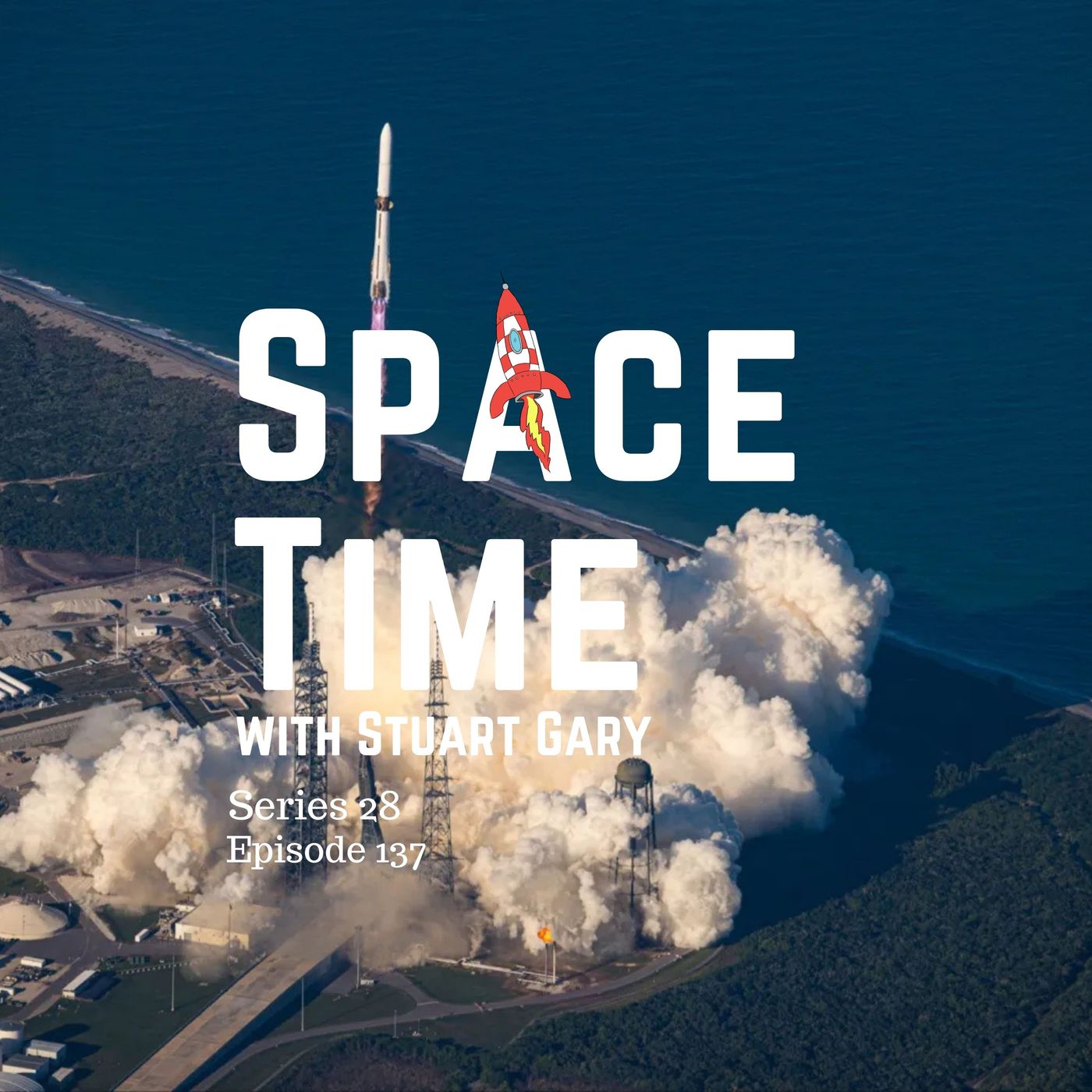
(00:00:00) Exploring Mars and Beyond: The Escapade Mission and the Expanding Mysteries of the Pleiades
(00:00:43) NASA's ESCAPADE mission to Mars blasts off
(00:10:00) The Pleiades prove to be far bigger than thought
(00:14:05) Ending the debate over interstellar comet 3I-Atlas
(00:17:05) The Science Report
(00:19:39) Skeptics guide to talking to plants.
In this episode of SpaceTime, we explore the latest advancements in space exploration and cosmic discoveries that deepen our understanding of the universe.NASA's Escapade Mission Launches to MarsNASA has successfully launched its first dual satellite mission to Mars, the Escapade spacecraft, aboard Blue Origin's New Glenn rocket. This innovative mission aims to map the Martian magnetic field and atmosphere in three dimensions, providing crucial insights into how Mars lost its atmosphere and the conditions necessary for future human colonization. The twin probes, named Blue and Gold, will utilize a unique trajectory that allows for flexible launch windows, crucial for future resupply missions to Mars.The Pleiades Star Cluster: A Greater Cosmic StructureNew research has revealed that the Pleiades star cluster is significantly larger than previously thought, forming the core of an expansive stellar complex that spans nearly 2,000 light years. This groundbreaking study combines data from multiple space missions, providing a clearer picture of the Pleiades' origins and its connection to other stellar groups, reshaping our understanding of star formation and migration across the galaxy.Debate Over Interstellar Comet 3I Atlas ContinuesThe ongoing debate regarding the origins of interstellar comet 3I Atlas is addressed, as evidence increasingly supports its classification as a comet rather than an alien spacecraft. This segment explores the comet's characteristics, trajectory, and the scientific explanations behind its unusual features, reaffirming its status as a natural celestial object.www.spacetimewithstuartgary.com✍️ Episode ReferencesAstrophysical JournalNASA ReportsUniversity of California ResearchBecome a supporter of this podcast: https://www.spreaker.com/podcast/spacetime-your-guide-to-space-astronomy--2458531/support.
In this episode of SpaceTime, we delve into remarkable discoveries that illuminate the origins of our planet and the cosmos beyond.Ancient Australian Rocks Shed Light on Earth's OriginsScientists have made significant strides in understanding the formation of Earth and the Moon through the analysis of 3.7 billion-year-old feldspar crystals from the Murchison region in Western Australia. This research reveals that continental growth began relatively late in Earth's history, around three and a half billion years ago, suggesting a shared composition between Earth and the Moon following a colossal impact event. The findings challenge existing theories about the timing of crustal development and provide new insights into the early geological processes that shaped our planet.Hints of a Possible Fifth Force in NatureA groundbreaking report has emerged, suggesting the potential existence of a fifth fundamental force of nature. Researchers have observed unexpected deviations in electron transitions among calcium isotopes, hinting at a new particle, the Yukawa boson. This discovery could reshape the standard model of particle physics and deepen our understanding of the universe's fundamental forces, as scientists continue to explore the mysteries of atomic interactions.Record-Breaking Ocean Waves Observed from SpaceIn an astonishing revelation, satellites have recorded ocean waves reaching heights of nearly 20 metres, the largest ever measured from space. This episode explores how these massive waves, driven by storms, can carry destructive energy across vast distances, impacting coastlines far from the storm's origin. The findings not only validate existing wave models but also reveal new insights into the energy dynamics of ocean swells.www.spacetimewithstuartgary.com✍️ Episode ReferencesNature CommunicationsPhysical Review LettersProceedings of the National Academy of SciencesBecome a supporter of this podcast: https://www.spreaker.com/podcast/spacetime-your-guide-to-space-astronomy--2458531/support.
In this episode of SpaceTime, we explore the latest astronomical phenomena and significant discoveries that are shaping our understanding of Earth and space.Auroral Displays Light Up the SkiesPlanet Earth has been treated to an extraordinary display of auroras, with both the Aurora Australis and Aurora Borealis lighting up the skies following three powerful X-class solar flares, including an X 5.1 event on November 11. This segment dives into the mechanics behind these solar flares, the resulting coronal mass ejections (CMEs), and how they triggered spectacular auroras visible at lower latitudes than usual, including sightings as far north as Cairns and even Florida.Largest Modern Impact Crater DiscoveredScientists have uncovered what is believed to be the largest modern impact crater on Earth, the 900-metre-wide Jinling Crater in southern China. This well-preserved structure, dating back to the Holocene epoch, offers new insights into extraterrestrial impacts and their effects on our planet. The discovery challenges previous assumptions about the frequency and scale of impacts from small celestial bodies and highlights the importance of studying such geological features.Nasa's Key Communications Dish Out of ServiceIn a significant setback for NASA, the 70-metre Goldstone deep space communications dish has been rendered inoperable due to an accident that occurred in September. The incident has raised concerns about the strain on NASA's Deep Space Network, especially with upcoming missions like Artemis 2. We discuss the implications of this loss for various space missions and the efforts being made to mitigate the impact on communications.The Science RobertIn our science report, we highlight a new projection from the World Meteorological Organisation indicating that 2025 is unlikely to be the hottest year on record, but it will rank among the top three. We also address public health concerns surrounding a measles alert in Australia, linked to declining vaccination rates, and the potential resurgence of preventable diseases. This segment underscores the importance of vaccination in maintaining herd immunity and protecting public health.www.spacetimewithstuartgary.com✍️ Episode ReferencesJournal of Geophysical ResearchNature CommunicationsWorld Meteorological Organisation ReportsBecome a supporter of this podcast: https://www.spreaker.com/podcast/spacetime-your-guide-to-space-astronomy--2458531/support.

(00:00:00) Cosmic Beginnings and Stellar Discoveries: Unveiling the First Stars and Secrets of the Moon
(00:00:47) Have astronomers finally seen the universe’s first stars
(00:04:06) Hidden secrets about the Moon and the asteroid Vesta
(00:10:45) Euclid peers deep into a stellar nursery full of baby stars
(00:16:05) The Science Report
(00:18:09) Skeptics guide to flat earthers falling flat on their face again
In this episode of SpaceTime, we uncover groundbreaking findings that could reshape our understanding of the universe's early stars, the Moon's hidden secrets, and the asteroid Vesta's internal structure.First Stars DetectedAstronomers may have finally glimpsed the universe's first stars, known as Population 3 stars, thanks to observations from NASA's Webb Space Telescope. These luminous giants, formed just 200 million years after the Big Bang, are believed to have ended the cosmic dark ages and initiated the epoch of reionisation. The episode delves into the significance of these findings, which suggest that these stars were formed in small clusters and exhibit extremely low metallicity, challenging previous theories about the early universe.Secrets of the Moon RevealedTwo NASA studies have provided fascinating insights into the Moon's internal structure through advanced gravity modelling. By analysing data from the GRAIL mission, researchers have created the most detailed gravitational map of the Moon to date, revealing variations linked to tidal deformation. This research offers clues about the Moon's geological history and volcanic activity, particularly highlighting differences between the near and far sides of the Moon.New Insights into Asteroid VestaIn a parallel study, scientists examined the asteroid Vesta's structure using data from NASA's Dawn spacecraft. Contrary to earlier beliefs of a layered interior, new measurements suggest Vesta may have a more uniform composition, with only a small core, if any. This revelation challenges long-held assumptions about the formation and evolution of this ancient asteroid.Euclid Space Telescope's Stellar Nursery ObservationsThe European Space Agency's Euclid Space Telescope has peered into the dark cloud LDN 1641, uncovering a vibrant stellar nursery filled with young stars. This segment discusses the significance of Euclid's observations, which not only aid in fine-tuning the telescope's capabilities but also contribute to our understanding of star formation and the cosmos.www.spacetimewithstuartgary.com✍️ Episode ReferencesAstrophysical Journal LettersNatureBecome a supporter of this podcast: https://www.spreaker.com/podcast/spacetime-your-guide-to-space-astronomy--2458531/support.
(00:00:00) Decelerating Cosmos and Solar Secrets: Unravelling Dark Energy and the Sun's Magnetic Dance
(00:00:45) More confirmation that the Universe's expansion is slowing
(00:08:53) First glimpse of the Sun’s polar magnetic field in motion
(00:14:09) Space Weather events ramping up
(00:18:24) The Science Report
(00:20:29) Alex on Tech NEO the humanoid housekeeper
In this episode of SpaceTime, we explore significant revelations about the universe's expansion, the Sun's magnetic field, and the current surge in solar weather activity.The Universe's Expansion Rate is SlowingA new study has confirmed that the universe's rate of expansion, which began after the Big Bang 13.8 billion years ago, is slowing down. This finding contradicts previous theories suggesting that the expansion was accelerating due to dark energy. We delve into the implications of this research, which indicates that dark energy may be evolving more rapidly than previously understood, potentially marking a paradigm shift in cosmology. The episode discusses various scenarios for the universe's future, including the Big Crunch, Steady State theory, Big Freeze, and Big Rip, and how these new observations could reshape our understanding of cosmic fate.First Glimpse of the Sun's Polar Magnetic FieldAstronomers have captured their first detailed view of the Sun's polar magnetic field in motion, revealing unexpected rapid movements. The Solar Orbiter spacecraft has provided insights into the Sun's magnetic activity, which follows an 11-year cycle. This segment highlights the significance of the findings, which enhance our understanding of solar dynamics and the implications for space weather.Current Surge in Space Weather EventsAs the Sun reaches solar maximum, astronomers are observing increased solar storm activity, including multiple X-class and M-class solar flares. This segment discusses the effects of coronal mass ejections on Earth, including spectacular auroras and potential disruptions to technology and power grids. We explore the science behind solar flares and their impact on our planet, providing a comprehensive overview of current space weather conditions.www.spacetimewithstuartgary.com✍️ Episode ReferencesMonthly Notices of the Royal Astronomical SocietyAstrophysical Journal LettersNature GeoscienceJournal of the American Medical AssociationBecome a supporter of this podcast: https://www.spreaker.com/podcast/spacetime-your-guide-to-space-astronomy--2458531/support.


Download from Google Play

Download from App Store
 United States
too many ads, duplicate ads, repetitive ads
duplicate ads that keep playing over and over again, may have to unsubscribe just because of the ads
i really don't want Microsoft looking at everything I do. it's not helpful to anyone but busy bodies.
if only scientists where as critical of capitalism or politics in general as of misinformation. it is more convenient to consider an enemy you can defeat, than one who makes possible your survival within the system. so scientists sound towards politics as they did towards religion when such was the dominant force. they hide their criticism so they can do their work, even though they do not believe in that system. it is not a system led by scientists, but by force of opinion.
The Australian Sceptic on this podcast is a misinformation and conspiracy nut, he thinks he is educating the audience with his insights and brilliant deductions. Gary should tell him to go away or stick to statistical proof provable facts without opinions
your idiotic, trump-ish Covid "science news" was bad enough now attacking young activists for their peers allegedly not wanting to eat a product that doesn't exist is next level. science smart you are definitely not. bye bye fool.
loved it
very informative , well done, I listen to every single one with great pleasure