


 Claim Ownership
Stanford Iranian Studies Program
Subscribed: 83Played: 1,591
Subscribe

© All rights reserved
Description
The Hamid and Christina Moghadam Program in Iranian Studies fosters the interdisciplinary study of Iran as a civilization. Each academic year, the Program offers undergraduate courses related to Iran in such disciplines as language, literature, economics, and political science. It provides a wealth of events for scholars, students and the general public, which include conferences, symposia, forums, lectures and performances.
Listen to one of our podcasts or check out our youtube channel to discover Iran!
Listen to one of our podcasts or check out our youtube channel to discover Iran!
174 Episodes
Reverse
October 5, 2023Speaker: Bahram GramiA book talk about the acclaimed Iranian poet, Ahmad Shamlou, with Dr. Bahram Grami. Event is in Persian and was organized on Oct. 5, 2023.“The book 'Ahmad Shamlou, Behind the Mirror' is not a literary criticism, it is a step toward better knowing Ahmad Shamlou based on reliable sources. It is not a documentary for promoting or defaming him. While Shamlou should be appreciated and praised for his great poetical works, his character and social life is studied because he has been a role model for young generations. This book contrasts with his statement, ‘I live in a glass house and have nothing to hide.’”Bahram Grami was born and raised in Tehran, Iran. He studied at Tehran University, American University of Beirut and University of Manitoba, Canada, where he received his PhD in plant science and genetics. He served as assistant professor in Iran until he left for the United States in 1985 and became a researcher at the University of California, Davis. His recent work includes the 2022 edition of Flowers and Plants in a Thousand Years of Persian Poetry. He has taught in Hong Kong, Bahrain and China, and has been a consulting editor for flora with the Encyclopedia Iranica.
 1
1In 2014, Maestro Mohammad Reza Shajarian visited Stanford University. In collaboration with Stanford’s Center for Computer Research in Music and Acoustics (CCRMA), he recorded a few test sessions using virtual acoustics of the Hagia Sophia. Recording and production of audio and video were made possible by the CCRMA team and the Icons of Sound Project.To watch the video recording of these test sessions, please visit our YouTube channel.
June 1, 2023Speaker: Tomoyo ChisakaThe second Zahedi Family Fellow lecture by the Spring 2023 Zahedi Fellow, Dr. Tomoyo Chisaka. Influential literature on Iran-US relations has assessed economic and security issues as having profound impacts on the rise and fall of Mohammad Reza Shah. However, relatively little attention has been paid to the ways that Iran's domestic institutions, particularly parliamentary politics, influenced the nature of bilateral relations. Findings from the Ardeshir Zahedi papers housed in Hoover Library and Archives and the US National Security Archives indicate that even though the Shah and the US were close allies, parliamentary elections provided a space for the US to contact “moderate” opposition who tried to challenge the Shah’s dictatorship by participating in electoral politics. This communication was facilitated by US concerns about fighting communism within the context of the Cold War, in part because Iran’s opposition knew that only US advocacy would encourage the Shah to co-opt them in parliament in an otherwise illiberal authoritarian environment. A closer look at parliamentary elections in Iran during the Shah’s regime offers important insights into the ways that domestic politics interacted with Iran-US relations, with implications for Iran’s political development.Dr. Tomoyo Chisaka joined the Iranian Studies Program as the second Zahedi Family Fellow in spring of 2023. Dr. Chisaka is a JSPS postdoctoral fellow at the University of Tokyo, Japan. She was a visiting scholar at the Abbasi Program in Islamic Studies at Stanford University during the 2022-2023 academic year. Her dissertation examined parliamentary election management in post-revolutionary Iran. Focusing on the legal functions of the Ministry of Interior and the Guardian Council, the dissertation considered when and how Iran’s Supreme Leader delegates autonomy to the executive headed by the President as related to the management of parliamentary elections.
May 11, 2023Speakers: Pamela KarimiDiscussion with Dr. Pamela Karimi about the work of several prominent contemporary women artists and their courageous acts of political activism in the streets of Iran.Following the tragic murder of Mahsa Amini, Iranian women took to the streets in large numbers to protest. Their bodies were the focus of these demonstrations, with women dancing and spinning their headscarves or anonymous activists installing protest banners or using sanitary pads to cover surveillance cameras in order to prevent state authorities from imposing conservative dress codes on women. The courageous presence of women in public spaces has been a crucial aspect of this revolution, with many instances of women's political activism on the streets taking on characteristics of art production. By entering the realm of visuality and sense-experience, traditionally assigned to art and aesthetics, activism has taken on performative dimensions. However, the "Woman, Life, Freedom" uprising is not the only manifestation of such involvement. For over three decades, Iranian women artists (and, by extension, activists as artists) have engaged in public art activism, creating moments of rupture in everyday life without necessarily declaring an overt political stance. These artists have used guerilla-style tactics such as painting graffiti, playful drifting, and occupying empty urban spaces to assert their right to the city and challenge strict urban regulations. Such innovative practices in busy urban areas are more challenging for women artists than their male counterparts. This presentation highlights the work of several prominent contemporary women artists who have questioned the limitations of public life for women, demanded freedom of expression, and reclaimed the streets through their creative and courageous interventions.Pamela Karimi received her PhD from the Massachusetts Institute of Technology in 2009 and is currently a professor at University of Massachusetts Dartmouth. Karimi is the author of Domesticity and Consumer Culture in Iran (Routledge, 2013) and Alternative Iran: Contemporary Art & Critical Spatial Practice (Stanford, 2022). She is the co-editor of The Destruction of Cultural Heritage in the Middle East: From Napoleon to ISIS, a collection of important essays published at the height of ISIS attacks on cultural heritage. Karimi has held fellowships from many organizations, including the College Art Association, the Graham Foundation for Advanced Studies in the Fine Arts and Iran Heritage Foundation at SOAS. More recently Karimi was the co-recipient of a major grant from the Connecting Art Histories Initiative at the Getty Foundation. Co-founder of Aggregate Architectural History Collaborative, Karimi currently serves on the boards of Thresholds Journal (MIT Press) and the Association of Modern and Contemporary Art of the Arab World, Iran, and Turkey.
May 2, 2023Speakers: Ladan Lari, Leila Pourhashemi, Abbas Milani, Kioumars GhereghlouA discussion about "Never Invisible: An Iranian Woman’s Life Across the Twentieth Century" (Mage Publishers, 2023).Houri Mostofi Moghadam was born in Tehran, Iran, in 1919, descended on her mother’s side from Iranian royalty and on her father’s from a “God-fearing” family of scholars and government administrators. When she was twenty-two, Houri married Mohsen Moghadam, a young man from a merchant family who went on to become a successful businessman, often traveling abroad, while Houri dedicated herself to teaching, charitable public works, and running international women’s associations in Tehran. Together, they also raised three children, in whom Houri was keen to instill the same spirit of industry and self-discipline she had learned from her own parents.Houri was among the first women to go to university in Iran, working as a teacher for nearly forty years and diligently continuing with her own education in later life, including traveling to the U.S. as a Fulbright Scholar, and, after being forced into exile following the Islamic Revolution of 1979, studying for a PhD at the Sorbonne in Paris. From a privileged social class, with a glamorous, jet-setting lifestyle, Houri was a pioneer, nonetheless, and a feminist for her own time. Through her hard work and frequent acts of bravery—from standing up to sinister intruders to dogged persistence in the face of intransigent officialdom—she made sure that, as a woman, she was never overlooked, never invisible, even when hidden under a dark chador at the Revolutionary Court. It was women like Houri who were the precursors of the young women fighting for equal rights and justice in Iran today.The resulting memoir tells the fascinating story of her life, with all its ups and downs, triumphs and tragedies, set against the backdrop of an impending revolution that would topple the world she and her family had always known and turn it upside down.In this video, Houri’s daughter, Ladan Lari, and granddaughter, Leila Pourhashemi, discuss Houri’s life and work, and the extraordinary commitment Houri’s daughter, Mariam Safinia, undertook to make the publication of this memoir possible.Dr. Kioumars Ghereghlou and Dr. Abbas Milani discuss the importance of the Houri Moghadam archival collection at Stanford, her life in historical perspective, and the process of creating and publishing the memoir.Conversation is in English and is moderated by Stanford Stein Visiting Writer Laleh Khadivi.
April 21, 2023A conversation with prominent Iranian-American business leaders Faraj Aalaei, Siavash Alamouti, Fay Arjomandi, Afsaneh Beschloss, Hamid Moghadam, and Shane Tedjarati about the role of dynamic entrepreneurship, the role of women in the future economy, and the impact of the Iranian diaspora on the transition to a future democratic Iran. The conference was moderated by Dr. Abbas Milani and held April 21, 2023 at Stanford University.Part of the Iranian Studies series "Prospects and Challenges for Transition to Democracy in Iran": https://iranian-studies.stanford.edu/initiatives/series-prospects-and-challenges-transition-democracy-iranSPEAKERS:Faraj Aalaei, an Iranian American immigrant and a 40-year veteran of the communications industry, is currently the Founding Managing Partner at Candou Ventures. As an entrepreneur Mr. Aalaei has raised several hundred million dollars for his semiconductor companies from private and public investors, executed several M&A deals and as CEO has taken two previous start-ups, Centillium and Aquantia, through IPO.Siavash Alamouti is an Iranian American scientist and entrepreneur. He has held senior executive positions in many Fortune 100 and startup companies, and is currently Executive Chairman of the Board at mimik Technology in Oakland, California. Mr. Alamouti was awarded the prestigious Marconi Prize (also known as the Nobel Prize in Communications) in 2022. He is most known as the inventor of the Alamouti Code used in billions of wireless devices.Fay Arjomandi is the founder and CEO of mimik, the pioneering hybrid edge cloud (HEC) company and has held executive positions in telecom, digital health, software, and augmented reality enterprises. Ms. Arjomandi is also a serial entrepreneur, investor, advisor, author, and advocate for women in tech and equality. She was recognized as one of the most influential women in Silicon Valley by San Francisco Business Week in 2014, was named the Edge Woman of the year in 2020 by the Linux Foundation, and received the Canadian Top 20 Tech Titans Award in 2022.Afsaneh Beschloss is an economist and leader in the private, public, and multilateral sectors and has focused her career on harnessing the power of sustainable finance to solve some of the world’s biggest challenges. A pioneer in climate policy and investments, Ms. Beschloss is the founder and CEO of RockCreek, one of the largest diverse-owned investment firms. The executive roles she has held, including the Treasurer and Chief Investment Officer of the World Bank, has enabled her to work closely with central banks and advise governments and regulatory agencies on global public policy, financial policy, as well as renewable energy.Hamid Moghadam is the co-founder, chairman and CEO of Prologis, the global leader in logistics real estate and a member of the S&P 100. He is a Trustee Emeritus of Stanford University and currently serves on the boards of Stanford Management Company, Stanford Health Care and the Stanford Graduate School of Business. In addition, he is a recipient of the Ellis Island Medal of Honor. In its latest ranking, Harvard Business Review voted him as the #17 Best Performing CEO in the world.Shane Tedjarati is the founder, chairman and CEO of the Tribridge Group, a global investment group applying leading technologies to global megatrends. Mr. Tedjarati was a former president and CEO of the Global High Growth Regions in Honeywell International Inc. He is also a Henry Crown Fellow of the Aspen Institute and the co-founder of its Middle East Leadership Initiative and China Fellowship Program. He is a member of the advisory board of Antai College of Economics and Management and the industry co-chair of China Leaders for Global Operations of Shanghai Jiao Tong University.
March 25, 2023Speakers: Mahnaz Afkhami, Homa Sarshar, and Marjane SatrapiA discussion with Ms. Mahnaz Afkhami, Ms. Homa Sarshar, and Ms. Marjane Satrapi, moderated by Dr. Mandana Zandian as a part of the conference "Dialogues on Iran's Transition to Secular Democracy" co-hosted by Stanford Iranian Studies, Gozar.org, and KAI on March 25-26, 2023 at Stanford University.Mahnaz Afkhami is a women's rights activist and author. Homa Sarshar is a journalist, writer, and human rights activist. Marjane Satrapi is an Iranian artist and director. With more than 30+ panel talks, 24 roundtables, 50+ speakers, and more than 100+ experts and civil society activists, the conference explored challenges and pathways of transitioning from the Islamic Republic regime in Iran to a secular democracy. Inspired by the Woman, Life, Freedom movement in Iran, the conference convened a diverse set of thought-leaders, experts, and civil society activists to support dialogue and discourse around the establishment of a new democratic system of governance in Iran.Learn more about the conference: https://iranian-studies.stanford.edu/events/conference-dialogues-irans-transition-secular-democracy
March 17, 2023Speakers: Hicham Alaoui A discussion with Dr. Hicham Alaoui (Hicham Alaoui Foundation) and Dr. Abbas Milani (Stanford Iranian Studies) in March of 2023. Part of the conference "Dialogues on Iran's Transition to Secular Democracy" co-hosted by Stanford Iranian Studies, Gozar.org, and KAI on March 25-26, 2023 at Stanford University. Dr. Alaoui is the Director of the Hicham Alaoui Foundation Dr. Abbas Milani is the faculty director of the Hamid and Christina Moghadam Program in Iranian Studies at Stanford University. With more than 30+ panel talks, 24 roundtables, 50+ speakers, and more than 100+ experts and civil society activists, the conference explored challenges and pathways of transitioning from the Islamic Republic regime in Iran to a secular democracy. Inspired by the Woman, Life, Freedom movement in Iran, the conference convened a diverse set of thought-leaders, experts, and civil society activists to support dialogue and discourse around the establishment of a new democratic system of governance in Iran.Learn more about the conference: https://iranian-studies.stanford.edu/events/conference-dialogues-irans-transition-secular-democracy
March 16, 2023Speakers: Larry Diamond, Michael McFaul, Abbas MilaniA discussion with Professor Larry Diamond (Political Science, Stanford) and Professor Michael McFaul (FSI, Stanford), moderated by Dr. Abbas Milani (Stanford Iranian Studies) in March of 2023. Part of the conference "Dialogues on Iran's Transition to Secular Democracy" co-hosted by Stanford Iranian Studies, Gozar.org, and KAI on March 25-26, 2023 at Stanford University. Professor Larry Diamond is the Mosbacher Senior Fellow of Global Democracy at the Freeman Spogli Institute for International Studies at Stanford. Professor Michael McFaul is the director of the Freeman Spogli Institute for International Studies at Stanford University. Dr. Abbas Milani is the faculty director of the Hamid and Christina Moghadam Program in Iranian Studies at Stanford University. With more than 30+ panel talks, 24 roundtables, 50+ speakers, and more than 100+ experts and civil society activists, the conference explored challenges and pathways of transitioning from the Islamic Republic regime in Iran to a secular democracy. Inspired by the Woman, Life, Freedom movement in Iran, the conference convened a diverse set of thought-leaders, experts, and civil society activists to support dialogue and discourse around the establishment of a new democratic system of governance in Iran.Learn more about the conference: https://iranian-studies.stanford.edu/events/conference-dialogues-irans-transition-secular-democracy
March 15, 2023Speakers: Allen Weiner, Bailey Ulbricht A discussion with Professor Allen Weiner (Stanford Law School) and Bailey Ulbricht (Stanford Humanitarian Program), moderated by Dr. Abbas Milani (Stanford Iranian Studies) in March of 2023. Part of the conference "Dialogues on Iran's Transition to Secular Democracy" co-hosted by Stanford Iranian Studies, Gozar.org, and KAI on March 25-26, 2023 at Stanford University. Professor Allen Weiner is the director of the Stanford Program in International and Comparative Law and the director of the Stanford Center on International Conflict and Negotiation. Bailey Ulbricht is Executive Director of the Stanford Humanitarian Program at the Stanford Law School. Dr. Abbas Milani is the faculty director of the Hamid and Christina Moghadam Program in Iranian Studies at Stanford University. With more than 30+ panel talks, 24 roundtables, 50+ speakers, and more than 100+ experts and civil society activists, the conference explored challenges and pathways of transitioning from the Islamic Republic regime in Iran to a secular democracy. Inspired by the Woman, Life, Freedom movement in Iran, the conference convened a diverse set of thought-leaders, experts, and civil society activists to support dialogue and discourse around the establishment of a new democratic system of governance in Iran.
March 14, 2023Speakers: Mojdeh Shamsaie, Shervin Emami, Abbas Milani, Donya NasserPanel discussion of Norooz/Persian New Year, hosted by the Stanford Iranian Studies Program and the Knight-Hennessy Scholars Program at Stanford in March 2023. Ms. Mojdeh Shamsaie, Professor Shervin Emami, and Professor Abbas Milani discuss the history and importance of Norooz, how it is celebrated in Iran and around the world, and the challenges it faces in Iran today. Conversation moderated by Stanford MS Health Policy student Donya Nasser.
March 9, 2023Speaker: Iran Davar ArdalanIran Davar Ardalan discusses the innovative and new Voice AI experience “Freedom Speaks.” This project honors Iranian women using powerful art such as poems, music and more from the past & present—all accessible through Alexa's voice command “Alexa, open Freedom Speaks." Ms. Ardalan also explains how others can be part of an exciting conversation about pushing forward language capabilities by making datasets available in Persian so that even more voices can have true power.Iran Davar Ardalan is the executive producer of "Freedom Speaks," a voice AI on Amazon Alexa that shares inspiring stories by Iranian women. Ardalan is a senior advisor to Women in Voice, a global non-profit creating women leaders in conversational AI. Ardalan is also National Geographic's executive producer of audio, where she oversees the award-winning podcast series, "Overheard,” the narrative limited series "Into the Depths" as well as new forays into spatial audio via Nat Geo's Soundbank. In September 2022, Ardalan presented “Sounds Like National Geographic” at the Voice2022 summit in Arlington, VA, talking about the future of voice AI as a keeper of wisdom and knowledge of nature and history and culture. Prior to this, Ardalan was deputy director of the Presidential Innovation Fellowship Program in Washington D.C. and before that a veteran journalist at NPR News for two decades. In May 2014, Davar was the recipient of an Ellis Island Medal of Honor, for individual achievement and for promoting cultural unity. In Fall 2021, through her work at IVOW, (Intelligent Voices of Wisdom) Ardalan launched a conversational AI scholar on Google Assistant to preserve the wisdom and work of her late mother, Islamic scholar, Dr. Laleh Bakhtiar into 21st century voice technology.
March 2, 2023Speakers: Kian TajbakhshAuthor Kian Tajbakhsh discussed his most recent book, "Creating Local Democracy in Iran: State Building and the Politics of Decentralization." With a combination of historical, political, and financial field research, it explores the multifaceted dimensions of local power and how various ideologically opposed actors shaped local government as an integral component of authoritarian state building. The Q&A session includes Dr. Abbas Milani (director of Iranian Studies Program at Stanford) and Dr. Michael A. McFaul, (director of Freeman Spogli Institute for International Studies).*The audio quality improves in the first 20 seconds of the talk. Kian Tajbakhsh (Ph.D. Columbia 1993) is a Senior Advisor at Columbia Global. In this role, Dr. Tajbakhsh works on university-wide initiatives focused on global migration and is the Coordinator of the Committee on Forced Migration. He is also a Fellow with Columbia’s Committee on Global Thought where since 2017 he has taught the core course in the Global Thought MA program “Globalization and the Problems of World Order.” From 2016-2018 he was Professor of Urban Planning at Columbia. His book Creating Local Democracy In Iran: State-Building and the Politics of Decentralization was published by Cambridge University Press in 2022. Before joining Columbia, Tajbakhsh worked for fifteen years as an international expert in urban policy and local government reform; democracy and human rights promotion. Reflecting his commitment to democracy and human rights, Tajbakhsh was the Open Society (Soros) Foundation’s representative in Iran in the 2000s, where he directed several initiatives aimed at strengthening civil society. Tajbakhsh was among the pro-democracy activists arrested and detained by the Iranian government during the Green Movement protests in 2009 and released as part of the 2016 Iran/P5+1 Nuclear Deal.
February 17, 2023Speakers: Mohsen Yalfani, Shabnam ToloueiA discussion with Mohsen Yalfani about his life, work, and the recent reading of his play “Diaspora,” directed by Shabnam Tolouei at Stanford University. Ms. Tolouei joined the conversation as well. Discussion is in Persian.Mohsen Yalfani was born in 1943 in Hamadan, Iran. He wrote his first plays in his last year in high school and submitted one to the Center for Dramatic Arts in Tehran and won a prize for it. At the age of 18 he moved to Tehran, and while studying at the Teachers' Training College, another of his plays won the same prize. This play was staged in the major theater in Tehran in 1966. Yalfani wrote several one act plays that were published in literary magazines and produced for Iranian television. In 1970 he wrote “The Teachers” which was staged in Tehran. The play was stopped by the Shah’s SAVAK and Yalfani along with the director, Saeid Soltanpoor, were arrested and spent three months in prison. Henceforth, all of Yalfani’s plays were prohibited from being staged or published.In 1973, while collaborating with the Iran Theatre Association, he was arrested, along with his coworkers and friends, and imprisoned for four years. In prison, he translated and adapted the book Voice and the Actor by Cicely Berry and wrote his one-act play “On the Beach.”When released in 1978, Yalfani collaborated with the Iranian Writers' Association (of which he was elected as a member of the secretariat). After the Islamic Regime’s crackdown on democratic associations, Yalfani left Iran, in disguise, and sought political asylum in France.Shabnam Tolouei is an award-winning actress, playwright, and director. Born in Tehran, she was forced into exile in 2004 and became a naturalized French citizen in 2019. She has studied filmmaking in Tehran, Bagh-Ferdos Film School and Theatre Studies at Université Paris X, Nanterre, France.She has been writing short stories for cultural magazines since 1990, acting and writing plays since 1993, and teaching acting for camera since 2001. She continues her career outside Iran as an actress, filmmaker, and playwright.Part of the Stanford Festival of Iranian Arts.
February 8, 2023Speaker: Houchang ChehabiDr. Houchang Chehabi discusses his new research work on Reza Shah and his family's exile in Mauritius.In 1941 Reza Shah and most of his family were exiled by the British to the Indian Ocean island of Mauritius. They remained there for six months. This talk discusses the circumstances of the royal family's long trip from Bandar Abbas via India to Mauritius, their reception by the colonial authorities of the island, and their ambiguous relations with local Mauritian society against the background of the geopolitics of the Indian Ocean during the Second World War.Dr. Houchang Chehabi is a Visiting Professor at UCLA and Emeritus Professor of International Relations and History at the Frederick S. Pardee School of Global Studies, Boston University.
February 2, 2023Speaker: Mona KhademiMona Khademi will examine the extraordinary life of Laura Barney and her deep and enduring connections with Iranians and Iran, and their impact on her life. Laura Barney learned Persian, traveled to Iran in 1906, visited several cities there, and met many Iranian dignitaries and government officials. She also met Iranian officials and scholars outside of Iran. Laura Barney was born in Ohio in 1879 but lived much of her life in Paris. She was introduced to the Baha’i Faith in 1900 in Paris and accepted its teachings. This sudden and profound change in the life of this young woman would have lasting consequences throughout the rest of her long life. She traveled to Akka, Palestine, the same year and met the son of the founder of the Baha’i faith, Abdu’l-Baha, who was then confined to prison. She compiled a book based on his responses to questions she posed to him titled Some Answered Questions, which was published in 1908 in three languages and became a major Baha’i book.Laura Barney’s humanitarian activities reflected her spiritual beliefs in the equality of men and women, world peace, and the oneness of humankind. She promoted these principles through her selfless work with the League of Nations and the International Council of Women, and later with the United Nations. She used her social privileges and blessings to become a feminist, global thinker, and peace builder. For her services to France, she was named Chevalier and later Officer of the Legion of Honors.Mona Khademi received her BA from Pahlavi University (today’s Shiraz University), Master's Degree in Arts Management from the American University, and has worked towards a PHD degree at Imperial College in London.As an independent researcher, Khademi has presented papers at conferences in Switzerland, Italy, Spain, England, and several cities in the US. Her articles have been published in several journals and magazines, quarterlies, and as chapters of books.Khademi started her research about the life of Laura Clifford Dreyfus-Barney in 2000 and has presented papers and published articles on this subject. Based on this research, she wrote the full biography titled "The Life of Laura Barney" which was published in June 2022.Mona Khademi is the Director of International Arts Management Consulting in Washington, D.C. Through her consulting firm, she promotes global understanding through exchange of arts and cultural programs. Her areas of interest include development and management of international cultural and arts programs. She is a member of the American Alliance of Museums.
December 1, 2022Speaker: Homa SarsharHoma Sarshar discusses her new book "A Narrative of Endurance." She also touched on the Iranian women’s movement and demonstrations organized by the Iranian diaspora in support of protests in Iran over the past four decades. This talk is in Persian. About the book:“One can find and obtain knowledge, albeit incomplete, of the footprints of nations and people in cemeteries discovered hundreds of years after their presence in the region. Years later, when a curious passer-by reaches the city of angels and visits each of the cemeteries in the city, they will know that at the end of the twentieth century and the beginning of the twenty-first century, immigrants lived in the city, among them numerous artists, intellectuals, academics, geniuses, political activists, and tireless fighters, who had departed their country or had escaped the prison of the Islamic Republic when the candle of the existence of some of them was soon extinguished. The tombstones of their eternal resting place, each in the cemeteries of Los Angeles, Berlin, Paris, London, and other cities, narrate a great historical migration, and so great that counting them all is no easy feat. The name of each of these greats, buried in foreign soil, reminds that passer-by of what happened to this immigrant tribe and the narrative of their legacy.”Homa Sarshar is a published author, award-winning journalist, writer, and media personality. She is the author of several books and the editor of eleven other volumes, including five volumes of the Iranian Women's Studies Foundation Journal and four volumes of "The History of Contemporary Iranian Jews." Her book "Sha’ban Jafari" was the number one best seller Persian book in Iran and abroad in the year 2003.From 1964 to 1978, she worked as a correspondent, reporter, and columnist for Zan-e Ruz weekly magazine and Kayhan daily newspaper in Iran. During this period, she also worked as a television producer, director, and talk show host for National Iranian Radio & Television. In 1978, Sarshar moved to Los Angeles where she resumed her career as a freelance journalist, radio and television producer, and on-air host. An established women’s rights activist, she served a five-year term on the board of the Iranian Women Studies Foundation, has worked with Human Rights Watch, her two-volume memoir ("Dar Koocheh Paskoocheh Ha-ye Ghorbat") was the first publication of a Jewish Iranian memoir, one of the first Persian memoirs after the revolution published outside Iran, as well as one of the very few examples of memoir-writing by an Iranian woman at the time of its publication.In 1995, she founded the Center for Iranian Jewish Oral History (CIJOH) in Los Angeles, a nonprofit organization that gathered over 1,600 historically significant photographs and documents, and recorded over 120 oral interviews with elders and leaders of the community. In 2006, she founded Honar Foundation to provide social and financial support to all Iranian American artists in need to ensure that these unique talents are served in the best way possible and their lives are improved.Throughout her 50-year career with Iranian and Iranian-American print, radio, and television, Sarshar has done more than 3000 interviews and has produced and anchored as many radio and television programs. She has also written, directed, and produced a collection of twenty video documentaries on exiled Iranian writers, poets, and artists, some of which have been acquired by the Library of Congress for the library’s permanent audiovisual archive.
November 30, 2022Speaker: Shirin EbadiThe Iranian Studies Program screened a new documentary “Shirin Ebadi: Until We Are Free” about the Nobel Peace laureate’s mission to bring justice to the people of Iran. Dr. Ebadi held a post screening discussion live-translated to English and moderated by Dr. Abbas Milani.The event was introduced by Dr. Abbas Milani. Hamid Moghadam welcomed guests and spoke about Shirin Ebadi's life and work. Dean Debra Satz, the Vernon R. and Lysbeth Warren Anderson Dean of the School of Humanities and Sciences, Marta Sutton Weeks Professor of Ethics in Society, and Professor of Philosophy, spoke about the universality of human rights and Iranian women's fight for equality and justice. Professor Michael McFaul, the director of Stanford's Freeman Spogli Institute, closed the event. Shirin Ebadi is an author and lawyer, and was the first female judge in Iran. She has lived in exile in London since 2009. She received the Nobel Peace Prize in 2003 for her efforts to promote democracy and human rights, especially those of women and children in Iran. Ebadi was a judge in Iran until 1979, the year of the Islamic Revolution, when she was no longer allowed to work as a judge. She co-founded the Society for Protecting the Rights of the Child in 1994 and co-founded the Defenders of Human Rights Centre (DHRC) in 2002 with other lawyers to assist those working towards promoting democracy. After her Nobel Prize in 2003, she co-founded the Nobel Women's Initiative in 2006, and used some of her prize money to support DHRC. In 2008, the Iranian government closed down DHRC by raiding her office, which by then had 30 lawyers working on cases. While she was traveling abroad, her professional archives and personal belongings were confiscated, and her husband and her sister arrested and imprisoned on spurious charges. She published her memoir, "Until We Are Free," in 2016 detailing her fight for human rights in Iran.The film “Shirin Ebadi: Until We Are Free,” written and directed by the award-winning filmmaker Dawn Gifford Engle, tells Ebadi’s story of courage and defiance in the face of a government out to destroy her, her family, and her mission: to bring justice to the people and the country she loves. The Iranian government would end up taking everything from Shirin Ebadi–her marriage, her home, even her Nobel Prize medallion–but the one thing it could never steal was her spirit to fight for justice and a better future for the women of Iran.Read more about the film: https://www.peacejam.org/film/shirin-ebadi-until-we-are-freeThe event was co-sponsored by the Hamid and Christina Moghadam Program in Iranian Studies and the Freeman Spogli Institute at Stanford University.
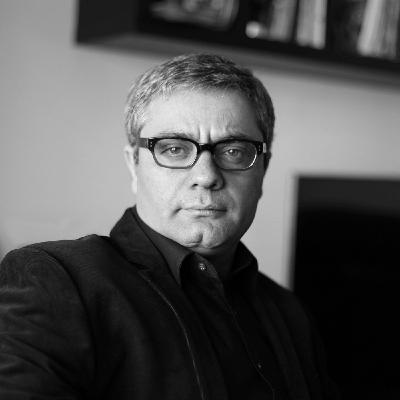
October 29, 2021Speaker: Mohammad RasoulofThe film screening of There Is No Evil was followed by a discussion with the film's director, Mohammad Rasoulof. The talk is in Persian with live English translation. About the film:Filmed in secret and banned in its home country, Mohammad Rasoulof’s Golden Bear-winning film is an anthology of four short stories, each focused on a person affected by the capital punishment system in a country that commits more executions per capita than anywhere else on Earth.About the director:Mohammad Rasoulof was born in Shiraz, Iran in 1972. He is an independent director, writer, and producer. He studied sociology. Rasoulof started his filmmaking with documentaries and short films. For his first film Gagooman (The Twilight, 2002) Rasoulof won the prize for the best film at the Fajr Film Festival in Iran. After his second film Jazireh Ahani (Iron Island, 2005) he began to have problems with the censorship system in Iran and his possibilities for the further production and screening of films were strongly limited or prohibited. To this date Mohammad Rasoulof has produced five feature films which none of have been shown in Iran due to the censorship, while his films are enjoyed by a broad audience in cinemas and festivals outside of Iran. Until 2010 Rasoulof mostly used metaphoric forms of storytelling as his means of expression in his films. Since then, he has shifted to using more direct forms of expression. In March 2010 Rasoulof was arrested on set at a filming location together with Jafar Panahi while they were directing a film together. In the following trial, he was sentenced to six years in jail. This sentence was later reduced to one year. He was then released on bail and is still waiting for the sentence to be executed. Mohammad Rasoulof has won many prizes for his films. In 2011, he won the prize for best director in Un Certain Regard for his film Bé Omid é Didar (Goodbye, 2011) at the Cannes Film Festival. In 2013 he won the FIPRESCI Prize in Cannes for the film Dast-Neveshteha-Nemisoozand (Manuscripts Don't Burn, 2013) from the International Federation of Film Critics in Un Certain Regard. In 2017 he won the best film Prize in Cannes for the film Lerd (A Man of Integrity, 2017) in Un Certain Regard. He won the prize Golden Bear for the film Sheytan Vojood Nadarad (There Is No Evil, 2020) at the Berlin Film Festival 2020.
October 28, 2022Speaker: Hamed EsmaeilionDr. Hamed Esmaeilion discusses his award-winning novels written in Persian, as well as his moving memoir about the loss of his wife and daughter in the downing of flight PS752 by the Islamic Republic of Iran on January 8, 2020. Introduction by Dr. Abbas Milani. Dr. Hamed Esmaeilion was born in Kermanshah, Iran and grew up during the Iran-Iraq war that ravaged the western part of Iran, including his hometown. Hamed earned his doctorate in dentistry in 2001. He married Parissa, a university classmate, and they opened a small dental practice in Tehran. In 2010, they moved to Canada when their daughter Reera was six months old and opened an independent practice just north of Toronto. While in Iran, Hamed published four novels that earned him several awards from the top Iranian literary circles. His first novel, Thyme is Not Pretty was published in 2009 and won the Hooshang Golshiri award for best short story collection. His third book titled Dr. Datis was published in 2012 and was awarded the Hooshang Golshiri award for best novel. Gamasyab Has No Fish was published in 2014 and was critically acclaimed and subsequently banned by the Islamic Republic authorities. The novel was later translated and published in Spanish by a Mexican publisher. After being black-listed by the Islamic Culture and Guidance Ministry, Hamed published his next novel The Blue Toukan in the United Kingdom.On January 8, 2020, Hamed lost his wife and nine-year old daughter who were aboard the Ukrainian flight PS752 that was shot down by IRGC missiles over the skies of Tehran. In the aftermath of the tragedy, he published his memoir It Snows in This House. Before the downing of flight PS752, Hamed was working on two novels, The Fractured Diaries of the Chancellor and The Summer with Five Bullets. He completed and published the last three books under the label Pareera Publishing that he founded in honor of his wife and daughter.Part of the Stanford Festival of Iranian Arts.


Download from Google Play

Download from App Store
 United States
❤