


 Claim Ownership
Stop Requested
Subscribed: 3Played: 37
Subscribe

© ETA Transit
Description
Stop Requested is a podcast hosted by Christian Londono and Levi McCollum, where they explore all things transit—from public transportation trends and innovations to the daily experiences of riders and transit professionals. Join them for insightful discussions, industry interviews, and a behind-the-scenes look at the challenges and successes shaping the future of mobility. Whether you're a transit enthusiast, professional, or curious commuter, Stop Requested is your stop for all things transit!
106 Episodes
Reverse

In this bonus episode of Stop Requested, Levi McCollum and Christian Londono talk with Alejandro Schmidt and Freddy Canales from DTPM, Santiago’s public transport authority, and Jose Mostajo from SONDA. Recorded in Spanish at APTA EXPO in Chicago, the conversation traces how Santiago’s transit system has changed since the difficult launch of Transantiago in 2007.
Alejandro and Freddy discuss cashless payments, monthly fare caps, and why many riders still prefer a physical fare card. They also talk about fare evasion and how better real-time information could make everyday trips easier.

In this episode of Stop Requested, Levi McCollum and Christian Londono talk with Nicholas Sofoul, Executive Director of the North Central Regional Transit District (Blue Bus), about the challenges of providing public transportation across 10,000 square miles of northern New Mexico, where transit often provides the only connection to healthcare, employment, groceries, and other essential services.
The conversation explores workforce development, rural rapid transit, zero-emission vehicles, limited cellular connectivity, and coordinating service across tribal communities. Nick also discusses why conventional ridership and efficiency metrics don't always reflect the value of rural transit, and how Blue Bus is working to strengthen its operations while expanding access to the communities it serves.
In this episode of Stop Requested, Levi McCollum and Christian Londono talk with Nicholas Dagen Bloom, professor and chair of the Department of Urban Policy and Planning at Hunter College and author of The Great American Transit Disaster, about how American transit systems declined and why some cities fared better than others.
The conversation explores the role of zoning, automobile growth, transit funding, public ownership, and local politics in reshaping transportation across the country. Bloom also challenges the streetcar conspiracy narrative, explains why frequent service and operating funding matter so much, and shares what today’s transit leaders can learn from a century of decisions that still shape their systems.
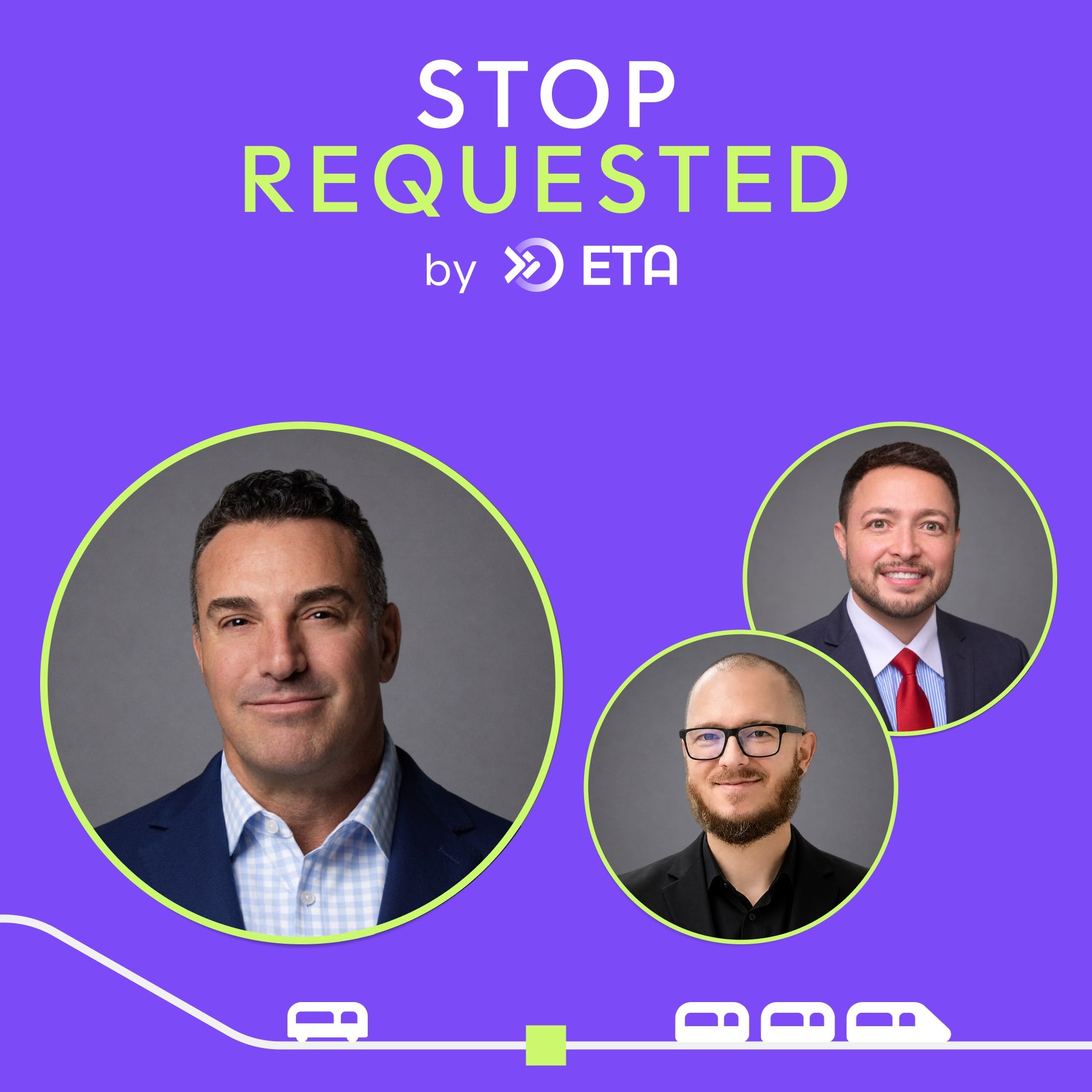
In the third installment of Stop Requested’s AI Roundtable series, ETA CEO John Maglio joins hosts Levi McCollum and Christian Londono, along with Derrick VanGennep of Voloridge Investment Management, to explore how machine learning can help transit agencies move from understanding what happened to predicting what might happen next.
The conversation covers data quality, model validation, uncertainty, and what happens when conditions change or an organization acts on a prediction. The group also explores potential transit applications including ridership, maintenance, on-time performance, and bus bunching, and why agencies looking to use predictive models should start with the decisions they need to make and the data required to support them.

In this episode of Stop Requested, Levi McCollum and Christian Londono talk with Charley Territo, Chief Growth Officer at Hayden AI, about how vision AI is helping transit agencies understand what is happening on the street and why it is affecting service.
The conversation explores bus lane and bus stop enforcement, changing driver behavior, improving safety and reliability, and using data to measure the impact of these programs. Charley also discusses applications beyond enforcement, including network intelligence, asset and bus stop monitoring, and how vision AI could give agencies a broader view of the conditions affecting transit performance.

Comments

Download from Google Play

Download from App Store
 United States