


Surviving Your Shift, Building Peer Support
Subscribed: 2Played: 7
Subscribe

© 2025 Surviving Your Shift, Building Peer Support
Description
Struggling to support your peers after a tough call, or unsure how to even start a peer support team? You’re not alone. Surviving Your Shift is the podcast for first responders, healthcare workers, and frontline professionals who want to build effective peer support programs, learn peer counseling skills, and bring training to their organizations. I’m Dr. Bart Leger, a retired first responder and board-certified traumatic stress expert with 25+ years of experience training peer supporters. Whether you’re starting a peer support program from scratch or want to be a stronger peer supporter, you’ll learn how to build trust, navigate tough conversations, and bring training to your organization. This is your go-to podcast for peer support training, first responder wellness, and frontline mental health. Hit play, and let’s equip you for success.
47 Episodes
Reverse
Feel lost in peer conversations? The Diamond Communication Structure gives you a simple, reliable way to support someone in crisis, without making things worse.Ever wish someone had given you a roadmap for crisis conversations?Too often, we freeze up when a peer says, “I’m not OK.” We either launch into advice too quickly or fumble through the silence, hoping we’re doing it right. And in peer support, those moments matter.One wrong move can shut a person down. But the right framework? It can build trust, open up healing, and give someone the safety to talk.In this episode, I’ll teach you the Diamond Communication Structure, a proven way to guide someone through a hard conversation, especially when they’re sharing something traumatic.It’s not a script. It’s a shape.And once you learn it, you’ll never go into another conversation feeling unsure again.BY THE TIME YOU FINISH LISTENING, YOU’LL LEARN:How to use closed-ended questions to stabilize the conversationWhen to shift into open-ended questions to invite their storyHow to paraphrase and close the loop without rushing or minimizingThis is one of the most practical communication tools you can learn in peer support. And the best part? You can start using it today.OTHER LINKS MENTIONED IN THIS EPISODE:StressCareDoc.comSchedule a Peer Support Discovery CallConnect with BartLinkedIn: linkedin.com/in/bartlegerFacebook Page: facebook.com/survivingyourshiftWebsite: www.survivingyourshift.comWant to find out how I can help you build a peer support program in your organization or provide training? Schedule a no-obligation call or Zoom meeting with me here.
Don’t guess your way through a crisis conversation. Learn how to use the 6-step SAFER-R model to support a peer through stress, shock, or trauma.Have you ever walked into a conversation with someone in crisis and thought, “I hope I don’t mess this up”?You’re not alone. When emotions are high and someone is overwhelmed, even experienced peer supporters can feel stuck. The good news? You don’t have to guess your way through it. There’s a simple model you can follow that keeps the conversation safe, supportive, and focused.In this episode, I walk you through the SAFER-R model, a 6-step crisis intervention framework that peer support teams across the country use to help coworkers stabilize, process, and move forward after a tough event.BY THE TIME YOU FINISH LISTENING, YOU’LL LEARN:The six essential steps of the SAFER-R modelWhat each step looks and sounds like in a real conversationHow to guide someone through a crisis moment without freezing or fixingThis episode gives you a structured, data-driven approach to one-on-one peer support that actually works, especially when emotions are raw and time is short.Links Mentioned in This Episode:CISM Quick Reference Cards - https://www.cismbookstore.com/content/critical-incident-stress-management-cism-quick-reference-cardsSchedule a call with Bart: https://stresscaredoc.com/consultationIf you're receiving value from this podcast, consider becoming a monthly supporter—your gift helps me keep producing these practical episodes. Become a supporter today.Connect with BartLinkedIn: linkedin.com/in/bartlegerFacebook Page: facebook.com/survivingyourshiftWebsite: survivingyourshift.comWant to find out how I can help you build a peer support program in your organization or provide training? Schedule a no-obligation call or Zoom meeting with me here.Mentioned in this episode:Houston Area CISM GRIN TrainingThis 3-day course, hosted by the Atascocita Fire Department, will teach you how to support your peers through effective communication, emotional resilience, and understanding the psychological impact of crises.
Register for this training. https://stresscaredoc.com/atascocita-grin
Dates: January 6-8, 2026
Times: 8:30 AM - 5:00 PM each day
Location: Atascocita Fire Admin Building
Knowing what to say in a crisis can be hard. In this episode, we cover what to say and what not to say when someone’s been through a critical incident or is overwhelmed.Ever been in a conversation where someone opens up about something painful, and you’re not sure what to say next?That moment can feel like walking a tightrope. Say the wrong thing, and they might shut down. Say nothing, and you risk missing a chance to help.If you’re on a peer support team or just someone others lean on, this episode will help you show up better when someone is hurting. You’ll learn practical ways to communicate care and empathy, without overstepping your role or fumbling for the right words.BY THE TIME YOU FINISH LISTENING, YOU’LL KNOW:What to avoid saying in a crisis conversation (even if it sounds helpful)How to stay present when someone’s angry, overwhelmed, or in tearsSimple, supportive phrases that help people feel heard—not judgedThis episode is full of real-world tools you can use the next time someone says, “I’m not OK.”Links Mentioned in This EpisodeEmail Bart: info@stresscaredoc.comSchedule a Discovery Call: https://stresscaredoc.com/consultationIf you're receiving value from this podcast, consider becoming a monthly supporter—your gift helps me keep producing these practical episodes. Become a supporter today.Connect with BartLinkedIn: linkedin.com/in/bartlegerFacebook Page: facebook.com/survivingyourshiftWebsite: survivingyourshift.comWant to find out how I can help you build a peer support program in your organization or provide training? Schedule a no-obligation call or Zoom meeting with me here.Mentioned in this episode:Houston Area CISM GRIN TrainingThis 3-day course, hosted by the Atascocita Fire Department, will teach you how to support your peers through effective communication, emotional resilience, and understanding the psychological impact of crises.
Register for this training. https://stresscaredoc.com/atascocita-grin
Dates: January 6-8, 2026
Times: 8:30 AM - 5:00 PM each day
Location: Atascocita Fire Admin Building
Helping others doesn’t mean sacrificing yourself. Learn how peer supporters can set boundaries without guilt, burnout, or blowing up relationships.Do you ever feel like you’re always “on call” for your team, even when you’re off?That might be a sign your peer support boundaries are too fuzzy. And here’s the thing: blurry boundaries don’t help anyone, not you, and not the people you’re trying to support.In peer support, it’s easy to slip into a mindset where you feel like you can’t say no. Like if someone needs you, you have to drop everything and respond. But that’s not sustainable. You can’t pour from an empty cup, and you shouldn’t feel guilty for taking care of your own mental and emotional health.In this episode, you’ll learn how to set boundaries in a way that protects your energy and still communicates care. We’ll talk about how to avoid burnout, how to recognize when you’re giving too much, and how to create healthy limits that still allow you to be present and helpful.BY THE TIME YOU FINISH LISTENING, YOU’LL LEARN:How to recognize when your boundaries are being pushedWhat healthy peer support boundaries look like in real lifeHow to say “no” without guilt—and why it’s one of the most caring things you can doThis episode will help you stay effective, avoid resentment, and model the kind of balance that actually helps your team thrive.Schedule a Call with Barthttps://www.survivingyourshift.com/consultationIf you're receiving value from this podcast, consider becoming a monthly supporter—your gift helps me keep producing these practical episodes. Become a supporter today.Connect with BartLinkedIn: linkedin.com/in/bartlegerFacebook Page: facebook.com/survivingyourshiftWebsite: survivingyourshift.comWant to find out how I can help you build a peer support program in your organization or provide training? Schedule a no-obligation call or Zoom meeting with me here.Mentioned in this episode:Houston Area CISM GRIN TrainingThis 3-day course, hosted by the Atascocita Fire Department, will teach you how to support your peers through effective communication, emotional resilience, and understanding the psychological impact of crises.
Register for this training. https://stresscaredoc.com/atascocita-grin
Dates: January 6-8, 2026
Times: 8:30 AM - 5:00 PM each day
Location: Atascocita Fire Admin Building
Ever freeze up when someone says, “I’m not OK”? Learn how to respond with simple crisis communication skills that support, not shut down, your peer.Ever feel stuck when someone opens up about something hard, and you have no idea what to say?It’s not just you. Most people aren’t taught how to handle emotionally charged conversations. So when a coworker or team member says, “I’m struggling,” we either over-talk, underreact, or panic inside.And if you’re on a peer support team? That silence can be costly.Avoiding the conversation, brushing it off, or saying something well-meaning but clumsy can actually shut the person down. The truth is, most of us don’t need fancy therapy skills; we need a simple structure to guide hard conversations in a helpful, human way.In this episode, you’ll learn a conversation framework that helps you support others without making things worse.BY THE TIME YOU FINISH LISTENING, YOU’LL LEARN:How to respond when someone says, “I’m not OK”What helps people feel psychologically safe in hard conversationsA simple structure you can use in almost any peer support situationThis episode is practical, encouraging, and designed to help you stay calm, stay present, and stay helpful when things get hard.OTHER LINKS MENTIONED IN THIS EPISODE:StressCareDoc.comSchedule a ConsultationIf you're receiving value from this podcast, consider becoming a monthly supporter—your gift helps me keep producing these practical episodes. Become a supporter today.Connect with BartLinkedIn: linkedin.com/in/bartlegerFacebook Page: facebook.com/survivingyourshiftWebsite: survivingyourshift.comWant to find out how I can help you build a peer support program in your organization or provide training? Schedule a no-obligation call or Zoom meeting with me here.Mentioned in this episode:Houston Area CISM GRIN TrainingThis 3-day course, hosted by the Atascocita Fire Department, will teach you how to support your peers through effective communication, emotional resilience, and understanding the psychological impact of crises.
Register for this training. https://stresscaredoc.com/atascocita-grin
Dates: January 6-8, 2026
Times: 8:30 AM - 5:00 PM each day
Location: Atascocita Fire Admin Building
Most peer support programs start strong… then fade out. In this episode, we’ll talk about how to sustain your team, keep engagement high, and ensure your peer support program remains trusted and effective for the long haul.Most peer support teams start with good intentions, a few trained peers, a launch meeting, maybe even some early wins. But what happens after six months? Or a year?If your team is starting to fade, or you want to prevent that from happening, this episode is for you.We’ll talk about what causes peer support teams to lose momentum, and I’ll walk you through practical steps to keep your team active, engaged, and trusted. From avoiding burnout to evaluating effectiveness, you’ll walk away with tools to make your program last.In this episode, you’ll learn:Why most peer support programs lose steamHow to maintain engagement without exhausting your teamWhat kinds of ongoing training actually make a differenceHow to evaluate what’s working (without breaking confidentiality)What to do if your team has fizzled outIf you found today’s episode helpful…Share it with your team. Follow the podcast so you never miss an episode. And if you’re building or revitalizing a peer support program, I’d love to help. Visit StressCareDoc.com to schedule a strategy call.https://www.survivingyourshift.com/41If you're receiving value from this podcast, consider becoming a monthly supporter—your gift helps me keep producing these practical episodes. Become a supporter today.Connect with BartLinkedIn: linkedin.com/in/bartlegerFacebook Page: facebook.com/survivingyourshiftWebsite: survivingyourshift.comWant to find out how I can help you build a peer support program in your organization or provide training? Schedule a no-obligation call or Zoom meeting with me here.Mentioned in this episode:Houston Area CISM GRIN TrainingThis 3-day course, hosted by the Atascocita Fire Department, will teach you how to support your peers through effective communication, emotional resilience, and understanding the psychological impact of crises.
Register for this training. https://stresscaredoc.com/atascocita-grin
Dates: January 6-8, 2026
Times: 8:30 AM - 5:00 PM each day
Location: Atascocita Fire Admin Building
Skeptical culture? Stigma? Silence? Learn how to promote peer support in a way your department will actually hear. Retired Sgt. Gabe Lira shares real solutions that work.How do you promote peer support without sounding like HR or a TED Talk?It’s one thing to build a peer support team. It’s another thing to get your department to trust it. If you’ve ever hit resistance, heard the line “We don’t need that,” or wondered how to shift the culture without sounding out of touch, this episode is for you.Gabe Lira joins me today with over 30 years of military and law enforcement experience, including building one of the first peer support teams in Southern California and co-founding the Public Safety Peer Support Association. Gabe understands firsthand what it takes to earn buy-in from the ground up, and he shares practical tools, common mistakes, and what works when you’re introducing peer support to a skeptical audience.BY THE TIME YOU FINISH LISTENING, YOU’LL LEARN:What to expect when your department pushes backSmart ways to introduce peer support that don’t sound like a lectureHow to get buy-in from leadership and frontline staff alikeIf you’re building or growing a team and facing resistance, this conversation is exactly what you need.CONNECT WITH GABE EMAIL: gabe@firstresponderpsych.comLINKEDIN: https://www.linkedin.com/in/gabe-lira-62b243247/WEBSITE: https://www.firstresponderpsych.comOTHER LINKS MENTIONED IN THIS EPISODE: Public Safety Peer Support Association: https://pspsa.org/If you're receiving value from this podcast, consider becoming a monthly supporter—your gift helps me keep producing these practical episodes. Become a supporter today.Connect with BartLinkedIn: linkedin.com/in/bartlegerFacebook Page: facebook.com/survivingyourshiftWebsite: survivingyourshift.comWant to find out how I can help you build a peer support program in your organization or provide training? Schedule a no-obligation call or Zoom meeting with me here.Mentioned in this episode:Houston Area CISM GRIN TrainingThis 3-day course, hosted by the Atascocita Fire Department, will teach you how to support your peers through effective communication, emotional resilience, and understanding the psychological impact of crises.
Register for this training. https://stresscaredoc.com/atascocita-grin
Dates: January 6-8, 2026
Times: 8:30 AM - 5:00 PM each day
Location: Atascocita Fire Admin Building
If your people don’t trust your peer support team, it won’t work. In this episode, you’ll learn how to protect confidentiality, build psychological safety, and create a culture where people know it’s safe to reach out.What good is a peer support team if no one feels safe enough to use it?Confidentiality isn’t just a policy, it’s the foundation of trust. And if your people don’t believe their conversations will be kept private, they’ll stay silent. That silence keeps people stuck in pain, stress, and burnout.In this episode, we’ll talk about what real confidentiality looks like, how to create psychological safety, and why one slip can damage your whole program.You’ll also learn what peer supporters should say, how leadership can either support or sabotage the process, and how to build a culture where trust isn’t just a buzzword, it’s a lived experience.BY THE TIME YOU FINISH LISTENING, YOU’LL DISCOVER:The non-negotiable rules of confidentiality for peer supportersHow to create psychological safety in every interactionPractical ways to build department-wide trust in your peer support programIf you want your peer support program to survive, confidentiality and trust aren’t optional; they’re everything.OTHER LINKS MENTIONED IN THIS EPISODE:Schedule a free discovery callhttps://stresscaredoc.com/consultationPeer Support & Crisis Training Infohttps://stresscaredoc.com/training-coursesDownload Confidentiality Playbookhttps://survivingyourshift.com/playbookIf you're receiving value from this podcast, consider becoming a monthly supporter—your gift helps me keep producing these practical episodes. Become a supporter today.Connect with BartLinkedIn: linkedin.com/in/bartlegerFacebook Page: facebook.com/survivingyourshiftWebsite: survivingyourshift.comWant to find out how I can help you build a peer support program in your organization or provide training? Schedule a no-obligation call or Zoom meeting with me here.Mentioned in this episode:Houston Area CISM GRIN TrainingThis 3-day course, hosted by the Atascocita Fire Department, will teach you how to support your peers through effective communication, emotional resilience, and understanding the psychological impact of crises.
Register for this training. https://stresscaredoc.com/atascocita-grin
Dates: January 6-8, 2026
Times: 8:30 AM - 5:00 PM each day
Location: Atascocita Fire Admin Building
You don’t need to reinvent the wheel. Just train it right. In this episode, I’ll show you exactly what kind of training your peer support team needs to be equipped and ready when it matters most.Does your peer support team actually have the training they need, or are they just winging it?Caring isn’t enough. Without the right training, peer supporters may overstep, or God forbid, do harm. And that can be disastrous for your team’s effectiveness.In this episode, I’ll walk you through the essential types of training every peer support team needs, especially in emergency services and high-stress professions.Whether you’re just getting started or realizing your current team needs more support, this episode gives you a clear and practical training roadmap to build confidence, competence, and care into every conversation.BY THE TIME YOU FINISH LISTENING, YOU’LL LEARN:The three core areas every team must be trained inWhy suicide intervention training is non-negotiableHow to keep your team sharp with ongoing education and supportDon’t guess. Train your team well, and build a culture where people know where to turn when life gets heavy.OTHER LINKS MENTIONED IN THIS EPISODE: Schedule a Discovery Callhttps://calendly.com/stresscaredoc/consultationShare this Episode:https://survivingyourshift.com/38QPR Suicide Training:https://stresscaredoc.com/suicide-intervention-trainingASIST Suicide Traininghttps://livingworks.net/training/livingworks-asist/If you're receiving value from this podcast, consider becoming a monthly supporter—your gift helps me keep producing these practical episodes. Become a supporter today.Connect with BartLinkedIn: linkedin.com/in/bartlegerFacebook Page: facebook.com/survivingyourshiftWebsite: survivingyourshift.comWant to find out how I can help you build a peer support program in your organization or provide training? Schedule a no-obligation call or Zoom meeting with me here.Mentioned in this episode:Houston Area CISM GRIN TrainingThis 3-day course, hosted by the Atascocita Fire Department, will teach you how to support your peers through effective communication, emotional resilience, and understanding the psychological impact of crises.
Register for this training. https://stresscaredoc.com/atascocita-grin
Dates: January 6-8, 2026
Times: 8:30 AM - 5:00 PM each day
Location: Atascocita Fire Admin Building
Confused about what a peer supporter is actually supposed to do? This episode breaks down the real role of peer support and what not to do, to keep the team trusted, safe, and effective.What’s the real role of a peer supporter, and where’s the line between helping and overreaching?Too many programs launch without clearly defining the role of a peer supporter. That leaves team members unsure of what to say, when to refer, or how much to carry. Some burn out trying to do too much. Others do too little, afraid of crossing a line. The result? Confusion and programs that quietly fall apart.In this episode, I walk you through what peer supporters actually do, and just as importantly, what they don’t do.BY THE TIME YOU FINISH LISTENING, YOU’LL LEARN:The core responsibilities of a peer supporterClear boundaries to protect the role (and yourself)Why therapy and peer support are not the same—and how to explain the differenceWhether you’re serving on a team or building one from the ground up, this episode will help you define the role so your program stays trusted, effective, and safe.OTHER LINKS MENTIONED IN THIS EPISODE: The International Critical Incident Stress FoundationSchedule a free discovery call with BartShare This Episodehttps://survivingyourshift.com/37If you're receiving value from this podcast, consider becoming a monthly supporter—your gift helps me keep producing these practical episodes. Become a supporter today.Connect with BartLinkedIn: linkedin.com/in/bartlegerFacebook Page: facebook.com/survivingyourshiftWebsite: survivingyourshift.comWant to find out how I can help you build a peer support program in your organization or provide training? Schedule a no-obligation call or Zoom meeting with me here.Mentioned in this episode:Houston Area CISM GRIN TrainingThis 3-day course, hosted by the Atascocita Fire Department, will teach you how to support your peers through effective communication, emotional resilience, and understanding the psychological impact of crises.
Register for this training. https://stresscaredoc.com/atascocita-grin
Dates: January 6-8, 2026
Times: 8:30 AM - 5:00 PM each day
Location: Atascocita Fire Admin Building
Not everyone is wired for peer support—and choosing the wrong people can do more harm than good. In this episode, I’ll show you how to choose the right team members your people can actually trust.How do you know if someone’s the right fit for your peer support team?Let’s be honest—just because someone wants to be on the team doesn’t mean they should be. In fact, putting the wrong people in peer support roles can do real damage. Trust gets broken. Teams disengage. And the program quietly falls apart.In this episode, I walk you through the traits of a strong peer supporter—and the red flags to watch out for.Whether you’re building your first team or cleaning up one that’s not working, this episode gives you the clarity you need to choose team members who are grounded, trustworthy, and emotionally ready for the job.BY THE TIME YOU FINISH LISTENING, YOU’LL LEARN:The six traits every peer supporter must haveHow to spot red flags before they create problemsWhy trust matters more than rank, credentials, or popularityPeer support only works when your people trust the team. This episode shows you how to build that trust from the start.Links Mentioned in This Episodehttps://survivingyourshift.com/36https://survivingyourshift.com/questionsIf you're receiving value from this podcast, consider becoming a monthly supporter—your gift helps me keep producing these practical episodes. Become a supporter today.Connect with BartLinkedIn: linkedin.com/in/bartlegerFacebook Page: facebook.com/survivingyourshiftWebsite: survivingyourshift.comWant to find out how I can help you build a peer support program in your organization or provide training? Schedule a no-obligation call or Zoom meeting with me here.Mentioned in this episode:Houston Area CISM GRIN TrainingThis 3-day course, hosted by the Atascocita Fire Department, will teach you how to support your peers through effective communication, emotional resilience, and understanding the psychological impact of crises.
Register for this training. https://stresscaredoc.com/atascocita-grin
Dates: January 6-8, 2026
Times: 8:30 AM - 5:00 PM each day
Location: Atascocita Fire Admin Building
Thinking about launching a peer support program but unsure where to start? In this episode, I’ll walk you through the exact steps to build a team your people will actually trust and use.Thinking about starting a peer support program in your department or organization, but feel overwhelmed by where to begin?You’re not alone. A lot of agencies know they need something in place, but either launch too quickly without structure, or stay stuck in planning mode for months.And the worst part? Some programs do get started… but no one uses them.In this episode, I’ll walk you through the clear, practical steps for starting a peer support program that works—not just on paper, but in real life.Whether you’re building from the ground up or trying to fix a team that fizzled out, this episode gives you the roadmap to create something sustainable, trusted, and effective.BY THE TIME YOU FINISH LISTENING, YOU’LL LEARN:How to get leadership buy-in and speak their languageThe most important step before choosing your teamWhat every peer support program needs to last long-termStarting a team doesn’t have to be complicated—but it does have to be done right. This episode will show you how.Share This Episodehttps://survivingyourshift.com/35OTHER LINKS MENTIONED IN THIS EPISODE:Peer Support Programs eBookLeave me a voicemailInternational Critical Incident Stress FoundationLivingWorks ASISTQPR Suicide Intervention TrainingSchedule a free discovery callPeer Support & Crisis Training InfoThis Week’s News StoryIf you're receiving value from this podcast, consider becoming a monthly supporter—your gift helps me keep producing these practical episodes. Become a supporter today.Connect with BartLinkedIn: linkedin.com/in/bartlegerFacebook Page: facebook.com/survivingyourshiftWebsite: survivingyourshift.comWant to find out how I can help you build a peer support program in your organization or provide training? Schedule a no-obligation call or Zoom meeting with me here.Mentioned in this episode:Houston Area CISM GRIN TrainingThis 3-day course, hosted by the Atascocita Fire Department, will teach you how to support your peers through effective communication, emotional resilience, and understanding the psychological impact of crises.
Register for this training....
Are there warning signs in your department you’re missing? In this episode, learn five red flags that signal it’s time to build—or rebuild—a peer support team that actually works.Is your department ignoring the signs that your people are struggling?When good people are burning out, leaving the job, or silently suffering through trauma, it’s not “just part of the job.” It’s a red flag. And if you don’t have a trusted, structured peer support team in place, the damage may already be happening under the surface.Many organizations don’t act until something breaks—but by then, it might be too late.In this episode, I’ll walk you through five warning signs that show your agency needs a peer support program—and what happens if you choose to ignore them. Whether you’re thinking about starting a team or realizing the one you have isn’t working, this episode gives you the clarity (and push) to take action.BY THE TIME YOU FINISH LISTENING, YOU’LL DISCOVER:The five red flags that reveal a lack of peer supportWhat happens when you don’t act early enoughHow to turn things around with a team your people will actually trustYou don’t have to wait for tragedy to do the right thing. You can start building the support your team needs today.Share This Episode: https://survivingyourshift.com/34OTHER LINKS MENTIONED IN THIS EPISODE:Episode 33: https://survivingyourshift.com/33Schedule a free discovery callQPR Suicide Intervention TrainingPeer Support & CISM Training InfoCitations:(2023, April 26). First Responders Suffering in Silence. Common Ground. Retrieved August 12, 2025, from https://commongroundhelps.org/first-responders-suffering-in-silence/(2024, October 31). Peer Support for First Responders: Insights from an Expert. FHE Health. Retrieved August 12, 2025, from https://fherehab.com/learning/peer-support-first-respondersFEMA (2019, October 19). Strategies to Improve Firefighter Mental Health Awareness in the Dayton Fire Department. Fema.goIf you're receiving value from this podcast, consider becoming a monthly supporter—your gift helps me keep producing these practical episodes. Become a supporter today.Connect with BartLinkedIn: linkedin.com/in/bartlegerFacebook Page: facebook.com/survivingyourshiftWebsite: survivingyourshift.comWant to find out how I can help you build a peer support program in your organization or provide training? Schedule a no-obligation call or Zoom meeting with me here.Mentioned in this episode:Houston Area CISM GRIN...
What is peer support—and why does it matter so much in high-stress jobs? In this episode, you’ll learn how it works, what it’s not, and why it’s saving lives on the front lines.Ever wonder what peer support actually is—and why it seems like everyone’s talking about it lately?Too many departments are using the term without really knowing what it means—or how to make it work. Worse, some well-meaning programs fail because they weren’t clearly defined or supported.And if you’re thinking of starting a team—or you already have one that feels stuck—there’s a good chance the problem isn’t the people. It’s the lack of clarity, training, or purpose.In this episode, I break down what peer support is, what it isn’t, and why it matters more than ever for first responders, medical professionals, and anyone working in a high-stress profession.BY THE TIME YOU FINISH LISTENING, YOU’LL DISCOVER:What peer support is—and why it’s not the same as being a good friendThe difference between Crisis Intervention Peer Support (CISM) and Comprehensive Peer SupportThe practical steps to build or improve a peer support program that actually helpsWhether you’re just getting started or trying to level up your existing team, this episode gives you a roadmap to do it right.OTHER LINKS MENTIONED IN THIS EPISODE:Share this episodeSchedule a free discovery callQPR Suicide Intervention TrainingCISM and Peer Support Training InfoCitations:Jessica N. Jeruzal, Lori L. Boland, Monica S. Frazer, Jonathan W. Kamrud, Russell N. Myers, Charles J. Lick & Andrew C. Stevens (2018): Emergency Medical Services Provider Perspectives on Pediatric Calls: A Qualitative Study, Prehospital Emergency Care, DOI: 10.1080/10903127.2018.1551450(2025, May 7). A Qualitative Study on the Design and Implementation of a First Responder Operational Stress Injury Clinic. PubMed Central. Retrieved August 2, 2025, from https://pmc.ncbi.nlm.nih.gov/articles/PMC12059418(ND). A Day Like No Other: A Case Study of the Las Vegas Mass Shooting. New Mexico Department of Homeland Security & Emergency Management. Retrieved August 2, 2025, from If you're receiving value from this podcast, consider becoming a monthly supporter—your gift helps me keep producing these practical episodes. Become a supporter today.Connect with BartLinkedIn: linkedin.com/in/bartlegerFacebook Page: facebook.com/survivingyourshiftWebsite: survivingyourshift.comWant to find out how I can help you build a peer support program in your organization or provide training? Schedule a no-obligation call or Zoom meeting with me here.Mentioned in this episode:Houston Area CISM GRIN TrainingThis 3-day course, hosted by the Atascocita Fire Department, will teach you how to support your peers through effective communication, emotional...
Peer support can save careers—and lives. This episode reveals why Surviving Your Shift is narrowing its focus and how it will equip you to build a strong peer support culture in your organization.Are you tired of seeing your coworkers burn out, break down, or just barely get by, and wondering what you can do to help?You’re not alone. Many first responders and frontline professionals feel called to support their peers, but don’t know where to start—or if they’re even qualified.This episode marks a big shift in the podcast. We’re going all in on peer support—what it is, why it works, and how to do it well. Whether you’re part of a peer support team or thinking about starting one, this show is now your go-to resource.BY THE TIME YOU FINISH LISTENING, YOU’LL FIND OUT:Why peer support isn’t just “nice to have”—it’s essential to saving lives, money, and moraleWhat kind of stories, guests, and training you can expect in future episodesHow you can share your own story to help shape a practical guide for building peer teams that actually workWe’re not just talking about culture change—we’re helping you lead it.OTHER LINKS MENTIONED IN THIS EPISODE: Bart’s email: bart@survivingyourshift.comSend Bart a voicemail: survivingyourshift.com/voicemailSchedule a complimentary consultation with Bart: stresscaredoc.com/consultationSources(n.d.). 2024-Suicide-Prevention-Stand-Down-REV. Www.Iaff.org. https://www.iaff.org/wp-content/uploads/2024/09/2024-Suicide-Prevention-Stand-Down-REV.pdf(2024, December 9). The RISE (Resilience in Stressful Events) Peer Support Program: Creating a Virtuous Cycle of Healthcare Leadership Support for Staff Resilience and Well-Being. PubMed Central. Retrieved July 30, 2025, from https://pmc.ncbi.nlm.nih.gov/articles/PMC11639878/(2023, March 8). Work-related posttraumatic stress disorder in paramedics in comparison to data from the general population of working age. A systematic review and meta-analysis. Frontiers in Public Health. Retrieved July 30, 2025, from https://www.frontiersin.org/journals/public-health/articles/10.3389/fpubh.2023.1151248/full?utm_source=chatgpt.com(2025, April 21). First Responder Suicide Rates, Mental Health Crises Rise. Government Technology. Retrieved July 30, 2025, from https://www.govtech.com/em/safety/first-reIf you're receiving value from this podcast, consider becoming a monthly supporter—your gift helps me keep producing these practical episodes. Become a supporter today.Connect with BartLinkedIn: linkedin.com/in/bartlegerFacebook Page: facebook.com/survivingyourshiftWebsite: survivingyourshift.comWant to find out how I can help you build a peer support program in your organization or provide training? Schedule a no-obligation call or Zoom meeting with me here.Mentioned in this episode:Houston Area CISM GRIN TrainingThis 3-day course, hosted by the Atascocita Fire Department, will teach you how to support your peers through effective communication, emotional resilience, and...
Feeling “off” but can’t explain why? This episode unpacks the hidden signs of long-term traumatic stress in first responders and frontline workers—and what you can do about it.Are you more irritable, distant, or emotionally numb than you used to be?You might think it’s just burnout, but what if it’s something deeper—like long-term traumatic stress?If stress is piling up and showing up in unexpected ways, this episode will help you recognize the signs and take the first step toward healing.BY THE TIME YOU FINISH LISTENING, YOU’LL DISCOVER:The difference between everyday stress and long-term traumatic stressReal-life symptoms you might be ignoring—mental, emotional, behavioral, and physicalFive practical steps to get out of survival mode and start healingYou’re not broken—and you’re not alone. This conversation could be the first step toward reclaiming your health and humanity.OTHER LINKS MENTIONED IN THIS EPISODE: Email: info@stresscaredoc.comWebsite: StressCareDoc.comIf you're receiving value from this podcast, consider becoming a monthly supporter—your gift helps me keep producing these practical episodes. Become a supporter today.Connect with BartLinkedIn: linkedin.com/in/bartlegerFacebook Page: facebook.com/survivingyourshiftWebsite: survivingyourshift.comWant to find out how I can help you build a peer support program in your organization or provide training? Schedule a no-obligation call or Zoom meeting with me here.Mentioned in this episode:Houston Area CISM GRIN TrainingThis 3-day course, hosted by the Atascocita Fire Department, will teach you how to support your peers through effective communication, emotional resilience, and understanding the psychological impact of crises.
Register for this training. https://stresscaredoc.com/atascocita-grin
Dates: January 6-8, 2026
Times: 8:30 AM - 5:00 PM each day
Location: Atascocita Fire Admin Building
Coming home after a tough shift and still feeling “on the clock”? Today’s episode breaks down practical strategies to create boundaries between work and home, helping first responders reclaim personal time and be fully present for what matters most.Have you ever felt like work stress follows you home?It’s all too common for first responders and frontline professionals to replay calls, zone out, or snap at loved ones after a shift. Ignoring this problem can lead to burnout, strained relationships, and even physical health issues.But here’s the good news: You can set healthy boundaries between work and home life. In this episode, I’ll guide you through practical, actionable steps to help you integrate work and personal life in a sustainable way—so you can thrive at both.BY THE TIME YOU FINISH LISTENING, YOU’LL DISCOVER: How to decompress and transition from work mode to home mode.The power of creating a “transition ritual” and how it can change your mindset.Proven techniques to set limits on work texts, phone calls, and distractions at home.Healthy boundaries allow you to show up fully—not just for work but for the people who matter most in your life.CONNECT WITH BART: Website | LinkedIn | FacebookOTHER LINKS MENTIONED IN THIS EPISODE: The 5-4-3-2-1 Grounding Technique: Episode 28: Finding Calm in the ChaosTransition Ritual Guide: Episode 1: Snapping at Your Family After Shift? Try ThisIf you're receiving value from this podcast, consider becoming a monthly supporter—your gift helps me keep producing these practical episodes. Become a supporter today.Connect with BartLinkedIn: linkedin.com/in/bartlegerFacebook Page: facebook.com/survivingyourshiftWebsite: survivingyourshift.comWant to find out how I can help you build a peer support program in your organization or provide training? Schedule a no-obligation call or Zoom meeting with me here.Mentioned in this episode:Houston Area CISM GRIN TrainingThis 3-day course, hosted by the Atascocita Fire Department, will teach you how to support your peers through effective communication, emotional resilience, and understanding the psychological impact of crises.
Register for this training. https://stresscaredoc.com/atascocita-grin
Dates: January 6-8, 2026
Times: 8:30 AM - 5:00 PM each day
Location: Atascocita Fire Admin Building
Do negative thoughts play over and over in your head after a tough call, wondering what you could’ve done differently?It’s easy to fall into a cycle of self-criticism that erodes your confidence and makes it hard to move forward. That nagging voice in your head can feel like a constant weight pulling you down.But what if there was a way to break that loop and rewrite those stories? Cognitive Reframing can help you process those experiences in a healthier, more balanced way.BY THE TIME YOU FINISH LISTENING, YOU’LL LEARN: How to identify and challenge negative thoughts.A step-by-step process to reframe those thoughts into opportunities for growth.Practical tips to apply this skill in real-time.Negative thoughts don’t have to control your narrative. Shift your perspective and discover how to turn tough experiences into catalysts for growth.Liked this episode? Share it with someone who needs it! Don’t forget to leave a review and subscribe for more actionable strategies.Connect with Dr. Bart J. Leger:Website: The Stress Care DocLinkedIn: https://www.linkedin.com/in/bartleger/Facebook: @stresscaredocIf you're receiving value from this podcast, consider becoming a monthly supporter—your gift helps me keep producing these practical episodes. Become a supporter today.Connect with BartLinkedIn: linkedin.com/in/bartlegerFacebook Page: facebook.com/survivingyourshiftWebsite: survivingyourshift.comWant to find out how I can help you build a peer support program in your organization or provide training? Schedule a no-obligation call or Zoom meeting with me here.Mentioned in this episode:Houston Area CISM GRIN TrainingThis 3-day course, hosted by the Atascocita Fire Department, will teach you how to support your peers through effective communication, emotional resilience, and understanding the psychological impact of crises.
Register for this training. https://stresscaredoc.com/atascocita-grin
Dates: January 6-8, 2026
Times: 8:30 AM - 5:00 PM each day
Location: Atascocita Fire Admin Building
Have you ever felt overwhelmed by the constant demands of the job? The fast pace, critical decisions, and unpredictable nature of frontline work can add up, even when we think we’re in control.Frontline work brings intense pressure, and managing stress is essential. In today’s episode, you’ll learn a quick, adaptable mindfulness technique that you can use anytime to find calm amidst chaos.Today’s episode introduces the 5-4-3-2-1 Grounding Technique, a powerful mindfulness exercise to bring focus and calm during high-stress moments. You can use it anytime, anywhere, to find clarity and reduce anxiety.BY THE TIME YOU FINISH LISTENING, YOU’LL LEARN: A simple mindfulness technique to manage stress in the momentHow to engage your senses to ground yourself and find focusPractical steps to incorporate this exercise into your daily routineRemember, taking a moment for self-care isn’t selfish—it’s essential. Try this technique the next time stress sneaks up on you.CONNECT WITH BART https://www.linkedin.com/in/bartleger/ | https://stresscaredoc.comIf you're receiving value from this podcast, consider becoming a monthly supporter—your gift helps me keep producing these practical episodes. Become a supporter today.Connect with BartLinkedIn: linkedin.com/in/bartlegerFacebook Page: facebook.com/survivingyourshiftWebsite: survivingyourshift.comWant to find out how I can help you build a peer support program in your organization or provide training? Schedule a no-obligation call or Zoom meeting with me here.Mentioned in this episode:Houston Area CISM GRIN TrainingThis 3-day course, hosted by the Atascocita Fire Department, will teach you how to support your peers through effective communication, emotional resilience, and understanding the psychological impact of crises.
Register for this training. https://stresscaredoc.com/atascocita-grin
Dates: January 6-8, 2026
Times: 8:30 AM - 5:00 PM each day
Location: Atascocita Fire Admin Building
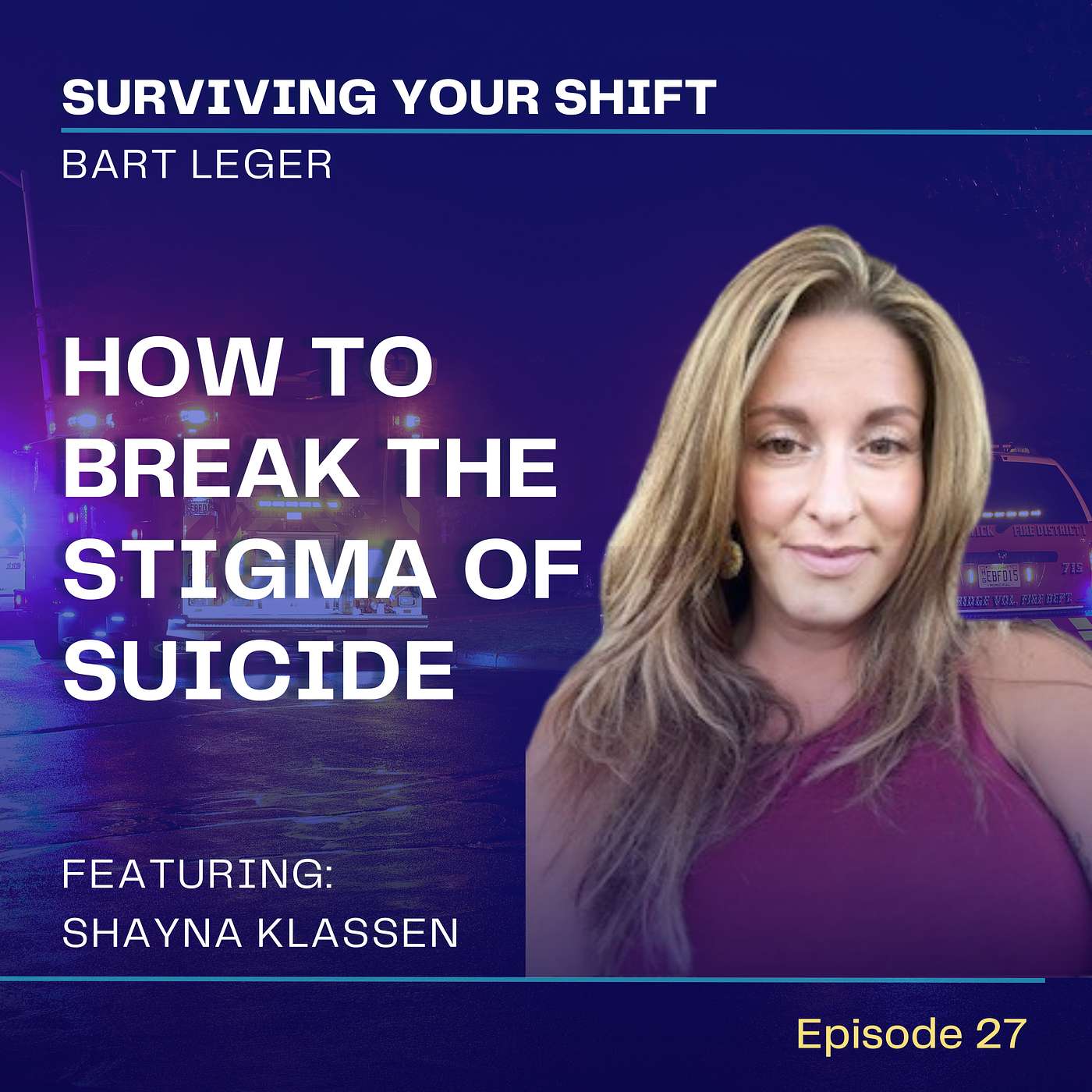
Are you equipped to recognize and prevent suicide in those around you?Many people miss the signs of mental health struggles and feel helpless when loved ones are at risk. This episode dives into actionable ways you can make a difference.Shayna Klassen, National Training Director for QPR Institute, shares her journey from addiction and recovery to becoming a leader in suicide prevention. Discover the life-saving impact of QPR training and how you can get involved in preventing suicide.BY THE TIME YOU FINISH LISTENING, YOU’LL DISCOVER: How Shayna’s personal journey led her to suicide prevention and the QPR InstituteThe unique elements that set QPR apart from other suicide intervention modelsHow easy it is to become a QPR-certified gatekeeper or instructor to make a positive impactJoin us to learn how you can be a part of the solution in suicide prevention.CONNECT WITH SHAYNA KLASSENWebsite: QPR InstituteEmail: shayna@qprinstitute.comOTHER LINKS MENTIONED IN THIS EPISODE:•QPR Gatekeeper and Instructor Training InformationCONNECT WITH BART:Website: https://stresscaredoc.comLinkedIn: https://www.linkedin.com/in/bartleger/If you're receiving value from this podcast, consider becoming a monthly supporter—your gift helps me keep producing these practical episodes. Become a supporter today.Connect with BartLinkedIn: linkedin.com/in/bartlegerFacebook Page: facebook.com/survivingyourshiftWebsite: survivingyourshift.comWant to find out how I can help you build a peer support program in your organization or provide training? Schedule a no-obligation call or Zoom meeting with me here.Mentioned in this episode:Houston Area CISM GRIN TrainingThis 3-day course, hosted by the Atascocita Fire Department, will teach you how to support your peers through effective communication, emotional resilience, and understanding the psychological impact of crises.
Register for this training. https://stresscaredoc.com/atascocita-grin
Dates: January 6-8, 2026
Times: 8:30 AM - 5:00 PM each day
Location: Atascocita Fire Admin Building

Comments

Download from Google Play

Download from App Store
 United States