


 Claim Ownership
TG2Cast
Subscribed: 2Played: 33
Subscribe

© Teachers Going Gradeless
Description
This is the podcast of Teachers Going Gradeless. Each episode focuses on progressive education and how teachers can transform teaching and learning when they grade less.
24 Episodes
Reverse
Eric is a principal at Hall Middle School in Larkspur, CA. Eric is the co-founder of Global School Play Day which is dedicated to promoting the idea that kids learn more when they play.
In this episode of TG2Cast Chris and I discuss Progressive Education, what is it, and how teachers interested in Progressive Education can get started.
Topics include:
Eric’s philosophy of leadership
Concerns about teacher insularity
How to break the cycle of teacher insularity
How going gradeless impacted his school

Chris is a Social Studies teacher at Global Impact Stem Academy in Springfield, Ohio. Chris is the founder of The Human Restoration Project which is dedicated to promoting Progressive Education.

Topics include:What is Environmental Learning and how does it fit with Project Based Learning.What is the philosophy behind Project Based and Environmental Learning.How parents and students perceive Project Based Learning.How Project Based Learning and No Grade go hand in hand.How project based learning and no grades students perform beyond high school.Resources:Skylar’s Blog on MediumPBL Works WebsiteList of articles about Project Based Learning on EdutopiaNorth American Association for Environmental EducationGreen Schools National Network

Topics include:How students see themselves through the lens of grades.How grades impact the student/teacher relationship.How grades shape the identity of a student.Why teachers need to take the time to talk to students in order to understand their perspective.Resources:"1 Week, 170 Conferences""In Her Words" (Full interview with Soleil)Jeff's Blog Site

As a teacher/activist, Julia Torres's work is grounded in empowering students to use the Language Arts to fuel resistance and positive social transformation. Ms. Torres facilitates workshops and professional conversations about anti-racist education, social justice, and culturally sustaining pedagogies. She writes about these and other topics at at juliaetorres.blog.
Topics include:
How Julia uses side-by-side teaching, expert groups, and culturally relevant texts to shift traditional power dynamics in her classroom
How grades foster attitudes of competition, compliance, and insecurity in students of color, dividing them and pitting them against one another
How Julia helps students "unlearn" disempowering attitudes from past experiences
Why implementing progressive practices like going gradeless can be extremely difficult in urban school settings
Why teachers from non-urban settings should visit and learn from teachers in urban settings

Topics include:#MyGradingStoryMontessori EducationStudent voice in learningHow to motivate students

Topics include:Choosing learning targetsProviding feedbackReporting learning to parents without gradesBuilding student metacognition

Topics include:Why it is important for students to engage in social justiceBuilding relationships as a foundation for social justiceHow social justice impacts classroom managementApplying social justice education in STEM disciplines

Topics include:How Ken's experiences as teacher, curriculum coordinator, and field hockey coach informed his ideas around assessment and gradingWhy we should shift our grading practicesReasons for optimism regarding shifting grading practices in schoolsWhy going gradeless and standards-based learning are "in the same chapter if not on the same page"Highlights from the new edition of How to Grade for Learning
Topics include:The landscape of grading and testing in SpainPersonalization vs. humanization in schoolsWhat teachers going gradeless can learn from playground reformWhy playgrounds are not automatically neutral or equitable spacesHow schools can create more equitable spaces and involve the voices of children

Topics include:The difference between intrinsic and extrinsic motivationHow teachers can leverage extrinsic motivationRethinking reluctant learners"Doing with" rather than "doing to"

Topics include:How deemphasizing grades reflects Benjamin's commitments as a teacherThe potential pitfalls of a more gradeless futureThe rhetoric of education reform, educational technology, and futurismHow tapping into and cultivating community can help us our voice as educators

Topics include:What are peer experts?Why use peer experts?How to implement peer experts in the classroomHow to maximize the effectiveness of peer experts

Topics include:Why Joy decided to write the bookHow to create positive classroom cultureDilemmas of grading and reporting learningHow to implement Genius HourOther shifts Joy is making after publishing the book

Topics include:Why grades are "the biggest and most insidious obstacle to education”How de-emphasizing grades coincides with a pedagogy of equity and social justiceWhy a gradeless space will not automatically be an equitable oneHow seemingly neutral platforms can flatten differences and influence pedagogiesHow we need to think about going gradeless in order it to be liberatory, transformative, an act of resistance
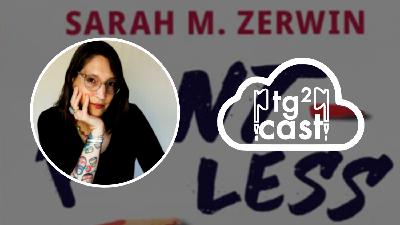
Sarah M. Zerwin teaches Senior Language Arts and AP Lit at Fairview High School in Boulder, Colorado, and author of the book Point-Less: An English Teacher’s Guide to More. You can follow her blog The Paper Grader and on twitter at @SarahMZerwinTopics include:What led to the idea that points get in the way of learning.How to identify learning targets and communicate them to students.How to establish a culture of feedback and maintain it throughout the year.How to report a final grade at the end of a term.

Part 2 of our conversation with college educators Maha Bali, Jesse Stommel,
and Asao B. Inoue. As college institutions struggle with the implications
of COVID-19, it’s important for them to place equity and access at the
center. We also have an opportunity to fundamentally revolutionize the
academy and the way we identify and support student success.

Maha Bali, Asao B. Inoue, and Jesse Stommel are three university educators
valued for their insights on equity and inclusion, higher education,
digital pedagogy, and going gradeless. They provide some important insights
that can help us navigate toward next year, especially at the college
level.
Sheldon L. Eakins, Ph.D. is the Founder of the Leading Equity Center and
host of the Leading Equity Podcast. With over 11 years in education, he has
served as a teacher, principal, and Director of Special Education. Dr.
Eakins has a passion for helping educators accomplish equitable practices
in their schools.
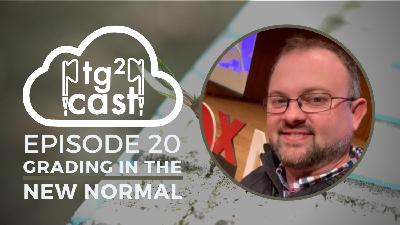
As the school year draws to a close and gradebooks are being calculated, it is becoming clear that traditional grading is inequitable. Some students are able to remain engaged while others, for various reasons, cannot. But schools need to provide some form of summative reporting. The question is, “How do we move forward?”I had the privilege to spend time with Jay Percell, Ed D. Jay is an Assistant Professor of Teaching and Learning at Illinois State University, he is the author of several academic essays, and a TEDx presenter. In this episode, Jay discusses the problems with traditional reporting and what we can learn from COVID-19 and report in ways that honor the learner.

Comments

Download from Google Play

Download from App Store
 United States