


 Claim Ownership
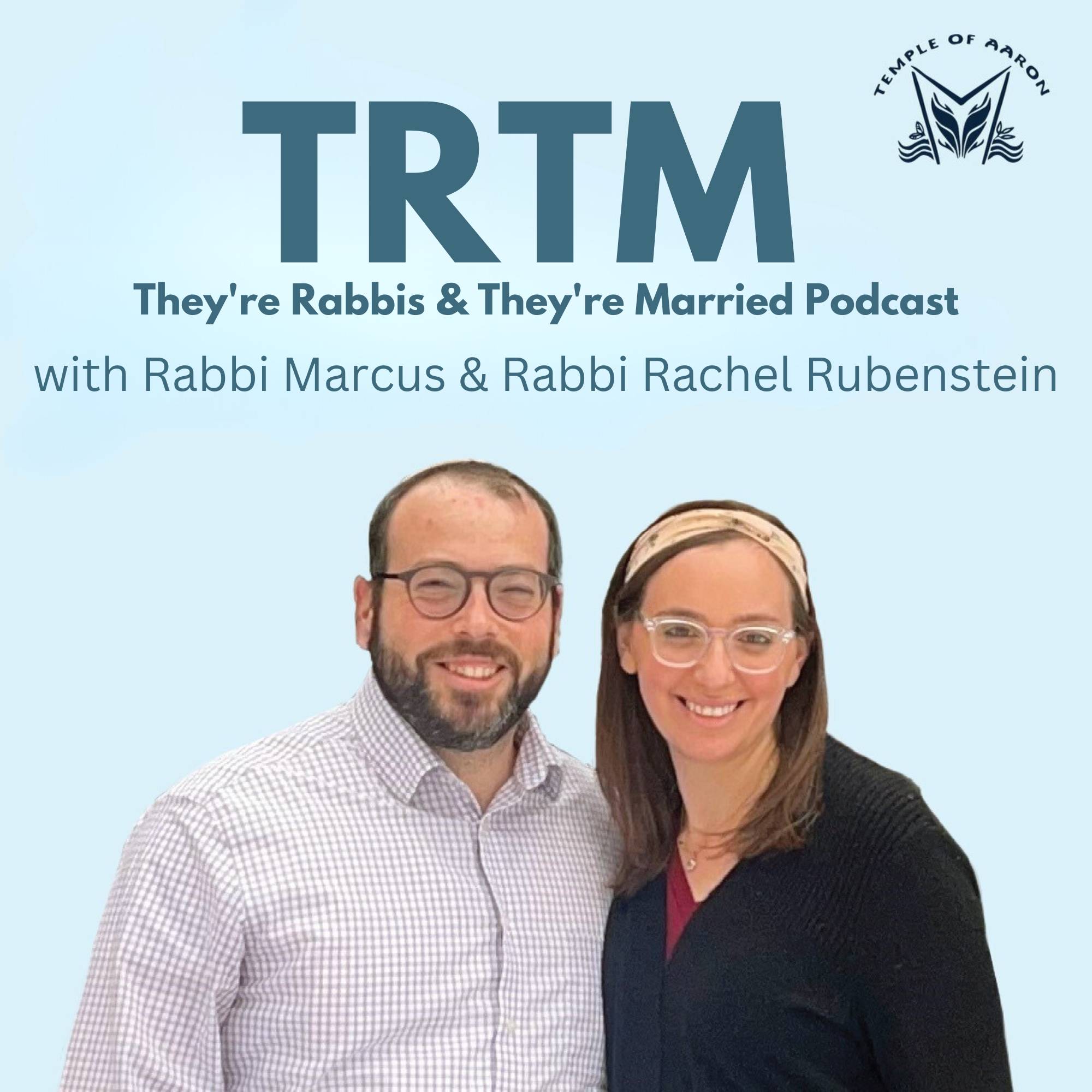
TRTM: They're Rabbis & They're Married
Subscribed: 5Played: 14
Subscribe

© Copyright 2025 Rant9 Productions
Description
What does it mean to be Rabbis who are married to each other? What does it mean to live Jewishly? What are ways that I can incorporate Jewish wisdom, values, and practices into my everyday life? Join Rabbi Rachel and Rabbi Marcus, a husband-and-wife rabbi team who serve as the co-rabbis of Temple of Aaron in Saint Paul, Minnesota, as they bring you an intimate glimpse into how they live out their daily Jewish lives. Each episode they will share their joys, struggles and everything in between as they work to apply Jewish ideas, values, and practices to their daily lives—building a Jewish home, raising children, serving their community, and navigating their busy daily lives. Join Rabbis Rubenstein each episode to learn ways that you too can practice an open-minded, modern, human-oriented, and sincere Judaism in your everyday life.
Intro music by the very talented Coleen Dieker and Jeffrey Baldinger
Intro music by the very talented Coleen Dieker and Jeffrey Baldinger
39 Episodes
Reverse
How should a Jew, according to the Torah, relate to the secular governemnt in which one lives in? How trusting should Jews be of the government and how much attention should we pay to it? The Rabbis Rubenstein learn, teach and discuss texts that discuss these essential questions for the modern Jew. They also speak about a very exciting event coming up at Temple of Aaron on Nov. 15th, 2025 on Shabbat morning when local St. Paul elected leaders will be visiting and meeting the community.
Can you pray for someone who’s sick on Shabbat? In this episode of They’re Rabbis and They’re Married, Rabbis Rachel and Marcus talk through a Talmudic debate on Shabbat 12b that asks exactly that question. Together, they explore why the rabbis might have hesitated about mixing words of healing with a day meant for rest and joy, and how this tension shows up in our own lives when we bring pain and worry into sacred time. What does it mean to pray for others on Shabbat, and how do we balance the holiness of the day with the reality of human need?
In this episode of They’re Rabbis and They’re Married, Rabbis Rachel and Marcus dive deep into one of the Talmud’s most surprising and romantic discussions— the closing passage of Tractate Taanit — to uncover the origins and deeper meanings of Tu B’Av, the 15th of Av. What makes this day, alongside Yom Kippur, one of the two greatest days in the Jewish calendar? Why were the daughters of Jerusalem dancing in white in the vineyards — and what does that have to do with matchmaking, war, unity, and redemption?Join us as we explore love, loss, and the surprising halachic history behind this lesser-known holiday that just might be Judaism’s most radical celebration of relationship, renewal, and hope.
As modern Jews, especially outside of Israel, the destruction of the Temple can feel like a distant and abstract loss. So why do we still fast, cry, and read Lamentations thousands of years later? In this episode, Rabbis Rachel and Marcus Rubenstein explore the spiritual value of mourning the Beit HaMikdash today. What does this grief open in our souls? How can remembering the brokenness of Jerusalem help us reconnect—with God, with people, with our own inner wholeness? Drawing from rabbinic texts, Chassidic thought, and their own experiences as clergy and partners, they uncover the enduring relevance of Tisha B’Av and the Three Weeks in a post-Temple, post-modern world.
In this bold and timely episode, our Rabbis Rubenstein take on one of the most serious and inflammatory accusations facing the Jewish state today: the charge that Israel is committing genocide in Gaza.From the headlines to the hashtags, this claim has gained traction around the world — but what’s really behind it? The Rabbis cut through the misinformation and double standards to present a clear, Jewish defense of Israel. Grounded in facts, Jewish ethics, and historical context, they explore how these accusations distort both international law and Jewish values.What does Judaism actually say about war, self-defense, and the sanctity of life — including the lives of one’s own people? How should Jews respond to the moral confusion and outright hostility surrounding this issue?This episode is a passionate and principled response to a dangerous lie, and a reminder that defending Israel is not just a political act — it's a spiritual and moral responsibility.
In this episode of They’re Rabbis and They’re Married, our Rabbis continue their mini-series on 10 foundational Jewish practices. They explore why showing up to synagogue isn’t just a weekend habit—it’s a cornerstone of Jewish spiritual life. From the ancient Temple to your neighborhood shul, we trace how communal prayer, sacred space, and presence in a minyan have shaped Jewish identity across generations.We talk about the emotional resistance people often feel, what makes a shul feel like home (or not), and how even imperfect prayer spaces still carry divine potential. Whether you're a daily davener, a High Holiday drop-in, or somewhere in between, this conversation invites you to rethink what it means to “belong” in Jewish community.
In this special episode, Rabbi Marcus and Rachel Rubenstein kick off a brand-new mini-series exploring 10 foundational practices for living out your Judaism. First up: Prayer.What does it mean to really pray — not just recite words, but connect? The Rubensteins dive into the heart of tefillah, sharing personal stories, spiritual insights, and practical guidance for building a meaningful prayer life, whether you're a daily davener or just beginning to explore the siddur.From ancient texts to modern struggles with focus, from the structure of the Amidah to finding your own voice in conversation with the Divine — this episode sets the tone for a transformative journey into embodied Jewish living.Tune in and take the first step with us.
Join our rabbis Rubenstein as they explore the hit Israeli song of the year, "Tamid Ohev Oti" or "Always loves me" by Sasson Ifram Shaulov. The rabbis discuss the meaning of the song and what it says about Israeli society and the Jewish people.Listen to the full song by clicking here: https://tinyurl.com/3fz8ezuaLink to Ein Nechamah Song: אלייצור - אין נחמה | ElaytZur- Ein Nechama - YouTubeLink to Lyrics of Ein Nechamah: Shilo Ben Saadon - אין נחמה (Ein Nechama) (English translation)Lyrics of Od Yoter Tov: God is a good Father, and He extols me, He sees my good deedsHe sees that I seek to be good, but I’m imperfect, thus all I need is a few prayersBut God sees my good deeds, the times I tried, refusing to give upHe knows my moment of shame and frustration, and how I continually start over anewAnd the blessed God, always loves me, I will always have nothing but goodness, the blessed God, always loves me, I will always have nothing but goodnessAnd I will be even better, even better, even better, even better, even better, even better, and I will always have nothing but goodnessHe hears me, has mercy on me, and always answers me, even when the answers feel delayed, God's still there, remind me continually that You always love me, give me new gifts everydayAnd mercifully guide me, as in this world is called mercy, let everyone see that you hear prayers, and we will be glad and healthyAnd the blessed God, always loves me, I will always have nothing but goodness, the blessed God, always loves me, I will always have nothing but goodness.And I will be even better, even better, even better, even better, even better, even better, and I will always have nothing but goodness.And I will have a prosperous life, and for those seeking love, may they find their match, I will have complete recovery and sound health, an exquisite happy life every yearThe blessed God, always loves me, I will always have nothing but goodness, the blessed God, always loves me, I will always have nothing but goodnessAnd I will be even better, even better, even better, even better, even better, even better, and I will always have nothing but goodness ה' הוא אבא טוב והוא תמיד מתפאר בי רואה בי רק ת'נקודות הטובותרואה שאני רוצה להיות טוב רק לא יוצא לי וחסרות לי כולה כמה תפילותוה' הוא גם ראה את הרצון שהיה לי שניסיתי לא אמרתי נואשרואה בבזיון שלי במר שהרגשתי איך התחלתי כל פעם שוב מחדש וה' יתברך תמיד אוהב אותיותמיד יהיה לי רק טובה' יתברך תמיד אוהב אותי ותמיד יהיה לי רק טובויהיה לי עוד יותר טובועוד יותר טובועוד יותר טובועוד יותר טובועוד יותר טובועוד יותר טובותמיד יהיה לי רק טוב שומע מרחם עלי ותמיד עונה ליואם עדיין לא
The Rabbis Rubenstein speak about a recent decision to not sign a recent letter signed by many other rabbis in the twin cities. They explain their reasoning and their philosophy of when to and when to not sign rabbinic letters.https://minnesotarabbinicalassociation.org/letter-to-the-jewish-community-about-constitutional-rights-and-jewish-safety
Join the rabbis Rubenstein as they chat with Saint Paul Tal Dror Rouache, a great friend and Israel Program director of the Saint Paul Jewish Federation. Together they will explore how we as American, Minnesotan Jews could be in active relationship with Israel.
Our Rabbis Rubenstein are joined by guest, Andrew Davies of the Bible Players (The Bible Players, Jewish Comedy) to discuss alternative and fun ways to teach and learn Torah and Judaism. The Rabbis experiment with improvisation games and speak about the value of widening the ways in which we teach Judaism. We hope you enjoy this discussion!
Join our Rabbis Rubenstein as they delve into early Zionist philosophers who sound like they could be writing their thoughts today on your favorite social media app. The thinkers they will sample with you in this episode are not well known enough in today's modern American Jewish community but they should be! These Jews were facing many of the same issues we are confronting anew today and can give us much fresh insight from the past. We hope you enjoy!
Our Rabbis Rubenstein delve into a "surprise text" (B. Talmud Shabbat 11a) which discusses the proper way for a Jew to give a gift. Through it's illuminating discussion, our Rabbis are able to derive many important Jewish values about how we treat each other and the purpose of our actions in this world.
Our Rabbis Rubenstein are back! R. Rachel has returned from maternity leave! The rabbis are starting where they left off- with the siddur (Jewish prayer book)! In this episode they will continue guiding you through the siddur. Through listening, this episode will help you connect in a deeper way to the words of prayer and hopefully to God.
Our Rabbis Rubenstein have noticed that many Jews struggle to find meaning in the traditional Jewish prayer service. Even if they are able to say the prayers, often it is something that is done because one is supposed to with little understanding of the spiritual transformation it should lead one to achieve. On the contrary, the Jewish siddur (prayer book) leads a spiritual practitioner through a vast guided meditation which can rewire the mind and the soul. Our rabbis lead us through a magisterial tour of the siddur, and what each moment of it can offer a dedicated spiritual practitioner. Here is part #1 on the morning blessings.
Our Rabbis Rubenstein interview Temple of Aaron member, Semyon Axelrod, a Jew who escaped the Soviet regime after being refused exit for many, many years. He speaks about his historic struggle to live as a Jew freely and what that struggle means for us today.
R. Marcus surprises R. Rachel with a text she never delved deeply into in the Babylonian Talmud Tractate Brachot (7b) asking the question- when is it ok to poke the bear? When is it ok to do something that you know will upset a powerful but evil person? Learn this text with us and see how two rabbis break down an important Talmudic text.
Our Rabbis Rubenstein invite a special guest, Coleen Dieker, onto the podcast to discuss music and it’s role in Jewish practice, spirituality and life. Coleen has been the incredible artist in residence for Temple of Aaron over the past years and is an expert in using musical performance to elevate the spiritual moments had in Jewish communities across the country. We will also get to hear a new exclusive song from her! We hope you enjoy this conversation.
Our Rabbis Rubenstein will delve into the topic of fertility and birth with a very special guest- a wonderful OB-GYN in their community. They will discuss their experiences with birth and fertility as well as how Judaism looks at these important topics. We hope you enjoy what was a truly meaningful and important discussion.
The Rabbis Rubenstein invite special guest, Ken Agranoff, ED of Temple of Aaron, to have a conversation around the financial costs of practice Judaism in 2023. Is practicing Judaism too expensive, just or a bargain? Listen and find out!

Comments

Download from Google Play

Download from App Store
 United States