


 Claim Ownership
The Advertising Forum by Marketecture
Subscribed: 1Played: 24
Subscribe

Copyright © 2025 Marketecture Media, Inc. All rights reserved.
Description
The Advertising Forum was created to address popular adtech, media and advertising topics and foster innovation by bringing together industry thought leaders, innovators, and experts from AdTech, Agency, and Brand sectors.
Recognizing the industry's thirst for knowledge, we empower the community through open discussions with industry experts. Each series will focus on a topic ranging from creative to yield with a goal of eliminating industry noise and getting straight to the topic. Together, we can create a brighter future for advertising.
Interested in sponsoring the show? Contact Marketecture Media.
88 Episodes
Reverse

In Episode 3 of The Great AI Advertising Reset Series, sponsored by DoubleVerify, Luis Di Como, former EVP of Global Media at Unilever, joins Jeremy Bloom and AdTechGod to discuss the growing complexity of digital advertising, the rise of AI agents, and why audiences, authenticity, and attention are becoming the defining pillars of modern marketing.
Takeaways
AI is shifting from a tool that answers questions to a system that helps shape decisions.
Marketers must plan for both human audiences and AI agents.
Authenticity is becoming more important as AI-generated content proliferates.
Content performs best when paired with the right context.
Media quality directly influences business outcomes.
Automation is essential for managing marketing complexity at scale.
Human judgment remains critical in AI-powered workflows.
Trust in AI grows through transparency, standards, and guardrails.
Brands need clear risk tolerances when deploying AI systems.
Attention that drives measurable business outcomes is the ultimate goal.
Chapters00:00 Introduction to The Great AI Advertising Reset Series00:32 Why Digital Advertising Has Become More Complex01:31 The Three A's: Audiences, Authenticity & Attention04:55 How AI Is Reshaping Marketing Organizations07:26 Moving Beyond Basic AI Automation08:55 Why Human Judgment Still Matters09:22 Connecting Media Quality to Business Outcomes11:12 Content Plus Context Equals Better Results11:38 Building Trust in AI Decision Making12:07 The Self-Driving Car Analogy for AI Adoption14:20 Final Thoughts on AI, Trust & Marketing

In Episode 1 of The Great AI Advertising Reset Series, sponsored by DoubleVerify, AdTechGod and Jeremy Bloom sit down with Mark Zagorski, CEO of DoubleVerify, to discuss the future of AI-driven advertising. Mark shares how DoubleVerify's newly launched DV Neura powers trust, transparency, and control across digital media, while helping brands combat AI-generated content, ad fraud, and the growing challenges of an agentic advertising ecosystem. From AI slop to CTV fraud, learn how advertisers can navigate the next era of advertising with greater confidence.
Takeaways
DV Neura is the AI engine powering DoubleVerify's measurement, optimization, and verification capabilities.
AI has been embedded in DoubleVerify's technology for nearly 18 years through machine learning and automation.
Agentic advertising is still in its early stages and requires stronger transparency and industry standards.
Independent verification will play a critical role in validating AI agents and automated media buying.
AI-generated content is rapidly increasing across social and digital platforms.
DoubleVerify developed "SlopStopper" to help advertisers avoid low-quality AI-generated content.
AI is accelerating ad fraud, particularly within Connected TV environments.
DoubleVerify uses AI to detect and combat AI-driven fraud and misinformation.
Neura helps advertisers move from insights to action faster.
The core benefits of Neura are speed, confidence, and control.
Chapters
00:00 Introduction to The Great AI Advertising Reset Series01:15 Why DoubleVerify Built DV Neura02:48 The Future of Agentic Advertising04:22 Building Trust and Transparency in AI Ecosystems04:37 The Growing Threat of AI Slop05:56 Introducing SlopStopper06:27 AI's Role in Rising Ad Fraud07:40 What Makes DV Neura Different08:31 Real-World Results and ROI from Neura09:22 Benefits Marketers Will Feel Immediately10:39 Speed, Confidence, and Control10:59 Final Thoughts and Closing Remarks

Dave Bernath, CEO of WURL, joins Jeremy Bloom and AdTechGod to discuss the evolution of CTV targeting from broad audience and show-level approaches to scene-level contextual targeting. The conversation explores how AI-powered content analysis is improving ad relevance, performance, and viewer engagement while helping advertisers better align with content in real time.
Takeaways
- Scene-level targeting provides more precision than traditional show-level targeting.
- AI enables real-time analysis of content, emotion, and context.
- Emotional alignment between ads and content can improve campaign performance.
- Contextual targeting drives stronger engagement, recall, and purchase intent.
- Brand safety, transparency, and measurement remain critical priorities.
- Industry collaboration is needed to scale scene-level targeting across CTV.
- CTV continues to offer a premium advertising experience for brands.
Chapters
00:00 Introduction to the From Show to Scene Series
00:29 The Early Days of CTV Targeting
01:54 Where Traditional Targeting Fell Short
02:41 Why Show-Level Targeting Hasn't Worked in CTV
04:37 The Shift from Shows to Scenes
05:04 How AI Unlocks Scene-Level Contextual Targeting
06:34 The Signals That Matter Most in Contextual Advertising
08:30 Performance Results from Scene-Level Targeting
09:42 What Still Needs to Happen for Scale
11:28 Why CTV Remains a Premium Advertising Opportunity
12:05 Closing Remarks and Key Takeaways
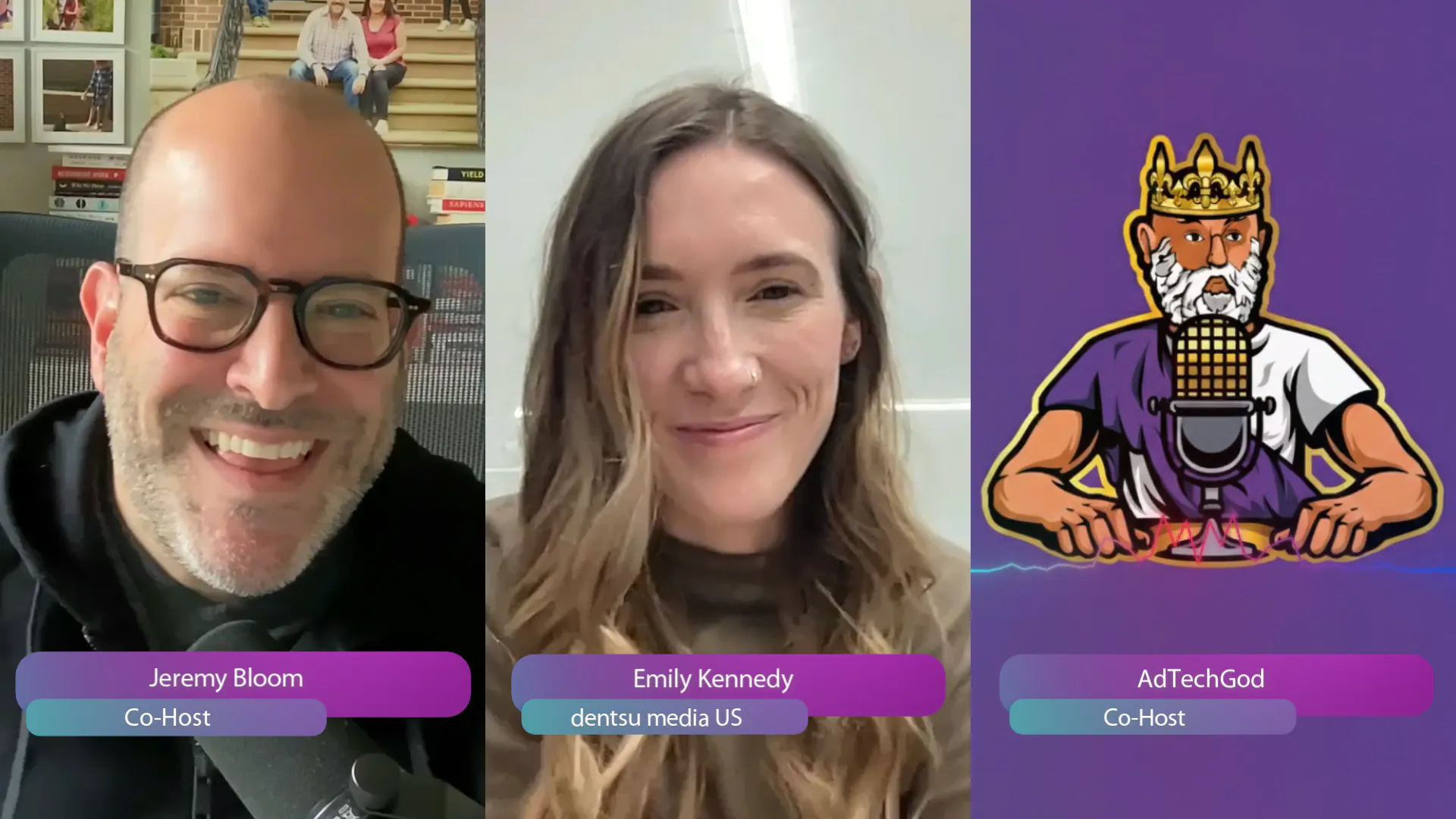
In Episode 2 of From Show to Scene sponsored by Wurl, Emily Kennedy, EVP and Head of Marketplace at Dentsu, joins Jeremy Bloom and AdTechGod to discuss how contextual targeting is evolving from a planning tool into a true optimization signal. Emily shares how brands can create stronger consumer connections through scene level targeting, why quality signals matter more than signal volume, and how the industry can overcome fragmentation challenges across streaming and video. The conversation also explores measurement, scalability, audience orchestration, and the future of contextual advertising in premium video.
Takeaways
- Contextual targeting is evolving into a powerful optimization signal
- Message relevance drives stronger engagement and performance
- Quality signals matter more than signal volume
- Scene-level targeting creates more meaningful brand moments
- Fragmentation continues to limit innovation and scale
- Brands are shifting focus from reach to business outcomes
- Strong consumer connections remain the ultimate goal
Chapters
00:00 Introduction to From Show to Scene
00:11 Emily Kennedy joins the conversation
00:27 How Dentsu approaches contextual targeting
01:41 Channel, show, and scene level targeting explained
03:05 Measuring contextual performance effectively
04:04 What signals matter most to brands and agencies
05:08 The challenge of fragmentation in streaming
06:35 What contextual targeting can scale today
07:48 Why one to one consumer connections matter
08:02 Helping clients understand advanced targeting
09:05 The future of contextual targeting and measurement
10:38 Closing thoughts and key takeaways

In episode 1 of From Show to Scene, Lauri Baker, Senior Vice President, Head of Partnerships at KERV, explains why audience targeting alone is no longer enough in CTV. She explores the shift from broad audience and genre-based buying toward scene-level, moment-based targeting, where ads align with what is happening on screen in real time.
Lauri also breaks down how this approach improves performance by increasing attention, recall, and intent, while addressing challenges like fragmentation, measurement, and scalability. She shares how advancements in video analysis and real-time activation are making moment-based targeting a powerful and viable strategy for modern advertisers.
Takeaways
• Scene-level targeting outperforms traditional audience targeting by aligning ads with real-time content moments
• Matching ad creative to the scene increases attention, recall, and intent
• Contextual signals act as a unifying layer across fragmented CTV ecosystems
• Standardization and measurement remain key challenges for scaling moment-based buying
• Advances in video analysis and real-time activation make scene targeting viable today
Chapters
00:00 Introduction to the From Show to Scene series
00:55 Why audience buying is no longer enough
01:27 Where performance gains actually come from
02:00 The shift from broad targeting to moment-based signals
04:10 Why the scene is the new audience
05:18 Tackling fragmentation in CTV
07:15 What is scalable versus still experimental
10:05 Technology enabling scene-level targeting
12:17 What is needed to scale this approach
15:03 Closing thoughts and key takeaways

Comments

Download from Google Play

Download from App Store
 United States