


The Age Reversal Project
Subscribed: 8Played: 84
Subscribe

© Copyright 2026 Orshi McNaughton
Description
How close are we to actually reversing aging — and what will it take to get there?
The Age Reversal Project goes inside the rapidly evolving world of longevity, age-reversal science and healthy aging to explore the breakthroughs that could help us live longer, healthier and more capable lives.
Host Orshi McNaughton talks with the scientists, researchers, biotech founders, physicians and pioneers working at the edge of human longevity — from regenerative medicine, cellular reprogramming and gene therapy to AI, longevity therapeutics, emerging medications, advanced diagnostics and human trials.
We follow the technologies moving from the laboratory into the real world, the companies trying to turn longevity science into medicine, and the experiments testing what's possible in humans today. We also explore the interventions available now — from health optimization and biohacking to new approaches designed to extend healthspan, slow biological aging and potentially reverse aspects of aging itself. The Age Reversal Project is your front-row seat to the longevity frontier — and the race toward longevity escape velocity.
If you're fascinated by longevity, age reversal, biotechnology, AI, anti-aging science, regenerative medicine, healthspan and the future of human lifespan, this is where you'll meet the people building that future and follow the breakthroughs that could change how we age.
The Age Reversal Project goes inside the rapidly evolving world of longevity, age-reversal science and healthy aging to explore the breakthroughs that could help us live longer, healthier and more capable lives.
Host Orshi McNaughton talks with the scientists, researchers, biotech founders, physicians and pioneers working at the edge of human longevity — from regenerative medicine, cellular reprogramming and gene therapy to AI, longevity therapeutics, emerging medications, advanced diagnostics and human trials.
We follow the technologies moving from the laboratory into the real world, the companies trying to turn longevity science into medicine, and the experiments testing what's possible in humans today. We also explore the interventions available now — from health optimization and biohacking to new approaches designed to extend healthspan, slow biological aging and potentially reverse aspects of aging itself. The Age Reversal Project is your front-row seat to the longevity frontier — and the race toward longevity escape velocity.
If you're fascinated by longevity, age reversal, biotechnology, AI, anti-aging science, regenerative medicine, healthspan and the future of human lifespan, this is where you'll meet the people building that future and follow the breakthroughs that could change how we age.
26 Episodes
Reverse

DescriptionHormone replacement therapy, testosterone, GLP-1 medications and peptides are changing how women approach menopause, metabolic health and longevity. Dr. Shoma Datta-Thomas explains how declining hormones can affect brain fog, sleep, insulin resistance, visceral fat, muscle mass and cardiovascular health, and why hormone health extends far beyond reproductive health.We explore the evolving science of HRT after the Women’s Health Initiative, testosterone therapy for women, GLP-1s for metabolic optimization, resistance training, peptides, supplements, advanced lab testing and the growing role of AI in personalized longevity medicine.LET'S CONNECTGuest: Dr. M. Shoma Datta-Thomas, MD, FACOGWebsite: https://www.next-health.com/team/dr-shoma-datta-thomasInstagram: https://www.instagram.com/shomadatamd/Host: Orshi McNaughtonWebsite: https://orshimcnaughton.com/Instagram: https://www.instagram.com/orshimcnaughtonSubstack: https://substack.com/@orshimcnaughtonEnjoying the podcast? ⭐⭐⭐⭐⭐Don’t forget to subscribe and leave a review to help spread the word!

Can we actually reverse human aging?XPRIZE has put $101 million behind that question, challenging scientists to demonstrate something far more meaningful than a younger biological-age score: measurable improvements in muscle function, cognition, and immune resilience.In the first episode of The Rabbit Hole, I dig into the science behind the XPRIZE longevity competition and some of the approaches now being tested—from repurposed drugs and multimodal protocols to stem cells, gene therapy, extracellular vesicles derived from plants, and cellular reprogramming.We explore why XPRIZE is shifting the conversation from biomarkers to actual human function, what the latest human data tells us, and the critical difference between longevity therapies you can access today and those that have actually been proven to work.Read the full article + explore my writing:https://orshimcnaughton.substack.com/https://www.instagram.com/orshimcnaughton/https://www.linkedin.com/in/orshimcnaughton/AI Disclosure: Portions of this episode feature AI-generated voices used to turn my original reporting and research into a conversational format. The underlying research, sources, editorial direction, and final review are my own.This podcast is for informational and educational purposes only and is not intended as medical advice. Always consult a qualified healthcare provider.

Microdosing GLP-1s is quickly becoming one of the most talked-about topics in obesity medicine, but can taking less actually produce better long-term results for some people?In this episode, Dr. Karen Mann shares how personalized GLP-1 dosing, food noise, behavior change, and identity-based habits may be the missing pieces to sustainable weight management. We also discuss preserving muscle, optimizing protein intake, resistance training, menopause, hormone replacement therapy, and why lasting health depends on changing who you become—not just what you weigh.#GLP1 #Microdosing #FoodNoise #WeightLossTIMESTAMPS[00:00] Why discomfort is the key to lasting behavior change[00:43] Welcome to The Optimized Woman[01:15] Dr. Karen Mann's personal journey into obesity medicine[02:51] Why weight management requires a personalized approach[04:18] Why standard GLP-1 dosing isn't right for everyone[08:08] Why behavior change matters more than motivation[10:45] Finding your "why" and building identity-based habits[14:56] Becoming the person you want to become[16:32] Coaching, accountability and habit formation[18:46] What microdosing GLP-1s actually means[22:09] New oral GLP-1 medications explained[26:15] Food noise, emotional eating and impulse control[29:43] Ultra-processed foods and why we're still hungry[34:16] Can you lose weight eating unhealthy foods?[36:10] Protein, muscle loss and resistance training[39:42] Why strength training becomes essential with age[42:21] Hormone replacement therapy and healthy aging[47:49] Self-talk, self-compassion and changing your mindset[50:56] Redefining discomfort as an act of self-loveLET'S CONNECTGuest: Dr. Karen Mann, MDInstagram: https://www.instagram.com/drkarenmann/Host: Orshi McNaughtonPodcast: https://optimized-women.captivate.fm/listenWebsite: https://www.optimizedwomen.com/YouTube: https://www.youtube.com/@optimizedwomenInstagram: https://www.instagram.com/orshimcnaughtonSubstack: https://substack.com/@orshimcnaughton
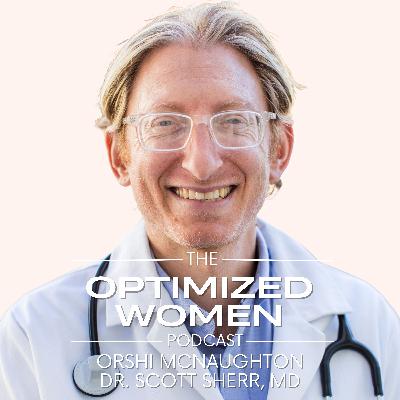
Methylene blue is one of the most talked-about tools in biohacking for mitochondrial function, brain fog, and energy—and the nuance is in dosing, quality, and context. In this episode, Dr. Scott Sherr explains how chronic stress and hormone shifts can trap women in a “wired but tired” state, why HRV drops when your nervous system can’t recover, and how sleep architecture, minerals, and mitochondrial support may help restore resilience. You’ll also learn the red flags of low-quality methylene blue, why low-dose and high-dose effects are different, and how to think about redox balance without making your stress physiology worse.KEY TOPICSMethylene blue benefits dosing and quality concernsMitochondrial dysfunction behind brain fog fatigue and anxietyHRV and nervous system resilience in midlife womenSleep architecture REM sleep and why waking at night happensMinerals electrolytes cortisol and the wired but tired stress loopTIMESTAMPS[00:00] Metabolic health crisis and why mitochondrial dysfunction is so common[01:06] Show introduction and what this episode will help you fix[01:37] Scott Sherr’s integrative path and Health Optimization Medicine approach[03:57] The Sympathetic Spiral of Doom and what it looks like in real life[05:10] Why midlife hormones reduce stress tolerance and recovery capacity[06:45] How chronic vigilance and modern stress keep you stuck in fight or flight[08:10] HRV trends over time and why “doing everything right” still isn’t enough[09:54] What HRV measures and how to use it for real-world experiments[11:40] The cell danger response and how mitochondria downshift energy production[12:55] Why “wired but tired” signals mitochondrial and nervous system overload[14:35] Why mood changes and irritability show up when the brain lacks energy[16:34] GABA vs glutamate and the neurochemistry of anxiety and insomnia[18:20] Why SSRIs don’t map cleanly to “low serotonin” in depression[19:55] Short-term calming tools vs medium-term nutrient and gut foundations[21:08] Sleep architecture explained deep sleep REM sleep and recovery biology[22:55] Why waking at night happens and why progesterone alone may not solve it[24:10] Sleep starts in the morning sunlight meals timing and daytime stress[26:05] Why REM sleep is mitochondrially demanding and easier to disrupt[27:37] Minerals under stress why magnesium sodium and potassium get depleted[28:55] Personalizing electrolytes for travel training and high-stress periods[30:05] Cortisol rhythm and why late exercise and late meals can tank recovery[31:20] Why minerals and antioxidants matter for energy production and detox[32:14] Your methylene blue Goldilocks dose and how to cycle it[33:27] What methylene blue does for mitochondria energy and detox together[34:50] Low-dose vs high-dose methylene blue and when higher doses get stressful[36:10] Hydrogen peroxide production at higher doses and why antioxidants matter[37:20] Redox balance explained energy production plus detox capacity[38:20] Quality risks heavy metals potency issues and why liquids are risky[40:02] Why redox-active compounds can backfire if your nervous system is dysregulated[43:40] Breaking the stress loop support mitochondria first then downregulate stress[45:10] The parasympathetic edge why “calmer performs better” is real physiology[48:03] Where health optimization is heading mitochondrial medicine and healthspan[50:25] Organ-level thinking vs cellular-level optimization holobiont framework[52:30] N-of-1 tracking wearables and why personalization beats population advice[53:09] AI caution why models can mislead and why human clinical context matters[54:18] Where to find Dr. Scott Sherr and related workLET'S CONNECTGuest: Dr. Scott Sherr, MDWebsite: https://drscottsherr.comInstagram: https://www.instagram.com/drscottsherrHost: Orshi McNaughtonPodcast: https://optimized-women.captivate.fm/listenWebsite: https://www.optimizedwomen.com/YouTube: https://www.youtube.com/@optimizedwomenInstagram: https://www.instagram.com/orshimcnaughtonEnjoying the podcast? ⭐⭐⭐⭐⭐Don’t forget to subscribe and leave a review to help spread the word!

If you’re strength training, eating “clean,” and still gaining fat or losing muscle after 40, it’s not just willpower—it’s physiology. In this episode we break down what actually changes during perimenopause and menopause (lean mass, central fat gain, estrogen shifts), plus the research-backed levers that still move the needle: resistance training intensity, protein targets, smart cardio, recovery, and when HRT may help. If you feel like the old playbook stopped working, this is your reset with a real framework.KEY TOPICS Why weight loss resistance shows up in midlife even for active women How menopause shifts body composition toward central fat gain and lean mass loss HRT and estradiol research for muscle gain and inconsistent fat loss outcomes Protein targets for midlife women and how to hit them consistently Training strategy that works: heavy lifting, cardio for VO2 max, power, agility, and recoveryTIMESTAMPS[00:00] Why Bill Campbell shifted his research to menopause after his wife’s experience[00:24] Female physiology matters: women are not “small men” and body composition changes hit hard[00:57] First generation of strength-trained women entering menopause and why the research gap matters[01:40] What’s really happening: gaining fat and losing muscle isn’t just about effort after 40[09:13] Menopause vs aging debate: what the SWAN data suggests about the transition[12:40] DEXA findings: lean mass loss begins and fat gain accelerates during the transition[14:10] Why fat shifts to the middle: central adiposity, FSH rise, and estradiol decline[15:00] HRT question: what changes when women use hormone therapy during training[16:46] Estradiol and muscle: why estrogen therapy may be anabolic in trained women[18:30] Estradiol and fat loss: why results are variable and not a guaranteed solution[20:28] Hormone balance and nuance: estradiol, progesterone, testosterone, and body fat context[22:55] Estradiol target ranges discussed for bone and muscle support[27:53] Progesterone vs progestins: why older research can be misleading[29:21] Protein targets: 0.75–1.0 g/lb ideal body weight and why most women under-eat protein[33:47] Practical protein strategy: distribute evenly across meals to hit your daily target[38:17] Protein timing around workouts: why pre vs post doesn’t matter much[40:39] Supplements that matter: creatine, whey/complete protein, omega-3s[43:22] Magnesium and vitamin D: common deficiencies and bone-health relevance[45:00] Strength training minimum effective dose: 1 day for maintenance, 2+ days for best results[47:16] Training doesn’t change by decade: intensity and proximity to failure are the difference[49:46] Benchmarks: squat bodyweight and deadlift ~1.25x bodyweight as aspirational goals[54:47] Cardio after menopause: VO2 max, HIIT, and why walking isn’t the same stimulus[58:41] Stress resiliency: when pulling back is smarter than pushing harder[01:00:16] Ideal weekly structure: resistance, aerobic fitness, power, agility, plus daily movement[01:03:16] BFR/Kaatsu for joint pain and training around injuries[01:05:02] What turned it around for Bill’s wife: progesterone first, then estradiol, plus patience[01:07:46] HRT isn’t one-and-done: adjust, track, and combine with training, sleep, and recovery[01:11:26] Where to follow Bill Campbell and his menopause fitness content[01:12:00] Support the show and join the free community at optimizedwomen.comGuest: Dr. Bill CampbellWebsite: https://billcampbellphd.comInstagram: https://www.instagram.com/billcampbellphd/LET'S CONNECTHost: Orshi McNaughtonPodcast Links: https://optimized-women.captivate.fm/listenWebsite: https://www.optimizedwomen.com/YouTube Channel: https://www.youtube.com/@optimizedwomenInstagram: https://www.instagram.com/orshimcnaughton

Comments

Download from Google Play

Download from App Store
 United States