


 Claim Ownership
The AutSide Podcast
Subscribed: 5Played: 306
Subscribe

© Jaime Hoerricks, PhD
Description
AutSide: A podcast from an autistic trans woman that explores critical issues at the intersection of autism, neurodiversity, gender, and social justice. Dive deep into the realities of living as an autistic adult, critiques of education systems, and the power of storytelling to reshape public narratives. With a unique blend of snark, sharp analysis, and personal experience, each episode challenges societal norms, from the failures of standardized testing to the complexities of identity and revolution. Join the conversation on AutSide, where lived experience and critical theory meet for change.
autside.substack.com
autside.substack.com
675 Episodes
Reverse
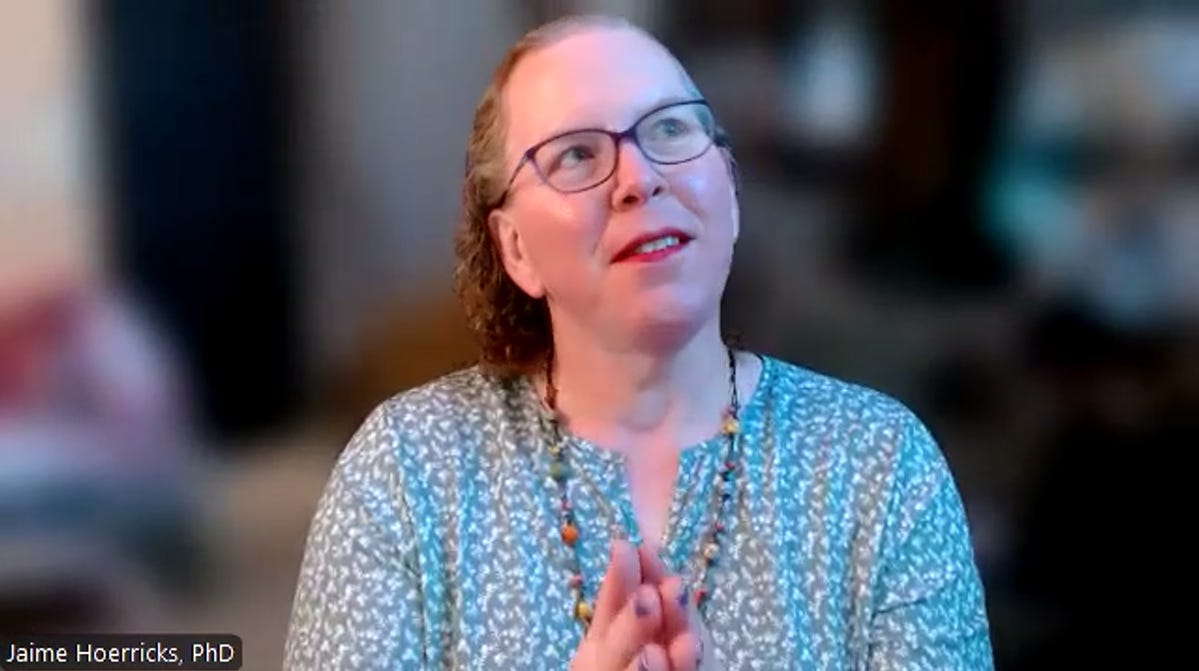
After an overwhelming fortnight leading up to TDoR, I sit with old questions, unexpected turns, and unfinished understanding—leaving a record of where I am today, in case future Jaime needs it.The past fortnight has been overwhelming in ways I am still trying to understand. As Trans Day of Remembrance approached, I found myself moving through old photographs, childhood memories, missing records, the poems I have been writing, and questions about my life that have followed me for decades. Some of those questions have acquired new dimensions. Others remain exactly where they have always been, waiting for information I may never recover. There have been moments of extraordinary recognition, unexpected tenderness, anger, grief, and the peculiar exhaustion that comes when several decades of experience suddenly demand attention at once.I have spent much of my adult life trying to understand the architecture of my own experience—how meaning arrives before language, how perception organises itself into a whole, how my body recognises things I cannot yet explain, and how the world came to interpret characteristics of mine without ever asking what they meant to me. Lately, that inquiry has begun reaching further into my developmental history, into the years for which I have so few records, and into the assumptions that acquired authority long before I had any opportunity to question them. I have more questions today than I did a fortnight ago. Some of them are questions I never imagined I would be asking.And then there is the matter of the moving goalposts. The documents, the classifications, the explanations, the expectations—each has occupied a different place in my life, and each has carried consequences. I have spent years gathering evidence, finding language, correcting records, and trying to make sense of a history that other people were once permitted to describe on my behalf. Even now, with so much more of that history available to me, I find myself encountering the limits of what can be known and the strange persistence of what others insist they already know.Years ago, a voice coach encouraged me to record myself, to leave something behind that I could return to later. At the time, I understood the advice largely in terms of hearing my own voice, noticing its movement, and recognising changes that might otherwise pass unnoticed. I think I understand it rather differently today. A recording can preserve a moment before subsequent understanding reorganises it. It can hold the uncertainty, the unfinished thoughts, the feelings that have yet to acquire names, and the particular way a person inhabited her life on an ordinary morning.So this week’s Saturday Morning Musings is something of a record for myself. I wanted to sit down and speak from wherever I happen to be in all of this, with the questions still open and the emotional weight of the past fortnight still very much present. There is no grand revelation waiting at the end, no carefully resolved argument, and no expectation that I will arrive at an answer simply because I have spent forty minutes talking about it. Sometimes the value of speaking is that the words become available at all.Perhaps future Jaime will need this recording. Perhaps she will listen years from now, knowing things I cannot know today, and recognise the woman who was sitting here in November 2026, just after TDoR, trying to understand the shape of her own life. I hope she will hear the curiosity alongside the grief, the pleasure of discovery alongside the uncertainty, and the determination to keep asking questions even when the answers become complicated. Most of all, I hope she will recognise that I was here, living this life as fully as I could, with the understanding available to me at the time.This was where I was then.The AutSide is a reader-supported publication. To support my work, consider becoming a paid subscriber. This is a public episode. If you'd like to discuss this with other subscribers or get access to bonus episodes, visit autside.substack.com/subscribe
I gave Gemini Notebook my essays and listened for what returned: could its virtual hosts follow the meanings I had worked to express? This deep dive becomes another record of language taking shape—and what still needs correction.About this episodeI use Gemini Notebook as part of my writing process. I give it my notes or essays and listen to the conversation its virtual hosts produce. Can they follow the relationships? Does the question remain intelligible when another voice explains it? When I can recognise my meanings in what returns, I have something concrete to examine: I have made language through which someone—or, here, a generated conversation—can follow what I was trying to express.This episode takes up The Scholar in the Introductory Classroom, my account of returning to community college for professional development whilst working as a special education teacher and continuing my scholarship. Linguistic Anthropology is also a Script Garden for me: a place to encounter formulations, examples, and distinctions that may become available in my teaching, writing, and everyday exchanges. I arrive with knowledge and a continuing need to learn.The hosts follow the series through the effort of making a curriculum cohere, the limits of what a correct answer demonstrates, and the inferential step between analysing an expression and explaining how someone produced it. They also explore the linguistic relativity assignment I encountered whilst already investigating what has to happen for meaning to become language. My experience of meaning preceding available expression gives that question a location; following Shakaman’s Gestalt Words and its footnotes opened a scholarly journey extending across more than a century.Power enters through the learner’s opportunity to contribute something consequential. Can I explain a theory accurately and question its reach? Can the knowledge I bring affect the conversation? The episode also takes up the autistic practice of sharing detailed connections—the offering others may call infodumping—and the work of deciding how much to say without losing the relationships that make an account intelligible. Those questions return with me to my students, whose understanding deserves investigation whether or not they possess credentials through which an institution readily recognises expertise.Listening also lets me hear where the account changes in transmission. The virtual hosts sometimes intensify a claim, supply an inference, misstate a detail … or mispronounce my name yet again. I listen for those departures alongside the connections they preserve. This makes the episode another working record: an opportunity to recognise where my language carries meaning, locate what needs correction, and continue the inquiry in public.The AutSide is a reader-supported publication. To receive new posts and support my work, consider becoming a free or paid subscriber. This is a public episode. If you'd like to discuss this with other subscribers or get access to bonus episodes, visit autside.substack.com/subscribe

Preparing to film, I found an old Celtic kit. Sporty and reflective, I return to the student’s chair—and leave a record of what learning, language, and teaching mean to me at this point in a life still making room for discovery.About the videoGetting ready to film involved choosing a top and rearranging my wardrobe. Somewhere within that process, I found an old Celtic football kit from the 2003–2004 SPL championship season. A different kind of preparation followed: recognising something of myself in what I had kept. Sporty and reflective can occupy the same afternoon, the same wardrobe, the same person trying to decide what to wear whilst explaining why she has returned to college.I find myself making these video prologues and epilogues partly to leave an artefact for myself. Writing allows me to follow a question through its relationships; speaking gives the account another form, carrying my voice, pace, hesitations, and the particular language available that day. Later, I can return and encounter where I was—what I understood, what I was still working through, and how I was trying to make it communicable.This video accompanies The Scholar in the Introductory Classroom, a series written whilst taking Linguistic Anthropology at my local community college. My professional development has practical purposes. As a special education teacher and IEP case manager, I need knowledge that helps me understand people and examine the explanations through which schools interpret them. Returning as an autistic student with an accommodations letter also gives me current experience to draw upon when advising my own students about college.The classroom is a script garden for me, too. I encounter phrases, distinctions, and ways of connecting ideas that may become available in another setting. I bring meanings for which I am still seeking usable language, alongside scholarship already underway. The video follows what happens when those resources and needs meet an introductory curriculum: the work of keeping information available, constructing an organising whole, answering the assessment, and asking what the answer actually demonstrates.Power runs through that encounter as the learner’s experience of competence, mattering, respect, and effectiveness. Can something I understand contribute to the shared inquiry? Can I explain an inherited account and question its reach? These questions follow me between the student’s chair and my responsibilities as a teacher. They also reach beyond my doctorate towards learners whose knowledge arrives without credentials that make it readily recognisable.The Celtic kit belongs in this record because the person preparing to speak has a life extending beyond the subject she is discussing. Clothing kept across years can return a relationship to attention in the middle of an ordinary task. Today, I am making room in a wardrobe, finding language for a learning experience, and preparing to leave myself something I can revisit. The camera will hold one account of where those things met.The AutSide is a reader-supported publication. To support my work, consider becoming a paid subscriber. This is a public episode. If you'd like to discuss this with other subscribers or get access to bonus episodes, visit autside.substack.com/subscribe
What if the DSM’s clues tell us as much about the observer as the person observed? From autistic literalism to psychiatric authority, I revisit an old essay and ask who decided which differences needed explaining.I’ve been rereading an essay I wrote earlier this year, Internal Architecture: The DSM’s Quiet Clues, and something about my original argument has been bothering me. I had imagined the DSM as a kind of field notebook—a collection of observations that might contain traces of cognitive architectures the observers themselves had not fully understood. Echolalia, idiosyncratic language, conversational reciprocity, and the familiar claim that autistic people are literal thinkers. But field notes are taken by somebody. Someone decides what deserves recording, which differences matter, and what those differences are supposed to mean. And that has sent my Sunday morning thoughts wandering in a rather unexpected direction.I find myself remembering two encounters from my younger years. One involved three invitations to a Sadie Hawkins dance, three enthusiastic answers, and the discovery that everyone else apparently understood a set of social obligations nobody had thought to explain. The other involved my cousin Mark, a hired rowboat, and a lake draining towards a 150-foot waterfall. Both began with an uncomplicated yes. Both became considerably more complicated. And both could be retrospectively described as examples of autistic literalism, although the circumstances, expectations, and consequences were profoundly different. Why should the explanation be located within my autism before anyone has investigated the organisation of the encounter itself?That question returns me to something I have been asking for years: where does my autism end and my gestalt processing begin? My experience of meaning often arrives whole, before the language needed to communicate its constituent parts becomes available. Yet autism and gestalt language processing have largely been described through their observable manifestations. Researchers can identify patterns, classify behaviours, and develop useful interventions without necessarily establishing the architecture producing those observations. The difficulty arises when the classification itself becomes the explanation. A name for a pattern tells us something about what has been observed. It does not necessarily tell us how the experience was organised before anything became observable.From there, my thoughts wander into the history of psychiatry, including Samuel Cartwright’s extraordinary 1851 invention of drapetomania—a supposed disorder explaining why enslaved people attempted to escape captivity. The example raises a question that reaches beyond the circularity of behavioural diagnosis: who decided that the behaviour required a pathological explanation, and whose interests were served by that decision? I find myself thinking about hysteria, borderline personality disorder, the experiences of late-identified autistic women, and racial disparities in how children’s behaviour is interpreted. These are different histories and different clinical constructs, but each invites examination of the assumptions through which an observer determines what constitutes disorder.As a special education teacher, these questions are part of my working life. A child refuses an instruction. Is the child oppositional, overwhelmed, unable to access the language of the task, protecting a fragile bit of regulation, or simply exercising an entirely reasonable wish to be left alone? ODD and PDA raise difficult questions about authority, autonomy, and the legitimacy of demands. Schools have responsibilities, and children sometimes need substantial support, but the demand itself should remain open to examination. The observer, the environment, the expectations, and the relationship all contribute to what becomes visible. Even conversational reciprocity requires two people, although the diagnostic record can make it sound like a characteristic possessed or lacking in only one.I return, eventually, to the old essay with more questions than I had when I began. The DSM may indeed contain clues about cognitive architecture, but those clues also carry the history of the people who selected and interpreted them. Some observed differences may reflect underlying processing, some may emerge through relationships and environments, and some may become conspicuous because a diagnosis has already supplied the observer with an explanation. I still do not know where my autism ends and my gestalt processing begins. Perhaps the boundaries are not where the categories suggest. Perhaps the more important inquiry begins with the person holding the notebook. And somewhere beneath all these questions, there remains a young queer femme who received three invitations, answered each one sincerely, and really did just want to dance.The AutSide is a reader-supported publication. To support my work, consider becoming a paid subscriber. This is a public episode. If you'd like to discuss this with other subscribers or get access to bonus episodes, visit autside.substack.com/subscribe
I came to functional literacy in my late thirties. Now I can write about how meaning becomes words, what phonics can do in a learner’s hands, and who gets to decide what counts as knowledge about minds like mine. Come on in.I keep trying to write a book, and the book keeps developing another side. In this recording, I begin with So You Think Differently, the perpetually developing outline for my field guide to gestalt minds and still one of the most popular pieces on The AutSide. It’s a map you can enter from several directions, which seems fitting for a book about a mind that comes to know things by returning to them.Then I turn to The Speed of Dark, which began when Cathy sent me seven perfectly reasonable questions and I came back with seven essays. Some people would have sent bullet points. I needed time to find words for what had already arrived whole, and the writing let me discover how much of what I knew was still waiting for a way to be said.Those two collections are open and free to read. Follow the links and you’ll find millions of words across more than four years of scholarship. There’s no journal route through which I could have published that body of work on the timescale of the conversations that gave rise to it. On The AutSide, somebody can question a claim, send me a source, or tell me where my account loses them, and I can follow that correction whilst we’re still talking about the thing itself. You can disagree with me for free. I consider that quite a generous subscription tier.Then there’s phonics. In Phonics, If You Must, I answer a practical question about when I’d introduce it to a gestalt language processor and what I’d actually do. In Resistant, Non-Compliant, Whole, I ask what happens when the same tool becomes a gate a child has to pass through before they can get on with their peers. There’s a history to the authority of parts-first teaching in the Global North, and it helps explain how a system can get very good at recording what a child does on cue whilst overlooking what that child is already doing with language.And then, a wee quarter turn into Breaking News. I have a bit of fun with the conferences and professional bodies that can find room for an autistic person’s story on the programme and still reserve the right to tell the room what it meant. When we say you’ve misdescribed what happened, can we change the account? Can we change the practice? There is, alas, no billing code for understanding.I’ve been writing in this space for more than four years. I’ve been living in it my entire life. I came to functional literacy in my late thirties, and it took longer still for writing to become something I could use as I do now. I have words I can use to speak up for myself, and to stand alongside spellers, non-speakers, and other gestalt language processors when their ways of communicating are called into question. It took me a lifetime to get to these words. They’re mine. And I’m using them.The AutSide is a reader-supported publication. To support my work, consider becoming a paid subscriber. This is a public episode. If you'd like to discuss this with other subscribers or get access to bonus episodes, visit autside.substack.com/subscribe

Comments

Download from Google Play

Download from App Store
 United States