


 Claim Ownership
The Better Movement Podcast
Subscribed: 77Played: 1,203
Subscribe

© Todd Hargrove
Description
25 Episodes
Reverse
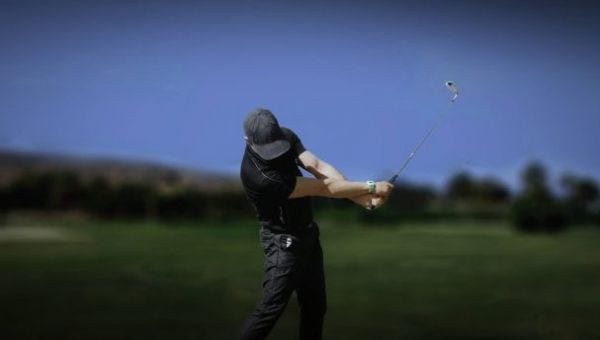
My guest on this episode is Adam Young, a golf instructor and author of the excellent book The Practice Manual. We discussed Adam’s personal journey in developing a unique task-oriented teaching style. He explained how his early experiences with textbook-based instruction led to physical injuries and frustration, prompting him to explore alternative methods. We also discussed a variety of topics related to motor learning, including the effects of internal versus external attention, the complexity of biomechanics, why deliberately making mistakes can be helpful, and the psychological and cultural factors inhibiting the exploration of new movement patterns. Even if you're not interested in golf, I think you will find Adam's ideas highly relevant to any movement-based practice, in the context of either rehab or performance. Links Adam’s website Adam’s book: The Practice Manual Follow Adam on Twitter Related PostsFocus of Attention in GolfLearning From MistakesThe Feel of Good Movement This is a public episode. If you'd like to discuss this with other subscribers or get access to bonus episodes, visit toddhargrove.substack.com/subscribe

My guest for this podcast is Greg Lehman. Greg is a physical therapist, chiropractor, and researcher. Our main subject was a new study that found very positive results for Cognitive Functional Therapy (CFT). I thought Greg would be a good guy to ask about the strengths and weaknesses of the study, and how to interpret its meaning in light of the broader literature.Greg is a popular writer and teacher whose main interest is reconciling pain science with biomechanics. Part of his approach involves looking at many different kinds of therapies that seem to work, and then asking: what do all these different methods have in common? It’s a good question that generates insight. One of Greg’s strengths is a broad knowledge of the relevant research. Therefore, he always supports his arguments with specific citations, and he also has a good context to interpret the meaning of a news study. For example, if a new study comes out showing that therapy X works or doesn't work, he can probably think of other studies with different results.Another great thing about Greg is that he is always willing to challenge his own biases. So if a study comes out validating his ideas, he will be the first one to stand up and point out its limitations.In this podcast we talked about the strengths and weaknesses of the new CFT study, and how to put it in the context of the larger literature. We also talked about broader issues related to being aware of your own biases, cherry picking evidence, and using double standards to interpret studies.Links Greg Lehman’s websiteGreg on TwitterMy previous podcast with GregInformation on the study and Cognitive Functional TherapyA previous post on Pain Reprocessing Therapy, which I compared to CFT This is a public episode. If you'd like to discuss this with other subscribers or get access to bonus episodes, visit toddhargrove.substack.com/subscribe
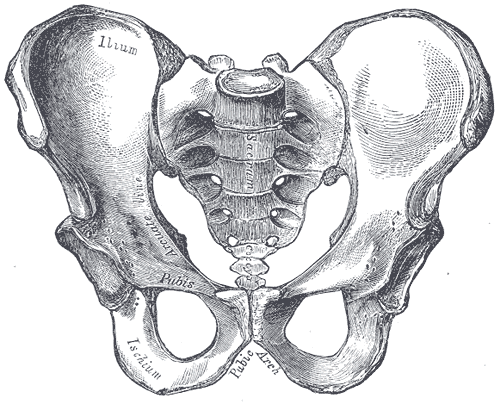
Today’s podcast is a 15-minute movement lesson you can do in a chair. It's a novel way to get the pelvis and spine moving, and bring some awareness to how they coordinate to keep you comfortable and balanced. It involves walking the sit bones over the base of your chair as if they were feet. Maybe the best alternative to getting up and going for a walk. This is a public episode. If you'd like to discuss this with other subscribers or get access to bonus episodes, visit toddhargrove.substack.com/subscribe

Leigh Egger is a physiotherapist and trainer working as head of performance at Feyenoord Rotterdam, a Dutch professional soccer club. I first became interested in Leigh’s work because he had extensive knowledge about applying the ideas of Frans Bosch to athletic training and injury prevention. Bosch is the author of two fascinating books on movement (one of which I reviewed here.) His ideas are notoriously original, controversial, and somewhat confusing. Leigh has worked with Bosch closely and has significant experience putting his ideas to practical use. I first met at Lee at a Bosch seminar in Los Angeles that he was helping to teach. Here’s a video of some highlights (with a brief cameo by yours truly.) If you watch the video you will see some interesting and unusual exercises. In this podcast, Leigh provides some simple explanations of the logic behind these and other exercises as a way to improve athletic performance and prevent injury. We talked about motor learning, passive versus active attractors, control of the pelvis and spine in single leg stance, the hip lock position, the proper use of the ankle during running, and many other topics.LinksSpeed Power Play, a consulting company run by Leigh and John PryorSpeed Power Play on InstagramLeigh’s Twitter page This is a public episode. If you'd like to discuss this with other subscribers or get access to bonus episodes, visit toddhargrove.substack.com/subscribe

My guest for today’s podcast is Tom Jesson. Tom is a physiotherapist and author of a two excellent books related to nerve root pain: Sciatica: The Clinician’s Guide and Cauda Equina: The MSK Clinician’s Guide. He also writes a newsletter on nerve root pain here. I highly recommend Tom’s writing because it is well-researched, easy to read, and respects the complexity of the subject matter. In this interview we talked about about sciatica including: the difference between referred pain, radicular pain and radiculopathy; the anatomy of the nerve root; the different ways the nerve root can become irritated; disc herniations and whether size and type matters; how discs heal over time; and how to prevent and treat sciatica. Highly recommended if you want to know more about this complex subject. This is a public episode. If you'd like to discuss this with other subscribers or get access to bonus episodes, visit toddhargrove.substack.com/subscribe

Comments

Download from Google Play

Download from App Store
 United States