


 Claim Ownership
The Blue Ridge Breakdown
Subscribed: 0Played: 1
Subscribe

© Troy N. Miller
Description
Join Troy N. Miller on The Blue Ridge Breakdown — a deep look at politics, economics & culture through an Appalachian lens. From corporate capture to working-class resilience, discover how power operates in rural America and why it matters everywhere.
26 Episodes
Reverse
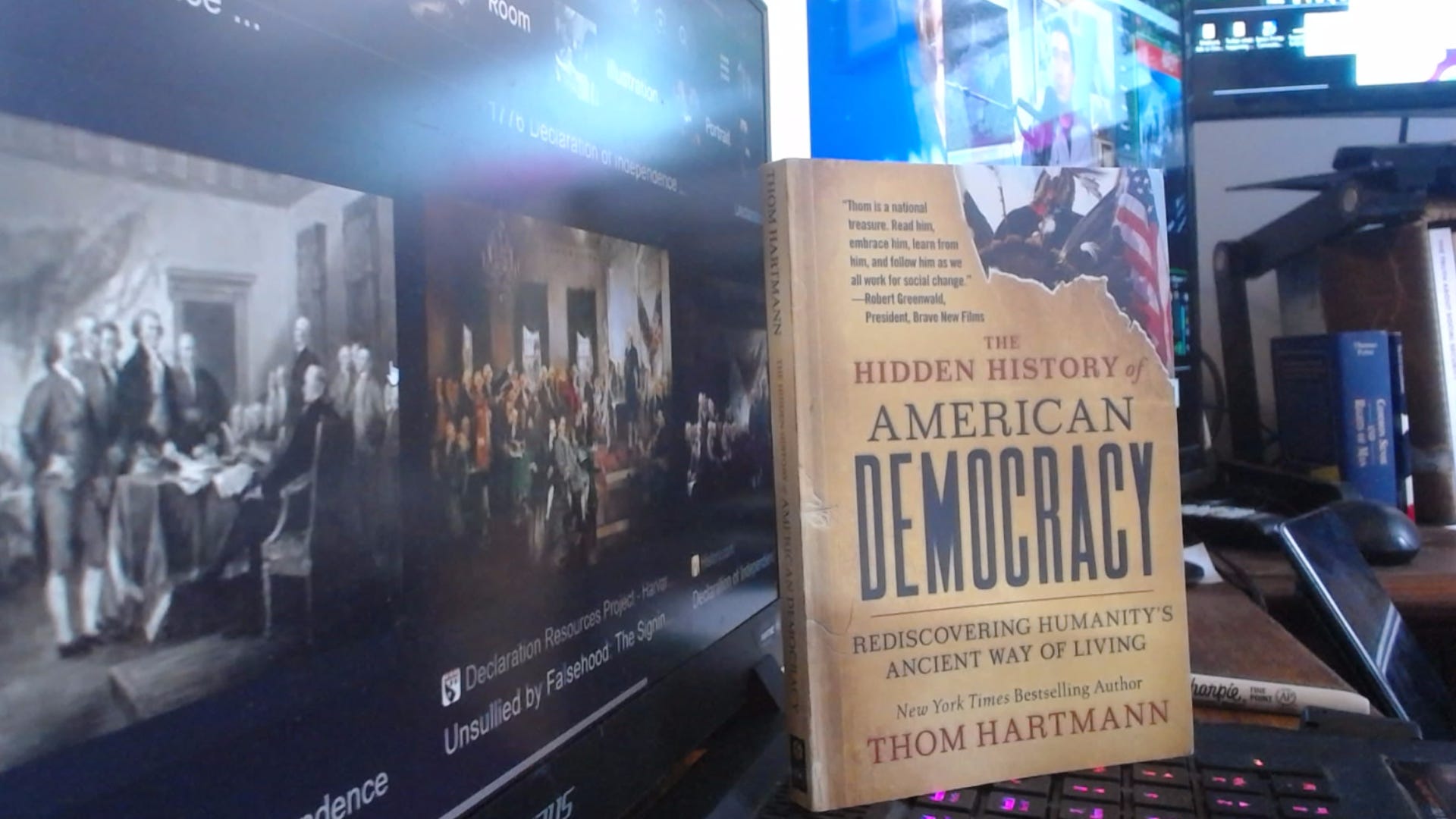
At a moment when democracy itself feels increasingly fragile at home and abroad, I sat down with Thom Hartmann to talk about power, oligarchy, and what he calls “humanity’s ancient way of living.” We discuss the historical roots of democracy, the rise of modern technocratic elites, the long arc from the New Deal to Project 2025, and why the struggle between democracy and authoritarianism is not new, but newly urgent. This conversation is wide-ranging, candid, and grounded in history, with an eye toward what comes next.Below is a transcript generated in part using Alice.ai and ChatGPT.You can watch and listen to The Blue Ridge Breakdown across the internetThis conversation is available on YouTube, Apple Podcasts, and Spotify, with clips and highlights on Troy’s Instagram.Troy MillerThom Hartmann is America’s number one progressive talk radio host. You can find him daily from noon to 3 Eastern, 9 to noon Pacific, pretty much anywhere you can find radio, or progressive radio at that. And he’s the New York Times bestselling author of dozens of books, one of which is The Hidden History of American Democracy: Rediscovering Humanity’s Ancient Way of Living, another of which is The Last Hours of Ancient Sunlight, which I’m very proud to have worked on the updated edition of.Before we get too much further: Thom, welcome back to The Blue Ridge Breakdown. Thanks for joining us.Thom HartmannThanks, Troy. It’s always nice to hang out with you. My cat says hi, too.Troy MillerThom, as we’re recording this on January 14, 2026, I see basically everywhere I look, from the sort of intraparty Democratic level out to the streets of Minneapolis, out to the streets of Venezuela, this sort of existential question of: are we, the people, going to be in charge of our future here?Are we going to be able to do something about the existential crises of machine learning, artificial intelligence, automation, all of this? The existential crisis of climate change? Elon Musk has said that don’t bother squirreling away money anymore for retirement because in 10 or 20 years it’ll be irrelevant. Says a guy who’s about to be a trillionaire.And in the streets of Minneapolis, I think we’re seeing the same sort of thing play out, whether we’re going to have a bunch of masked bandits who are accountable only to Kristi Noem and Donald Trump basically roaming the streets and deciding who is ripe for violence, or whether we’re going to take control of our country.And the parallels—I see the end of the Roman Republic into the Empire stages. I see the British, the Boston Massacre has been coming to mind as I look at Minneapolis. FDR talked about in one of his inaugural addresses: we fought the enemy without in the American Revolution; we fought the enemy within in the Civil War; and at the time, FDR was saying that we were again confronting the enemy without with Fascist Italy and Nazi Germany and imperialist Japan. I think we’re facing the enemy within again today.So with all of that, one of the reasons I really wanted to talk to you today, and in the midst of all of this, is that you have literally written a book on American democracy and rediscovering humanity’s ancient way of living.So with all of that as primer, what do you mean when you’re talking about reclaiming humanity’s ancient way of living, for one? And for two, what do we have with American democracy? How is this so special? Why is this so special?Thom HartmannYeah, well, I mean, what we have right now is increasingly oligarchy in the United States, unfortunately. But yeah, democracy is the oldest operating system for humanity. Virtually every aboriginal or Indigenous tribe around the world is organized democratically or something close to it.That’s the system that the founders of this country—Madison and Jefferson and Franklin in particular—they were the three who had a lot of interactions with Native Americans as they were growing up and throughout their lives, particularly Jefferson and Franklin.And what they observed was democracy actually happening in these communities, the largest of which, of course, was the Haudenosaunee Confederacy.And so this message—that there is a way that humans can live where power flows from the bottom up, not the top down, where government derives its authority from the consent of the governed, to quote the Declaration of Independence—it’s a principle that really, really resonates with people.And it has, all around the world, over and over and over again, at least in the modern era, the last 200 years, changed governments and changed the way people live.There’s always been a dynamic tension. You could argue that the rise of—well, in fact, Daniel Quinn makes this argument very cogently in his book Ishmael, which is a novel, but it’s just brilliant. I used to know Dan before he passed away—that we were always largely democratic prior to the agricultural revolution.And what happened with the agricultural revolution was suddenly we went from basically everybody being involved in food production—mostly the men hunting, mostly the women gathering, but nonetheless everybody involved in food production—to a very small number of people being in charge of food production, those being the farmers.And the farmers quickly discovered that they could lock up the food. And because without food, after a couple of weeks you die, or a couple of months depending on what your stores are like in your body, this became the power of life or death.And thus came the original kings and kingdoms. It was all based on locking up the food, on controlling the critical resources—food, water, transportation, stuff like that.So I think in that context you could make the argument that the post-agricultural revolution era from 7,000 years ago up until about 200 years ago was an argument for oligarchy and kingdom and authoritarian governance.Because everybody said all these advances that we made from the Stone Age literally to the modern technological age happened during times of kings and kingdoms and emperors and princes and all that kind of stuff.I’ve heard that argument made over and over again throughout the years. And the corollary argument, which was being made in a big way during FDR’s time, was that if you try to insert too much democracy, you’re going to end up with chaos. This was Russell Kirk’s The Conservative Mind.And I think what we’ve found, what we’ve learned, is that even—or particularly maybe with the experiment of democracy in the United States and in northern Europe—high levels of democracy, high levels of diffusion of power, high levels of participatory democracy, where power flows from the bottom up, actually enhance the growth of economies and enhance the development of innovation and things like that.But there’s always been this dynamic tension between democracy and autocracy.And the autocrats—you’ve got right-wing billionaires. One famously said he’s increasingly convinced that democracy and freedom are incompatible. That was, I believe, Peter Thiel.You’ve got others saying women shouldn’t have—well, again, it was Peter Thiel—saying the biggest mistake we made was letting women vote.These are very powerful and influential people. J.D. Vance wouldn’t be vice president without Peter Thiel.And so there’s this broad skepticism about democracy among the tech bros and the dark-enlightenment figures. And I see that as probably the biggest challenge that we have going forward, outside of the Trump administration’s naked attempts to turn us into a dictatorship.Troy MillerRight. I mean, I honestly see these guys in the wings basically just allowing Trump to have a nice big playpen of whatever, knowing that he’ll be gone soon enough and then they’ll be able to implement whatever they want.And Peter Thiel has also said basically that he doesn’t know why he should have to go and appeal to people who are never going to agree with him. Let’s use technology to basically go around the institutions of politics and the democratic system and our legislation.And I’ve been saying since Project 2025 was leaked, as I recall, that this is nothing more than a blueprint for what the Powell Memo laid out in 1973 that can be implemented as swiftly as humanly possible, so there’s no potential for pushback—or it can be done swiftly enough behind Donald Trump’s chaos.But I also now see that I think they—the tech billionaires in large part, but also Singer on Wall Street and all of it—it’s the classic villains, ironically enough.And I think now they’re basically trying not only to undo the New Deal and the Great Society, which were the goals of Project 2025, but to take us all the way back to pre-Civil War America, where you can have basically a feudalized system, but the feudal system this time is a technocracy.What do you think about that?Thom HartmannI would argue that to the extent that’s the trajectory that they’re pursuing—and I would not disagree with the argument, although I’d add some nuance—I would argue that what they’re trying to do is recreate the Confederacy.What you had in 1810, 1820, the South was pretty much like the North politically. And what happened was Eli Whitney invented the cotton gin in 1797 and started marketing it in the 1810s.One machine could do the work of 50 enslaved people. It was also very expensive. And so only the biggest plantations could afford it.They got massive economies of scale, which I think is analogous to the assembly line with Henry Ford and to AI and search technology today. That technological change wiped out their small competitors and turned people into sharecroppers.People had to sell their land to the big plantations and then continue to live on that land and work it on behalf of the plantation owners.By the mid-1840s, democracy in the South had completely ended. The South had become an oligarchy, period.And it transitioned over the next decade into a dictatorship, which is what always happens with oligarchies. They either back off—as they did in 1933
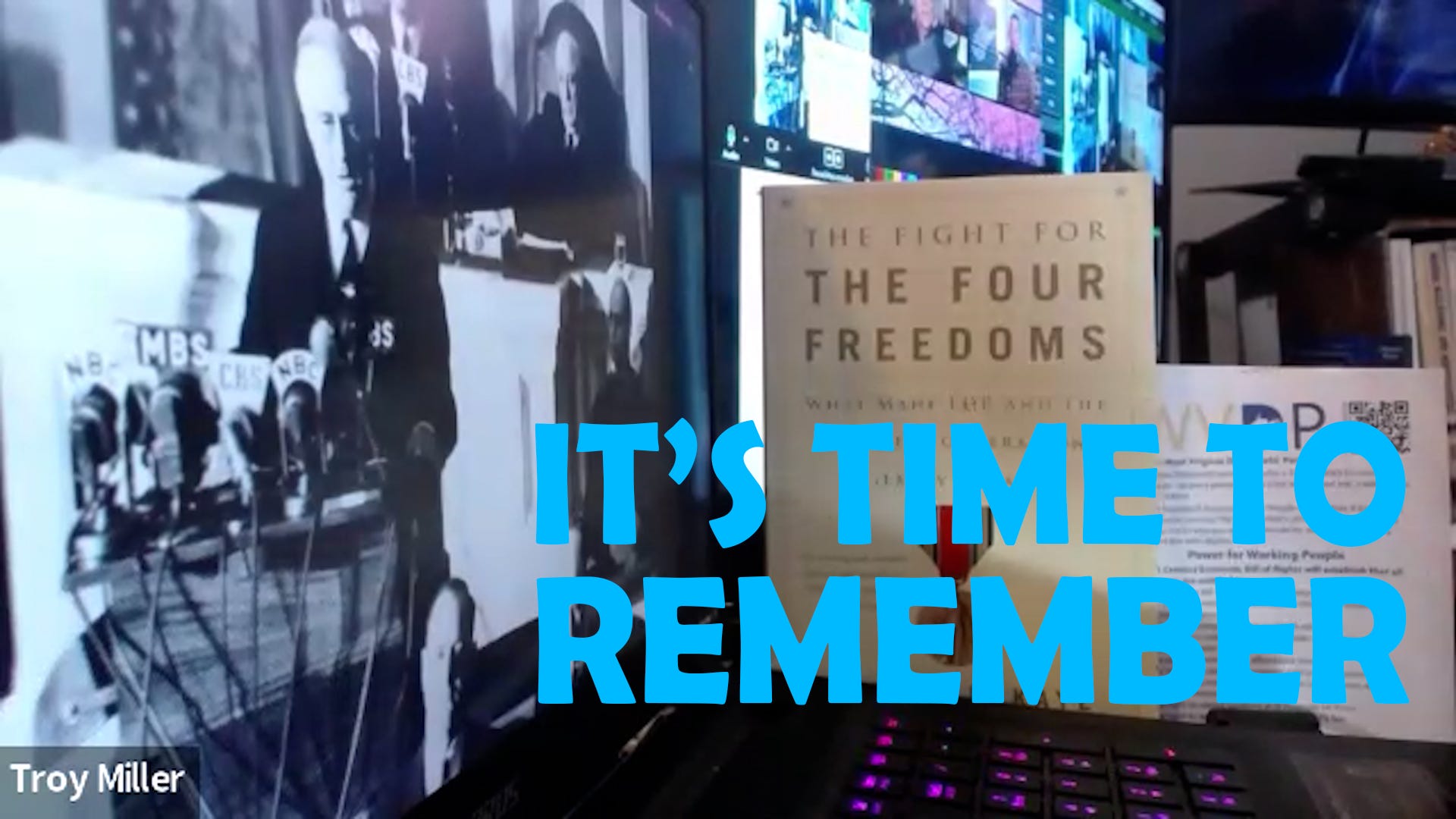
January 6, FDR, and the Fight for the Four FreedomsIn this episode of The Blue Ridge Breakdown, host Troy Miller is joined by historian Professor Harvey J. Kaye to reclaim January 6 as more than a symbol of democratic rupture.On January 6, 1941—eighty-five years before the Capitol insurrection—Franklin Delano Roosevelt delivered his State of the Union address introducing the Four Freedoms: freedom of speech, freedom of worship, freedom from want, and freedom from fear. Those ideas became the moral foundation of the New Deal and America’s fight against fascism.Miller and Kaye trace a democratic through-line from Thomas Paine to Abraham Lincoln to FDR, examining how economic inequality, oligarchy, and historical amnesia have repeatedly threatened democracy—and how earlier generations fought back through labor rights, social programs, and an expansive vision of freedom.Rather than surrender January 6 to insurrectionists, this conversation argues for reclaiming it as a reminder of democracy’s unfinished promise—and the economic rights required to sustain it.Guest: Harvey J. Kaye, Professor Emeritus, University of Wisconsin–Green BayBooks: The Fight for the Four Freedoms; Thomas Paine and the Promise of America Get full access to The Blue Ridge Breakdown at blueridgebreakdown.substack.com/subscribe
In this episode of The Blue Ridge Breakdown, host Troy Miller speaks with freshwater biologist Than Hitt of the West Virginia Rivers Coalition about clean water, cancer rates, wetlands, data centers, and why what goes into our rivers never stays there. From selenium contamination to AI-driven data center water use, this conversation explores how science, policy, and profit shape life downstream—in West Virginia and beyond. Get full access to The Blue Ridge Breakdown at blueridgebreakdown.substack.com/subscribe
The Republican healthcare plan came out yesterday, December 10 -- which is essentially to give tax breaks to billionaires and let average Americans fight directly with health insurers. But WHY is our system in such DESPERATE need of FIXING? What are the factors driving America's healthcare deficiencies? What explains why we don't guarantee every American a right to healthcare? I sit down with @thomhartmann to discuss. Since the first program was developed in Bismarck's conservative Germany in the 1880s, EVERY SINGLE developed country in the WORLD has figured out how to guarantee healthcare to its citizens... except the United States of America. #oligarchy #healthcare #politics #economics #america #history Get full access to The Blue Ridge Breakdown at blueridgebreakdown.substack.com/subscribe
Sabrina Davis -- Policy and Communications Specialist for Social Security Works and Senior Youth Correspondent for The Blue Ridge Breakdown -- joins to discuss aging and what it means to be "chopped" and "unc" and why Social Security is so important for everyone -- young people and "chopped" people alike. Get full access to The Blue Ridge Breakdown at blueridgebreakdown.substack.com/subscribe
In November we've seen big wins from coast to coast and real electoral demands for "affordability" and economic populism -- and at the same time now HALF of US GDP is driven by the AI bubble. @TheZeroHourwithRJEskow joins to discuss what these stories tell us about how voters are rejecting the billionaires' political program even as the billionaires double down on strip mining America. Get full access to The Blue Ridge Breakdown at blueridgebreakdown.substack.com/subscribe
WV Citizen Action Group Organizing Manager and Healthcare Lead Mindy Holcomb joins to talk about how the government shutdown is hurting West Virginians -- and how Republican policies will keep hurting West Virginians even when it re-opens. Get full access to The Blue Ridge Breakdown at blueridgebreakdown.substack.com/subscribe
Joined by labor and employment attorney and DNC committee member Sam Petsonk to discuss how West Virginia can tackle the affordability crisis and start to make healthcare affordable again by expanding the Public Employee Insurance Agency health plans to businesses and individuals. Get full access to The Blue Ridge Breakdown at blueridgebreakdown.substack.com/subscribe
Continuing my conversation with Professor Harvey J. Kaye about Thomas Paine, agrarian justice, social security, Paine's faith, why conservatives tried to erase Paine and what every single progressive movement in American history has had in common Get full access to The Blue Ridge Breakdown at blueridgebreakdown.substack.com/subscribe
An in-depth conversation with historian, author, and professor Harvey J. Kaye, author of "Thomas Paine and the Promise of America" about Thomas Paine's life from his childhood as the son of a corset maker, to sparking the American Revolution with "Common Sense," to birthing the foundations of Social Democracy and attempts to suppress his legacy all the way to his mysterious final resting place. Get full access to The Blue Ridge Breakdown at blueridgebreakdown.substack.com/subscribe
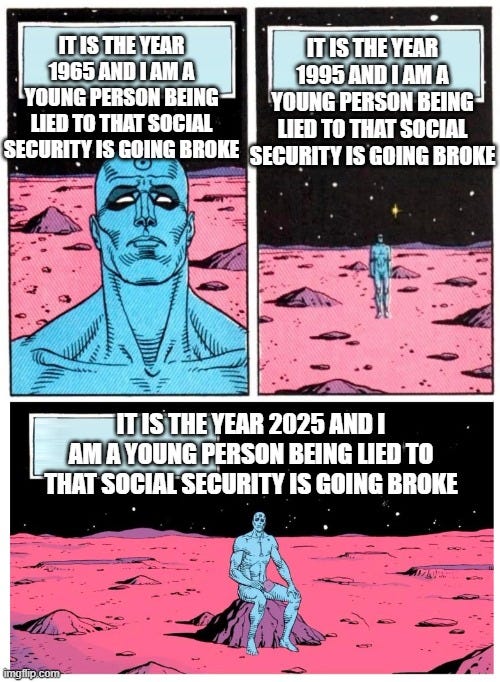
A conversation with Nancy Altman of Social Security Works about Social Security yesterday, today and tomorrow, including: the real and imaginary threats to Social Security; why some people want to destroy it (and steal your hard earned money); and what we can do to shore up and expand the program for generations to come. Get full access to The Blue Ridge Breakdown at blueridgebreakdown.substack.com/subscribe
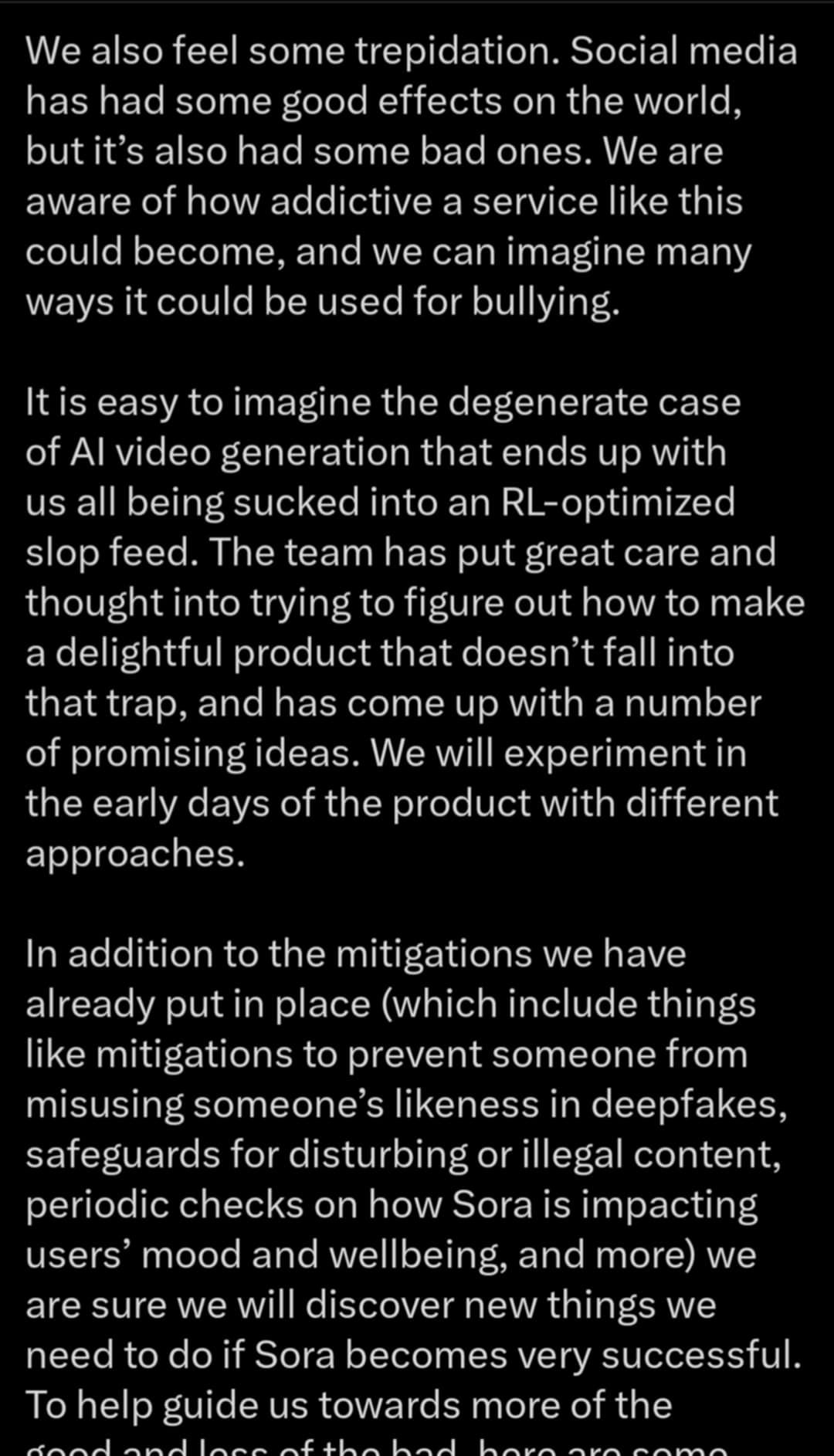
Earlier today (October 1, 2025) I talked with Richard (RJ) Eskow about how so-called “Artificial Intelligence” and the economics around it have very real impacts and extracts from everybody. You’ll hear about things I won’t link to, but I will screenshot to — like OpenAI’s announcement of Sora 2. Amounting to, in my view, “yes we can imagine more than you can the harm this technology may do, and we are ready to profit from it anyway.” The conversation scratches a lot of surfaces but there’s a few things while I was listening back that I wanted to make sure folks had direct links to. Full disclosure, I produced both of these. * On the data center based electronic frontier of so-called “AI,” we’re the cattle, and that’s nothing new. Check out this conversation with Yasha Levine back in July of 2018. * And what’re the robber barons of the 21st century imagining to do with their hoards? Well, they’re pretty sure there’ll be a cataclysm and even then it seems their only concern is how to retain their hoard. (It is this author’s opinion very much that we all need to actually get on Team Human.) Beyond all that, when push comes to shove it’s also hitting us all right where it hurts and we all are paying up whether any of it pans out or not. Just search “ai centers electricity” and let Google’s “AI” confess. There’s a lot more in our “intelligent conversation” — so give it watch, listen, share — and let us know at the Blue Ridge Breakdown what you’d like to learn more about that we touched on or completely missed in this conversation, or other things. If you don’t already sign up for more and we welcome paid subscriptions even as we figure out what we can offer y’all above and beyond the free subscription. With thanks and in solidarity, Troy Get full access to The Blue Ridge Breakdown at blueridgebreakdown.substack.com/subscribe
America’s number one progressive talk radio host and New York Times-bestselling author Thom Hartmann joins to discuss the rise of authoritarianism in America and why it’s not “too late” for America to turn back to small-d democracy. His new book (out September 23, 2025) is The Last American President: A Broken Man, a Corrupt Party, and a World on the Brink. Topics of our conversation include:* how billionaires built a social and political infrastructure that spans from state legislatures to national media outlets * why billionaires depend on a permanent underclass of citizens and politics of division* what we can learn from the history of authoritarianism in other countries* how the Democratic Party lost its sense of identity and its small-d democratic 20th-century roots* why we need to take over the Democratic Party from below and how you can get involvedCheck out the whole thing and stay tuned for more from The Blue Ridge Breakdown - and if you don’t already, make sure to subscribe to Thom Hartmann and The Hartmann Report right here on Substack. Other books discussed in this include The Hidden History of Monopoly ; The Hidden History of Oligarchy : and The Hidden History of Big Brother. All available through your local bookstore or here!With thanks and in solidarity, Troy Get full access to The Blue Ridge Breakdown at blueridgebreakdown.substack.com/subscribe
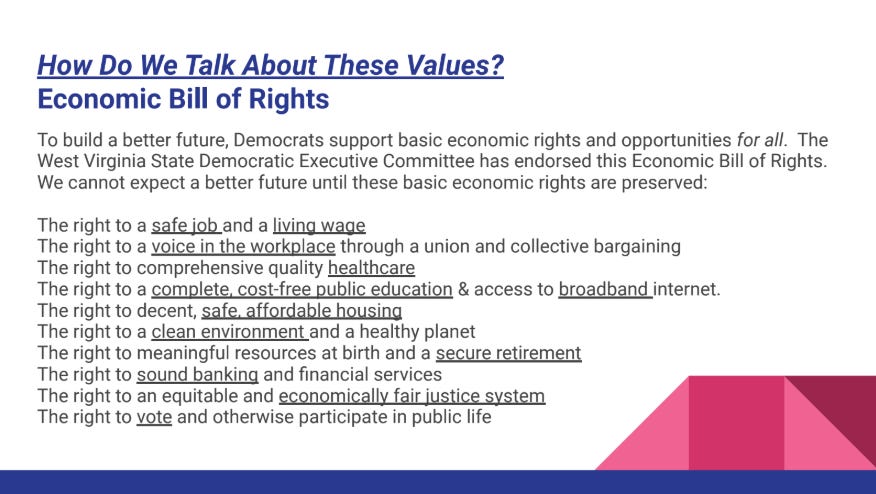
This was a real pleasure! For those of you who don’t know, Progressive Democrats of America recently launched a chapter in West Virginia and I am honored to serve on the steering committee for our chapter. On July 8th, PDA West Virginia invited Prof. Harvey Kaye and PDA Executive Director Alan Minsky to join to discuss their work on the 21st century Economic Bill of Rights that led up to West Virginia’s Democratic Party adopting it both by resolution and into our 2024 party platform (pictured below).We’re not sure how it’s already most of the way through July, but we plan on getting back into more regularly posting to here, even if it is content that is not *exclusive* to here. There’s a few other projects that have been stewing too and I look forward to writing and talking about those more on The Blue Ridge Breakdown. At this point we’re just shy of 250 subscribers, and we’re well on our way to 1500 followers! I appreciate each of you for adding The Blue Ridge Breakdown into your media diet. If you like what you get from us — or you want to encourage us to pick up our output — help spread the word, and/ or donate if you’re so inclined! Your donations mean a lot and go a long way, even if you only give a little. As always — with thanks and in solidarity, Troy Get full access to The Blue Ridge Breakdown at blueridgebreakdown.substack.com/subscribe
What the big ugly budget bill means for WV and Appalachia? Medicaid cuts for us and tax breaks to billionaire coastal elites.Call your reps and tell them hell no! Hands off our rural healthcare! Hands off Medicaid!Congressional switchboard is: (202) 224-3121 Troy Get full access to The Blue Ridge Breakdown at blueridgebreakdown.substack.com/subscribe
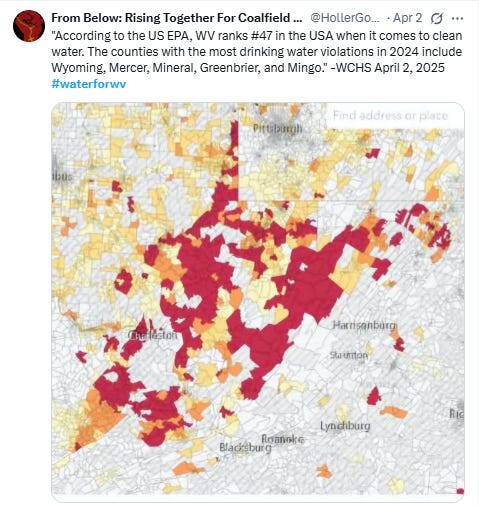
So much to discuss, but the main threads here are how big money and corporate monopolies have rigged both our trade agreements and our political system against working people. At the state level in West Virginia I talk about how Governor Patrick Morrisey seems to endure humiliation after humiliation from getting snubbed on flood relief in Southern West Virginia to getting “fat-shamed” last week by RFK Jr. Speaking of RFK Jr. and the food dye ban in West Virginia: I want to be crystal clear, I want to get toxins out of our consumer products. But I think we need to do so by enforcing a strong precautionary principle that bans the sale of products until the products are proven safe. It seems to me that the current law would still allow a corporation to leak Yellow #5 directly into the Kanawha River and people’s drinking water from a poorly regulated above-ground storage tank. I want them to address the dozens of drinking water violations so that people can drink their damn tap water!On another note about West Virginia flood relief, I talk briefly about the community organizing and mutual aid that Blue Jay Rising is doing in the coalfields, putting both the state government and FEMA to shame, in my opinion. Learn more about that at this short documentary produced by 100 Days In Appalachia:The real problem with our regulatory system is not that we have too many regulations and rules — it’s that the rules and regulations have been written by corporate lobbyists, hired by the most profitable companies, to ensure that our political system re-enforces their profits. I talk a little bit about this bill in context of Jefferson County, West Virginia WV House passes amended version of Morrisey’s microgrid, data center bill sans requirements for coal. This just seems to be another in a long line of bad ideas from Charleston that have the potential to completely undercut Jefferson County’s thoroughbred horse economy, and I talk about some of the nitty gritty of the thoroughbred industry and it’s relationship to the casino in Jefferson County. I also give a crash course on how corporations and companies went from historically being legal fictions chartered by people breaking bread together to do business, to today where now they are “persons” protected by our U.S. Constitution with unlimited speech via profits, and how that naturally has lead to a corporate capture of our political system. Finally, I read off from a conversation I had with Elon Musk’s LLM “Grok” on the prompt: “what legislative actions would be most appropriate for West Virginia to secure the rights laid out in the 21st century Economic Bill of Rights?” I have to say, these proposals are really quite moderate, and I hope that the fact that the messenger is Grok means that maybe some Republican legislators can accept that these are reasonable proposals… I dare to dream!There’s a lot more in the video, so I hope you check out the whole thing and let us know what resonates with YOU! And finally, a reminder to find a rally near you on April 5, 2025 and make sure your voice is heard! You matter, your neighbors matter, and collectively WE matter a hell of a lot more than any corporate bottom line or half-baked idea from Elon Musk of what civilization should be. Onwards, Troy Get full access to The Blue Ridge Breakdown at blueridgebreakdown.substack.com/subscribe

It’s been a moment since I sat down and recorded something, so today is a bit more rant than news. I start off talking about the issue of running “government like a business,” namely that businesses are not homogeneous and are profit-seeking entities, not service providers. For a business, providing service is simply a thing they do to create profit. But more than that, the type of business they’re actually running America like is called “private equity.”They’re behaving exactly like the private equity firms that acquired and then demolished Toys R Us, Sears, Bed, Bath and Beyond, and countless other businesses that have been dismantled and liquidated to pursue easy profit for private equity firms. Now they’re taking clear aim at the USPS (the creation of which is an enumerated power to Congress in the Constitution before the entire Executive Branch), Social Security, Medicare, Medicaid, Amtrak, SNAP, WIC… go down the line, they see a failing business instead of an essential service provider. And they’re gonna dismantle and privatize each and every service that working people rely on in America. Segueing from there, I then read extensively from this speech by Otto von Bismarck, delivered March 15, 1884 (141 years ago, this weekend) in support of Germany’s world-first Worker’s Compensation program. The whole problem is rooted in the question: does the state have the responsibility to care for its helpless fellow citizens, or does it not?[…]The question is, where do the justifiable limits of state socialism lie? Without such a boundary we could not manage our affairs. Each law for poor relief is socialism. There are states that distance themselves so far from socialism that poor laws do not exist at all. I remind you of France. From these conditions in France the theories of the remarkable social politician, Léon Say, whom Herr Bamberger referred to, are quite naturally accounted for. This man expresses the French view that every French citizen has the right to starve and that the state has no responsibility to hinder him in the exercise of his right.I encourage you to check out the whole speech and ask yourself why the conservative position in America is exactly the same as among the 19th century German aristocracy, and in why Democrats are constantly told we must moderate when the party already messages largely to the right of Bismarck. Then I discuss the economic concepts of “velocity of money” and the “multiplier effect,” in contrast to the economic policies we are currently living through. I also discuss how “profits” themselves are a form of economic waste and raise the conundrum of why stimulus checks for workers are called inflationary but tax breaks for the rich aren’t? Either those tax breaks aren’t inflationary because the money doesn’t circulate in the economy (which would be bad), or it is inflationary because they’re re-investing all their hoards of money. The only other option is that inflation might not be driven entirely by spending and the volume of money in an economy. I personally think that inflation in the U.S. is generally not driven by “too much money chasing too few goods,” and I also don’t believe these billionaires re-invest the hundreds of billions that they claim to do. The whole story is bogus, in my opinion.Finally, I call for Democrats to start fighting for a vision beyond “Trump bad” or “Elon bad” — namely I call for national Democrats to adopt and start fighting coherently and cogently for a 21st century Economic Bill of Rights. Every 80 years or so the fight between oligarchy and democracy comes to a head in United States history. That moment is now. We either present a vision of how to move democracy forward and deliver for everyone, or we cede the next 80 years to the oligarchs and economic royalists. So, those are the main themes of today’s Blue Ridge Breakdown. What do you think? What’s the appropriate role of government? Are profits a form of economic waste? Thanks, as always — Troy Get full access to The Blue Ridge Breakdown at blueridgebreakdown.substack.com/subscribe
Today’s video essay focuses on the most recent disastrous flooding in West Virginia and how it connects directly to climate change, and why we need to be urgently building infrastructure to adapt to a warmer world. FIRST, please check out this resource from Blue Jay Rising with a list of how we can help with flood relief in southern West Virginia. https://www.facebook.com/bluejayrisingorgSecond, and to the gist of the video, I cited this early on: NASA’s article on atmospheric warming and moisture (who knows how long this link will stay live?) Since the late 1800s, global average surface temperatures have increased by about 2 degrees Fahrenheit (1.1 degrees Celsius). Data from satellites, weather balloons, and ground measurements confirm the amount of atmospheric water vapor is increasing as the climate warms. (The United Nations’ Intergovernmental Panel on Climate Change Sixth Assessment Report states total atmospheric water vapor is increasing 1 to 2% per decade.) For every degree Celsius that Earth’s atmospheric temperature rises, the amount of water vapor in the atmosphere can increase by about 7%, according to the laws of thermodynamics.From Caity Coyne’s reporting at West Virginia Watch, a sentiment that would be heartwarming if it weren’t from the state’s governor: Morrisey said a bright spot in the ongoing devastation across the coalfields was how West Virginians — and those from outside the state — have stepped up to help their community through donations and cleanup efforts. He said bottled water had been donated from multiple residents who were spared from the floods. Other donations came in from as far away as Texas.“I saw so much volunteer efforts and food and water and people that cared so much. That’s the West Virginia way,” Morrisey said. “… We thank everyone who is putting themselves in harm’s [way] to save the lives of their neighbors. There’s no substitute for that — people acting selflessly to help their fellow West Virginians.”In terms of climate science news, I reference this recent article about a Spanish research team’s discovery of methane deposits releasing under the Antarctic.For more on the nitty-gritty of climate change and the history of humanity, please do check out the Third Edition of The Last Hours of Ancient Sunlight — I don’t want this to be an advertisement so I’ll simply suggest you can either buy it wherever you buy your books (shop local!) or support your local public library by checking it out there! As always, thank you for listening, watching, reading, sharing, subscribing and so on! Troy Get full access to The Blue Ridge Breakdown at blueridgebreakdown.substack.com/subscribe
Today’s commentary starts with some brief discussion about the WV Legislative session, and a reminder to check out: Improving West Virginia’s Competitiveness: How the Mountain State Matches Up With Our Region Where It Matters Most.Find more about the “school choice” discussion in West Virginia here, from Amelia Ferrell Knisely at West Virginia Watch: Morrisey pushes school choice; lawmakers face ‘balancing act’ as counties lose public schools. More on the push to bring AI data centers to West Virginia, from WV Delegate Tristan Leavitt: https://x.com/leavittforwv/status/1889308231492641204 As I’ve written before about how automation destroyed labor in the coal fields: Why Don’t Coal Barons Support Immigration Like They Used To? I also discuss at some length the issues with fighting for the myth of the “free market” — it’s a bit like inventing a better car by assuming a world without friction or gravity. And finally, I talked about this book I helped Thom Hartmann write: The Hidden History of Big Brother in America: How the Death of Privacy and the Rise of Surveillance Threaten Us and Our Democracy. (And relatedly, The Age of Surveillance Capitalism: The Fight for a Human Future at the New Frontier of Power)My main point today is that when we wrote that book just four years ago, we were looking at both a ‘public sector Big Brother” and a ‘private sector Big Brother’. Importantly the Public Sector Big Brother can theoretically be kept in check by virtue of the structure of our democratic republic; but, Private Sector Big Brother is unaccountable to anyone except investors, and can only be kept in check through government guard rails and regulations that protect citizens from unscrupulous would-be Private Sector Big Brother. Thanks for reading The Blue Ridge Breakdown! This post is public so feel free to share it.And now we are seeing now is what happens when those guard rails aren’t strong enough: Elon Musk has become “Big Bro”, and he is merging government surveillance and information sets with his corporate surveillance and information sets, with the sole motivation of creating more profit for Elon Musk and capturing the market for Elon Musk’s corporations. Democracy isn’t dying in darkness — it is drowning in profit. Thank you all as always! Troy Get full access to The Blue Ridge Breakdown at blueridgebreakdown.substack.com/subscribe
Today’s video begins with a brief discussion about WV Governor Patrick Morrisey’s plan for “Backyard Brawl” / Race to the bottom. Please check out this report from WV Center on Budget and Policy, “Improving West Virginia’s Competitiveness: How the Mountain State Matches Up With Our Region Where It Matter Most”. Spoiler alert: Morrisey’s “Backward Brawl” ideas are not going to address West Virginia’s competitiveness in almost any of the ways that would matter most.The bulk of the video (starting around 3 minutes and 50 seconds in) I spend talking about this story and what I see as the implications: OpenAI exploring Stargate data center options in 16 states// Company aiming to develop up to ten gigawatt-scale campuses . It reminds me of Amazon’s HQ2 search: Amazon reaps a treasure trove of data with its HQ2 search. And it reminds me of this: Yasha Levine: On The Electronic Frontier, We're All CattleVery simply, in my view, the Silicon Valley “broligarchs” are doing nothing less than trying to turn the entire country into the Appalachian coalfields of the early 20th century. They aim to get states to bend over backward to accommodate Silicon Valley profits, and in my view I don’t see Silicon Valley proposing much innovation aside from “give us more free stuff to scale up our product so we can sell our product for profit.” The Musk-Bezos War on Collective Bargaining// When Biden’s NLRB began to restore workers’ rights, the world’s richest men moved to shut down the NLRB altogether.For more on what the early 20th century coalfields looked like, check out some of the other essays on the Blue Ridge Breakdown: Why Don’t Coal Barons Support Immigration Like They Used To? Lessons for Labor & Community: A Century of Power Ebb and Flow in Appalachia’s CoalfieldsCronies for Appalachian Oligarchs Celebrate Heroes of Southern OligarchyThank you all again! Troy Get full access to The Blue Ridge Breakdown at blueridgebreakdown.substack.com/subscribe

Comments

Download from Google Play

Download from App Store
 United States