


 Claim Ownership
The Cognitive Crucible
Subscribed: 127Played: 2,074
Subscribe

© 2023 Information Professionals Association
Description
The Cognitive Crucible explores all aspects of our generational challenge: Cognitive Security. It is the only podcast dedicated to increasing interdisciplinary collaboration between information operations practitioners, scholars, and policy makers. Join the discussion forum each week with the Cognitive Crucible host, John Bicknell. Have a question or would like to suggest a topic go to: https://information-professionals.org/podcasts/cognitive-crucible.
240 Episodes
Reverse

The Cognitive Crucible is a forum that presents different perspectives and emerging thought leadership related to the information environment. The opinions expressed by guests are their own, and do not necessarily reflect the views of or endorsement by the Information Professionals Association. During this episode, Dr. Josh "Bugsy" Segal recaps his recent observations from the Ukraine battlefield and concerns for Western governments which don't adapt quickly. Ukraine's rapid development of sophisticated, cost-effective domestic defense technology, including advanced counter-drone systems, is positioning the nation as a key arms supplier of the future. This innovation highlights a critical national security concern for the U.S., as expensive Western weapons have proven ineffective against Russian countermeasures, and the American defense industry is failing to incorporate vital battlefield insights. To maintain its global defense sector dominance, the U.S. must accept its current competitive disadvantage and immediately prioritize collaboration with Ukraine to integrate its effective, relevant technology. Recording Date: 12 Dec 2025 Resources: Cognitive Crucible Podcast Episodes Mentioned #192 Josh "Bugsy" Segal on the American Maginot Line #219 Dr. Josh Segal on Are We Losing the War? Lethality, Deterrence, and Information Ukraine offers a roadmap for faster and cheaper battlefield innovation by Josh Segal Defense in depth Brave 1 Ukrainian Defense Innovation Fire Point Weapons Systems Link to full show notes and resources Guest Bio: Josh Segal holds a Ph.D. in Russian Studies from George Washington University and an MA in Russian Studies from Emory University and graduated Summa Cum Laude from Emory. He is a former negotiator on Chemical Weapons Convention and helped establish the OPCW, and other treaties in the 1990s, became active duty Navy Info warfare and intel officer and served 27 years, finishing as Director of the Information Warfare Program and finally at US Special Operations Command. Current;y, he is a senior advisor to a number of Department of War leaders across Policy and the Services, recently returned from 11 speaking engagements in Europe and North America on Hybrid Warfare. About: The Information Professionals Association (IPA) is a non-profit organization dedicated to exploring the role of information activities, such as influence and cognitive security, within the national security sector and helping to bridge the divide between operations and research. Its goal is to increase interdisciplinary collaboration between scholars and practitioners and policymakers with an interest in this domain. For more information, please contact us at communications@information-professionals.org. Or, connect directly with The Cognitive Crucible podcast host, John Bicknell, on LinkedIn. Disclosure: As an Amazon Associate, 1) IPA earns from qualifying purchases, 2) IPA gets commissions for purchases made through links in this post.
The Cognitive Crucible is a forum that presents different perspectives and emerging thought leadership related to the information environment. The opinions expressed by guests are their own, and do not necessarily reflect the views of or endorsement by the Information Professionals Association. During this episode, Michael Lissack discusses Anticipatory Agents in Causal Bubbles–a unified theoretical framework that reconciles Quantum Bayesianism (QBism), Robert Rosen's theory of Anticipatory Systems, the causal bubbles interpretation of quantum mechanics, and pragmatic constructivism through Hans Vaihinger's philosophy of 'as if.' Recording Date: 2 Dec 2025 Research Question: Michael Lissack suggests an interested student or researcher examine how can the continuous process of asking "what gives this symbol, sign, or phrase meaning?" (synecdoche) against the background of the "information abyss" lead to a developed sense of understanding? Resources: Cognitive Crucible Podcast Episodes Mentioned #7 Randy Rosin on Russia and Applied Cybernetics #72 Noah Komnick on Cybernetics and the Age of Complexity #47 Yaneer Bar-Yam on Complex Systems and the War on Ideals #85 Josh Kerbel on Complexity and Anticipatory Intelligence Anticipatoryagents.com Anticipatory Agents in Causal Bubbles: Reconciling Quantum Bayesianism, Rosen's Anticipatory Systems, and Pragmatic Constructivism by Michael Lissack WHAT SCIENTIFIC TERM OR CONCEPT OUGHT TO BE MORE WIDELY KNOWN? Ashby's Law of Requisite Variety by John Naughton Destruction and Creation by John Boyd (1976) W. R. Ashby, "Requisite variety and its implications for the control of complex systems," Cybernetica, vol. 1, no. 2, pp. 83–99, 1958. Link to full show notes and resources Guest Bio: Michael Lissack, the founder and director of the Second Order Science Foundation, has dedicated his academic career to understanding how individuals and organizations can learn and adapt in a rapidly changing world. Lissack's work focuses on the intersection of cognition, communication, and technology, and he has developed innovative approaches to knowledge management, organizational learning, and leadership development. Lissack was the president of American Society for Cybernetics, founder of the Institute for the Study of Coherence and Emergence, and founding editor of the journal Emergence. He has taught at several universities throughout the world, including Erasmus in the Netherlands and Tongji in Shanghai. He holds a D.B.A. in complex systems from Brunel University and Henley Management College. About: The Information Professionals Association (IPA) is a non-profit organization dedicated to exploring the role of information activities, such as influence and cognitive security, within the national security sector and helping to bridge the divide between operations and research. Its goal is to increase interdisciplinary collaboration between scholars and practitioners and policymakers with an interest in this domain. For more information, please contact us at communications@information-professionals.org. Or, connect directly with The Cognitive Crucible podcast host, John Bicknell, on LinkedIn. Disclosure: As an Amazon Associate, 1) IPA earns from qualifying purchases, 2) IPA gets commissions for purchases made through links in this post.
The Cognitive Crucible is a forum that presents different perspectives and emerging thought leadership related to the information environment. The opinions expressed by guests are their own, and do not necessarily reflect the views of or endorsement by the Information Professionals Association. During this episode, COL Rob Thelan discusses the US Army's Information Warfare (IWAR) Branch. IWAR aims to integrate the IO (Information Operations) and PSYOP (Psychological Operations) communities into a unified, conventional force branch. Other topics include: U.S. lagging behind adversaries like China and Russia in IO funding and the need to break down "stovepiping" within the U.S. information operations community; the State Department's Global Engagement Center and filling the void with respect to mis/dis-information; and military public affairs evolution. Recording Date: 19 Nov 2025 Research Question: Rob Thelan suggests an interested student or researcher examine: Where else are we falling behind our adversaries and how do we make up ground – especially with respect to operations in the information environment? Resources: Cognitive Crucible Podcast Episodes Mentioned #106 Mike Taylor on the Global Engagement Center Art of War by Sun Tzu The Fire of the Dragon: China's New Cold War by Ian Williams Link to full show notes and resources Guest Bio: Colonel Robert M. Thelen is currently the chief of staff of the Department of the Army Strategic Operations Directorate (DAMO SO). Previously, he was the Department of State Senior Military Advisor to the Bureau of Public Diplomacy and Global Public Affairs office of Foreign Information Manipulation and Interference (R/FIMI). Colonel Thelen completed a War College Fellowship at the Near East South Asia Strategic Studies Center at National Defense University. Prior to War College he was assigned to the Joint Staff J39 (Deputy Director for Global Operations DDGO) as Chief Special Activities Division (SAD). He was also assigned to the US Special Operations Command (SOCOM) J39 Information Operations (IO) Division as the Chief of Special Activities. He also served at the US Africa Command (AFRICOM) J39 Information Operations (IO) Division after earning a Master Degree in Public Administration from Harvard University's John F. Kennedy School of Government. He previously served as the G7 Information Operations Officer for the Second Infantry Division, stationed at Camp Red Cloud, Republic of Korea. He was also assigned to Fort Hood's III Armored Corps as a G35 Future Operations IO Planner and deployed to Afghanistan in 2013 where he lead an international team of IO planners for the Future Operations G35 of the ISAF Joint Command (IJC). Before joining III Armored Corps, COL Thelen served with the U.S. Army Forces Command's Operations Division Watch team where he was instrumental in establishing the IO section within the G-3/5/7. Colonel Thelen has had a long and diverse military career, bringing a plethora of military experience to the Department of State. While still a junior in high school, he enlisted in the Illinois Army National Guard as a photo journalist. Four years later, he attended Officer Candidate School and commissioned as a Second Lieutenant after graduating from Illinois State University with a Bachelor of Science degree in Public Relations. He then relocated to Washington, D.C., where he pursued a career with the federal government while continuing to serve in the Virginia Army National Guard's 29th Infantry Division as the Commander of Headquarters and Headquarters Company, as well as an aide-de-camp to the Commanding General. COL Thelen was transferred to Atlanta, Georgia where he joined the Georgia Army National Guard and the 124th Mobile Public Affairs Detachment. In 1997 he was mobilized, deployed and attached to the 1st Infantry Division 2-2 Infantry in Bosnia-Herzegovina, serving as the Task Force 2-2 Public Affairs Officer. He remained on active duty through the Active Guard and Reserve (AGR) program where he served in Stuttgart, Germany with the European Command J37 NATO Exercise Branch and performed Operations Center duties during the Kosovo Campaign. Following this assignment, he returned to Atlanta and served in the G-3/5/7 Training Division at the U.S. Army Forces Command and the Executive Officer to the 2-star senior Army National Guard Advisor. He was then selected to serve as the Battalion S3, Assistant Professor of Military Science (APMS) at the Georgia Institute of Technology (Georgia Tech) ROTC program, and then as the Coordinator for the Georgia National Guard's State Partnership Program with the Former Soviet Republic of Georgia. During this time he also commanded the 124th Mobile Public Affairs Detachment. After command, he attended Command and General Staff College (CGSC) at Fort Leavenworth, Kansas and was then assigned as the Brigade S3 Plans officer at the 48th Infantry Brigade. COL Thelen was then assessed to active duty as an Information Operations officer and continues to serve. COL Thelen is married to Alexis (Layton-Moore) and has three children, Jake, Rachel and Robert, Jr. He has owned and operated a real estate investment firm and is an active member of the Harvard Kennedy School Alumni Association. About: The Information Professionals Association (IPA) is a non-profit organization dedicated to exploring the role of information activities, such as influence and cognitive security, within the national security sector and helping to bridge the divide between operations and research. Its goal is to increase interdisciplinary collaboration between scholars and practitioners and policymakers with an interest in this domain. For more information, please contact us at communications@information-professionals.org. Or, connect directly with The Cognitive Crucible podcast host, John Bicknell, on LinkedIn. Disclosure: As an Amazon Associate, 1) IPA earns from qualifying purchases, 2) IPA gets commissions for purchases made through links in this post
The Cognitive Crucible is a forum that presents different perspectives and emerging thought leadership related to the information environment. The opinions expressed by guests are their own, and do not necessarily reflect the views of or endorsement by the Information Professionals Association. During this episode, Bob Thibadeau returns to the Cognitive Crucible and discusses the fundamentals of computational cognitive neuroscience and privacy. He asserts that everyone should manage a million identities on an embodied chip, share these identities selectively, and change them frequently. Recording Date: 29 Sep 2025 Resources: Cognitive Crucible Podcast Episodes Mentioned #5 Robert Thibadeau on Lies The Internet Court of Truth Robotaxies: Blackmail Comes of Age and the Need for Identity MegaChips (YouTube) Fiat Lies are Genocide on the Human Race (YouTube) Fiat Lies are Genocide on the Human Race (Medium) Flashy Crypto Chipped: A Storage OEM View (YouTube) Robert Thibadeau's Medium Site Frequency-hopping spread spectrum (Wikipedia) Heider and Simmel (1944) animation (YouTube) Link to full show notes and resources Guest Bio: Professor Bob Thibadeau has been affiliated with Carnegie Mellon University School of Computer Science since 1979. His expertise is in Cognitive Science, AI, and Machine Learning. Prof Thibadeau is one of the founding Directors of the Robotics Institute. And, he is author of the book "How to Get Your Lies Back: The Internet Court of Lies." Watch his recent Liecourt.com or truthcourt.net trials at https://www.truthcourt.net/sponsor/thibadeau. "Fiat Lies are Genocide on the Human Race" is a brief summary of the book available on Medium.com. It is tried for its truthfulness off his TruthCourt.net sponsor page. or directly at https://www.youtube.com/watch?v=qp-Q_Vqm7Eo. His "million identities to protect your privacy," also on Medium.com, is tried for its truthfulness at https://www.youtube.com/watch?v=tyxTdFlmZY8. About: The Information Professionals Association (IPA) is a non-profit organization dedicated to exploring the role of information activities, such as influence and cognitive security, within the national security sector and helping to bridge the divide between operations and research. Its goal is to increase interdisciplinary collaboration between scholars and practitioners and policymakers with an interest in this domain. For more information, please contact us at communications@information-professionals.org. Or, connect directly with The Cognitive Crucible podcast host, John Bicknell, on LinkedIn. Disclosure: As an Amazon Associate, 1) IPA earns from qualifying purchases, 2) IPA gets commissions for purchases made through links in this post.
The Cognitive Crucible is a forum that presents different perspectives and emerging thought leadership related to the information environment. The opinions expressed by guests are their own, and do not necessarily reflect the views of or endorsement by the Information Professionals Association. During this episode, Lt. Col. Orlandon Howard discusses rethinking strategic communication for U.S. military public affairs, exploring topics such as the PESO model and the balance between informing and influencing. The discussion centers around his recent article: "Communication Strategery: Rethinking Strategic Communication for U.S. Military Public Affairs." Recording Date: 24 Sep 2025 Research Question: Orlandon Howard suggests an interested student or researcher examine: What cognitive (psychological and sociological) conditions typically exist among host nation populations that are associated with prevalent support for foreign military aims and operations? Resources: "Communication Strategery: Rethinking Strategic Communication for U.S. Military Public Affairs" by Orlandon Howard PESO model Propaganda: The Formation of Men's Attitudes (1973) by Jacques Ellul Link to full show notes and resources Guest Bio: Lt. Col. Orlandon Howard serves as the public affairs officer (or PAO) for the Assistant Secretary of the Army for Manpower & Reserve Affairs and the U.S. Army G-1 at the Pentagon. He has previously worked as a public affairs coach-trainer, public affairs operations officer, Army brigade combat team PAO, marketing operations officer, and as a Fellow with FleishmanHillard, a New York-based public relations and marketing agency. About: The Information Professionals Association (IPA) is a non-profit organization dedicated to exploring the role of information activities, such as influence and cognitive security, within the national security sector and helping to bridge the divide between operations and research. Its goal is to increase interdisciplinary collaboration between scholars and practitioners and policymakers with an interest in this domain. For more information, please contact us at communications@information-professionals.org. Or, connect directly with The Cognitive Crucible podcast host, John Bicknell, on LinkedIn. Disclosure: As an Amazon Associate, 1) IPA earns from qualifying purchases, 2) IPA gets commissions for purchases made through links in this post.
The Cognitive Crucible is a forum that presents different perspectives and emerging thought leadership related to the information environment. The opinions expressed by guests are their own, and do not necessarily reflect the views of or endorsement by the Information Professionals Association. During this episode, Dr. John Pennell discusses his book and Ph.D. research: Assessing Russia's Actions in Ukraine and Syria, 2014–2022 Implications for the Changing Character of War. Recording Date: 4 Sep 2025 Research Question: John Pennell suggests an interested student or researcher examine: How can we better inform the American public about the information space; focusing on informing the American public about threats from adversaries and discerning fact from fiction. How Russian information operations has evolved since 2022; studying the evolving Russian information operations since 2014, including the shift in approach in 2022, as well as the influence of non-state actors like criminal syndicates and drug cartels in the information space. Resources: Cognitive Crucible Podcast Episodes Mentioned #151 Daniel Runde on Chinese Soft Power #230 Randy Rosin on Warfare is Informational; the Case for a New DoD Information Paradigm Assessing Russia's Actions in Ukraine and Syria, 2014–2022 Implications for the Changing Character of War By John A. Pennell Link to full show notes and resources Guest Bio: Dr. Pennell is a highly accomplished, retired US senior foreign service officer (Minister-Counselor rank), with 20+ years of executive-level experience leading multidisciplinary, interagency, and joint teams to oversee US cooperation programs across Africa, Eurasia, the Indo-Pacific, Latin America, and the Middle East. He has deep expertise in irregular warfare, strategic competition, public diplomacy, strategic communications, and countering hybrid threats including in high-threat, gray-zone, and/or active combat environments. He's currently a Senior Diplomacy Fellow with Narrative-Strategies, Senior Strategic Advisor with Pax Strategies LLC, and Senior Practitioner (pro bono) with the US Department of Defense's Irregular Warfare Center (IWC) in the intelligence, operations in the information environment, and emerging tech networks. He's also a subject matter expert reviewer (pro bono) for National Defense University's Joint Forces Quarterly (JFQ) and an International Advisory Board Member of Ukraine Foundation, a Swiss-based organization focused on peace processes and conflict resolution in Ukraine. In addition to being a lifetime member of the Information Professionals Association (IPA), he's a member of the American Foreign Service Association (AFSA), Baltimore Council on Foreign Affairs (BCFA), Foreign Policy for America (FP4A), Intelligence and National Security Alliance (INSA), and National Security Leaders for America (NSL4A). He has a PhD in War & Defense Studies from King's College London and Masters degrees from the National War College and American University. His book on Russia's irregular warfare activities in Syria and Ukraine is available from Bloomsbury, Amazon, Waterstones, etc. You can also visit his website. About: The Information Professionals Association (IPA) is a non-profit organization dedicated to exploring the role of information activities, such as influence and cognitive security, within the national security sector and helping to bridge the divide between operations and research. Its goal is to increase interdisciplinary collaboration between scholars and practitioners and policymakers with an interest in this domain. For more information, please contact us at communications@information-professionals.org. Or, connect directly with The Cognitive Crucible podcast host, John Bicknell, on LinkedIn. Disclosure: As an Amazon Associate, 1) IPA earns from qualifying purchases, 2) IPA gets commissions for purchases made through links in this post.
The Cognitive Crucible is a forum that presents different perspectives and emerging thought leadership related to the information environment. The opinions expressed by guests are their own, and do not necessarily reflect the views of or endorsement by the Information Professionals Association. During this episode, Tod Rathbone discusses trends related to digital marketing and why it matters including: the evolution of live media, digital ad tracking, AI's impact on marketplaces and media, identity mapping and platform challenges, AI and online safety, challenges of digital information management, and infrastructure vulnerabilities. Recording Date: 2 Sep 2025 Link to full show notes and resources Guest Bio: Tod Rathbone is a seasoned marketing strategist and agency leader with over four decades of experience guiding global brands and creative organizations through transformation and growth. He currently serves as a fractional Chief Strategy Officer for Infinity Marketing Team and Reed Art Department. Previously, Tod was Global Chief Strategy Officer at WONGDOODY, where he built and scaled the strategic offering that helped transform the agency from a $25M regional shop into a $200M global digital innovation company. He also served on the 4A's Board of Directors, contributing industry leadership at the national level. His earlier leadership roles at Publicis Sapient, Razorfish, and Band Digital spanned brand strategy, digital transformation, and innovation for Fortune 100 clients including Samsung, Nestlé, and Apple. Known for shaping agencies into engines of growth and cultural relevance, Tod combines deep expertise in brand building, digital innovation, and creative strategy with a proven track record of scaling businesses, inspiring teams, and delivering award-winning client work. About: The Information Professionals Association (IPA) is a non-profit organization dedicated to exploring the role of information activities, such as influence and cognitive security, within the national security sector and helping to bridge the divide between operations and research. Its goal is to increase interdisciplinary collaboration between scholars and practitioners and policymakers with an interest in this domain. For more information, please contact us at communications@information-professionals.org. Or, connect directly with The Cognitive Crucible podcast host, John Bicknell, on LinkedIn. Disclosure: As an Amazon Associate, 1) IPA earns from qualifying purchases, 2) IPA gets commissions for purchases made through links in this post.
The Cognitive Crucible is a forum that presents different perspectives and emerging thought leadership related to the information environment. The opinions expressed by guests are their own, and do not necessarily reflect the views of or endorsement by the Information Professionals Association. During this episode, Randy Rosin returns to the Cognitive Crucible to support his assertion that warfare is informational and the US Department of Defense needs an entirely new information paradigm. Recording Date: 28 Aug 2025 Resources: Cognitive Crucible Podcast Episodes Mentioned #7 Randy Rosin on Russia and Applied Cybernetics #187 Randy Rosin on Reflexive Control #125 Journey from conception through JP 3-04 Cybernetics: Or Control and Communication in the Animal and the Machine by Norbert Wiener Programming the Universe: A Quantum Computer Scientist Takes On the Cosmos by Seth Lloyd The Bit and the Pendulum: From Quantum Computing to M Theory--The New Physics of Information by Tom Siegfried The Information: A History, A Theory, A Flood by James Gleick Link to full show notes and resources Guest Bio: Dr. Randy Rosin was formerly a faculty member of the National Intelligence University in Bethesda, Maryland. He taught courses in propaganda, foreign information and cyber strategy, cyber threat intelligence, denial and deception, and leadership. He is a 32-year active-duty Army veteran who has served in combat arms, psychological operations, information operations, as a middle eastern foreign area officer, and in human intelligence operations. Notably serving as the information operations chief in Iraq, at US Central Command, and as the Senior Defense Official and Defense Attaché in Yemen. His research interests are in the intersection of technology and manipulative communication and on the development of information-based theoretical frameworks in military applications. Currently he teaches critical thinking courses in the Honors College at Montana State University. About: The Information Professionals Association (IPA) is a non-profit organization dedicated to exploring the role of information activities, such as influence and cognitive security, within the national security sector and helping to bridge the divide between operations and research. Its goal is to increase interdisciplinary collaboration between scholars and practitioners and policymakers with an interest in this domain. For more information, please contact us at communications@information-professionals.org. Or, connect directly with The Cognitive Crucible podcast host, John Bicknell, on LinkedIn. Disclosure: As an Amazon Associate, 1) IPA earns from qualifying purchases, 2) IPA gets commissions for purchases made through links in this post.
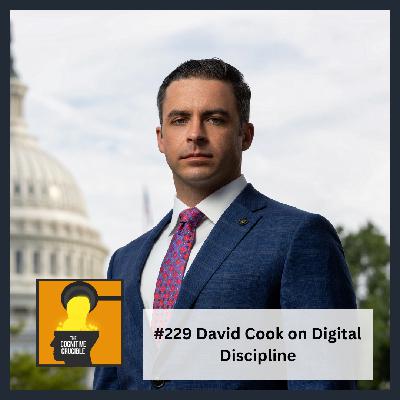
The Cognitive Crucible is a forum that presents different perspectives and emerging thought leadership related to the information environment. The opinions expressed by guests are their own, and do not necessarily reflect the views of or endorsement by the Information Professionals Association. During this episode, David Cook discusses his recent article: When Cell Phones Kill: Digital Discipline and the Future of SOF Obscurity. In addition to digital discipline in a national security context, David discusses cyber and AI threats and practical mitigation practices that private sector companies and citizens should be aware of. Recording Date: 19 Aug 2025 Resources: Cognitive Crucible Podcast Episodes Mentioned #222 JD Maddox on Emerging IO Opportunities When Cell Phones Kill: Digital Discipline and the Future of SOF Obscurity by Dave Cook Link to full show notes and resources Guest Bio: David Cook spent a decade in the US Army in both conventional and special operations units focused on the Middle East. After his time in the Army, David joined Congressman Darrell Issa as a fellow then National Security Advisor who handled covered his Foreign Affairs and Judiciary portfolio. David co-authored several strategic documents at Army OSINT Office and the Defense Intelligence Agency along with contributing to the most recent OSINT Strategy released by the Office of the Director of National Intelligence. Most recently, David led the go-to-market efforts of a leading OSINT software company. About: The Information Professionals Association (IPA) is a non-profit organization dedicated to exploring the role of information activities, such as influence and cognitive security, within the national security sector and helping to bridge the divide between operations and research. Its goal is to increase interdisciplinary collaboration between scholars and practitioners and policymakers with an interest in this domain. For more information, please contact us at communications@information-professionals.org. Or, connect directly with The Cognitive Crucible podcast host, John Bicknell, on LinkedIn. Disclosure: As an Amazon Associate, 1) IPA earns from qualifying purchases, 2) IPA gets commissions for purchases made through links in this post.
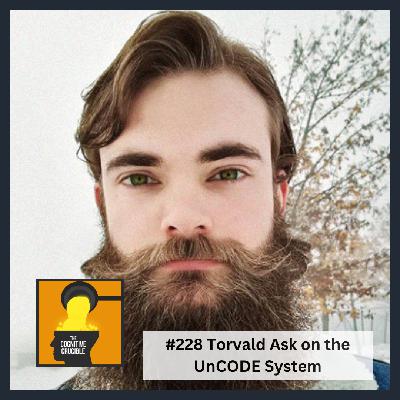
The Cognitive Crucible is a forum that presents different perspectives and emerging thought leadership related to the information environment. The opinions expressed by guests are their own, and do not necessarily reflect the views of or endorsement by the Information Professionals Association. During this episode, Torvald Ask discusses his 2023 co-authored paper: The UnCODE System: A Neurocentric Systems Approach for Classifying the Goals and Methods of Cognitive Warfare. The UnCODE System is an accessible and a practical tool for understanding and addressing cognitive warfare goals. Recording Date: 1 Aug 2025 Research Question: Torvald Ask suggests an interested student or researcher examine how to measure the cognitive baseline of a population to figure out if they have been influenced positively or negatively. Resources: Cognitive Crucible Podcast Episodes Mentioned #227 Matthew Canham on Agentic AI and the Cognitive Security Institute #223 Paul Buvarp on the Demand-side of Disinformation #174 Kara Masick on Assessment Insights from Program Evaluation The UnCODE System: A Neurocentric Systems Approach for Classifying the Goals and Methods of Cognitive Warfare by Torvald F. Ask, Ricardo G. Lugo, Stefan Sütterlin, Matthew Canham, Daniel Hermansen, Benjamin J. Knox The Moloch Trap of Environmental Problems Link to full show notes and resources Guest Bio: Torvald F. Ask is a Neuroscientist and co-founder of Gonzo Solutions. His research is focused within the fields of human factors in cybersecurity, cognitive security and cognitive warfare, cognitive control, psycho-neuro-immunology, and neurodevelopment. Ask holds a PhD in Information Security and Communication Technology from the Norwegian University of Science and Technology. He is currently affiliated with the Faculty of Health, Welfare and Organization at Østfold University College, Norway. About: The Information Professionals Association (IPA) is a non-profit organization dedicated to exploring the role of information activities, such as influence and cognitive security, within the national security sector and helping to bridge the divide between operations and research. Its goal is to increase interdisciplinary collaboration between scholars and practitioners and policymakers with an interest in this domain. For more information, please contact us at communications@information-professionals.org. Or, connect directly with The Cognitive Crucible podcast host, John Bicknell, on LinkedIn. Disclosure: As an Amazon Associate, 1) IPA earns from qualifying purchases, 2) IPA gets commissions for purchases made through links in this post.
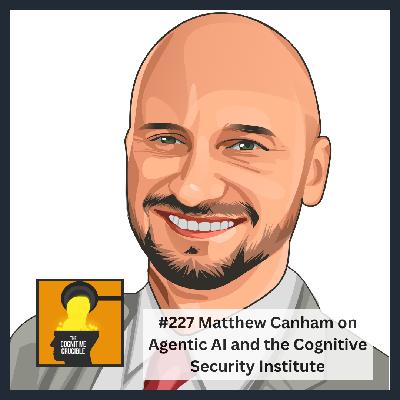
The Cognitive Crucible is a forum that presents different perspectives and emerging thought leadership related to the information environment. The opinions expressed by guests are their own, and do not necessarily reflect the views of or endorsement by the Information Professionals Association. During this episode, Matthew Canham discusses agentic AI's potential to boost productivity by automating tasks and its anticipated influence on user interfaces, potentially creating new security vulnerabilities and opportunities for user manipulation. Matthew emphasized the importance of robust security measures to counteract such threats. He also touched on the "meaning crisis" in modern society, attributing it to increased free time and mental bandwidth, and its connection to rising rates of drug overdoses and suicides. As executive director of the Cognitive Security Institute, Matthew discusses the Institute's growth since 2023, now with over 550 members, and its focus on community engagement and education. He highlighted initiatives like the Cyber Talent Exchange program, connecting job seekers with cybersecurity roles, and addressed AI's significant impact on the job market, leading to overwhelming application numbers. Recording Date: 22 July 2025 Resources: Cognitive Crucible Podcast Episodes Mentioned #89 Ajit Mann and Paul Cobaugh on Narrative #138 Matthew Canham on Cognitive Security #212 Libby Lange on Algorithmic Cognitive Warfare #223 Paul Buvarp on the Demand-side of Disinformation #224 Jake Bebber on Cognitive Warfare #221 Carrick Longley on Influence Automation Cognitive Security Institute NYTimes: A.I. Sludge Has Entered the Job Search The Cognitive Attack Taxonomy (CAT) Crisis of Meaning John Vervaeke Youtube Series Link to full show notes and resources Guest Bio: Dr. Matthew Canham is the Executive Director of the Cognitive Security Institute and a former Supervisory Special Agent with the Federal Bureau of Investigation (FBI), he has a combined twenty-one years of experience in conducting research in cognitive security and human-technology integration. He currently holds an affiliated faculty appointment with George Mason University, where his research focuses on the cognitive factors in synthetic media social engineering and online influence campaigns. He was previously a research professor with the University of Central Florida, School of Modeling, Simulation, and Training's Behavioral Cybersecurity program. His work has been funded by NIST (National Institute of Standards and Technology), DARPA (Defense Advanced Research Projects Agency), and the US Army Research Institute. He has provided cognitive security awareness training to the NASA Kennedy Space Center, DARPA, MIT, US Army DevCom, the NATO Cognitive Warfare Working Group, the Voting and Misinformation Villages at DefCon, and the Black Hat USA security conference. He holds a PhD in Cognition, Perception, and Cognitive Neuroscience from the University of California, Santa Barbara, and SANS certifications in mobile device analysis (GMOB), security auditing of wireless networks (GAWN), digital forensic examination (GCFE), and GIAC Security Essentials (GSEC). About: The Information Professionals Association (IPA) is a non-profit organization dedicated to exploring the role of information activities, such as influence and cognitive security, within the national security sector and helping to bridge the divide between operations and research. Its goal is to increase interdisciplinary collaboration between scholars and practitioners and policymakers with an interest in this domain. For more information, please contact us at communications@information-professionals.org. Or, connect directly with The Cognitive Crucible podcast host, John Bicknell, on LinkedIn. Disclosure: As an Amazon Associate, 1) IPA earns from qualifying purchases, 2) IPA gets commissions for purchases made through links in this post.
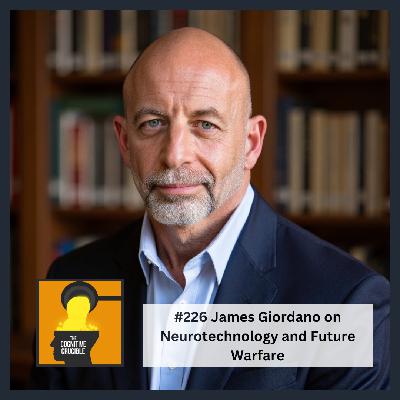
The Cognitive Crucible is a forum that presents different perspectives and emerging thought leadership related to the information environment. The opinions expressed by guests are their own, and do not necessarily reflect the views of or endorsement by the Information Professionals Association. During this episode, Dr. James Giordano discusses a broad range of topics related to national security from biopsychology to complexity to neurotechnology to enactivism. Recording Date: 25 Jun 2025 Research Question: James Giordano suggests an interested student or researcher examine: "How might the convergence of neurotech, big data, and AI lead to improved human and multinational relations, and in these ways, contribute to avoiding conflict and warfare?" Resources: Cognitive Crucible Podcast Episodes Mentioned #72 Noah Komnick on Cybernetics and the Age of Complexity James Giordano NDU Website Enactivism Architectonics Heilmeier Catechism N3: Next-Generation Nonsurgical Neurotechnology Bioethics and Brains, published by MIT Press, which I co-authored with my longtime colleague Dr John Shook Neuroscience, Neuroculture and Neuroethics, published by Springer, which I co-authored with John Shook and Dr Roland Benedikter Link to full show notes and resources Guest Bio: Dr. James Giordano is the Director of the Center for Disruptive Technologies and Future Warfare of the Institute for National Strategic Studies at the National Defense University. He is Professor Emeritus in the Departments of Neurology and Biochemistry, and Senior Scholar Emeritus of the Pellegrino Center for Clinical Bioethics of Georgetown University Medical Center, Washington, DC. Dr. Giordano has served as Senior Scientific Advisory Fellow of the Strategic Multilayer Assessment Branch of the Joint Staff, Pentagon; Senior Bioethicist of the Defense Medical Ethics Center; Distinguished Fellow in Science, Technology and Ethics of the Stockdale Center for Ethics at the United States Naval Academy; and as an appointed member of the Neuroethics, Legal and Social Advisory Panel of the Defense Advanced Research Project Agency (DARPA), and an appointed member of the Department of Health and Human Services' Secretary's Advisory Committee for Human Research Protections. Dr Giordano is internationally recognized for his research on the use – and ethical guidance and governance - of neurocognitive sciences and technology in military, intelligence and global security operations A widely published author of over 350 peer-reviewed papers in the international scientific literature, 25 governmental reports, 37 book chapters, and 10 books - which most recently include Bioethics and Brains; Neuroscience, Neuroculture and Neuroethics; and Neurotechnology in National Security and Defense: Technical Considerations, Neuroethical Concerns. Dr. Giordano is a former Fulbright Fellow; an elected Fellow of the Hastings Center for Ethics; the European Academy of Science and Arts; and the Royal Society of Medicine (UK); and frequently lectures in German and Italian. A former United States Naval officer, he was winged as a Naval Aerospace Physiologist, co-designated as a Research Physiologist and Psychologist, and served with US Navy and US Marine Corps. About: The Information Professionals Association (IPA) is a non-profit organization dedicated to exploring the role of information activities, such as influence and cognitive security, within the national security sector and helping to bridge the divide between operations and research. Its goal is to increase interdisciplinary collaboration between scholars and practitioners and policymakers with an interest in this domain. For more information, please contact us at communications@information-professionals.org. Or, connect directly with The Cognitive Crucible podcast host, John Bicknell, on LinkedIn. Disclosure: As an Amazon Associate, 1) IPA earns from qualifying purchases, 2) IPA gets commissions for purchases made through links in this post.
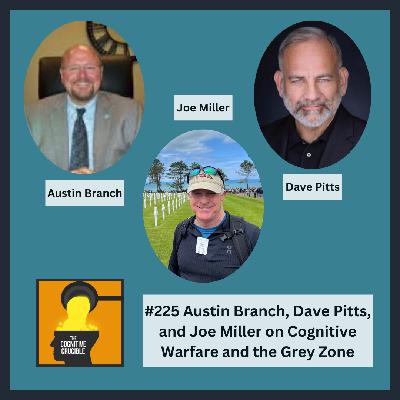
The Cognitive Crucible is a forum that presents different perspectives and emerging thought leadership related to the information environment. The opinions expressed by guests are their own, and do not necessarily reflect the views of or endorsement by the Information Professionals Association. During this episode, Austin Branch, Dave Pitts, and Joe Miller discuss cognitive warfare, the gray zone, and intensifying great power competition. The ultimate goal is to compete by gaining and maintaining information advantage without kinetic fighting. Recording Date: 28 Apr 2025 Research Question: Has Russian cognitive warfare, including the use of reflexive control, red lines and nuclear threats, influenced US policy decisions regarding weapon deliveries and restrictions to Ukraine? Similarly, has Chinese cognitive warfare impacted US policy and strategic outcomes concerning Taiwan and the Philippines? Resources: Cognitive Crucible Podcast Episodes Mentioned #24 John Davis on Modern Warfare, Teamwork, and Commercial Cognitive Security #62 Jonathan Rauch on the Constitution of Knowledge #222 JD Maddox on Emerging IO Opportunities Unrestricted Warfare by Qiao Liang and Wang Xiangsui The Cypher Brief Antifragile: Things That Gain from Disorder by Nassim Nicholas Taleb The Black Swan: The Impact of the Highly Improbable by Nassim Nicholas Taleb Thinking, Fast and Slow by Daniel Kahneman Screenplay: The Foundations of Screenwriting by Syd Field Save the Cat Story Structure: Definition and Beat Sheet by Blake Snyder Link to full show notes and resources Guest Bio: Austin Branch founded Crescent Bridge to help serve the Information technical and cognitive needs of the Federal Government. Additionally, Austin joined ARLIS to help support the evolution of the Defense and U.S. Government Operations in the Information Environment (OIE) enterprise. Previously, Austin served as OIE Technology & Strategy at Secretary of the Air Force Directorate for Concepts, Development and Management (Exec IPA) after several years in the private sector at COLSA Corporation as the Executive Director for Information Strategies and Programs (2015-2021) after serving 30 years in Federal service as an Army Officer and Senior Civilian. He was commissioned as an Infantry Officer in 1986 from The Citadel, Charleston S.C. and went on to serve in multiple Command and Staff positions in conflict and in peace becoming the Army's first Information Operations Officer. Austin pioneered military operations in the information environment in key leadership positions in the Army, Joint Special Operations Command, Joint Staff, EUCOM, and deployed Joint and multinational Task Force Organizations across the globe. Upon retirement from the Army, Austin joined the Office of the Undersecretary of Defense for Intelligence as the Deputy Director and Chief of Operations for the Defense Policy Analysis Office with oversight of National special plans and technical operations. In 2008 was selected as a Defense Intelligence Senior Leader as Senior Advisor for Defense Information Operations focused on oversight, policy and support for Service and Joint Information Operations, and associated Special Access programs. In 2010, Austin was selected by the Secretary of Defense to lead the Information Operations and Military Information Support Defense Enterprise as the first Senior Director for this mission area in the Office of Policy and Special Operations and Low Intensity Conflict. In this capacity, Austin was DOD's senior representative for IO, MISO, EW and special program oversight, policy and assessments. In 2013, Austin was selected by the Director for the National Counter-Terrorism Center and the DNI to establish and lead a new organization to address Domestic Counter Terrorism, Counter Violent Extremism, and Counter Terrorism Cyber Strategy and Policy in support of the National Security Council. In this capacity, he also served as the National Co-lead for countering ISIS propaganda and influence and associated IPC lead strategist for National Security Council. Austin is also one of the founder's of a Non-profit, Information Professionals Association (IPA). IPA is a professional organization established to serve the interests of the broader Information community worldwide and for issues related to Cognitive Security. Austin also served on the Defense Science Board summer 2019 study focused on great power competition in the Information Environment and was recently was selected to join the University of Maryland Advanced Research Laboratory for Intelligence & Security (ARLIS) to help lead development of their Cognitive Security & Information Portfolio. He also serves on various Advisory Board(s) and professional associations. Austin and his wife, Carol live in Bluffton SC and have three children. They have two serving in active duty in the Army and one in Medical School at Icahn School of Medicine, Mt Sinai, NY. Dave Pitts is a senior national security professional, former CIA executive, and veteran with over four decades of experience in challenging and critical missions, ranging from intelligence operations, counterterrorism and special operations to great power competition. Dave served as the Assistant Director of CIA for South and Central Asia, Chief of National Resources Division, senior leadership positions in the Counterterrorism Center—including in the strategic communications space—and led CIA's two largest Field Stations. Dave has a proven track record of leading large and diverse teams, building lasting partnerships, integrating innovative technologies, and delivering results in high-stakes and high-pressure situations. Dave is a thought leader, Cipher Brief Expert and a frequent writer and commentator on terrorism, great power competition, the gray zone, cognitive warfare and emerging global issues. Dave is a co-founder of The Cipher Briefs Gray Zone Group. Joe Miller, Senior Executive Service, is currently the Deputy Commander for Support at the US Army Special Operations Command, headquartered at Ft Bragg, N.C. Prior to his assignment to Ft Bragg, Joe was the J7 Director of Joint Training and Innovation at US NORAD/NORTHCOM at Peterson, AFB, Co and first SES assignment was the J5 Director, Policy, Strategy, Plans and Futures at US Special Operations Command at Mac Dill AFB, Fl. Joe is a retired US Army Colonel. He has led and Commanded platoons, troops, detachments, a Battalion task force and a Brigade. He has served and operated in western Europe, the Balkans, the Middle East, SW Asia and throughout the Americas. He is a graduate of the University of Florida, Bachelor of Science in Business Administration with Honors, US Army Command and General Staff College and the School of Advanced Military Studies (Master of Military Arts and Sciences), an Army War College Fellowship. He earned a Master's Degree in Operations Research from the Air Force Institute of Technology. He is a life Member of the Council on Foreign Relations. Joe is married with one son. About: The Information Professionals Association (IPA) is a non-profit organization dedicated to exploring the role of information activities, such as influence and cognitive security, within the national security sector and helping to bridge the divide between operations and research. Its goal is to increase interdisciplinary collaboration between scholars and practitioners and policymakers with an interest in this domain. For more information, please contact us at communications@information-professionals.org. Or, connect directly with The Cognitive Crucible podcast host, John Bicknell, on LinkedIn. Disclosure: As an Amazon Associate, 1) IPA earns from qualifying purchases, 2) IPA gets commissions for purchases made through links in this post.
The Cognitive Crucible is a forum that presents different perspectives and emerging thought leadership related to the information environment. The opinions expressed by guests are their own, and do not necessarily reflect the views of or endorsement by the Information Professionals Association. During this episode, Jake Bebber discusses his work related to the concept, challenges, and potential responses to cognitive warfare. Jake explains how cognitive warfare uses technology to manipulate cognition and behavior, emphasizing its distinction from traditional information warfare and its potential impact across various domains. The conversation covers the need for a structured ontology to understand and address cognitive warfare, as well as the importance of maintaining American values while developing strategies to combat these threats. Recording Date: 5 May 2025 Research Question: Jake Bebber suggests an interested student or researcher examine several topics, such as: How to protect personal privacy in an environment of persistent cognitive manipulation. The legal, moral, and ethical boundaries related to cognitive warfare. How cognitive warfare impacts alliance structures. How to fortify critical infrastructure against attacks that blend tangible and intangible elements in the cognitive space. How to ensure democratic systems remain tenable. The best ways to organize and compete in the cognitive warfare space, including identifying key stakeholders beyond traditional national security ecosystems. Lessons that can be drawn from the past, especially the Cold War, regarding competition with a long-term peer competitor. Resources: Cognitive Crucible Podcast Episodes Mentioned #212 Libby Lange on Algorithmic Cognitive Warfare Cognitive Competition, Conflict, and War: An Ontological Approach by Jake Bebber Cognitive Competition, Conflict, and War by Jake Beber Neurotechnology in National Security and Defense by James Giordano Mind Wars: Brain Research and National Defense by Jonathan D. Moreno Minds at War: China's Pursuit of Military Advantage through Cognitive Science and Biotechnology By Elsa B. Kania James Giordano Cognitive Security Institute Link to full show notes and resources Guest Bio: Robert "Jake" Bebber is an officer in the United States Navy. He has served at various locations throughout his career, including Fort Meade, US 7th Fleet, Carrier Strike Group 12, Information Warfare Training Command-Corry Station, and US Special Operations Command. He holds a PhD in public policy from the University of Central Florida. His writings have appeared in Proceedings, Orbis, Journal of Information Warfare, Journal of Political Risk, Comparative Strategy, and elsewhere. He is supported by his wife, Dana, and their two boys, Vincent and Zachary. About: The Information Professionals Association (IPA) is a non-profit organization dedicated to exploring the role of information activities, such as influence and cognitive security, within the national security sector and helping to bridge the divide between operations and research. Its goal is to increase interdisciplinary collaboration between scholars and practitioners and policymakers with an interest in this domain. For more information, please contact us at communications@information-professionals.org. Or, connect directly with The Cognitive Crucible podcast host, John Bicknell, on LinkedIn. Disclosure: As an Amazon Associate, 1) IPA earns from qualifying purchases, 2) IPA gets commissions for purchases made through links in this post.
The Cognitive Crucible is a forum that presents different perspectives and emerging thought leadership related to the information environment. The opinions expressed by guests are their own, and do not necessarily reflect the views of or endorsement by the Information Professionals Association. During this episode, Paul Buvarp contrasts disinformation as a human demand-side problem with the typical supply-side perspective. Additional discussion threads include thinking about online and real-world environments as differently as forests and tropical environments are different, how young people view TikTok and news consumption, bypassing traditional information filters, and Ashby's Law of Requisite Variety. Recording Date: 1 Apr 2025 Resources: Cognitive Crucible Podcast Episodes Mentioned #212 Libby Lange on Algorithmic Cognitive Warfare The spread of true and false news online by Soroush Vosoughi, Deb Roy, Sinan Aral Amusing Ourselves to Death by Neil Postman The Paradox of Democracy: Free Speech, Open Media, and Perilous Persuasion by Zac Gershberg and Sean Illing Link to full show notes and resources Guest Bio: Bio: Paul M. H. Buvarp, Ph.D., is a senior researcher at the Norwegian Defence Research Establishment (ffi.no/en), specialising in disinformation and foreign interference in digital media. His work explores the phenomenon through the lenses of media theory, sociology, and philosophy. He is also part of the research team monitoring and analysing attempts to interfere with Norwegian elections. Paul holds a doctorate degree in International Relations from the University of St Andrews in Scotland. He has published numerous academic articles, reports, and essays, and regularly gives lectures and talks in Norway and internationally. About: The Information Professionals Association (IPA) is a non-profit organization dedicated to exploring the role of information activities, such as influence and cognitive security, within the national security sector and helping to bridge the divide between operations and research. Its goal is to increase interdisciplinary collaboration between scholars and practitioners and policymakers with an interest in this domain. For more information, please contact us at communications@information-professionals.org. Or, connect directly with The Cognitive Crucible podcast host, John Bicknell, on LinkedIn. Disclosure: As an Amazon Associate, 1) IPA earns from qualifying purchases, 2) IPA gets commissions for purchases made through links in this post.
The Cognitive Crucible is a forum that presents different perspectives and emerging thought leadership related to the information environment. The opinions expressed by guests are their own, and do not necessarily reflect the views of or endorsement by the Information Professionals Association. During this episode, JD Maddox discusses new influence opportunities borne out of necessity. JD suggests that listeners consider radical-sounding concepts for, such as letters of marque, indemnification, task-based organization, public-private operations, and new authorities as viable influence pathways for today's strategic landscape. Recording Date: 31 Mar 2025 Resources: Cognitive Crucible Podcast Episodes Mentioned or Related #110 Sean McFate on The New Rules of War #220 Tom Kent on US International Broadcasting and Soft Power Lord's Resistance Army (Central Africa) The Kherson Ruse: Ukraine and the Art of Military Deception Letters of Marque US Agency for Global Media Link to full show notes and resources Guest Bio: J.D. Maddox is an expert in political warfare, and an academic, writer and former political candidate. He has served as a Central Intelligence Agency branch chief, deputy coordinator of the U.S. Global Engagement Center, advisor to the Secretary of Homeland Security, and as a U.S. Army Psychological Operations team leader. He is the founder of Inventive Insights LLC, and the Vice President of Technology and Innovation at Deft9 Solutions, and currently consults on Operations in the Information Environment to government organizations, and consults to commercial and political organizations on strategic communications. He's an adjunct professor of national security studies at George Mason University's Schar School, teaching Disinformation and Policy Responses, and he's an adjunct professor at Tulane University, where he teaches Open Source Information Analysis. He also recently initiated "Tab D," a biweekly report highlighting U.S. adversaries' narrative vulnerabilities. About: The Information Professionals Association (IPA) is a non-profit organization dedicated to exploring the role of information activities, such as influence and cognitive security, within the national security sector and helping to bridge the divide between operations and research. Its goal is to increase interdisciplinary collaboration between scholars and practitioners and policymakers with an interest in this domain. For more information, please contact us at communications@information-professionals.org. Or, connect directly with The Cognitive Crucible podcast host, John Bicknell, on LinkedIn. Disclosure: As an Amazon Associate, 1) IPA earns from qualifying purchases, 2) IPA gets commissions for purchases made through links in this post.
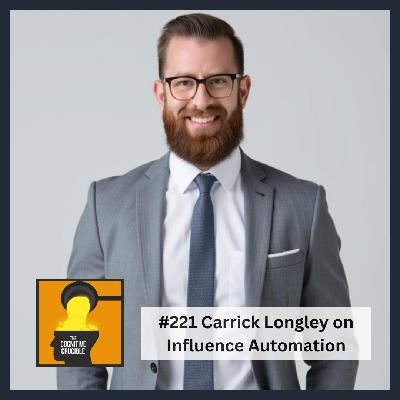
The Cognitive Crucible is a forum that presents different perspectives and emerging thought leadership related to the information environment. The opinions expressed by guests are their own, and do not necessarily reflect the views of or endorsement by the Information Professionals Association. During this episode, Carrick Longley discusses Large Language Models (LLM) and influence. Key topics include: LLM 101 Usage and changes in prompt engineering Improving influence resonance and speed The recent DeepSeek model controversy Bias in foundational models and Software development Recording Date: 26 Mar 2025 Research Question: Guest suggests an interested student or researcher examine: Resources: ZenithFlow Company of One by Paul Jarvis Reddit: Local LLama Link to full show notes and resources Guest Bio: Dr. Carrick Longley is the Founder and CEO of ZenithFlow, a company pioneering privacy-first AI solutions for strategic communications. A former Marine Corps SIGINT and Technical IO Officer with a Ph.D. in Information Sciences, he leads the development of StoryForge, an advanced platform that transforms raw data into compelling narratives. Through ZenithFlow's local-first AI approach, Dr. Longley is revolutionizing how organizations leverage artificial intelligence to create impactful messaging while maintaining complete data privacy and control. About: The Information Professionals Association (IPA) is a non-profit organization dedicated to exploring the role of information activities, such as influence and cognitive security, within the national security sector and helping to bridge the divide between operations and research. Its goal is to increase interdisciplinary collaboration between scholars and practitioners and policymakers with an interest in this domain. For more information, please contact us at communications@information-professionals.org. Or, connect directly with The Cognitive Crucible podcast host, John Bicknell, on LinkedIn. Disclosure: As an Amazon Associate, 1) IPA earns from qualifying purchases, 2) IPA gets commissions for purchases made through links in this post.
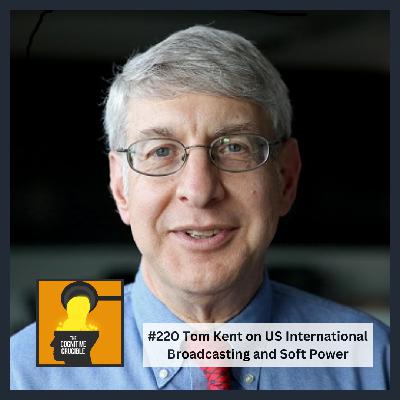
The Cognitive Crucible is a forum that presents different perspectives and emerging thought leadership related to the information environment. The opinions expressed by guests are their own, and do not necessarily reflect the views of or endorsement by the Information Professionals Association. During this episode, Tom Kent returns to the Cognitive Crucible to share his concerns related to the United States recent withdrawal from international broadcasting. Topics include: US soft power, abandoning pro-democracy initiatives, impact on international relations, international broadcasting structure inefficiencies, and language services cost and logistics Recording Date: 25 Mar 2025 Resources: Cognitive Crucible Podcast Episodes Mentioned #10 Tom Kent on Striking Back #105 Tom Kent on Persuasion in the Developing World #177 Tom Kent on How Russia Loses US agency for Global Media (USAGM) Link to full show notes and resources Guest Bio: Thomas Kent teaches and consults on Russian affairs, journalism, and the problems of propaganda and disinformation. President of Radio Free Europe/Radio Liberty until 2018, he now teaches at Columbia University and consults for governments, NGOs, and news organizations. He is a senior fellow for strategic communication of the American Foreign Policy Council and an associate fellow of Slovakia's GLOBSEC. Previously, he was Moscow bureau chief for The Associated Press, head of AP's international news coverage, and editor for standards and ethics. His first book, Striking Back: Overt and Covert Options to Combat Russian Disinformation, was published in 2020, and his second, "How Russia Loses," in 2023. He is now working on a new book, on the propaganda lessons of the Ukraine war. About: The Information Professionals Association (IPA) is a non-profit organization dedicated to exploring the role of information activities, such as influence and cognitive security, within the national security sector and helping to bridge the divide between operations and research. Its goal is to increase interdisciplinary collaboration between scholars and practitioners and policymakers with an interest in this domain. For more information, please contact us at communications@information-professionals.org. Or, connect directly with The Cognitive Crucible podcast host, John Bicknell, on LinkedIn. Disclosure: As an Amazon Associate, 1) IPA earns from qualifying purchases, 2) IPA gets commissions for purchases made through links in this post.
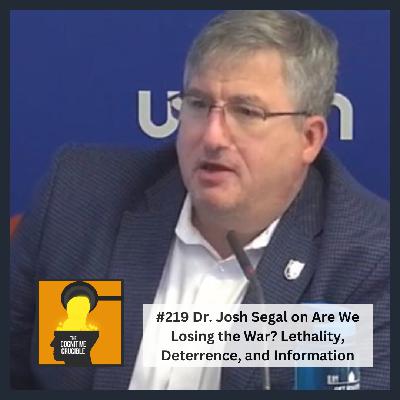
The Cognitive Crucible is a forum that presents different perspectives and emerging thought leadership related to the information environment. The opinions expressed by guests are their own, and do not necessarily reflect the views of or endorsement by the Information Professionals Association. During this episode, Dr. Josh "Bugsy" Segal asks the provocative question: Are We Losing the War? Josh discusses the importance of understanding the impact of the nation's investments in soft power assets and programs, emphasizing the need for a strategic approach and a broader national security context. He expresses concerns about the challenges in reaching the desired audience for information operations and the need for the US to adapt and innovate in the face of increasing influence from China and Russia. Lastly, the discussion touches on the current administration's agenda of cutting costs, the threat posed by adversaries, and the importance of nurturing relationships–particularly in the context of disinformation and subversive narratives. Recording Date: 19 Feb 2025 Resources: Cognitive Crucible Podcast Episodes Mentioned #213 Sviatoslav Hnizdovskyi on Countering Authoritarian Influence #192 Josh "Bugsy" Segal on the American Maginot Line #124 Dean Cheng on China, Space, and Information Operations #24 John Davis on Modern Warfare, Teamwork, and Commercial Cognitive Security Deft9 Solutions Russia's GRU Unit 29155 The DOGE website Link to full show notes and resources Guest Bio: Dr. Joshua "Bugsy" Segal is the Co-Founder & Vice President for Strategy and Innovation at Deft9 Solutions. A veteran of over 30 years in national security policy, strategy and operations, and intelligence, both military and civilian, Dr. Segal is an internationally recognized expert in arms control, countering foreign malign influence, and counter-WMD. Dr. Segal spent over a decade as a member of U.S. multilateral arms control delegations in Geneva, Vienna, and The Hague, including the negotiations to finalize the 1993 Chemical Weapons Convention and establish the Organization for the Prohibition of Chemical Weapons. After leaving the federal government and then retiring from the military, Dr. Segal serves as an advisor to senior DoD leaders on operations in the information environment and teaches OSINT tradecraft. About: The Information Professionals Association (IPA) is a non-profit organization dedicated to exploring the role of information activities, such as influence and cognitive security, within the national security sector and helping to bridge the divide between operations and research. Its goal is to increase interdisciplinary collaboration between scholars and practitioners and policymakers with an interest in this domain. For more information, please contact us at communications@information-professionals.org. Or, connect directly with The Cognitive Crucible podcast host, John Bicknell, on LinkedIn. Disclosure: As an Amazon Associate, 1) IPA earns from qualifying purchases, 2) IPA gets commissions for purchases made through links in this post.
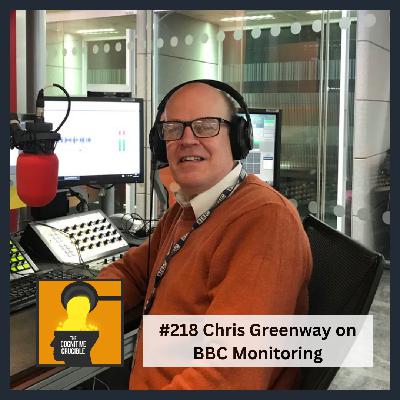
The Cognitive Crucible is a forum that presents different perspectives and emerging thought leadership related to the information environment. The opinions expressed by guests are their own, and do not necessarily reflect the views of or endorsement by the Information Professionals Association. During this episode, Chris Greenway discusses the origins and evolution of BBC Monitoring, a service that gathers news from various sources. BBC Monitoring began in the 1930s as a response to the BBC's external broadcasts, with the initial focus on Arabic, Spanish, and Portuguese languages. The British government showed interest in monitoring, leading to a partnership with the BBC. By the height of World War II, the service had expanded to a thousand people and developed a relationship with American partners. Chris also discusses the significant role of open-source intelligence (OSINT) as well as products and services offered by BBC Monitoring. Recording Date: 17 Feb 2025 Research Question: Chris Greenway suggests an interested student or researcher take part in a narrative assessment: have a look at Sputnik, or RT. What narrative are they trying to project to you? And can you "reverse engineer" those narratives to reveal the objective of the Russian government? Resources: Cognitive Crucible Podcast Episodes Mentioned #148 Kalev Leetaru on GDELT BBC Monitoring Sefton Delmer Black boomerang by Sefton Delmer Link to full show notes and resources Guest Bio: Chris Greenway has worked for BBC Monitoring (BBCM) since 1981, helping the organisation's users to understand the world and threats to international stability through coverage of global media. Joining the service in the shortwave era, he first worked at its signals-receiving station, providing colleagues with feeds from radio stations and news agencies around the world. Two years later he joined the editorial teams who compiled the regional editions of Monitoring's daily newspaper, the Summary of World Broadcasts, working on the Soviet, East European, Middle East and Africa desks. That led to a total of eight years of postings to BBCM's outstation in Nairobi, monitoring Africa, interspersed with duties back at BBCM's UK HQ where he held various editorial and management posts. Since 2006, he has been part of a team coordinating the organisation's daily global operations and output. Chris combines his work with a personal interest in the history of, and current developments in, broadcasting, media monitoring and international information warfare. About: The Information Professionals Association (IPA) is a non-profit organization dedicated to exploring the role of information activities, such as influence and cognitive security, within the national security sector and helping to bridge the divide between operations and research. Its goal is to increase interdisciplinary collaboration between scholars and practitioners and policymakers with an interest in this domain. For more information, please contact us at communications@information-professionals.org. Or, connect directly with The Cognitive Crucible podcast host, John Bicknell, on LinkedIn. Disclosure: As an Amazon Associate, 1) IPA earns from qualifying purchases, 2) IPA gets commissions for purchases made through links in this post.

Comments

Download from Google Play

Download from App Store
 United States