


 Claim Ownership
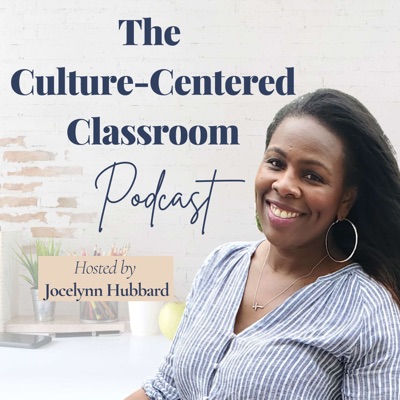
The Culture-Centered Classroom
Subscribed: 6Played: 27
Subscribe

© Jocelynn
Description
The Culture-Centered Classroom podcast is the go-to podcast for teachers, instructional coaches, and school leaders ready to step into their power by centering educational equity, celebrating diversity, and affirming culture every single day. This podcast will provide you with powerful reflection questions, learning, and action strategies to elevate your practice and impact the way you guide the next generation of thought leaders. Tune in.
135 Episodes
Reverse

Student Demographics Are Not Their Mathematical DestinyIn this episode of The Culture Centered Classroom, Jocelynn is joined by Juliana Tapper, M.Ed., founder of CollaboratEd Consulting, to discuss her bookTeaching 6–12 Math Intervention: A Practical Framework To Engage Students Who Struggle.This conversation is grounded in the powerful, practical framework Juliana shares in her book—a framework designed to help educators support students who are working below grade level without deficit thinking, lowered expectations, or exclusionary practices.One of the most resonant ideas from the book, and from this conversation, is this truth: Student demographics are not their mathematical destiny.Throughout the episode, Juliana explains how her framework helps teachers become gatebreakers—educators who actively disrupt inequitable systems, expand access to rigorous learning, and design math classrooms that are equity-centered, culturally relevant, and humanizing.In this episode, we explore:The core principles of Juliana’s math intervention frameworkWhy traditional intervention models often reinforce inequityHow teacher beliefs and instructional decisions shape access and opportunityWhat it means to teach math in ways that honor students’ identities and lived experiencesHow educators can move from compliance-driven intervention to meaningful engagementThe conversation also connects Juliana’s work to The New Teacher Project’s article, The Opportunity Myth, highlighting how students are too often denied access to grade-level tasks and rich instruction. Jocelynn and Juliana further ground the discussion in Kimberlé Crenshaw’s work on intersectionality, reminding listeners that students experience math classrooms through multiple, overlapping identities.Resources mentioned in this episode:Teaching 6–12 Math Intervention: A Practical Framework To Engage Students Who Strugglehttps://www.collaboratedwithjuliana.com/buyhttps://gatebreakerbook.comJuliana Tapper’s Masterclasshttps://www.collaboratedwithjuliana.com/masterclass2The Opportunity Myth by The New Teacher ProjectThis episode is an invitation to rethink math intervention—not as remediation, but as an equity practice. If you’re ready to challenge assumptions, expand opportunity, and become a gatebreaker for your students, this conversation—and Juliana’s book—are a powerful place to begin.
The Culture of Celebration Series As the winter season unfolds, many classrooms begin to feel a little cattywampus. Schedules shift, energy runs high, budgets feel tight, and the pressure to “make it magical” can quickly become overwhelming.In this episode of The Culture Centered Classroom, Jocelynn introduces The Joy Budget a reframe that reminds educators that the most meaningful celebrations do not require money, elaborate plans, or Pinterest worthy perfection. Instead, they are built on connection, care, cultural competence, and co creation.This episode builds directly on the first three episodes of the series, offering practical, zero cost strategies for honoring diverse traditions, sustaining joy, and strengthening classroom community during the winter months.In This Episode You Will ExploreWhy celebration does not need a financial budgetJocelynn reframes celebration as a practice rooted in relationship rather than resources, emphasizing that connection is the true currency of joy.How cultural competence guides winter celebrationsThis episode revisits the idea that culture is not decoration and that honoring diverse observances requires intention, humility, and care rather than surface level activities.The power of co creation during the holiday seasonBy inviting students into planning and decision making, educators reduce their own workload while honoring student agency and belonging.Zero cost celebration ideas aligned with the AnchorED for Achievement frameworkYou will hear practical examples includingCo creation audits The Global Light ShareAffirmation artifactsCelebration dance breaksCommunity norms reflection circlesEach idea is grounded in agency, empowerment, community, hope, and reflection.Why joy is a strategic practice not a seasonal eventJocelynn connects these practices to long term culture building, showing how intentional celebration strengthens equity, belonging, and emotional safety.Reflection Questions for EducatorsWhat does celebration currently cost me in time, energy, or stressHow can I shift from planning for students to co creating with themWhich traditions or celebrations feel meaningful in my classroom and which feel performativeHow does cultural competence influence the way I approach winter celebrationsWhat joyful practices should carry beyond this season and into everyday classroom lifeResources MentionedBack to School Series Freebie Lesson 1 from The First 10 Days Building Classroom Belonging customteachingsolutions.com/btsfreeFocus Word Reflection Kit Available in the Virtual Learning Library and on Teachers Pay Teachers
In this episode of The Culture-Centered Classroom, we explore one of the most essential and misunderstood aspects of culturally responsive practice: the difference between celebrating culture and appropriating it.Building on Episodes 1 and 2, Jocelynn offers a grounded, compassionate, and culturally competent look at what happens when celebration intersects with identity, history, and lived experience—especially during the diverse and emotionally charged winter season.This episode is not about shame, it’s about clarity, courage, care, and cultural competence.What You’ll Learn in This Episode: The Clear Distinction Between Appreciation and AppropriationJocelynn breaks down the difference through the lens of intent vs. impact, emphasizing that cultural celebration without context or permission can unintentionally cause harm—even when well-intentioned.Why Cultural Competence Must Guide CelebrationYou’ll learn four truths cultural competence teaches us:Culture is not decorationTraditions carry emotional and historical weightSymbols have context and meaningPractices emerge from lived experience—not Pinterest boardsThese truths help prevent “performing diversity” and instead foster authentic cultural appreciation.A Real-World Example: Florida State Seminoles FootballJocelynn uses the Florida State Seminoles as a concrete case study of how permission, relationship, and collaboration create a model for cultural appreciation rather than appropriation.This example helps educators understand the importance of community consent, not assumption.Why We Must Avoid the “Single Story” TrapDrawing on Chimamanda Ngozi Adichie’s powerful TED Talk, The Danger of a Single Story, Jocelynn explains how incomplete narratives shape misunderstanding, bias, and cultural harm.This example reinforces the need for multiple voices, not stereotypes or oversimplified representations.A Simple 3-Step Guide for Culturally Respectful CelebrationAligned with the AnchorED for Achievement framework, Jocelynn shares a practical, actionable method:Reflect — examine assumptions, intentions, and classroom normsLearn — seek authentic sources, voices, and historical contextImplement — co-create celebrations with students and familiesThis guide helps you celebrate culture with confidence—not fear.Reflection Questions for EducatorsWhat assumptions do I bring into cultural celebrations?Whose voice is centered? Whose voice is missing?Is this cultural element being used with permission, understanding, and respect?How does this celebration deepen belonging for all students?How can I create space for students to share (or not share) their traditions with agency?Resources MentionedTED Talk: The Danger of a Single Story – Chimamanda Ngozi AdichieBack-to-School Series Freebie: Lesson 1 + activities👉 customteachingsolutions.com/btsfreeFocus Word Reflection Kit – available in the Virtual Learning Library and TPT store
The Culture of Celebration SeriesIn this second episode of The Culture of Celebration, Jocelynn explores how meaningful, equity-centered celebration goes far beyond seasonal holidays and big events.Real celebration—the kind that builds trust, belonging, and resilience—lives in the micro-moments we notice, honor, and name every single day.As students and educators navigate the emotional highs and lows of the winter season, this episode offers a compassionate, culturally responsive reframing of what it truly means to celebrate one another in ways that feel safe, affirming, and authentically human.This conversation is a continuation of the work we began in Episode 1 and beautifully connects back to your Back-to-School series, “The First 10 Days: Building Classroom Belonging.” It’s the perfect mid-year reminder that the roots you planted in August need care, water, and attention in November and December.In This Episode, You’ll Learn:Why the holiday season requires deeper care and cultural responsivenessJocelynn highlights how disrupted routines, varied cultural traditions, and heightened emotions make micro-celebrations especially powerful in November and December.What micro-celebrations actually are—and why they matterDiscover how tiny, intentional acts of noticing effort, growth, and courage strengthen classroom culture far more than large events or public ceremonies.How cultural competence shapes our understanding of celebrationWe often assume students want to be celebrated the way we prefer to be celebrated. Jocelynn challenges that lens and offers strategies for honoring cultural variation with humility and intention.The essential role of the AnchorED for Achievement and AAA FrameworksLearn how micro-celebrations reinforce Agency, Empowerment, Community, Hope, Opportunity, and Awareness—core components of your instructional and relational practice.Why this is the perfect time to revisit your Back-to-School workJocelynn invites educators to reflect on everything learned during The First 10 Days: Building Classroom Belonging—identity, voice, norms, storytelling—and use those insights to shape mid-year celebrations with greater care and nuance.Download the free Day 1 lesson & activities at: customteachingsolutions.com/btsfreeHow administrators can support teachers through micro-celebrationsSchool leaders receive specific, actionable ideas for recognizing the adults who hold the emotional and community labor of the school.Practical, ready-to-use micro-celebration routinesTry Joy Journals, “We Noticed” boards, one-word celebrations, shout-out postcards, or 30-second video affirmations—simple ideas teachers can implement tomorrow.Reflective Questions for EducatorsWhat small moments did I notice today that are worth celebrating?Which students thrive with public affirmation—and which prefer quiet celebration?How do my own cultural experiences shape the way I define “care” and “celebration”?What norms around celebration did we build in August? Do they still serve us now?How can micro-celebrations help stabilize or strengthen our classroom culture this season?Related ResourcesBack-to-School Lesson 1 Freebie: customteachingsolutions.com/btsfreeFocus Word Reflection Kit for culturally responsive year-end reflection (Virtual Learning Library + TPT)Connect with JocelynnInstagram: @iteachcustomLinkedIn: Jocelynn HubbardWebsite: customteachingsolutions.com
As we enter the winter holiday season — a time filled with classroom parties, family gatherings, cultural traditions, and moments of both joy and complexity — this new series, The Culture of Celebration, invites educators to pause and ask a powerful question:What are we really celebrating?In this first episode, Jocelynn unpacks the deeper meaning behind celebration, explores the connection between culture and recognition, and models how cultural competence helps us design celebrations that are equitable, authentic, and inclusive for every student.Whether you love the holidays, find this season heavy, or fall somewhere in between, this episode offers grounding, compassion, and practical insight for educators navigating November and December with intention.In this episode we explore:Why this episode matters during Thanksgiving week and the National Day of MourningHow the holidays can bring both joy and tension for students and familiesThe difference between celebration as performance and celebration as meaningHow celebrations tell a story about what a community valuesA clear, accessible definitionWhy cultural competence is a mindset shift, not a checklistHow our own cultural lens shapes classroom celebrationsHow her approach to holiday travel and traditions transformedMoving from “this is how we’ve always done it” to “what do we actually need right now?”The role that grief, motherhood, and healing played in redefining celebrationHow to use the AnchorED principles (Agency, Norms, Community, Hope, Opportunity, Reflection, Empowerment, Data-Informed Practice) to evaluate classroom and school celebrations:Opportunity: Who gets seen?Agency: Who gets to choose how they are celebrated?Norms: What values guide recognition?Community: Whose stories are centered?Hope + Empowerment: Are we uplifting what is possible?Reflection: What messages are we sending?Themes inspired by Oriah Mountain Dreamer’s “The Invitation”Why authentic celebration centers truth, humanity, and belongingHow to move beyond calendar-based celebrations to culture-based celebrationsReflection Questions:Use these alone, with a colleague, or in a team meeting:What do our current classroom or school celebrations communicate about what we value?Whose traditions, identities, or stories are highlighted? Whose are overlooked?How might we invite more student agency into celebration?What would celebration look like if it honored each student’s story, comfort, and cultural lens?Where can we shift from performance to authenticity?Related Resources:If this episode inspires you to rethink celebration in your classroom, check out Jocelynn’s Focus Word Reflection Kit — a set of worksheets and slides designed to help you and your students enter the new year with intention, authenticity, and joy.Available in the Virtual Learning Library and Teachers Pay Teachers store.Connect:Instagram: @customteachingsolutionsLinkedIn: Jocelynn HubbardWebsite: customteachingsolutions.com
This episode shifts the spotlight from individual action to institutional design. If your school’s equity work disappears when one leader leaves, it was never sustainable to begin with.Jocelynn challenges listeners to design schools that can withstand disruption—political, cultural, and structural—by embedding equity into systems, not personalities. She shares how equity audits and strategic planning become powerful tools for long-term transformation, and outlines the design principles that turn your vision into structure.Whether you're a principal, coach, teacher-leader, or team lead, this episode helps you build earthquake-ready equity systems—the kind that flex but don’t fall.Key Themes:The problem with personality-driven equityDesigning for disruption: anticipating the stormEquity audits and strategic planning as system toolsBuilding equity into policies, PD, hiring, and onboardingMoving from vision to infrastructureReflection Questions:Data-Informed Practice: What data are you collecting to assess structural equity?Community: Who's at the redesign table—staff, students, families?Opportunity: Where do gaps in access, visibility, or advancement persist?Agency: Are your systems empowering or policing?Reflection: What foundational structure needs reinforcement, not just revision?If you're tired of watching equity disappear when people leave or policies shift, it's time to design systems that hold the weight of justice.Explore coaching cohorts, strategic planning sessions, and equity audit tools at https://customteachingsolutions.com/equitytools
This episode is a reclamation of pause. In the face of backlash, pressure, and exhaustion, we’re not just talking about resistance—we’re talking about boundaries.What if rest is resistance? What if pause is power? What if walking away for a moment is what allows us to keep standing?We explore how boundaries protect instructional clarity, model integrity, and create space to recover joy. With the guidance of bell hooks, Audre Lorde, and Brené Brown, this episode reminds you that you don’t have to burn out to be brave.KEY THEMES:Boundary-setting as equity leadershipRest and reflection as tools for sustainabilityChoosing when to speak, when to stay, and when to pauseInstructional integrity and values alignmentHolding the line without losing yourselfTHOUGHT LEADERS REFERENCED:Bell Hooks – Living your valuesAudre Lorde – Rest as self-preservationBrené Brown – “Clear is kind”REFLECTION QUESTIONS:What boundary do I need to define more clearly?Where am I pulled away from my values?Who is in my boundary-keeping community?What future am I protecting by setting this boundary?What do my students learn when they see me model care and clarity?If you are seeking strategy or support to help you or your team visit https://customteachingsolutions.com/equitytools or reach out to Jocelynn on LinkedIN.
What if the most powerful lesson your students learn isn’t in your curriculum—but in your character?In this reflective and deeply human episode, Jocelynn explores what W.E.B. Du Bois called the “double consciousness”—and how that internal tension shapes what we model as educators. Students aren’t just learning from our words; they’re watching our pauses, our reactions, our silence, and our joy.This is an episode about mirror work—the quiet, ongoing practice of modeling courage, joy, humility, and humanity. It’s not about perfection. It’s about presence.From classroom culture to leadership choices, Jocelynn weaves in powerful quotes from Baldwin, Freire, and Octavia Butler, plus a call to revisit our earliest memories of power, apology, and grace. This episode will stay with you.Key Themes:What students learn from teacher behaviorThe emotional power of modeling courage, joy, and imperfectionThe “unspoken curriculum” in every classroomReflection as liberationThe AnchorED for Achievement framework in practiceReflective Prompts:Reflection – What do students learn about justice by watching me?Community – How am I shaping the unspoken climate of my classroom or school?Norms – What behaviors or mindsets have I normalized—intentionally or not?Empowerment – When have I modeled what it looks like to speak up?Agency – How do I invite student feedback on how I show up?If you’re ready to begin or deepen your mirror work, Jocelynn offers coaching and workshops designed to support reflection, recalibration, and intentional modeling.Learn more at https://customteachingsolutions.com
This episode is for every principal, coach, and school leader carrying the weight of instructional equity in a moment of increased scrutiny and resistance.When inclusive practices are questioned, books are banned, and professional values are under fire, what does it look like to lead with courage and clarity?Jocelynn Hubbard explores what it takes to hold the line and protect the vision when your integrity is tested and your community is watching. She shares real stories from her leadership coaching cohorts, unpacks the tension between risk and responsibility, and reminds you that instructional excellence is an equity strategy.Key Themes:Instructional leadership in politically restrictive climatesHow to lead for equity when systems are pushing backThe emotional cost of carrying the workCoaching cohorts as communities of care and courageUsing data and norms to protect culturally responsive practicesEquity as evidence-based instructional improvementThought Leaders Referenced:Jimmy Casas – “Your title doesn’t make you a leader. Your impact does.”Brené Brown – “You can choose courage or you can choose comfort. But you cannot choose both.”Bell Hooks – “The function of leadership is to produce more leaders, not more followers.”Reflection Questions:Would I follow me? Why or why not?What instructional or behavioral norms can serve as a shield in moments of pushback?How am I modeling vulnerability and clarity for my team?What equity-centered practice needs to be defended with data this week?What does courageous leadership look like for me right now?Are you a school leader navigating the tension between advocacy and accountability? Let’s build your capacity AND your community.Explore coaching cohorts, equity audits, and strategy sessions with Jocelynn at https://customteachingsolutions.com/equitytools.
In this episode, we tackle the monumental challenge of teaching equity, justice, and critical thinking in an era of restrictive policies and political scrutiny. We provide a strategic roadmap for maintaining your professional integrity without sacrificing your personal safety.Key TakeawaysThe Duty of Non-Neutrality: We examine Freire’s belief that education must always serve freedom, and what neutrality truly costs our students. We also share the powerful context of his exile for holding this stance.Strategic Advocacy: We break down actionable moves into two categories: Subtle Moves (using curriculum as a shield, letting primary sources speak) and Bold Moves (collective advocacy, knowing your policy).The AnchorED Framework: We introduce the AnchorED for Achievement framework—Agency, Norms, Community, Hope, Opportunity, Reflection, Empowerment, and Data-Informed Practice—as a memory tool and strategic guide for applying these advocacy moves.The Un-Bannable Work: We focus on how empowering students through Agency and Empowerment ensures that the core work of critical thinking continues, regardless of external attempts to restrict content.Reflection QuestionsFor Teachers: What is one "anchor" from the AnchorED framework that you can apply this week to a potentially challenging topic? How can you use Data or Norms to shield a crucial discussion?For Instructional Coaches & School Leaders: Where in your curriculum or PD agenda are you inadvertently promoting neutrality or compliance? What is one way you can create a safer "collective" space (the Community anchor) for teachers to discuss restrictive policies without fear of retaliation?For Everyone: Where in your community or personal life are you tempted toward silence? What is the personal cost of that silence?Resources MentionedThe work of Paulo Freire (Pedagogy of the Oppressed)Cultivating Genius: An Equity Framework for Culturally and Historically Responsive Literacy by Dr. Gholdy MuhammadIf you're looking for support to continue this work in your own school or classroom, I invite you to explore my Equity Audit Tools, Student Data Dive Tool, and Coaching services. You can find all of these resources at https://customteachingsolutions.com/equitytools.
In this episode, we explore the crucial shift from student voice to student agency. We discuss how co-creating the learning narrative with our students is a powerful act of equity that fosters ownership, intellectualism, and true freedom in the classroom.Key TakeawaysStudent Agency > Student Voice: We distinguish between the concepts of "voice" and "agency," arguing that true power is found in shared ownership and co-designed learning.Co-Creating is a Mindset: We define co-creation as designing curriculum, culture, and assessments with students, rather than just for them.Trusting Student Genius: We discuss how trusting our students' intellect is a fundamental act of equity and how it is essential for their intellectual liberation.Small Shifts, Big Impact: We offer simple, actionable steps that educators can take to experiment with co-creation without feeling overwhelmed.Reflection QuestionsFor Teachers:What is one small way you can give up a little control to increase student agency?What is one part of your upcoming lesson you can let your students co-design?For Instructional Coaches & School Leaders:What is one area of your professional development that you can co-design with your teachers?What is one way you can create a culture where your team feels empowered to lead with agency and to fail forward?For Everyone:What might it look like to trust your students with something that matters this week?If you're looking for support to continue this work in your own school or classroom, I invite you to explore my Equity Audit Tools, Student Data Dive Tool, and Coaching services. You can find all of these resources at https://www.customteachingsolutions.com/equitytools.
Dedication: This episode is dedicated to the students, families, and educators of Annunciation Catholic School in Minneapolis, Minnesota. We honor their immense courage and resilience in the face of the tragic school shooting that occurred in August 2025, and their profound choice to walk in their theme: "A future filled with hope."If you wish to support the victims and their families, please consider donating to the official fund here: https://secure.myvanco.com/L-ZM37/campaign/C-1619X.Key TakeawaysHope as an Action: We discuss how hope is not a passive wish, but a defiant and active choice—a powerful act of resistance in the face of tragedy.Bravery is Vulnerability: We redefine bravery, moving away from the idea of being unafraid to embracing vulnerability, honesty, and community as core components of courageous leadership.Rest is Resistance: We explore how intentional rest and self-care are essential forms of resistance against systemic fatigue.Modeling Humanity: We discuss the importance of educators modeling humanity and resilience for their students, showing them that it's okay to not be okay, as long as we continue to show up.Reflection QuestionsFor Teachers: What is one small, tangible act of rest you can commit to this week that will help you sustain your energy for the work? How can you become a gentle observer of yourself this week?For Instructional Coaches & School Leaders: How are you modeling care and sustainability for your team? What is one thing you can take off their plate this week to ease the burden?For Everyone: What is one thing that brings you a quiet, reflective joy? What is one thing you can do this week to connect with that joy?If you're looking for support to continue this work in your own school or classroom, I invite you to explore my Professional Development workshops, Equity Audit Tools, Student Data Dive Tool, and Coaching services. You can find all of these resources at: https://customteachingsolutions.com/equitytools.
In this episode, we dive into the core themes of our season by directly addressing the current backlash against Diversity, Equity, Inclusion, and Belonging (DEIB) and the often-ironic arguments used to oppose it. We explore the tension between conformity and freedom in education and the importance of creating spaces where students and teachers can thrive authentically.Key TakeawaysThe Irony of Backlash: We discuss how some who oppose DEIB work are driven by their own cultural beliefs, demonstrating a key hypocrisy at the heart of the current "culture wars."All Instruction is Culturally Responsive: We explore the powerful truth that culture is always present in the classroom. The real question isn’t whether or not to include culture, but rather, whose culture is being centered.Personal vs. Political: We explore the powerful shift that happens when the political becomes personal, forcing individuals to re-evaluate their stance on DEIB when it affects them or their loved ones directly.Conformity vs. Freedom: We use Paulo Freire's quote to frame the purpose of education, challenging listeners to reflect on whether their actions are fostering a space of conformity or one of courageous freedom.The Power of Words and Action: We reframe the debate around words, emphasizing that their true power lies in the actions that accompany them. Words can be a bridge or a wall, and their meaning is found in our commitment to live out the values they represent.Creating a Space for Safety: We talk about how educators have the power to create an environment where students and teachers are free to be authentic, curious, and collaborative without fear.Quotes“Education either functions as an instrument to bring about conformity or freedom.” — Paulo Freire“All instruction is culturally responsive. The question is to whose culture is it responding?” — Zaretta HammondReflection Questions:For Teachers:When you hear these words, "Education either functions as an instrument to bring about conformity or freedom," how do they make you feel?Does the idea of conformity feel safe or scary? Does the idea of freedom feel chaotic or courageous? Why?Really ask yourself what you feel the purpose of education is and why you feel this way.What messages have you been receiving from childhood?What experiences did you have in education as a child and an adult that have shaped your understanding of why we go to school, not why we learn, but why we go to school.For Instructional Coaches and School Leaders:What conversations are you having with your teams about the difference between conformity and freedom in the classroom?How are you creating a space where teachers can be vulnerable about their fears and questions about DEIB work without feeling judged?Resources MentionedThe work of Paulo FreireThe book Unearthing Joy by Dr. Gholdy MuhammadThe book Choosing to See: A Framework for Math Equity in the Classroom by Dr. Pamela Seda and Kyndal BrownThe book Culturally Responsive Teaching & the Brain by Zaretta HammondIf you're looking for support to continue this work in your own school or classroom, I invite you to explore my Equity Audit Tools, Student Data Dive Tool, and Coaching services. You can find all of these resources at https://customteachingsolutions.com/equitytools
In this episode, we dive into the core theme of our season: moving beyond the buzzwords of equity and into tangible action. We explore the powerful idea that what we do, not just what we say, defines who we are. Our discussion is rooted in the words of James Baldwin, Gholdy Muhammad, and the timeless message of Martin Niemöller's poem.Key TakeawaysIntegrity in Action: True integrity is what we do when no one is watching. We discussed how this applies to educators and leaders who are committed to advocating for their students behind closed doors.A "Hum" of Commitment: We introduced the concept of the "quiet, persistent hum" of living out your values, even when it's difficult or goes against the grain.The Power of Joy: Drawing from Dr. Gholdy Muhammad's framework, we explored joy as a critical act of resistance in equity work. We discussed how defining and pursuing joy is essential for both students and educators.The Importance of Authenticity: You heard a personal story about how to create a brave and belonging space for multilingual learners by valuing their heart language and being vulnerable as an educator.From Theory to Practice: We shared how these principles translate to the work of instructional coaches and school leaders who must build trust and a culture of psychological safety.Quotes from the Episode“We are not what we say we believe; we are what we do.” — James Baldwin“First they came for the socialists, and I did not speak out—because I was not a socialist. Then they came for the trade unionists, and I did not speak out—because I was not a trade unionist. Then they came for the Jews, and I did not speak out—because I was not a Jew. Then they came for me—and there was no one left to speak for me.” — Martin Niemöller"Equity is teaching and learning that is centered on justice, liberation, truth, and freedom, and is free of bias and favoritism.” — Gholdy MuhammadReflection Questions:For Teachers: What is one small way you can put your values into practice in the classroom? What is one way you can be brave and vulnerable for the students in your care?For Instructional Coaches and School Leaders: What is one small thing you can do to create a space for teachers where they feel safe and where their voices are valued? What is one story you can share with your team to show them that you're in the work with them, not just asking them to do it?Cultivating Genius: An Equity Framework for Culturally and Historically Responsive Literacy by Dr. Gholdy MuhammadUnearthing Joy: A Guide to Culturally and Historically Responsive Teaching and Learning by Dr. Gholdy MuhammadChoosing to See: A Framework for Math Equity in the Classroom by Dr. Pamela Seda and Kyndal BrownIf you're looking for support to continue this work in your own school or classroom, I invite you to explore my Equity Audit Tools, Student Data Dive Tool, and Coaching services. You can find all of these resources at https://customteachingsolutions.com/equitytools
This episode explores a powerful question posed by my six-year-old son: "When is Kid's Month?" This simple question sparks a deeper conversation about inclusion, representation, and the importance of valuing children's voices. Join me as I discuss how this question led to a critical examination of Women's History Month resources and a renewed commitment to creating a culture of inclusion that extends to everyone, regardless of age.Key takeaways from this episode:For Principals: Foster a school-wide culture of inclusion that values all voices, regardless of age.Support teachers in creating culturally responsive and age-inclusive learning environments.Encourage the use of diverse resources that represent children and their contributions.For Teachers: Actively listen to and value children's perspectives.Incorporate children's experiences and contributions into your lessons.Audit your resources to ensure they are age-inclusive and reflect diverse experiences.Create a classroom environment where all children feel safe, seen and loved.For Students: Your voice matters! Don't be afraid to ask questions and share your ideas.Celebrate your own achievements and the achievements of your peers.Be kind and inclusive to everyone, regardless of their age or background.Learn about people who are different than you.In this episode, I mention:"Women's History Month" resources – Available in my Teachers Pay Teachers store.Blog Post - "Six Sensational Ways to Celebrate Women's History Month with Your Students"Additional learning resources in my Virtual Learning Library.Stay connected: Visit Custom Teaching Solutions for more resources, coaching, and professional development opportunities.
In this insightful episode, we sit down with Joshua Cabral, expert in intercultural communication, to explore the essential role of intercultural competence and cultural intelligence in today’s classrooms. Together, we dive into what it means to develop a culturally intelligent mindset, ways to understand cultural value dimensions, and practical strategies for educators.
Joshua shares his thoughts on how to move beyond viewing one’s own culture as the “norm” and to cultivate a more inclusive, culturally responsive approach. Listen in as we discuss how to help students and educators shift their thinking to see cultural perspectives on a spectrum, encouraging curiosity, respect, and adaptability.
REFLECTION QUESTIONS FOR TEACHERS-
How do I currently teach or model openness and curiosity about other cultures? In what ways could I better facilitate these values?
What strategies can I implement to encourage students to think in terms of cultural spectrums rather than fixed norms?
How do I encourage students to express their cultural identities openly? Are there ways I could create more space for diverse voices and perspectives?
How do I address my own biases and ensure they do not affect my teaching practice or relationships with students?
In this episode I mention:
Joshua's Podcast - World Language Classroom
Joshua's Instagram
Joshua's LinkedIN
Cultural Value Dimensions
James Baldwin Quote
Virtual Learning Library - https://customteachingsolutions.com/virtuallearning
Teaching Materials - https://www.teacherspayteachers.com/store/custom-teaching-solutions
Teacher Reflection - New Year, Focus Activities for Teachers
Activities for creating a welcoming and inclusive class - Buy resources in my TEACHER SHOP
Culture-Centered Teacher WORKSHOPS - Click HERE for more information
Ready to take action?
Grab your FREE "The Welcoming & Inclusive Classroom Classroom Roadmap" at https://customteachingsolutions.com/theroadmap
Schedule a free DISCOVERY CALL at https://calendly.com/customteachingsolutions/35min
Check out The Culture-Centered Teacher Workshops HERE!
CONNECT WITH ME:
Email - Jocelynn@customteachingsolutions.com
LinkedIN - https://www.linkedin.com/company/cts-custom-teaching-solutions/
Instagram - https://www.instagram.com/iteachcustom/
Website - https://customteachingsolutions.com
**Custom Teaching Solutions is a affiliate for Bookshop.org, which means we receive a commission on every sale that comes through our link at no additional cost to you.**
In this heart-centered episode of The Culture-Centered Classroom, host Jocelynn Hubbard engages in a deep and inspiring conversation with Dr. Pamela Seda, co-author of Choosing to See: A Framework for Equity in the Math Classroom. Dr. Seda shares her motivation for creating the ICUCARE Framework and how it supports educators in fostering equitable math classrooms.
Throughout the episode, Dr. Seda beautifully explains how her personal experiences as an educator led her to develop a framework that prioritizes equity and inclusion. She shares the meaning behind the book’s title, emphasizing the importance of choosing to see students as capable mathematicians and the dangers of adopting a "colorblind" approach in education. Jocelynn and Dr. Seda explore the ICUCARE Framework in depth.
Dr. Seda also recounts the heartwarming story behind the book’s cover art and offers practical advice for educators on how to align their intentions with their impact in the classroom. If you are an educator striving to create a more inclusive and culturally responsive classroom, this episode is packed with insights and actionable strategies to help you on that journey.
REFLECTION QUESTIONS FOR TEACHERS-
What does "choosing to see" your students mean in your math classroom? How do you address the dangers of colorblindness in your teaching?
How can you incorporate elements of culturally relevant curricula into your current lesson plans?
What steps can you take to ensure that your intentions as a teacher align with the impact you are having on your students?
In this episode I mention:
Choosing to See: A Framework for Equity in the Math Classroom by Dr. Pamela Seda and Kyndall Brown
The ICUCARE Framework
Dr. Pamela Seda’s Website
Paulo Freire’s Pedagogy of the Oppressed (Referenced during the discussion on the banking model of education)
Comprehensive Support - https://customteachingsolutions.com/services
Virtual Learning Library - https://customteachingsolutions.com/virtuallearning
Teaching Materials - https://www.teacherspayteachers.com/store/custom-teaching-solutions
Teacher Reflection - New Year, Focus Activities for Teachers
Activities for creating a welcoming and inclusive class - Buy resources in my TEACHER SHOP
Culture-Centered Teacher WORKSHOPS - Click HERE for more information
Ready to take action?
Grab your FREE "The Welcoming & Inclusive Classroom Classroom Roadmap" at https://customteachingsolutions.com/theroadmap
Schedule a free DISCOVERY CALL at https://calendly.com/customteachingsolutions/35min
Check out The Culture-Centered Teacher Workshops HERE!
CONNECT WITH ME:
Email - Jocelynn@customteachingsolutions.com
LinkedIN - https://www.linkedin.com/company/cts-custom-teaching-solutions/
Instagram - https://www.instagram.com/iteachcustom/
Website - https://customteachingsolutions.com
**Custom Teaching Solutions is a affiliate for Bookshop.org, which means we receive a commission on every sale that comes through our link at no additional cost to you.**
In the powerful conclusion of the "Intersectionality in Education" Series, we shift our focus to empowering students with intersecting identities to become self-advocates and leaders. We'll explore strategies for fostering their unique strengths and perspectives, creating opportunities for them to share their voices, and nurturing their potential to make a positive impact on the world.
Key takeaways from Episode 4:
Beyond knowledge: Discover how to empower students to understand their identities and navigate complex systems.
Creating opportunities for voice and action: Learn how to provide platforms for students to express themselves and make a difference.
Mentorship and support: Explore the importance of guiding and encouraging students on their journey toward leadership.
In this episode I mention:
Kimberlé Crenshaw
Dr. Gloria Ladson Billings
Lessons with Impact Podcast Series
Comprehensive Support - https://customteachingsolutions.com/services
Virtual Learning Library - https://customteachingsolutions.com/virtuallearning
Teaching Materials - https://www.teacherspayteachers.com/store/custom-teaching-solutions
Teacher Reflection - New Year, Focus Activities for Teachers
Activities for creating a welcoming and inclusive class - Buy resources in my TEACHER SHOP
Culture-Centered Teacher WORKSHOPS - Click HERE for more information
Ready to take action?
Grab your FREE "The Welcoming & Inclusive Classroom Classroom Roadmap" at https://customteachingsolutions.com/theroadmap
Schedule a free DISCOVERY CALL at https://calendly.com/customteachingsolutions/35min
Check out The Culture-Centered Teacher Workshops HERE!
CONNECT WITH ME:
Email - Jocelynn@customteachingsolutions.com
LinkedIN - https://www.linkedin.com/company/cts-custom-teaching-solutions/
Instagram - https://www.instagram.com/iteachcustom/
Website - https://customteachingsolutions.com
**Custom Teaching Solutions is a affiliate for Bookshop.org, which means we receive a commission on every sale that comes through our link at no additional cost to you.**
In this third episode of the "Intersectionality in Education Series" we're diving into the heart of culturally responsive pedagogy and exploring how it can be adapted to meet the unique needs of students with intersecting identities. We'll discuss strategies for creating inclusive curriculum and instructional practices that honor and celebrate the diverse experiences of all learners.
Key takeaways from Episode 3:
Beyond cultural backgrounds: Understanding how multiple identities intersect to shape students' experiences.
Adapting culturally responsive pedagogy: Learn how to create inclusive curriculum and instructional practices that address the complexities of intersectionality.
Building relationships and challenging biases: Discover the importance of connecting with students and families, and being open to learning and growth.
In this episode I mention:
Kimberlé Crenshaw
Dr. Gloria Ladson Billings
Lessons with Impact Podcast Series
Comprehensive Support - https://customteachingsolutions.com/services
Virtual Learning Library - https://customteachingsolutions.com/virtuallearning
Teaching Materials - https://www.teacherspayteachers.com/store/custom-teaching-solutions
Teacher Reflection - New Year, Focus Activities for Teachers
Activities for creating a welcoming and inclusive class - Buy resources in my TEACHER SHOP
Culture-Centered Teacher WORKSHOPS - Click HERE for more information
Ready to take action?
Grab your FREE "The Welcoming & Inclusive Classroom Classroom Roadmap" at https://customteachingsolutions.com/theroadmap
Schedule a free DISCOVERY CALL at https://calendly.com/customteachingsolutions/35min
Check out The Culture-Centered Teacher Workshops HERE!
CONNECT WITH ME:
Email - Jocelynn@customteachingsolutions.com
LinkedIN - https://www.linkedin.com/company/cts-custom-teaching-solutions/
Instagram - https://www.instagram.com/iteachcustom/
Website - https://customteachingsolutions.com
**Custom Teaching Solutions is a affiliate for Bookshop.org, which means we receive a commission on every sale that comes through our link at no additional cost to you.**
I'm thrilled to announce the launch of a brand new series on The Culture-Centered Podcast: "Intersectionality in Education: Navigating Complex Identities."
In our first episode, we're laying the foundation by defining intersectionality and exploring its historical context. We'll delve into why understanding the complexities of our students' identities is crucial for creating truly inclusive and equitable learning environments.
Key takeaways from Episode 1:
What is intersectionality? We'll break down this important concept and its significance in education.
The roots of intersectionality: We'll trace its origins in social justice movements and the contributions of key scholars.
Why it matters in the classroom: Discover how recognizing intersecting identities can transform your teaching practice.
In this episode I mention:
Kimberlé Crenshaw
Bell Hooks
Patricia Hill Collins
Comprehensive Support - https://customteachingsolutions.com/services
Virtual Learning Library - https://customteachingsolutions.com/virtuallearning
Teaching Materials - https://www.teacherspayteachers.com/store/custom-teaching-solutions
Teacher Reflection - New Year, Focus Activities for Teachers
Activities for creating a welcoming and inclusive class - Buy resources in my TEACHER SHOP
Culture-Centered Teacher WORKSHOPS - Click HERE for more information
Ready to take action?
Grab your FREE "The Welcoming & Inclusive Classroom Classroom Roadmap" at https://customteachingsolutions.com/theroadmap
Schedule a free DISCOVERY CALL at https://calendly.com/customteachingsolutions/35min
Check out The Culture-Centered Teacher Workshops HERE!
CONNECT WITH ME:
Email - Jocelynn@customteachingsolutions.com
LinkedIN - https://www.linkedin.com/company/cts-custom-teaching-solutions/
Instagram - https://www.instagram.com/iteachcustom/
Website - https://customteachingsolutions.com
**Custom Teaching Solutions is a affiliate for Bookshop.org, which means we receive a commission on every sale that comes through our link at no additional cost to you.**

Comments

Download from Google Play

Download from App Store
 United States