


 Claim Ownership
The Danger Zone (DZ)
Subscribed: 11Played: 152
Subscribe

© Paul Fordyce
Description
Paul conducts the guided tour at the Australian Armour and Artillery Museum, Cairns every Saturday at 10:30 am. Paul’s tour’s like what Carlsberg says about their beer, probably the best tour of an armour and artillery museum in the world. The Trip Advisor reviews of his Tour speak for themselves. This Podcast is like the Tour – only infinitely better. It looks at military history, in incredible detail, the likes of which you’ve never heard before. Never rushed – the topic is exhaustively covered in as many parts as are needed to do the topic full justice.
302 Episodes
Reverse
Do you remember Tubthumping? It was a popular song by Chumbawamba released in 1997. If you can’t remember it, let me give you the chorus, then I’m sure you’ll remember the song – I get knocked down, but I get up again. You’re never going to keep me down. I think Eisenhower and his lieutenants were about to find out that that song was the song for Hitler’s Germany of 1944 in the West. And then some. Hitler’s Germany was a phoenix that rose from the ashes on the Western front in 1944 after it had been pounded into impotence after the Allied breakout from Normandy in July/August 1944.Tag words: Tubthumping; Chumbawamba; Hitler; phoenix; Eastern Front; Carlo d’Este; Eisenhower; Field Marshal Walter Model; Russell Weigley; Eisenhower’s Lieutenants; Volksgrenadier divisions; General der Panzertruppen Otto von Knobelsdorff; Patton; US Third Army; A Genius for War; Daniel Yergin; Napoleon; unforgiving minute; David Irving; The War Between the Generals; Bradley; Roosevelt; Morgenthau; Montgomery; Marshall; Kay Summersby; D-Day; 21st Army Group; Lieutenant General Morgan; COSSAC; Chief of Staff to the Supreme Allied Commander; Normandy; Nigel Hamilton; Monty: The Battles of Field Marshal Montgomery; Operation Cobra; General Devers; 6th US Army Group; US 12th Army Group; Shellburst; SHAEF; Supreme Headquarters Allied Expeditionary Force; Martin Creveld; Supplying War; Chester Wilmot;
For over 50 days the Allies had been bottled up in their bridgeheads at Normandy. And then, suddenly, they weren’t. The road to Germany was open. All they had to do was drive into the Third Reich, seize Berlin, and bring about the downfall of Adolf Hitler and his gang – and all of this in 1944 – or so it seemed. What was the feeling at the top when the entirely unexpected breakout happened in July when Operation Cobra burst out of the bridgehead?Tag words: Normandy; Third Reich; Adolf Hitler; Operation Cobra; Mortain; Chief of the Imperial General Staff; CIGS; Sir Alan Brooke; War Between the Generals; David Irving; Carlo d’Este; Eisenhower: A Soldier’s Life; Eisenhower; Russell Weigley; Eisenhower’s Lieutenants; Nigel Hamilton; Monty: The Battles of Field Marshal Montgomery; General Devers; General Bradley; Major General Kenneth Strong; SHAEF; Patton; Colonel Oscar Koch; Westwall; Siegfried Line; Churchill; Lieutenant General Brehon Somervell; Robert P. Patterson; General Marshall; General Bedell Smith;
It was Omar Bradley who, during the campaign by Patton’s Third Army in Brittany who said to Troy Middleton, the commander of the VIII Corp who was fretting over Patton’s orders to take Brest as quickly as possible:Some people are more concerned with the headlines and the news they'll make than the soundness of their tactics. I don't care if we get Brest tomorrow or ten days later. If we cut the peninsula, we'll get it anyhow. But we can't risk a loose hinge.This indicated a fundamental difference between the way of war conducted by Bradley and Patton, the commander of the Third Army who had been foisted on an unhappy Bradley.Montgomery, who had been the first to realise that the ports in Brittany no longer mattered in the war being fought against Germany after the collapse of its army after Cobra, didn’t issue an order to Bradley not to send Patton’s entire Army into Brittany to take the ports, but he did make it clear that he thought a single Corp could do the job, and with doubts that even that would be needed. So how did Bradley handle the whole Brittany thing?Tag words: Omar Bradley; Patton’s Third Army; Troy Middleton; Brest; Brittany; Montgomery; Operation Cobra; Russell Weigley; Eisenhower’s Lieutenants; German Army; Overlord; Normandy; General John Shirley Wood; Tiger Jack; American Rommel; Quiberon Bay; Chateaubriant; Carlo d’Este; A Genius for War;
From 27 July 1944, as the Americans began to achieve a surprisingly spectacular breakout, beyond everyone’s wildest dreams as Operation Cobra gained a good head of steam, Monty perceived that the situation that had been planned for before the D-Day invasion had now totally changed. He told Alanbrooke, the Chief of the Imperial General Staff: the main business lies to the east.That is the Allies armies must now race to the bridgeless Seine River to trap the German armies and prevent their escape. But that wasn’t what the pre-D-Day invasion plans had required. What to do Stick with the original planning, regardless of the reality on the ground, or race the Germans to the east?Tag words: Operation Cobra; D-Day; Alanbrooke; Chief of the Imperial General Staff; Russell Weigley; Eisenhower’s Lieutenants; B. H. Liddell Hart; Patton; Martin Creveld; Supplying War; General Lee; COM Z; Overlord; 3rd Army; Bradley; Marshall; Eisenhower; Montgomery; War As I Knew It; Rick Atkinson; Liberation Trilogy; The Guns at Last Light; Carlo d’Este; Max Hastings; Hank Cox; John Kennedy Ohl; Supplying the Troops; Brigadier General Joseph. T. McNarney; Goldthwaite Dorr; G-4; Brehone Burke Somervell; Services of Supply; SOS; Army Service Forces; ASF; Battle of the Bulge;
Nigel Hamilton, in his book The Battles of Field Marshal Montgomery, wrote about Montgomery’s concerns of the hopeless preparations being undertaken for the cross channel invasion. His concern was that no overall ground force commander had been appointed. Nigel Hamilton wrote what Monty’s feelings were about this in May 1943, more than a year before the invasion took place:"A cross-Channel operation is being envisaged," he complained to the Director of Military Operations at the War Office; "various planning staffs are at work; no outline has been produced by the Commander who is to take charge of the operation, because no Commander has been appointed. The staff of the Commander have been appointed and they are busily engaged in planning; but none of them have fought in this war and they know nothing about the battle end of the problem," he protested. "A further point is that the Commander, when appointed, has got to create his fighting machine and train his forces for the battle. This takes time, and it is not being done."There seems to be no one person in England who knows what is wanted, who says so quite clearly, and who has such prestige and fighting experience that everyone will accept his opinion and get on with it. Until such a person is appointed to "take hold" of the Army in England, we will do no good."At present there are too many people in England who think they know what is wanted; but they all disagree with each other; and they have got the basic set-up wrong; and they bellyache about nonessentials; they do not really know what are the essentials" — at which Monty listed the essentials of modern war as he saw them: namely the need to win air superiority; the necessity for good and simple army planning; the seizing and retaining of the tactical initiative once ashore; targeting the vital hinges in the enemy's defensive layout; regrouping, if necessary, to capture or outflank those hinges; and appointing only commanders with terrific "drive" and energy.….Only General Marshall in Washington had the necessary vision and commitment to the cross-Channel attack to bring back to England an experienced field commander at the end of the Sicilian campaign — Omar Bradley.Tag words: Nigel Hamilton; The Battles of Field Marshal Montgomery; Monty; General Marshall; Omar Bradley; Forrest Pogue; Operation Overlord; Eisenhower; Patton; Dominick Graham; Shelford Bidwell; Coalitions, Politicians and Generals; General Alexander; Sicily; Oliver Leese; Carlo d’Este; A Genius for War; Ernie Pyle; GI General; The Soldier’s General; Operation Cobra; Falaise Gap;
Was there fake media in January 1945? Was it Montgomery that said what sent the Americans into a blind rage, or was it Nazi disinformation (and so long ago)? What Monty really said, did it cause the Americans to meltdown because it was false, or because it was true? Is it harder to get along when you’re winning than when you’re losing? Luckily for you I’ve got all of the answers.Tag words: Montgomery; Battle of the Bulge; Bradley; Patton; Churchill; Nigel Hamilton; The Battles of Field Marshal Montgomery; SHAEF; Russell Weigley; Eisenhower’s Lieutenants; Ardennes; Eisenhower; Carlo d’Este; David Irving; The War Between the Generals; Chester Wilmot; BBC;
A good commander surrounds himself with the most talented people to make it easier to achieve his mission. The goals that Eisenhower and Monty wanted to achieve were very different and are reflected in the men they chose to surround themselves with. Monty’s Chief of Staff was "Freddie" de Guingand. He’d filled that role in the 8th Army when Monty first took command of it on 15thAugust 1942. He was a staff officer when Monty arrived and was not certain he would. Out with the old, in with the new. Fortunately there was a history between them. Monty knew and respected him going back to 1922. Nigel Hamilton in The Battles of Field Marshal Montgomery, gives this little detail of de Guingand that was, in December 1944, going to save Monty’s skin:De Guingand was a man few could dislike, with tremendous joie de vivre, an immensely fertile mind — and a natural charm which Monty did not, himself, possess.Tag words: Eisenhower; "Freddie" de Guingand; Monty; Montgomery; Nigel Hamilton; The Battles of Field Marshal Montgomery; Carlo d’Este; Russell Weigley; Eisenhower’s Lieutenants; Battle of the Bulge; Bradley; David Irving; The War Between the Generals; Lt. Cdr. Harry C. Butcher; Bedell Smith; Marshall; Churchill; Roosevelt;
It was the coldest winter in Europe for as long as anyone could remember. The Battle of the Bulge was at its height. Monty finished telling his boss, Eisenhower, that he now had to do something that was impossible for him to do. Eisenhower was feeling as low as he could go. The American leadership shared Bradley’s view about the sudden resurgence of German strength: "Pardon my French . .. but where in hell has this son of a bitch gotten all his strength?" Monty, always lacking completely in self awareness, then took the one idiot step that seemed to guarantee something remarkable - that he’d be sacked.Tag words: Battle of the Bulge; Field Marshal Bernard Law Montgomery; Eisenhower; Bradley; Field Marshal Alanbrooke; Patton; 12th Army Group; Carlo d’Este; Nigel Hamilton; in The Battles of Field Marshal Montgomery; SHAEF; Dominick Graham; Shelford Bidwell; Coalitions, Politicians and Generals;
What was so remarkable about General Omar N. Bradley’s exhortation on Christmas Day to Field Marshal Montgomery to immediately attack the north side of the German salient created during the Battle of the Bulge? Would you support what Bradely recommended?Tag words: General Omar N. Bradley; Field Marshal Montgomery; Battle of the Bulge; Eisenhower; Chief of the Imperial General Staff; Alan Brooke; Russell Weigley; Eisenhower’s Lieutenants; Carlo d’Este; Ultra; Frederick Winterbotham; The Ultra Secret; Christmas Day; Nigel Hamilton; The Battles of Field Marshal Montgomery; Major "Bill" Williams; Patton; Third Army;
As General Bradley travelled to a meeting with Montgomery, in the thick of the Battle of the Bulge, he was puzzled to see the Hollanders, Bradley’s description of them, walking on the sidewalk in holiday dress. How strange was that? The Nazis had just launched a massive attack. There was a real chance that these people would again have their Nazi masters return, but here they were, all dressed up. Bradley got an explanation from his chief of staff, Chet Hansen. What was it?Tag words: General Bradley; Montgomery; Chet Hansen; Battle of the Bulge; Eisenhower; Patton; Third Army; Bastogne; Otto Skorzeny; Mussolini; Carlo d’Este; A Soldier’s Story; Nigel Hamilton; The Battles of Field Marshal Montgomery; David Irving; The War Between the Generals;
Which general was it, who called Field Marshal Bernard Law Montgomery a tired little fart? Was it Eisenhower? Perhaps General Omar N. Bradley? Or was it General George S Paton Junior?Tag words: Field Marshal Bernard Law Montgomery; Eisenhower; General Omar N. Bradley; General George S Paton Jr; Normandy bridgehead; David Irving; The War Between the Generals; General Somervell; LeRoy Lutes; 12th Army Group; Battle of the Bulge; Carlo d’Este; SHAEF; Churchill; Nigel Hamilton; The Battles of Field Marshal Montgomery; Bedell Smith; Major Hansen; Stars and Stripes; Twelfth Army Group; President Roosevelt; Bronze Star; A Soldier’s Story;
Someone said of Monty’s arrival at US First Army’s headquarters in December 1944 that it was like "Christ come to cleanse the temple." Do you know who said that and why? What does it even mean?Tag words: Monty; Montgomery; Christ come to cleanse the temple; Matthew 21:12-13; Battle of the Bulge; Adolf Hitler; Eisenhower; Bradley; Patton; narrow front; broad front; Nigel Hamilton; The Battles of Field Marsal Montgomery; Albert Speer; Erich von Manstein; Sichelschnitt; David Irving; The War Between the Generals; Fifth Panzer Army; Sixth SS Panzer Army; Dunkirk; Carlo d’Este; 7thUS Armoured Division; St Vith; Matthew Ridgeway; General Marshall; James Gavin; 82nd AirborneDivision;
True or false. Montgomery penned a pamphlet called Notes on High Command in War which he provided to King George VI, General Marshall as well as to leaders and commanders all over the world, often accompanied with a photograph of himself, and a request for a return photograph of the recipient.Tag words: Montgomery; Monty; Bedell Smith; Eisenhower; Bradley; Nigel Hamilton; Monty: The Battles of Field Marshal Bernard Montgomery; Rommel; the "Desert Fox"; General Brooke; Churchill; 8th Army; Claude Auchinleck; General Alexander; Edgar “Bill” Williams; Operation Husky; General Patton; Operation Goodwood;
To some it was a stupid thing that Monty did. But by God did it inspire the men he lead?Tag words: Monty; Field Marshal Bernard Montgomery; Betty Carver; Major General Sir Percy Hobart; 79th Armoured Division; Hobart’s Funnies; Nigel Hamilton; Monty: The Battles of Field Marshal Montgomery; 8th Army; Basil Liddell Hart; German Army; Bedell Smith; 9th Australian Division; Denis Johnson; Battle of El Alamein; de Guingand; Omaha Beach;
The very first time Monty came across the name Eisenhower was in circumstances that caused him to doubt that man’s suitability as a commander-in-chief.Tag words: Montgomery; Monty; Dwight D. Eisenhower; Bedell Smith; Nigel Hamilton; Monty: The Battles of Field Marshal Montgomery; Alan Brooke; Chief of the Imperial General Staff; CIGS; Bradley; Patton; Mons; Distinguished Service Order; Field Marshal Haig; Polygon Wood; Menin Road; Broodseinde; Lord Gort; British Expeditionary Force; BEF; Schlieffen Plan; Erich von Manstein; Sichelschnitt; Dunkirk; General Sir John Dill; British Army; Churchill; Auchinleck; Palestine; Operation Torch; Erwin Rommel; El Alamein; 8th Army; Hitler;
Your imagination is far better than anything that Hollywood can throw up on the screen. Steven Spielberg created the terror of the insane semi driver who harassed the driver in his first movie Duel. In Jaws the greatest terror from the shark came when you didn’t see it. So what imaginary thing paralysed the Allied High Command during the Battle of the Bulge.Tag words: Bradley; Montgomery; General Marshall; Eisenhower; David Irving; The War Between the Generals; Nigel Hamilton; Monty: The Battles of Field Marshal Montgomery; Admiral Ramsay; Brooke; Chief of the Imperial General Staff; CIGS; Patton; Battle of the Bulge; Stephen Ambrose; Mrs. Summersby; Carlo d’Este; SHAEF; Hasselt station; Major General Kenneth Strong; Major General John Whiteley;
There have been some great teams of commanders. A great team makes all the difference. Take Robert E Lee’s Army of Northern Virginia with Stonewall Jackson, Longstreet, and JEB Stuart. Or Napoleon and his Marshalls, Ney, Murat, Davout. So how did Generals Eisenhower, Montgomery, Bradley and Patton get along once the Battle for France became fluid after the totally unexpected Operation Cobra breakout followed by the total German collapse? Could the Allied team have been rearranged to give a better outcome? What one historian has offered as his answer to that question should come as surprise to you!Tag words: General Dwight D. Eisenhower; Montgomery; Omar Bradley; Patton; Carlo d’Este; ETO;Eurpopean Theatre of Operations; Lieutenant General Jacob L. Devers; General George Marshall; Bedell Smith; 12th Army Group; Russell F. Weigley; Major General J. Lawton "Lightning Joe" Collins; Major General Charles H. "Pete" Corlett; Nigel Hamilton; Monty: The Battles of Bernard Montgomery; Salerno; Operation Avalanche; General Maxwell Taylor; Anzio; Operation Anvil; Operation Shingle; Operation Dragoon; Churchill; Operation Overlord; Operation Cobra; Brooke; Chief of the Imperial General Staff; CIGS;
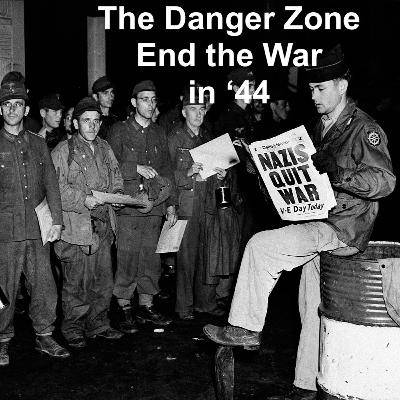
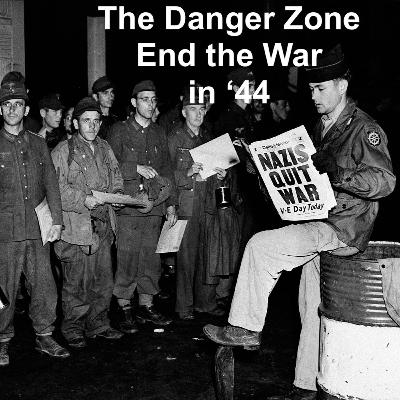
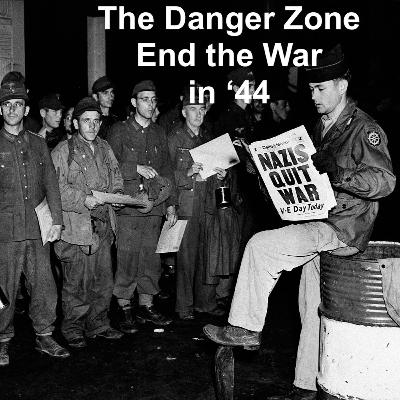
World War 2 in Europe ended with the surrender of Nazi Germany to the Western Allies on 7 May 1945 and to the Soviet Union on 8 May 1945. In the last year of the war, 1945, about 2.6 million military personnel died in Europe. The number of civilian casualties were also considerable. After the Allied breakout from Normandy in August 1944 there seemed to have been a chance to end the war in Europe before Christmas – that often heard refrain in World War I and World War II, although after the war this one isn’t brought to mind as much as it should be. Was there any truth to that rumour about World War II in Europe ending in 1944? I’m going to explore that in this series of programmes.Tag words: World War 2; Nazi Germany; Normandy; Lieutenant-General JCH Lee; General Eisenhower; General Montgomery; Field Marshall Montgomery; General Omar N Bradley; General George S Patton Jr; 21st Army Group; 12th Army Group; 3rd US Army; Shellburst; Anvil; General Marshall; D-Day; Nigel Hamilton; Monty – The Battles of Field Marshal Bernard Montgomery; Operation Cobra; Carlo d’Este; Overlord; US Army; Flavius Renatus Vegetius; De Re Militari; Scipio; golden bridge; Argentan; Falaise Gap; Hitler; Mortain; Seventh Army; Fifth Panzer Army; Carlo d’Este; Eisenhower: Decision in Normandy; 12th SS Panzer Division; Martin Blumenson; Breakout and Pursuit;

Proclaim liberty throughout all the land unto all inhabitants thereof – what was it that made the West great and enriched the entire world as a consequence? It was freedom. Out of the failed attempt by the mighty Persian Empire, to conquer the impoverished farming land of Greece, the Greeks gave the world a lasting gift. The abstract idea of freedom – which a successful Persian invasion of Greece would have crushed.A quarter million of Xerxes' troops perished in his vain attempt to take away this mysterious abstract thing called freedom which was enjoyed uniquely in all of the world by this tiny Balkan country of less than 130,000 square kilometres.Tag words: Persian Empire; Xerxes; Persians; Achaemenid; Persian Wars; God; Hebrews; Pharoah; Herodotus; The Histories; Victor Davis Hanson; Carnage and Culture; Freedom; hoplite; landowners; Demaratus; Divine Salamis; the rise of the West; Aeschylus; Hellenic civilization; Themistocles; Eurybiades; Athenians; free citizens; Marathon; Battle of Plataea; free men; Athens; Thermopylae; Spartans; Georg Hegel; democracy; Aristotle; Plato; Alexander the Great; Abraham Lincoln; Gettysburg Address; decisive battles of the Western world;

All the Spartans acknowledged that he was the most courageous Spartan who fought at the Battle of Plataea, but he was unanimously disqualified by them from receiving any honours. Why?Tag words: Spartans; Battle of Plataea; Victor Davis Hanson; The Western Way of War; Persians; Greek phalanx; Plutarch; Herodotus; The Histories; Lacedaemonians; Pausanias; Mardonius; Athenians; Tegeans; JFC Fuller; Decisive Battles of the Western World; Boeotians; Richard Nelson; Armies of the Greek and Persian Wars; Artabazus; Aeschylus;

Comments

Download from Google Play

Download from App Store
 United States