


 Claim Ownership
The Design Vault
Subscribed: 4Played: 12
Subscribe

Copyright © 2024-2025 The Design Vault, LLC. All Rights Reserved.
Description
A show about the past, present, and future of design. The Design Vault is a conversation hosted by Albert Shum and Thamer Abanami, reflecting on iconic products and ideas from the past, and rethinking them from new perspectives.
FOLLOW US
@thedesignvaultpodcast on Instagram
Hosts: Albert Shum and Thamer Abanami
Editor: Rachel James
Intro Music: Red Lips Media LLC
Brand Design: Rafael Poloni
20 Episodes
Reverse
Episode Overview
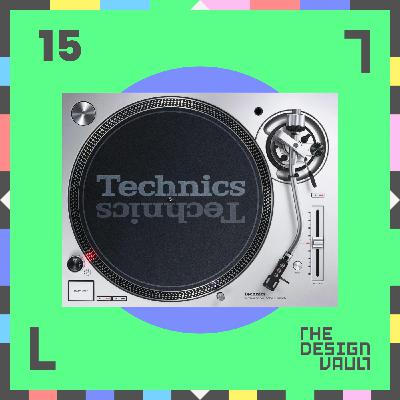
In this episode of The Design Vault, hosts Albert Shum and Thamer Abanami are joined by legendary producer Dan the Automator Nakamura (Gorillaz, Deltron 3030, Dr. Octagon) to explore the Technics SL-1200 MK2 — the direct drive DJ turntable that evolved from an audiophile product into a central instrument for hip hop, house, and techno DJs and producers.
From Konosuke Matsushita’s long-term “250-year philosophy” to Grand Wizard Theodore’s scratching breakthrough, this is the story of how Japanese engineering precision met street creativity to create one of the most influential musical instruments of the late 20th century. Dan shares personal stories of witnessing a young Qbert and Mix Master Mike before fame, why the 1200 is often called the “Porsche 911 of turntables,” and how the constraints of early sampling technology shaped hip hop’s signature sound.
Episode Length: 1:01:59
Original Air Date: September 23, 2025
Hosts: Albert Shum, Thamer Abanami
Special Guest: Dan the Automator Nakamura
Key Segments & Timestamps
Sound Recording’s Strange Beginning (00:02:25 - 00:07:44)
1857: First sound recorded but unplayable for 151 years
Edison’s phonograph and “Mary Had a Little Lamb”
Emile Berliner’s flat disc revolution and the birth of the record industry
The LP vs. 45 RPM rivalry that settled into coexistence
How physical media constraints shaped modern music
Matsushita’s Long-Term Philosophy (00:07:44 - 00:13:11)
23-year-old Konosuke Matsushita starts with 100 yen
The “tap water philosophy”: abundance through affordability
From handmade plugs to bicycle lamps that lasted 40 hours
Post-WWII Japan’s “three sacred treasures”
How long-term thinking created Panasonic and its Technics brand
The Direct Drive Revolution (00:13:11 - 00:18:03)
Belt drive’s fatal flaw: wow and flutter
Shuichi Obata eliminates the rubber band middleman
The SP-10: world’s first direct drive for broadcasting
Why torque and instant startup changed everything
From FM radio booths to consumer turntables
Birth of the 1200 Legacy (00:18:03 - 00:24:31)
1972: SL-1200 MK1 launches for home audiophiles
DJs discover unintended benefits: rock-solid speed, durability
Kool Herc’s “merry-go-round” technique extends breaks
Engineers began to notice how DJs in emerging club and hip hop scenes were pushing the decks in new ways
1979: The MK2 arrives with DJ-specific features
The Accidental Art of Scratching (00:26:21 - 00:32:10)
Grand Wizard Theodore’s mother interrupts practice
From holding a record in place to creating percussion
Grandmaster Flash perfects “quick mix theory”
Herbie Hancock’s Rockit brings scratching to MTV
Regional styles emerge: Philadelphia smooth vs. West Coast technical
Dan’s Evolution of Scratch Styles (00:32:10 - 00:34:07)
Jam Master Jay’s percussive power approach
Philadelphia’s transform scratch innovation
West Coast technical precision with Mix Master Mike
DJ Premier’s loose, funky internal metronome
How each region developed distinct aesthetics
Design Analysis: Japanese Precision Meets Street Culture (00:36:47 - 00:42:14)
24 pounds of die-cast aluminum confidence
5-pound platter with machined strobe dots
Pop-up target light for dark club cueing
Brushed metal buttons built to survive anything
Typography that defined an era of Japanese electronics
The Digital Transformation (00:47:03 - 00:54:10)
From vinyl crates to CD wallets: Pioneer’s CDJ
Serato’s time-coded vinyl preserves feel, adds infinite music
Digital controllers merge software with tactile control
2010: Technics stops production after 38 years
2016 revival, with 2019 models reborn as $1,000+ luxury nostalgia products
Technology as Creative Catalyst (00:56:18 - 00:59:01)
How technical limitations create aesthetic signatures
Photography’s threat becoming opportunity
Electronic music’s journey to legitimacy
Why constraints breed genres
AI and the next creative frontier
Credits
Hosts: Albert Shum and Thamer Abanami
Special Guest: Dan the Automator Nakamura
Editor: Rachel James
Intro Music: Red Lips Media
Brand Design: Rafael Poloni
Connect With The Design Vault on Instagram @thedesignvaultpodcast
Episode Overview
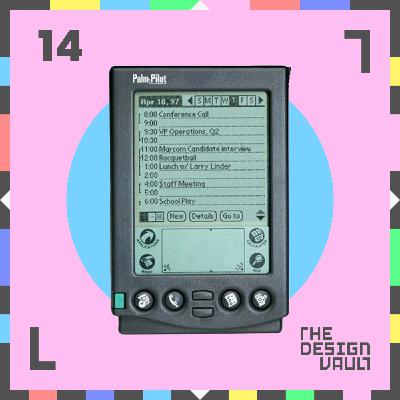
In this episode of The Design Vault, hosts Albert Shum and Thamer Abanami explore the remarkable story of the PalmPilot—the device that solved the PDA puzzle through radical constraint. When Jeff Hawkins carved a block of wood into the shape of a shirt-pocket computer and carried it everywhere, pretending to use it throughout his day, he wasn't just prototyping a product—he was designing the first truly successful bridge between desktop and mobile computing.
From its 1996 launch to its $53 billion peak valuation to its eventual absorption into smartphones, the PalmPilot's journey reveals timeless lessons about simplicity versus complexity, the power of ecosystem thinking, and why being first doesn't guarantee survival. This episode uncovers how three taps, 160x160 pixels, and a simplified alphabet called Graffiti almost gave us the smartphone era five years early.
Episode Length: 39:21
Original Air Date: September 9, 2025
Hosts: Albert Shum, Thamer Abanami
Key Segments & Timestamps
Setting the Stage: The Gadget Graveyard (00:00:20 - 00:04:35)
The 1990s digital device explosion: Casio organizers, Sharp Wizards, and others
Apple Newton's $700 failure and handwriting recognition jokes
The junk drawer problem: expensive solutions looking for problems
Enter Jeff Hawkins: The Wooden Computer (00:04:43 - 00:08:04)
Hawkins' background: electrical engineering, neuroscience, and Grid Systems
Palm Computing's founding in 1992 with Donna Dubinsky and Ed Colligan
The wooden prototype: carrying a carved block of wood for months
Pretotyping in practice: fake meetings with a fake device
Design Philosophy: The Zen of Palm (00:08:04 - 00:14:31)
Form factor constraints: 4.7" x 3.2" x 0.7", under 6 ounces
160x160 monochrome display as design driver
Graffiti: making humans adapt to the machine (97% accuracy)
The three-tap rule and Rob Haitani's tap counter
Instant-on philosophy: no boot time, no waiting
The HotSync Revolution (00:14:31 - 00:21:42)
Creating the first seamless desktop-to-mobile bridge
Conflict resolution algorithms for two-way synchronization
Email on the go: the killer app emerges
Building the third-party app ecosystem
Market Triumph: Fastest Growing Computer Product (00:24:04 - 00:28:26)
Launch reception: 1 million units in 18 months
The magic $299 price point
70% market share by 2000
Healthcare, sales teams, and executive adoption
Corporate Turbulence and Competition (00:25:27 - 00:33:17)
Microsoft's Windows CE entry and desktop replication strategy
The Handspring betrayal: founders becoming competitors
BlackBerry's wireless disruption and enterprise email dominance
Palm's split into hardware and software divisions
WebOS development: the moonshot that came too late
The iPhone Moment and Legacy (00:32:27 - 00:39:21)
2007: The disruption nobody could adapt to
Palm's $53 billion peak valuation during the dot-com bubble
HP's acquisition and the LG TV connection
Timeless lessons: constraint-driven innovation and simplicity
Why "almost right" in tech often means complete failure
Connect With The Design Vault
The Design Vault explores iconic products from the innovation-rich 1970s-early 2000s, extracting strategic insights for today's designers, engineers, and business leaders. Each episode combines nostalgic storytelling with actionable lessons for modern product development.
Subscribe: Available on all major podcast platforms including Spotify, Apple, and more
Follow us: Instagram: @thedesignvaultpodcast, LinkedIn: Thamer Abanami, Albert Shum
We'd love to hear your thoughts, episode ideas and feedback via the links above.
Credits
Hosts: Albert Shum and Thamer Abanami
Editor: Rachel James
Intro Music: Red Lips Media
Brand Design: Rafael Poloni

Episode Overview
In this episode of The Design Vault, hosts Albert Shum and Thamer Abanami explore the extraordinary story of the Citroën DS, arguably the most audacious automobile ever created. Born from the devastation of post-WWII France, this revolutionary car emerged from an 18-year development odyssey that challenged every automotive convention. With insights from retired Apple and Motorola design leader Tim Parsey, who owned multiple DS models, this episode reveals how a dream team of engineers and designers created a vehicle so advanced it seemed to come from the future. From its magical hydropneumatic suspension to its aerodynamic sculpture-on-wheels aesthetic, the DS completely reimagined what a car could be.
Original Air Date: August 26, 2025
Episode Length: 38:31
Hosts: Albert Shum, Thamer Abanami
Guest: Tim Parsey (Former Apple, Motorola, Mattel Design Leader)
Key Segments & Timestamps
The Context: Post-War France’s Design Challenge (00:20 - 03:58)
Post-WWII devastation creating space for radical innovation
Rough roads, high fuel taxes, and the culture of efficiency
Charles de Gaulle’s “grandeur” vision driving technological ambition
How constraints became catalysts for breakthrough thinking
The Automotive Landscape: A World Ripe for Disruption (03:58 - 06:10)
American excess era: 42-inch tail fins and chrome measured by weight
Germany’s people’s car philosophy with the Beetle
Britain maintaining pre-war conservatism
France’s strategy to leapfrog rather than catch up
Citroën’s Culture of Radical Innovation (06:10 - 08:45)
André Citroën’s front-wheel-drive gamble with the Traction Avant
The critical 1934 bankruptcy and Michelin’s revolutionary takeover
Pierre Boulanger’s radical decision: “Keep engineers, fire accountants”
The 2CV’s parallel development funding DS ambitions
The Dream Team (08:45 - 11:50)
André Lefebvre: Aeronautical engineer with a backlog of innovations
Paul Magès: Self-taught genius behind hydropneumatic suspension
Flaminio Bertoni: Italian sculptor turned automotive stylist
Why letting creative minds loose is “highly risky but necessary”
The 18-Year Development Odyssey (11:50 - 16:21)
Simple question: Why improve roads when you can improve cars?
Secret development during WWII
The hydropneumatic breakthrough: Gas compresses, liquid transmits
Systems integration: One technology powering suspension, brakes, steering
40% of build cost invested in hydraulic complexity
The Theatrical Launch: Paris 1955 (17:16 - 20:03)
Grand Palais transformed into theater
The silk sheet drops, crowds gasp
12,000 pre orders—a record until Tesla Model 3
The strategic 500-customer beta program with dedicated engineers
Living with Revolutionary Complexity (20:03 - 23:05)
The infamous “mushroom brake” and its quirks
Tim’s near-death experience
“Marking territory with hydraulic fluid”
Why the experience had to be driven to be understood
The Meditative Magic: What Made DS Special (23:05 - 27:03)
“Like gliding around… a meditative experience”
Magic carpet ride over speed bumps
Why no other manufacturers copied the formula
Engineering complexity as competitive moat
Evolution and Variants (27:03 - 28:55)
From “frog eyes” to swiveling directional headlights (1967)
Power progression: DS 19, DS 21, DS 23
Safari wagons, Pallas luxury, SM with Maserati power
“Frogs have personality. Fairings don’t.”
Design Philosophy: Engineering as Art (28:55 - 32:39)
Perfect tension between engineering and sculptural beauty
Authentic aerodynamics vs. American “rocket ship” styling
Three-dimensional airflow management with under-car panels
Flush door handles decades before Tesla
Interior as Living Room (32:39 - 35:20)
Four interior lights creating ambient atmosphere
Bench seats and column-mounted gear shifter maximizing space
Single-spoke steering wheel for unobstructed view
Dashboard-mounted mirror at natural eye level
Personal Connection: Tim’s First DS Story (35:20 - 38:27)
£30 for two broken cars to make one working DS
Brilliant engineering: body panels removable with single bolts
Digging holes in frozen ground to replace hydraulic lines
The devotion that revolutionary design inspires
Legacy and Lessons for Modern Innovators (38:27 - 38:31)
Showing possibilities people never imagined
The courage to exist “outside of time”
Why serving people sometimes means ignoring market research
Dream teams without financial constraints
Connect With The Design Vault
The Design Vault explores iconic products from the innovation-rich 1970s-early 2000s, extracting strategic insights for today’s designers, engineers, and business leaders. Each episode combines nostalgic storytelling with actionable lessons for modern product development.
Subscribe: Available on all major podcast platforms including Spotify, Apple, and more
Follow us: Instagram: @thedesignvaultpodcast, LinkedIn: Thamer Abanami, Albert Shum
We’d love to hear your thoughts, episode ideas and feedback via the links above.
Credits
Hosts: Albert Shum and Thamer Abanami
Guest: Tim Parsey
Editor: Rachel James
Intro Music: Red Lips Media LLC
Brand Design: Rafael Poloni

Episode Overview
In this episode of The Design Vault, hosts Albert Shum and Thamer Abanami explore the remarkable story of the Koss Porta Pro, a pair of headphones that defied every rule of consumer electronics and emerged as an unlikely icon. Launched in 1984 at $49.95, these skeletal-looking headphones still sell for the exact same price today, effectively making them much cheaper due to inflation. From John Koss's accidental entry into electronics to a bankruptcy-driven product that became permanent, the Porta Pro story shows how understanding human needs—not industry assumptions—creates timeless design. This episode uncovers why a product initially rejected by some for looking "too cheap" became a cult object spanning from veteran audiophiles to Gen Z walkman enthusiasts, and how its "evergreen product strategy" challenges everything we believe about planned obsolescence.
Episode Length: 37:02
Original Air Date: August 12, 2025
Hosts: Albert Shum, Thamer Abanami
Key Segments & Timestamps
Why This Matters Now (00:02:54 - 00:04:06)
The concept of "accessible excellence" in consumer electronics
Democratizing high-quality audio like IKEA democratized design
The lifetime warranty as a design constraint
Predicting the "good enough" revolution in consumer tech
Setting the 1984 Scene (00:04:06 - 00:05:55)
Sony Walkman's five-year dominance with "awful" bundled headphones
The portability penalty: accepted wisdom that portable meant compromised
Uncomfortable foam speakers vs. expensive home-use models
Music becoming private and mobile: the cultural shift
The gap in the marketplace nobody was addressing
John Koss: The Accidental Revolutionary (00:05:55 - 00:08:15)
Jazz musician turned TV rental entrepreneur (1953)
Creating the first stereo headphones (SP/3) in 1958
Philosophy: "Music should be accessible to everyone"
Chapter 11 bankruptcy in 1984: crisis as catalyst
Project "Light and Lively": the two-year development journey
The Design Brief That Changed Everything (00:09:10 - 00:10:42)
Under $50 retail target (radical for quality audio)
Must work with low-powered portable devices
Titanium-coated Mylar drivers innovation
"For those with a refined ear for music"
Research findings: pressure, heat, weight, and "hair disruption"
Physical Design: Anti-Fashion as Philosophy (00:10:56 - 00:14:56)
The skeletal wire sculpture aesthetic
Completely exposed architecture: structure as aesthetic
Collapsible design that becomes its own case
The Comfort Zone System: temple and ear pressure distribution
Minimal branding in the age of logos
Pop colors against '80s neon excess
Technical Innovation: The Sound of Revolution (00:15:05 - 00:19:40)
30mm dynamic drivers with 15-25,000 Hz response
Open-back design creating spacious soundstage
Tuned for satisfaction, not accuracy
The secret language of audio: warm vs. bright vs. flat
Why titanium-coated Mylar matters
Optimized for battery-powered Walkmans
Confident Evolution (00:19:55 - 00:22:55)
1984: Launch at $60, quickly drops to $49.95
1991: Michael J. Koss takes over, maintains vision
1995: KSC clip-on variants using same drivers
1999: Sporta Pro for active users
2009: 25th anniversary with commemorative coin
2016: New colorways prove aesthetics still matter
2018: Bluetooth version (80% sound quality trade-off)
2021: Utility model with detachable cables
2024: Giant billboard in Milwaukee celebrating current product
The Lifetime Warranty Gamble (00:22:55 - 00:24:48)
No-questions-asked lifetime warranty on $50 product
Small company competing with Sony and Panasonic
Creating trust through radical commitment
The evergreen product strategy: no planned obsolescence
Replacement parts always available
Sustainable business through consistency
Price as Philosophy (00:24:48 - 00:27:37)
Maintaining $49.95 for four decades
Arizona Iced Tea pricing strategy parallel
Destroying the premium price equals quality assumption
66% cheaper today accounting for inflation
Manufacturing efficiency through unchanging design
The rise of low-priced, high-quality audio segment
Cultural Impact: From Anti-Design to Icon (00:27:37 - 00:30:21)
The Porta Pro cult: forums and modifications
Cable mods, Yaxi pads, 3D printed parts
People spending more on mods than the headphones cost
Producers and musicians adopting them
Design blogs rediscovering "anti-fashion headphones"
Gen Z discovery through TikTok and Retrospekt
The Evergreen Product Strategy (00:31:02 - 00:32:45)
No annual updates, no Mark II planned
75% family ownership enabling long-term vision
Growth vs. consistency mindset
Minor necessary revisions only
Same product for 40 years
Word-of-mouth over marketing spend
Design Legacy: Honesty as Movement (00:32:54 - 00:35:22)
Transparent aesthetic and exposed architecture
Influence on Teenage Engineering and Nothing
Comfort-first design approach adoption
Temple relief concept in gaming headsets
Ultra-lightweight construction principles
Wearable computing implications
More than human factors and ergonomics
Ultimate Lessons (00:35:31 - 00:37:02)
Consistency as the most radical act
Permanence as revolution in obsolescence-driven market
Excellence can be democratic
Understanding people vs. industry assumptions
The masterclass in design philosophy
Sustainability through timelessness
Connect With The Design Vault
The Design Vault explores iconic products from the innovation-rich 1970s-early 2000s, extracting strategic insights for today's designers, engineers, and business leaders. Each episode combines nostalgic storytelling with actionable lessons for modern product development.
Subscribe: Available on all major podcast platforms including Spotify, Apple, and more
Follow us: Instagram: @thedesignvaultpodcast, LinkedIn: Thamer Abanami, Albert Shum
We'd love to hear your thoughts, episode ideas and feedback via the links above.
Credits
Hosts: Albert Shum and Thamer Abanami
Editor: Rachel James
Intro Music: Red Lips Media LLC
Brand Design: Rafael Poloni
Episode Overview
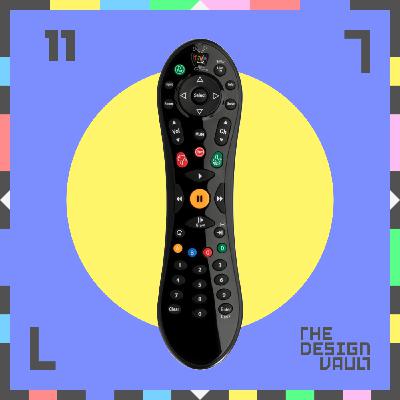
In this episode of The Design Vault, hosts Albert Shum and Thamer Abanami explore the revolutionary TiVo digital video recorder, a product so transformative it became a verb, yet ultimately couldn't capitalize on the future it created. From the moment TiVo demonstrated pausing live TV at CES 1999, leaving journalists bewildered by this "magic trick," to its eventual relegation as a feature in cable boxes, TiVo's story exemplifies the classic innovator's dilemma. This episode reveals how two Silicon Graphics engineers created the first truly intuitive TV interface, pioneered recommendation algorithms, and invented binge-watching culture, only to watch cable companies commoditize their revolution with inferior but "barely good enough" alternatives.
Episode Length: 46:19
Original Air Date: July 29, 2025
Hosts: Albert Shum, Thamer Abanami
Key Segments & Timestamps
The Pre-TiVo Dark Ages (00:04:27 - 00:06:41)
The tyranny of appointment television and TV Guide magazines
VCRs: The engineering nightmare requiring "post-doc degree" to program
Missing shows meant waiting for syndication reruns
The anti-design philosophy of consumer electronics
Pattern of Japanese hardware companies struggling with software integration
The perfect storm for disruption in an entrenched industry
The Unlikely Revolutionaries (00:07:49 - 00:10:14)
Mike Ramsey and Jim Barton: Engineers at Silicon Graphics
Both laid off on the same day in 1997
Ramsey's Nintendo 64 architecture background
Barton's radical philosophy: "Technology should be invisible"
Original company name: Teleworld
Initial vision: Home network computer for email, web, and TV
The crucial pivot to focus solely on "fixing TV"
The Technical Breakthroughs (00:10:14 - 00:14:45)
Time-shifting vs. time-traveling: Making the impossible possible
Hard drives in consumer devices: Revolutionary for 1998
Real-time MPEG-2 compression on the fly
The genius of the phone line connection for guide data
14-day program guide with full metadata
Linux-based system hidden behind appliance simplicity
Constant recording buffer: The secret to pausing live TV
The Peanut Remote Revolution (00:16:16 - 00:21:09)
Collaboration with IDEO for ergonomic design
Kidney-shaped form factor for natural hand fit
Rubberized texture and balanced weight distribution
Giant play/pause button as centerpiece
Revolutionary thumbs up/thumbs down buttons
Color-coded interface with playful audio cues
Progressive disclosure: Hiding complexity behind simplicity
Five-minute learning curve vs. VCR manuals
The Recommendation Engine Pioneer (00:25:12 - 00:27:05)
First consumer product with predictive algorithms
Thumbs up/down creating personalized profiles
Anonymous data aggregation across users
Filling empty drive space with predicted content
The birth of algorithmic content curation
Foreshadowing modern streaming recommendations
Behavioral Revolution: The End of Appointment TV (00:28:24 - 00:30:42)
Liberation from network scheduling tyranny
Birth of binge-watching culture
Season Pass: Automating series recording
The unintended consequences of time control
Changing social dynamics around TV viewing
From shared cultural moments to personalized experiences
The Commercial Skip Controversy (00:30:42 - 00:33:15)
Fast-forward through commercials: Industry panic
Replay TV's automatic commercial skip and lawsuit
TiVo's careful balance: Manual skip only
Time Warner's advertising boycott
Patent wars with EchoStar and Dish Network
$500 million settlement vindication
The beginning of the licensing company pivot
The Platform Squeeze (00:33:23 - 00:38:11)
Cable companies as both partners and competitors
The bundling advantage: "Free" DVR with cable box
Distribution trumps design quality
Good enough beats better when it's bundled
The frenemy relationship trap
Why paying extra for TiVo became a hard sell
Loyal users vs. mass market adoption
The Innovator's Dilemma Crystallized (00:36:04 - 00:39:17)
TiVo as the purest example of Christensen's theory
Educating the market for competitors to harvest
Fighting legal battles that benefited everyone
Establishing UI conventions copied industry-wide
Premium features few would pay extra for
The brutal reality of seeing it coming but being powerless
Modern Parallels and Lasting Impact (00:41:59 - 00:45:56)
Netflix, YouTube TV, Hulu: All running TiVo's playbook
The DNA in every streaming interface today
Design matters more than technology specs
Business model innovation as crucial as product innovation
Platform dynamics in content industries
The Peloton parallel: Great product, platform challenges
Why being revolutionary isn't always enough
Connect With The Design Vault
The Design Vault explores iconic products from the innovation-rich 1970s-early 2000s, extracting strategic insights for today's designers, engineers, and business leaders. Each episode combines nostalgic storytelling with actionable lessons for modern product development.
Subscribe: Available on all major podcast platforms including Spotify, Apple, and more
Follow us: Instagram: @thedesignvaultpodcast, LinkedIn: Thamer Abanami, Albert Shum
We'd love to hear your thoughts, episode ideas and feedback via the links above.
Credits
Hosts: Albert Shum and Thamer Abanami
Editor: Rachel James
Intro Music: Red Lips Media LLC
Brand Design: Rafael Poloni

Comments

Download from Google Play

Download from App Store
 United States